Define the Foil Target
State foil type, thickness range, width, production speed and critical surface requirements.

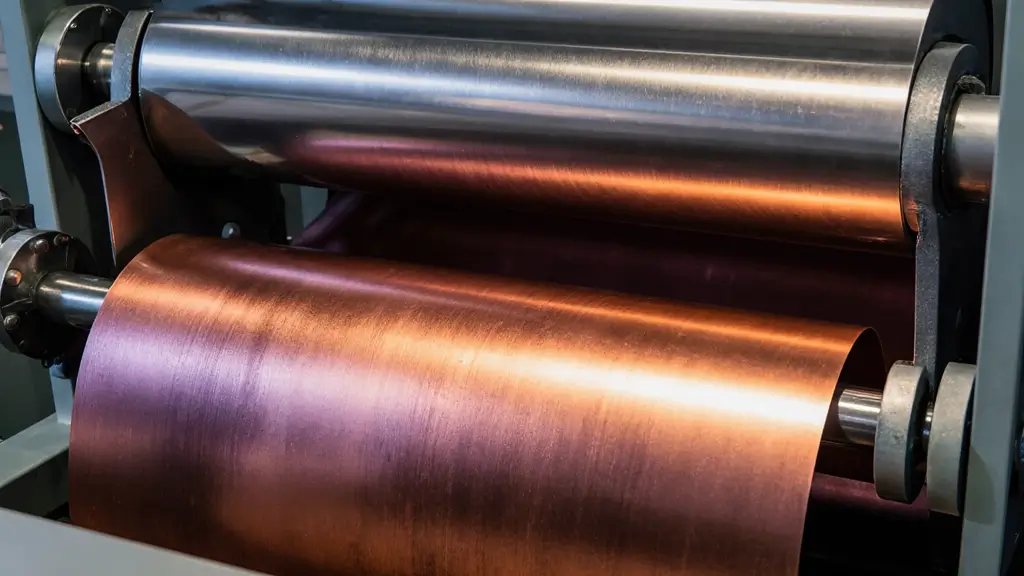
Electrolytic Copper Foil Solution
Review custom titanium-anode requirements against the copper electrolyte, additive system, electrical load, cell and drum geometry, foil target, tolerances and line-qualification basis.
Solution Selection Guide
Copper-foil anode requirements follow the electrolyte and additive system, current density, drum and cell geometry, electrode spacing, foil-thickness and surface targets, production speed and qualification plan. Define these parameters before an anode construction or coating path is proposed.
Before Requesting a Quote
Confirm whether the project requires a custom anode plate, a segmented assembly, a drawing-based replacement or a pilot quantity. Include the bath and additive data, drum and cell drawings, electrical duty, foil-quality targets and trial-acceptance method. Any full-production supply decision should follow an agreed qualification process.
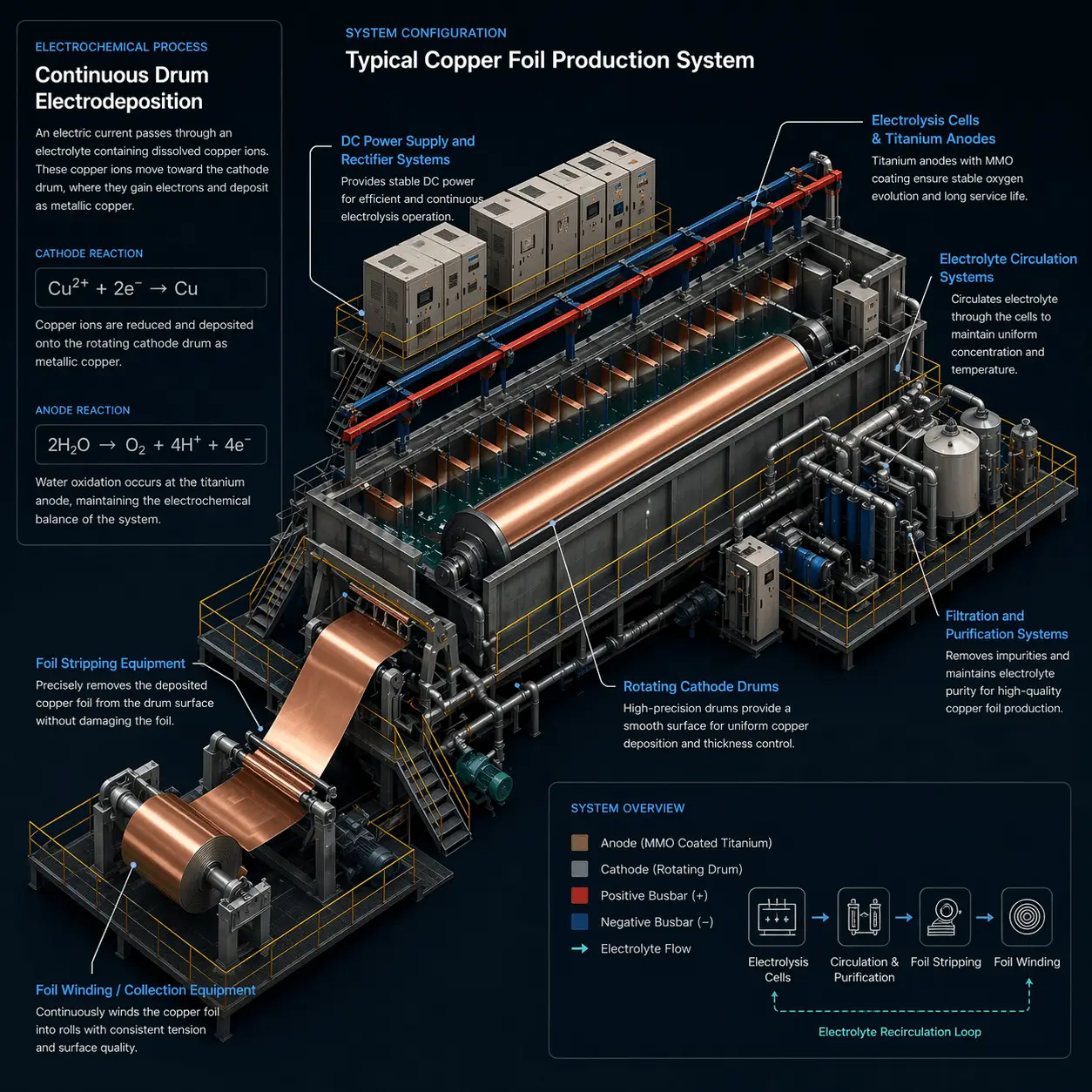
Process Review
A reliable copper-foil anode specification begins with the foil target and electrolyte-additive system, then defines the drum and cell geometry, electrical duty, anode dimensions, connection tolerances and pilot qualification requirements.
State foil type, thickness range, width, production speed and critical surface requirements.
Provide copper and acid concentrations, chloride, additives, impurities and temperature.
Share drum diameter, anode arc, spacing, dimensions, segmentation and current-feed arrangement.
Define drawings, tolerances, inspection, trial lot, line approval and evidence requirements.
Solution Configurations
Use the confirmed process conditions to compare material, coating, geometry, assembly and documentation requirements. Final configuration remains project-specific.
Solution Route
For drawing-based copper-foil cells requiring defined curvature, active area, flatness and connection.
Start with
Cell drawing, arc or radius, dimensions, active area, terminals, tolerances and quantity.
Solution Route
For line layouts where electrode segmentation and current distribution must match the equipment design.
Start with
Segment layout, spacing, bus interface, current distribution and installation sequence.
Solution Route
For existing line components requiring dimensional compatibility and a controlled qualification basis.
Start with
Existing drawing, coating information, service record, voltage trend, failure concern and approval process.
Solution Route
For projects requiring trial quantities and agreed evaluation criteria before broader adoption.
Start with
Pilot scope, test conditions, acceptance criteria, reporting and decision gate.
Technical Intake
Provide the inputs that materially affect chemistry, geometry, qualification and commercial scope. Unknown values can be marked for joint review.
Product type, thickness, width, production speed and relevant surface or profile requirements.
Copper and acid concentration, chloride, additives, impurities, temperature and circulation.
Current, current density, voltage, current-feed arrangement and operating cycle.
Drum diameter, anode arc, spacing, segment layout, flow and installation interface.
Dimensions, substrate thickness, active area, flatness, connection, welds and tolerances.
Trial plan, inspection, coating or composition evidence, line acceptance and change control.
Supply Scope & Qualification
Copper-foil production requires line-specific qualification. HELE can review a drawing- and process-based titanium-anode opportunity, while line compatibility, additive control, foil roughness, additive consumption and production performance remain subject to an agreed trial and acceptance plan for the actual process.
Cells & Electrode Configurations
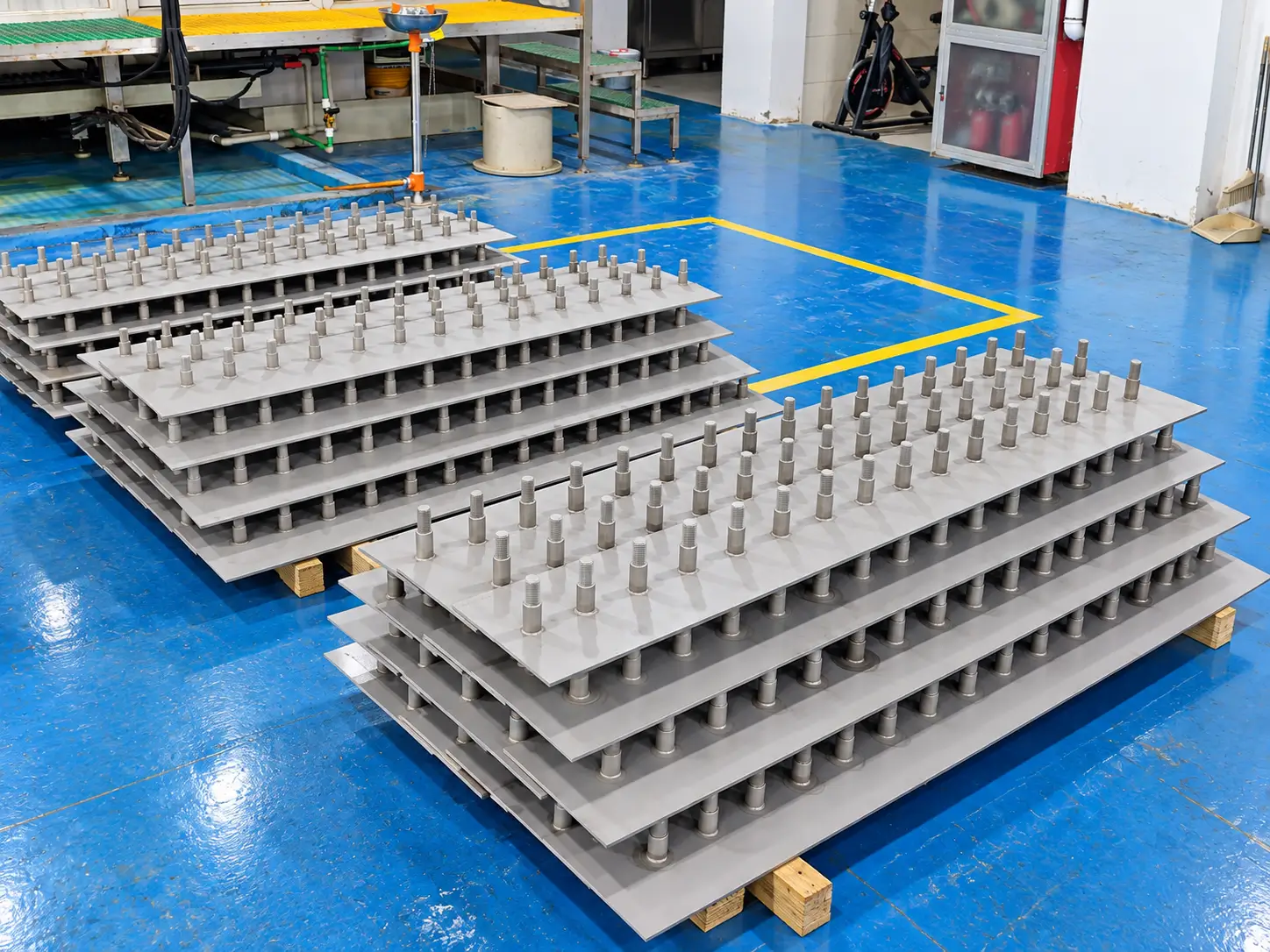
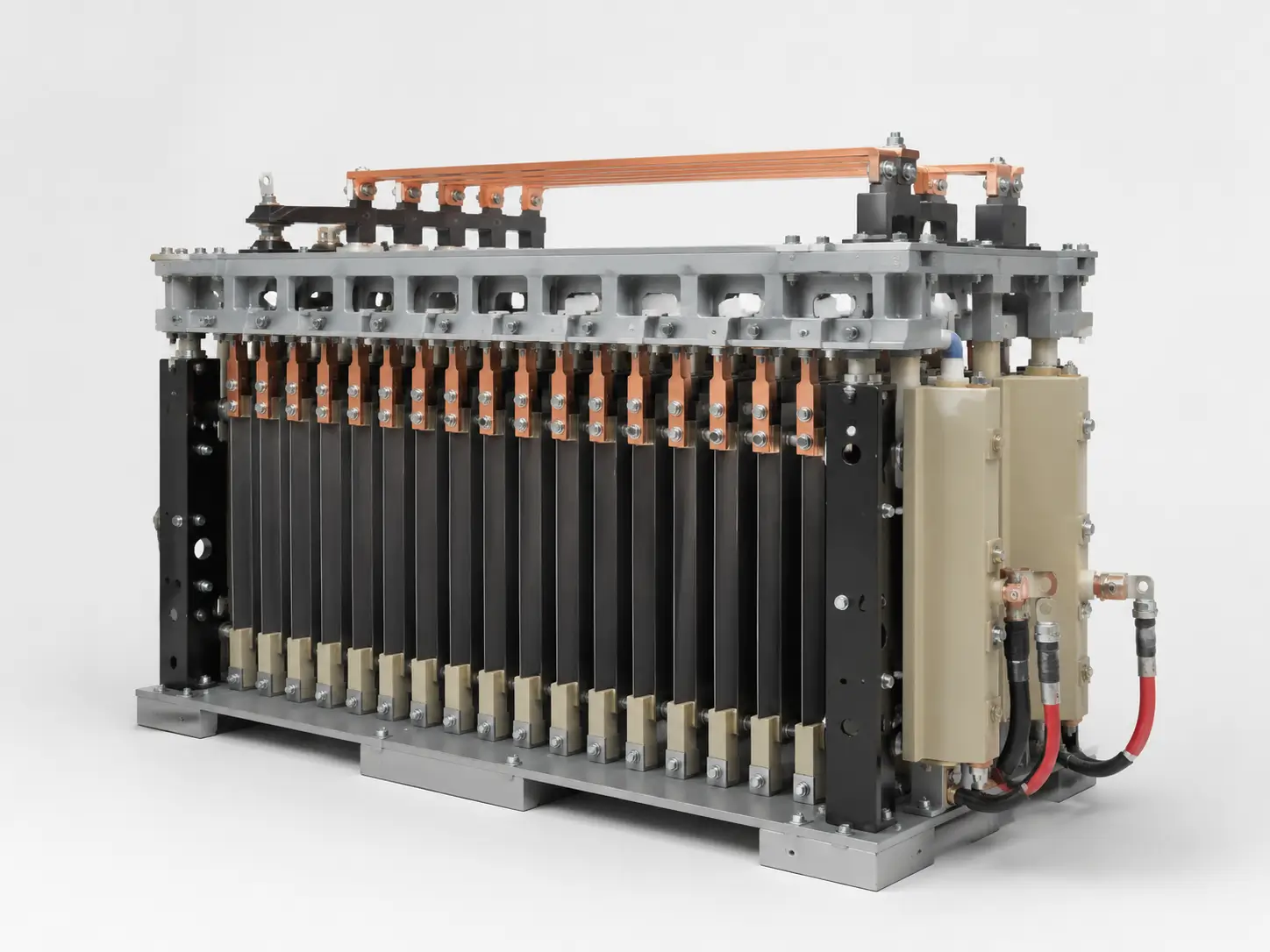
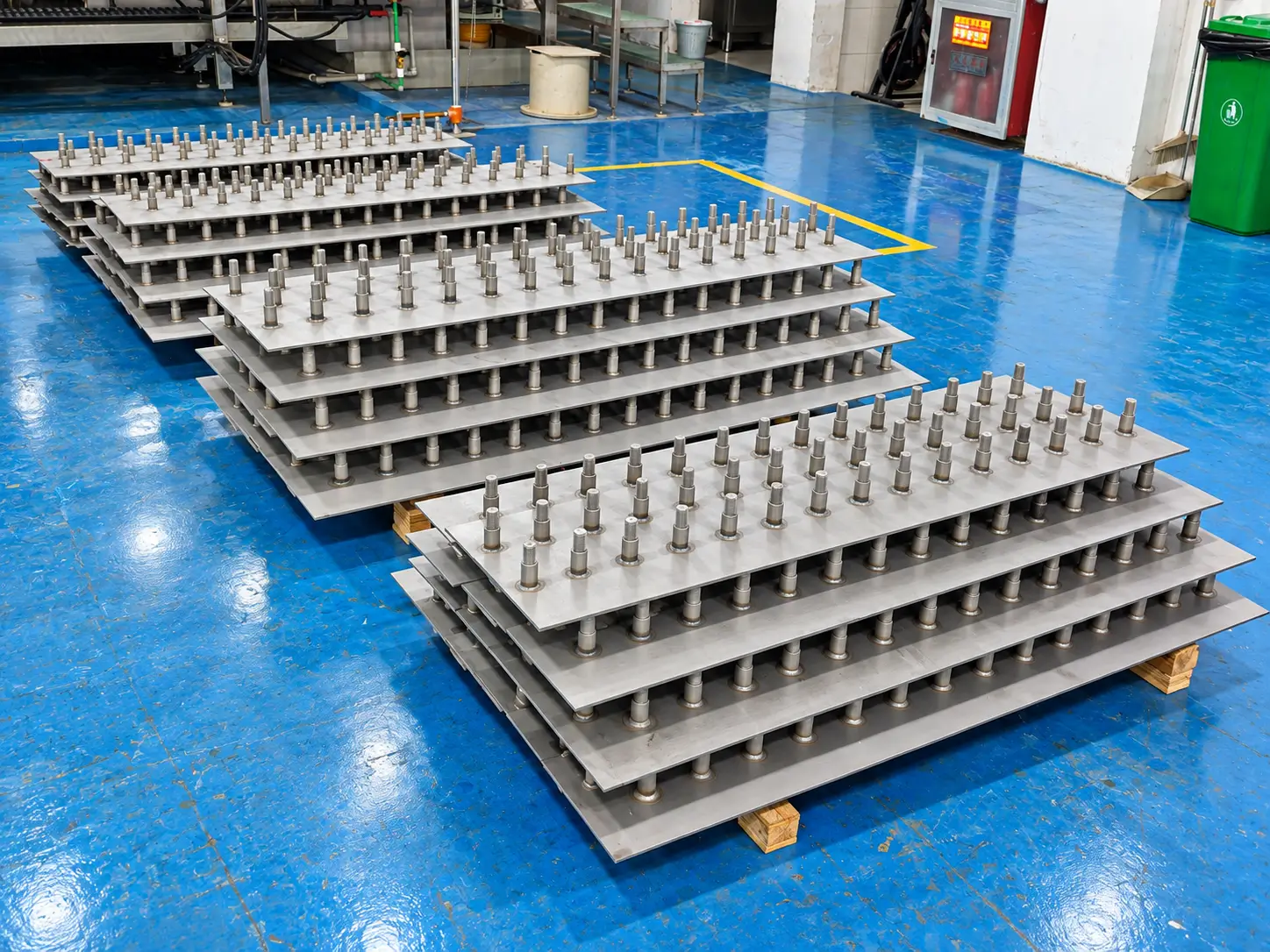
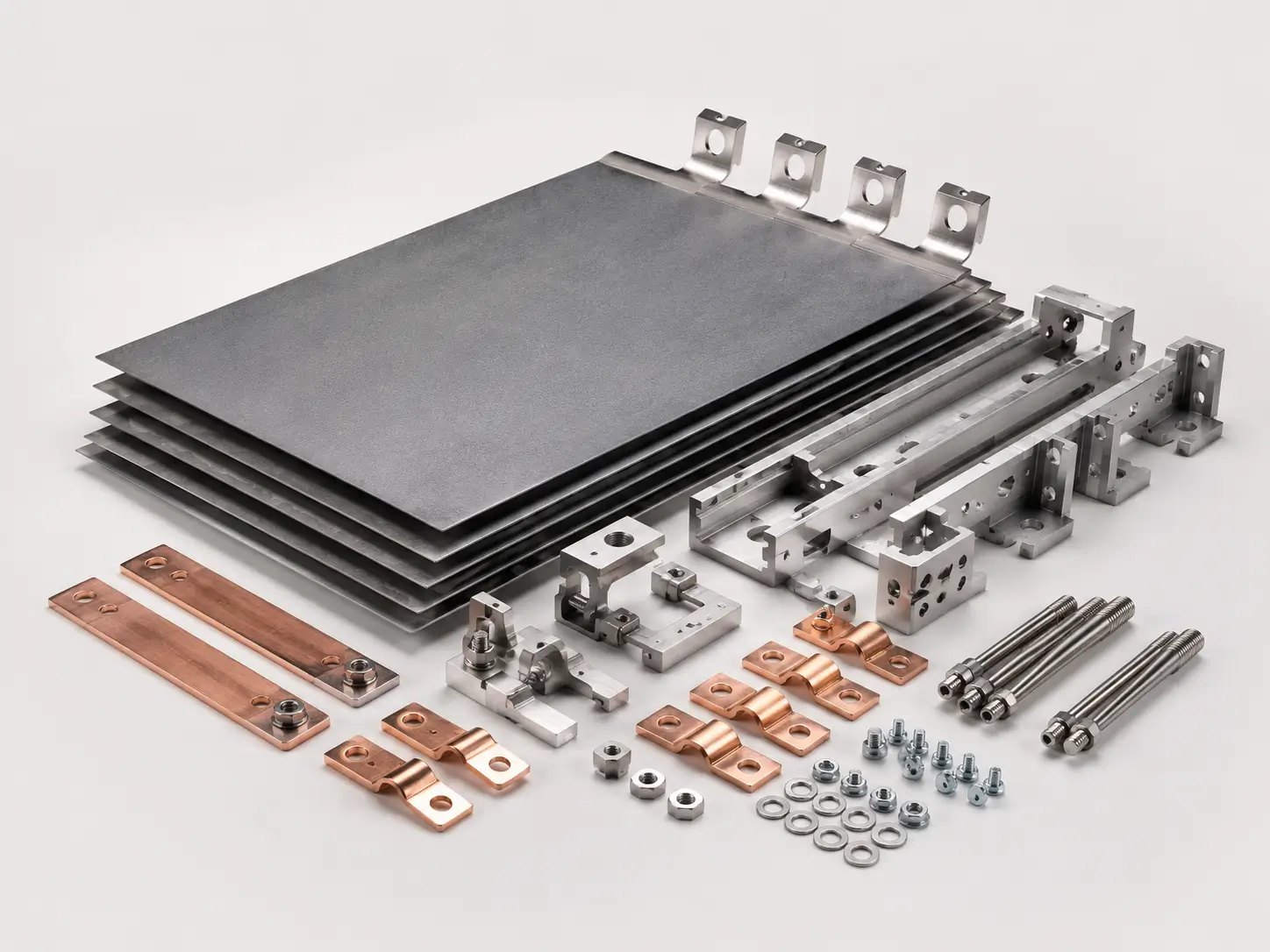
Review representative cell, drum and anode configurations for copper-foil production. Final design must follow the electrolyte-additive system, electrical duty, line geometry and qualification plan.


Related Products & Applications
Compare related product families and application capabilities that may support material selection, equipment integration, replacement planning or project qualification.
← Explore All Electrochemical SolutionsTechnical FAQ
No. Electrolyte, additives, current density, drum and cell geometry, spacing, production speed and surface requirements must also be reviewed.
Dimensions are necessary but insufficient. The process chemistry, electrical duty, connection, coating information, service history and approval basis also matter.
No. Foil quality depends on the complete line, electrolyte control, additives, hydrodynamics, drum condition, current distribution and operating discipline.
Use a controlled pilot scope with agreed drawings, process conditions, inspection records, trial criteria, comparison method and approval gate.
Tell us about the foil type and thickness range, drum and cell geometry, electrolyte and additive system, current density, production speed, anode dimensions, connection, tolerances, existing service history and qualification requirements. HELE will review whether the project fits a custom anode or trial-supply path and identify missing inputs.