Precision Titanium Fasteners
Titanium Fastener Solutions

Precision Titanium Fasteners & Bolts Manufacturer

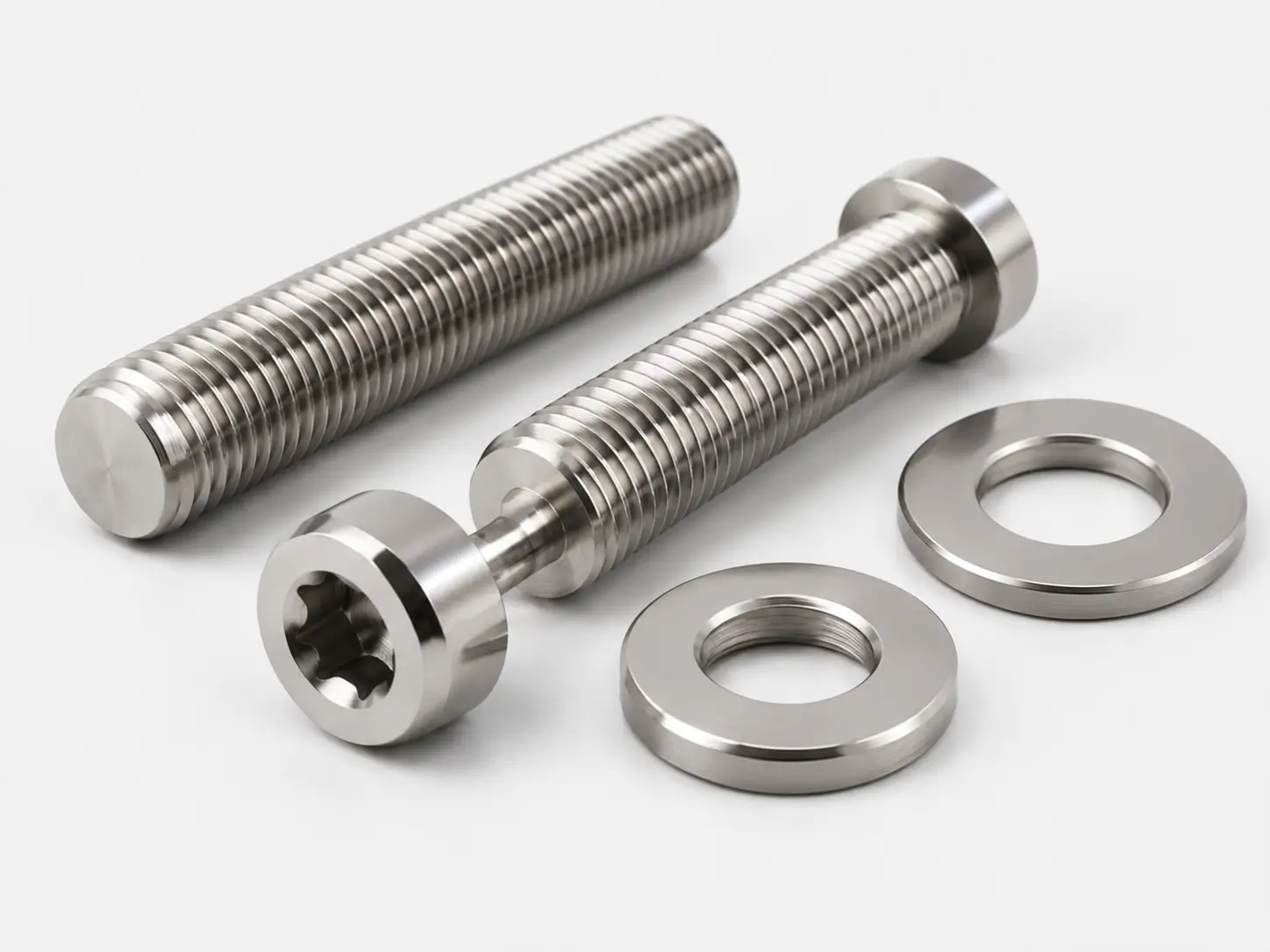
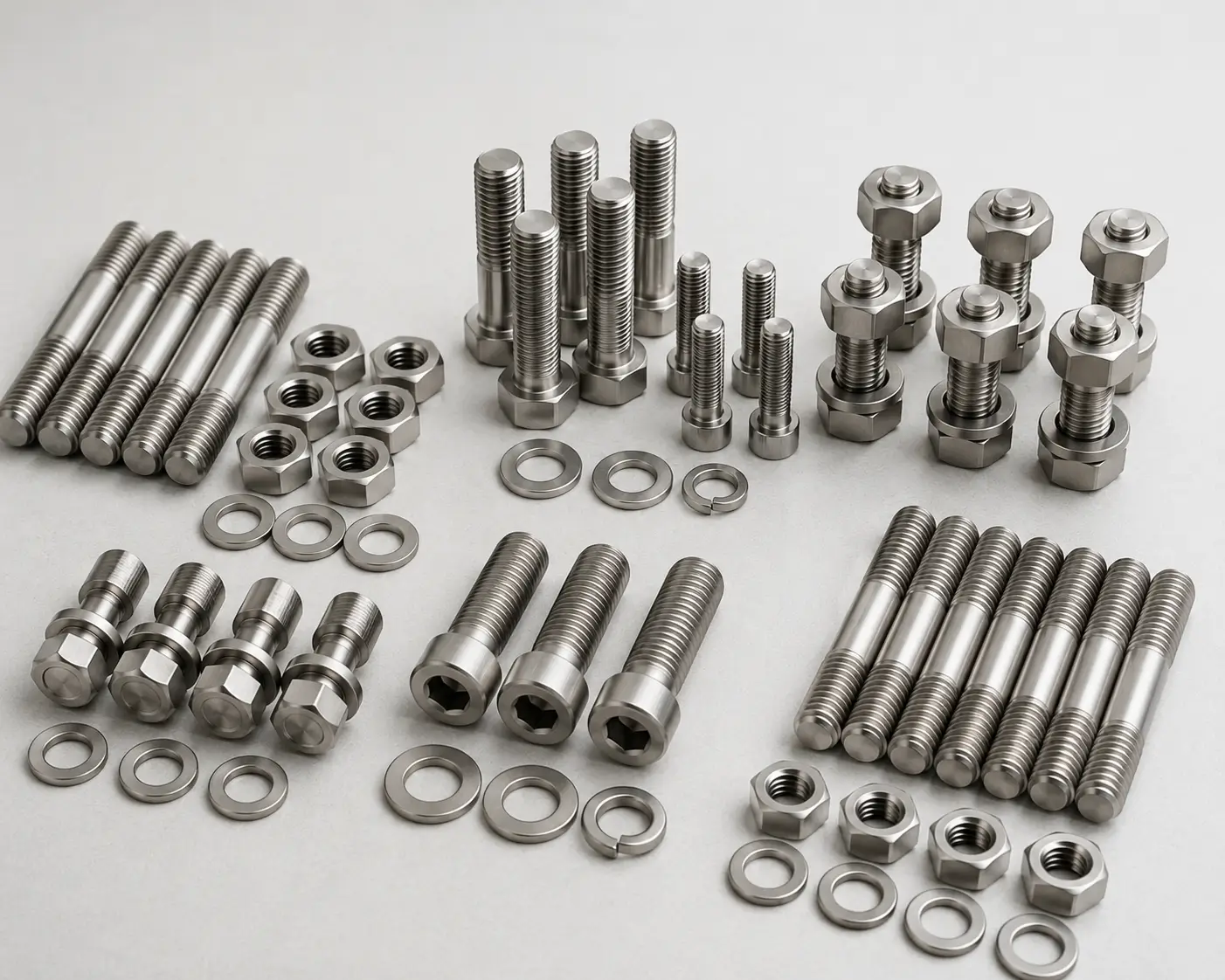
High-strength, corrosion-resistant titanium fasteners engineered for critical load-bearing applications. We manufacture bolts, screws, nuts, studs, washers, and custom hardware strictly conforming to DIN, ISO, ASTM, and ANSI standards. Designed for aerospace, marine, chemical, robotics, medical, and OEM fastening systems.

  • Grade 2 / Grade 5 / Grade 7 / Grade 23
  • DIN / ISO / ASTM / ANSI Standards
  • CNC Machining + Thread Rolling
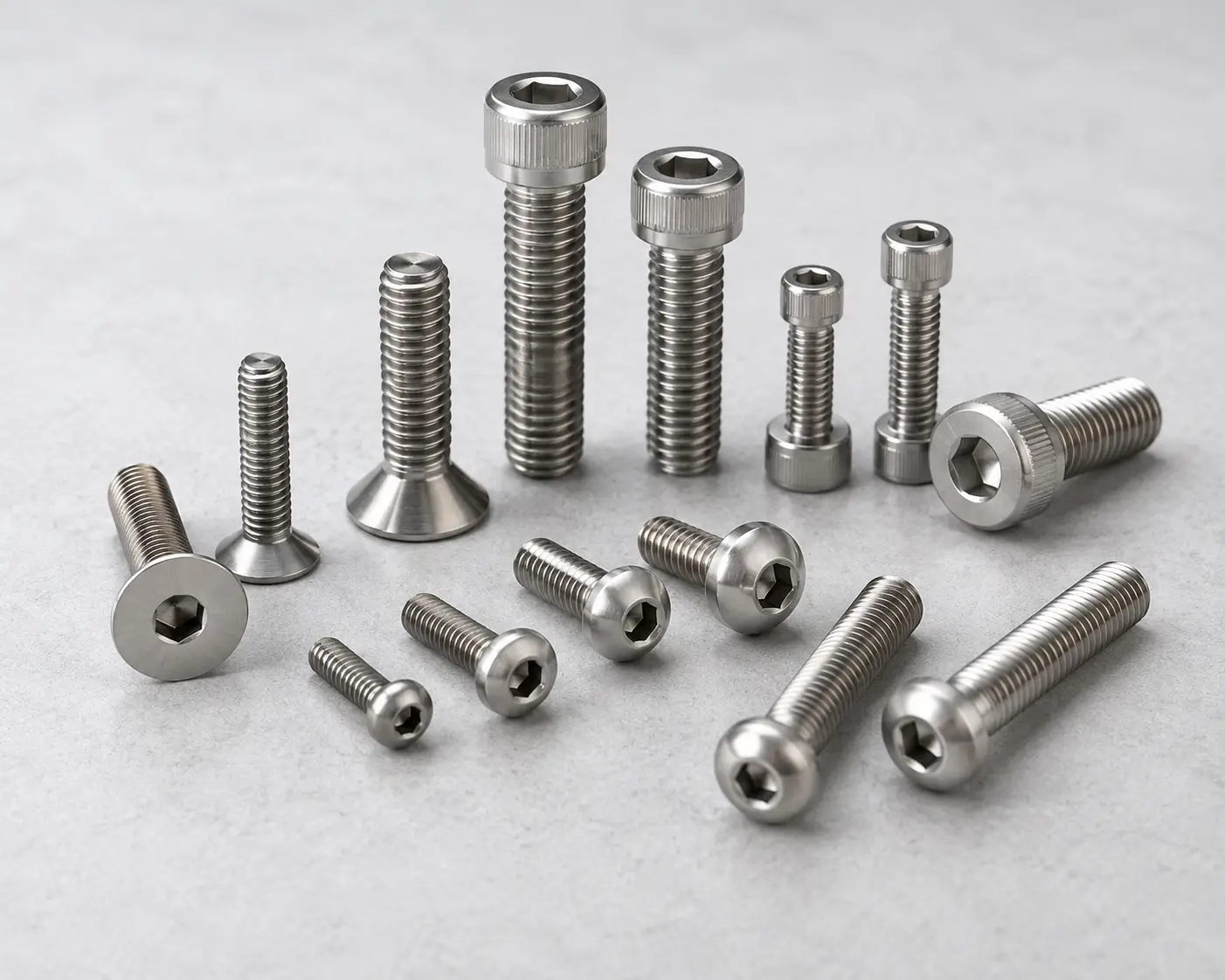
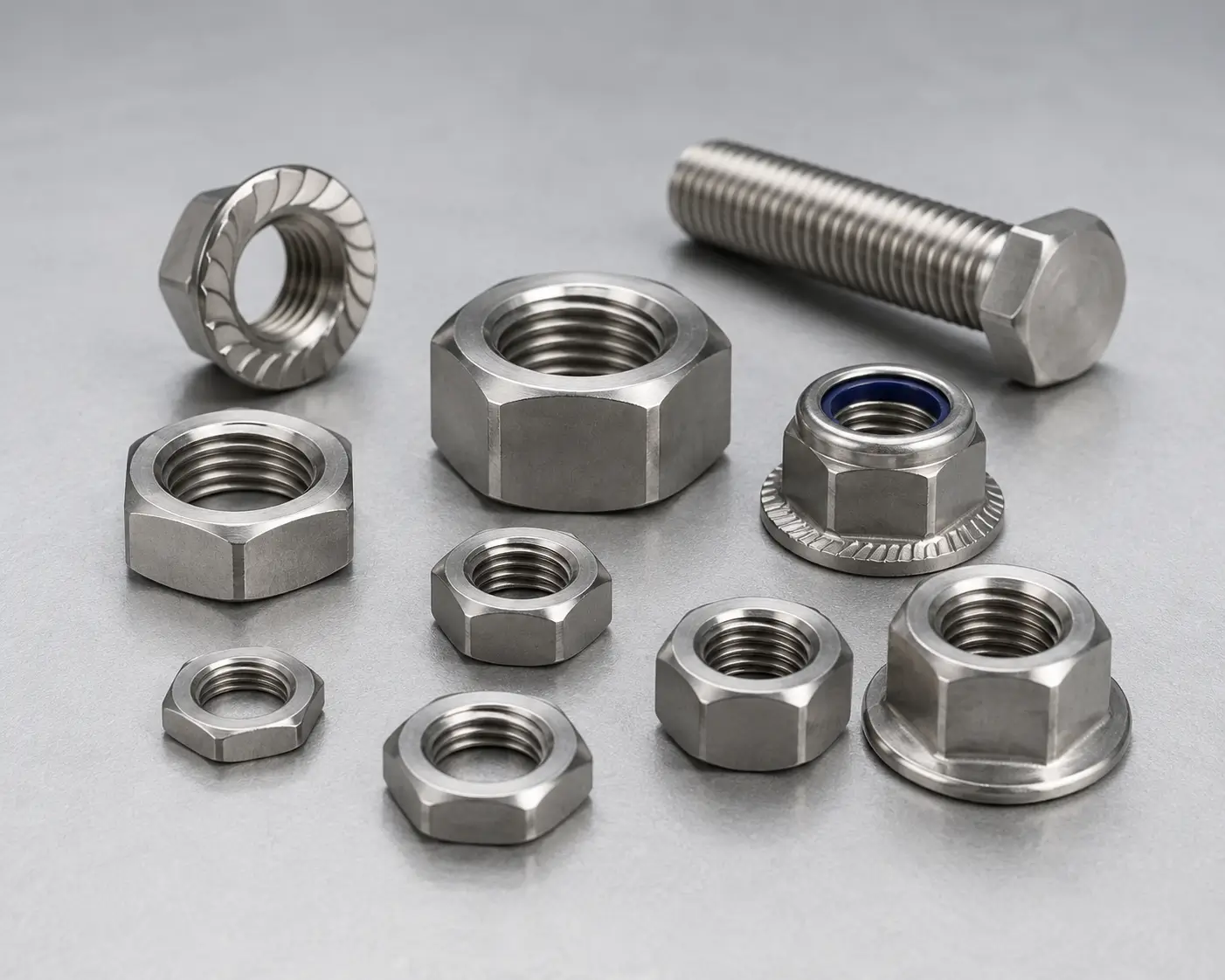
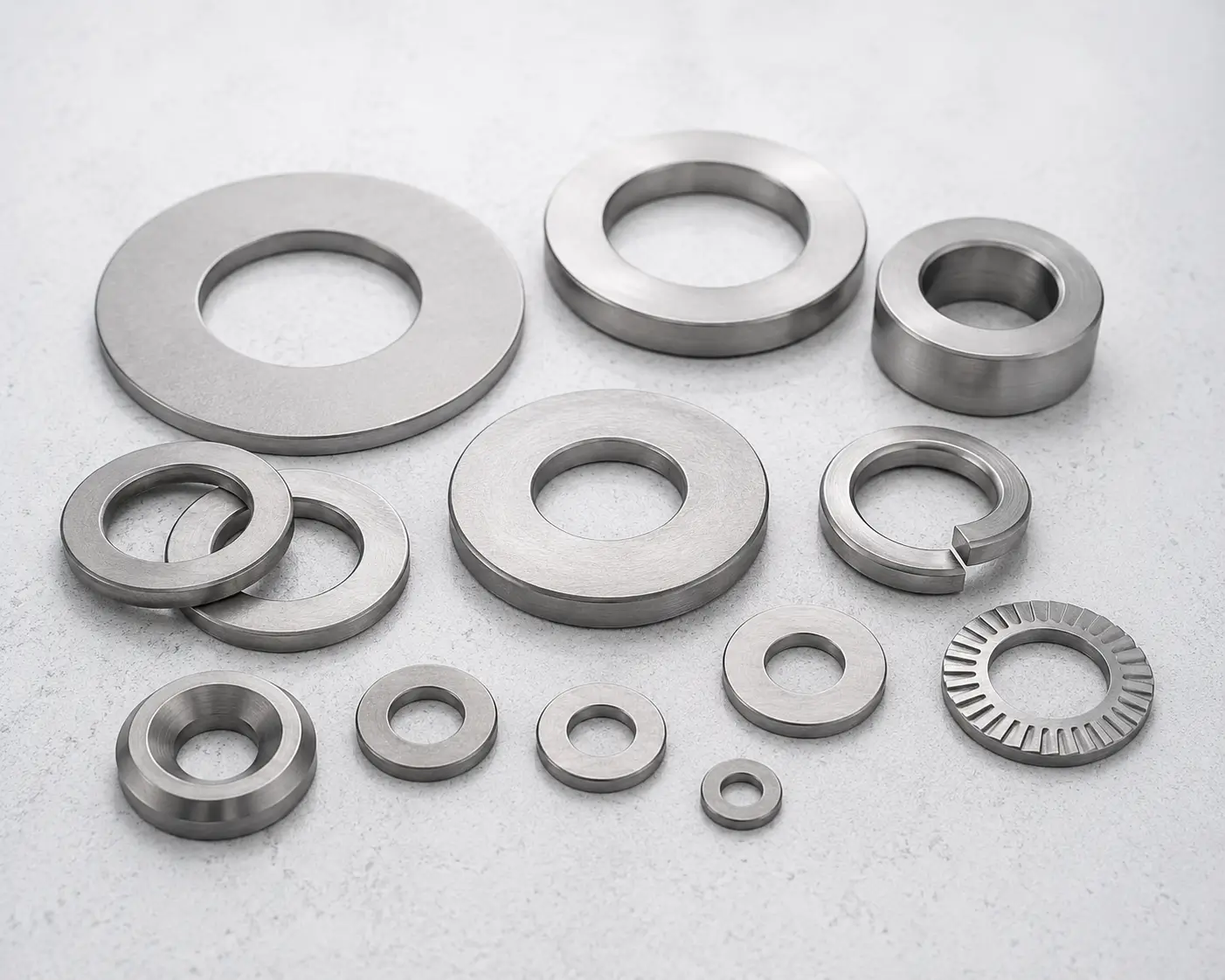
  • Bolts / Screws / Nuts / Studs / Washers
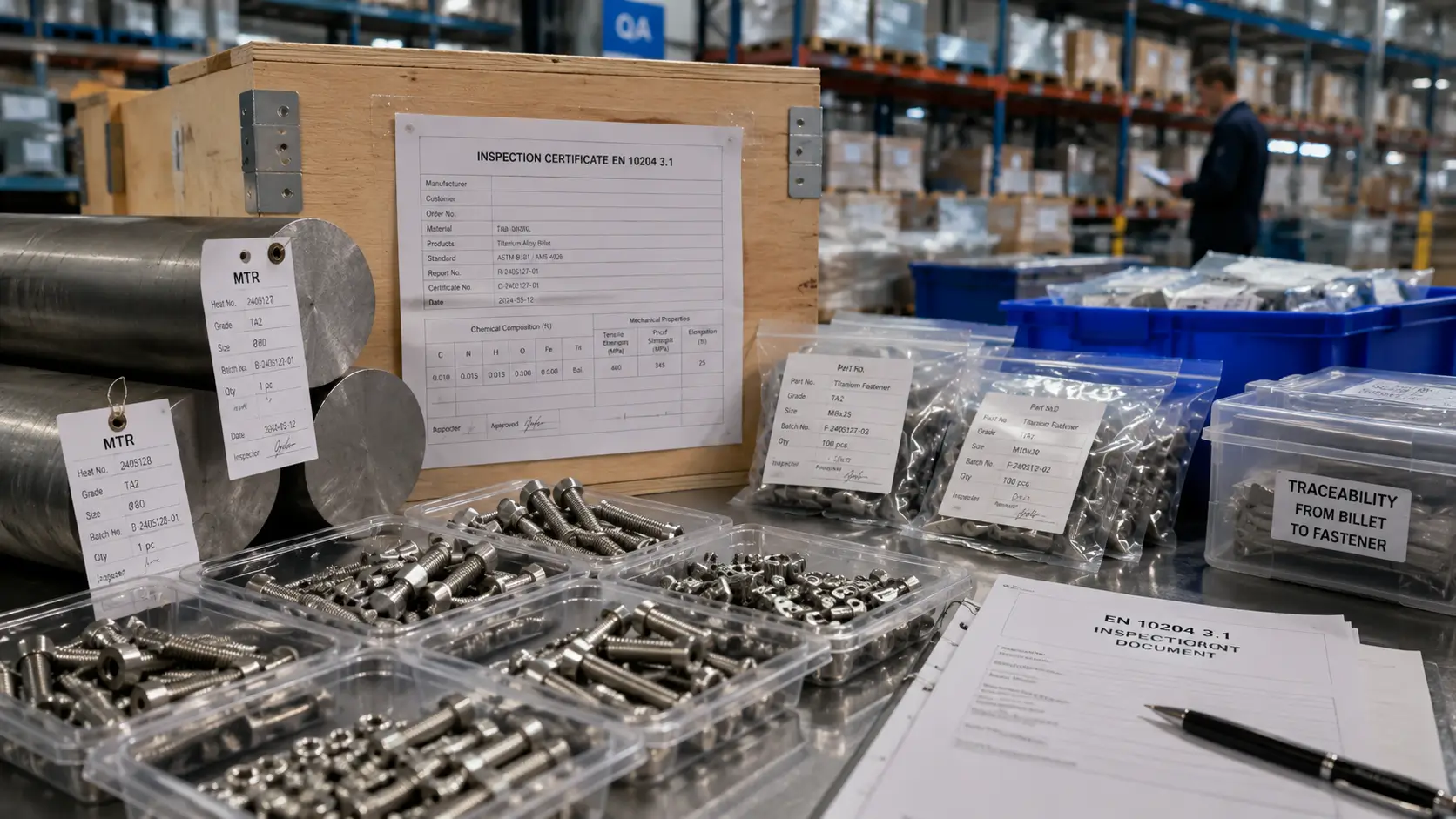
  • EN 10204 3.1 MTC Traceability

Your OEM Partner for Critical Fastening Solutions

Small components. Critical consequences. Titanium fasteners define the long-term reliability of your whole assembly.

As a direct titanium fastener manufacturer—not a generic hardware reseller—Hele Titanium engineers fastening systems for applications where failure is not an option. We supply both standard DIN/ISO hardware and bespoke CNC-machined components.

  • Grade 2: Absolute corrosion immunity
  • Grade 5: Lightweight structural strength
  • Grade 7: Severe chemical environments
  • Grade 23: Medical & high-purity precision

By combining precision machining with advanced thread rolling for superior fatigue life and integrating robust anti-galling engineering, we ensure consistent clamp load and absolute assembly safety in the most demanding environments.

Structural Load Reliability
Rolled-Thread Fatigue Strength
Anti-Galling Engineering
OEM Custom Machining
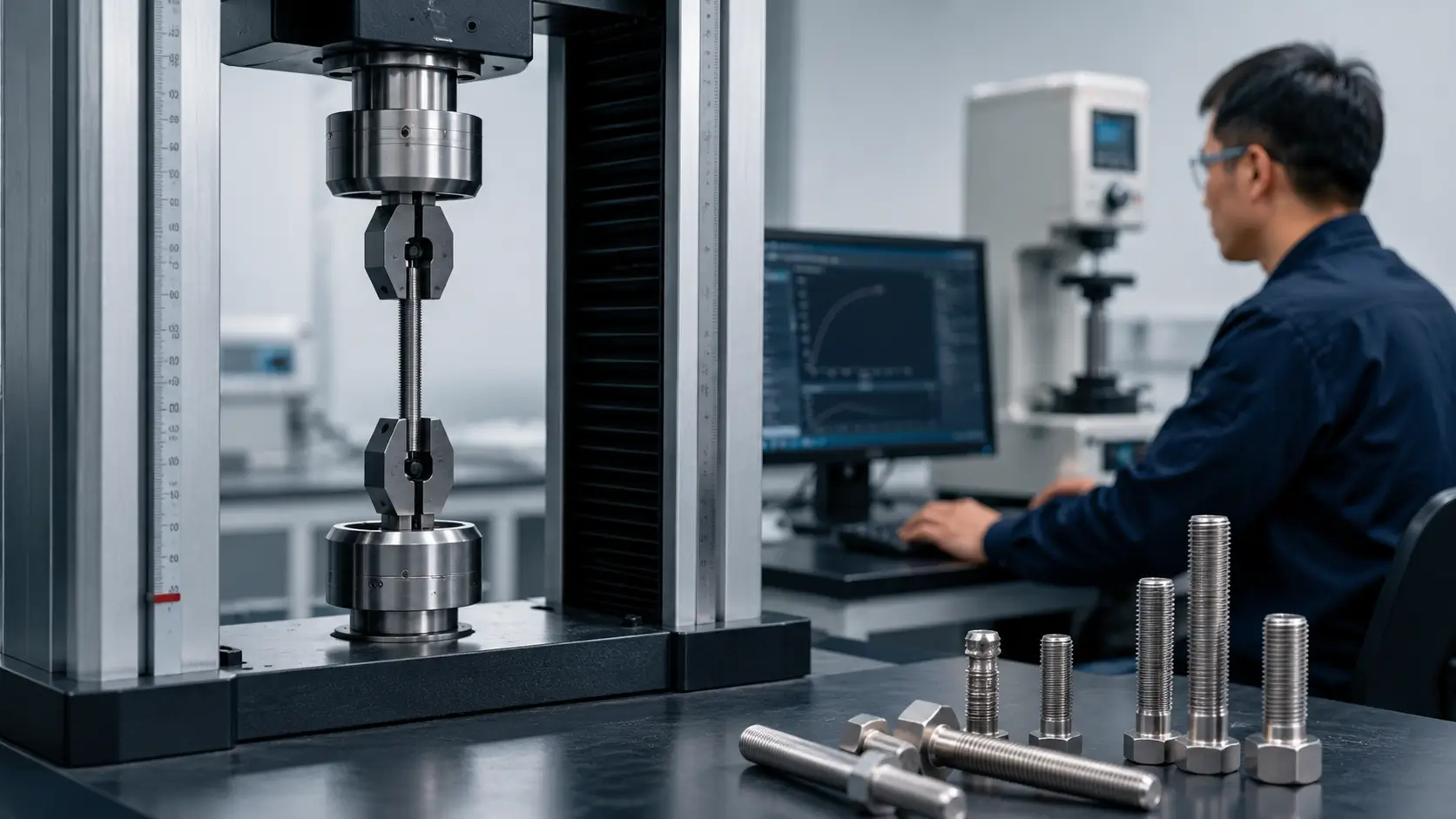
Engineering Inspection of Titanium Fasteners

Precision Engineering

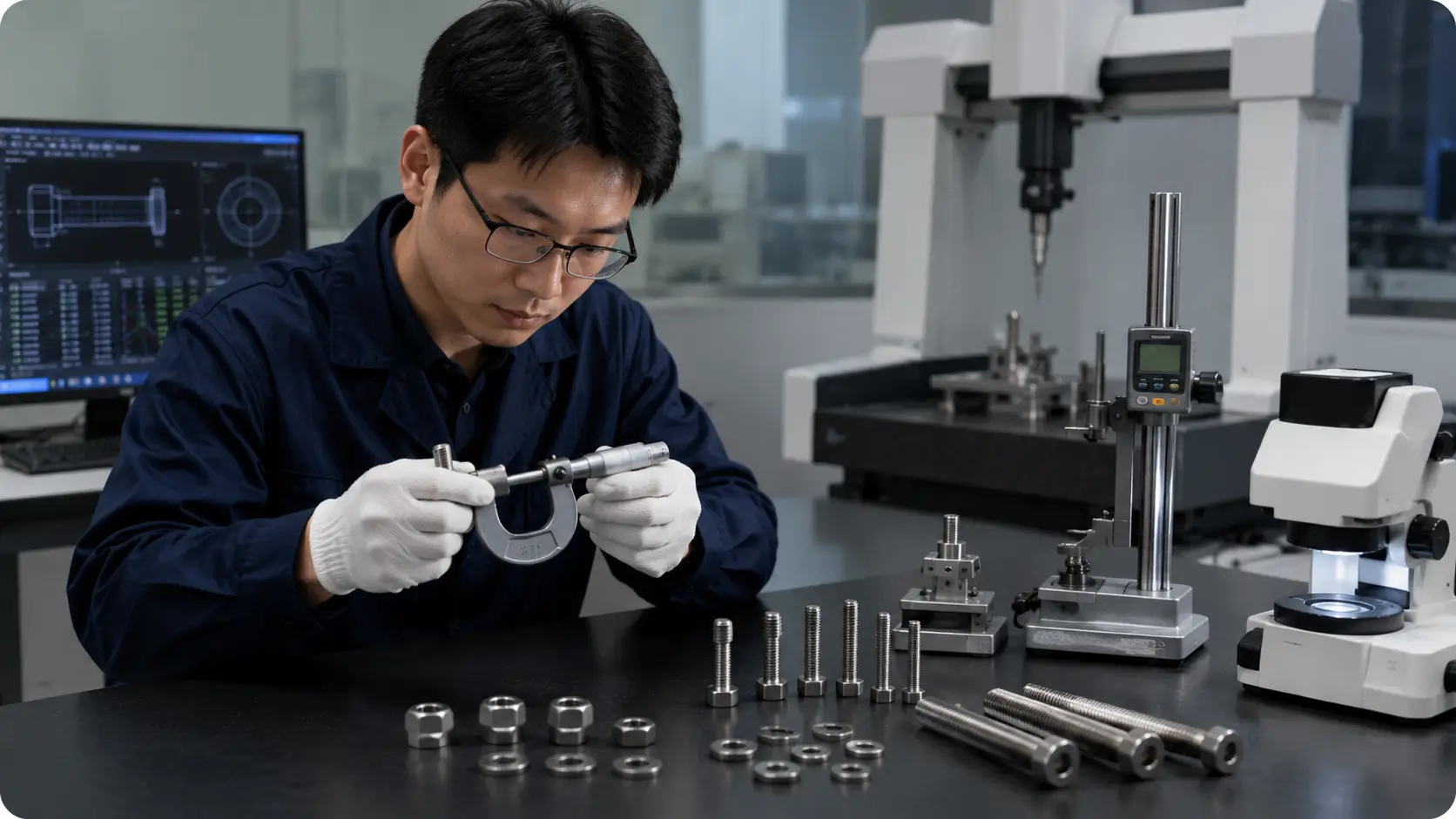
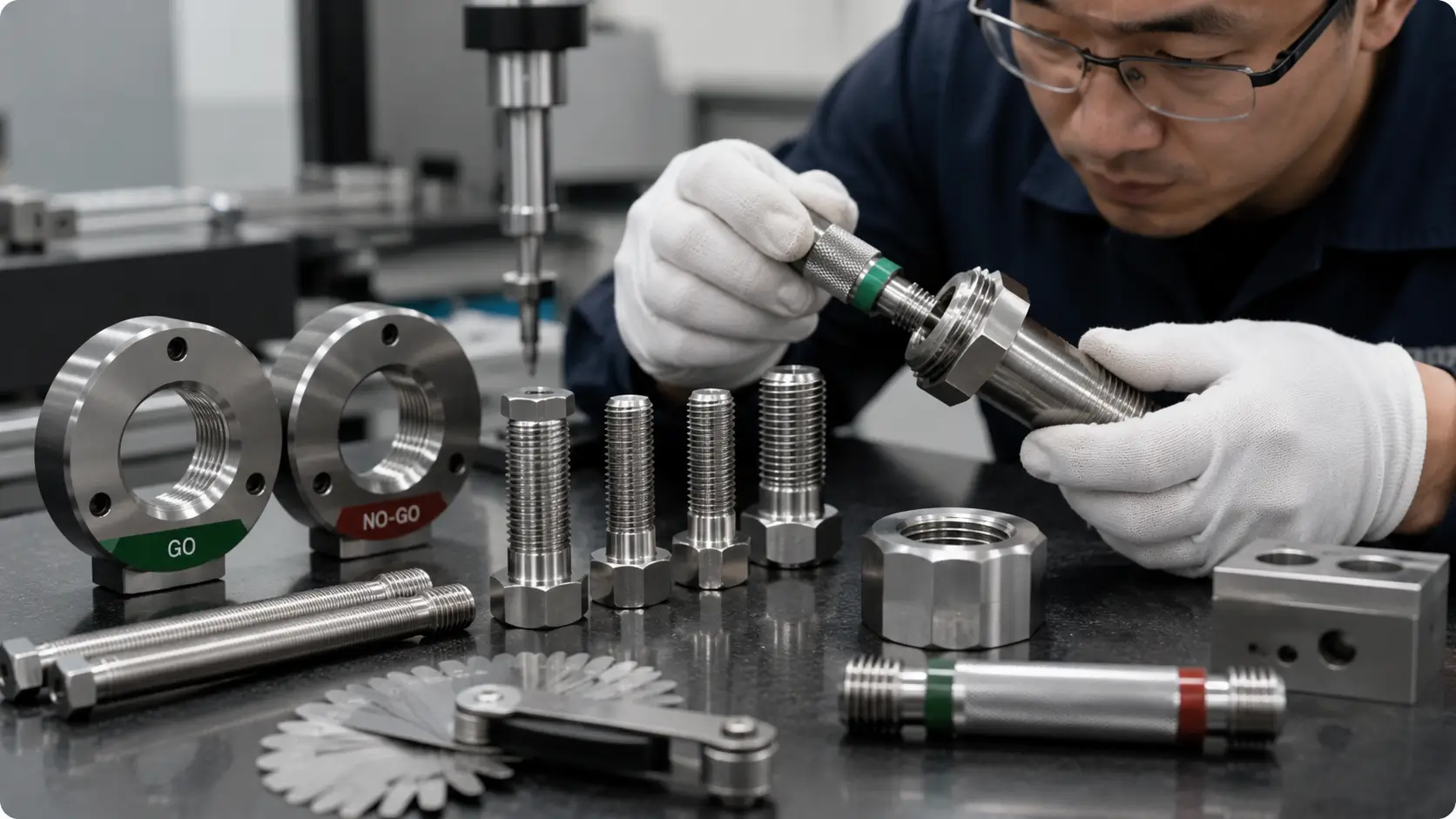
Dimensional metrology and thread gauge validation in our facility.

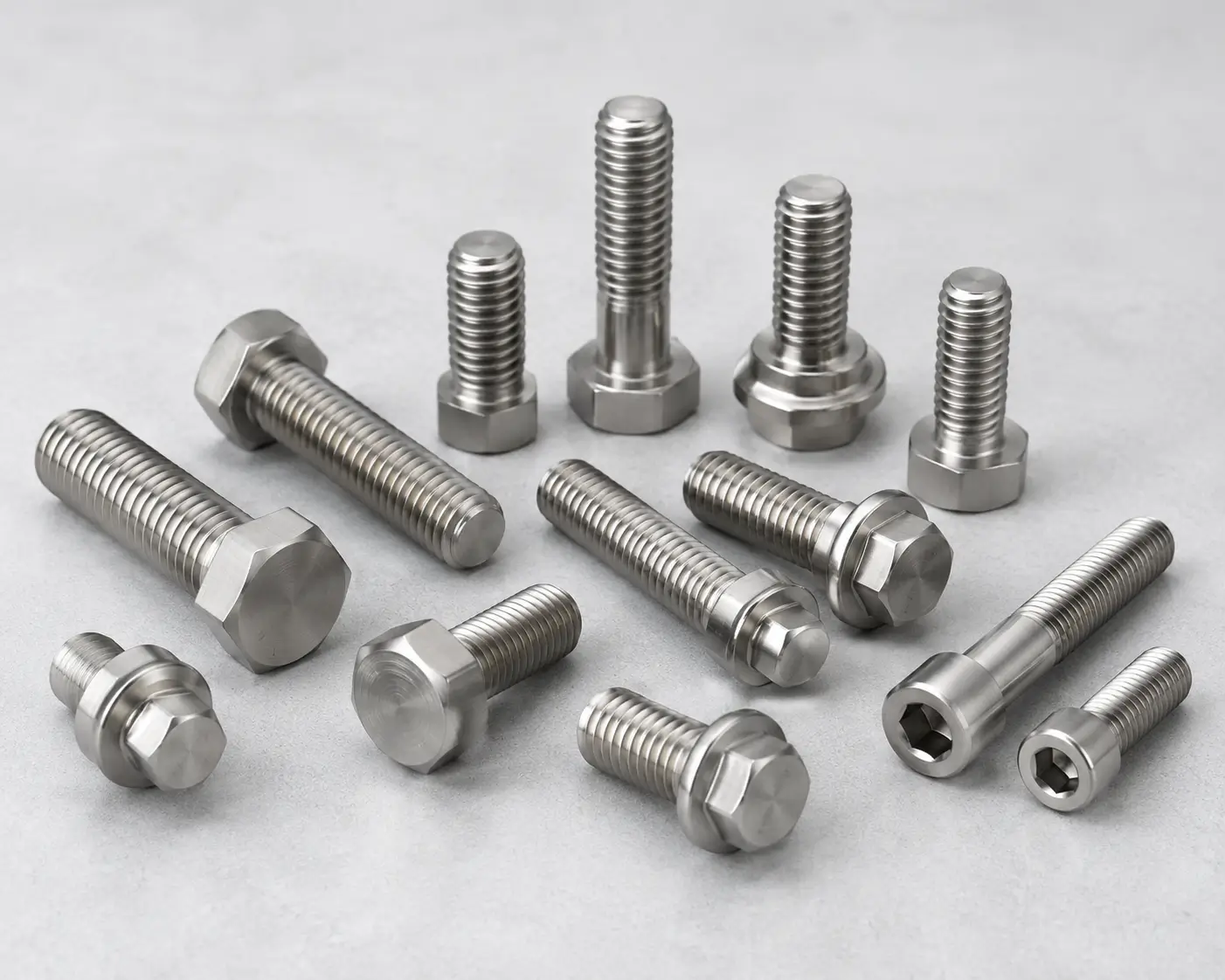
Titanium Fastener Series: Precision & Performance

From standard DIN/ISO metric bolts to bespoke CNC-machined studs, our titanium fastening systems are engineered for maximum tensile strength, fatigue resistance, anti-galling control, and long-term corrosion immunity.

Titanium Hex Head Bolts

Titanium Hex Head Bolts

DIN 933 / ISO 4014 / ANSI B18.2.1 Gr2 / Gr5
Best For Structural joints and high clamp-load assemblies
Key Advantage Maximum wrenching torque with corrosion-proof lightweight performance
Socket Head Cap Screws

Socket Head Cap Screws

DIN 912 / ISO 4762 Gr2 / Gr5
Best For Precision machinery, robotics, and compact assemblies
Key Advantage Strong torque transfer in limited radial clearance
Titanium Flange Bolts

Titanium Flange Bolts

DIN 6921 / JIS B1189 Gr5
Best For High-vibration automotive and marine assemblies
Key Advantage Integrated washer face improves load distribution and vibration resistance
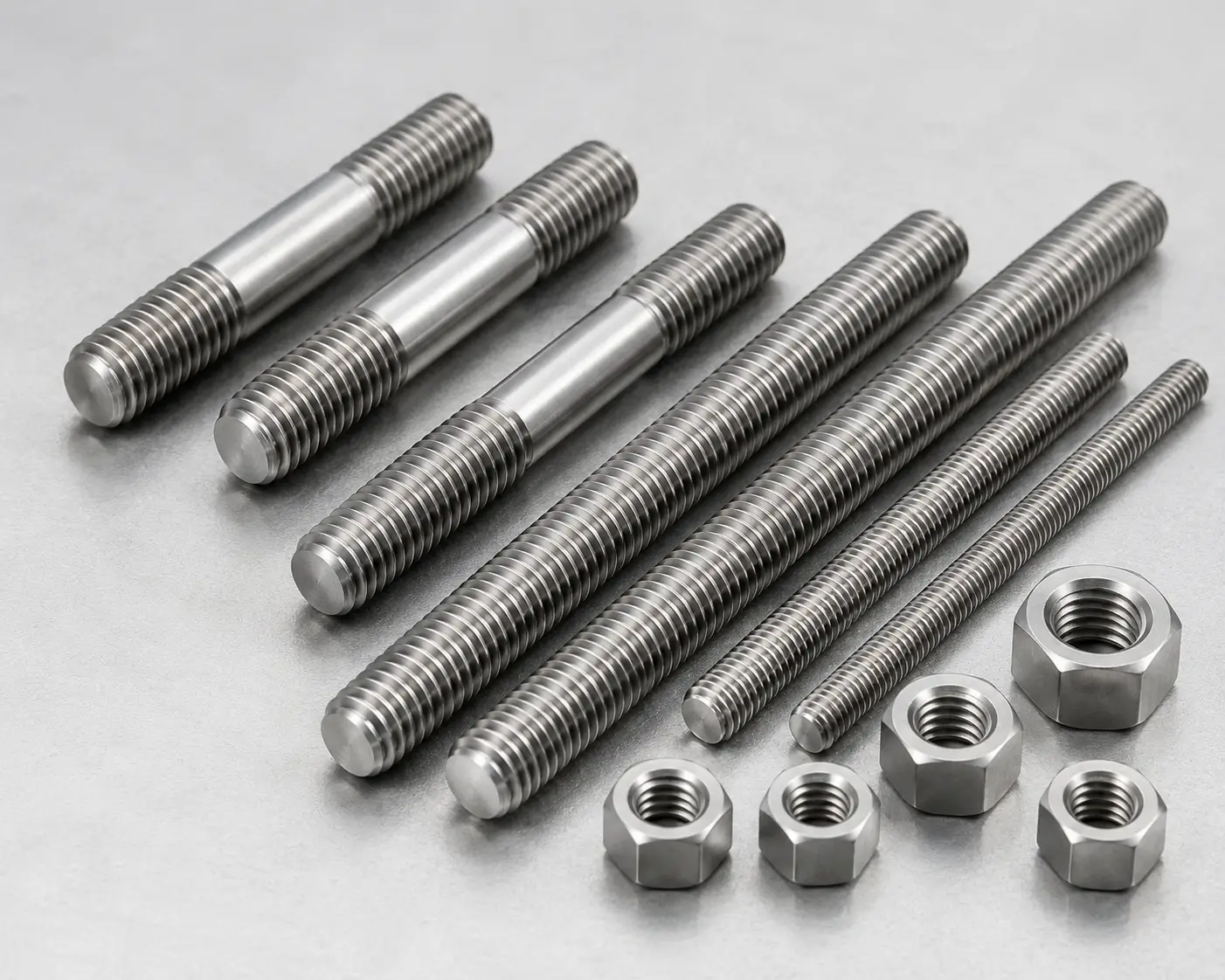
Titanium Threaded Studs

Titanium Threaded Studs

DIN 976 / ASTM B348 Gr2 / Gr7
Best For Petrochemical flanges and permanent installations
Key Advantage High-tension corrosion-resistant fastening for severe service
Titanium Countersunk Bolts

Titanium Countersunk Bolts

ISO 10642 Gr5
Best For Flush-seating panels and aerodynamic assemblies
Key Advantage Low-profile 90° head geometry for smooth surface integration
Titanium Button Head Screws

Titanium Button Head Screws

ISO 7380 Gr2 / Gr5
Best For Electronics, bicycle hardware, and compact enclosures
Key Advantage Rounded low-profile head reduces snag risk and improves appearance
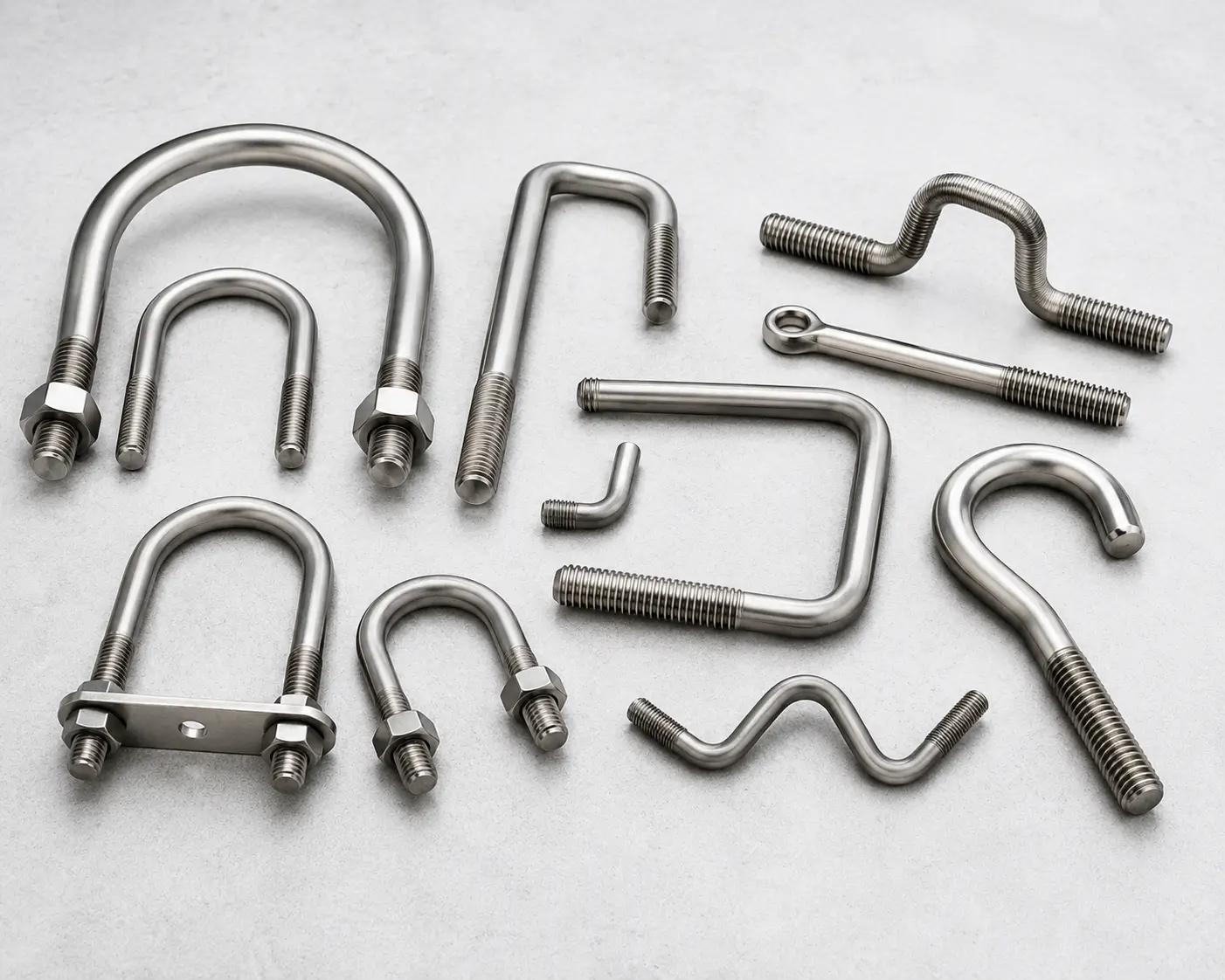
Titanium U-Bolts

Titanium U-Bolts

Custom engineered Gr2 / Gr5
Best For Marine pipe routing and offshore supports
Key Advantage Seawater-immune pipe support with non-magnetic performance
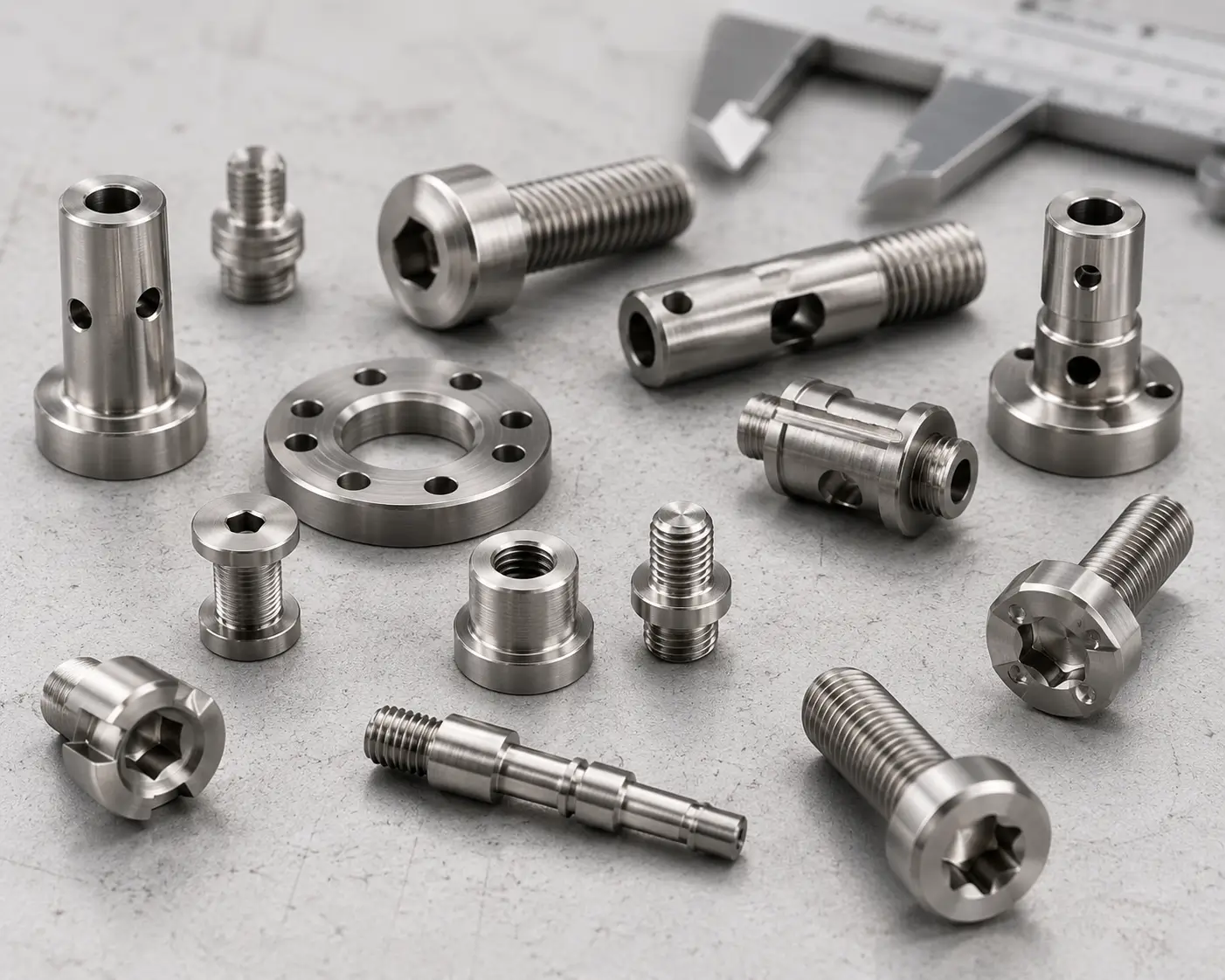
Custom CNC Fasteners

Custom CNC Fasteners

ASTM / AMS / OEM drawings Gr2 / Gr5 / Gr7 / Gr23
Best For Subsea, medical, aerospace, and proprietary assemblies
Key Advantage Blueprint-based machining with custom heads, shoulders, shanks, and thread profiles

Choose Titanium Fasteners by Load, Geometry & Environment

Quickly identify the most suitable fastener solution based on structural load, head style, clearance condition, corrosion demand, and custom machining requirement.

Structural Load

Hex Bolts / Studs

Best for high clamp load, flange tension, and structural joints requiring strong mechanical retention.

Compact Torque

Socket Head Screws

Best for precision machinery, robotics, and narrow-clearance assemblies needing strong torque in limited space.

Flush or Low Profile

Countersunk / Button

Best for aerodynamic surfaces, electronic housings, and assemblies where profile height matters.

Corrosive Routing

U-Bolts / Marine

Best for seawater-exposed supports, pipe routing, and non-magnetic fastening in harsh environments.

Custom OEM Geometry

CNC / AMS / Blueprint

Best for proprietary head forms, special shanks, medical profiles, and exact drawing-based systems.

Need help selecting the right titanium grade, thread form, coating, or anti-galling strategy?

Engineered to Your Exact Mechanical Specifications

Custom Titanium Fastener Fabrication

Standard off-the-shelf hardware cannot always satisfy strict mass-reduction targets, clearance requirements, torque conditions, or shear-load demands in proprietary assemblies. We work directly with OEMs and mechanical engineers to produce bespoke titanium fasteners from prototype runs to high-volume production.

Specify Advanced Alloys

  • Gr1 to Gr4 for corrosion immunity
  • Gr5 for high tensile strength
  • Gr7 for reducing acids
  • Gr23 (ELI) for medical-grade biocompatibility

Precision Machining & Thread Rolling

  • multi-axis CNC turning and milling
  • rolled threads for better fatigue strength
  • metric, UNC, and UNF support

Surface Engineering & Anti-Galling

  • anodizing for identification
  • passivation and special coatings
  • smoother assembly and improved torque control

Absolute Quality & Traceability

  • prototype to OEM mass production
  • rigorous dimensional metrology
  • EN 10204 3.1 MTC-backed batches

Lightweight Strength. Corrosion Immunity. OEM-Ready Hardware.

Custom Titanium Fastener Machining

Stringent Quality Control: Engineered for Zero-Defect Fastening

In critical fastening applications, small deviations in thread pitch, head geometry, surface finish, or alloy identity can lead to thread stripping, galling, clamp-load loss, or structural failure. Our QA workflow is designed to catch these risks before shipment.

1

Material Verification

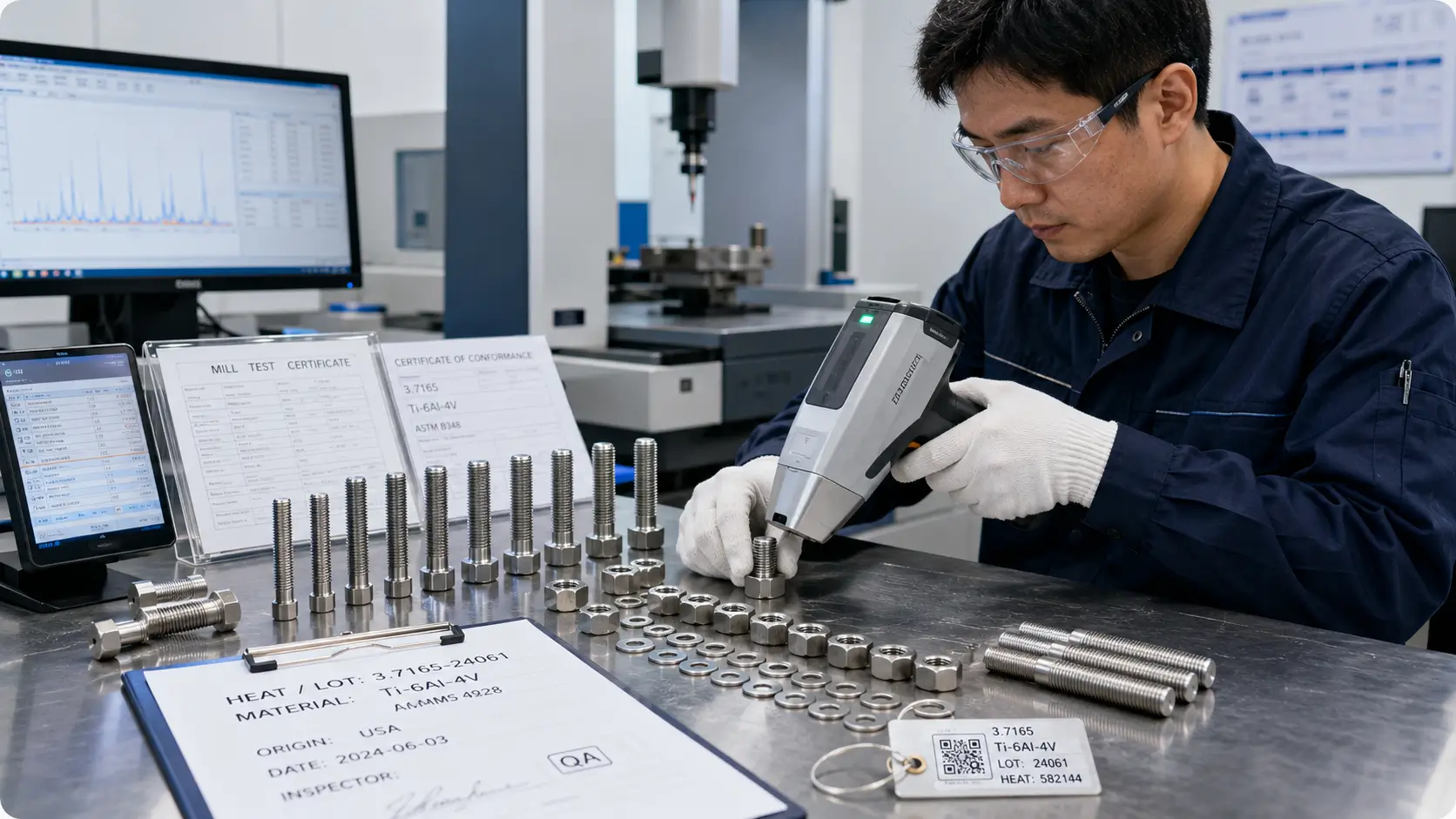
  • PMI and heat-number traceability
  • Confirms Gr2 / Gr5 / Gr7 / Gr23 identity
  • Prevents wrong-grade installation
2

Dimensional Metrology

  • Head geometry, shank diameter, length, concentricity
  • CMM, micrometers, optical inspection
  • Ensures assembly fit and seating reliability
3

Thread Validation

  • Pitch accuracy, flank angle, root radius
  • GO / NO-GO ring and plug gauges
  • Confirms ISO 965 / ASME B1.1 / 6g / 6H compliance
4

Mechanical Testing

  • Tensile strength, yield strength, hardness
  • Especially critical for Grade 5 structural fasteners
  • Verifies load-bearing performance
5

Surface & Defect Analysis

  • Burr removal, roughness, coating quality
  • Microscopic inspection where required
  • Reduces galling risk and surface failure

Traceable QA Documentation for Critical Fastening Systems

  • EN 10204 3.1 Material Test Certificate
  • Certificate of Conformity
  • Dimensional and thread inspection reports
  • Mechanical test records where required
  • SGS / TUV / BV third-party verification upon request

Industry Solutions: Fastening Systems for Demanding Environments

Titanium fasteners are not chosen only for corrosion resistance. They are specified where mass reduction, clamp-force reliability, galvanic compatibility, and long-term fatigue performance directly influence system safety and lifecycle cost.

Aerospace Titanium Fasteners

Aerospace & Defense

Fastener Focus: Grade 5 Structural Bolts & Countersunk Screws

Challenge:

Airframes and mission-critical structures require high strength with the lowest possible mass.

Solution:

Grade 5 titanium fasteners deliver high tensile performance with major weight savings versus steel hardware.

Service Condition:

Airframes, panels, structural joints, defense assemblies

Explore Aerospace Fastener Solutions
Marine Titanium Fasteners

Marine & Offshore

Fastener Focus: Grade 2 / Grade 7 Bolts, Studs & U-Bolts

Challenge:

Saltwater and mixed-metal assemblies rapidly degrade conventional fastening systems.

Solution:

Titanium fasteners prevent chloride-driven corrosion and minimize galvanic failure in offshore and marine service.

Service Condition:

Marine piping, deck systems, offshore supports, seawater equipment

Explore Marine Fastener Solutions
Chemical Titanium Fasteners

Chemical & Petrochemical Processing

Fastener Focus: Grade 2 / Grade 7 Studs and Flange Hardware

Challenge:

Aggressive media and long maintenance intervals increase the risk of seized, corroded, or failed fastening systems.

Solution:

Titanium flange studs and hardware provide corrosion resistance and long-term service reliability in severe process environments.

Service Condition:

Reactor flanges, acid systems, chemical equipment maintenance

Explore Chemical Fastener Solutions
Precision Titanium Fasteners

Medical, Robotics & Precision Equipment

Fastener Focus: Grade 23 / Grade 5 Custom Screws

Challenge:

Small-scale precision assemblies require non-magnetic, lightweight, and highly consistent fastening performance.

Solution:

Custom-machined titanium screws provide precision geometry, biocompatibility options, and clean mechanical integration.

Service Condition:

Medical tools, robotic linkages, imaging systems, compact devices

Explore Precision Fastener Solutions

Specify titanium fastening systems built for structural confidence, corrosion resistance, and long-term assembly reliability.

The Hele Titanium OEM Advantage

Global aerospace, marine, and petrochemical OEMs rely on Hele Titanium for critical fastening systems that must arrive on time, match exact standards, and perform reliably in high-value assemblies.

100% Titanium Expertise

Unlike general hardware suppliers, we specialize in titanium and help you choose the correct grade to prevent galvanic corrosion, reduce galling risk, and maximize structural reliability.

In-House CNC & Thread Rolling

Total process control over machining, forging, and rolled-thread production ensures strict DIN, ISO, ASTM, and ANSI compliance.

Traceable & Secure Supply

Every shipment is backed by ISO-oriented quality control and EN 10204 3.1 material traceability from billet to finished fastener.

Agile Engineering Support

We provide rapid drawing verification, DFM feedback, and custom surface-engineering advice to solve complex fastening challenges.

Prototype to OEM Scale

From 50-piece validation runs to high-volume assembly-line supply, we support both development projects and serial production.

Anti-Galling Awareness

We understand titanium’s thread-friction challenges and support appropriate design, finish, and assembly guidance for better torque-to-tension control.

Secure your supply chain with precision titanium hardware.

Technical FAQs: Precision Titanium Fasteners

Find quick answers about grade selection, thread galling, strength-to-weight ratio, standards compliance, temperature limits, and total cost of ownership.

Which titanium grades should I specify for my fastening application?
Use Grade 2 for general industrial applications where absolute corrosion resistance (especially in seawater or chlorides) is the primary goal and structural loads are moderate. Use Grade 5 (Ti-6Al-4V) when high tensile strength and fatigue resistance are critical, such as in aerospace, motorsport, or high-pressure structural joints. Grade 7 is ideal for reducing-acid environments, and Grade 23 is used for medical implants.
How does the strength-to-weight ratio of Grade 5 titanium compare to alloy steel?
Grade 5 titanium offers a tensile strength comparable to many high-strength alloy steels (approx. 895-1000 MPa UTS) but is 45% lighter. This exceptional strength-to-weight ratio makes it the preferred choice for applications where reducing mass is as critical as maintaining structural integrity.
Are titanium fasteners suitable for high-temperature and magnetic-sensitive environments?
Yes. Titanium maintains excellent mechanical properties up to approximately 400°C (750°F) depending on the grade. Furthermore, titanium is completely non-magnetic, making it ideal for MRI equipment, sensitive electronics, and precision robotics where magnetic interference is unacceptable.
How do titanium fasteners improve long-term total cost of ownership?
While the initial unit cost of titanium is higher than steel or basic stainless, its absolute immunity to many corrosive environments eliminates the need for frequent replacement, reduces equipment downtime, and prevents catastrophic failure of high-value assets. Over a 10-to-20-year lifecycle in marine or chemical service, titanium is often the most economical choice.
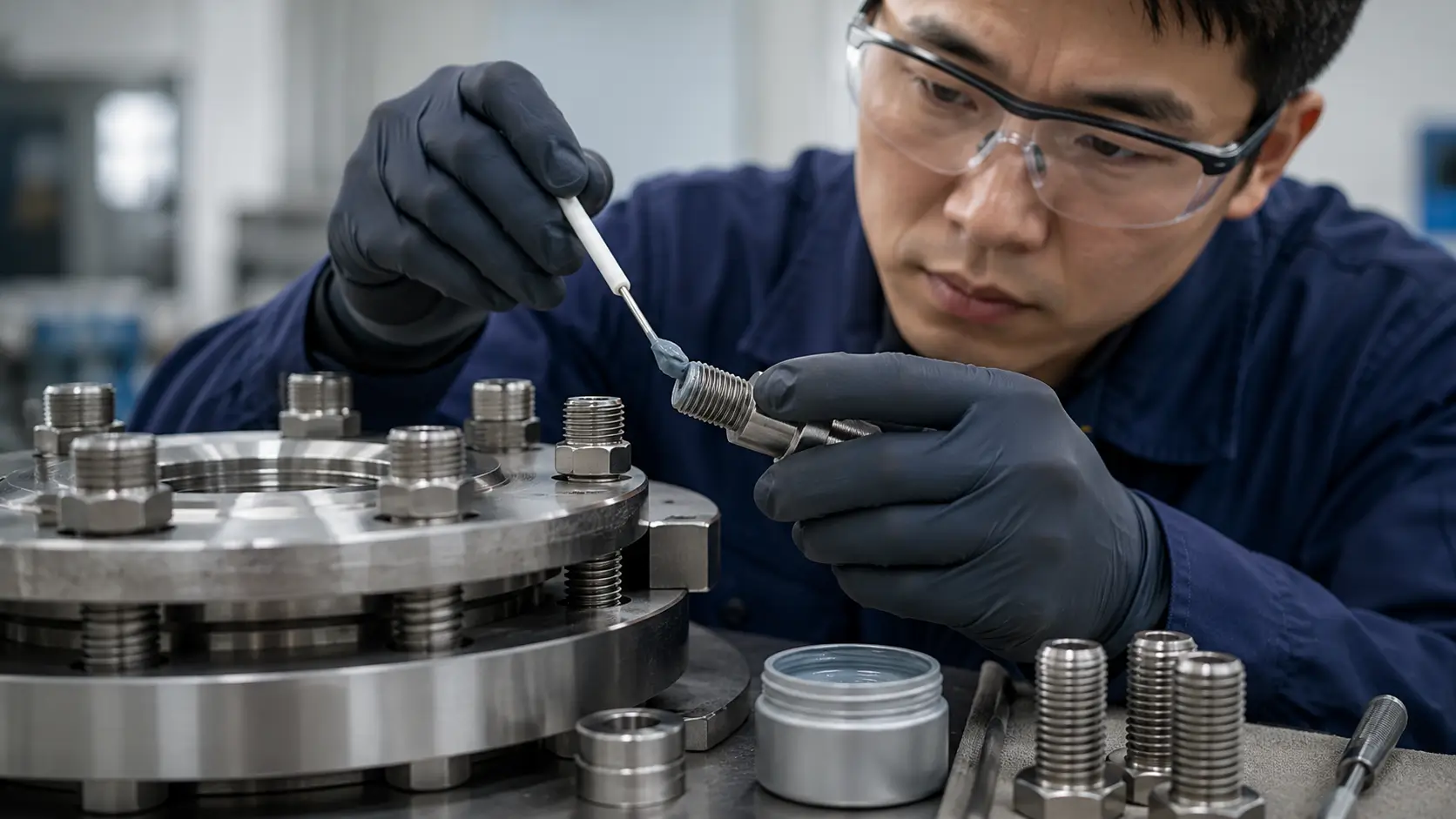
How do you prevent thread galling in titanium assemblies?
Titanium threads are prone to galling (cold welding) due to high friction. We mitigate this by ensuring high-quality surface finishes (often via thread rolling instead of cutting), controlling dimensional tolerances strictly, and recommending the use of appropriate anti-seize lubricants (like molybdenum disulfide or silver-based pastes) or anodizing treatments during assembly.
What standards do your titanium fasteners comply with?
We manufacture to all major global dimensional standards, including DIN (e.g., 933, 912, 976), ISO (e.g., 4014, 4762), ANSI/ASME (B18 series), and JIS. Material chemistry and mechanical properties conform to ASTM (e.g., B348, F467, F468) and AMS specifications for aerospace applications.
Why is thread rolling better than thread cutting for critical fasteners?
Thread rolling cold-forms the titanium, compressing the material grain structure along the thread profile rather than cutting through it. This significantly increases the thread's shear strength, improves fatigue resistance, and results in a smoother surface finish that reduces friction and the risk of galling during installation.
Can you manufacture custom titanium fasteners to our drawings?
Absolutely. We have extensive CNC turning and milling capabilities to produce bespoke fasteners with proprietary head geometries, special shank lengths, unique thread pitches, or specific captive features based entirely on your OEM blueprints.

Inside Our Manufacturing & Quality System

See how we produce, inspect, and document titanium products as a direct manufacturing partner.

See how titanium fasteners move from billet selection through forming, machining, thread rolling, and final packing.

Titanium Billet Preparation

Titanium Billet Preparation

CNC Turning / Head Forming

CNC Turning / Head Forming

Precision Thread Rolling

Precision Thread Rolling

Final Release & Packing

Final Release & Packing

A look inside the production areas where titanium fasteners are machined, rolled, inspected, and prepared for shipment.

CNC Fastener Machining Area

CNC Fastener Machining Area

Thread Rolling Station

Thread Rolling Station

Inspection & Metrology Zone

Inspection & Metrology Zone

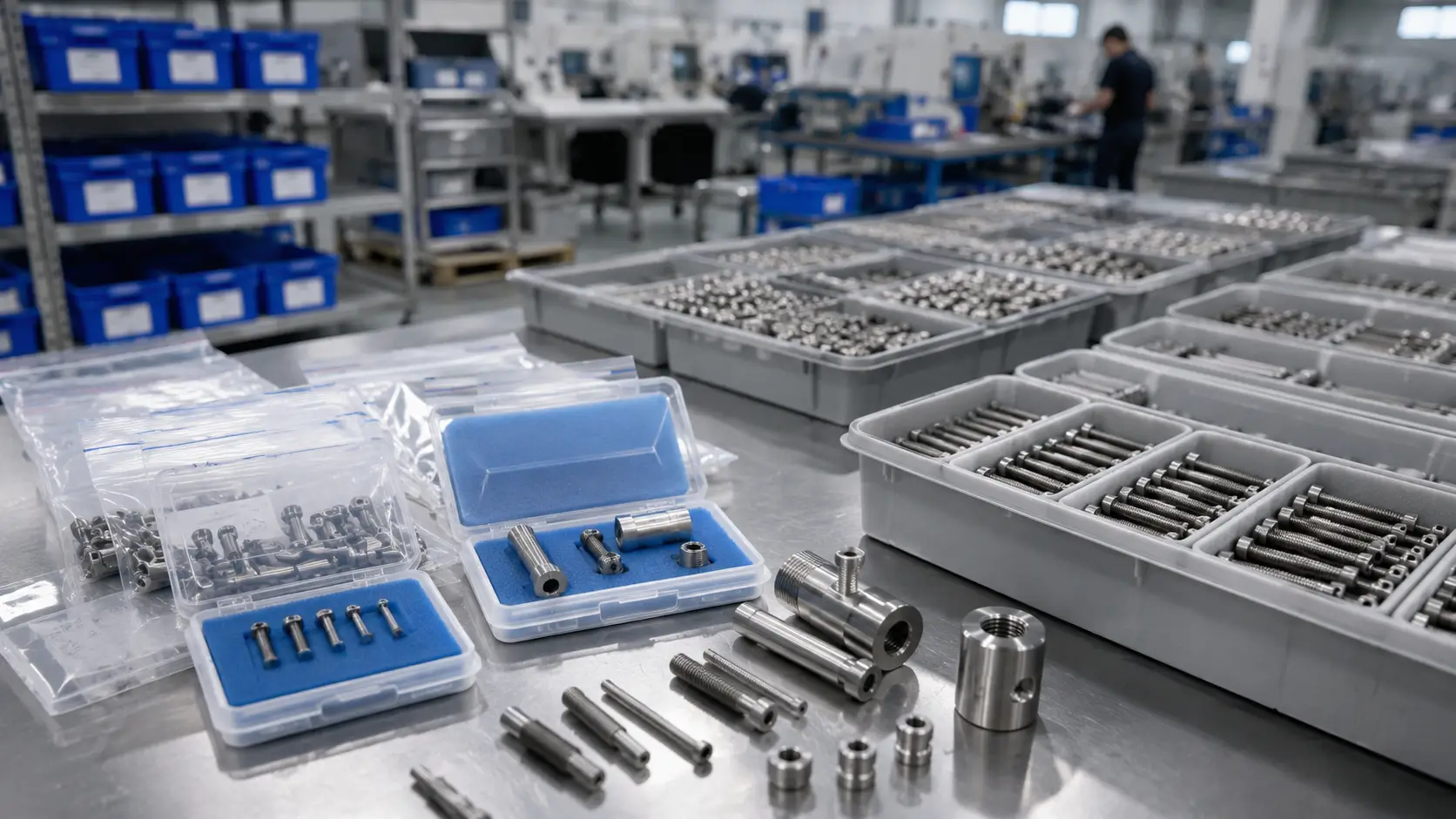
Packing & Dispatch Area

Packing & Dispatch Area

Our inspection system verifies grade identity, dimensions, thread profile, mechanical properties, and surface quality before shipment.

PMI Material Verification

PMI Material Verification

Dimensional Inspection

Dimensional Inspection

Thread Gauge Validation

Thread Gauge Validation

Final Surface & Packing Check

Final Surface & Packing Check

Documentation and traceability are essential for aerospace, marine, medical, and industrial OEM fastening systems.

Material Test Certificate Example

Material Test Certificate Example

Thread / Dimensional Inspection Report

Thread / Dimensional Report

Mechanical Test Record

Mechanical Test Record

Export & Traceability Documentation

Export & Traceability Doc

Need production photos, inspection records, or documentation support? Contact our team for direct factory assistance.

Engineering & Procurement Guide: Titanium Fasteners

Read Time: 17 Minutes Author: Hele Titanium Engineering Team Last Updated: 2026

Specifying the correct titanium fastener directly affects the structural integrity, fatigue life, and environmental endurance of the entire assembly. This guide outlines the metallurgical comparisons, fastener geometries, thread standards, and sourcing considerations needed to optimize your fastening strategy.

Before You RFQ Titanium Fasteners, Confirm These 3 Things

  • Which fastener profile do you need: bolt, screw, stud, nut, washer, U-bolt, or custom geometry?
  • Which priority matters most: corrosion resistance, weight reduction, tensile strength, or medical-grade purity?
  • Which thread standard, tolerance class, surface finish, and anti-galling requirement must be specified?

1. Core Engineering Advantages of Titanium

Titanium is specified over conventional fastener materials due to a unique combination of physical properties. Its primary advantage is an exceptional strength-to-weight ratio.

  • Strength-to-Weight Ratio: Grade 5 titanium offers tensile strength comparable to alloy steel but is 45% lighter.
  • Corrosion Immunity: Naturally forms a stable, continuous oxide film providing absolute immunity in seawater, chlorides, and many industrial chemicals.
  • Non-Magnetic: Inherently non-magnetic, ideal for sensitive electronics and medical devices.
  • Fatigue Resistance: Exhibits excellent fatigue resistance under cyclic loading.

2. Comparative Material Analysis

Material Density Tensile Strength Corrosion Res. Magnetic Max Temp
Titanium Grade 5 4.43 g/cm³ ~895 MPa Excellent No 400°C
Alloy Steel 10.9 ~7.85 g/cm³ 1040 MPa Poor Yes ~400°C
316L Stainless 7.99 g/cm³ ~485 MPa Good Low 870°C
Aluminum 6061-T6 2.70 g/cm³ ~310 MPa Moderate No 150°C

3. Fastener Configurations & Geometry

Type Core Advantage Typical Applications
Hex Bolts Maximum wrenching torque and clamp load Structural joints, heavy machinery
Socket Head Cap Screws High torque in tight radial clearances Robotics, internal engine components
Flange Bolts Distributes load, eliminates washers High-vibration engine mounts
Countersunk Screws Flush seating, low profile Aerodynamic surfaces, enclosures
Threaded Studs High-tension logic for permanent fixtures Petrochemical flanges, pipe joints
U-Bolts Secure tubular routing in harsh media Marine piping, offshore platforms

4. Titanium Grade Selection Matrix

Selecting the correct grade is paramount to matching mechanical requirements with environmental conditions.

Grade Composition / Type Key Feature Best For
Grade 2 Commercially Pure (CP) Excellent ductility & absolute corrosion immunity Marine hardware, chemical processing
Grade 5 Ti-6Al-4V Alloy High strength-to-weight ratio Aerospace, automotive, structural
Grade 7 Ti-0.15Pd Alloy Superior resistance to reducing acids Harsh chemical & petrochemical environments
Grade 23 Ti-6Al-4V ELI High purity, biocompatible, high fracture toughness Medical implants, high-precision assemblies

5. Dimensional & Thread Metrology Standards

Precision fasteners must strictly adhere to recognized standards to ensure interchangeability and reliable seating.

Standard Category Common Specifications Application & Notes
Material & Performance ASTM F468 / F467 Standard specs for non-ferrous bolts, hex cap screws, and nuts.
Dimensional (Metric) ISO 4014, DIN 912 Defines head dimensions, shank lengths, and overall geometry.
Dimensional (Imperial) ANSI/ASME B18 series Standardized imperial fastener dimensions.
Thread Tolerance ISO 965 (6g/6H)
ASME B1.1 (2A/2B, 3A/3B)
Ensures accurate pitch, flank angles, and proper mating fit.

6. Manufacturing Processes & Scalability

The manufacturing method dictates both the structural performance and the unit cost of the fastener.

Process Description Pros & Cons
Thread Rolling Cold-working process to form threads without cutting material. Improves fatigue strength & grain flow, reduces galling. Best for critical uses.
Thread Cutting Material is removed via dies or lathes to form the thread profile. Lower setup cost for small batches, but interrupts natural grain flow.
CNC Machining Turning and milling from solid titanium bar stock. Ideal for complex, custom OEM geometries and rapid prototypes.
Forging (Hot/Cold) Forming fastener heads under high pressure in dies. Highly economical at volume, excellent structural integrity.

7. Surface Engineering & Anti-Galling Protocols

Titanium-on-titanium threads exhibit high friction and are highly susceptible to galling (cold welding) during assembly.

Critical Anti-Galling Warning

Never install titanium-on-titanium fasteners dry under high torque. Use suitable anti-seize compound or controlled lubrication to reduce galling risk and improve torque-to-tension reliability.

  • Surface Roughness Control: Essential for minimizing friction during initial thread engagement.
  • Anodizing: Hardens the surface oxide layer, reduces friction, and provides color-coded identification.
  • Lubrication: Mandatory use of MoS2, Teflon-based lubricants, or specialized anti-seize pastes during installation.

8. Procurement Considerations & Cost Drivers

When evaluating cost, engineers must consider the Total Cost of Ownership (TCO). The initial premium of titanium is rapidly offset by the elimination of maintenance, replacement, and failure costs in aggressive environments.

Primary Cost Drivers Checklist:

  • Material Grade: Grade 5 and specialty alloys (like Grade 7) command a premium over commercial Grade 2.
  • Manufacturing Method: Rolled threads require dedicated tooling; CNC turning is costlier per unit but avoids high setup costs for small batches.
  • Batch Scale: Forging and thread rolling become highly economical at high volumes.
  • Certification Requirements: Full traceability, EN 10204 3.1 certs, and medical/aerospace compliance add necessary overhead.

Ready to Transition from Specification to Production?

Hele Titanium provides DFM support, precision machining, rolled-thread capability, and full traceability to help OEMs balance fastener performance, budget, and long-term reliability.

Titanium Fastener Inquiry

Get Your Titanium Fastener Solution

Tell us your fastener type, titanium grade, thread standard, dimensions, surface requirement, application environment, and drawing if available. Our team will recommend the most suitable titanium fastening solution for your assembly.

  • Precision CNC, Forging & Thread Rolling
  • High Strength + Corrosion Resistance
  • Traceability, MTC & Inspection Support

Direct Contact

sales@heletitanium.com

Room 1206, Building 1, Huaxia Yue World

Request a Quote

We typically respond within 24 hours.