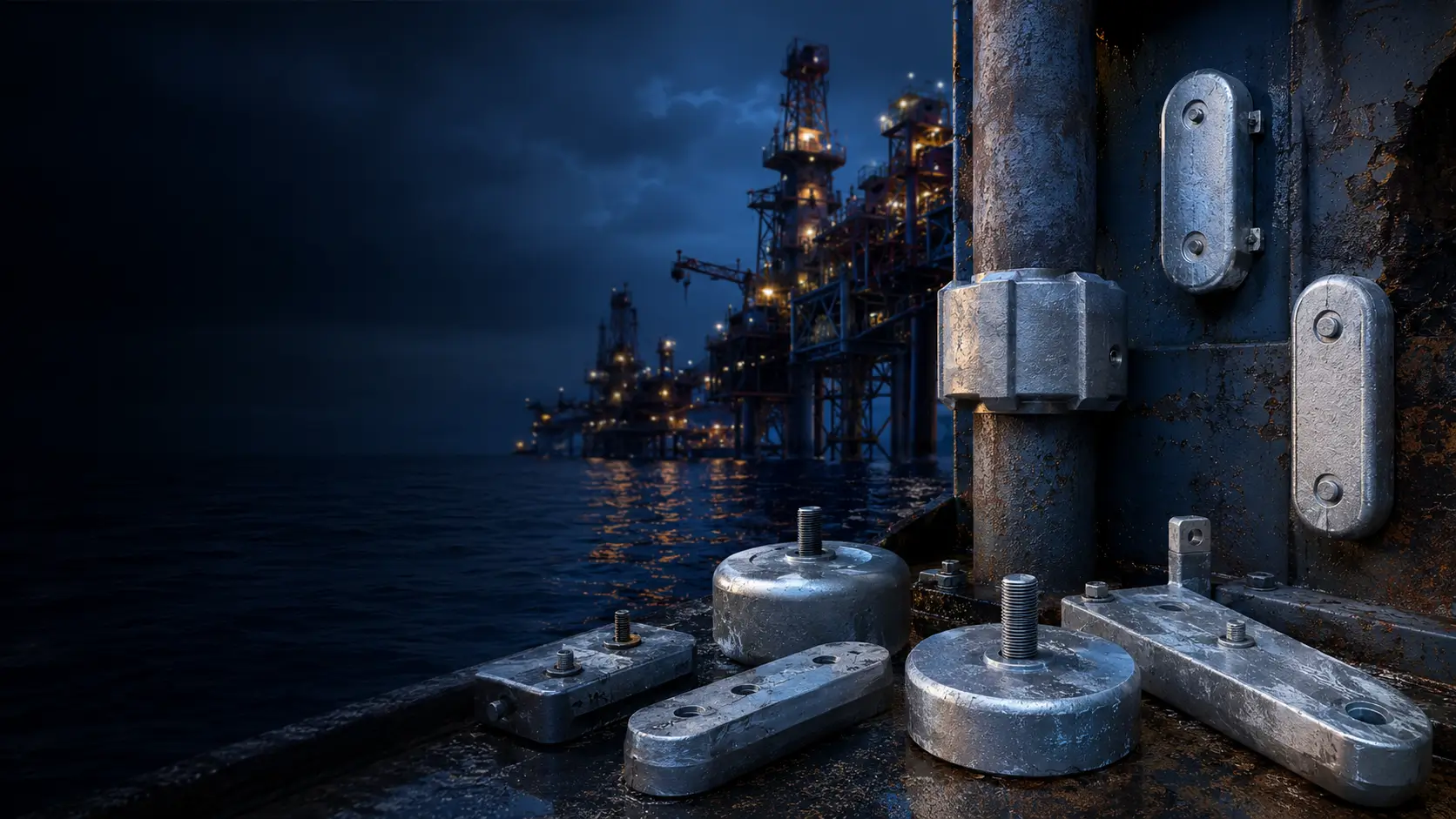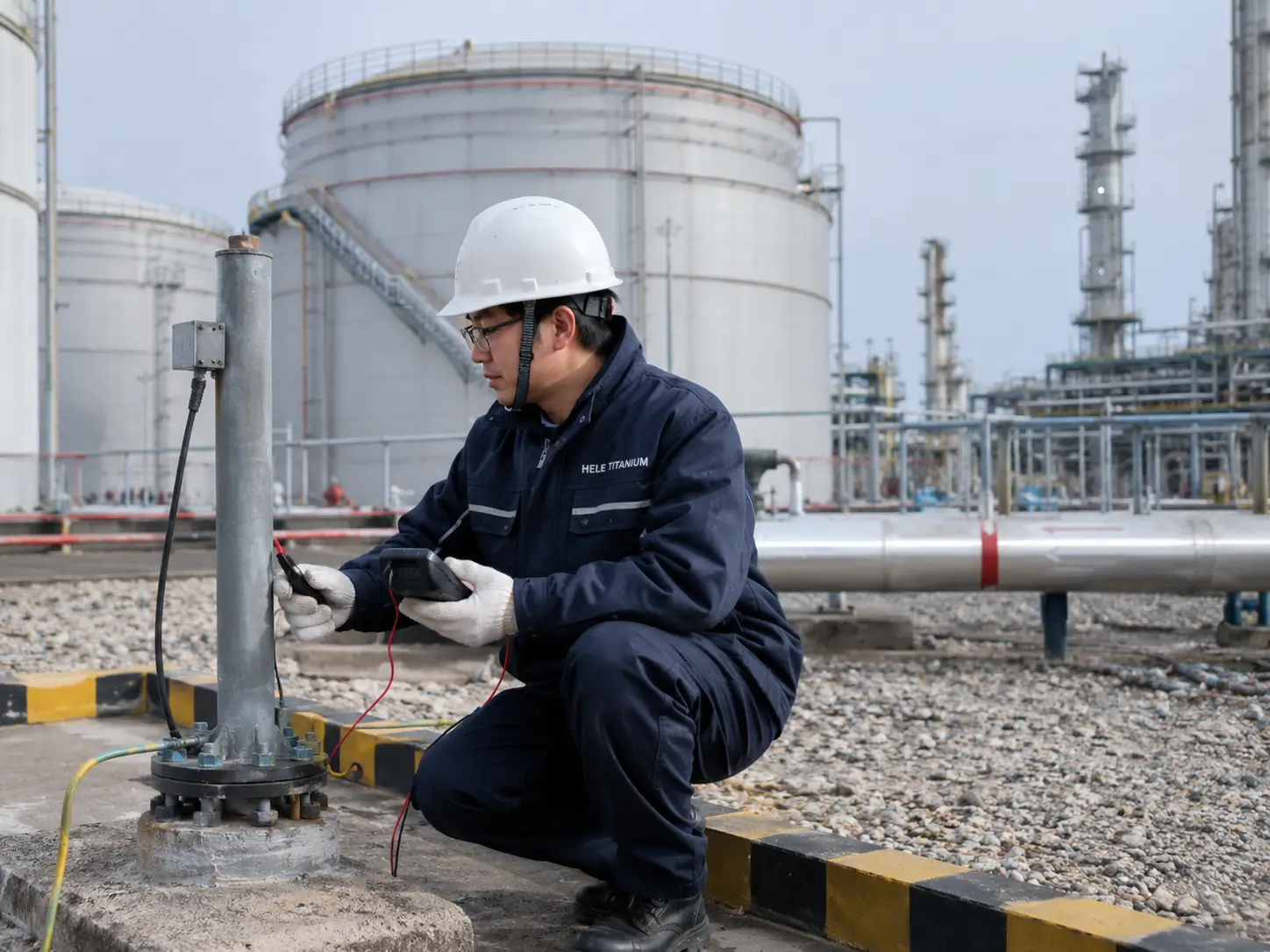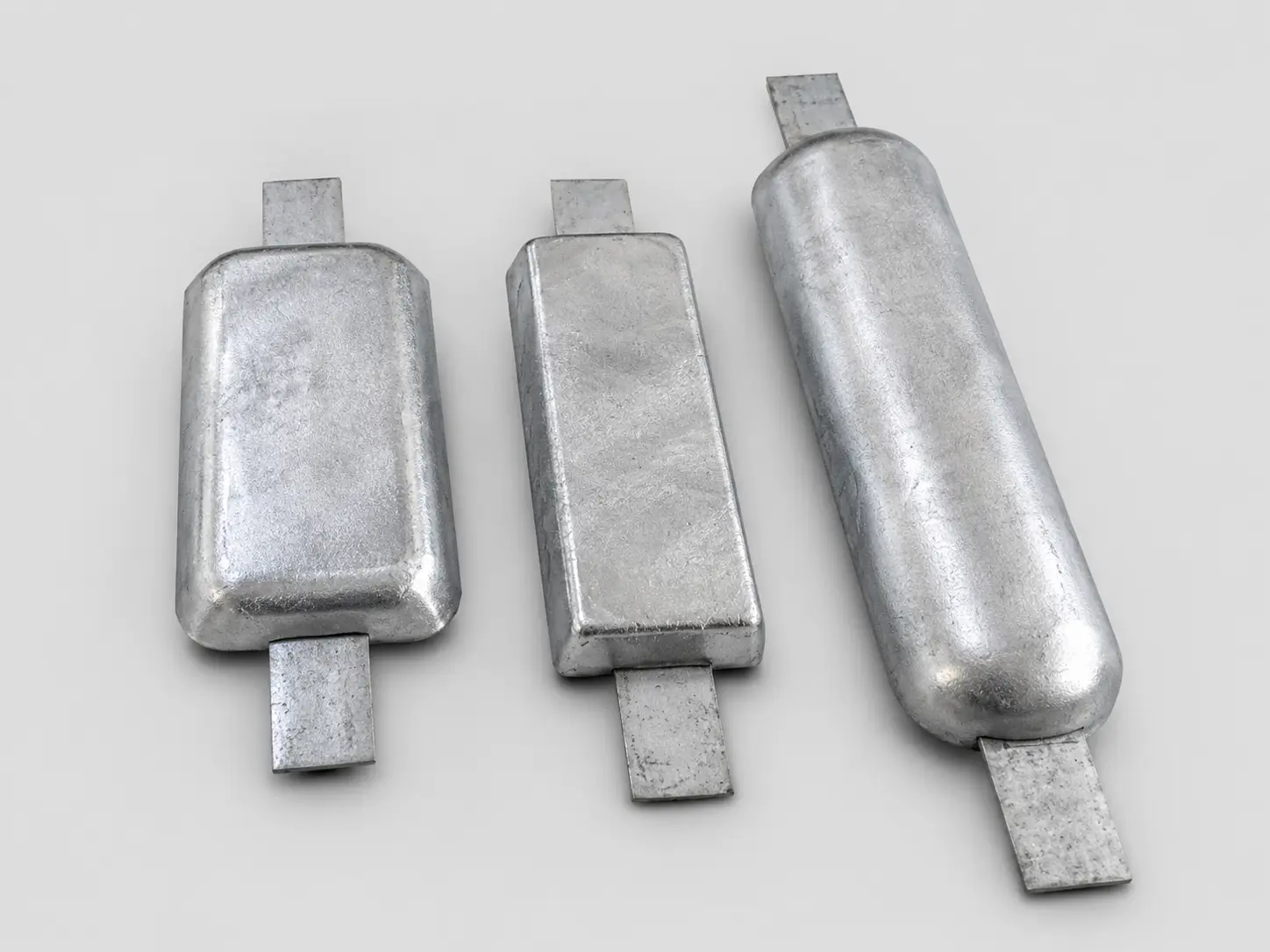
Zinc, Magnesium & Aluminum Sacrificial Anodes for Corrosion Protection
Factory-direct galvanic anodes engineered for marine vessels, offshore platforms, pipelines, storage tanks, water systems, and industrial assets.
Simple Protection Still Requires the Right Anode
Sacrificial anodes are one of the simplest and most reliable forms of cathodic protection because they operate without external power. But choosing the wrong alloy, size, shape, or installation method can lead to under-protection, rapid consumption, passivation, or unnecessary replacement cost.
Hele Titanium manufactures custom zinc, magnesium, and aluminum sacrificial anodes designed around your environment, structure type, target service life, current demand, and installation conditions.
No External Power Required
Sacrificial anodes generate protective current naturally through galvanic action, making them suitable for remote or simple CP systems.
Environment-Driven Choice
Zinc, magnesium, and aluminum each perform differently in seawater, brackish water, freshwater, and soil.
Consumable by Design
Sacrificial anodes must be sized for expected current output, consumption rate, design life, and replacement access.
Shape Affects Performance
Rod, plate, bracelet, ribbon, hull, tank, and custom forms influence current distribution and installation reliability.
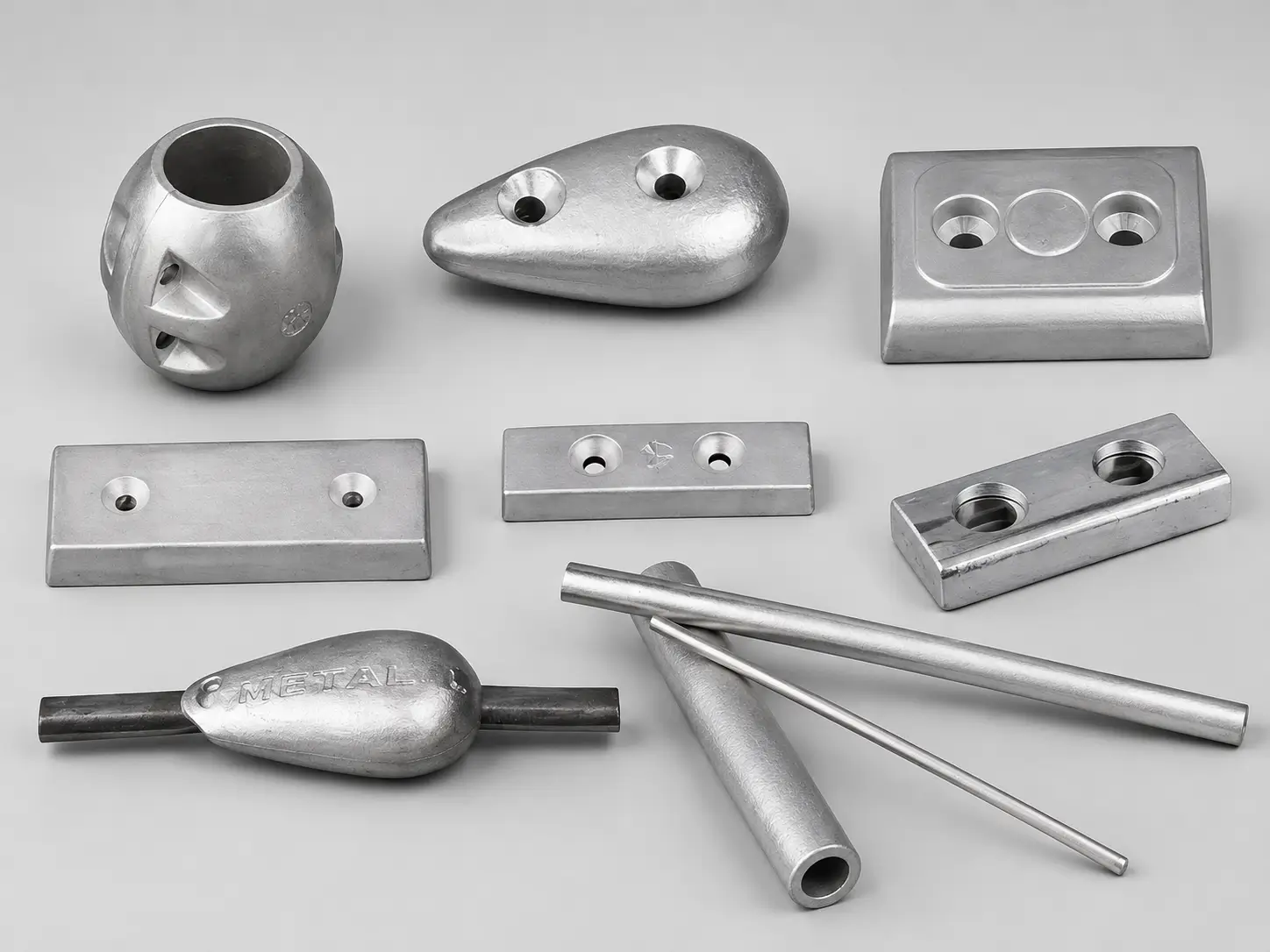
Sacrificial Anode Product Range
Hele Titanium manufactures zinc, magnesium, and aluminum sacrificial anodes for marine, offshore, pipeline, tank, water heater, and industrial cathodic protection systems. Standard and custom shapes are available to match your environment, current output, and design life requirements.
Zinc Hull Anodes
Application:
Marine vessels, ship hulls, offshore structures, rudders, shafts, and submerged components in seawater.
Key Features:
- High-purity zinc alloy
- Stable current output in saltwater
- Long service life and low maintenance
- Effective marine corrosion protection
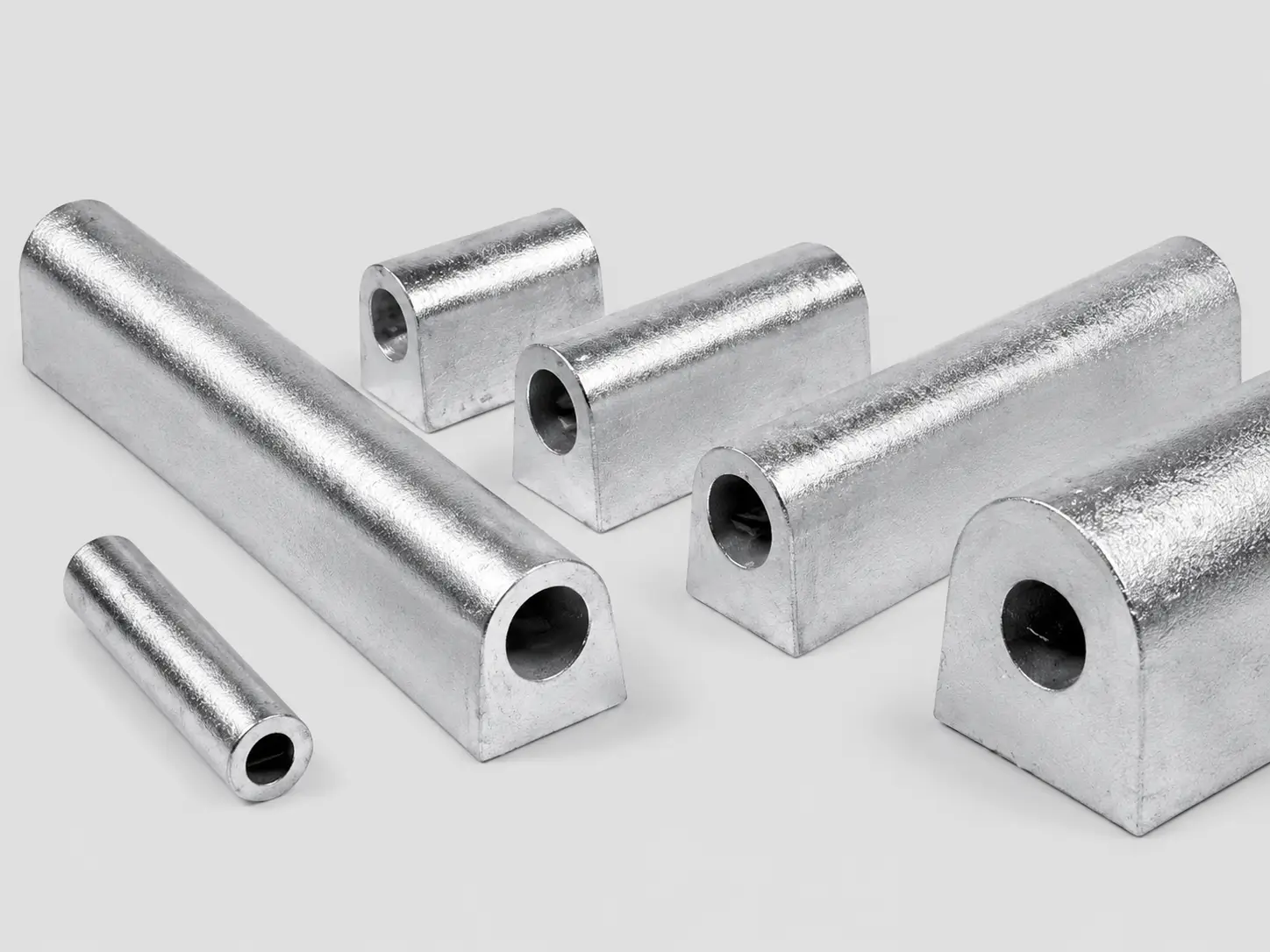
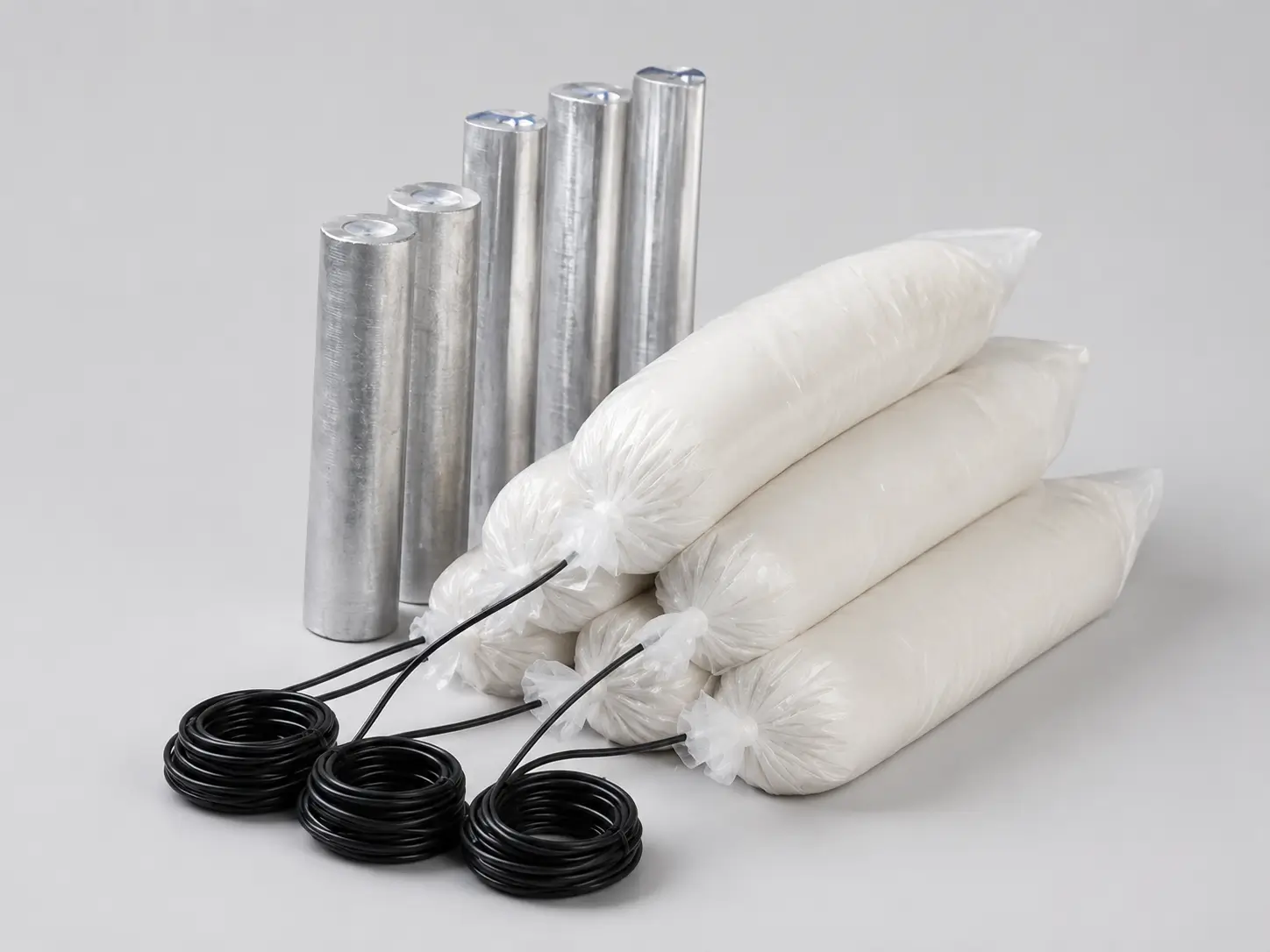
Magnesium Rod Anodes
Application:
Underground pipelines, water heaters, storage tanks, freshwater systems, and high-resistivity soil.
Key Features:
- High driving potential
- Effective in soil and freshwater
- Lightweight and easy to install
- Suitable for high-resistivity environments
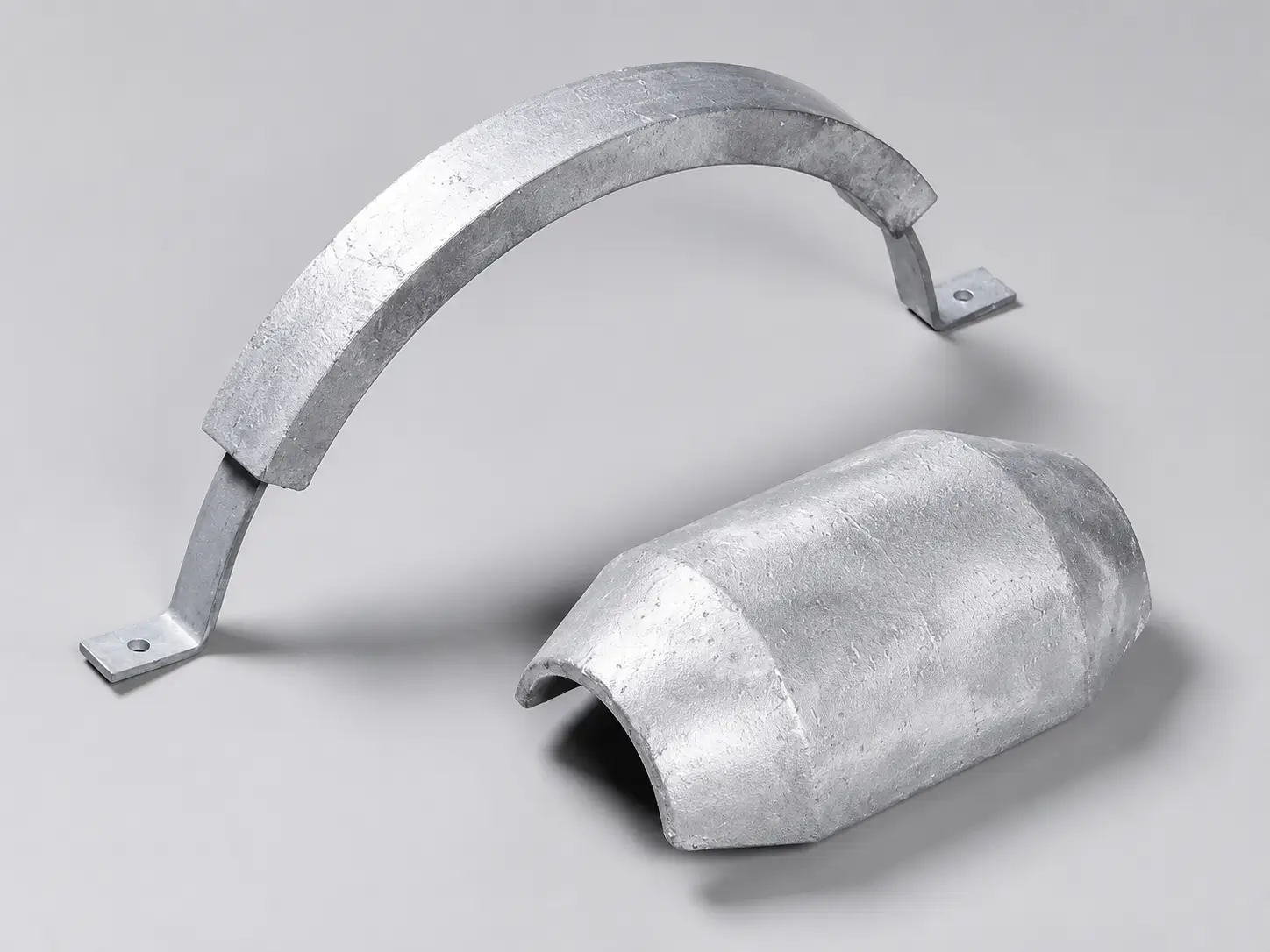
Aluminum Bracelet Anodes
Application:
Subsea pipelines, risers, offshore structures, and underwater pipeline systems.
Key Features:
- Two-piece clamp-on design
- High current capacity
- Lightweight compared with zinc
- Long-lasting offshore protection
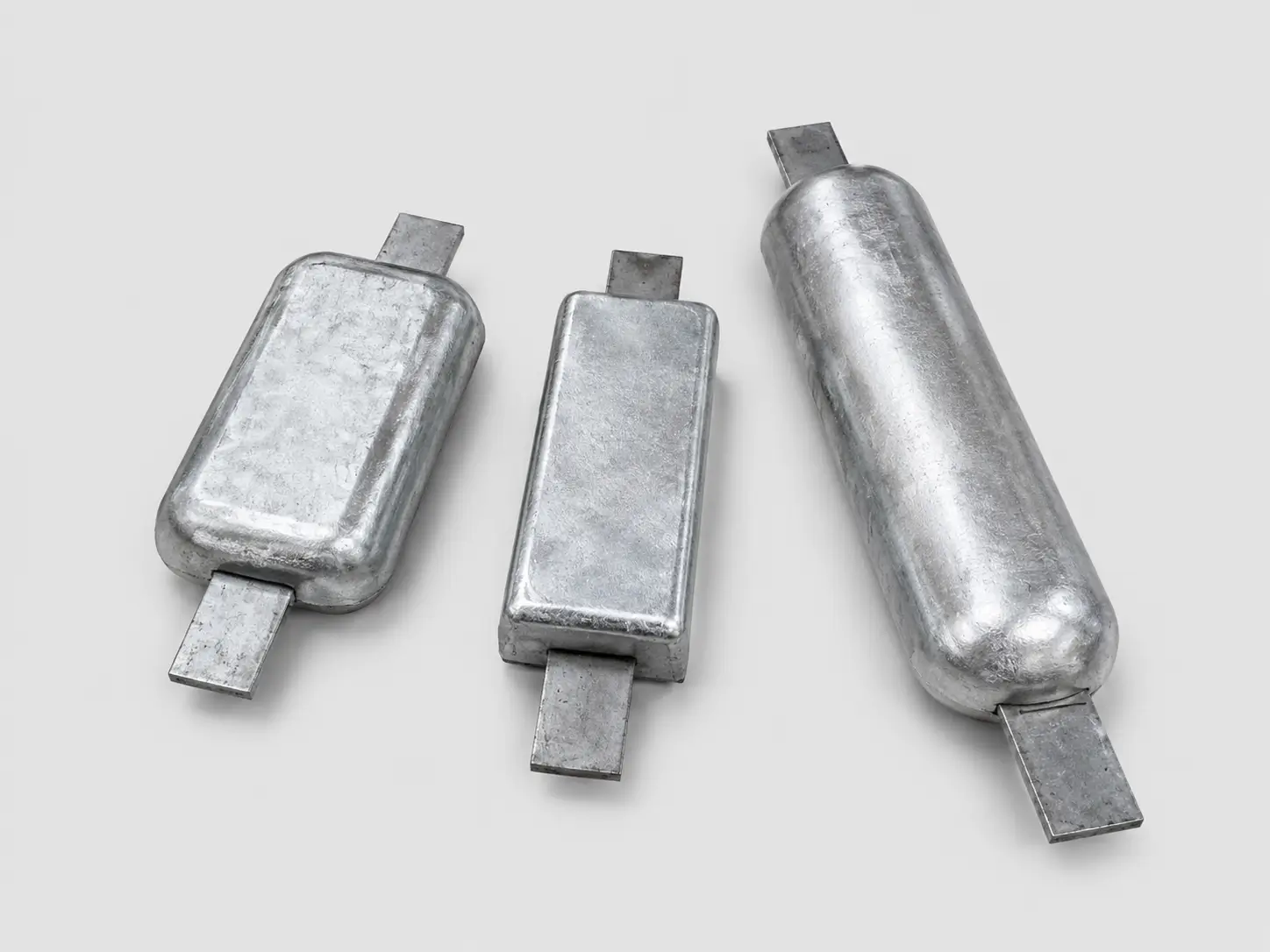
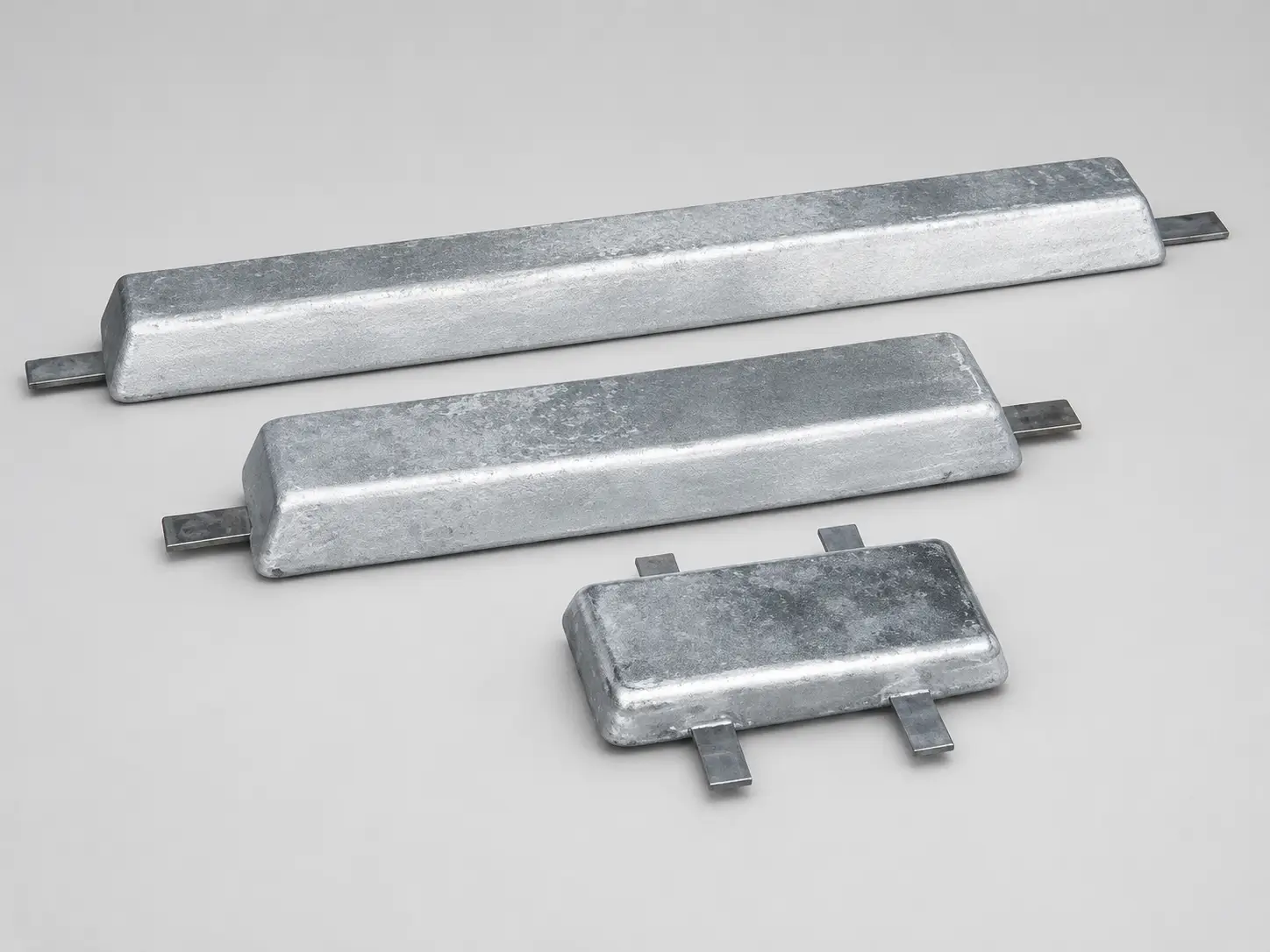
Zinc Plate Anodes
Application:
Ship hulls, tank interiors, marine pilings, seawalls, docks, and submerged steel structures.
Key Features:
- Low-profile surface mounting
- Uniform current distribution
- Cost-effective seawater protection
- Easy bolted or welded installation
Magnesium Ribbon Anodes
Application:
Gas lines, buried pipelines, narrow trenches, cathodic mats, and AC mitigation zones.
Key Features:
- Flexible long-run installation
- High current output in soil
- Easy field deployment
- Suitable for distributed protection
Aluminum Tank Anodes
Application:
Seawater ballast tanks, process tanks, fluid systems, and marine storage tanks.
Key Features:
- Lightweight aluminum alloy
- Good balance of weight and current output
- Corrosion-resistant in saline environments
- Custom sizes available
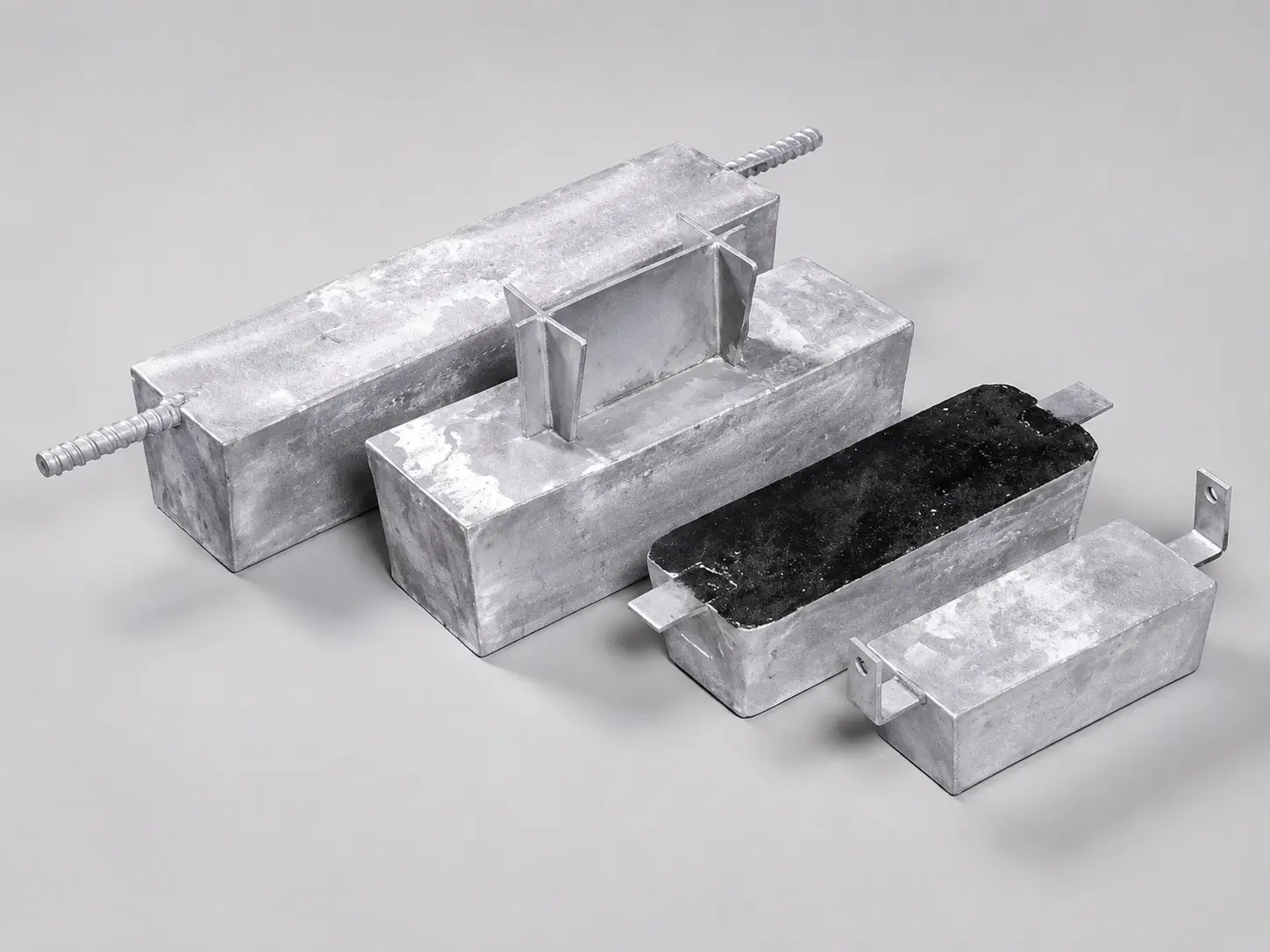
Zinc Ballast Tank Anodes
Application:
Ship ballast tanks, submerged marine systems, internal tank protection, and confined marine spaces.
Key Features:
- Compact for tight installation
- Integrated steel core
- Reliable seawater performance
- Durable and cost-effective
Magnesium Water Heater Anodes
Application:
Residential and commercial water heater tanks, freshwater systems, and internal steel tank protection.
Key Features:
- Prevents internal tank corrosion
- Extends water heater life
- Easy replacement
- Compatible with common tank designs
How to Choose the Right Sacrificial Anode
Sacrificial anode selection depends on water type, soil resistivity, structure material, current demand, design life, coating condition, and installation method. Use this guide as a starting point before requesting a detailed recommendation.
Buyer Note: For accurate selection, provide the environment, structure type, target service life, anode material preference, dimensions, quantity, and any drawings or standards.
| Environment / Application | Recommended Material | Common Forms | Selection Notes |
|---|---|---|---|
| Seawater Marine Vessels | Zinc or Aluminum | Hull, plate, block, shaft, ballast tank anodes | Zinc is traditional for seawater. Aluminum offers high capacity and lower weight for larger marine assets. |
| Brackish Water | Aluminum or Zinc | Plate, block, bracelet, tank anodes | Aluminum alloys often perform well in brackish environments when properly formulated. |
| Freshwater | Magnesium | Rod, water heater anode, tank anode | Magnesium provides stronger driving voltage where conductivity is lower. |
| High-Resistivity Soil | Magnesium | Prepackaged rod, block, ribbon | Backfill helps retain moisture and reduce contact resistance. |
| Subsea Pipelines | Aluminum or Zinc | Bracelet anodes, clamp-on anodes | Bracelet anodes provide 360-degree protection around pipeline circumference. |
| Underground Storage Tanks | Magnesium | Prepackaged rod or block anodes | Material weight and backfill design should match soil resistivity and tank size. |
| Aboveground Tank Bottoms | Zinc or Magnesium | Ribbon, strip, plate | Distributed layouts help protect broad tank bottom areas. |
| Reinforced Concrete Repair | Zinc-based anodes | Embedded discrete anodes, mesh, thermal spray | Used to reduce patch-edge corrosion and extend rebar service life. |
Custom Sacrificial Anodes Built Around Your System
Off-the-shelf anodes are not always suitable for demanding environments, unusual structures, or project-specific design life requirements. Hele Titanium manufactures custom zinc, magnesium, and aluminum anodes engineered around your asset geometry, electrolyte conditions, current demand, and installation method.
Send Your RequirementsAlloy Selection Support
Zinc, magnesium, and aluminum alloys are selected according to water type, soil resistivity, driving voltage, current capacity, efficiency, and design life target.
Custom Shapes & Configurations
Rod, plate, block, disc, slab, bracelet, ribbon, hull, condenser, tank, sled, and custom molded anodes can be manufactured according to drawings or field installation needs.
Application-Tuned Sizing
Anode weight, surface area, alloy grade, and utilization factor can be calculated around the protected structure, coating condition, current demand, and service life.
Mounting & Core Design
Cast-in steel cores, welded straps, bolt holes, brackets, clamp-on systems, threaded rods, and installation hardware can be customized for secure electrical connection.
Casting, Machining & Finishing
Controlled casting and machining help achieve correct geometry, consistent alloy structure, clean surfaces, and reliable field performance.
Documentation & Project Support
We support OEMs, EPCs, system integrators, and asset operators with drawings, alloy certificates, inspection reports, packaging labels, and export documentation.
Sacrificial Anode Quality — Guaranteed Performance
Sacrificial anodes are designed to corrode, but they must corrode predictably. Hele Titanium controls alloy composition, casting quality, weight, dimensions, electrochemical potential, mounting connection, and traceability to support reliable corrosion protection.
Certified Galvanic Alloys
Zinc, magnesium, and aluminum alloys are checked against project specifications and applicable industry requirements for seawater, brackish water, soil, freshwater, or tank environments.
Precision Casting & Machining
Controlled casting and machining help ensure correct alloy structure, geometry, mass, current output, mounting fit, and installation reliability.
Project-Specific Testing
Testing protocols can be adapted for marine vessels, buried pipelines, storage tanks, ballast tanks, water heaters, offshore structures, and reinforced concrete applications.
| Test Item | Purpose | Method / Standard |
|---|---|---|
| Alloy Composition Analysis | Confirm galvanic material meets project specifications | Spectrometry & Certificate of Analysis |
| Electrochemical Potential | Verify driving voltage against protected structure requirements | Open Circuit Potential Testing |
| Weight & Dimensional Check | Ensure correct mass, size, and shape for design life | Precision measurement per drawing |
| Anode Efficiency | Assess theoretical vs. actual consumption behavior | Lab simulation in relevant electrolyte |
| Visual & Surface Inspection | Detect casting defects, cracks, contamination, or surface flaws | Magnified surface review / salt spray |
| Mounting & Connection Test | Validate bracket, core bonding, and electrical continuity | Pull test & contact resistance measurement |
| Core / Strap Verification | Confirm cast-in core or welded strap integrity | Visual inspection and mechanical check |
| Packing & Labeling QA | Ensure batch traceability and installation readiness | Final QC checklist & packaging verification |
Traceable Quality for Project Approval
For qualified sacrificial anode projects, Hele Titanium can provide alloy certificates, inspection reports, dimensional records, packing labels, drawing references, and export documentation to support procurement and installation planning.
Request QC DocumentationWhere Sacrificial Anodes Protect Critical Assets
Sacrificial anodes provide passive, self-powered corrosion protection for marine, buried, tank, water, petrochemical, and concrete structures where simplicity, reliability, and low maintenance are important.
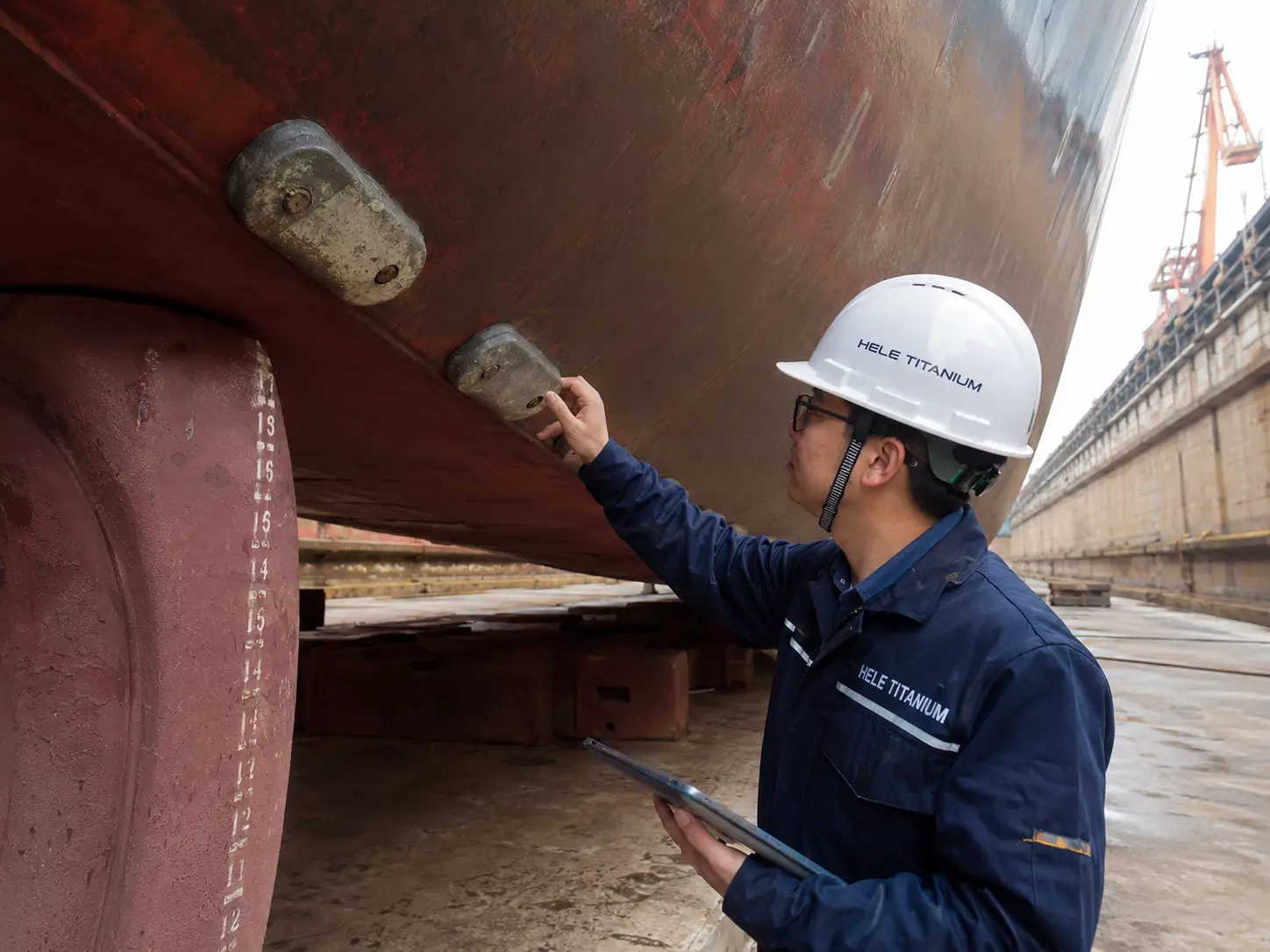
Marine Vessels & Ship Hulls
Challenge: Seawater causes aggressive galvanic corrosion on hulls, rudders, propellers, shafts, sea chests, and ballast tanks.
Recommended: Zinc hull anodes, aluminum hull anodes, ballast tank anodes, shaft anodes.
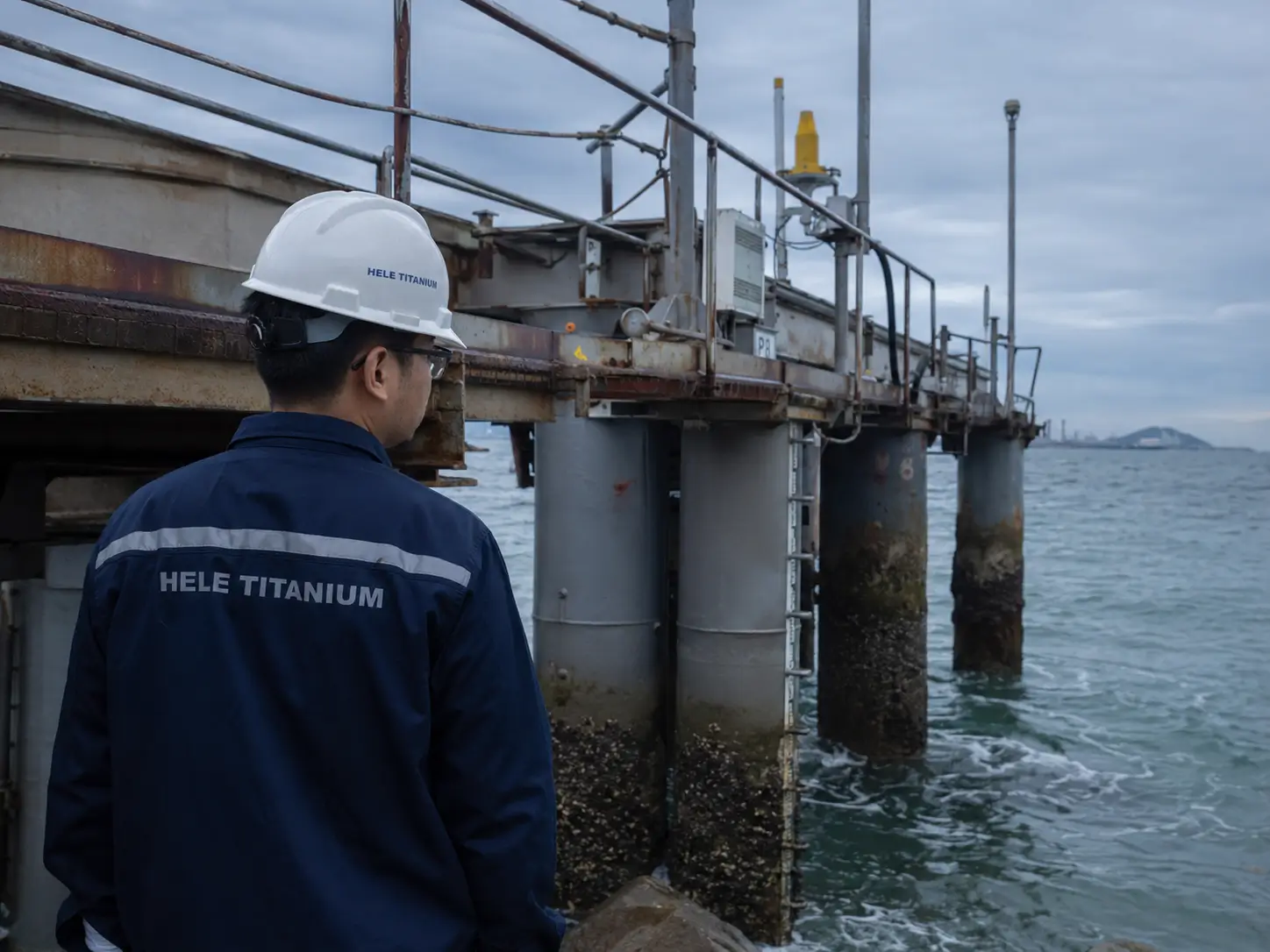
Offshore Platforms
Challenge: Submerged steel structures face long-term chloride exposure and difficult inspection access.
Recommended: Aluminum stand-off anodes, zinc anodes, bracelet anodes.
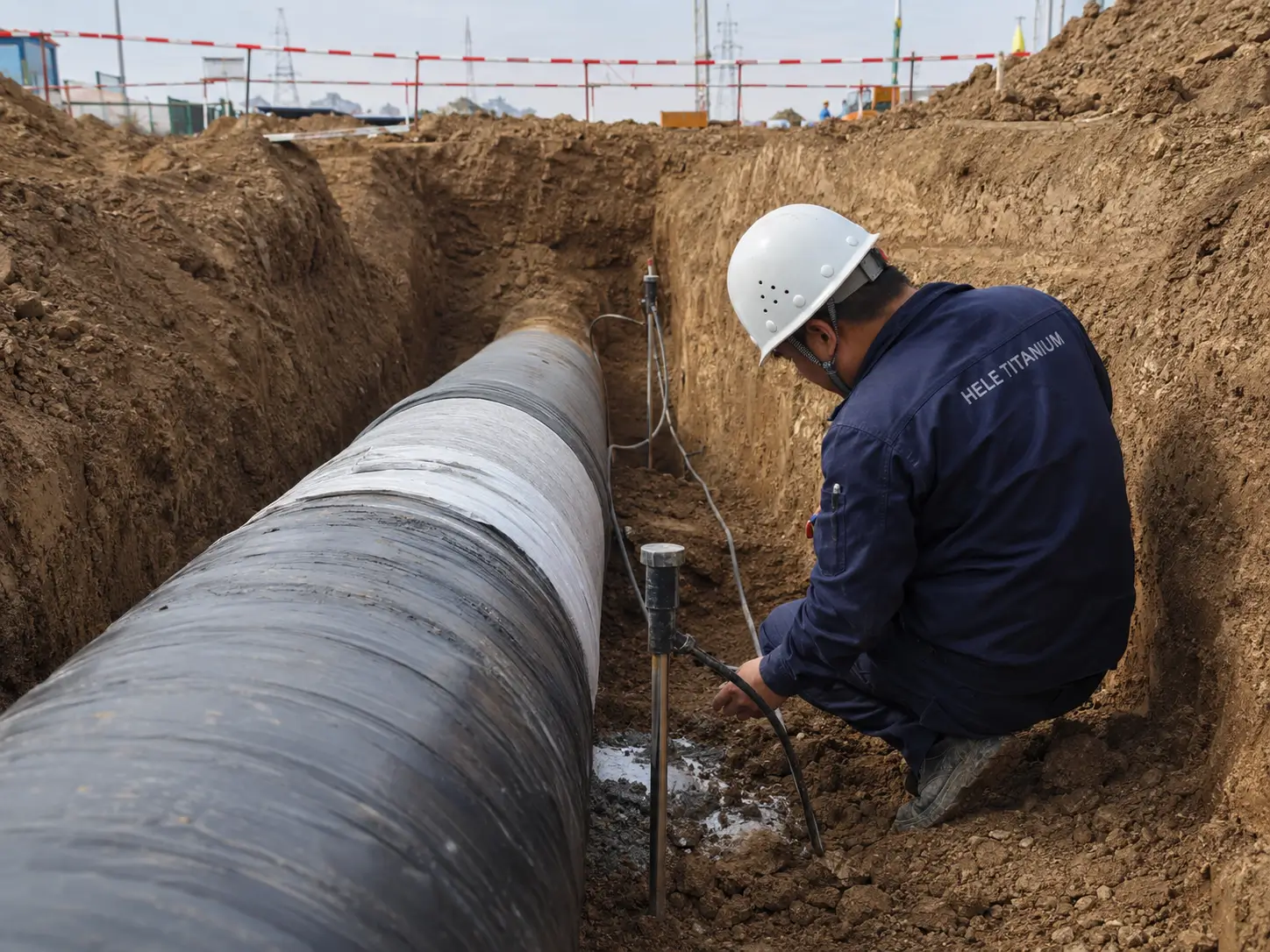
Subsea & Buried Pipelines
Challenge: Pipelines face soil resistivity, seawater exposure, coating defects, and current distribution challenges.
Recommended: Aluminum/Zinc bracelet anodes, magnesium prepackaged anodes, magnesium ribbon.
Storage Tanks
Challenge: Tank bottoms and internals are exposed to moisture, soil, process fluids, or water accumulation.
Recommended: Magnesium tank anodes, zinc ribbon, aluminum tank anodes, rod/chain anodes.
Water Heaters & Systems
Challenge: Internal tank corrosion reduces equipment life and increases replacement cost.
Recommended: Magnesium rod anodes, aluminum rod anodes, zinc-alloy odor-control options.
Reinforced Concrete
Challenge: Chloride ingress and carbonation cause rebar corrosion, cracking, and structural degradation.
Recommended: Zinc embedded anodes, zinc mesh, thermal spray zinc systems.
A Factory-Direct Partner for Reliable Corrosion Protection
Hele Titanium manufactures custom-engineered zinc, magnesium, and aluminum sacrificial anodes for marine, pipeline, tank, water, offshore, and industrial cathodic protection systems.
Manufacturing Expertise
Over 10 years of manufacturing experience supporting zinc, magnesium, and aluminum anodes for diverse environments.
High-Quality Alloy Control
Certified alloy materials and controlled casting processes help ensure stable current output and predictable consumption.
Custom Shapes
Rod, plate, block, bracelet, ribbon, hull, and custom molded forms manufactured to fit your asset.
Flexible Production
From one-off replacement anodes to large project batches, we support prototypes, OEM, and project-scale supply.
Quality Testing
Alloy analysis, dimensional checks, OCP testing, visual inspection, and packing verification support reliable procurement.
Technical Guidance
Our team helps buyers review environment, resistivity, current demand, and material choice before production.
Direct Factory Value
Direct production in China helps global buyers access custom anodes with competitive project value and controlled quality.
Global Delivery
Packing, labeling, documentation, and logistics coordinated for marine, offshore, and industrial projects worldwide.
Sacrificial Anode FAQs
Practical answers for engineers, OEM buyers, EPC contractors, marine operators, and procurement teams sourcing zinc, magnesium, or aluminum sacrificial anodes.
What is a sacrificial anode?
How does a sacrificial anode work?
Which anode material should I choose for seawater?
Which anode material is best for freshwater or high-resistivity soil?
Can I use aluminum anodes in freshwater?
How often should sacrificial anodes be replaced?
Can sacrificial anodes be painted?
Inside Our Manufacturing & Quality System
Every sacrificial anode is produced through controlled alloy selection, casting, machining, dimensional inspection, electrochemical verification, packing, and documentation review.
From alloy preparation and casting to machining, finishing, core insertion, bracket preparation, and packing, each step is controlled according to project specifications.
Controlled casting for zinc anodes
Magnesium anode production
Aluminum bracelet anode casting
Machining and finishing
Steel core and strap preparation
Packing preparation for delivery
Our workshop supports multiple sacrificial anode formats, including rod, plate, block, bracelet, ribbon, slab, hull, condenser, tank, and custom molded designs.
Workshop support for custom production
Zinc anode manufacturing area
Magnesium rod anode production
Aluminum bracelet anode production
Custom mold preparation
Finished anodes prepared for shipment
Quality checks focus on alloy composition, electrochemical potential, weight, dimensions, casting quality, core bonding, surface condition, and packing.
Alloy composition analysis
Electrochemical potential testing
Weight and dimensional inspection
Surface inspection for defects
Mounting and connection verification
Packing and labeling check
For qualified projects, Hele Titanium can provide alloy certificates, inspection reports, dimensional records, packing documentation, and export support.
Alloy certificates for review
Certificate of analysis
Dimensional records
Packing labels for traceability
Drawing documents
Export documentation support
Need alloy certificates, inspection reports, drawings, or project-specific documentation?
Request Manufacturing & QC DetailsSacrificial Anode Procurement Guide
Table of Contents
Sacrificial anodes offer a simple, cost-effective, and proven way to protect pipelines, tanks, marine vessels, offshore platforms, water systems, and reinforced concrete. But selecting the right material and configuration requires more than comparing price. Buyers must consider electrolyte conditions, current demand, alloy type, weight, shape, installation method, and replacement access.
1. Why Sacrificial Anodes Matter
The fundamental role of galvanic protection in asset longevity and risk mitigation.
Corrosion can damage pipelines, tanks, vessels, offshore structures, and reinforced concrete. Sacrificial anodes protect these assets by redirecting corrosion to a more active metal. This simple galvanic protection method helps extend asset life, reduce maintenance risk, and lower lifecycle cost.
Warning: Sacrificial anodes are simple, but they are not one-size-fits-all. Material, size, weight, shape, environment, and electrical connection determine whether the anode will protect the structure effectively.
2. What Is a Sacrificial Anode?
Understanding the core material and its electrochemical purpose in cathodic protection.
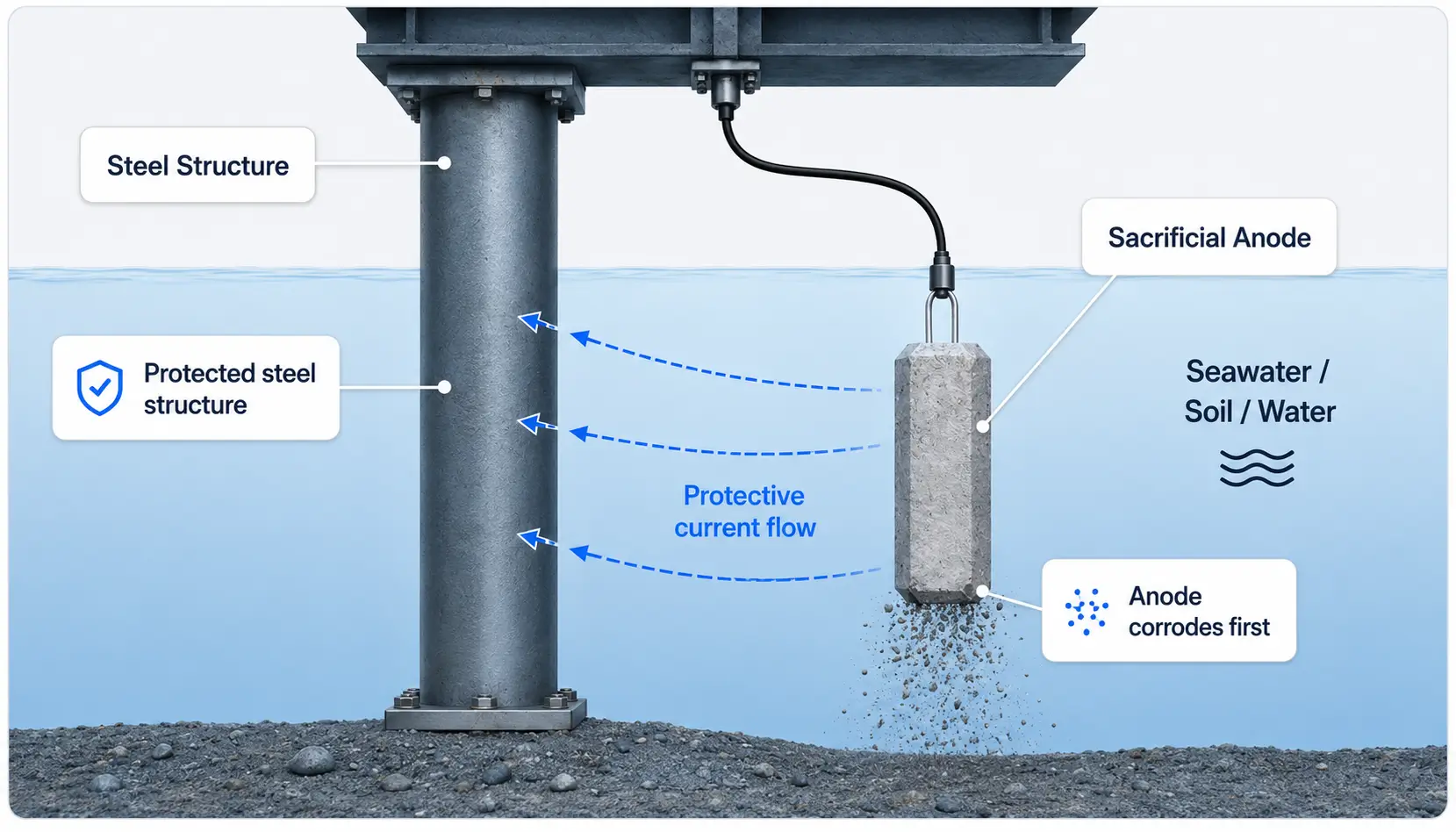
A sacrificial anode, also called a galvanic anode, is made from a metal that is more electrochemically active than the protected structure. When connected to steel and exposed to an electrolyte, the anode corrodes preferentially while the structure remains protected.
3. How Sacrificial Anodes Work
The basic mechanism of electron transfer and corrosion suppression in a galvanic cell.
A working sacrificial anode system requires four elements: an anode, the protected structure, an electrolyte, and a metallic connection. Once installed, the anode oxidizes and releases electrons. These electrons flow to the protected structure and suppress corrosion.
- Anode must be more active than the structure
- Good electrical connection is required
- Anode must be exposed to the electrolyte
- Material must match the environment
4. Zinc vs Aluminum vs Magnesium
Comparing the primary materials to ensure optimal performance in specific environmental conditions.
| Material | Best Environment | Key Advantage |
|---|---|---|
| Zinc | Seawater and brackish water | Stable marine performance |
| Aluminum | Marine, offshore, subsea | High capacity and lightweight |
| Magnesium | Freshwater and high-resistivity soil | Highest driving voltage |
5. Common Anode Shapes
How physical configuration impacts surface area, installation feasibility, and current output.
The shape dictates surface area, which directly influences current output and installation feasibility. Below is a breakdown of standard configurations and their typical uses:
| Anode Shape | Typical Application |
|---|---|
| Block / Plate | Hulls, internal tanks |
| Rod | Water heaters, heat exchangers |
| Hull Anode | Ships and marine vessels |
| Bracelet Anode | Subsea pipelines |
| Ribbon | Tank bottoms, tight spaces |
| Custom Molds | Specialized geometries for specific surface areas |
6. Application-Based Selection
Matching the right anode material and design to specific industrial structures and environments.
Selecting the correct system requires aligning the material properties with the asset's specific environment:
| Application | Preferred Material / Design | Key Reason |
|---|---|---|
| Ship Hulls & Offshore Platforms | Zinc or Aluminum | Standard and stable marine performance |
| Subsea Pipelines | Aluminum Bracelet Anodes | Fits pipeline geometry seamlessly; high capacity |
| Buried Pipelines & Underground Tanks | Magnesium | High driving voltage overcomes high soil resistivity |
| Water Heaters | Magnesium Rods | Optimal for high-temperature freshwater |
7. Key Performance Factors
The critical variables that determine protection efficiency, current distribution, and lifespan.
Sacrificial anode efficiency is governed by several interconnected electrochemical and physical variables:
| Performance Factor | Impact & Consideration |
|---|---|
| Driving Voltage & Alloy Efficiency | Determines the strength of protection and how efficiently the mass is consumed over time. |
| Electrolyte Conductivity | High conductivity (seawater) allows lower voltage anodes; low conductivity (soil) requires high voltage. |
| Surface Area Ratio & Current Demand | Anode surface area must be sufficient to meet the current requirements of the protected structure. |
| Passivation / Disconnection | If an anode remains untouched after long service, it is either electrically disconnected or passivated. |
8. Limitations vs ICCP Systems
Recognizing when to upgrade from passive sacrificial systems to active Impressed Current Cathodic Protection (ICCP).
While sacrificial anodes are excellent for small, remote, or simple assets, larger complexes often require the active control of ICCP systems using MMO titanium anodes:
| Feature | Sacrificial Anodes (Passive) | ICCP Systems (Active) |
|---|---|---|
| Best Application | Small, remote, or simple assets | Large, complex, or high-demand assets |
| Power Requirement | None (Galvanic action) | Requires external power source (Rectifier) |
| Current Output | Fixed and limited | Adjustable and scalable |
| Core Material | Zinc, Aluminum, Magnesium | MMO Titanium Anodes |
9. Inspection & Replacement
Essential maintenance practices to prevent protection gaps and ensure continuous asset safety.
Sacrificial anodes are intentionally consumed over time. Proper inspection and timely replacement are mandatory to maintain asset integrity:
| Maintenance Aspect | Guideline & Best Practice |
|---|---|
| Inspection Requirement | Mandatory routine checks to ensure electrical connection and active consumption. |
| Replacement Threshold | Replace when approximately 50% – 67% of the original mass has been consumed. |
| Risk of Delay | Delayed replacement creates protection gaps, leading to rapid localized asset corrosion. |
10. RFQ Checklist
The necessary technical details required for an accurate, fast, and customized quotation.
To receive a faster and more accurate quotation, provide as much technical detail as possible:
- Application environment
- Structure type
- Water type or soil resistivity
- Preferred anode material & shape
- Dimensions or weight target
- Quantity & desired service life
- Mounting method & bracket requirements
- Drawings or sketches
Need Help Selecting the Right Sacrificial Anode?
Send your environment, structure type, target service life, and drawing requirements to Hele Titanium. Our team will help you review the best-fit solution.
Protect Your Infrastructure with the Right Anode
Tell us your environment, structure type, preferred material, dimensions, quantity, or service life target, and our team will recommend the right zinc, magnesium, or aluminum anode solution.
- Factory-Direct Zinc, Mg & Aluminum Anodes
- Custom Casting & Drawing-Based Support
- Alloy QC Documentation Available
Prefer email? sales@heletitanium.com