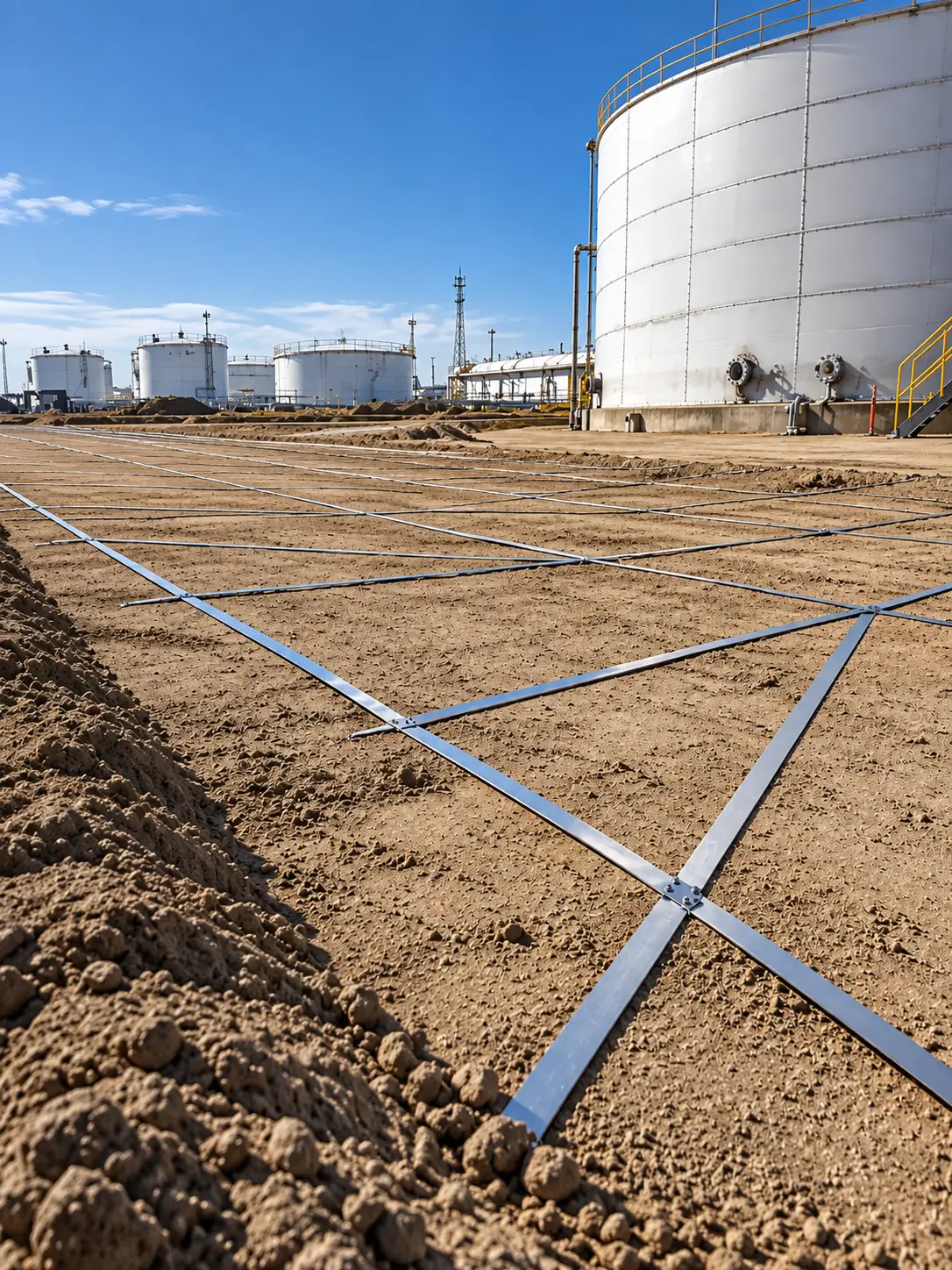
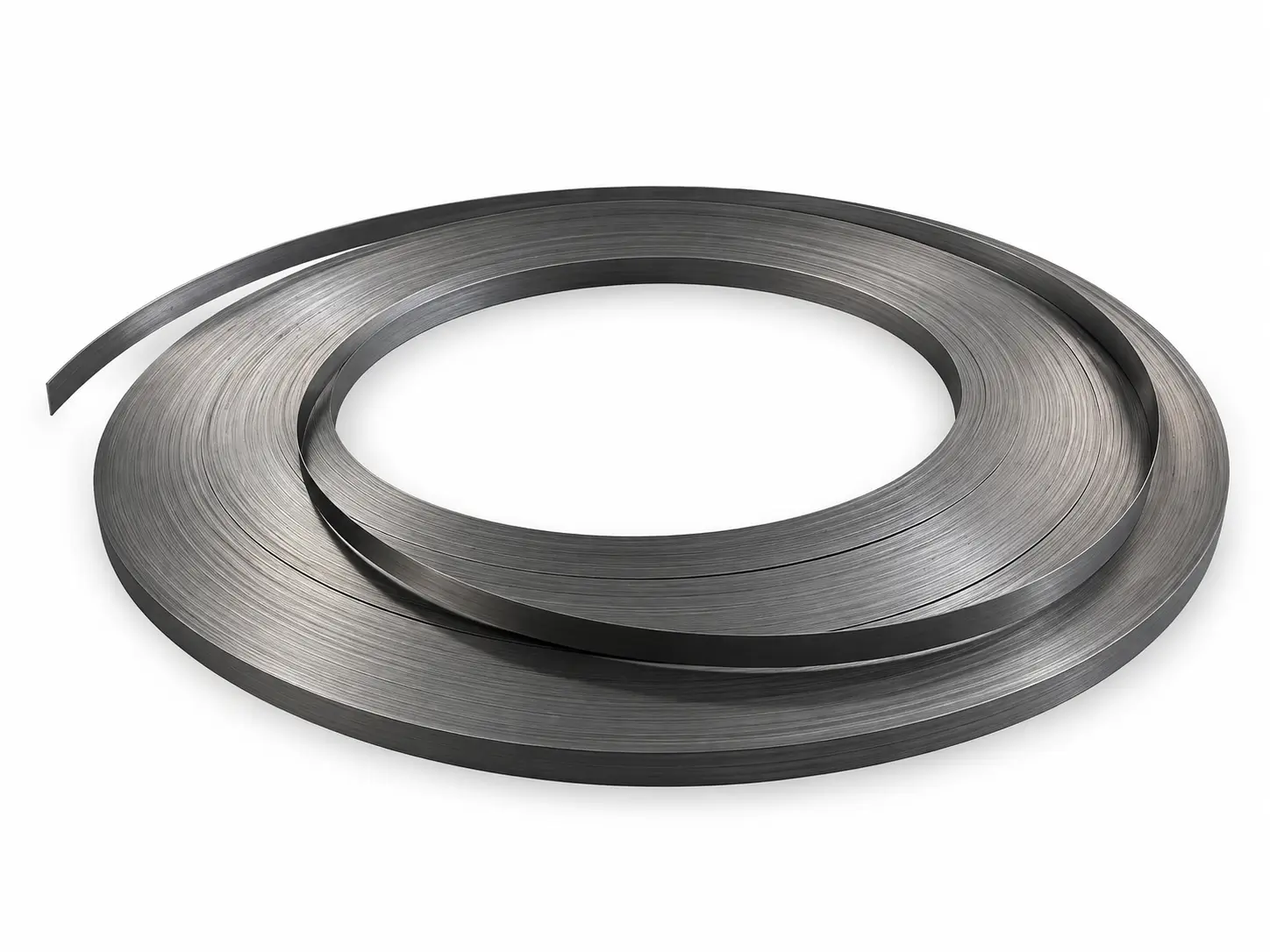
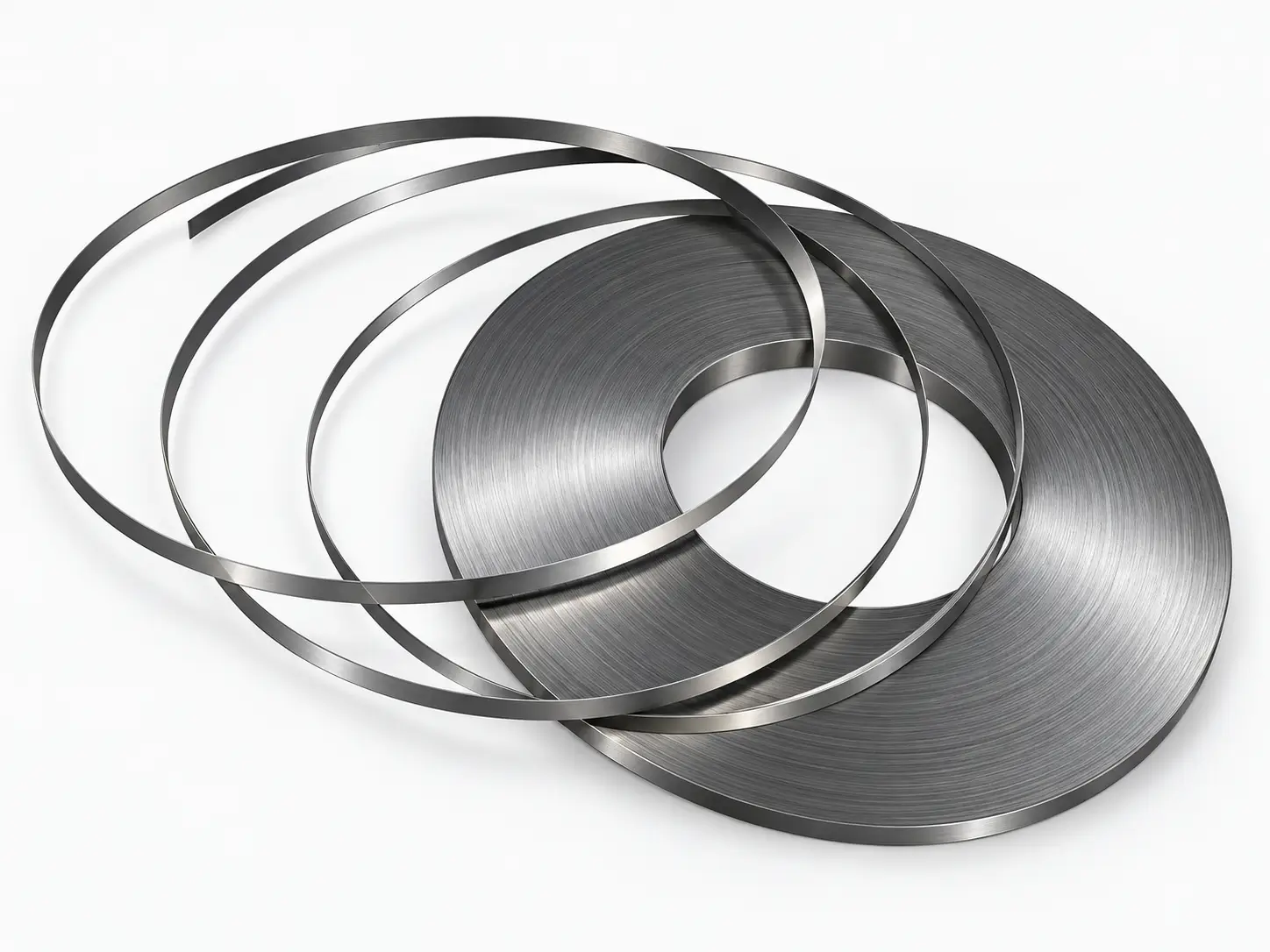
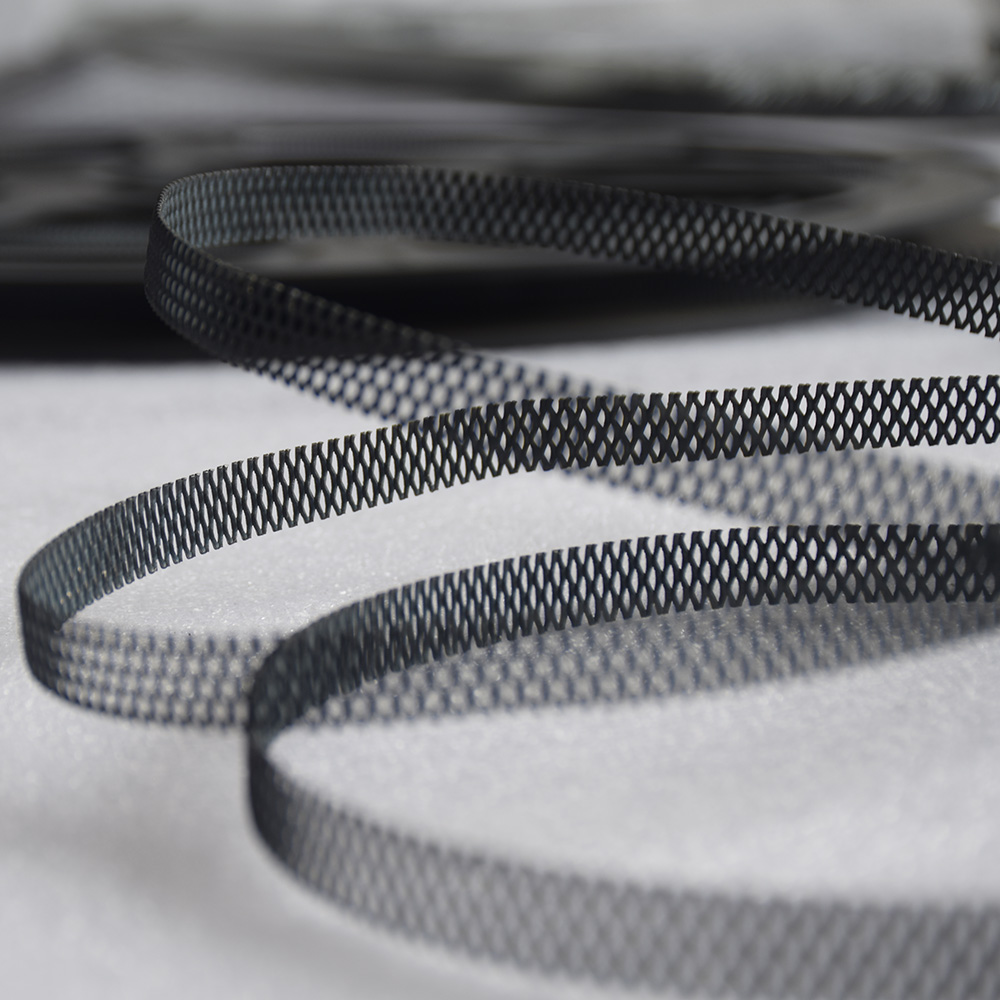
Custom MMO coated titanium ribbon anodes engineered for storage tank bottom cathodic protection, reinforced concrete CP, under-tank protection, embedded CP systems, and long-area distributed current output applications.
MMO ribbon anodes are selected when a flat linear anode is needed to distribute protective current across a long or wide area. They are commonly reviewed for storage tank bottom protection, reinforced concrete cathodic protection, under-tank systems, and embedded electrochemical protection layouts.
Compared with wire anodes, MMO ribbon anodes provide a flat strip geometry that can offer broader contact area and easier layout control in many long-area CP systems. The final design should be reviewed according to soil or concrete resistivity, chloride level, current output requirement, ribbon spacing, installation method, connection design, and design life target.
Hele Titanium supports custom MMO ribbon anodes with project-specific ribbon width, thickness, coated length, coating loading, connection method, packing, labels, and documentation according to cathodic protection project requirements.
Request MMO Ribbon Anode Review
A flat titanium ribbon form supports long-area current distribution and controlled installation layout.
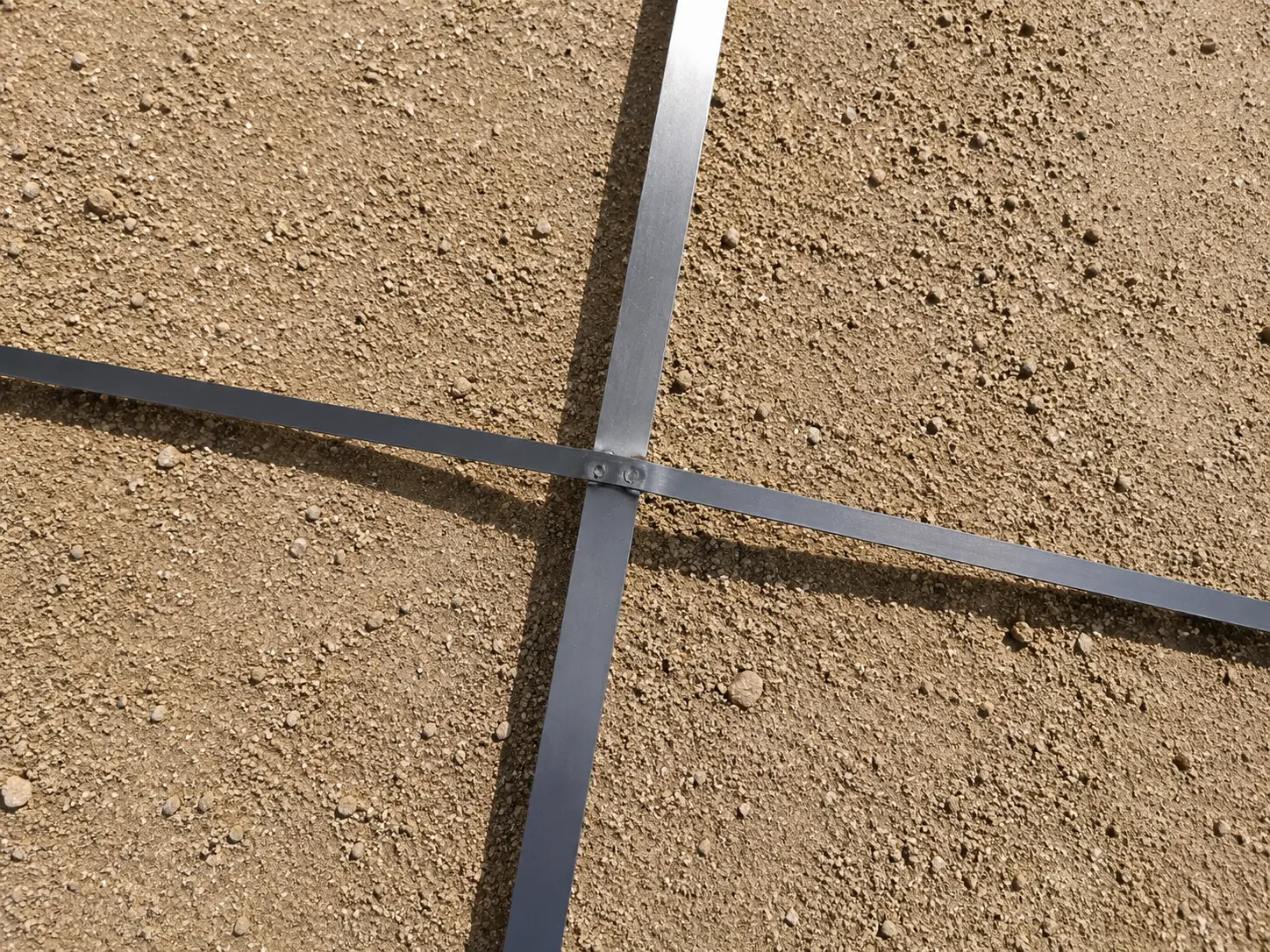
Suitable for under-tank and storage tank bottom cathodic protection layouts.
Can be reviewed for reinforced concrete CP, concrete repair, and embedded protection systems.
Ribbon width, length, coating loading, spacing, and connection method can be reviewed according to project needs.
An MMO ribbon anode is a flat titanium strip coated with mixed metal oxide. It is used as a linear anode for impressed current cathodic protection systems where protective current needs to be distributed along a defined path or across a large protected area.
The ribbon form makes it suitable for applications such as storage tank bottom cathodic protection, reinforced concrete CP, under-tank protection, and embedded electrochemical protection systems. The correct ribbon size and layout depend on current output, installation spacing, environment, design life, and connection requirements.
| Feature | What It Means | Why It Matters |
|---|---|---|
| Flat Titanium Ribbon | A strip-style titanium substrate coated with MMO. | Supports controlled placement and long-area current distribution. |
| MMO Coating | Mixed metal oxide coating applied to the active ribbon surface. | Provides electrochemical activity for impressed current output. |
| Custom Width & Length | Ribbon dimensions can be reviewed according to project layout. | Helps match current output, spacing, and installation requirements. |
| Connection Design | Ribbon anode can be connected with cable, tab, welded joint, or custom termination. | Supports electrical continuity and CP system integration. |
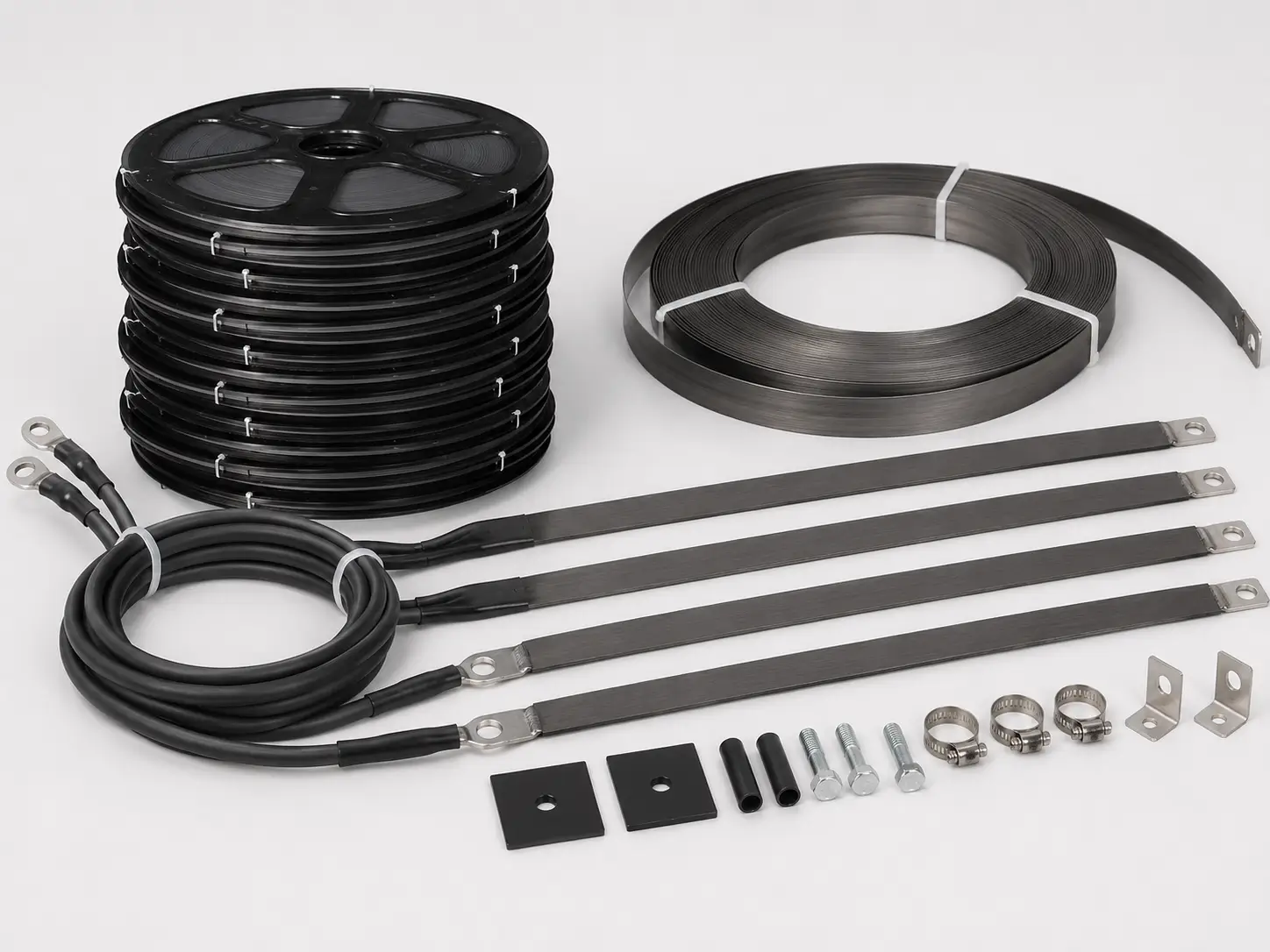
Different MMO ribbon anode configurations are used depending on protected structure, installation layout, current requirement, and connection design. Hele Titanium can support standard and custom MMO coated titanium ribbon anodes according to project requirements.
Flat MMO coated titanium ribbon for distributed current output in tank bottom, concrete, and long-area CP systems.
Best For: Storage tank bottoms, under-tank protection, reinforced concrete CP, and long-area protection layouts.
View Standard Ribbon Anodes →
Ribbon anodes with project-specific width, thickness, and active length according to current output and layout requirements.
Best For: Projects requiring defined current distribution, spacing control, or custom installation geometry.
Request Custom Ribbon Size →
MMO ribbon anode supplied with cable connection, welded tab, sealing, labels, or project-specific electrical interface.
Best For: Field installation, CP system integration, under-tank layouts, and ready-to-connect anode assemblies.
Discuss Cable Connection →
Drawing-based MMO ribbon assemblies with custom length, connection, packing, labels, and documentation.
Best For: Project-specific CP layouts, OEM systems, and non-standard electrochemical protection applications.
Request Custom Ribbon Assembly →MMO ribbon anodes are commonly used when a flat, long-area anode form is required for distributed current output. The final ribbon width, coated length, spacing, and connection design should be reviewed according to the protected structure, environment, current output, and installation method.
| Application | Why MMO Ribbon Anode Fits | Key Review Factors |
|---|---|---|
| Storage Tank Bottom Cathodic Protection | Flat ribbon anodes can support distributed current output under large tank bottom areas. | Tank diameter, soil resistivity, anode spacing, cable route, current output, and installation method. |
| Under-Tank Protection Systems | Ribbon geometry supports controlled layout beneath tank floors or foundation areas. | Backfill condition, ribbon spacing, current distribution, connection design, and mechanical protection. |
| Reinforced Concrete Cathodic Protection | Ribbon anodes can be embedded, surface-applied, or incorporated into concrete repair layouts. | Concrete resistivity, chloride level, cover depth, spacing, current density, and embedment method. |
| Long-Area CP Layouts | The flat strip form supports continuous current distribution along large or elongated structures. | Protected length, environment, current demand, spacing, and cable connection. |
| Electrochemical Repair Systems | Ribbon form can support temporary or permanent current distribution for repair and protection applications. | Electrolyte contact, installation duration, current density, contact area, and removal or embedment method. |
| Custom Distributed Current Projects | Ribbon size and layout can be adapted to non-standard structure geometry or project-specific CP design. | Structure geometry, environment, design life, installation limitation, and documentation needs. |
Why It Fits: Flat ribbon anodes can support distributed current output under large tank bottom areas.
Key Review Factors: Tank diameter, soil resistivity, anode spacing, cable route, current output, and installation method.
Why It Fits: Ribbon geometry supports controlled layout beneath tank floors or foundation areas.
Key Review Factors: Backfill condition, ribbon spacing, current distribution, connection design, and mechanical protection.
Why It Fits: Ribbon anodes can be embedded, surface-applied, or incorporated into concrete repair layouts.
Key Review Factors: Concrete resistivity, chloride level, cover depth, spacing, current density, and embedment method.
Why It Fits: The flat strip form supports continuous current distribution along large or elongated structures.
Key Review Factors: Protected length, environment, current demand, spacing, and cable connection.
Why It Fits: Ribbon form can support temporary or permanent current distribution for repair and protection applications.
Key Review Factors: Electrolyte contact, installation duration, current density, contact area, and removal or embedment method.
Why It Fits: Ribbon size and layout can be adapted to non-standard structure geometry or project-specific CP design.
Key Review Factors: Structure geometry, environment, design life, installation limitation, and documentation needs.
MMO ribbon anode specifications should be confirmed according to current output, ribbon width, ribbon thickness, coated length, operating environment, installation layout, design life, and documentation requirements.
| Substrate | Titanium ribbon substrate according to project requirements |
|---|---|
| Coating | MMO coating selected according to operating environment and current output requirement |
| Ribbon Width | Reviewed according to current output, installation spacing, contact area, and project layout |
| Ribbon Thickness | Reviewed according to mechanical handling, installation method, and design requirements |
| Coated Length | Custom active coating length according to CP layout and current distribution requirement |
| Current Output | Reviewed by current requirement, design life, ribbon size, and environment |
| Connection | Cable connection, welded tab, crimped connection, sealed joint, or custom termination |
| Installation | Under-tank, embedded, surface-mounted, buried, concrete, backfill, or custom installation |
| Environment | Soil, concrete, seawater, freshwater, industrial electrolyte, or project-specific environment |
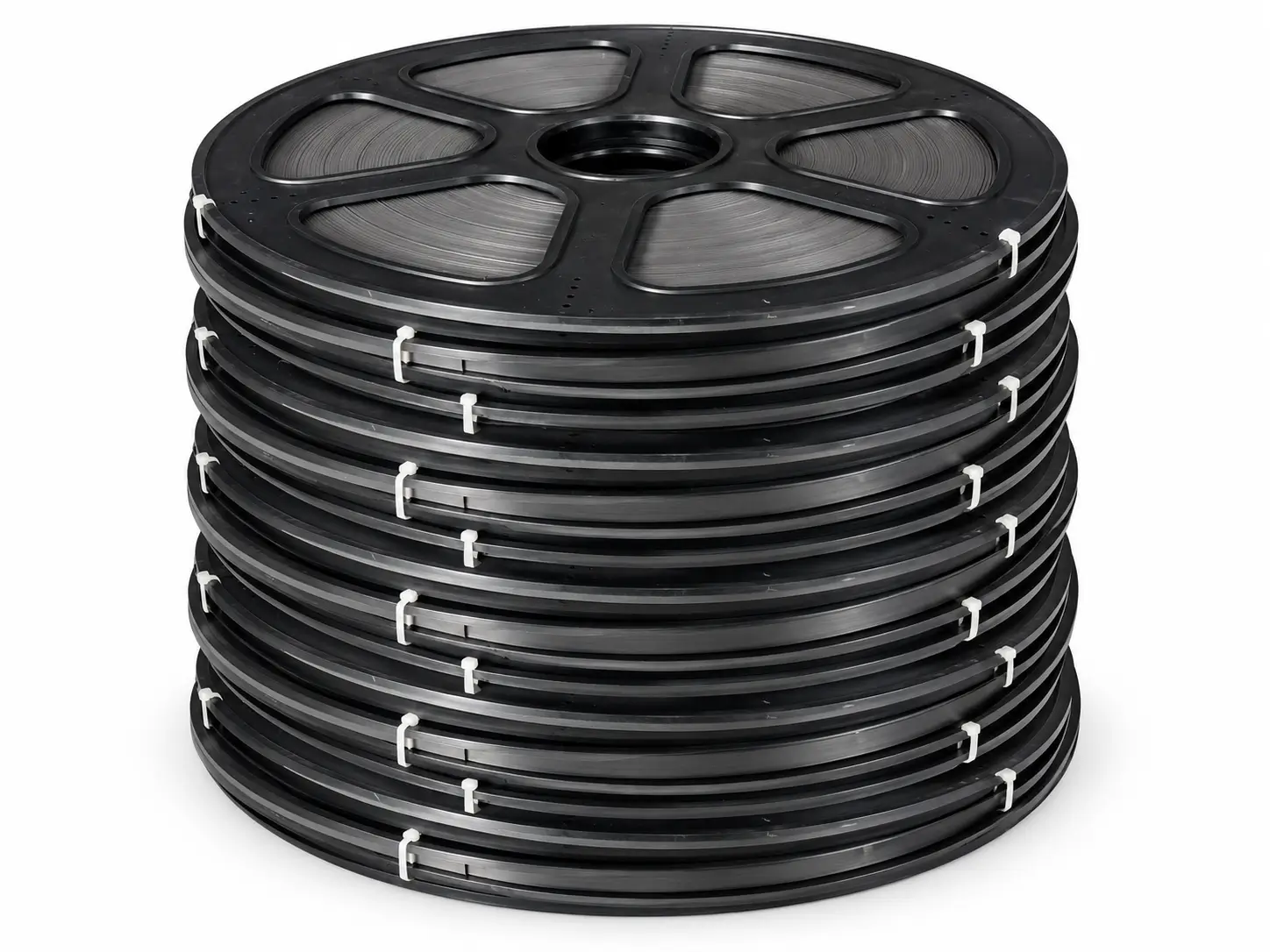
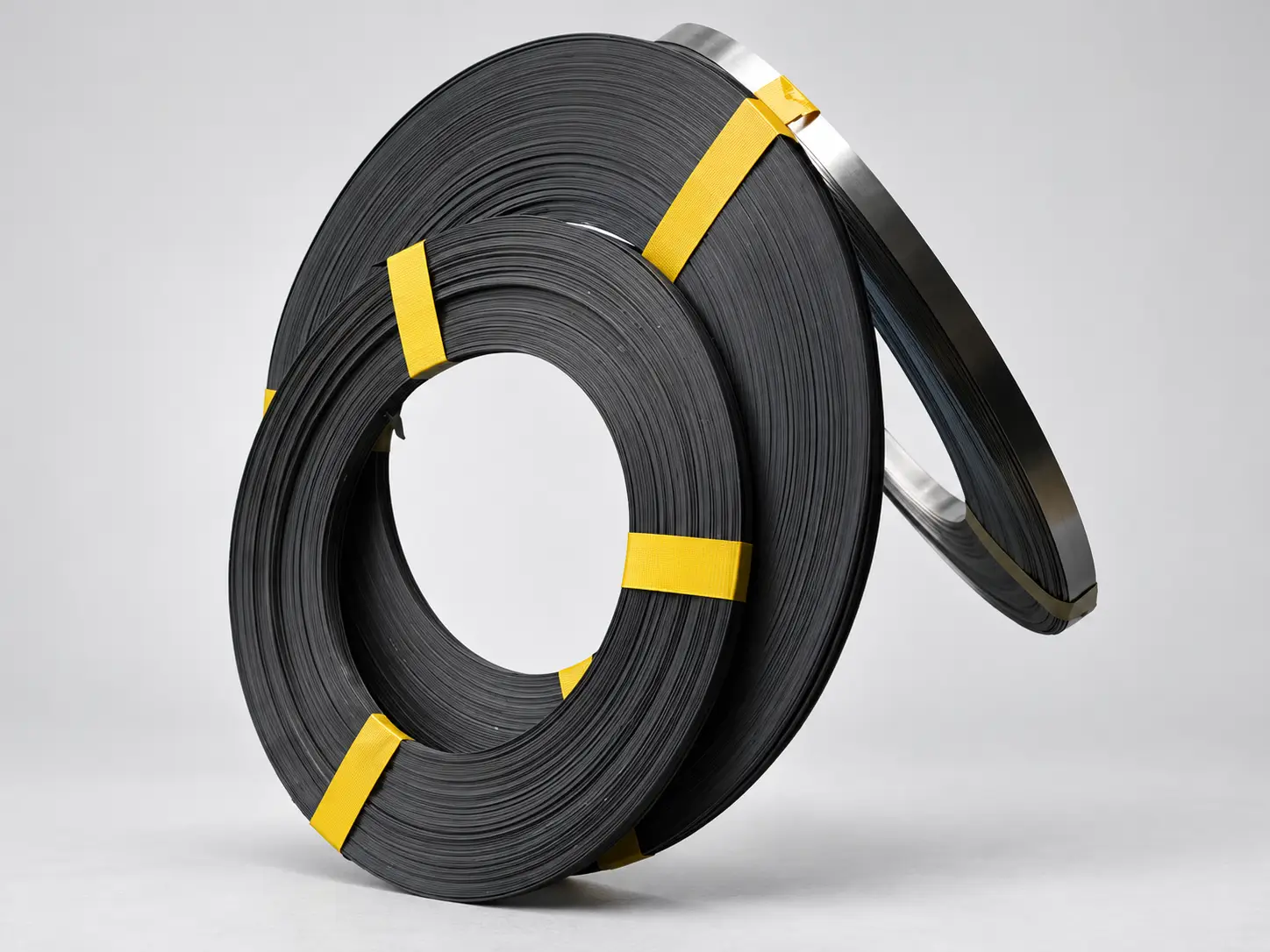
| Packing | Coiled, bundled, labeled, protected, or packed according to length and shipment requirement |
| Documentation | MTC, coating record, inspection notes, packing list, labels, and project documents when required |
Note: Final specifications should be confirmed according to current output, ribbon size, coated length, environment, installation layout, and service life target.
MMO ribbon anode design should be reviewed according to ribbon width, ribbon thickness, coated length, current output, protected structure geometry, resistivity, installation method, cable route, coating loading, and design life target.
Review ribbon width and thickness according to current output, contact area, installation spacing, and mechanical handling needs.
Customize active coated length according to project layout, current distribution, and spacing requirement.
Review total current demand, output per meter, current density, and design life target.
Review MMO coating type and coating loading according to environment and current requirement.
Customize cable length, welded tab, connection method, sealing, termination, and labeling.
Review spacing, routing, fixing method, embedment, backfill contact, mechanical protection, and accessibility.
For MMO ribbon anodes, the flat ribbon size is only one part of the design. Coating selection, coated length, output per meter, operating environment, layout spacing, cable connection, and installation method all affect how the ribbon anode performs in a cathodic protection system.
Affects contact area, handling strength, installation spacing, and available active surface.
Determines the active current output zone and must match the CP layout.
Helps define the required coating loading, spacing, and system design.
Spacing, cable sealing, termination, and electrical continuity are important for long-area installations.
MMO ribbon anode quality depends on titanium ribbon substrate condition, surface preparation, coating application, coated length accuracy, ribbon dimension, connection quality, visual condition, packing protection, and final documentation.
Titanium ribbon is reviewed according to grade, width, thickness, flatness, surface condition, and project requirements.
Cleaning, roughening, activation, and pre-treatment are controlled before coating.
Coating formulation, application cycles, drying, and thermal treatment are controlled according to project requirements.
Ribbon width, thickness, active coated length, total length, labels, and termination details are reviewed according to order requirements.
Cable connection, welded tab, sealed joint, surface condition, coating coverage, and visual appearance are reviewed according to inspection scope.
MTC, coating record, inspection notes, labels, packing list, and project-specific documents can be prepared when required.
Proper installation helps MMO ribbon anodes deliver distributed current more effectively. Ribbon layout, spacing, contact environment, fixing method, cable connection, and mechanical protection should be reviewed before installation.
| Installation Factor | Why It Matters |
|---|---|
| Ribbon Layout | Helps the anode follow the required protection area and maintain distributed current output. |
| Anode Spacing | Affects current distribution, protection uniformity, and CP system design. |
| Backfill / Concrete / Soil Contact | Contact environment affects current transfer and system performance. |
| Cable Connection | Electrical continuity and sealing quality affect long-term system reliability. |
| Fixing Method | Supports stable ribbon placement during installation and operation. |
| Mechanical Protection | Helps reduce damage during handling, burial, embedment, or construction work. |
| Inspection Access | Useful for future system review, testing, and maintenance planning. |
Buyer Note: MMO ribbon anode installation should be reviewed together with the full cathodic protection design. Share your layout, current requirement, and operating environment for engineering review.
Discuss Ribbon Anode Installation LayoutMMO ribbon anodes are best used when a flat linear anode form is needed for long-area current distribution. Other MMO anode forms may be more suitable when the project requires flexible routing, larger open mesh contact, packaged groundbed design, cylindrical structure, or localized output.
Best Used When: You need an upper-level selection guide for wire, ribbon, and mesh ribbon linear anodes.
View MMO Linear Anode →Best Used When: Flexible embedded linear current output is needed.
View MMO Wire Anode →Best Used When: Larger contact area or concrete embedment is needed.
View MMO Mesh Ribbon Anode →Best Used When: A durable cylindrical anode is required for soil, seawater, or tank CP systems.
View MMO Tubular Anode →Best Used When: A packaged anode assembly is needed for groundbed installation.
View MMO Canister Anode →Best Used When: A rod-shaped electrode is needed for cell, CP, or pilot systems.
View MMO Rod Anode →Not sure which MMO anode form is suitable?
Request an anode selection reviewCommon questions regarding specification, application, and ordering of MMO ribbon anodes.
Tell us your application, protected structure, operating environment, current output requirement, design life target, ribbon width, ribbon thickness, coated length, cable connection, and installation layout. Hele Titanium will help review the suitable MMO ribbon anode configuration for your project.
Engineered for distributed current output.
Customized according to project layouts.
Full assembly options available.
Reliable supply chain from Hele Titanium.
Share your drawings, application, material grade, coating requirement, quantity, and delivery target. Our team will review your request within 1 business day.
Email Us
sales@heletitanium.comWhatsApp / Call Us
+86 13857402537Factory & Engineering Center
Titanium Valley, Baoji City, Shaanxi Province, China