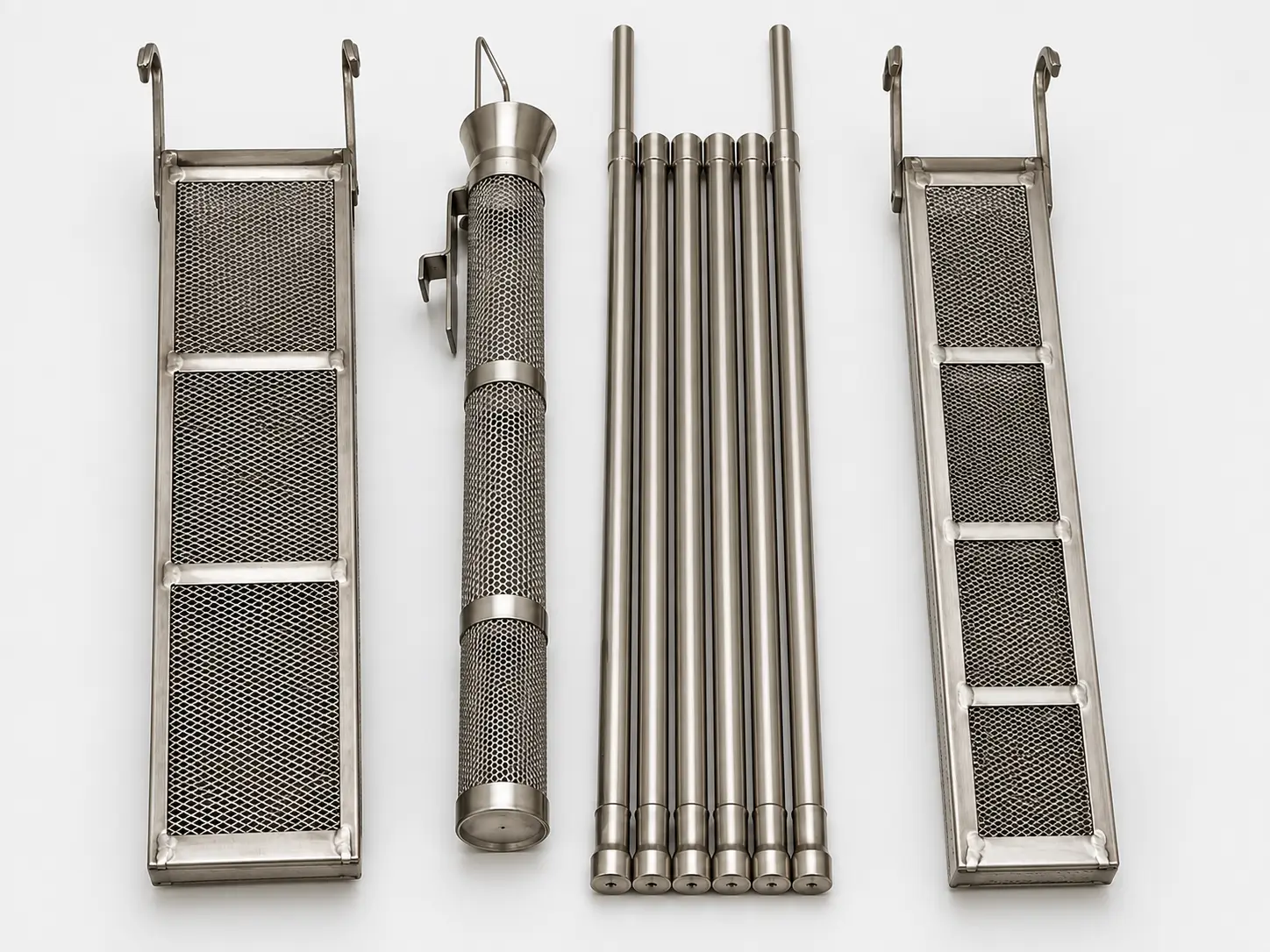
Rectangular Mesh Anode Baskets
Specify: L × W × D · SWD/LWD · Strand · Hook
Expanded-mesh construction reviewed with anode particle size, open area, frame, tank clearance, loading and bag fit.

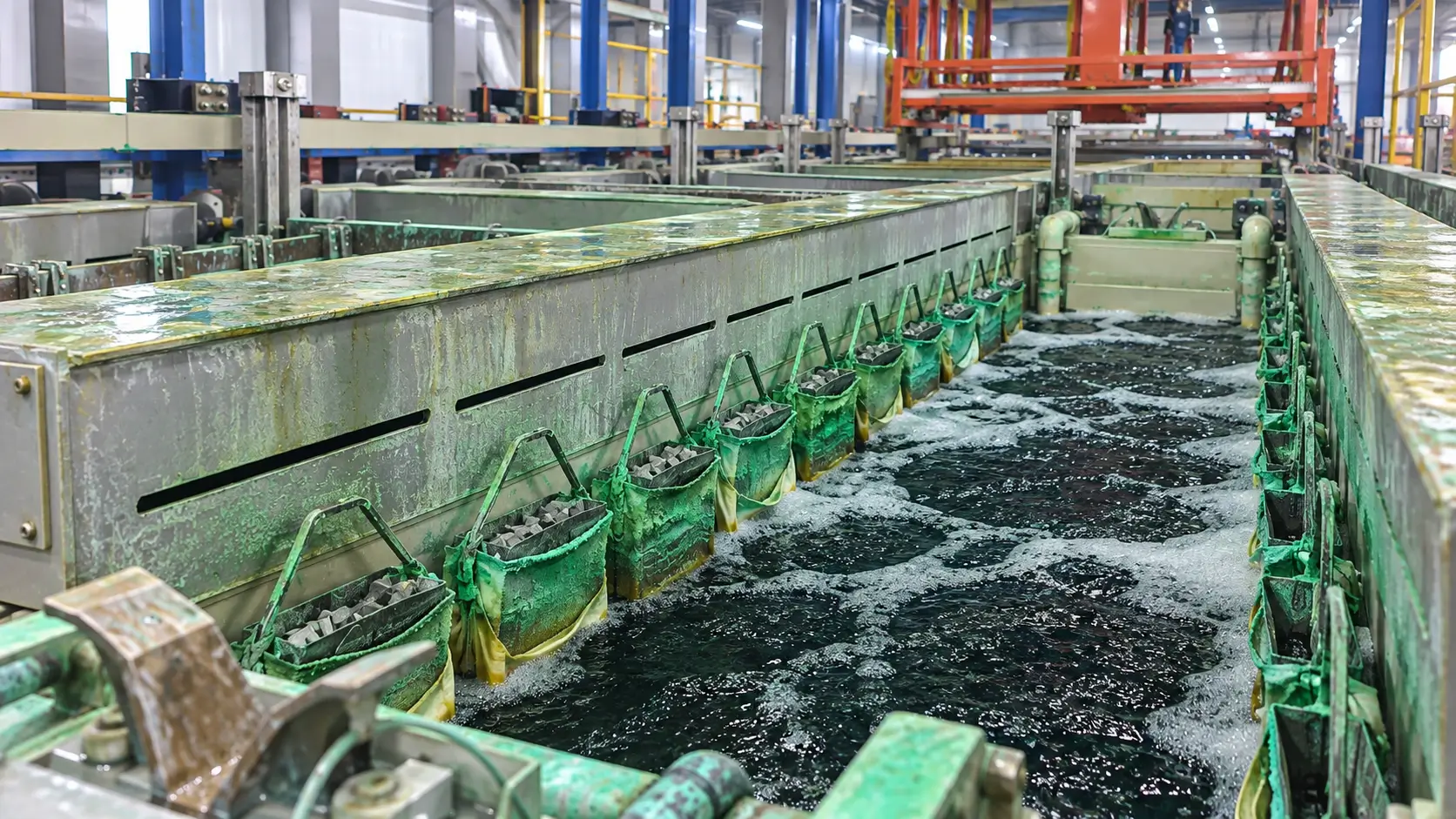
Mesh · Perforated · Framed · Bag-Fit · Custom Hook
Specify the plating bath, soluble anode material, tank and busbar layout, basket geometry, mesh or perforation, hook/contact, current information, loading, bag fit, inspection and documents before comparing quotations.
Before comparing quotations: align the bath/process basis, anode form, basket and tank geometry, mesh/perforation, current path, structural load, bag, inspection, documents and project exceptions. A titanium Grade and overall basket size alone are not a complete order.
Titanium Anode Basket Types
Mesh, perforated, cylindrical, framed and bag-fit baskets require different geometry, containment, structural, electrical and maintenance decisions.
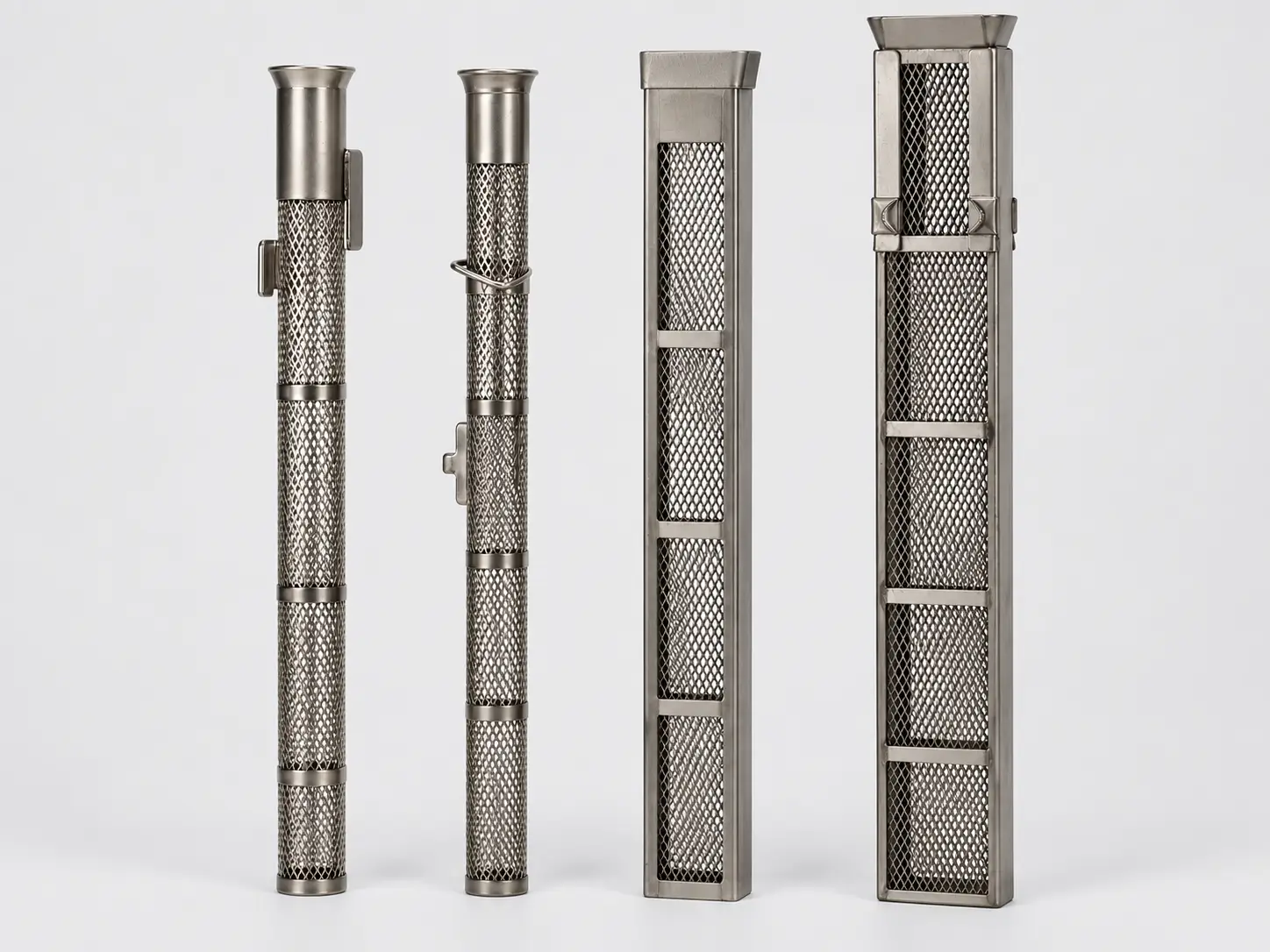
Specify: L × W × D · SWD/LWD · Strand · Hook
Expanded-mesh construction reviewed with anode particle size, open area, frame, tank clearance, loading and bag fit.
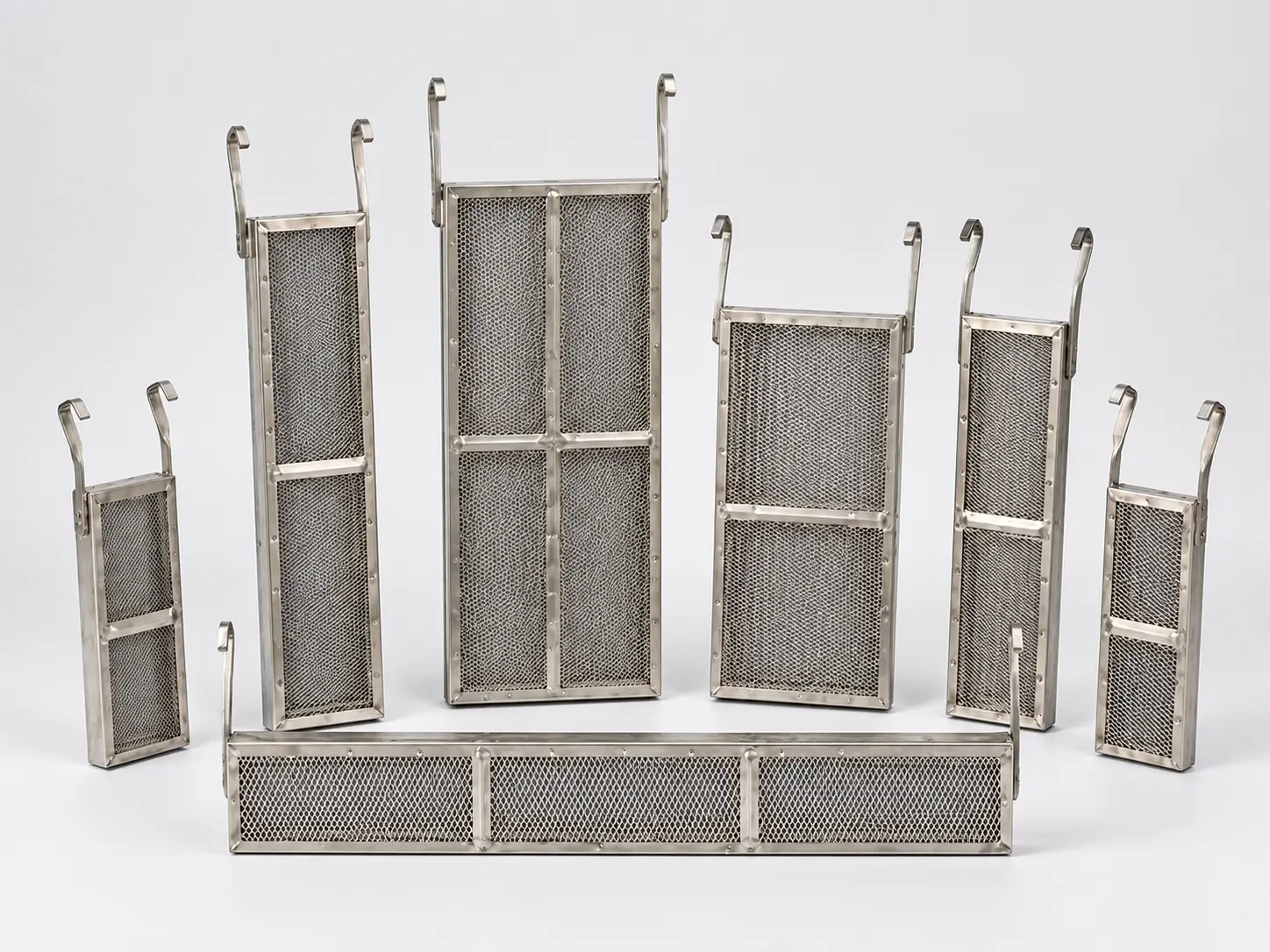
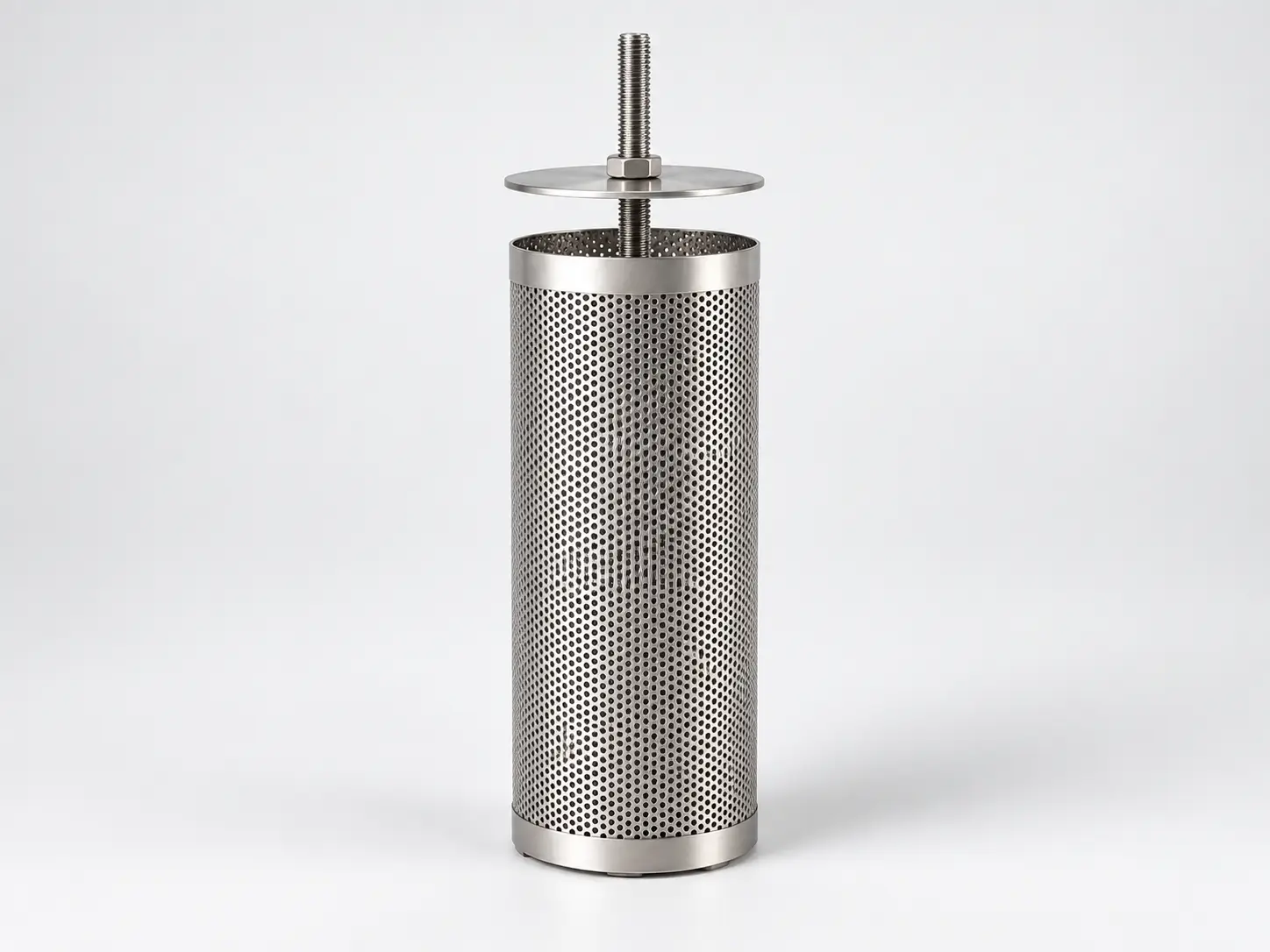
Specify: Diameter · Length · Mesh/perforation · End · Hook
Round baskets controlled for tube-like geometry, end containment, anode refill, tank position and electrical contact.
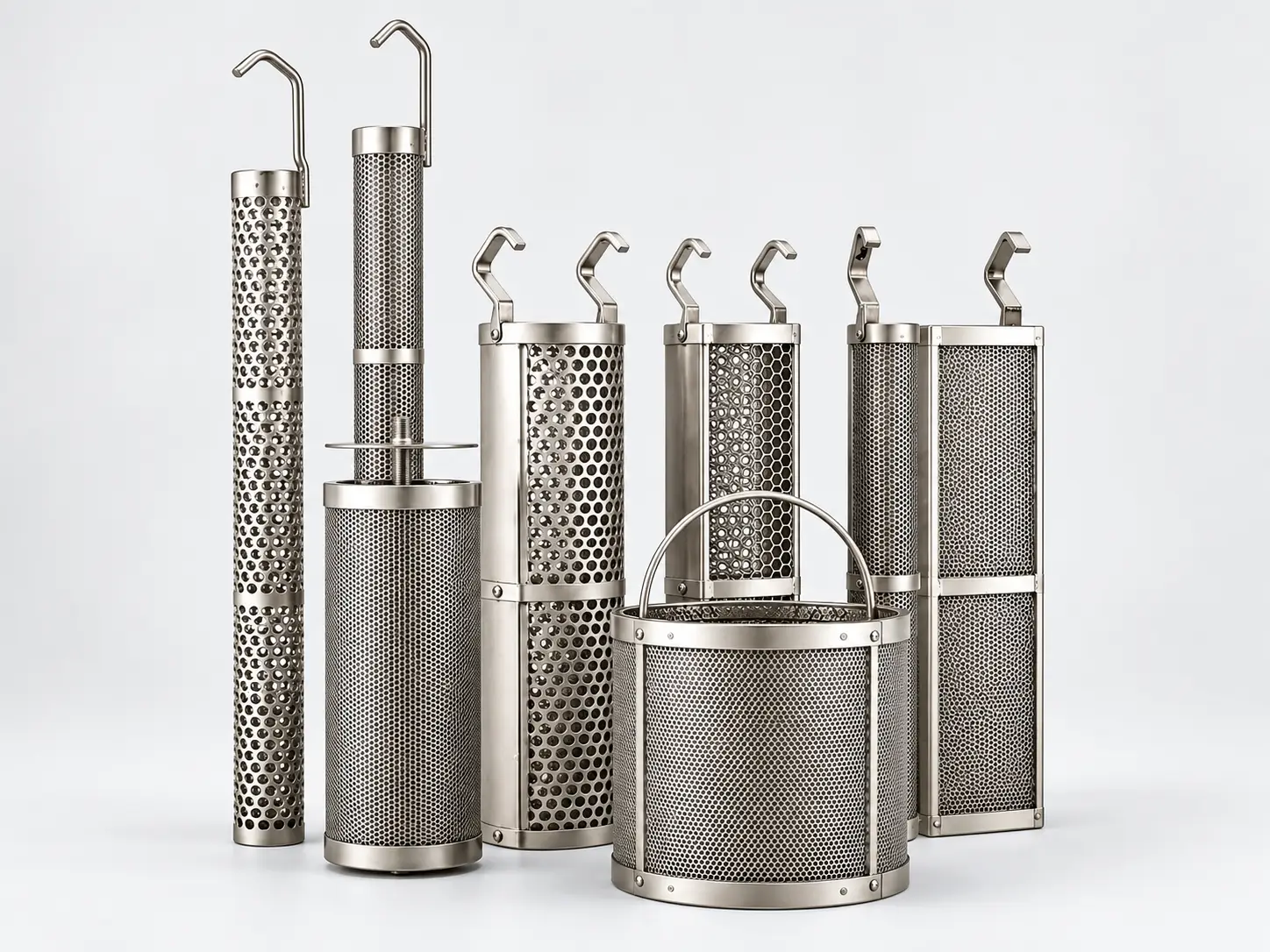
Specify: Hole · Pitch · Pattern · Sheet thickness · Open area
Perforated construction defined by measurable hole layout, edge margins, structural support and solution-access requirements.
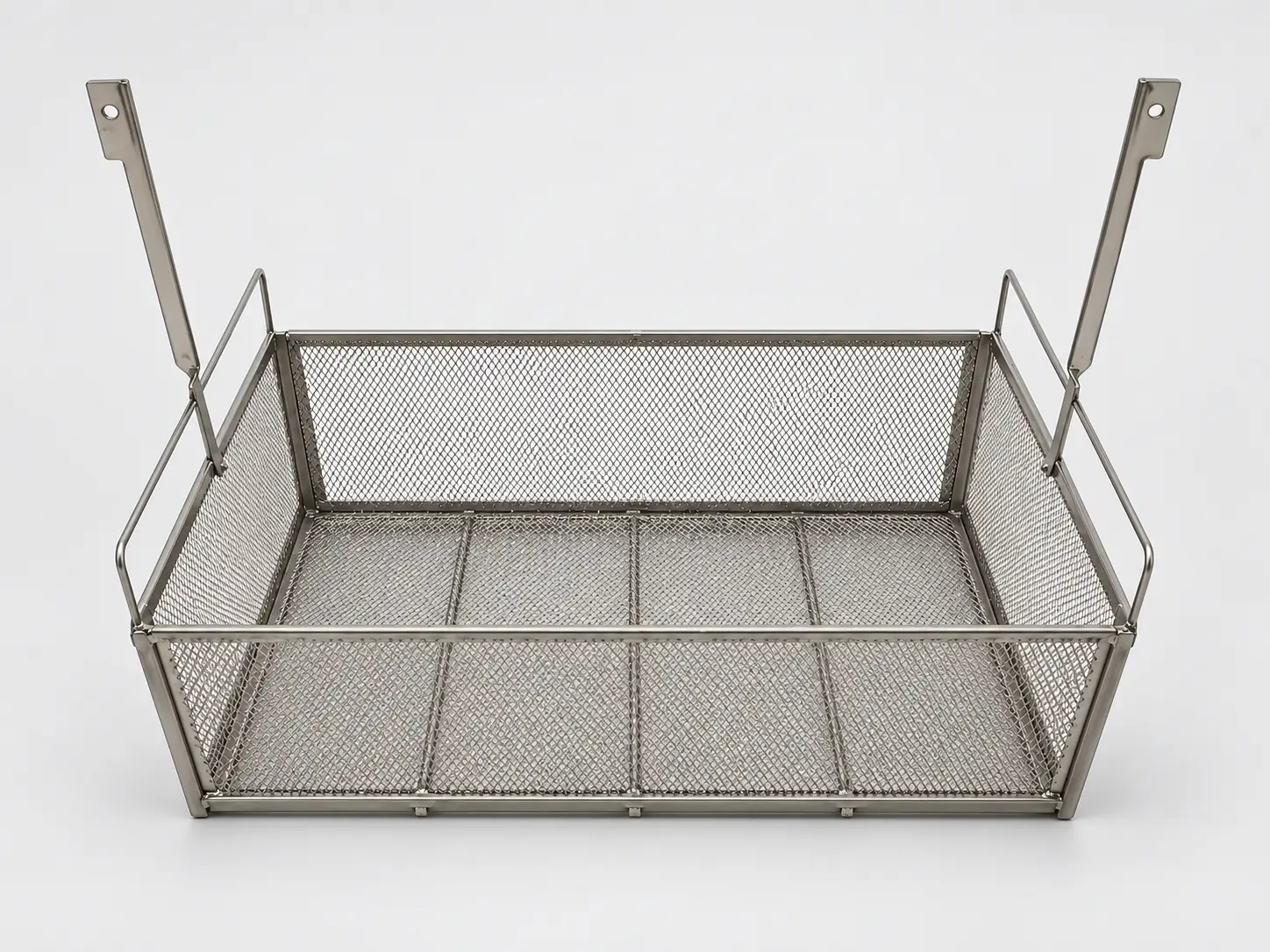
Specify: Frame · Bracing · Wet/dry load · Lifting · Welds
Reinforcement and handling features reviewed against full anode load, service cycles, basket length and installation method.
Specify: Profile · Envelope · Spacing · Contact · Drawing
Non-rectangular forms developed around the tank, workpiece, anode spacing, access and approved fabrication drawing.
Specify: Bag material · Size · Closure · Retention/flow · Change-out
Basket edges, frame and dimensions coordinated with the buyer-approved bag specification and maintenance method.
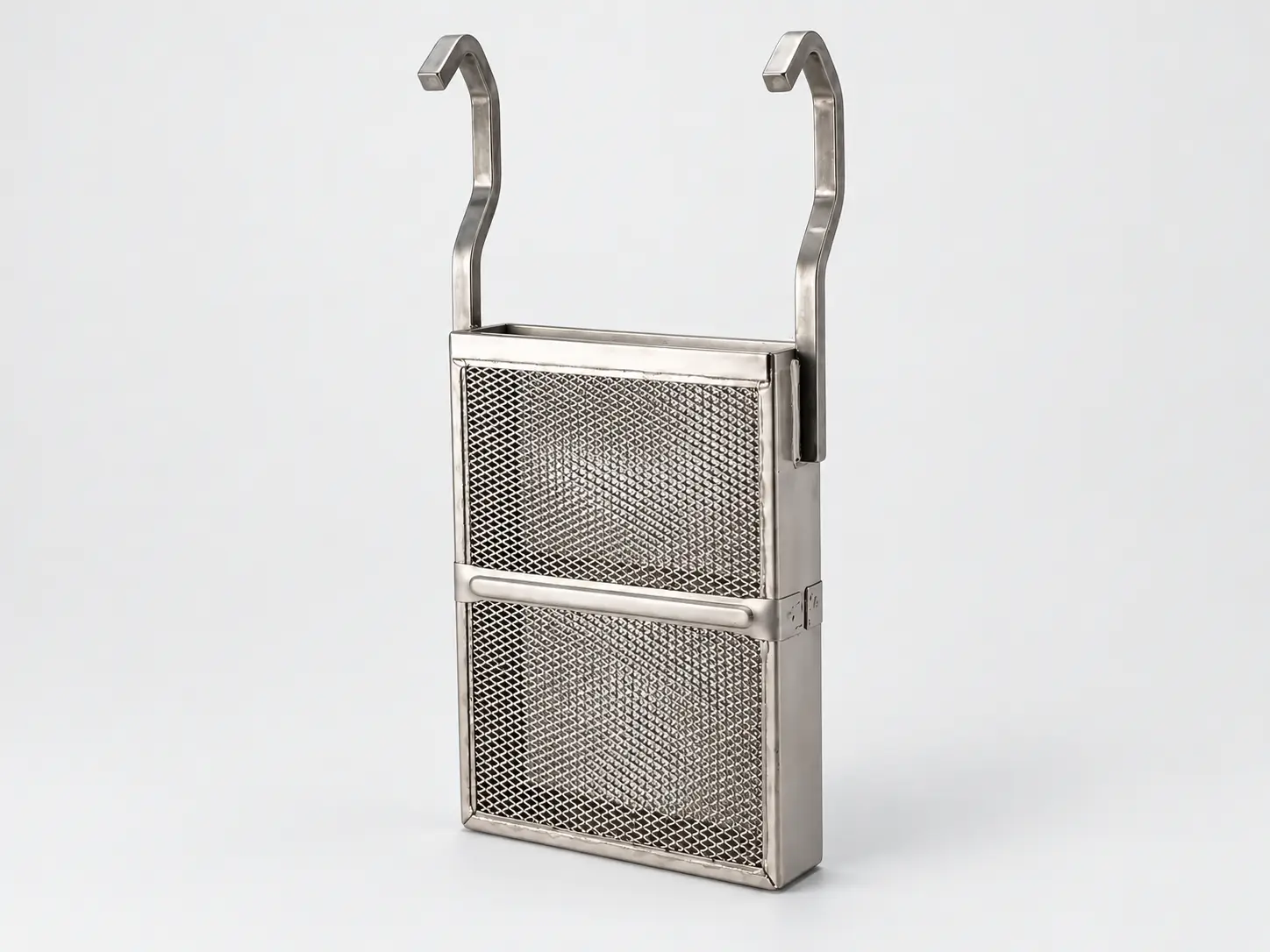
Specify: Busbar · Hook section · Contact area · Current · Liquid level
Hook and hanger geometry reviewed as part of the complete current path, tank interface and cleaning/maintenance plan.
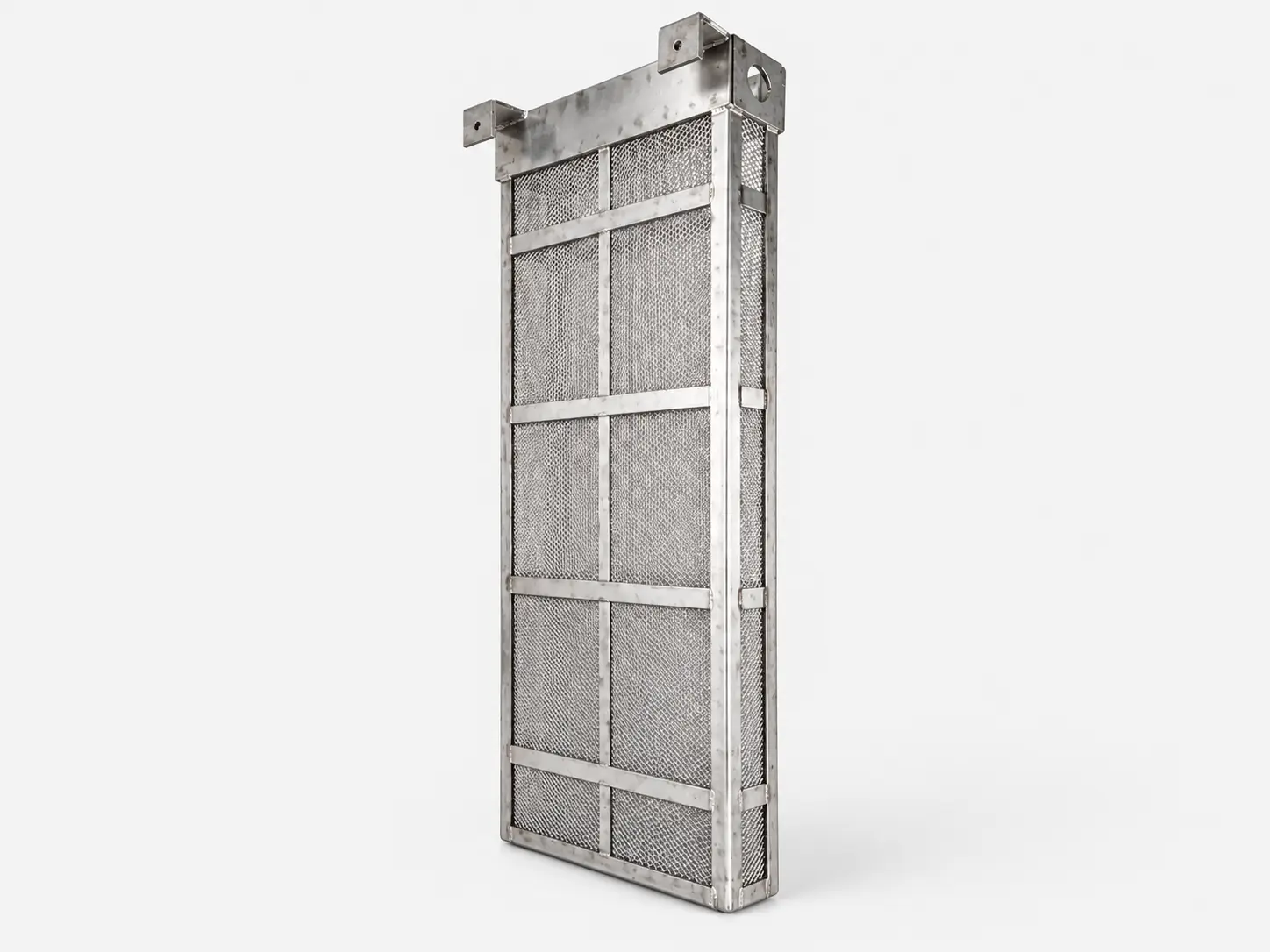
Specify: Drawing · Grade · Material forms · Welds · Inspection
Replacement, retrofit and OEM baskets controlled by revision, datums, fit-up, material identity and agreed acceptance evidence.
Baskets are cut, expanded or perforated, formed, welded and inspected in our own facility. Geometry, mesh or perforation, hook and contact design, bag fit and availability are confirmed per quotation for each configuration.
Supply Scope & Qualification
Do not combine every bath, Grade, size, mesh, hook and current condition into one capability statement. Review the exact configuration against chemistry, loading, fabrication, electrical contact, inspection and operating practice.
| Order item | Required definition | Acceptance decision |
|---|---|---|
| Process and material | Bath chemistry/conditions, anode material/form, titanium Grade and starting-material specifications | Material and role are compatible with the approved process basis |
| Tank and basket geometry | Tank, liquid level, workpiece, spacing, basket L/W/D or diameter/length and quantity | Drawing fits installation, refill and maintenance access |
| Mesh/perforation and loading | SWD/LWD/strand or hole/pitch/pattern, open area, anode size, fill height and wet/dry load | Containment, flow and structure are defined |
| Electrical path | Busbar, hook, contact area, joints, current/duty, liquid level and maintenance | Interface and inspection method are agreed |
| Bag, inspection and documents | Bag specification, dimensions, weld/visual checks, traceability and reports | Evidence links to the shipped baskets |
Standards Map
Titanium strip, sheet and plate starting material within scope; not a finished-basket design or electrical standard.
Wire or bar/billet starting material where the ordered basket construction uses those forms.
Finished dimensions, mesh/perforation, hook, welds, load, inspection, sampling and acceptance.
EN 10204 3.1 identifies an inspection document type; ISO 9001 defines a quality-management system. Neither proves basket performance by itself.
Process Review
Freeze Grade, starting forms, thickness/strand/section, basket assembly drawing, tank interface and revision.
Control cutting, expanding/perforating, forming, frame/hook fit-up, shielding-sensitive welding and edge treatment.
Check overall geometry, mesh/perforation, hooks/contacts, joints/welds, bag-touching edges and trial fit where required.
Align MTC, heat/lot identity, drawing revision, inspection results, deviations, labels and packing list.
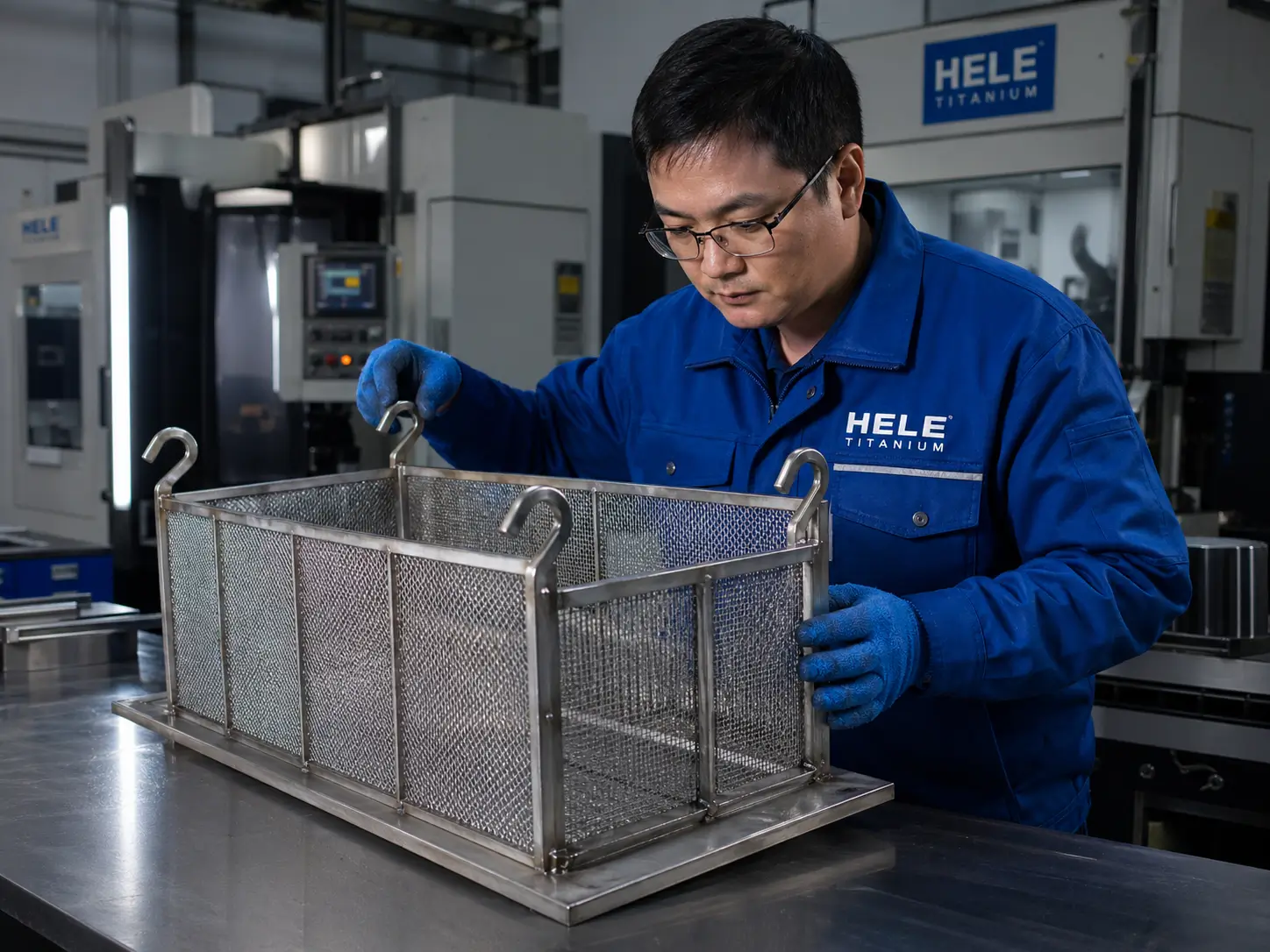
Material identity and basket dimensions matter, but current distribution, deposit uniformity and service life also depend on the busbar, rectifier, anode loading, bath, tank geometry, workpiece and operating practice.
Application Review
Application names do not establish bath compatibility or electrical performance. The plating-line owner or responsible process engineer must approve the chemistry, layout, current, loading, bag and operating basis.
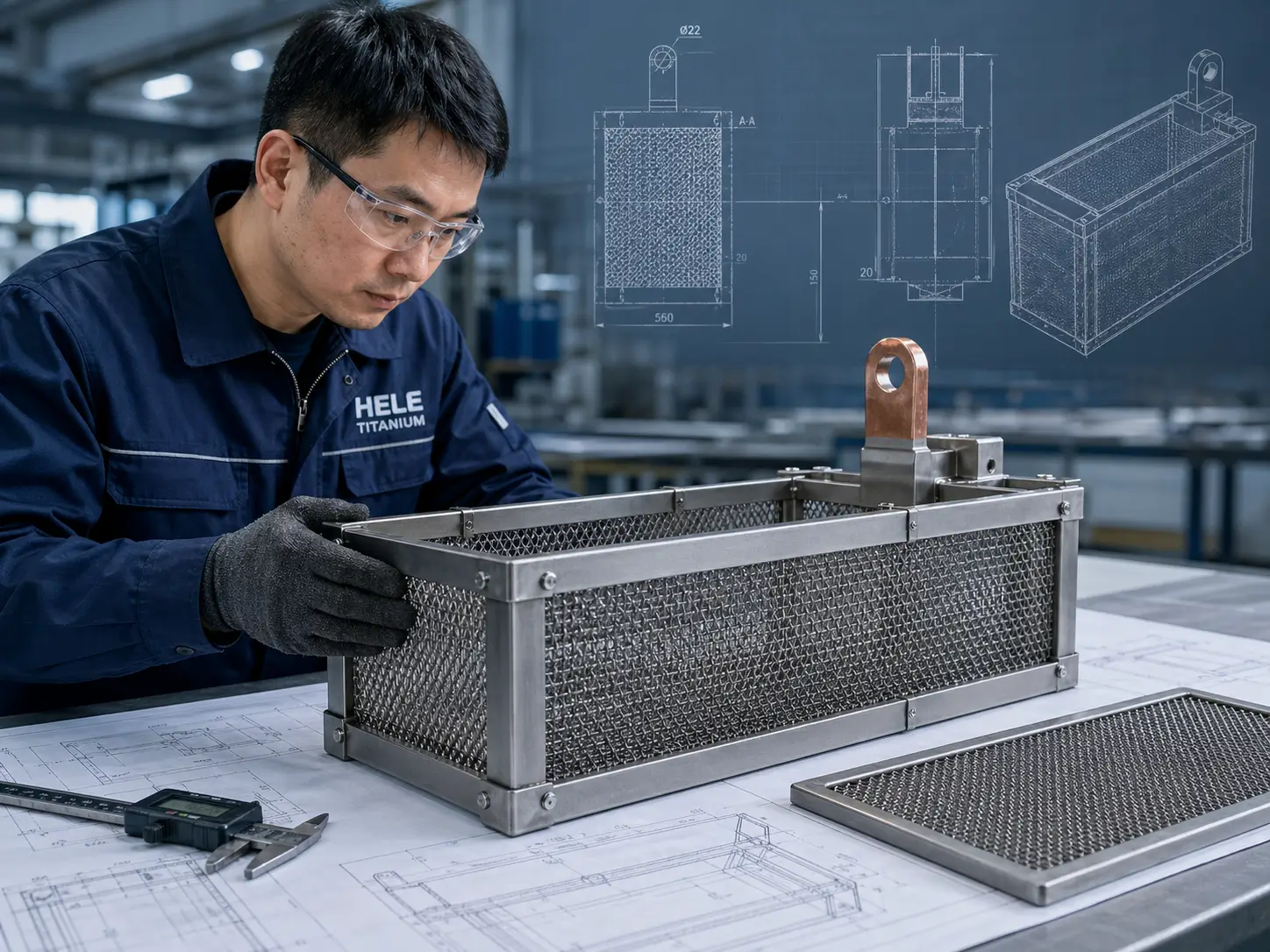
Coordinate tank, workpiece envelope, anode spacing, busbar, liquid level, basket quantity, access and maintenance before freezing geometry.
Review the application context →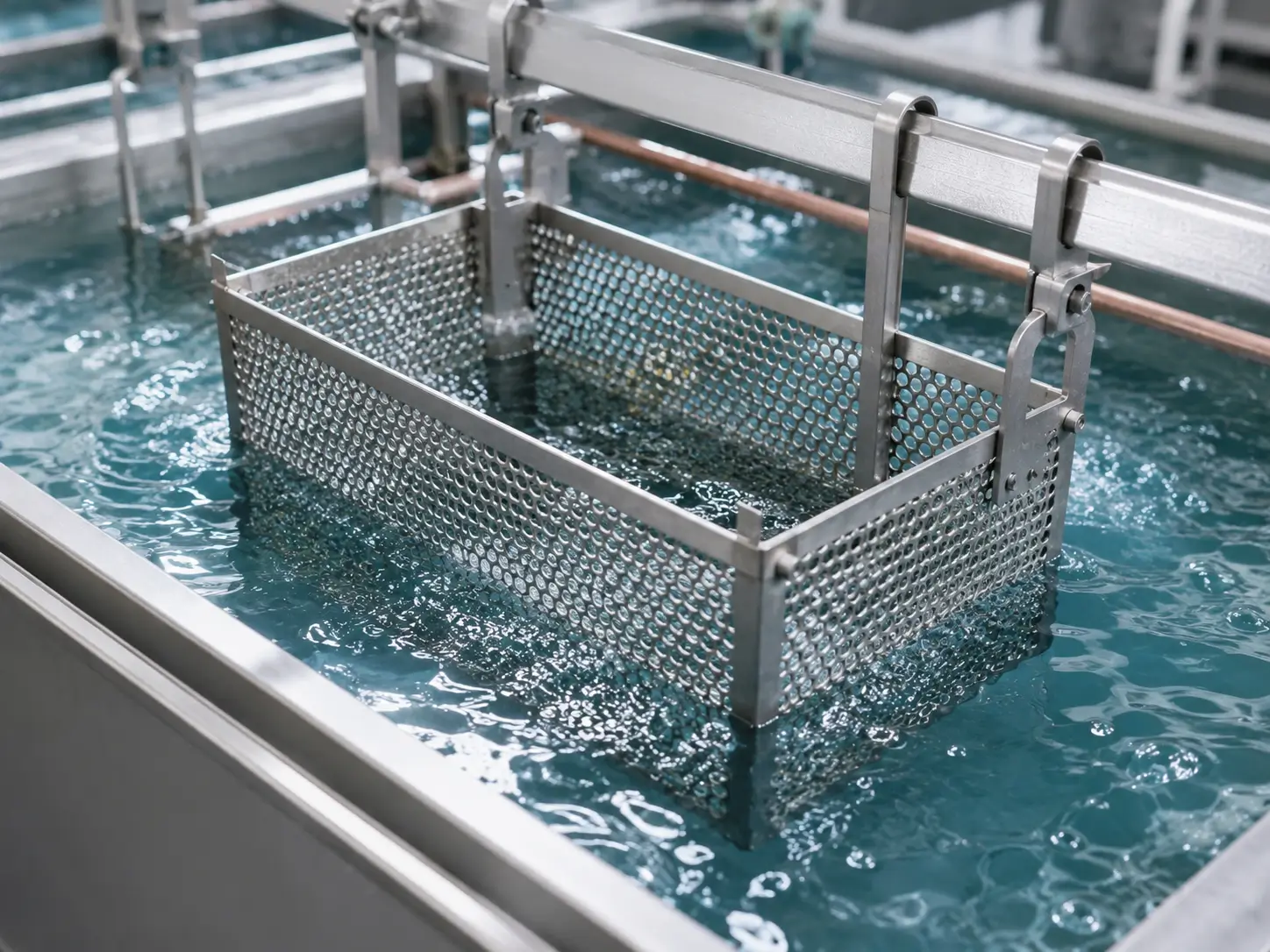
Match mesh/perforation and open area to anode form, electrolyte access, replenishment, containment, bag and actual process requirements.
Review the application context →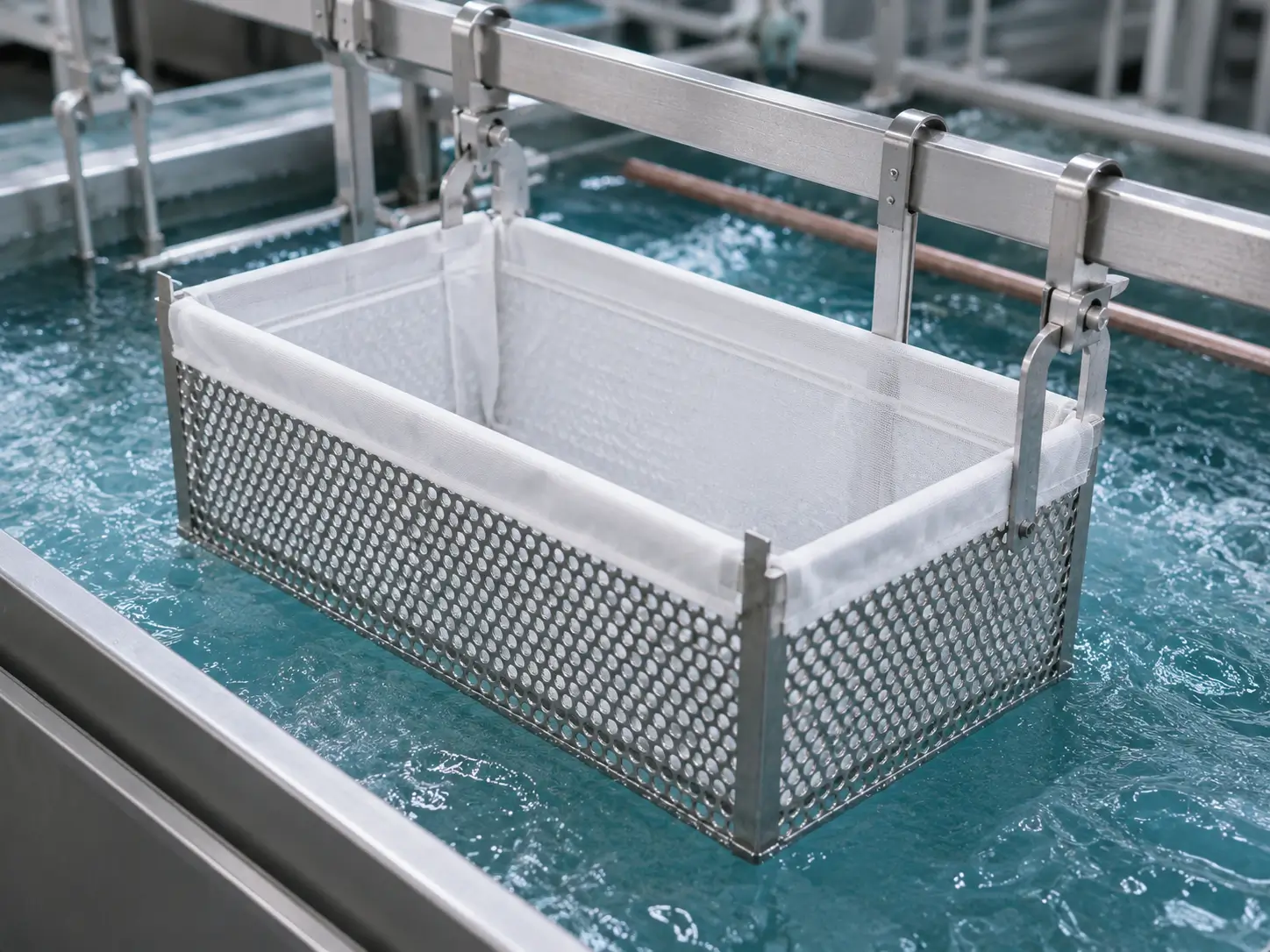
Define bag fabric, pore/retention basis, dimensions, closure, seams, flow, expansion and replacement without assuming universal sludge capture.
Review the application context →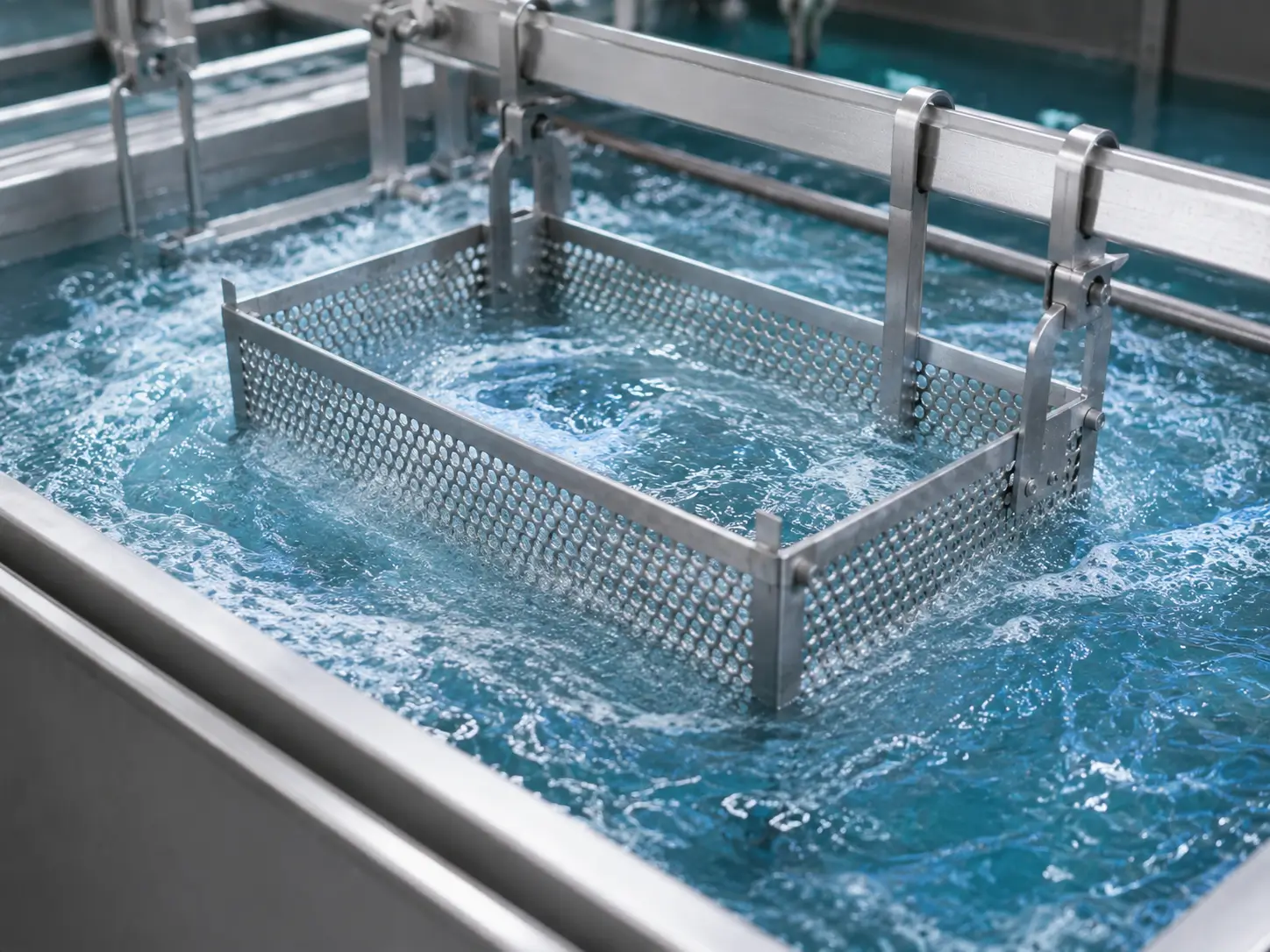
Record existing basket, sample dimensions, contact wear, distortion, failure location, current, bath and requested improvements before copying a design.
Review the application context →Related Supply Scope
The basket drawing should identify each starting material, joint, frame, hook/contact and inspection point rather than relying on a generic “titanium basket” description.
Titanium Anode Baskets Purchase Guard
The complete guide covers basket role, bath compatibility, anode loading, geometry, mesh/perforation, hooks and contacts, current path, bag fit, structural load, fabrication, inspection, maintenance and quotation comparison.
Frequently Asked Questions
Provide plating process and bath chemistry, soluble anode material and form, tank/busbar layout, basket type and dimensions, mesh or perforation details, hook/contact design, current information, anode loading, bag requirement, quantity, inspection and drawing.
No. An anode basket normally contains soluble anode material and carries current from the busbar. A work basket holds parts, while an MMO- or platinum-coated titanium anode is an insoluble electrode with a different electrochemical duty.
No. Suitability depends on the exact chemistry, concentration, pH, temperature, additives, contaminants and electrochemical conditions. Fluoride-containing or otherwise aggressive baths require specific compatibility review.
For expanded mesh, state SWD, LWD, strand width/thickness, orientation and open area. For perforated sheet, state hole shape/diameter, pitch, pattern, sheet thickness, open area and edge margins.
No. Hook and contact design are only part of the electrical path. Current distribution and deposit uniformity depend on the busbar, basket quantity/position, anode loading, workpiece geometry, bath, agitation, rectifier and operating controls.
Bag fit can be reviewed, but specify fabric/material, dimensions, closure, seam, retention/flow requirement, expansion allowance, replacement method and compatibility with the bath and anode fines.
Share the information currently available. Unknown parameters can remain open for review and confirmation.