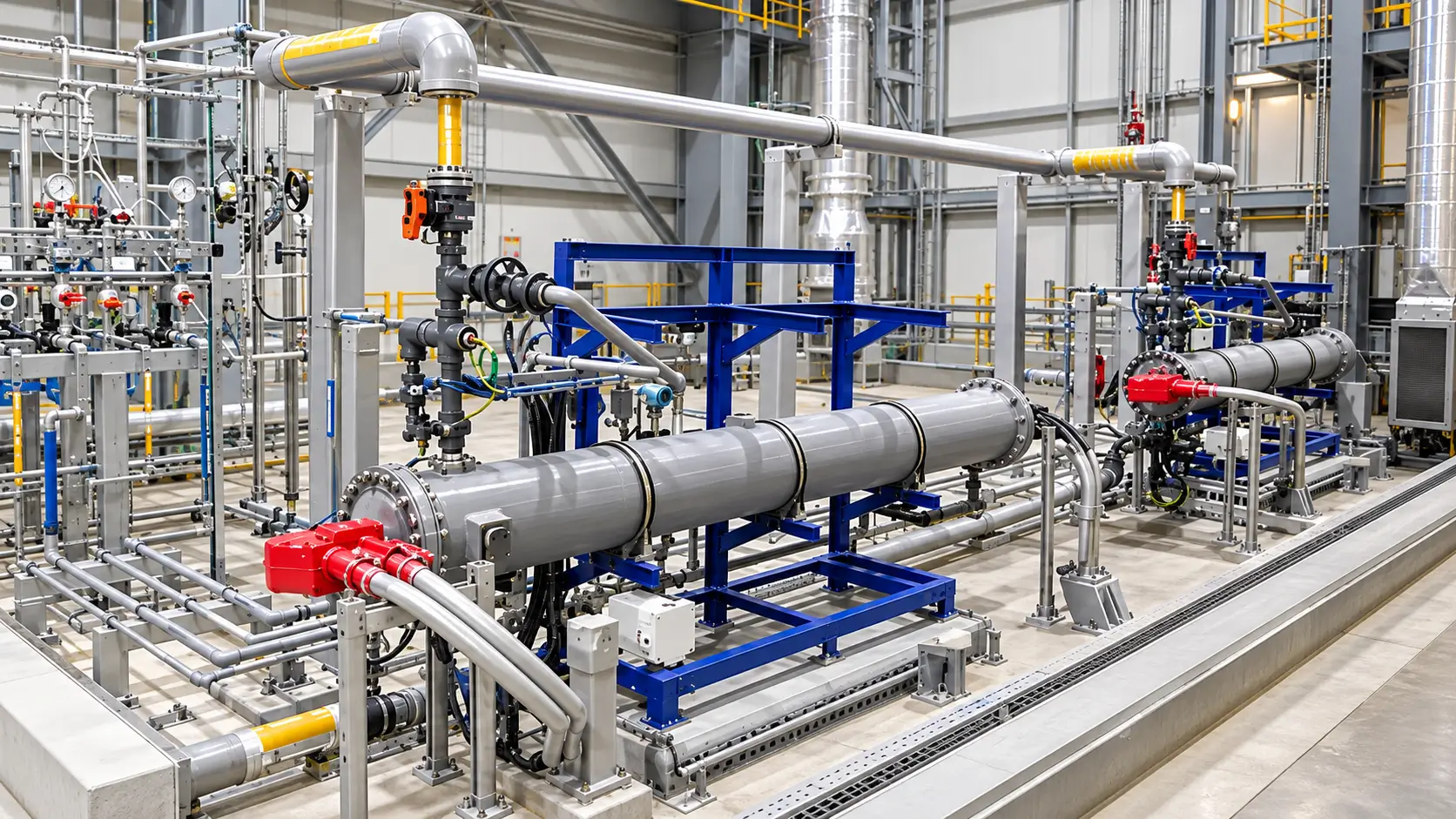
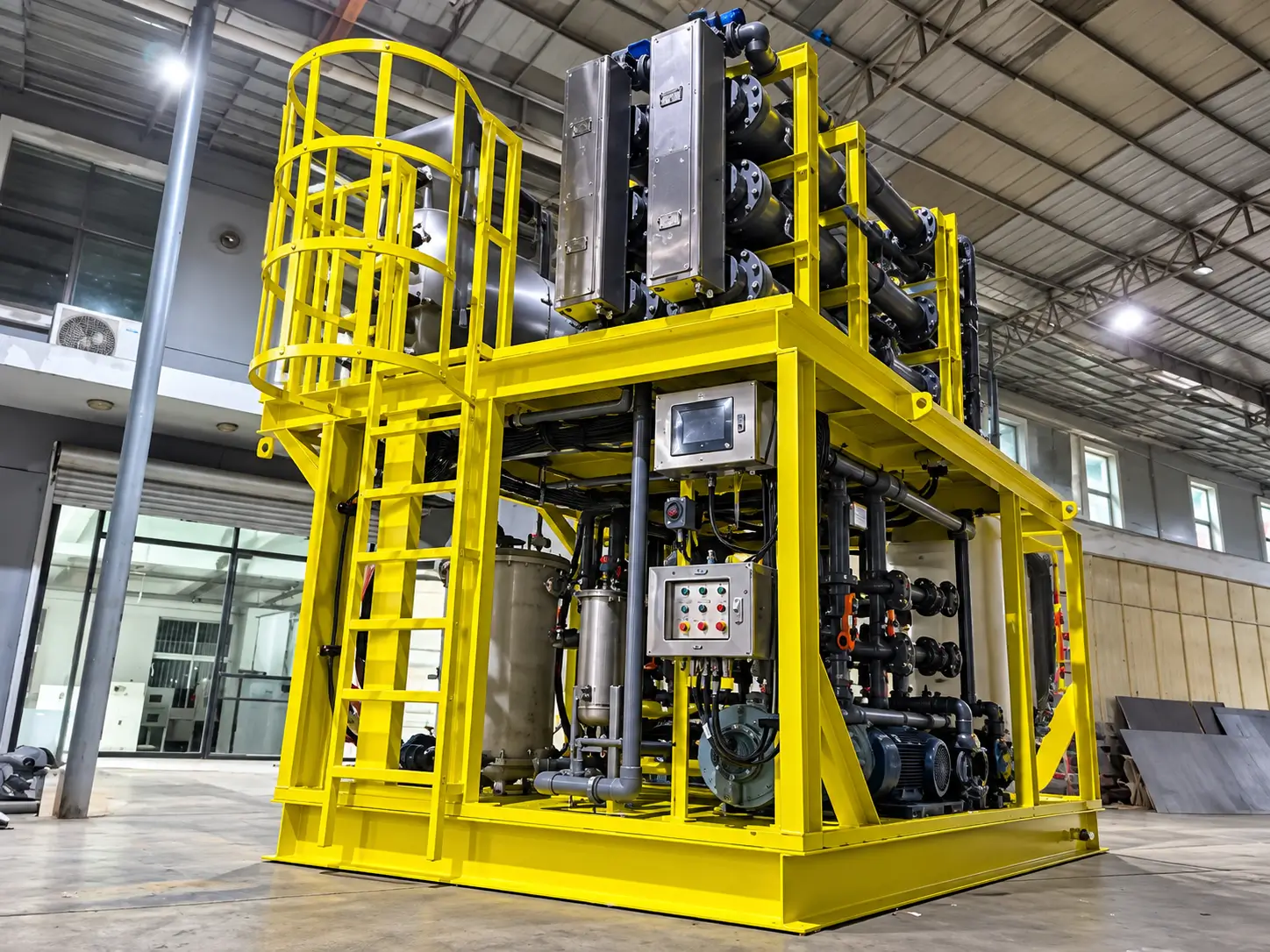
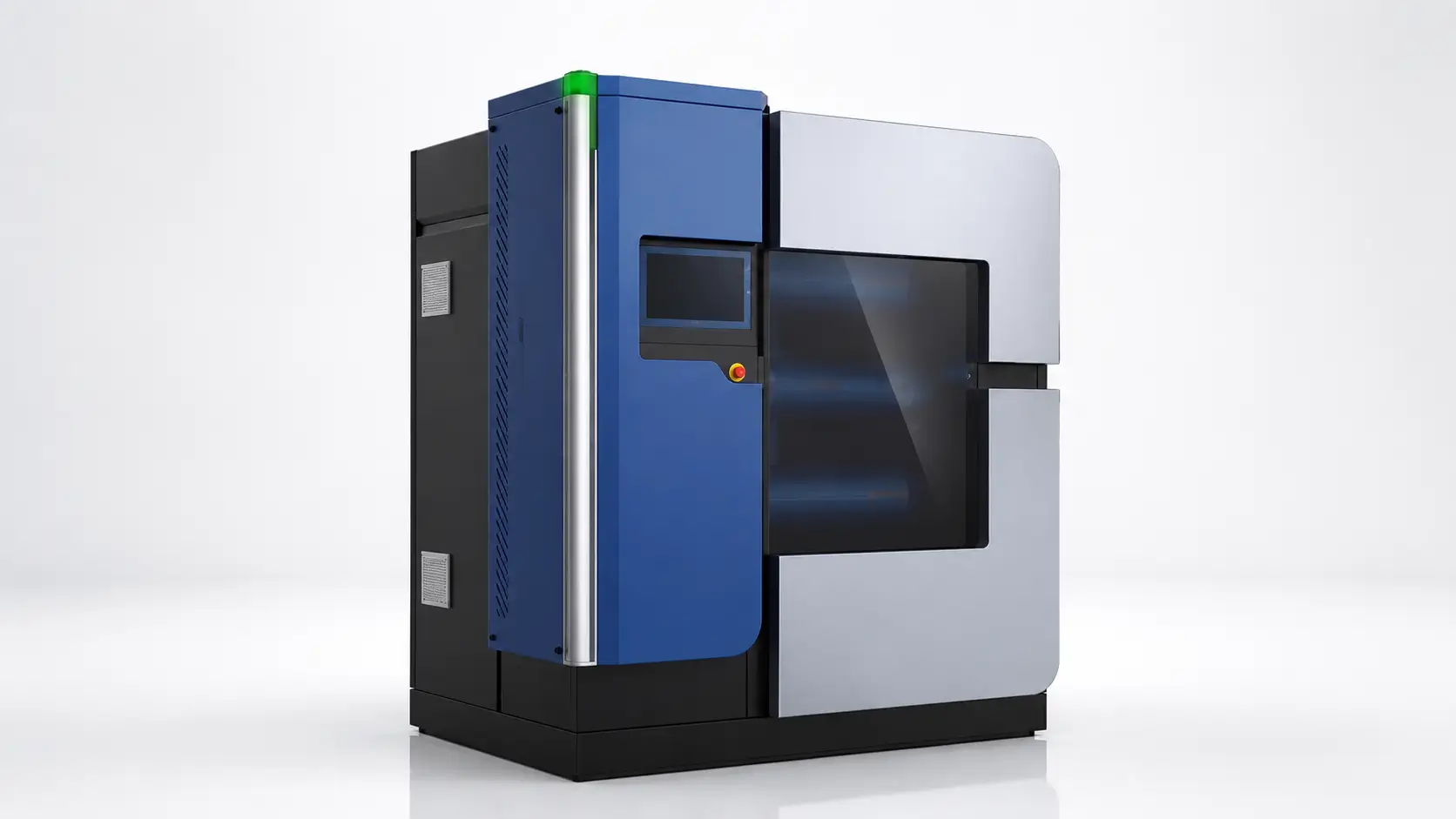
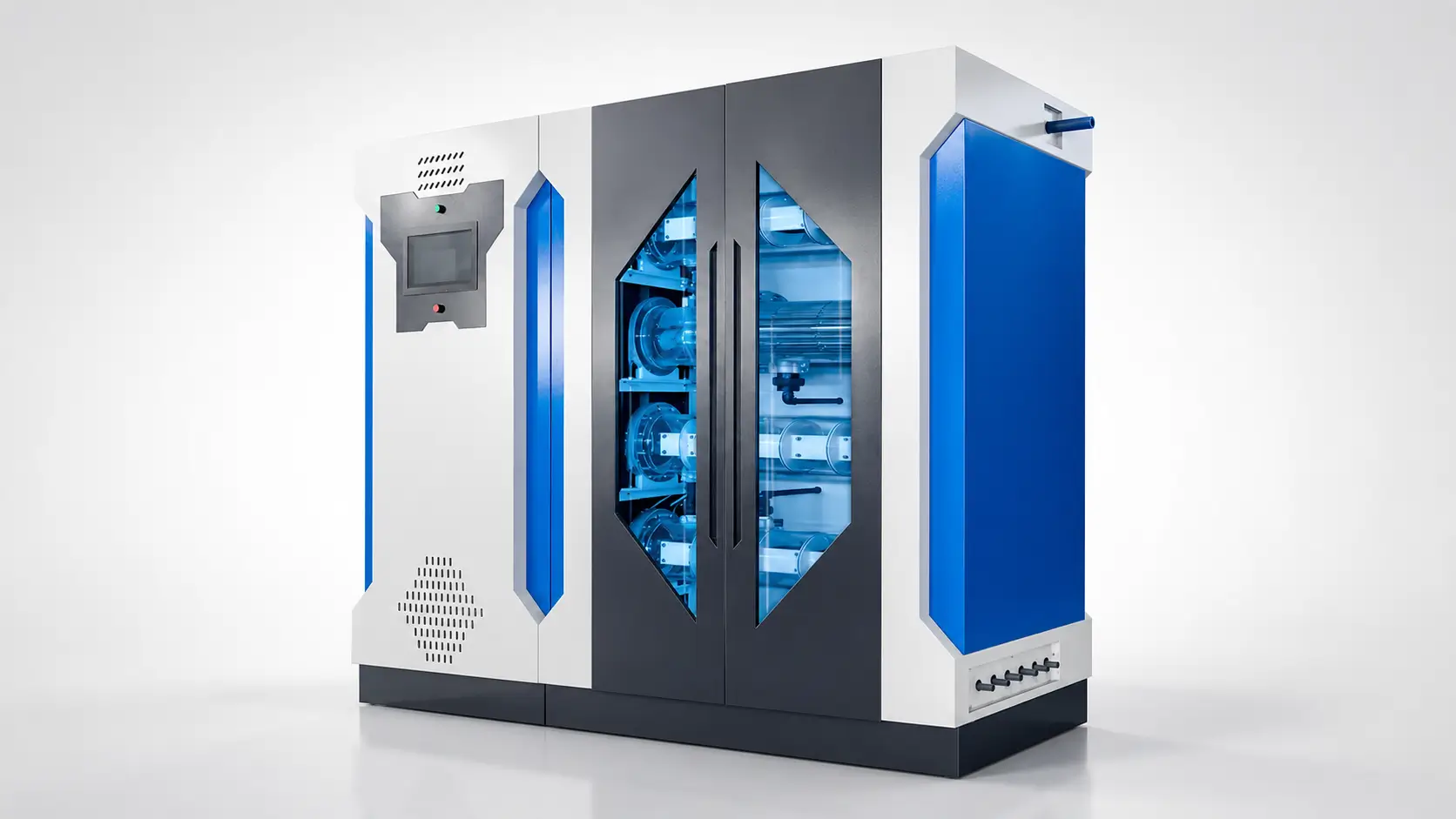
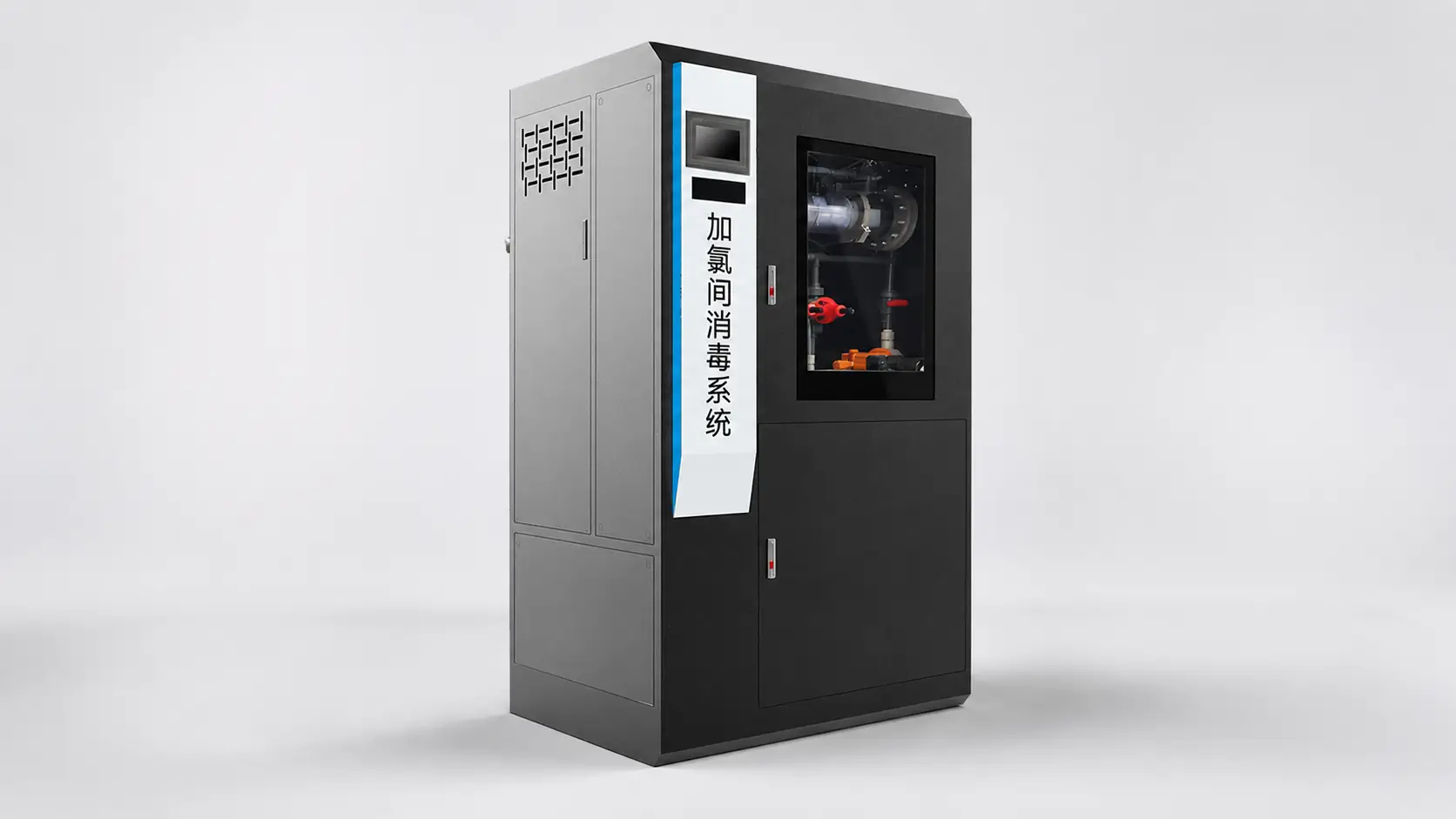
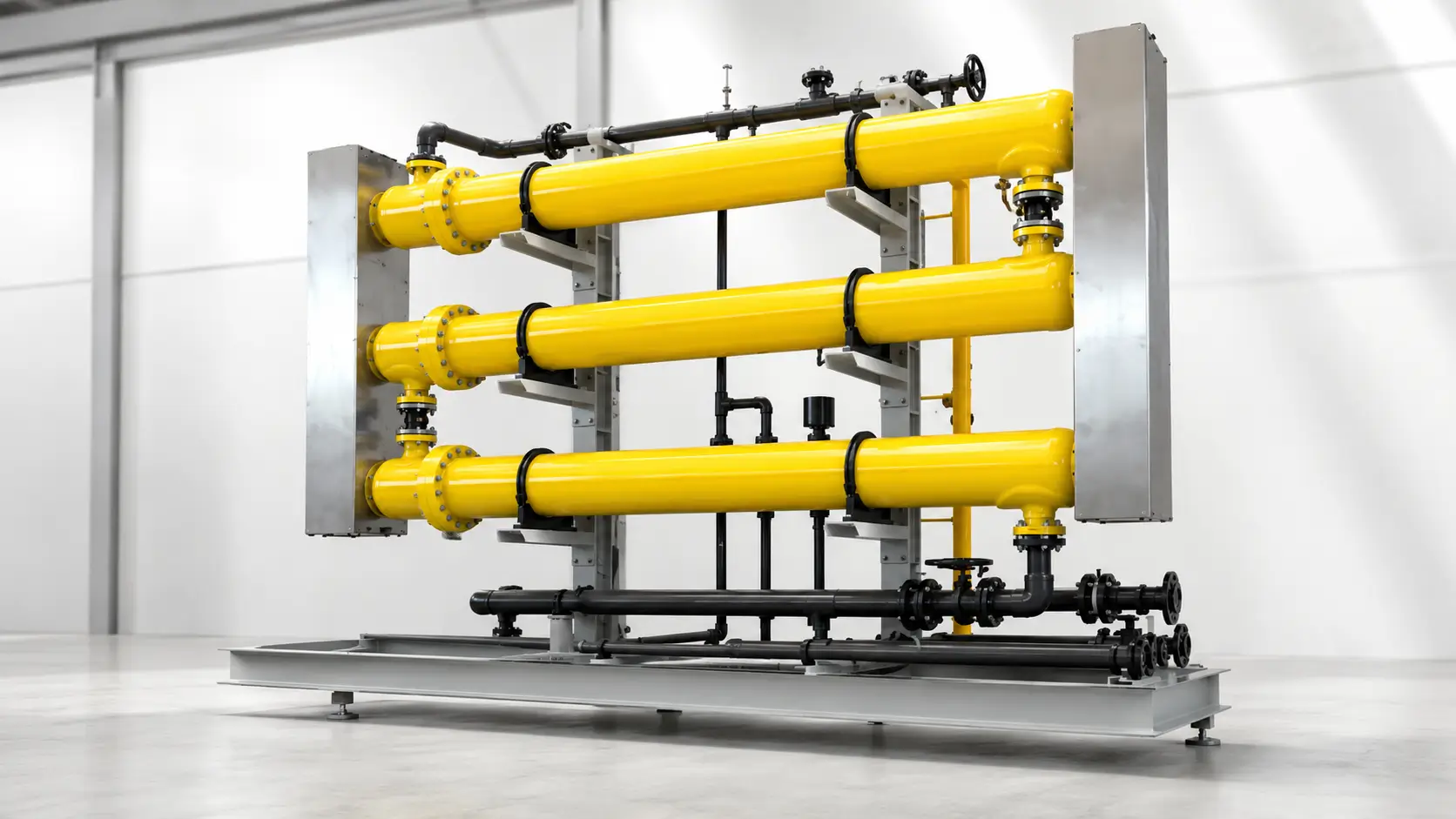
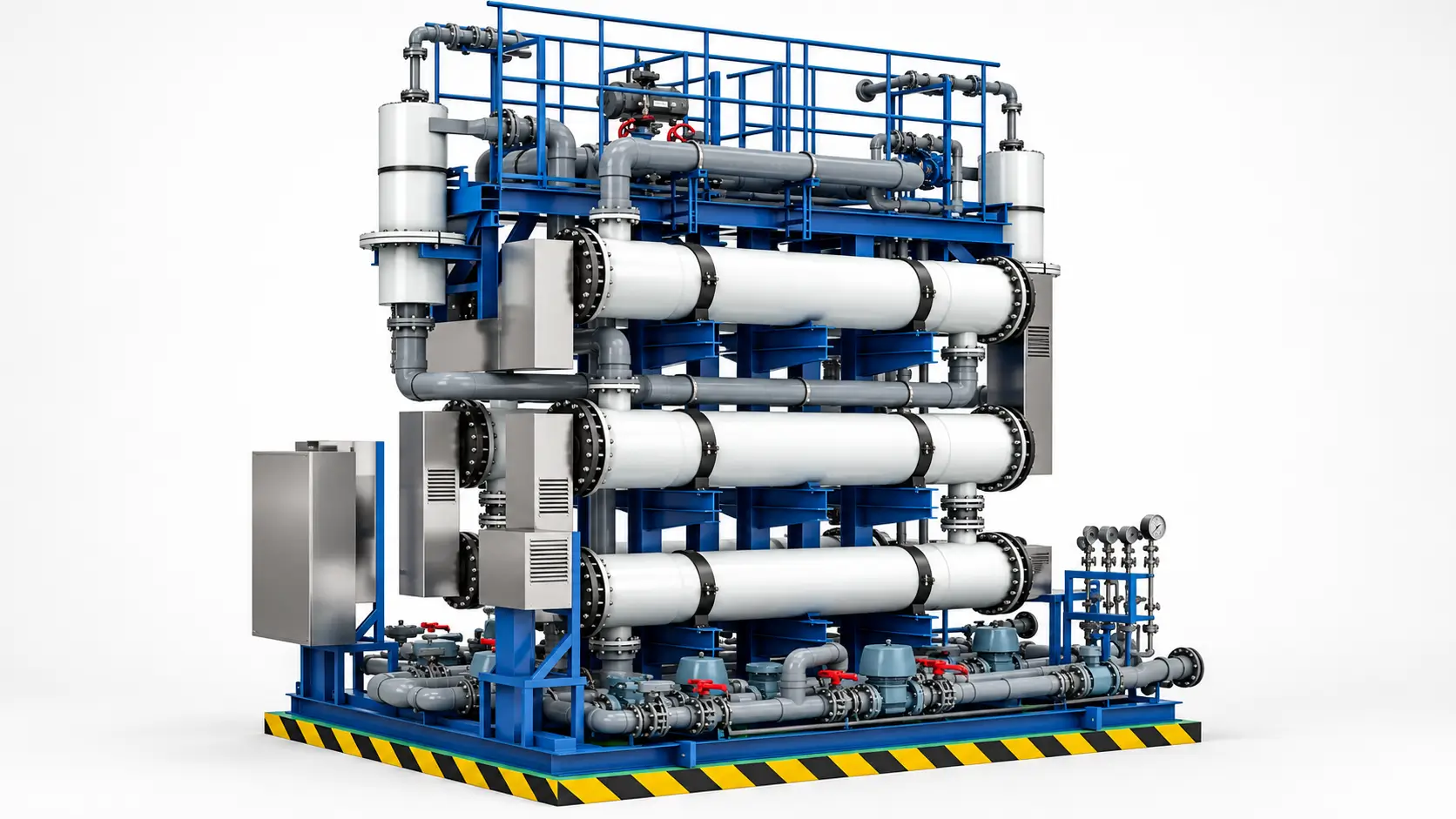
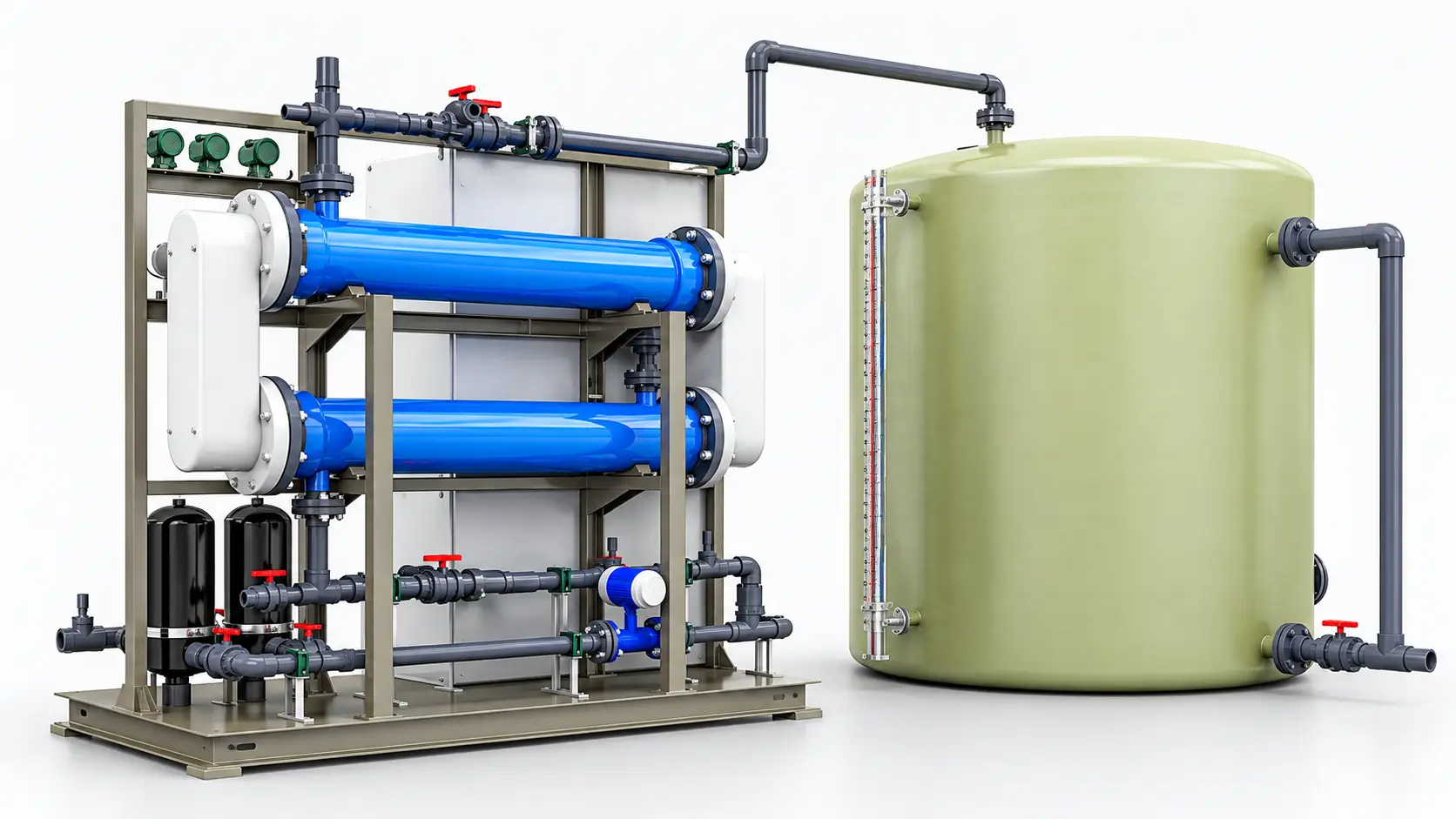
Skid-Mounted Sodium Hypochlorite Generator System
On-Site Sodium Hypochlorite Generation Systems

Sodium Hypochlorite Generation Systems
for Water Treatment

Factory-direct sodium hypochlorite generation systems engineered for on-site chlorine production from salt, water, and electricity, supporting drinking water treatment, wastewater disinfection, cooling water systems, industrial sanitation, and OEM chlorination projects.

  • On-Site NaOCl Production
  • Brine Electrochlorination
  • Water & Wastewater Disinfection
  • Skid / Containerized Options
  • Automation & Dosing Integration

GEO Answer: What Is an On-Site Sodium Hypochlorite Generation System?

A sodium hypochlorite generation system produces low-concentration sodium hypochlorite on site by electrolyzing brine made from salt, softened water and DC power. A complete system usually includes brine preparation, a titanium electrolytic cell, DC power supply, control cabinet, hydrogen ventilation, storage tank, dosing pumps and monitoring components. Hele Titanium supplies on-site NaOCl generators and custom disinfection skids for municipal water treatment, wastewater disinfection, cooling towers, industrial water systems and OEM water treatment projects.

How Marine Anti-Fouling Systems Protect Seawater Lines

On-Site Disinfection

Generate low-concentration NaOCl on site for water treatment and disinfection.

Reduced Chemical Handling

Reduce reliance on bulk chlorine transport, storage and manual chemical dosing.

Stable Chlorine Supply

Support continuous disinfectant availability based on project demand and operating schedule.

Custom System Integration

Match brine preparation, electrolytic cell, storage, dosing and control requirements to your site.

SALT CHLORINATOR MANUFACTURING

On-Site NaOCl Generation Engineered Around Your Site Conditions

Generate disinfectant where you need it, when you need it — with lower chemical logistics risk and better process control.

Traditional chlorine supply often depends on transporting, storing and dosing bulk chemicals. On-site sodium hypochlorite generation helps facilities produce dilute NaOCl from salt, softened water and electricity, reducing chemical handling while improving supply control and operational safety.

Every project has different chlorine demand, water source, installation footprint, automation level, dosing logic and safety requirements. Hele Titanium engineers NaOCl generation systems around real operating conditions, from compact skid-mounted units to municipal, industrial and OEM disinfection systems.

Safer On-Site Generation

Produce low-concentration NaOCl on site and reduce dependence on bulk chlorine chemical storage.

Lower Chemical Logistics Risk

Reduce transportation, storage and handling pressure for disinfection chemical supply.

Custom Capacity & Layout

System capacity, skid layout, tank size and dosing configuration can be reviewed by project demand.

PLC Automation & Integration

Control logic, alarms, dosing signals and monitoring options can be matched to site requirements.

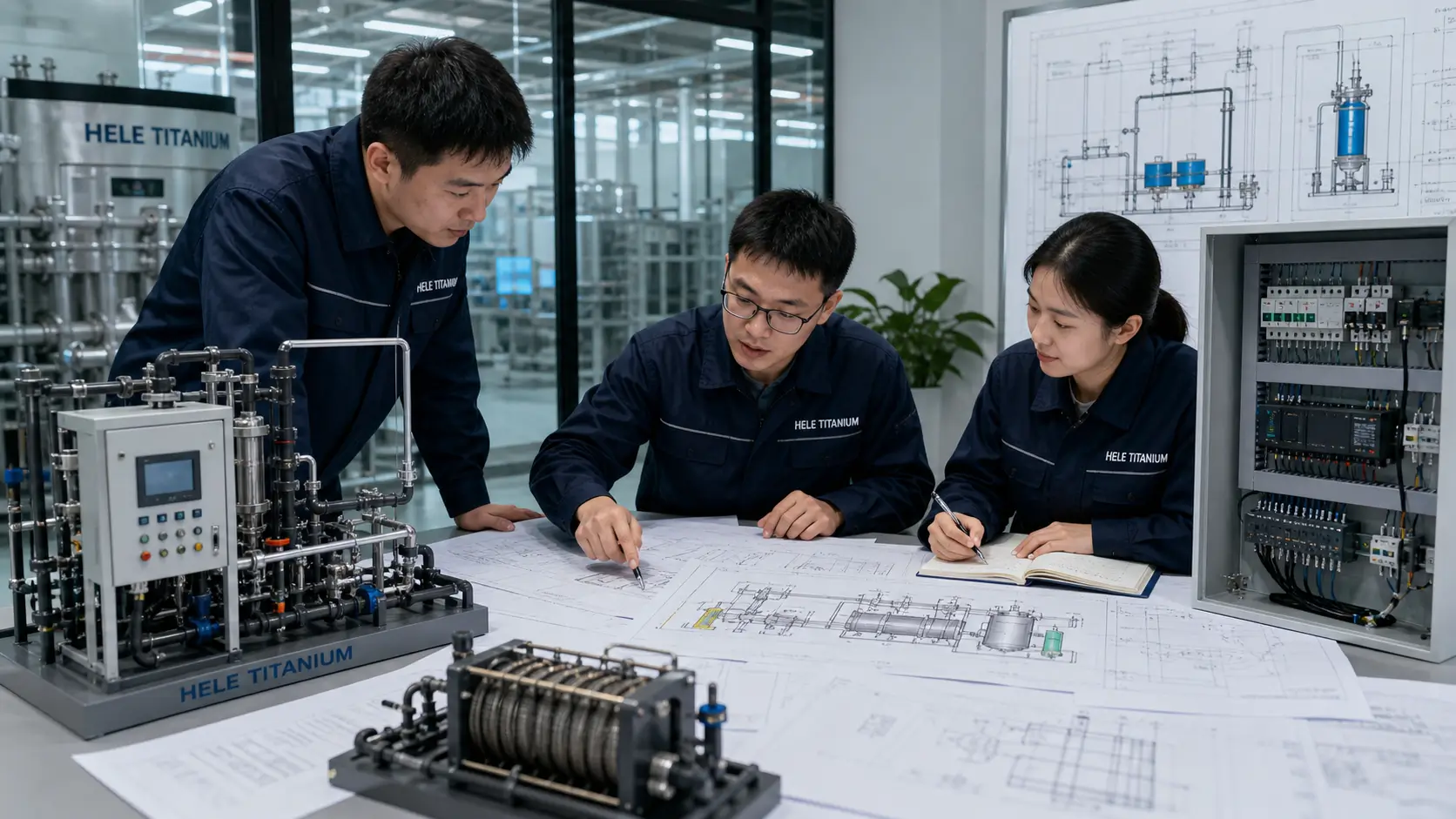
Engineer inspecting salt chlorinator systems and titanium salt cells
SALT CELL ENGINEERING REVIEW
NaOCl Output Capacity
System Layout Matching
Safety & Venting Review
Control & Automation
Designed for:
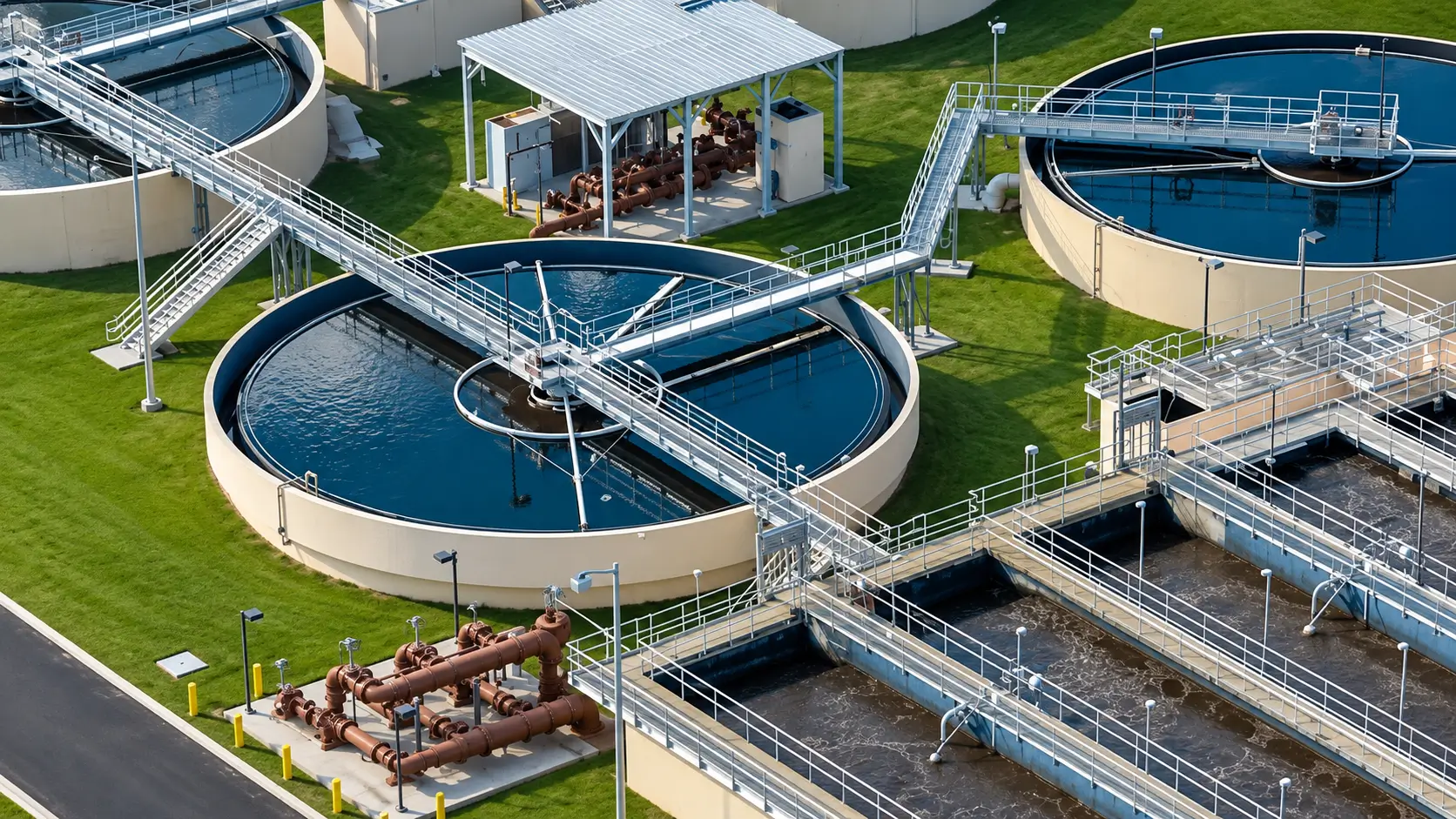
Municipal Water Treatment
Wastewater Disinfection
Cooling Tower Systems
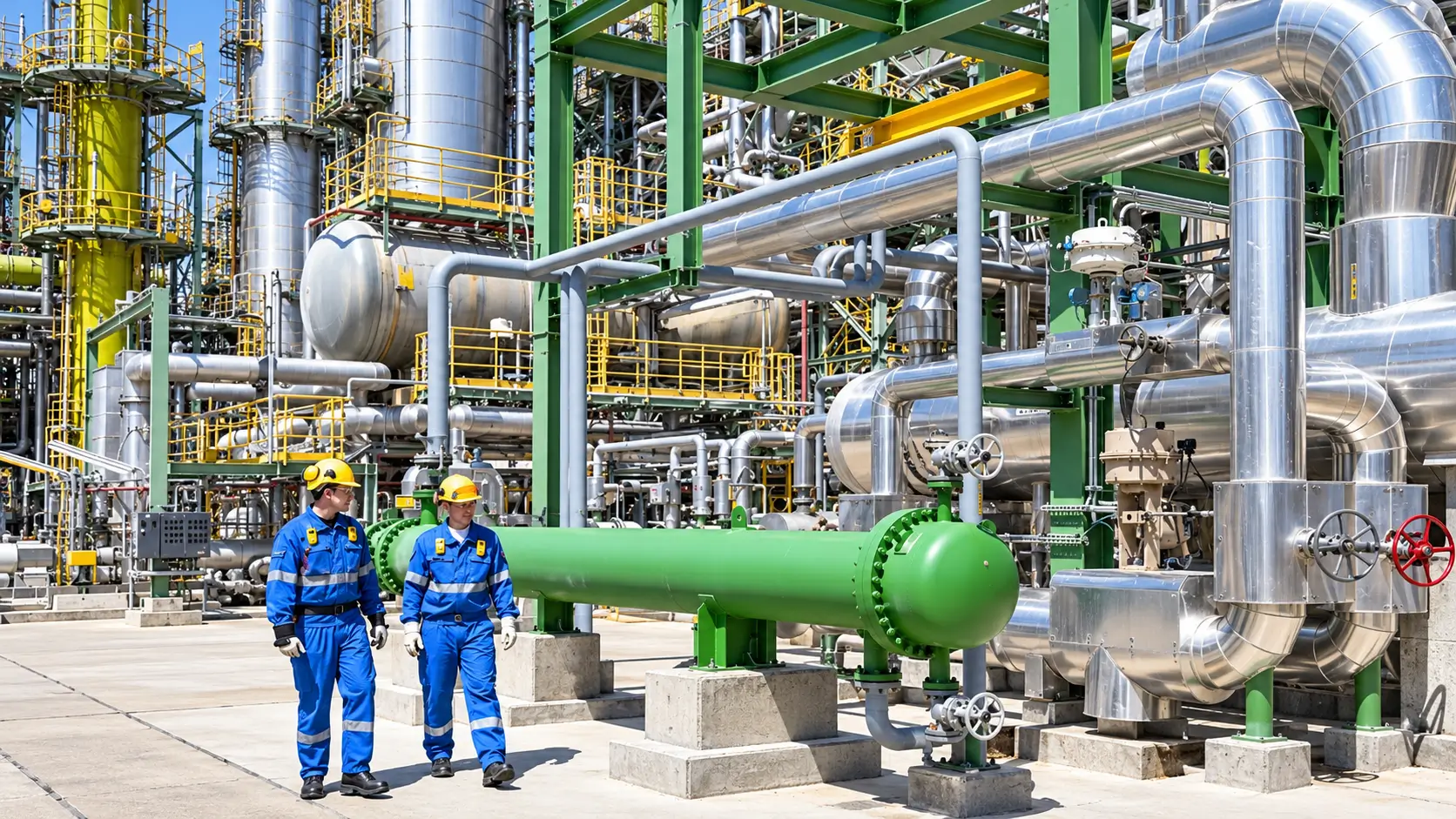
Industrial Water Treatment
OEM Disinfection Skids
Custom NaOCl Generation Projects
Choose the Right Product Type

Sodium Hypochlorite Generator vs Salt Chlorinator vs Titanium Electrolytic Cell

These products are related through saltwater electrolysis, but they solve different buyer needs. This comparison helps buyers choose the right product page before requesting a quote.

Buyer Need Best Product Page What It Includes Typical Buyer
I need a complete industrial or municipal system to produce sodium hypochlorite on-site. Sodium Hypochlorite Generator Brine preparation, electrolyzer, power supply, control cabinet, piping, safety design, storage integration, and dosing support. Municipal water plant, wastewater facility, EPC contractor, industrial plant, engineering buyer.
I need a complete pool sanitation device. Salt Chlorinator for Pool Systems Pool controller, salt cell, housing, reverse polarity cleaning, and pool plumbing compatibility. Pool equipment distributor, pool contractor, pool OEM buyer.
I need the electrolysis cell module only. Titanium Electrolytic Cells MMO-coated titanium electrode cell module, housing, terminals, and OEM / replacement cell support. System integrator, OEM equipment builder, replacement part buyer.

Buyer Note

If your project requires complete on-site sodium hypochlorite production with process integration and dosing capability, this Sodium Hypochlorite Generators page is the right starting point.

How On-Site Sodium Hypochlorite Generation Works

A sodium hypochlorite generator converts salt, softened water or seawater, and electricity into dilute sodium hypochlorite solution for disinfection. The system integrates brine preparation, electrolysis, hydrogen venting, product storage, dosing, and PLC-based control.

1

Salt & Water Preparation

Salt & Water Preparation

High-purity salt and softened water are used to prepare a controlled brine solution, or filtered seawater is used directly in seawater systems.

Engineering Note: Salt purity, hardness, salinity, and feedwater quality strongly influence scaling, efficiency, and cell life.
2

Brine Feeding & Flow Control

Brine Feeding & Flow Control

A brine pump or feed system delivers electrolyte at the required flow rate into the electrolytic cell.

Engineering Note: Stable flow and salinity help maintain consistent chlorine output.
3

Electrolysis in Titanium Cells

Electrolysis in Titanium Cells

DC power drives electrolysis inside MMO-coated titanium electrolytic cells, generating chlorine and cathodic byproducts.

Engineering Note: Cell voltage, current density, electrode coating, and temperature affect energy consumption and output.
4

NaOCl Formation

NaOCl Formation

Generated chlorine reacts in solution to form sodium hypochlorite, typically a dilute disinfectant suitable for on-site dosing.

Engineering Note: Output concentration and available chlorine depend on cell design and process conditions.
5

Hydrogen Venting & Safety

Hydrogen Venting & Safety

Hydrogen gas is diluted and safely vented through dedicated safety features and monitored system design.

Engineering Note: Ventilation, interlocks, and alarms are critical for safe operation.
6

Storage, Dosing & Automation

Storage, Dosing & Automation

The product is stored in a tank and dosed into the water stream based on flow, residual chlorine, or plant control logic.

Engineering Note: PLC / HMI,

Sodium Hypochlorite Generator System Range

Hele Titanium provides on-site sodium hypochlorite generation systems in multiple configurations for drinking water disinfection, wastewater treatment, cooling water systems, industrial sanitation, and OEM chlorine generation projects.

Compact On-Site Sodium Hypochlorite Generator

Compact On-Site Sodium Hypochlorite Generator

Best For: Small water systems, packaged equipment, pilot projects, and light industrial disinfection

Typical Capacity: Low to medium daily chlorine demand

System Scope: Compact skid, integrated electrolyzer, simple control logic, and easy installation

RFQ Note: Provide daily chlorine demand, target concentration, installation space, power supply, and application.
Municipal Water Sodium Hypochlorite Generation System

Municipal Water Sodium Hypochlorite Generation System

Best For: Drinking water plants, municipal utilities, and rural water supply systems

Typical Capacity: Medium to large daily chlorine demand

System Scope: Brine preparation, electrolyzer, power supply, control cabinet, storage tank integration, and dosing interface

RFQ Note: Provide water flow, daily chlorine demand, target chlorine dose, operating hours, and system layout.
Wastewater Disinfection NaOCl Generator

Wastewater Disinfection NaOCl Generator

Best For: Wastewater plants, recycled water systems, and industrial effluent treatment

Typical Capacity: Medium to high chlorine demand

System Scope: Industrial electrolyzer system, corrosion-resistant piping, control cabinet, and dosing compatibility

RFQ Note: Provide effluent flow, required chlorine demand, dosing point, water condition, and installation environment.
Cooling Water Electrochlorination System

Cooling Water Electrochlorination System

Best For: Cooling towers, process water, utility water, and industrial recirculating systems

Typical Capacity: Continuous or intermittent dosing requirement

System Scope: Brine feed, electrochlorination cell, automatic control, and dosing integration

RFQ Note: Provide water flow, scaling condition, dosing target, operating hours, and water quality.
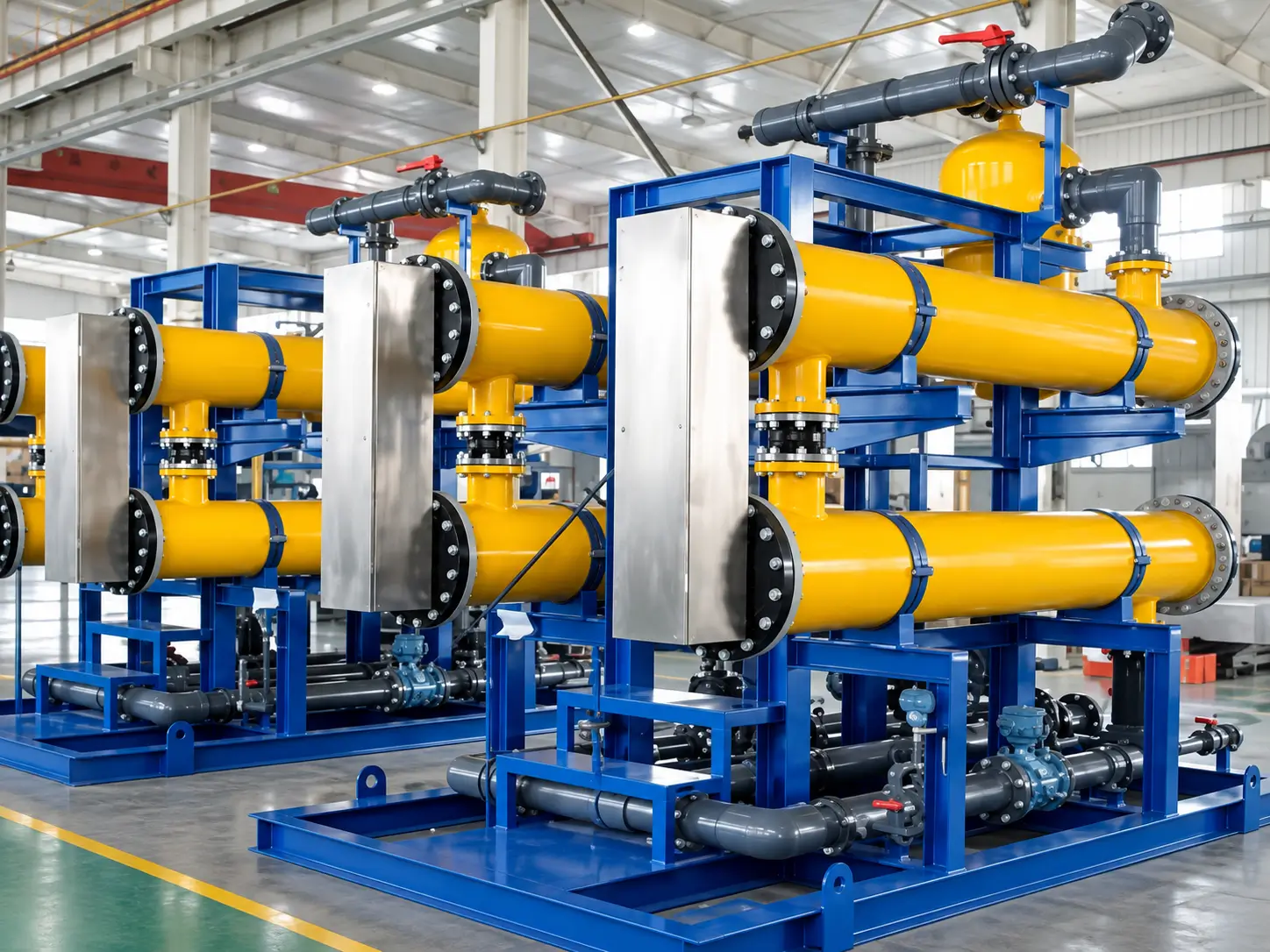
Skid-Mounted Sodium Hypochlorite Generator

Skid-Mounted Sodium Hypochlorite Generator

Best For: EPC projects, remote utilities, modular plants, and turnkey integration

Typical Capacity: Project-specific

System Scope: Skid-mounted structure, piping, electrolyzer, power cabinet, control system, and connection-ready layout

RFQ Note: Provide project site condition, footprint, daily chlorine demand, automation level, and delivery requirements.
Custom OEM Sodium Hypochlorite Generation System

Custom OEM Sodium Hypochlorite Generation System

Best For: OEM manufacturers, engineering companies, and integrated disinfection equipment builders

Typical Capacity: Custom-designed

System Scope: Custom electrolyzer sizing, control logic, cabinet design, piping layout, and interface integration

RFQ Note: Provide drawings, output demand, control requirements, branding needs, quantity, and destination country.

Choose Brine-Based or Seawater-Based Generation

The right sodium hypochlorite generator depends on your feed source, salinity, water quality, output concentration, installation environment, and disinfection objective. Hele Titanium helps you select and engineer the system architecture that fits your site.

Brine-Based Sodium Hypochlorite Generators

Best For: Municipal water, wastewater, cooling towers, industrial process water, commercial facilities, and sites without seawater access

How It Works: High-purity salt and softened water are prepared into brine and electrolyzed into dilute NaOCl.

Key Advantages:
  • Controlled feed chemistry
  • Stable output concentration
  • Suitable for inland facilities
  • Easier scaling control with proper water softening
  • Broad municipal and industrial use

Seawater Electrochlorination Generators

Best For: Coastal power plants, desalination plants, offshore platforms, vessels, marine cooling systems, and biofouling control

How It Works: Filtered natural seawater is electrolyzed directly to generate active chlorine species.

Key Advantages:
  • No prepared salt brine required
  • Ideal where seawater is naturally available
  • Effective for continuous biofouling control
  • Suitable for marine and coastal infrastructure
Selection Factor Brine-Based System Seawater-Based System
Feed Source Salt + softened water Natural seawater
Output Control High control over salinity and concentration Depends on seawater salinity and temperature
Typical Output Dilute NaOCl solution Active chlorine in seawater
Best Applications Water plants, wastewater, cooling towers, industrial sites Marine, offshore, desalination, coastal power plants
Scaling Risk Managed by water softening Depends on seawater hardness and design
System Layout Brine tank + cell + storage + dosing Intake filtration + cell + dosing/circulation
Best Buyer Municipal / industrial utility Marine / coastal facility / offshore integrator

What’s Inside a Complete Sodium Hypochlorite Generator?

A reliable sodium hypochlorite generator requires more than an electrolytic cell. Each subsystem must work together to maintain stable output, safe hydrogen handling, accurate dosing, and long equipment life.

Water Softener

Removes calcium and magnesium hardness to reduce scale formation inside the electrolytic cell.

Value: Improves cell efficiency and reduces cleaning frequency.

Salt Dissolving / Brine Tank

Prepares consistent brine concentration for electrolysis.

Value: Supports stable NaOCl output and predictable system operation.

Brine Pump & Flow Control

Delivers electrolyte at a controlled flow rate to the electrolytic cell.

Value: Maintains production consistency and protects system balance.

Titanium Electrolytic Cell

Converts brine or seawater into active chlorine using MMO-coated titanium electrodes.

Value: Determines system efficiency, service life, and output stability.

DC Power Supply / Rectifier

Provides stable DC current for electrolysis.

Value: Controls energy efficiency, current stability, and cell protection.

Product Storage Tank

Stores generated dilute NaOCl solution before dosing.

Value: Provides buffer capacity for continuous disinfection demand.

Dosing Pumps

Inject generated NaOCl into the target water stream.

Value: Supports accurate dosing based on flow or residual control.

Hydrogen Venting System

Dilutes and safely vents hydrogen gas generated during electrolysis.

Value: Critical for safe system operation and compliance.

PLC / HMI Control System

Automates operation, alarms, interlocks, monitoring, and data logging.

Value: Reduces operator workload and improves safety control.

System Sizing

How to Size an On-Site Sodium Hypochlorite Generator

The correct system capacity depends on daily chlorine demand, target available chlorine concentration, treatment flow, operating hours, salt and water quality, power supply, and dosing strategy.

Capacity Planning and System Sizing
Selection Factor Buyer Question Why It Matters
Daily Chlorine Demand How many kg/day of available chlorine are required? Determines system output size.
Target NaOCl Concentration What solution strength is required? Affects electrolysis design, storage, and dosing logic.
Water Flow What is the treatment flow rate? Supports dosing calculation and system capacity planning.
Operating Hours Continuous or batch operation? Affects equipment sizing and daily production planning.
Salt and Water Quality What salt and water source are available? Affects brine stability, scaling risk, and maintenance.
Power Supply What voltage, phase, and frequency are available? Affects rectifier and control cabinet design.
Storage and Dosing Is storage tank and dosing pump integration required? Determines complete system scope and installation planning.

Custom Sodium Hypochlorite System Engineering for Your Project

Standard sodium hypochlorite generation systems may not meet every project’s output target, footprint, salinity control method, automation requirement, dosing layout, or site condition.

Hele Titanium supports custom system engineering for industrial and municipal on-site chlorine generation applications.

Engineer reviewing NaOCl generator layout

Output Capacity Design

System size can be engineered according to daily chlorine demand, required available chlorine concentration, and dosing schedule.

Brine & Water Treatment Design

Salt dissolution, brine concentration control, and water pretreatment can be reviewed based on feedwater condition.

Electrolyzer Configuration

Electrolyzer cell quantity, coating selection, hydraulic layout, and electrochemical performance can be matched to the application.

Control & Automation

PLC logic, alarms, operating modes, remote monitoring, and HMI interface options can be reviewed according to project needs.

Skid / Cabinet / Layout Integration

Piping arrangement, cabinet design, skid layout, and modular system footprint can be customized.

Dosing & Downstream Integration

The system can be prepared for integration with storage tanks, dosing pumps, disinfection pipelines, or existing treatment infrastructure.

What We Need From You

  • Application and treated water type
  • Required chlorine demand & dosage
  • Brine or seawater source
  • Feedwater analysis (if available)
  • Target NaOCl concentration
  • Site footprint constraints
  • Automation and SCADA needs
  • Storage and dosing requirements

Solutions by Industry: Empowering Your Operations

A municipal water plant, marine integrator, industrial facility, and EPC contractor all have different requirements. Hele Titanium provides sodium hypochlorite generator systems tailored to each sector’s compliance, uptime, safety, and OPEX priorities.

Municipal Water Authorities

Municipal Water Authorities

Pain Point:

Need reliable public health disinfection, stable residual control, and safer chemical handling.

Hele Value:

On-site NaOCl generation reduces bulk chlorine logistics, supports dosing control, and can scale with water demand.

Wastewater Treatment Plants

Wastewater Treatment Plants

Pain Point:

Need reliable pathogen control and discharge compliance under variable effluent conditions.

Hele Value:

Robust systems support final effluent disinfection, odor control, and reduced dependence on delivered chemicals.

Industrial Plant Engineers

Industrial Plant Engineers

Pain Point:

Need microbial control in cooling towers and process water without frequent downtime.

Hele Value:

Customized systems protect heat exchangers, process lines, and water circuits while supporting OPEX reduction.

Marine & Offshore Integrators

Marine & Offshore Integrators

Pain Point:

Need compact, corrosion-resistant electrochlorination systems for harsh seawater environments.

Hele Value:

Seawater electrochlorination systems support biofouling control, ballast water treatment support, and offshore integration.

EPC Contractors

EPC Contractors

Pain Point:

Need dependable system suppliers with documentation, drawings, and integration support.

Hele Value:

We provide technical specifications, CAD support, project-oriented lead times, and engineering communication.

Disinfection System OEMs

Disinfection System OEMs

Pain Point:

Need reliable systems, private label options, and competitive factory-direct supply.

Hele Value:

OEM / ODM customization, partner support, stable manufacturing, and technical training help grow your business.

Quality Assurance: Safe, Stable & Verified NaOCl Output

A sodium hypochlorite generator must deliver stable disinfectant output while operating safely over years of service. Our QA process verifies system assembly, titanium electrolytic cell performance, PLC control, hydrogen venting, flow stability, dosing accuracy, and documentation before shipment.

Titanium Cell Verification Available Chlorine Output Testing PLC / HMI Function Check Hydrogen Venting Safety Review System Leak & FAT

Sodium Hypochlorite Generator Quality Testing Parameters

Test Item Test Conditions Qualification Standard Purpose
Titanium Electrolytic Cell Inspection Material, coating, assembly, electrical terminals Matches project specification & passes internal inspection Confirms long-term electrochemical reliability
Available Chlorine Output Run under specified flow and power input Output meets rated capacity within tolerance Verifies disinfectant production capacity
NaOCl Concentration Check Sample generated product solution during test Meets design range (e.g., 0.7%–0.8%) Confirms stable product quality
Power Consumption Operate at rated output and record energy use Within agreed kWh/kg Cl₂ design range Supports OPEX calculation and efficiency validation
Salt Consumption Operate under standard brine concentration Within agreed kg salt/kg Cl₂ range Verifies raw material efficiency
PLC / HMI Function Test Run sequences (start, stop, alarm, interlock) Correct control logic and alarm response Ensures safe and easy operation
Hydrogen Venting Safety Check Review ventilation path, fan, interlock, alarms Hydrogen dilution design meets requirement Reduces gas accumulation risk
Leak & Hydraulic Test Run water/brine through piping, tanks, cell No leakage or abnormal pressure issue Confirms system integrity before shipment
Factory Acceptance Test (FAT) System-level functional test before packing Operates according to agreed specification Reduces site commissioning risk
Note: Testing parameters can be customized based on system capacity, feedwater source, automation level, application, and project documentation requirements.

System Confidence Before Shipment

  • Electrolytic cell and coating verification
  • Available chlorine output test
  • NaOCl concentration validation
  • PLC / HMI and alarm function check
  • Hydrogen venting design review
  • Leak and hydraulic inspection
  • Factory acceptance test support
  • Project documentation and export records

WHY CHOOSE HELE TITANIUM

A Factory-Direct NaOCl Generation System Partner

Choosing a sodium hypochlorite generation system supplier is not only about equipment price. Water treatment projects need stable manufacturing, engineering communication, safety awareness, documentation support and long-term service coordination. Hele Titanium supports on-site NaOCl generation projects with factory-direct system supply and project-based engineering review.

Factory-Direct System Supply

We support sodium hypochlorite generators, titanium electrolytic cells, control cabinets, dosing components, system assembly, packing and export delivery.

Project-Based Engineering Review

System configuration can be reviewed according to chlorine demand, water source, site layout, dosing points, automation level and installation requirements.

Safety & Documentation Support

Hydrogen venting, alarms, interlocks, inspection records, packing labels and project documents can be prepared according to order requirements.

Long-Term Operation Support

Spare parts, replacement cells, commissioning guidance, troubleshooting support and technical communication help support long-term system operation.

FAQ

Sodium Hypochlorite Generation System FAQ

Find answers to common questions about on-site sodium hypochlorite generation, NaOCl generator capacity, salt and water requirements, hydrogen venting, safety systems, skid customization and project documentation.

What is a sodium hypochlorite generation system used for?
A sodium hypochlorite generation system is used to produce low-concentration NaOCl disinfectant on site for water treatment and disinfection. It is commonly used in municipal drinking water treatment, wastewater disinfection, cooling towers, industrial water systems, commercial facilities and OEM disinfection skids.
How does an on-site sodium hypochlorite generator work?
An on-site sodium hypochlorite generator uses salt, softened water and DC power to produce dilute sodium hypochlorite through electrolysis. Brine is prepared and fed into a titanium electrolytic cell, where chlorine-based disinfectant is generated. The system may also include hydrogen venting, storage, dosing pumps, monitoring and PLC / HMI control.
What concentration of sodium hypochlorite can be generated?
On-site sodium hypochlorite generators usually produce low-concentration NaOCl solution for safer storage and dosing compared with higher-strength commercial chlorine chemicals. The final concentration depends on system design, salt concentration, water quality, electrolytic cell configuration, operating current and project requirements.
What salt, water and power are required?
A sodium hypochlorite generation system typically requires high-purity salt, softened or treated water and a suitable electrical power supply. Salt quality, water hardness, conductivity, temperature and power stability can affect chlorine output, scaling tendency, cell voltage, maintenance frequency and operating cost.
How do I choose the right NaOCl generator capacity?
NaOCl generator capacity should be selected according to daily chlorine demand, peak dosing requirement, water flow rate, residual chlorine target, operating hours, storage tank volume, dosing points, site redundancy and future expansion plan. For accurate sizing, provide your water treatment application, required available chlorine, operating schedule and process flow data.
What is the difference between a sodium hypochlorite generator and a salt chlorinator?
A sodium hypochlorite generator is usually designed for municipal, industrial or commercial water disinfection and may include brine preparation, electrolytic cells, control cabinet, hydrogen venting, storage tank and dosing system. A pool salt chlorinator is usually a smaller system designed to generate chlorine directly in swimming pool circulation water.
Is hydrogen produced during sodium hypochlorite generation?
Yes. Hydrogen is produced as a byproduct during electrolysis. The system design should include hydrogen ventilation or safe gas management according to system capacity, installation environment and project safety requirements. Proper venting, interlocks and monitoring help support safe operation.
What safety systems are required for hydrogen venting?
Safety requirements may include hydrogen ventilation, flow interlocks, level monitoring, temperature protection, over-current protection, over-voltage protection, alarms, emergency stop, leak prevention and control cabinet safety logic. Final safety configuration should be reviewed according to system capacity, installation room, local standards and site operating conditions.
Can the system be customized as a skid or container?
Yes. Hele Titanium can support custom sodium hypochlorite generation systems in skid-mounted, cabinet-mounted, modular or containerized layouts. System configuration can be reviewed according to chlorine output, brine preparation, electrolytic cell capacity, storage tank, dosing pumps, automation, hydrogen venting, installation footprint and site layout.
What documents can be provided with the system?
For qualified projects, Hele Titanium can provide project-specific documents such as technical datasheets, system layout drawings, equipment lists, material records, inspection records, electrical test records, packing labels, operation guidance, export documents and other documentation according to order requirements.

Need help selecting capacity, skid layout or safety configuration? Share your chlorine demand, water source, dosing points and site requirements for review.

Inside Our Manufacturing & Quality System

See how we produce, inspect, and document sodium hypochlorite generation systems as a direct manufacturing partner.

See how sodium hypochlorite generation systems move from component preparation through electrolyzer integration, skid assembly, control wiring, functional testing, and final packing.

Core Component Preparation Core Component Preparation
Electrolyzer & Piping Integration Electrolyzer & Piping Integration
Control Cabinet Assembly Control Cabinet Assembly
Final System Packing & Release Final System Packing & Release

A look inside the production areas where sodium hypochlorite generators are assembled, wired, integrated, and prepared for shipment.

System Assembly Area System Assembly Area
Electrolyzer Integration Station Electrolyzer Integration Station
Electrical Control Cabinet Area Electrical Control Cabinet Area
Skid Packing & Dispatch Area Skid Packing & Dispatch Area

Our inspection system verifies system assembly quality, piping integrity, control performance, functional operation, and final documentation before shipment.

Component Inspection Component Inspection
Piping & Leak Test Piping & Leak Test
Control Logic & Electrical Check Control Logic & Electrical Check
Final Functional Inspection Final Functional Inspection

Documentation and traceability are important for municipal, industrial, OEM, and project-based sodium hypochlorite generation systems.

Material / Component Documentation Material / Component Documentation
Inspection Record Example Inspection Record Example
System Test Report System Test Report
Export & Traceability Documentation Export & Traceability Documentation

Need production photos, system assembly records, quality documents, or technical support materials? Contact our team for direct factory assistance.

Sodium Hypochlorite Generation Made Simple: A Guide for Water Treatment and Disinfection Engineers

Read Time: 18 Minutes Author: Hele Titanium Engineering Team Last Updated: 2026

When disinfection efficiency, chemical safety, and operational reliability matter, on-site sodium hypochlorite generation provides a safer and more controllable alternative to transporting and storing bulk chlorine chemicals. This guide helps engineers, operators, EPC contractors, and procurement teams evaluate system capacity, feedwater source, components, automation, safety, maintenance, OPEX, and supplier reliability.

Before You RFQ Sodium Hypochlorite Generators, Confirm These 5 Things

  1. Application: drinking water, wastewater, industrial process water, cooling tower, marine, pool, or OEM system
  2. Chlorine demand: g/h, kg/h, kg/day, target dosage, flow rate, and peak demand
  3. Feed source: brine, softened water, seawater, or site-specific water chemistry
  4. System design: skid-mounted, containerized, automation level, storage, dosing, footprint, and safety requirements
  5. Documentation needs: P&ID, layout drawing, FAT report, QC report, manual, export docs, or project certification support

1. What Is a Sodium Hypochlorite Generator?

An essential overview of on-site generation technology and its role in modern water treatment infrastructure.

A sodium hypochlorite generator is a highly engineered, complete on-site system designed to produce a stable, dilute sodium hypochlorite (NaOCl) solution using only three basic inputs: salt, water, and electricity. Rather than purchasing, transporting, and storing hazardous high-concentration bulk bleach or pressurized chlorine gas, facilities can manufacture their own disinfectant exactly when and where it is needed.

It is crucial to understand that a generator is not merely a single piece of equipment. It is an integrated micro-chemical plant. A properly designed system encompasses the electrolytic cells (the core reactor), precision brine preparation units, robust DC power supplies (rectifiers), product storage tanks, accurate dosing pumps, intelligent PLC automation, and—most importantly—critical safety systems dedicated to hydrogen gas dilution and venting.

What Is a Sodium Hypochlorite Generator

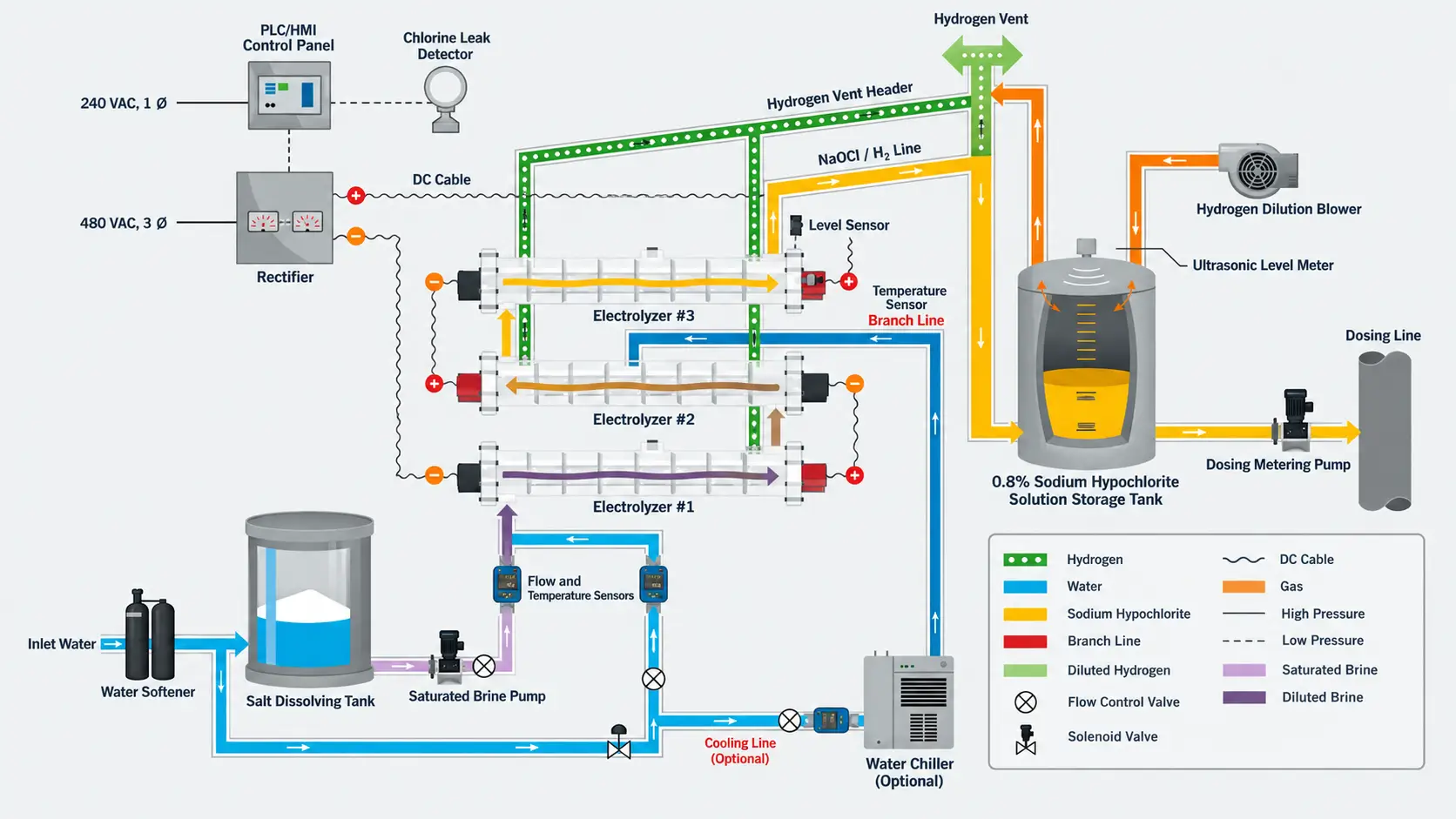
2. How On-Site NaOCl Generation Works

Understanding the step-by-step electrochemical process that transforms raw, everyday materials into a powerful, active disinfectant.

The core principle relies on electrolysis. By passing a direct current through a saltwater solution, the system triggers a chemical reaction that creates sodium hypochlorite. Here is the step-by-step workflow that operators and engineers should know:

  1. Feedwater Preparation: High-purity salt and softened water (or naturally available seawater) are mixed in exact proportions to create a consistent electrolyte solution (brine).
  2. Electrolysis Chamber: The prepared electrolyte is pumped into the titanium electrolytic cell, which contains precisely spaced anodes and cathodes.
  3. Electrochemical Reaction: A specialized DC power supply (rectifier) drives an electrical current across the Mixed Metal Oxide (MMO) coated titanium electrodes.
  4. Conversion: At the anode, chloride ions are oxidized to form chlorine gas. At the cathode, water is reduced to form hydrogen gas and hydroxide ions.
  5. Solution Formation: The chlorine immediately reacts with the hydroxide ions within the cell to form a stable, dilute sodium hypochlorite solution (typically 0.7% to 0.8% concentration).
  6. Hydrogen Management: The byproduct hydrogen gas is safely separated from the liquid phase, heavily diluted with fresh air via forced-draft blowers, and safely vented outside the facility to prevent any explosive accumulation.
  7. Storage and Dosing: The final NaOCl product is stored in a dedicated tank and automatically dosed into the target water stream based on real-time flow rates or residual chlorine sensors.
How On-Site Sodium Hypochlorite Generation Works

3. On-Site Generation vs Traditional Disinfection Methods

A comprehensive comparative analysis of safety, operational logistics, and long-term costs across different disinfection technologies.

For decades, facilities relied on pressurized chlorine gas or commercial 12-15% bulk bleach. While effective, these methods present severe safety risks, degrade quickly in storage, and require constant chemical deliveries. On-site generation eliminates the hazardous transport of chemicals, offering a stable 0.8% solution that is below the threshold for hazardous material classification, vastly improving operator safety and reducing regulatory compliance burdens.

Feature On-Site NaOCl Generation Bulk Chlorine / Bleach Ozone UV
Disinfection residual Yes (highly stable) Yes (but degrades rapidly) No No
Safety profile High (safe, dilute 0.8% output) Low (hazardous gas/spill risks) Moderate High
Chemical logistics Only safe salt delivery needed High risk & frequent delivery None None
Operating cost (OPEX) Low (salt + electricity only) High (chemical purchasing) High (energy intensive) Moderate
Maintenance Periodic cell cleaning, salt refill Frequent piping/valve replacement Highly Complex Lamp/sleeve replacement
On-Site Generation vs Traditional Disinfection Methods

4. Key System Components

A detailed look at the critical building blocks that ensure the reliable, continuous, and safe operation of your chemical plant.

Evaluating a supplier requires looking at the quality of their individual components. A failure in any of these subsystems can halt disinfection entirely. High-quality systems will feature industrial-grade materials designed for corrosive environments.

  • Water Softener: Absolutely essential for brine systems. It removes calcium and magnesium from the incoming water, preventing hard mineral scale from blinding the electrolytic cell and drastically extending its lifespan.
  • Brine Tank & Proportioning Pump: Automatically dissolves raw salt and precisely meters the saturated brine with softened water to maintain the perfect 3% electrolyte concentration for optimal electrical efficiency.
  • Titanium Electrolytic Cell: The beating heart of the system. It utilizes premium titanium electrodes coated with proprietary Mixed Metal Oxides (MMO) like Ruthenium and Iridium to maximize chlorine evolution and minimize energy loss.
  • Rectifier (DC Power Supply): Converts standard AC facility power into the highly stable, high-current DC power required to drive the electrolysis process continuously without overheating.
  • Hydrogen Venting System: A non-negotiable safety requirement. It includes liquid/gas separators, dual redundant dilution blowers, and air-flow sensors to ensure hydrogen gas is diluted well below its lower explosive limit (LEL) before venting.
  • PLC / HMI Control Panel: The brain of the operation. It automates start/stop logic based on tank levels, manages dosing rates, monitors safety interlocks, and provides operators with a clear touchscreen interface and SCADA integration.

5. Types of Sodium Hypochlorite Generators

Tailoring the system architecture and physical footprint to meet specific site demands, environmental conditions, and capacity requirements.

Generators are not one-size-fits-all. They are highly customizable based on the required chlorine output (capacity) and the physical constraints of the installation site. Working with an experienced manufacturer ensures you get the right form factor for your project.

  • Small-scale commercial units (50–500 g/h): Compact, wall-mounted or small frame units ideal for commercial swimming pools, small community water systems, and localized cooling towers.
  • Medium and large industrial units (1,000–64,000+ g/h): Heavy-duty, high-capacity systems designed for large municipal drinking water plants, major wastewater treatment facilities, and heavy industrial processing.
  • Skid-mounted systems: Pre-assembled, pre-piped, and pre-wired on a stainless steel or FRP frame. These "plug-and-play" systems drastically reduce on-site installation time and engineering costs.
  • Containerized systems: Fully enclosed in modified ISO shipping containers. These are perfect for remote locations, outdoor installations, offshore platforms, or sites lacking existing indoor infrastructure. They include built-in HVAC, lighting, and safety systems.
  • Brine-based vs. Seawater-based systems: Differentiated by their feedwater source, which dictates the internal cell design and pre-filtration requirements.

6. Capacity, Output & Technical Specifications

Essential engineering metrics and performance data required for accurate sizing, utility planning, and site integration.

When sizing a system, engineers must calculate the total daily chlorine demand (flow rate × target dosage). Once the capacity is determined, understanding the consumption of raw materials (salt and power) is critical for calculating long-term operating expenses (OPEX) and sizing utility connections.

Output concentration Typically 0.7%–0.8% (7,000 - 8,000 ppm) NaOCl for brine systems. Seawater systems typically produce 0.1% to 0.2%.
Salt consumption Highly efficient designs consume approximately 2.5–3.5 kg of high-purity salt per 1 kg of active chlorine (Cl₂) produced.
Power consumption Typically requires ~4.0–5.5 kWh of AC electricity per 1 kg of active chlorine (Cl₂) produced, depending on rectifier efficiency.
Current efficiency Project-specific design, optimized by the quality of the MMO titanium coating and internal cell geometry.
Automation & Control Fully automated via PLC / HMI. Capable of remote monitoring via SCADA (Modbus, Profibus, Ethernet/IP) for unmanned operation.

7. Brine-Based vs Seawater-Based Systems

Selecting the optimal feedwater source based on your geographic location, available resources, and specific application needs.

Brine-Based Systems: These systems use potable water and refined salt. Because the inputs are highly controlled, they produce a higher concentration of hypochlorite (~0.8%) and operate with incredible consistency. They are the standard choice for inland municipal drinking water plants, wastewater facilities, and industrial cooling towers.

Seawater-Based Systems (Electrochlorination): These systems draw directly from the ocean, utilizing the naturally occurring salt in seawater. This eliminates the cost and logistics of buying and storing salt entirely. While they produce a lower concentration (~0.1% to 0.2%), the unlimited feed source makes them perfect for coastal power plants, LNG terminals, offshore oil rigs, and marine vessels looking to control biofouling in their cooling water intakes.

Brine-Based vs Seawater-Based Systems

8. Automation, Safety & Hydrogen Venting

Protecting personnel, equipment, and infrastructure through intelligent control systems and mandatory active safety measures.

Modern generators are designed to operate with minimal human intervention. They utilize advanced PLC/HMI automation to monitor real-time data. Sensors continuously track water flow, brine levels, cell temperature, and voltage. If any parameter falls outside safe operating ranges, the system can trigger remote alarms or initiate a safe, automated shutdown.

Critical Safety Warning: Hydrogen Venting

Hydrogen gas is an unavoidable byproduct generated during the electrolysis of saltwater. It is highly flammable. Proper ventilation, active redundant dilution blowers, air-flow sensor interlocks, and strict operating procedures are absolutely essential. A reputable supplier will design the system to dilute hydrogen to less than 1% (well below the 4% Lower Explosive Limit) before it is safely vented to the atmosphere.

Automation, Safety & Hydrogen Venting

9. Applications by Industry

Proven deployment strategies and operational benefits across diverse water treatment and heavy industrial sectors.

Because of its scalability and safety, on-site generation has become the preferred disinfection technology across multiple critical industries:

  • Municipal Drinking Water: Provides primary disinfection and maintains a stable residual in the distribution network to meet strict EPA and WHO public health standards.
  • Wastewater Treatment: Effectively controls pathogens in effluent discharge, reduces biological oxygen demand (BOD), and neutralizes severe odor issues.
  • Cooling Towers & Power Generation: Enables continuous shock dosing to prevent biofouling, algae growth, and deadly legionella outbreaks in heat exchangers.
  • Marine & Offshore: Seawater electrochlorination protects critical sea chests, firewater mains, and cooling intakes from barnacles and marine growth without storing hazardous chemicals on board.
  • Commercial Pools & Water Parks: Replaces dangerous chlorine gas with automated, large-scale sanitization that is safer for guests and staff.
Applications by Industry

10. Maintenance & Lifecycle Cost

Maximizing system uptime and extending equipment lifespan through proactive care and structured maintenance routines.

While on-site generators drastically reduce the daily labor associated with moving heavy chemical drums, they do require structured, periodic maintenance. The primary focus is preventing calcium scale buildup inside the electrolytic cell and ensuring the safety sensors remain calibrated.

Routine Maintenance & Inspection Checklist

  • Replenish high-purity salt in the brine tank regularly.
  • Inspect brine tank, filters, and proportioning pumps for blockages.
  • Monitor daily cell voltage and current to track efficiency trends.
  • Perform mild acid cleaning on the electrolytic cell when scaling affects voltage.
  • Check water softener resin and backwash performance to guarantee soft water.
  • Inspect dosing pumps and calibrate residual chlorine sensors.
  • Verify the hydrogen vent path is clear and test blower airflow sensors.
  • Review PLC alarm history and record operational data for preventive maintenance.

11. ROI & Total Cost of Ownership

The financial justification and economic benefits of transitioning from purchasing bulk chemicals to generating your own supply on-site.

The initial capital expenditure (CAPEX) for an on-site generator is undeniably higher than purchasing a simple chemical dosing pump and a plastic storage tank. However, the operational expenditure (OPEX) is drastically lower. By eliminating the premium costs of commercial bleach, hazardous material delivery fees, and the administrative burden of safety compliance, facilities typically see a Return on Investment (ROI) within 1.5 to 3 years.

The Total Cost of Ownership is calculated by evaluating the local cost of salt, industrial electricity rates, and water usage, weighed against the immense savings in reduced maintenance labor, eliminated chemical degradation waste, and mitigated liability risks.

12. Supplier Evaluation Checklist

Crucial criteria and strategic questions for selecting a manufacturing partner capable of delivering long-term reliability and technical support.

Not all system integrators are created equal. Because the electrolytic cell is the most expensive and critical component, partnering with a supplier who possesses deep electrochemical expertise is vital for the success of your project.

  • Core Manufacturing: Does the supplier actually manufacture or directly control the coating of the titanium electrolytic cells, or are they just assembling third-party parts?
  • Versatility: Can they engineer and support both brine and seawater systems depending on your specific project location?
  • Engineering Support: Can they provide comprehensive documentation including P&IDs, 3D layout drawings, and electrical schematics for your EPC team?
  • Safety Focus: Do they rigorously address hydrogen venting, providing redundant blowers and hardwired safety interlocks?
  • Quality Assurance: Can they provide Factory Acceptance Test (FAT) reports, material certifications, and thorough QC documents before shipment?
  • Lifecycle Partnership: Do they offer robust support for site installation, commissioning guidance, and reliable access to spare parts?

13. Summary & RFQ Guidance

Final recommendations and actionable next steps for initiating a successful, well-defined procurement process.

Investing in a sodium hypochlorite generator is a strategic decision that enhances plant safety, ensures disinfection autonomy, and stabilizes long-term operating budgets. The best system will be one that is meticulously sized to match your exact chlorine demand, compatible with your feedwater chemistry, built to strict safety standards, and designed to fit your available footprint.

When you are ready to move forward, partner with a manufacturer that understands both the electrochemical core technology and the complex system integration required for reliable, industrial-grade operation. Use the RFQ checklist at the top of this guide to gather your site data, and reach out to our engineering team to design a solution tailored precisely to your facility's needs.

Sodium Hypochlorite Generator Inquiry

Get Your Custom On-Site NaOCl Generation System

Tell us your application, water flow rate, required chlorine dosage, daily chlorine demand, feedwater source, site footprint, automation level, storage and dosing requirements, and safety standards. Our engineering team will recommend the most suitable sodium hypochlorite generator system for your project.

  • Brine & Seawater-Based Systems
  • Titanium Electrolytic Cells with MMO Coatings
  • Skid-Mounted & Containerized Designs
  • PLC Automation, Hydrogen Venting & FAT Support

Direct Contact:

sales@heletitanium.com

Titanium Valley, Baoji City, Shaanxi Province, China

We typically respond within 24 hours.