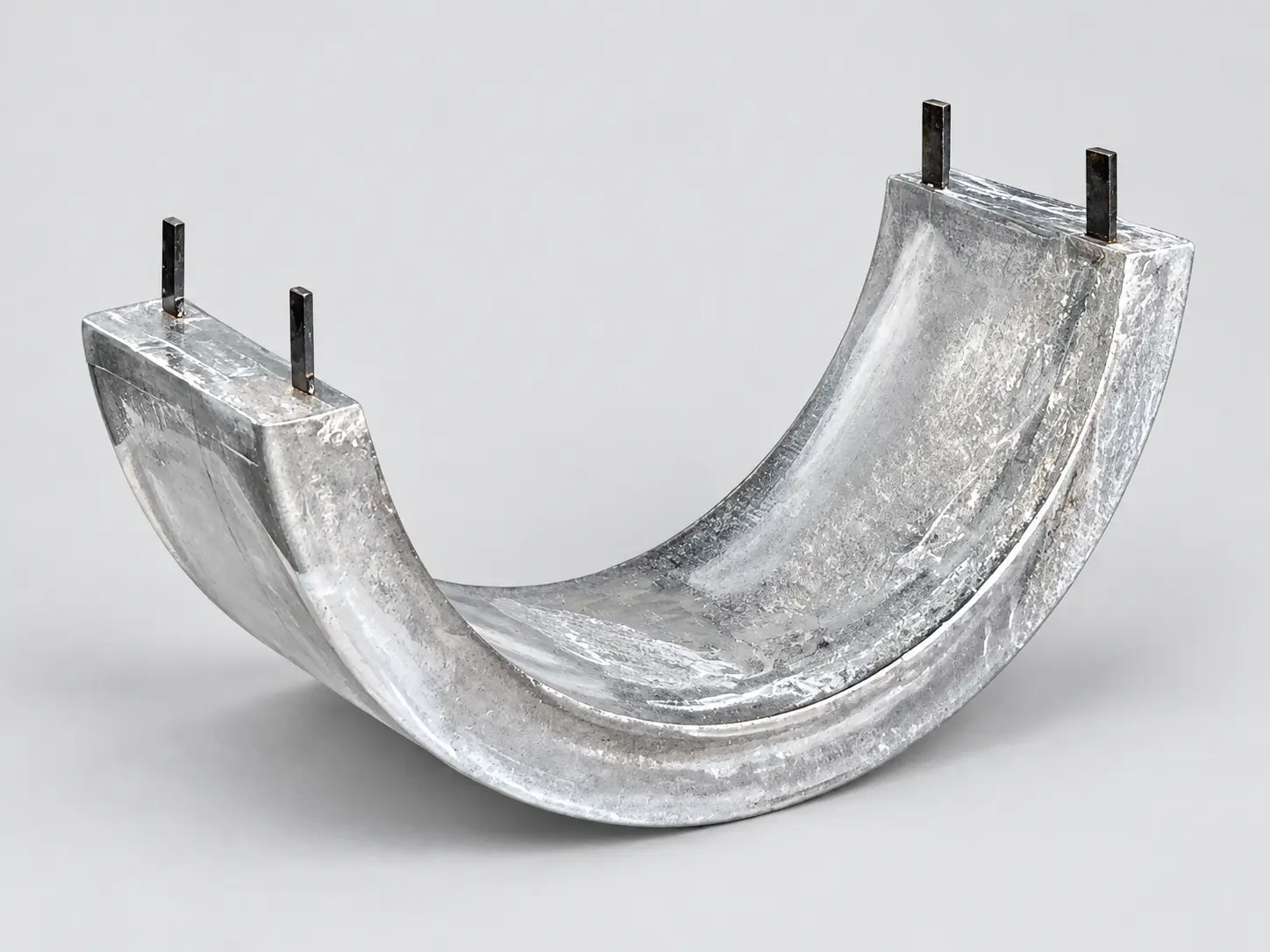
Bracelet Anodes for Offshore Pipeline
Sacrificial Anodes Category

Bracelet Anodes for Offshore Pipeline Cathodic Protection

Custom aluminum, zinc, and project-specific sacrificial bracelet anodes for offshore pipelines, subsea pipelines, risers, pipe sections, shore crossings, and pipe-mounted cathodic protection systems.

Pipeline Bracelet Anodes Aluminum / Zinc Options Split Design & Steel Inserts Custom ID & Weight
Bracelet Anode Engineering

Pipe-Mounted Sacrificial Anodes Built Around Pipeline Diameter and Design Life

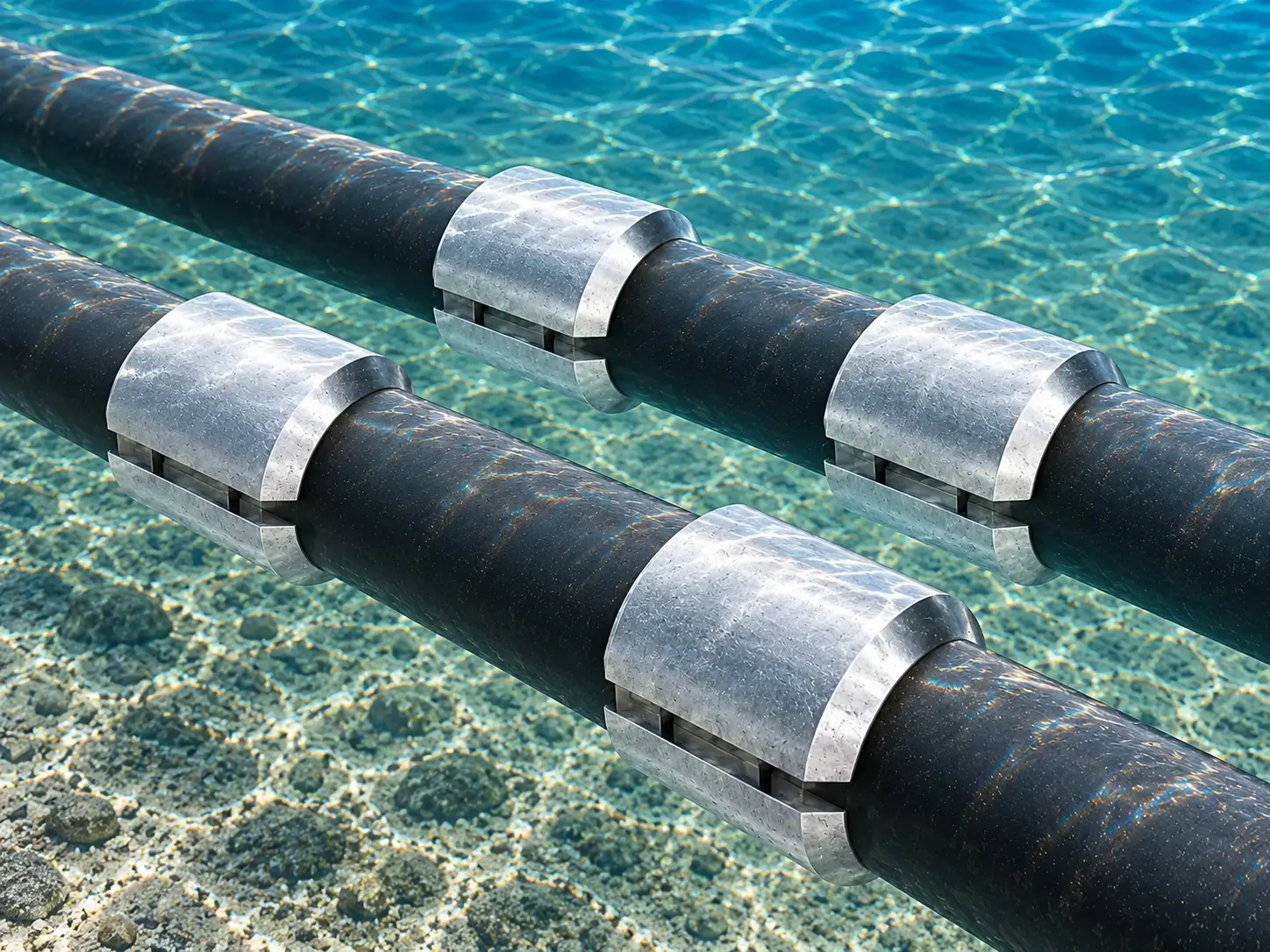
Bracelet anodes are sacrificial anodes designed to fit around pipelines or pipe sections. They are commonly reviewed for offshore pipelines, subsea pipelines, risers, and marine pipeline systems where pipe-mounted galvanic protection is required.

Engineer reviewing bracelet anode drawings

Hele Titanium Engineering Team Reviewing Pipeline OD Data

Unlike general block or hull anodes, bracelet anodes must match the pipeline outside diameter, coating thickness, bracelet inner diameter, anode segment design, steel insert, anode weight, and installation method. The final material and size should be reviewed according to seawater or soil environment, project standard, current demand, design life target, and pipeline installation conditions.

Hele Titanium supports custom bracelet anodes in aluminum, zinc, and project-specific material options, with split / half-shell design, steel insert, clamp or welding structure, dimensions, weight, packing, labels, and documentation support according to project requirements.

1 Pipeline OD Matching

Bracelet ID, segment size, and installation clearance should match pipeline outside diameter and coating thickness.

2 Material Selection

Aluminum, zinc, or project-specified anode material can be reviewed according to environment and project standard.

3 Steel Insert Design

Steel straps, inserts, clamps, welding pads, or custom fixing structures can be designed by drawing.

4 Documentation

Inspection notes, material documents, packing list, labels, and project-specific documents can be prepared when required.

Request Bracelet Anode Review

What Are Bracelet Anodes?

Bracelet anodes are sacrificial anodes designed to be installed around pipelines or pipe sections. They are usually supplied as split or segmented anode assemblies that fit around the pipe and are electrically connected to the pipeline for cathodic protection.

Bracelet anodes are commonly used for offshore pipelines, subsea pipelines, risers, shore crossings, and pipe-mounted protection systems. They can be made from aluminum, zinc, or project-specified sacrificial anode alloys depending on seawater, soil, brackish water, project standard, and design requirements.

Bracelet anode selection should be reviewed according to pipeline outside diameter, coating thickness, bracelet inner diameter, anode weight, alloy requirement, steel insert design, installation method, design life target, and documentation needs.

Feature What It Means Why It Matters
Pipe-Mounted Design The anode is designed to fit around or onto a pipeline. Correct fit is important for installation, electrical continuity, and project compliance.
Split / Segmented Structure Bracelet anodes are often supplied as two or more segments. Segment design affects installation method, handling, and pipeline fit.
Sacrificial Alloy Material Aluminum, zinc, or project-specific alloy may be selected. Material selection affects suitability for seawater, soil, or project standard.
Steel Insert / Clamp System Steel inserts, straps, or mounting structures are cast into or attached to the anode. Insert design affects mechanical fixing and electrical connection.

Bracelet Anode Options We Supply

Different bracelet anode configurations are used depending on pipeline diameter, seawater or soil environment, anode alloy, installation method, project standard, and design life target. Hele Titanium can support standard and custom bracelet anodes according to drawings, samples, or technical specifications.

Aluminum Bracelet Anodes

Aluminum Bracelet Anodes

Aluminum sacrificial bracelet anodes for offshore pipelines, subsea pipelines, risers, and marine pipe-mounted CP systems.

Best For: Offshore pipelines, subsea pipelines, seawater exposure, long design life projects.

Review Factors: Pipeline OD, coating thickness, bracelet ID, anode weight, alloy specification.

View Aluminum Anodes
Zinc Bracelet Anodes

Zinc Bracelet Anodes

Zinc sacrificial bracelet anodes for selected marine pipeline and seawater applications where zinc material is specified.

Best For: Projects requiring zinc anode material, marine pipelines, pipe sections.

Review Factors: Project standard, water chemistry, anode weight, pipe size, mounting structure.

View Zinc Anodes
Split Bracelet Anodes

Split Bracelet Anodes

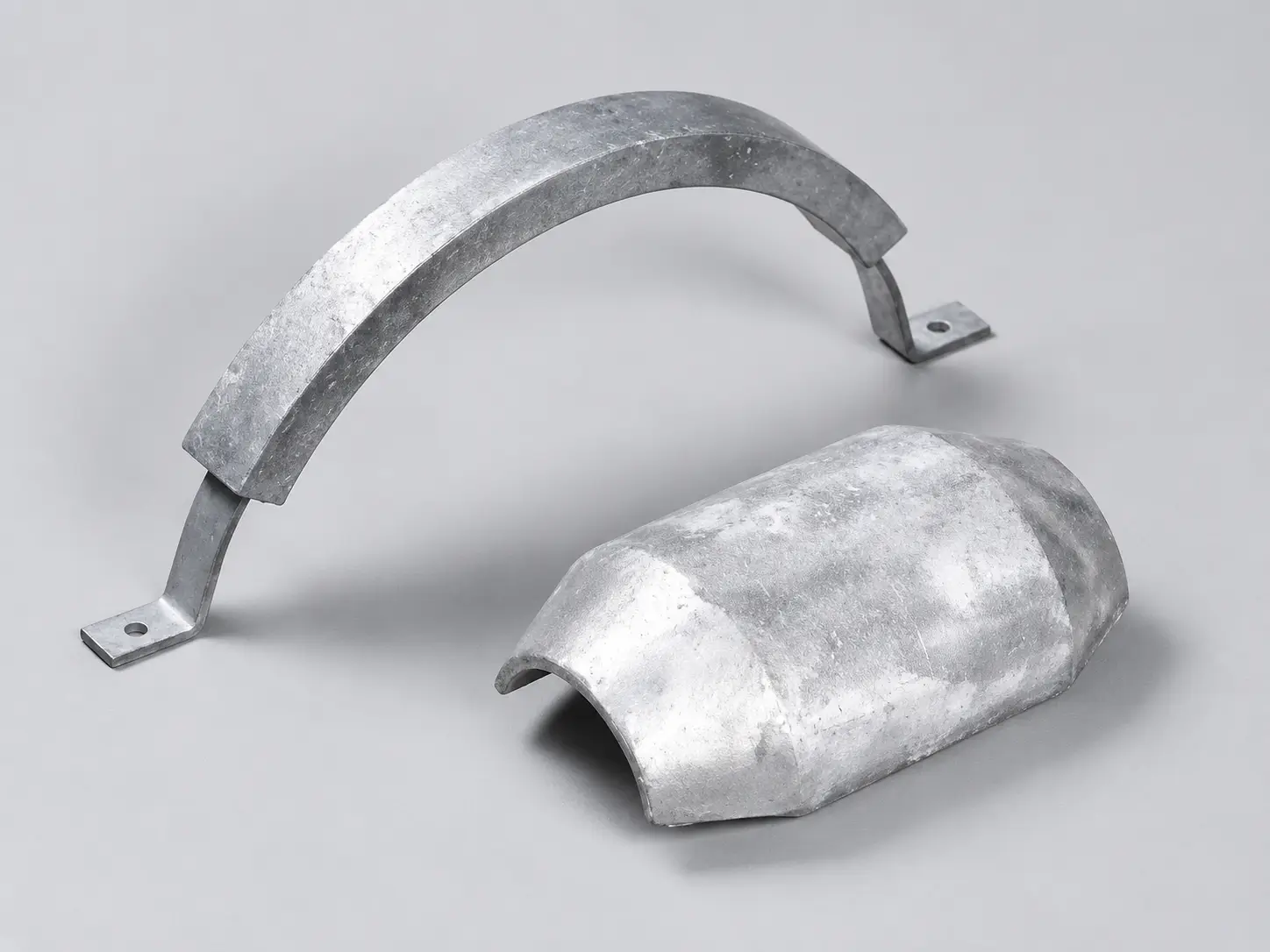
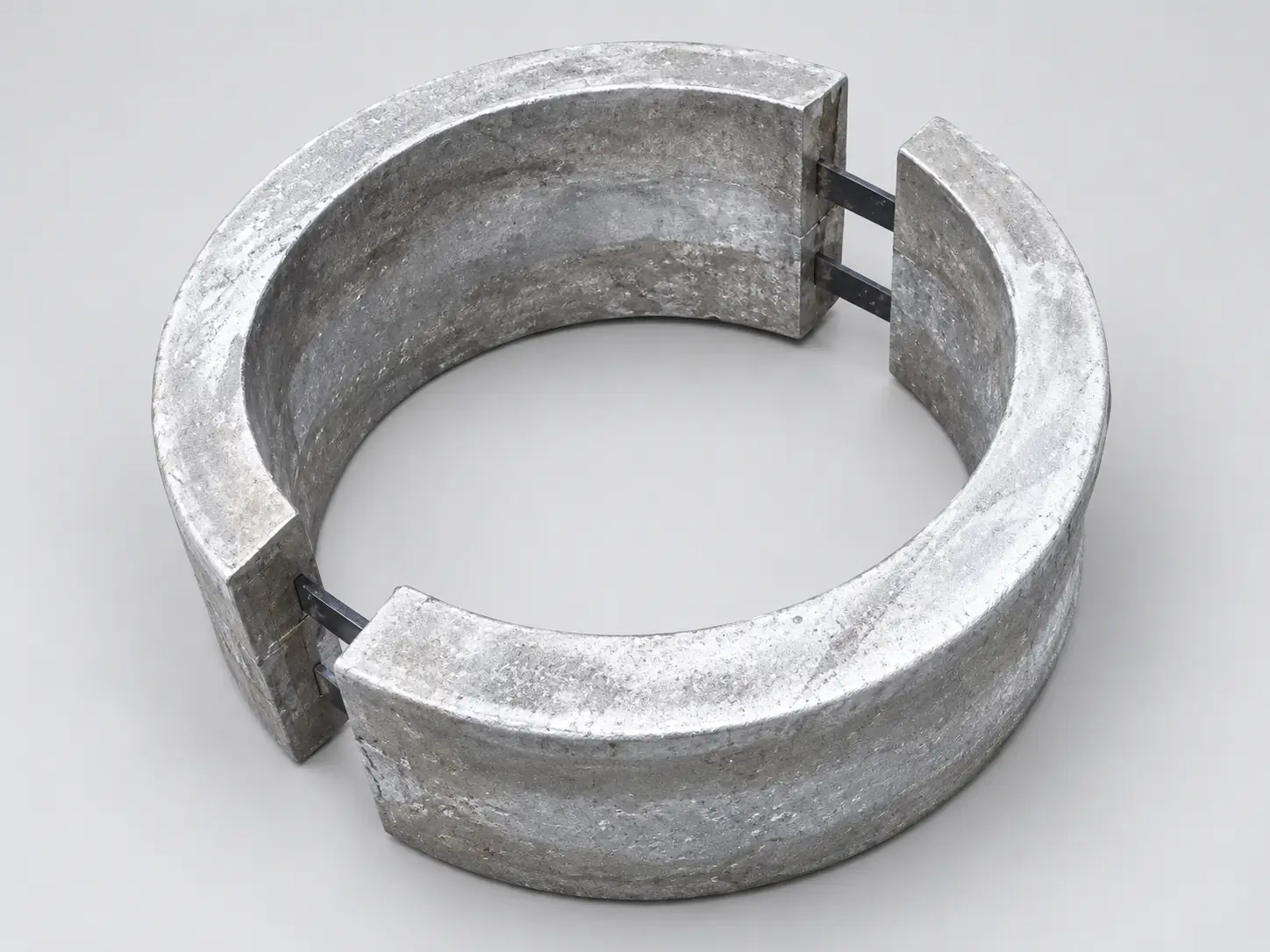
Two-piece or multi-piece bracelet anodes designed for easier installation around pipelines or pipe sections.

Best For: Offshore pipeline installation, pipe section assembly, risers, repair projects.

Review Factors: Number of segments, bolt/clamp design, pipe OD, handling requirement.

Request Split Bracelet Design
Half-Shell Bracelet Anodes

Half-Shell Bracelet Anodes

Half-shell bracelet anode designs for pipe-mounted cathodic protection with custom casting and steel insert structure.

Best For: Subsea pipelines, marine pipelines, pipe-mounted anode systems, custom projects.

Review Factors: Anode profile, inner radius, segment width, steel insert, clamp detail.

Discuss Half-Shell Anodes
Bracelet Anodes with Steel Inserts

Bracelet Anodes with Steel Inserts

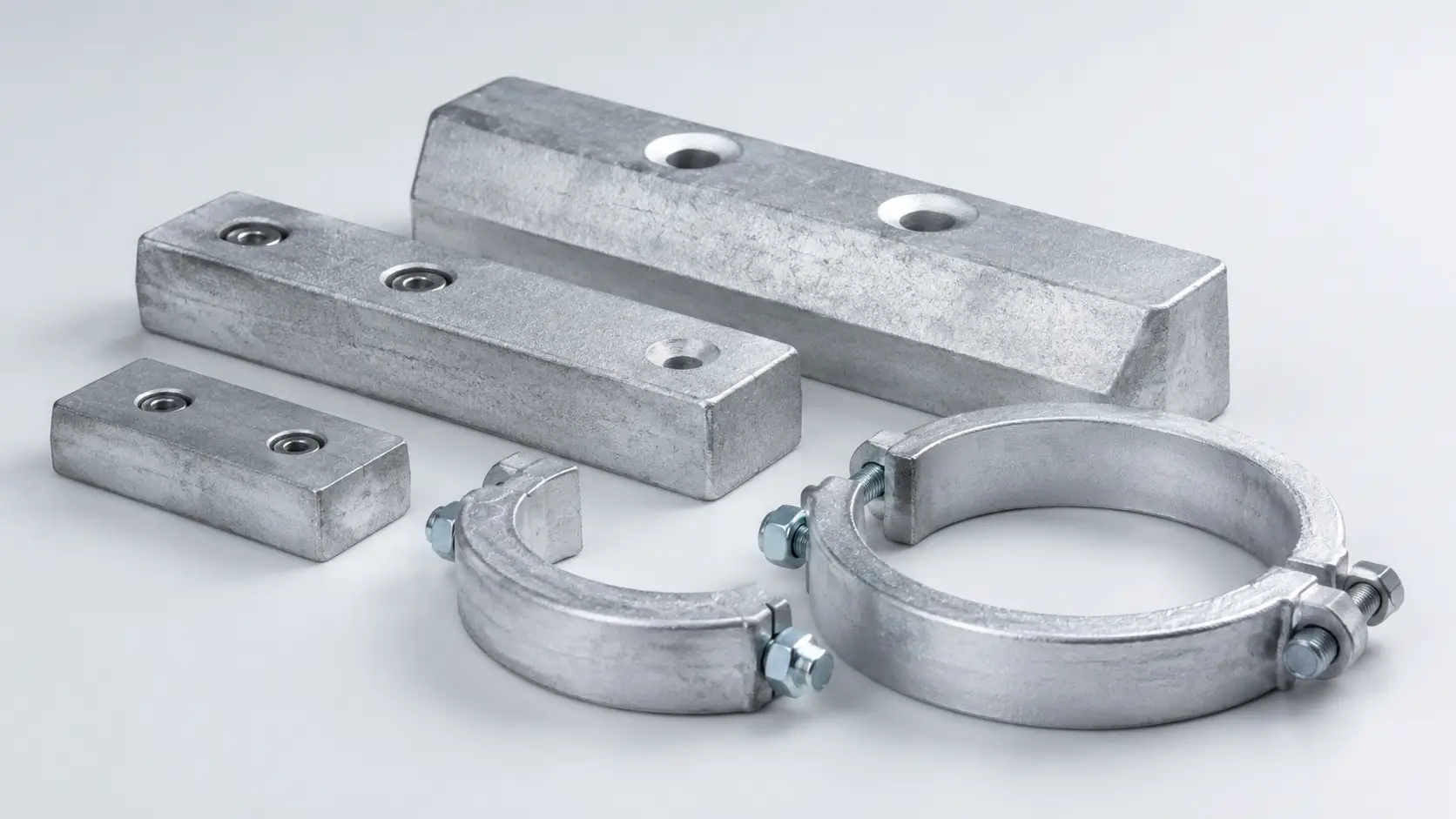
Bracelet anodes with cast-in steel inserts, straps, cores, or welding structures for mechanical fixing and electrical connection.

Best For: Projects requiring defined attachment method, welding design, or clamp structure.

Review Factors: Steel insert material, position, welding area, pipe coating clearance.

Review Steel Insert Design
Custom Bracelet Anode Castings

Custom Bracelet Anode Castings

Drawing-based bracelet anodes with custom alloy, inner diameter, outer profile, weight, segment design, and packing.

Best For: EPC projects, offshore contractors, subsea pipelines, non-standard CP requirements.

Review Factors: Drawing, pipe OD, alloy, weight, insert design, documentation requirements.

Request Custom Bracelet Anodes

Where Bracelet Anodes Are Commonly Used

Bracelet anodes are commonly reviewed for pipeline cathodic protection projects where anodes need to be mounted directly around the pipe. The final design should be selected according to pipeline diameter, environment, coating condition, project standard, current demand, installation method, and design life target.

Offshore Pipeline Protection

Why it fits: Mounted directly around offshore pipelines for seawater galvanic protection.

Review: Pipeline OD, coating, seawater condition, weight.

Subsea Pipeline Systems

Why it fits: Fits pipe geometry, remains stable during installation.

Review: Water depth, anode spacing, segment design.

Pipeline Risers & Shore Crossings

Why it fits: Protects transition zones and vertical sections.

Review: Exposure zone, pipe diameter, mechanical impact risk.

How to Select Bracelet Anode Material

Bracelet anodes can be produced using different sacrificial anode materials. The best material should be reviewed according to seawater or soil environment, project specification, pipeline coating condition, current demand, design life target, and customer standard.

Al

Aluminum Bracelet Anodes

Best For: Offshore pipelines, subsea pipelines, seawater exposure, and many marine pipeline CP projects.

Review Points: Aluminum alloy requirement, seawater condition, design life target, anode weight, and project standard.

View Aluminum Sacrificial Anodes
Zn

Zinc Bracelet Anodes

Best For: Selected marine pipeline projects where zinc material is specified by project standard or customer requirement.

Review Points: Zinc alloy specification, water chemistry, vessel / marine standard, anode shape, and mounting design.

View Zinc Sacrificial Anodes
Mg

Magnesium Bracelet Anodes

Best For: Selected soil or freshwater pipe protection projects where magnesium anodes are suitable and specified.

Review Points: Soil resistivity, freshwater condition, current demand, anode spacing, cable connection, and CP design.

View Magnesium Sacrificial Anodes

Buyer Note

Do not select bracelet anode material by product name alone. The final material should follow environment data, CP design calculations, customer specifications, and project requirements.

Compare Bracelet Anode Materials

Bracelet Anode Technical Specifications

Bracelet anode specifications should be confirmed according to pipeline outside diameter, coating thickness, bracelet inner diameter, anode material, net weight, segment design, steel insert, mounting method, current output requirement, design life target, and documentation needs.

Parameter Typical Options / Review Items
Anode Material Aluminum, zinc, magnesium, or project-specified sacrificial anode alloy
Product Form Split bracelet anode, half-shell bracelet anode, segmented bracelet anode, or custom pipe-mounted anode
Pipeline OD Required pipeline outside diameter for bracelet anode fit review
Pipeline Coating Thickness Reviewed to determine bracelet inner diameter and installation clearance
Bracelet ID Inner diameter based on pipe OD, coating thickness, and installation requirement
Anode Weight & Width Net anode weight per bracelet or per segment; segment width according to design and current requirement
Segment & Insert Design Two-piece, multi-piece; steel core, strap, bar, clamp, weld pad, or customer-specified insert
Mounting Method Clamp-on, weld-on, bolt-on, strap-mounted, or project-specific installation
Application Environment Seawater, offshore, subsea, brackish water, shore crossing, soil, or project-specific environment
Standards & Packing DNV, ASTM, customer spec; Pallet, wooden case, crate, export packing according to shipment requirement

Note: Final specifications should be confirmed according to pipeline drawing, CP design, project standard, environment, current demand, and design life target.

Custom Bracelet Anodes Built Around Your Pipeline and Installation Method

Bracelet anode design should be reviewed according to pipeline OD, coating thickness, anode material, bracelet ID, segment design, anode weight, steel insert, mounting method, design life target, project standard, and offshore installation requirements.

Engineer inspecting custom bracelet anode casting

1. Pipeline Fit Review

Review pipeline OD, coating thickness, bracelet ID, installation clearance, and segment fit.

2. Anode Material Review

Review aluminum, zinc, magnesium, or customer-specified alloy according to environment and standard.

3. Weight & Segment Design

Review anode weight, segment width, number of pieces, current demand, and design life target.

4. Steel Insert Design

Customize steel insert, strap, clamp, weld pad, bar, or mounting structure according to installation.

5. Casting & Dimensions

Support casting shape, inner radius, outer profile, surface condition, marking, and dimensional inspection.

6. Packing & Documents

Support labels, packing list, inspection notes, material documents, export packing, and project files.

What We Need From You

  • Application
  • Pipeline OD & Coating thickness
  • Required anode material / alloy
  • Bracelet drawing or sample photo
  • Required anode weight or design life
  • Segment design preference
  • Steel insert / mounting requirement
  • Installation environment
  • Quantity & Delivery destination
  • Documentation requirement

Bracelet Anodes vs Other Sacrificial Anode Forms

Bracelet anodes are designed for pipe-mounted cathodic protection. Other sacrificial anode forms may be more suitable when the protected structure is a ship hull, ballast tank, underground pipeline, tank bottom, or distributed soil CP layout.

Anode Form Best Used When Related Page
Bracelet Anodes Anodes need to fit around offshore, subsea, riser, or pipe-mounted structures. Current Page
Ribbon Anodes Distributed sacrificial protection is needed along pipelines, tank bottoms, or soil CP layouts. View Ribbon Anodes →
Hull Anodes Ship hulls, rudders, propeller zones, and marine vessel surfaces require sacrificial protection. View Hull Anodes →
Ballast Tank Anodes Anodes are installed inside ballast tanks or marine compartments. View Ballast Tank Anodes →
Packaged Mag Anodes Buried pipelines, underground tanks, or soil CP systems require packaged anodes with backfill. View Magnesium Anodes →

Buyer Note: The anode form should match the installation location, not only the material. Share your structure drawing and installation requirement for accurate anode selection.

Compare Forms

Installation Considerations for Bracelet Anodes

Proper installation helps bracelet anodes work as intended in pipeline cathodic protection systems. Pipeline fit, segment alignment, steel insert contact, coating clearance, electrical continuity, and mechanical fixing should be reviewed before installation.

Pipeline OD & Coating

Bracelet ID should match the pipe and coating system to support correct fit.

Segment Alignment

Split or half-shell segments should align properly around the pipe during installation.

Steel Insert Contact

Steel insert or mounting structure should support electrical connection to the protected pipeline.

Mounting Method

Clamp-on, weld-on, bolt-on, or project-specific fixing should match the installation procedure.

Coating Clearance & Spacing

Consider pipe coating thickness and installation tolerance. Spacing affects current distribution.

Mechanical Handling

Handle carefully during transport, pipe assembly, and offshore installation. Ensure inspection access.

Buyer Note: Bracelet anode installation should be reviewed together with the full pipeline cathodic protection design. Share your pipe drawing, coating thickness, anode layout, and installation procedure for engineering review.

Discuss Bracelet Anode Installation Layout

Quality Control for Bracelet Anodes

Bracelet anode quality depends on alloy control, casting condition, inner diameter accuracy, segment fit, anode weight, steel insert position, surface condition, marking, packing protection, and final documentation.

1. Alloy & Material Review

Aluminum, zinc, magnesium, or project-specified anode material is reviewed according to customer requirements when required.

2. Casting & Mold Review

Bracelet shape, mold condition, segment structure, steel insert placement, and product form are controlled according to order requirements.

3. Dimensional & Weight Check

Bracelet ID, width, segment dimensions, net weight, insert position, and overall shape are checked according to agreed scope.

4. Segment Fit & Insert Review

Segment alignment, inner radius, steel insert exposure, clamp / weld area, and mounting details are reviewed when required.

5. Surface & Visual Review

Surface condition, casting appearance, visible defects, marking, and handling condition are reviewed according to inspection scope.

6. Packing & Documentation

Packed according to weight, shape, and shipment requirement. Documents prepared when required.

Available Documents May Include:

  • Material certificate when available
  • Dimensional inspection record
  • Weight inspection record
  • Segment fit inspection notes
  • Steel insert inspection notes
  • Visual inspection notes
  • Packing list & Product labels
  • Project-specific QC documents
  • Third-party inspection support

Bracelet Anode FAQ

Common questions regarding specification, sizing, and ordering of pipe-mounted anodes.

What are bracelet anodes?
Bracelet anodes are sacrificial anodes designed to be installed around pipelines or pipe sections. They are typically supplied as split or segmented assemblies that fit the pipe's outer diameter for galvanic cathodic protection.
Where are bracelet anodes commonly used?
They are commonly used for offshore pipelines, subsea pipelines, risers, shore crossings, pipe sections, and marine pipeline systems where pipe-mounted protection is required.
What is the difference between bracelet anodes and other sacrificial anodes?
The primary difference is their physical form. Bracelet anodes are specifically cast to match a pipeline's curvature (inner diameter) and are often segmented, whereas hull or tank anodes are typically flat blocks or teardrop shapes.
Are bracelet anodes usually made from aluminum or zinc?
Both are common. Aluminum is widely used for offshore and subsea pipelines due to its higher capacity and lighter weight. Zinc is used where specified by project standards or in specific marine environments. The choice depends on the environment and project standard.
Can magnesium bracelet anodes be used for pipelines?
Yes, magnesium bracelet anodes can be used for selected soil or freshwater pipe protection projects where high driving potential is needed and magnesium is specified by the CP design.
What information is needed for a bracelet anode quote?
We need the pipeline OD, coating thickness, required anode material/alloy, required anode weight, segment design preference, steel insert/mounting requirement, quantity, and delivery destination. A drawing is highly recommended.
Why are pipeline OD and coating thickness important?
These dimensions determine the required bracelet inner diameter (ID). If the ID is incorrect, the anode will not fit securely around the pipe, affecting installation and electrical continuity.
Can bracelet anodes be customized by drawing?
Yes, Hele Titanium supports custom casting based on client drawings, including specific dimensions, split/half-shell designs, and custom weights.
Can steel inserts, clamps, or welding structures be customized?
Yes, the internal steel core, external straps, welding pads, or clamping mechanisms can be customized according to your specific installation method and pipeline requirements.
What affects bracelet anode weight and design life?
It depends on pipeline OD, coating condition, environment (seawater/soil resistivity), anode material capacity, current demand calculations, and the project's target design life.
How are bracelet anodes packed for export?
They are typically packed on heavy-duty pallets, in wooden cases, or crates, with separated packing to protect the steel inserts and casting surfaces during international transit.
What documents can be provided with bracelet anodes?
When required, we can provide material certificates, dimensional and weight inspection records, visual inspection notes, packing lists, and project-specific QC documents based on the agreed scope.

Get Your Custom Bracelet Anode Recommendation

Tell us your pipeline outside diameter, coating thickness, application environment, required anode material, bracelet ID, anode weight, segment design, steel insert requirement, quantity, and documentation needs. Hele Titanium will help review suitable bracelet anode options for your pipeline cathodic protection project.

Custom Bracelet Anode Casting Support

Tailored to your specific pipeline dimensions and drawing requirements.

Aluminum, Zinc & Project-Specific Options

Material selection reviewed according to environment and standard.

Pipeline OD, Bracelet ID & Weight Review

Ensuring precise fit and sufficient sacrificial capacity.

Steel Insert, Mounting & Export Docs

Comprehensive support from mechanical fixing to final inspection notes.

Direct contact: sales@heletitanium.com | Room 1206, Building 1, Huaxia Yue World