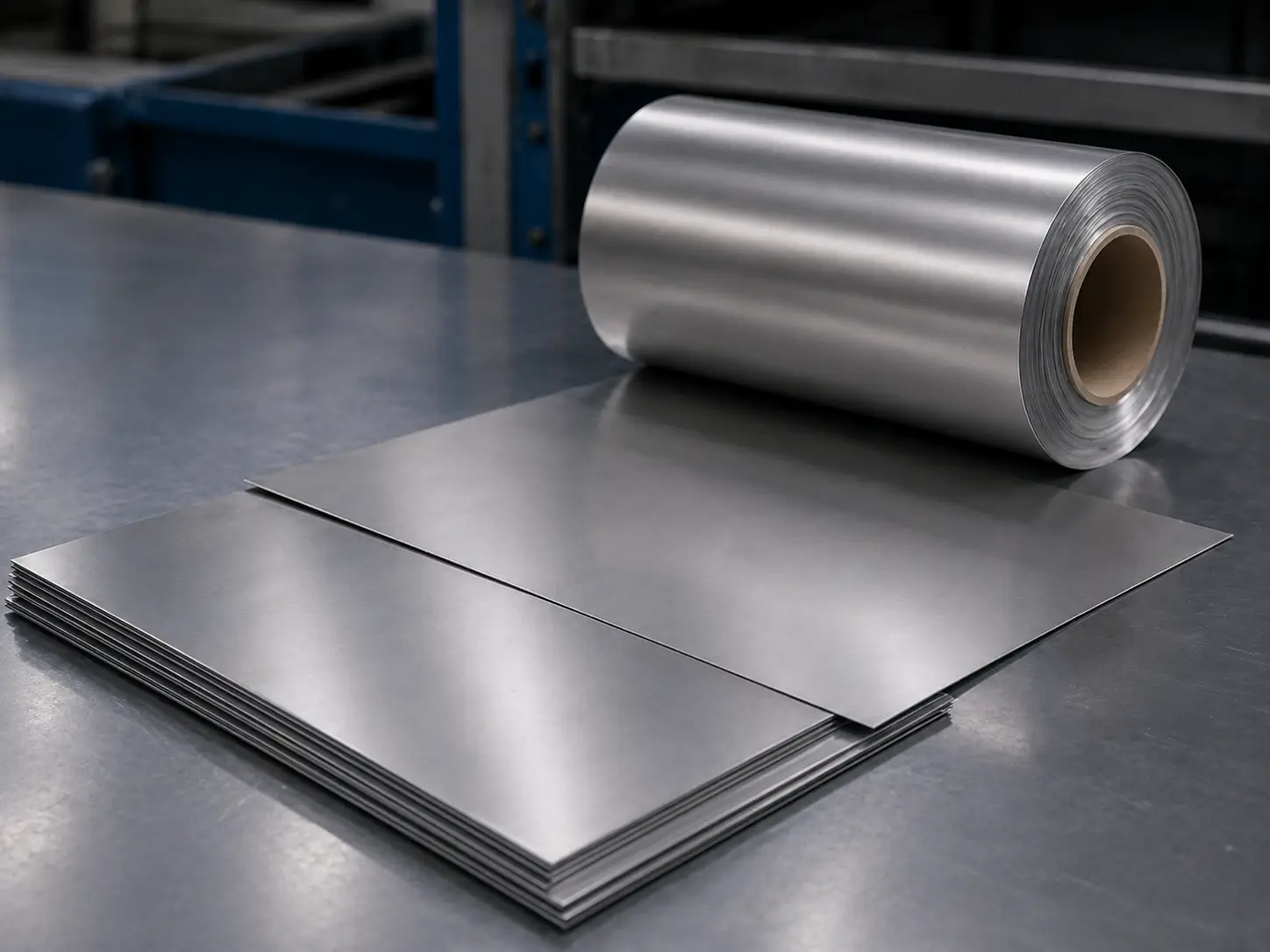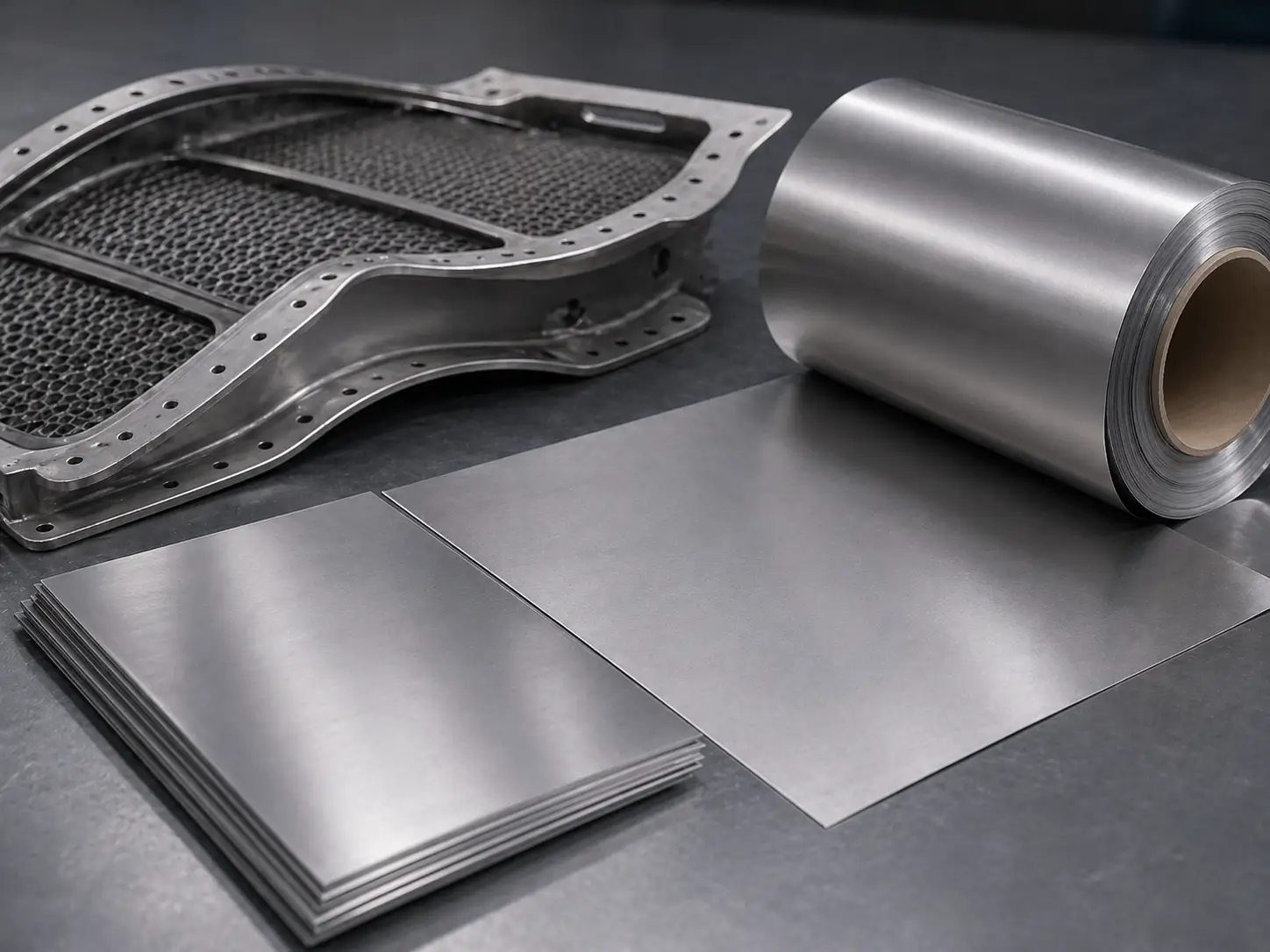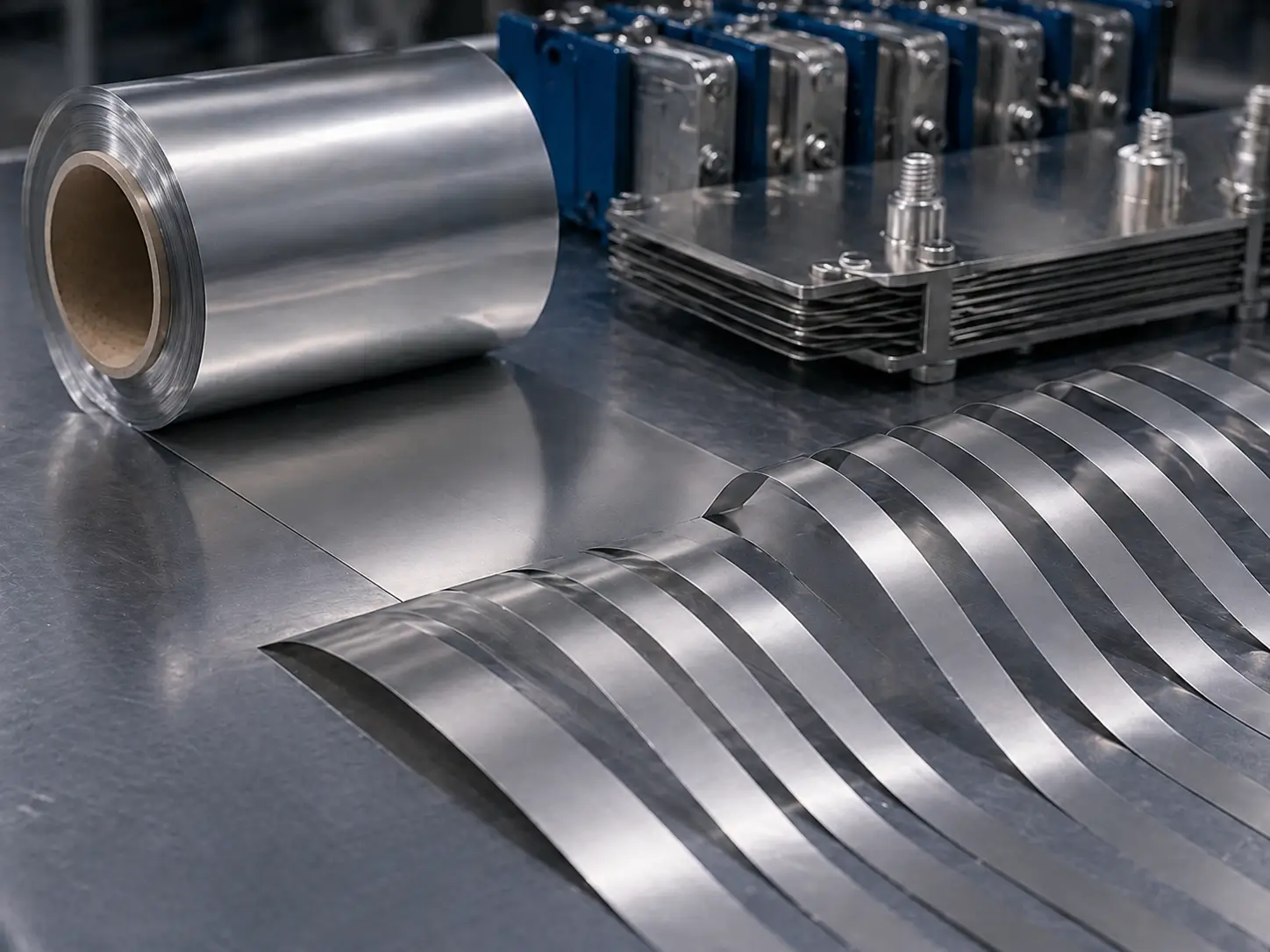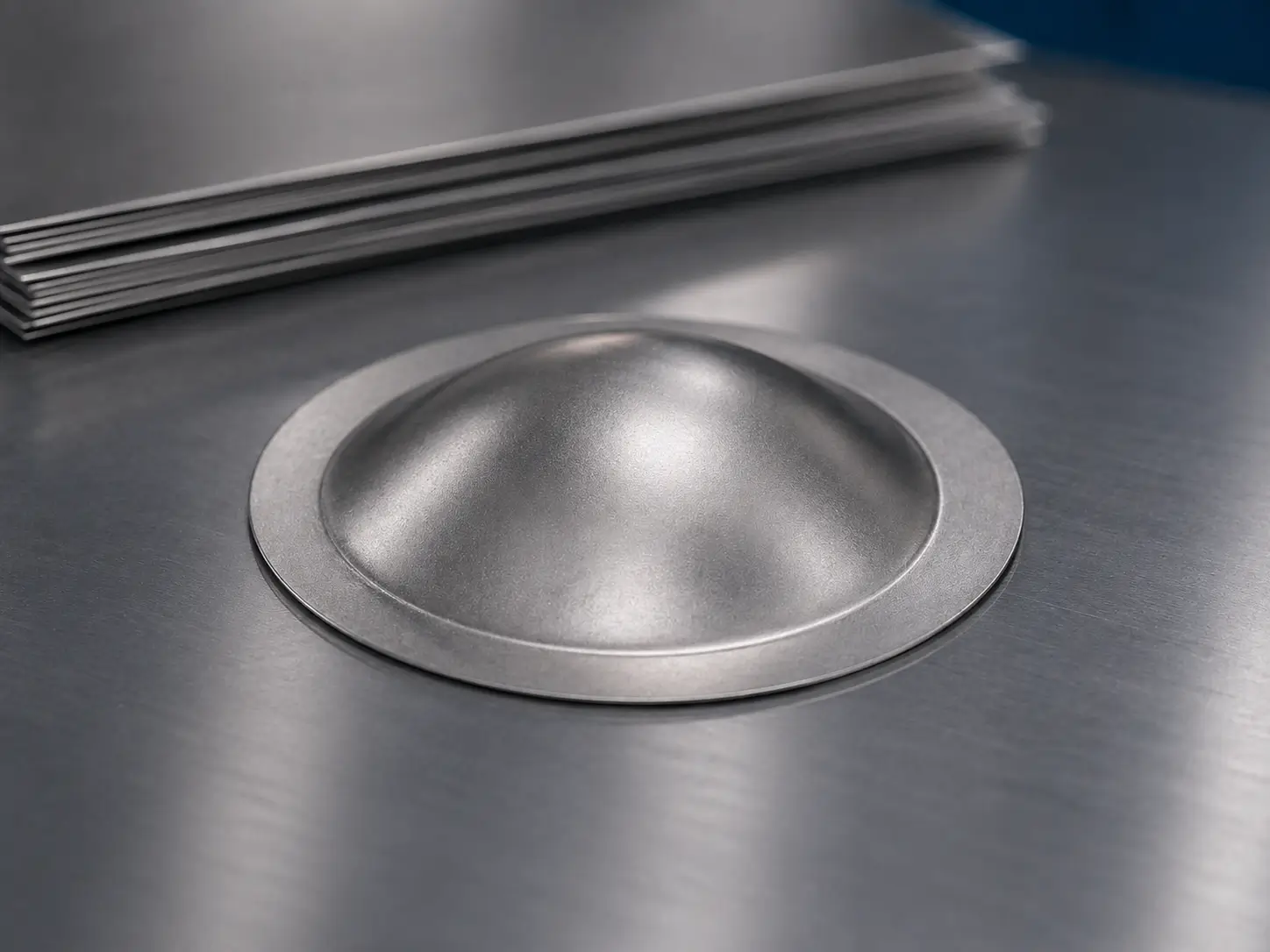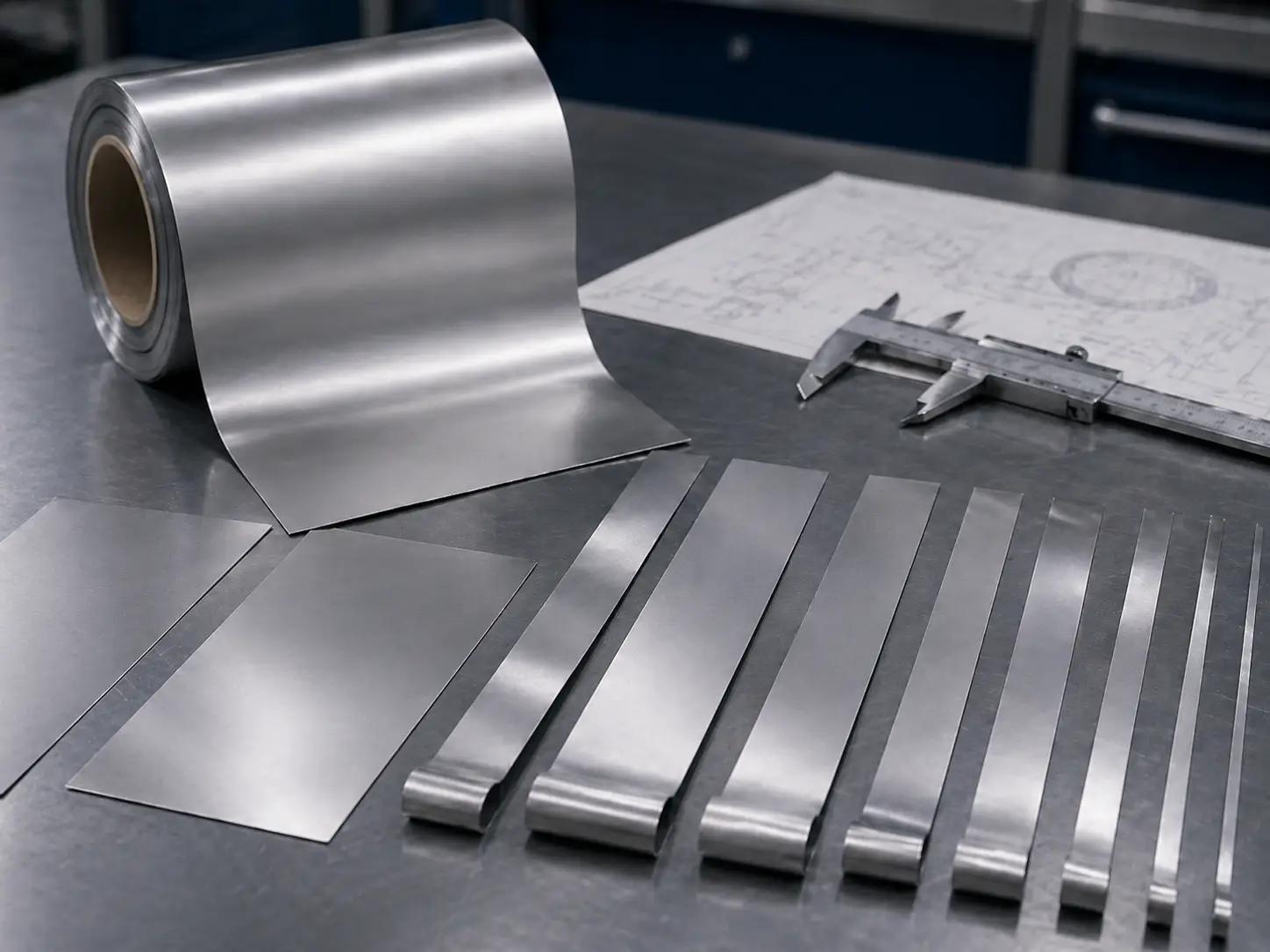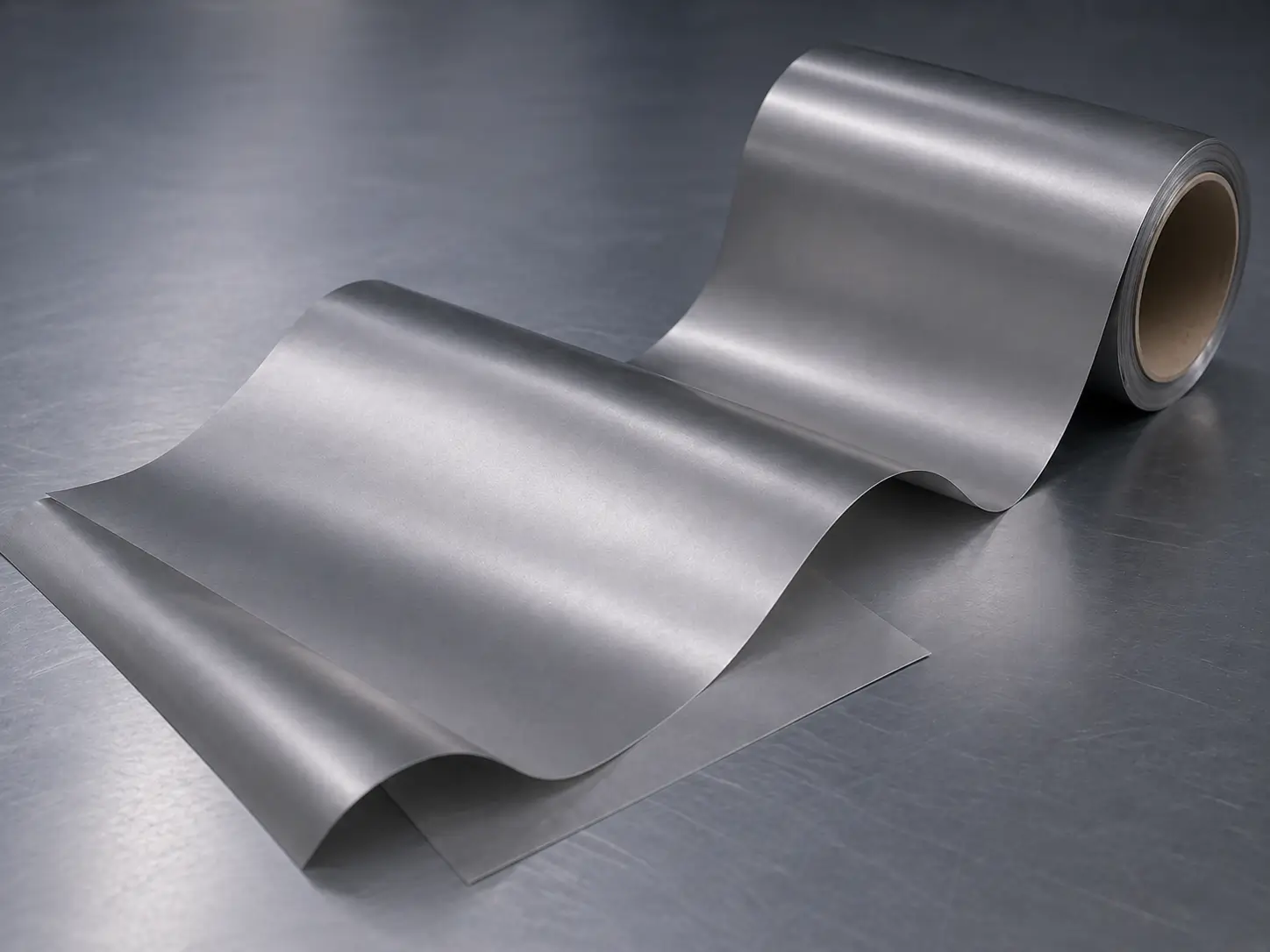
Precision rolled titanium foil coils
Hele Titanium Foil Solutions

Precision Titanium Foil Manufacturer

Engineered for high-stakes applications where every micron matters. We deliver precision-rolled titanium with superior flatness, consistent thickness, and zero surface contamination for advanced industrial integration.

Thickness
0.005–0.5 mm
Formats
Coil / Sheet / Slit Strip
Surface Finish
Bright / Matte / Degreased
Key Grades
Gr1 / Gr2 / Gr5 / Gr23

Micron-Level Precision. Factory-Controlled Purity.

Absolute Surface Integrity | Consistent Tension | Zero Contamination

By controlling the entire multi-roll cold rolling and vacuum annealing process in-house, Hele Titanium aggressively minimizes internal stress and surface pinholes common in commercial foil production.

Our strict degreasing protocols guarantee a flawless finish. Whether it's a 5-micron ultra-thin strip or an aerospace-grade alloy, your foil arrives strictly to spec—ready for immediate coating, bonding, or cleanroom assembly.

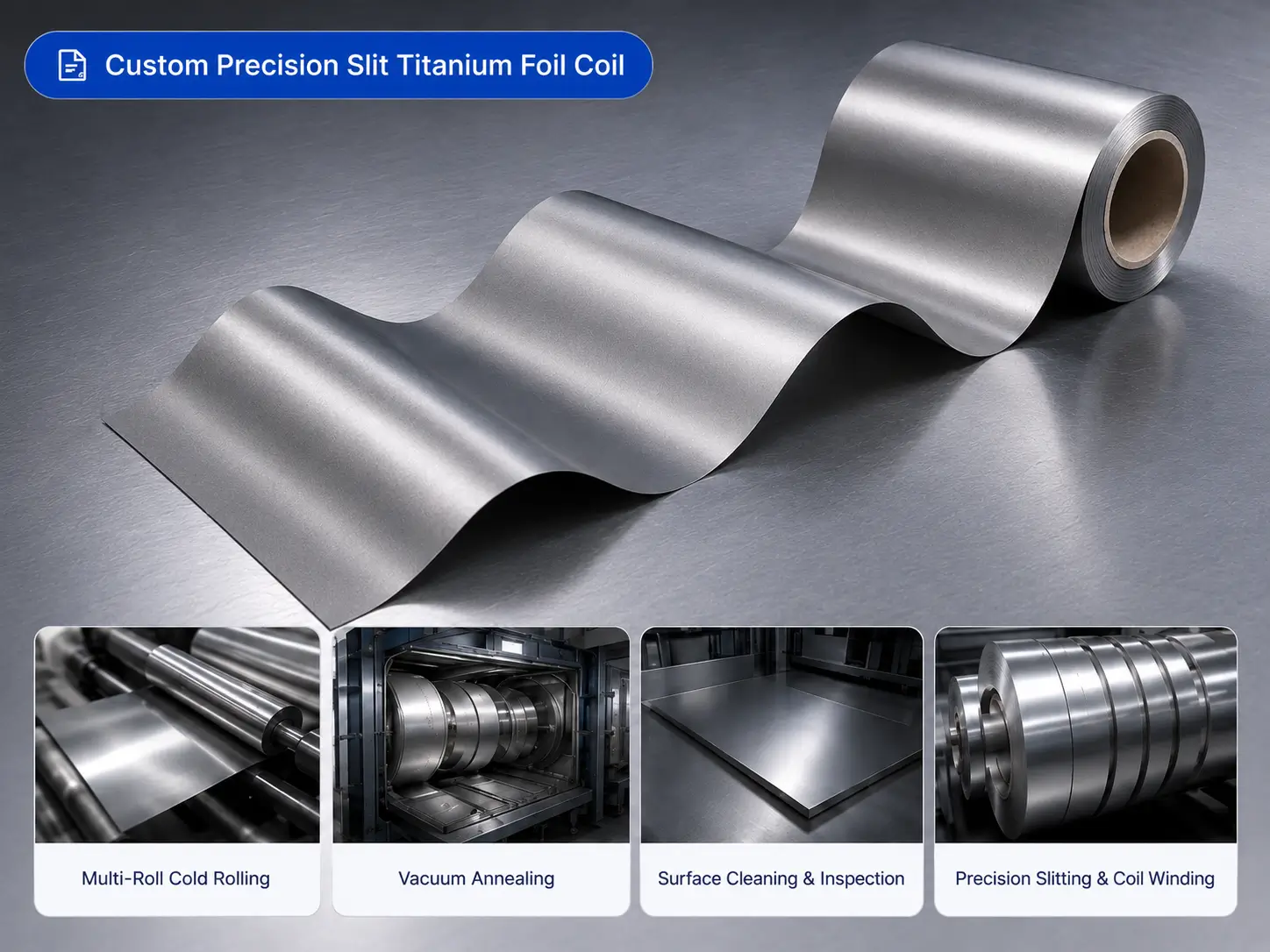
Multi-Roll Cold Rolling
Vacuum Annealing
Degreased Surface
Precision Slitting
Precision titanium foil rolling process

Titanium Foil Series: Engineered for High-Tech

Sourcing precision foil requires matching micro-structure to your application. Our factory-controlled rolling process ensures consistency from 5 microns up to 0.5mm.

Standard & Performance Grades

Core titanium alloys optimized for industrial and structural applications.

Titanium Grade 1 Foil
ASTM B265 | 0.02mm – 0.5mm

Titanium Grade 1 Foil

Best for deep drawing

Maximum ductility designed for complex cold forming processes.

Apps: Speaker diaphragms, medical packaging
Request Quote
Titanium Grade 2 Foil
ASTM B265 | Pickled or Bright

Titanium Grade 2 Foil

Best for general industrial foil use

Balanced strength and oxidation resistance for versatile applications.

Apps: Chemical liners, heat exchanger fins
Request Quote
Medical Grade 23 Foil
ASTM F136 | 0.03mm – 0.2mm

Medical Grade 23 (ELI)

Best for implant barrier use

Extra Low Interstitial titanium ensuring maximum biocompatibility.

Apps: Surgical mesh, dental barrier membranes
Request Quote
Grade 5 Aerospace Foil
AMS 4911 | 0.05mm – 0.3mm

Grade 5 Aerospace Foil

Best for high-strength lightweight apps

Superior strength-to-weight ratio for demanding thermal systems.

Apps: Heat shields, honeycomb structures
Request Quote

Application-Specific Foil Solutions

Engineered surfaces and custom alloys for specialized high-tech environments.

Battery & Energy Foil
Ultra-Clean | 0.02mm – 0.1mm

Battery & Energy Foil

Best for ultra-clean electrochemical surfaces

High-purity foil engineered for maximum electrochemical stability.

Apps: Li-ion current collectors, PEM plates
Request Quote
EMI / RF Shielding Foil
Non-Magnetic | 0.02–0.3mm

EMI / RF Shielding Foil

Best for conductive barrier applications

Corrosion-proof shielding for sensitive electronic systems.

Apps: Avionics housings, 5G infrastructure
Request Quote
Acoustic Diaphragm Foil
Tolerance ±1µm | 0.01 – 0.03mm

Acoustic Diaphragm Foil

Best for ±1μm precision acoustic forming

High stiffness-to-mass ratio for premium high-frequency acoustics.

Apps: Hi-Fi tweeters, premium headphones
Request Quote
Custom Alloy Foil
Gr7 (Ti-Pd) / Gr9 | Custom Slit

Custom Alloy Foil

Best for engineered special-service environments

Engineered alloy foil for extreme acid resistance and pressure stability.

Apps: Chemical reactor linings, fluid wraps
Request Quote

Choose Titanium Foil by Grade & Application

Quickly identify the most suitable titanium foil solution based on thickness, formability, cleanliness, conductivity, and end-use environment.

Deep Draw Foil

High Ductility / Complex Forming

Best for Grade 1 applications requiring maximum softness and complex shaping.

Industrial Utility Foil

General Chemical / Thermal Use

Best for Grade 2 foil where corrosion resistance and process stability matter.

Medical Foil

Barrier / Cleanroom / Implant Use

Best for Grade 23 foil requiring biocompatibility, clean surfaces, and controlled purity.

Aerospace Foil

High Strength / Lightweight

Best for Grade 5 foil used in thermal shields and weight-sensitive assemblies.

Battery & Electronic

Ultra-Clean / Conductive Surface

Best for battery, shielding, and acoustic applications requiring surface consistency.

Need help selecting the right foil grade, thickness, or surface finish?

Custom precision slit titanium foil coil

Engineered to Your Specs: Beyond Standard Stock

Stop Compromising on Material Consistency.

In precision manufacturing, “close enough” is failure. Standard stock rarely meets the strict demands of micro-electronics or biomedical devices. As a direct manufacturer, we customize thickness, surface condition, width, and packaging so your foil integrates cleanly into your cleanroom or manufacturing processes.

Micro-Rolling Precision

  • 0.005mm–0.5mm thickness
  • ±1µm acoustic foil tolerance
  • 3mm–600mm custom slitting

Surface Engineering

  • Bright, Matte, or Pickled finishes
  • Vacuum annealed formability
  • Degreased & defect-inspected

Arrival Integrity

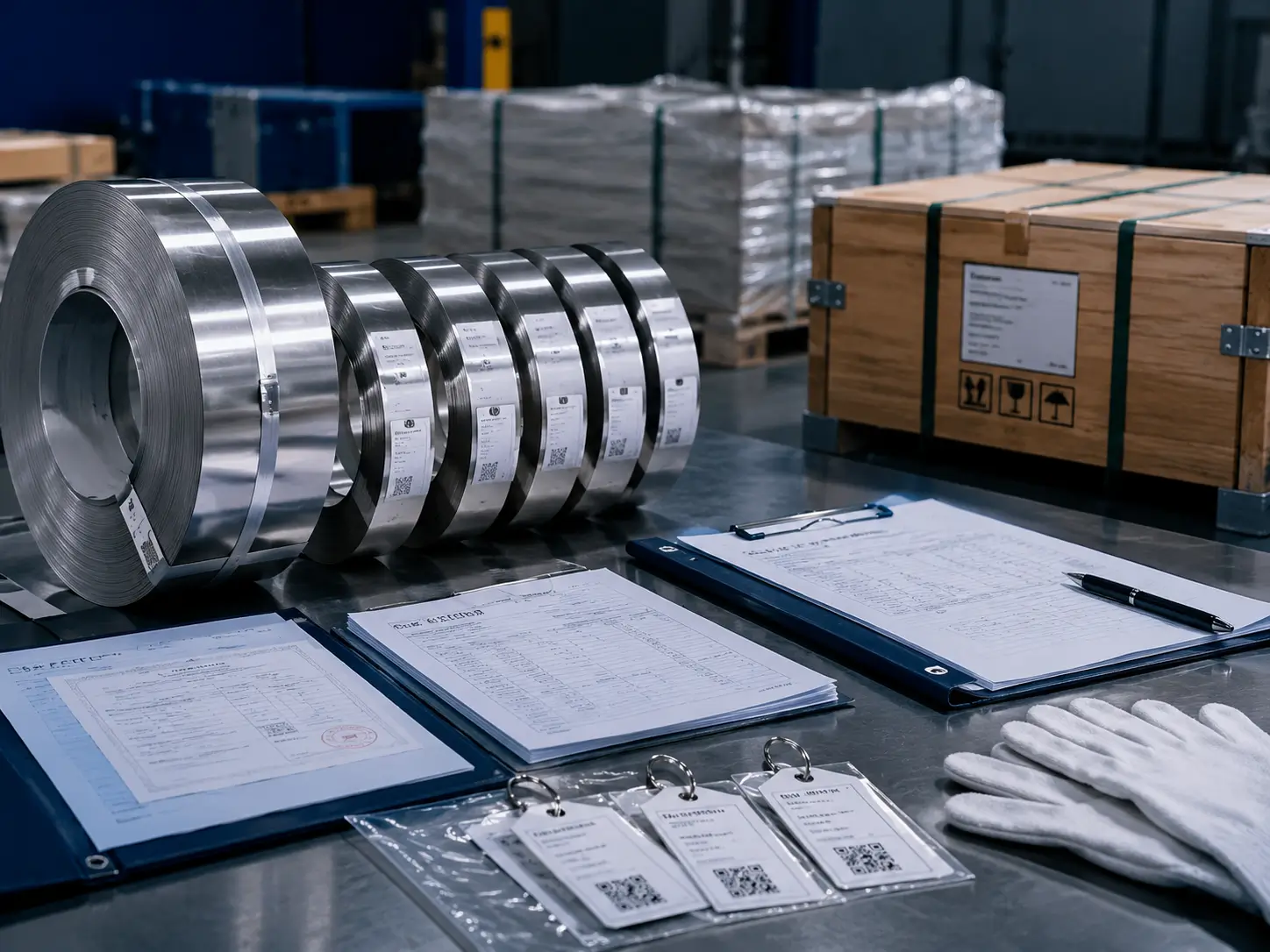
  • Vacuum-sealed packaging
  • Suspended crating prevents marks
  • ISO Class 7 cleanroom packaging

We provide the technical certainty required for the world’s most sensitive electronic and medical components.

Quality Control: Perfection in Every Micron

Ultra-thin foil production is unforgiving; even tiny pinholes, oil residue, micron-level thickness deviations, or edge defects can compromise battery cells, medical barriers, and acoustic diaphragms. We use a multi-stage inspection protocol to ensure absolute metallurgical continuity, surface purity, and dimensional precision.

1

Interstitial Verification

Action: OES analysis and premium titanium melt sourcing

Goal: Verify ultra-low oxygen, nitrogen, and iron levels

Critical for the extreme ductility required during micro-rolling.

2

Precision Gauge Control

Action: Multi-pass cold rolling with advanced AGC systems

Goal: Real-time monitoring of micron-level thickness tolerance and flatness

Variations are corrected instantly before they become defects.

3

Pinhole & Surface Audit

Action: Optical scanning and light-table inspection

Goal: Detect microscopic pinholes, verify surface roughness, and ensure zero residual oil

Zero Visible Defect standard for sensitive applications.

4

Edge Condition & Integrity

Action: Precision slitting inspection and mechanical testing

Goal: Verify burr-free edges, yield strength, and forming stability

Essential for high-speed lamination and deep drawing.

5

Winding & Packaging Stability

Action: Tension-controlled coiling and final vacuum sealing

Goal: Prevent coil telescoping, edge damage, oxidation, and contamination

Material arrives cleanroom-ready and perfectly wound.

Total Traceability. Certified Purity. The Hele Standard.

  • 100% coil-by-coil traceability and dimensional accountability
  • Zero-pinhole guarantee and surface purity control for battery and medical use
  • EN 10204 3.1 Mill Test Certificates with comprehensive chemical and mechanical data
  • Clean packaging assurance with tension-controlled, vacuum-sealed delivery

Empowering Global Innovation: Titanium Foil in Action

Titanium foil is an enabling material in high-performance systems where low weight, corrosion resistance, conductivity, or clean surface behavior are mission-critical.

Medical & Implantable Devices

Medical & Implantable Devices

Biocompatibility & Clean Barrier Performance

Recommended Grades:Grade 23 / Grade 1
Typical Forms:Ultra-Thin / Barrier / Implant Foil

Used for pacemaker casings, surgical barriers, dental membranes, and compact implant components.

Explore Medical Foil
Aerospace & Avionics

Aerospace & Avionics

Thermal Stability & Weight Reduction

Recommended Grades:Grade 5 / Grade 9
Typical Forms:Heat Shield / Structural / Insulation

Used for honeycomb structures, heat shields, and sensor assemblies in vibration- and heat-intensive flight environments.

Explore Aerospace Foil
Energy Storage & Hydrogen

Energy Storage & Hydrogen

Electrochemical Stability & Clean Conductivity

Recommended Grades:Grade 1 / Grade 2
Typical Forms:Battery Foil / Collector / Bipolar Plate

Used in lithium systems and PEM hydrogen components where corrosion resistance and clean surfaces are critical.

Explore Energy Foil
High-End Audio & Acoustics

High-End Audio & Acoustics

Stiffness-to-Mass Performance

Recommended Grades:Specialized CP Titanium
Typical Forms:Diaphragm / Acoustic / Thin Strip

Used for tweeter domes, headphone diaphragms, and ultrasonic devices where transient response matters.

Explore Acoustic Foil

High-Precision Foil for High-Stakes Engineering.

Your Strategic Manufacturing Partner for Precision Foil

Sourcing foil is not just about price—it is about consistency. Hele Titanium combines industrial-scale rolling capacity with the flexibility needed for R&D, medical, electronic, and prototype programs.

Fully Integrated Manufacturing

Factory-direct control with in-house rolling, annealing, slitting, and export packaging for absolute quality assurance and traceability.

Strict Standard Compliance

Fully documented production offering ASTM B265 / AMS 4911 / EN 10204 3.1 support for critical aerospace, medical, and industrial applications.

Precision Micro-Slitting

Engineered to exact tolerances, featuring narrow-width slitting for automated feed systems to ensure seamless production line integration.

Secure Global Logistics

Industrial-grade, vacuum-packed export crating specifically designed to eliminate oxidation, pressure marks, and transit damage globally.

Prototyping & R&D Support

Flexible manufacturing capabilities providing MOQ-friendly R&D sample support for material validation and early-stage evaluation.

Accelerated Turnaround

Strategic inventory management utilizing a standard CP master coil buffer for quicker turnaround on urgent production runs.

Reliability at Scale. Precision by Design.

Frequently Asked Questions

How thin can you roll titanium foil?
Our precision mills can reach 0.005mm (5 microns) for specialized R&D and acoustic applications. Common industrial and medical production ranges usually begin from 0.02mm upward depending on grade and tolerance needs.
What surface finish is best for battery vs bonding vs medical use?
Bright finishes are preferred for conductivity-sensitive electronic or battery applications. Matte finishes provide better mechanical interlocking for coating adhesion, lamination, or bonding processes. Medical applications often require specific Ra (roughness average) values which we can precisely control during final rolling passes.
What core IDs do you offer for titanium foil coils?
We standardly offer 300mm, 400mm, and 500mm core inner diameters (IDs), utilizing steel or high-strength plastic cores depending on coil weight and thickness. Custom core sizes can be accommodated to match your specific unwinding equipment.
What is the difference between foil and strip?
Foil generally refers to titanium below 0.1mm or ultra-thin precision gauge, while strip usually refers to thicker coil material above the foil range. Final terminology can depend on the customer use case, but the key difference lies in thickness and downstream handling requirements.
How do you prevent telescoping, edge damage, or pressure marks in thin foil coils?
We utilize precise tension control during winding to prevent telescoping. For shipping, coils are suspended in custom wooden crates to ensure the edges never bear weight. We also interleave coils with protective paper or film to eliminate pressure marks and surface scratches during transit.
Can you supply degreased foil for coating or bonding?
Yes. Our foil can be supplied fully degreased, washed, and prepared for immediate downstream processes like coating, bonding, or cleanroom assembly. We also offer vacuum-sealed clean packaging options for contamination-sensitive orders.
Do you offer samples for R&D and prototype testing?
Yes. We support sample coils and sheet samples for qualified R&D, validation, and early-stage production testing to ensure the material meets your exact specifications before scaling up.
What is your standard lead time for custom foil production?
Standard lead times range from 3 to 6 weeks depending on the grade, thickness, and current mill schedule. We also maintain stock of common gauges for rapid sample dispatch and urgent small-batch needs.

Inside Our Manufacturing & Quality System

See how we produce, inspect, and document titanium products as a direct manufacturing partner.

See how titanium foil moves from raw material preparation through precision rolling, annealing, slitting, and final conversion.

Vacuum Melting Preparation

Vacuum Melting Preparation

Precision Cold Rolling

Precision Cold Rolling

Vacuum Annealing Process

Vacuum Annealing Process

Slitting & Coil Conversion

Slitting & Coil Conversion

A look inside the factory areas where titanium foil is rolled, slit, handled, packaged, and prepared for shipment.

Foil Rolling Workshop

Foil Rolling Workshop

Coil Slitting Area

Coil Slitting Area

Clean Coil Handling Zone

Clean Coil Handling Zone

Packaging & Dispatch Area

Packaging & Dispatch Area

Our inspection system verifies thickness, flatness, surface condition, and coil consistency before release.

Thickness Verification

Thickness Verification

Surface Defect Inspection

Surface Defect Inspection

Pinhole / Light Table Audit

Pinhole / Light Table Audit

Final Coil Inspection

Final Coil Inspection

Documentation and traceability support are essential for high-precision foil sourcing.

Mill Test Certificate Example

Mill Test Certificate Example

ISO Quality Certification

ISO Quality Certification

Precision Inspection Report

Precision Inspection Report

Export & Compliance Documentation

Export & Compliance Documentation

Need production photos, inspection records, or documentation support? Contact our team for direct factory assistance.

The Ultimate Guide to Titanium Foil 

Read Time: 14 Minutes Author: Hele Titanium Engineering Team Last Updated: 2026

Titanium foil is not just thin metal. It is a precision-engineered material used when light weight, corrosion resistance, mechanical flexibility, or surface integrity are critical. This guide explains how thickness, tolerance, surface quality, grade selection, and coil handling determine foil performance across medical, aerospace, electronics, battery, and chemical applications.

Before You Specify Titanium Foil

Confirm These 3 Things:

01 Thickness & Tolerance Determine exact micron limits.
02 Surface Condition Bright, matte, or degreased.
03 Format Coil, sheet, or slit strip.

1. What is Titanium Foil?

Titanium foil is a precision rolled material category rather than simply thin sheet. While standard sheets are used for structural fabrication, foil is engineered for flexibility, surface integrity, and extreme thickness control. Its unique micro-structure allows it to be deep-drawn for speaker domes, etched for micro-electronics, or wrapped as aerospace insulation without cracking.

2. Standard vs. Precision Tolerances

In foil production, standard ASTM tolerances are often too wide for automated stamping or battery winding. Precision rolling ensures the coil tension remains consistent during your downstream manufacturing.

Thickness Range ASTM Standard Tolerance Hele Precision Tolerance
0.01 – 0.03 mm ± 10% ± 2–5% (± 1µm)
0.03 – 0.10 mm ± 10% ± 5%
0.10 – 0.30 mm ± 0.015 mm ± 0.008 mm

Note: Precision rolling is mandatory for electronics and aerospace to prevent uneven heat distribution or electrical resistance variations.

3. Surface Quality & Finish

Pinholes, scratches, and oil residue are major failure risks. A pinhole in a medical barrier foil breaches sterility; rolling oil on a battery foil prevents coating adhesion. Choose your finish based on the downstream process.

Surface Finish Visual Characteristic Best For (Downstream Process)
Bright Highly reflective, ultra-smooth Conductivity, Electronics, Battery
Matte Micro-roughened for mechanical keying Bonding, Lamination, Adhesion
Degreased Zero rolling lubricants or residue Medical, Coating, Cleanroom Assembly
💡

Engineering Note: Barrier foil applications fail when surface integrity is treated as secondary to thickness. Always specify light-table inspection for ultra-thin gauges.

4. Foil vs. Strip vs. Sheet vs. Plate

Understanding where foil ends and strip begins is critical for sourcing the right mill format.

Focus
Foil
0.005 – 0.1 mm

Precision Coils / Spools

  • Acoustics
  • Batteries
  • Medical Barriers
Strip
0.1 – 0.5 mm

Master Coils / Slit Coils

  • Stamping
  • Gaskets
  • Heat Exchangers
Sheet
0.5 – 4.75 mm

Flat Cut Sheets

  • Aerospace Skins
  • Chemical Tanks
  • Fabrication
Plate
> 4.75 mm

Heavy Flat Plates

  • Structural Machining
  • Flanges
  • Heavy Industry

5. Grade Selection Matrix

Grade selection dictates the foil's behavior during deep drawing, its springback after stamping, and its biocompatibility.

Titanium Grade Key Characteristic Primary Foil Applications
Grade 1 Ultra-Soft CP Highest ductility. Essential for complex cold forming without cracking. Deep draw / soft forming
Grade 2 Standard CP The industry workhorse. Balanced strength & excellent corrosion resistance. General industrial foil
Grade 5 Ti-6Al-4V High strength-to-weight ratio. Difficult to cold form. High strength / aerospace
Grade 23 Ti-6Al-4V ELI Extra Low Interstitial. High purity alloy. Implant / medical use

6. The Manufacturing Process

  • 1
    Vacuum Melting Ensures raw titanium ingot is free from atmospheric contamination.
  • 2
    Hot Rolling Breaks down the ingot into manageable coil stock.
  • 3
    Precision Cold Rolling Multi-pass rolling using 20-high mills to achieve micron-level thickness without tearing.
  • 4
    Vacuum Annealing Relieves internal stresses built up during cold rolling, restoring ductility without oxidizing the surface.

7. Coil Specifications: Core IDs & Winding

For automated stamping or battery winding lines, the physical format of the coil is as important as the foil itself.

  • Core IDs: Standard inner diameters are typically 300mm, 400mm, or 500mm, but custom IDs are available to match your unwinding equipment.
  • Core Materials: Paper, plastic, or steel cores depending on coil weight and cleanroom requirements.
  • Telescoping-Free Winding: Precision tension control during final slitting prevents the coil layers from shifting (telescoping), ensuring smooth automated feeding.

8. Thickness by Application

Match your industry requirements with the optimal thickness range using this decision matrix:

Application Optimal Thickness Range Typical Use Case
Acoustic Diaphragm
0.01 – 0.03 mm High-end speakers
Battery / Energy
0.02 – 0.10 mm Current collectors
Medical Barrier
0.03 – 0.20 mm Implant packaging
Aerospace Foil
0.05 – 0.30 mm Heat shields / honeycomb

9. Handling & Storage

Foil Handling Checklist

  • Wear clean, lint-free gloves to prevent fingerprint oils from etching the surface.
  • Avoid creasing; ultra-thin foil cannot be "flattened out" once kinked.
  • Keep in original vacuum packaging until ready for use.
  • Protect edges; edge damage causes tears during unwinding.
  • Store in a climate-controlled environment to avoid dust and condensation.

10. Cost Insights: The Thinness Premium

Why does ultra-thin foil cost significantly more per kilogram than standard sheet? The cost is driven by processing time, not raw material mass:

  • Additional micro-rolling passes required
  • More intermediate vacuum annealing cycles to prevent hardening
  • Higher edge trimming and yield loss
  • Greater inspection time and specialized packaging requirements
Buyer Note: In foil sourcing, thinner does not just mean less material — it often means exponentially more process control.

Ready to Secure Your Precision Foil Supply?

Whether for medical barriers, aerospace heat shields, battery collectors, or high-end acoustic components, success depends on matching thickness, surface condition, grade, and packaging format to the real application. Hele Titanium provides the factory-direct precision, rolling control, and quality documentation you need to source with confidence.

Direct Contact: sales@heletitanium.com

Precision Foil Sourcing

Specify Your Titanium Foil Requirements

Tell us your required grade, thickness, width, tolerance, surface finish, format, packaging, and end-use application. Our engineering team will review your specifications and provide a competitive quote within 24 hours.

  • Ultra-Thin Precision Rolling (Down to 0.01mm)
  • Custom Slitting & Tight Dimensional Tolerances
  • Clean-Room Packaging & Full Mill Test Traceability

Direct Engineering Contact:

sales@heletitanium.com

Request an RFQ