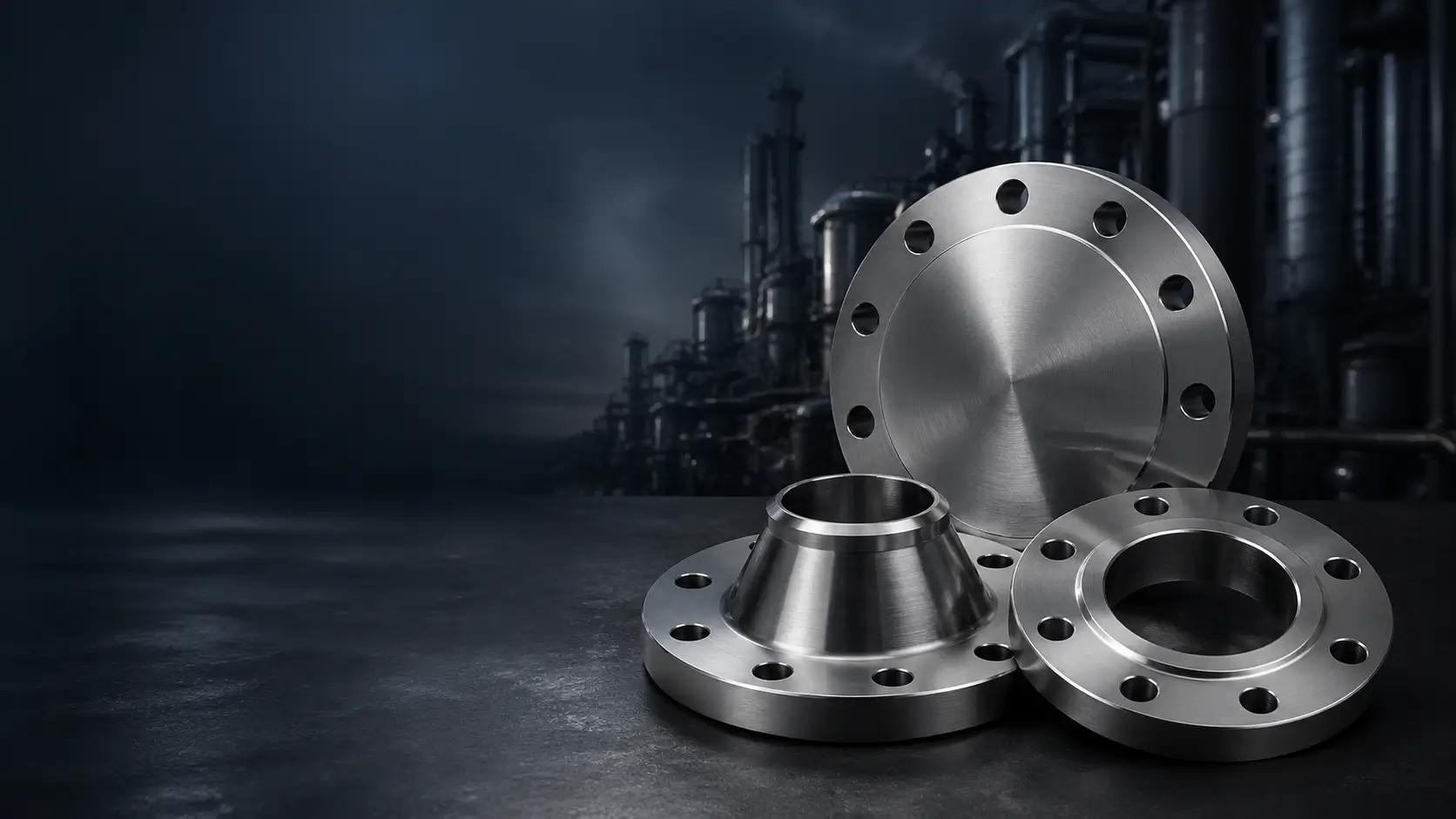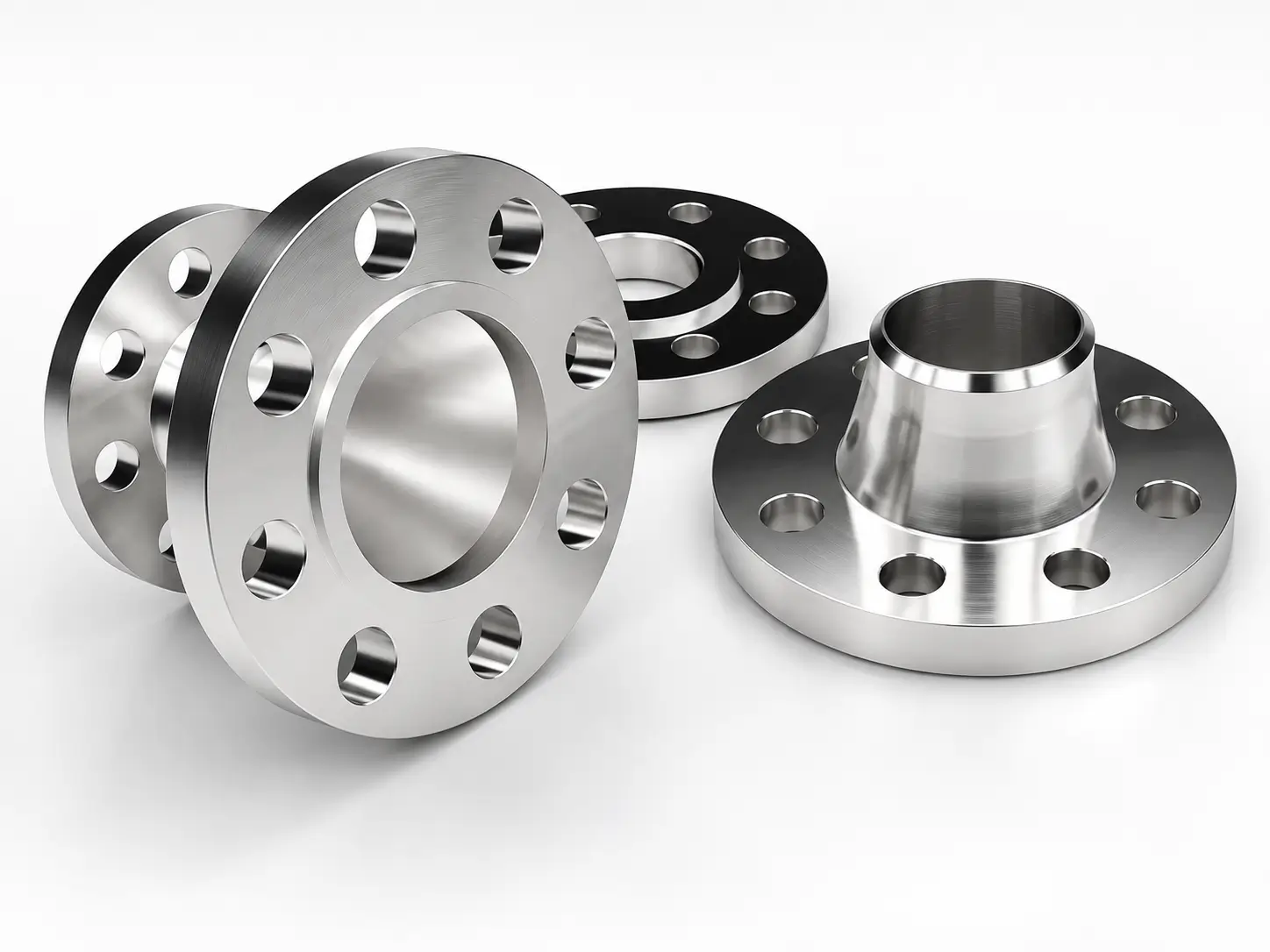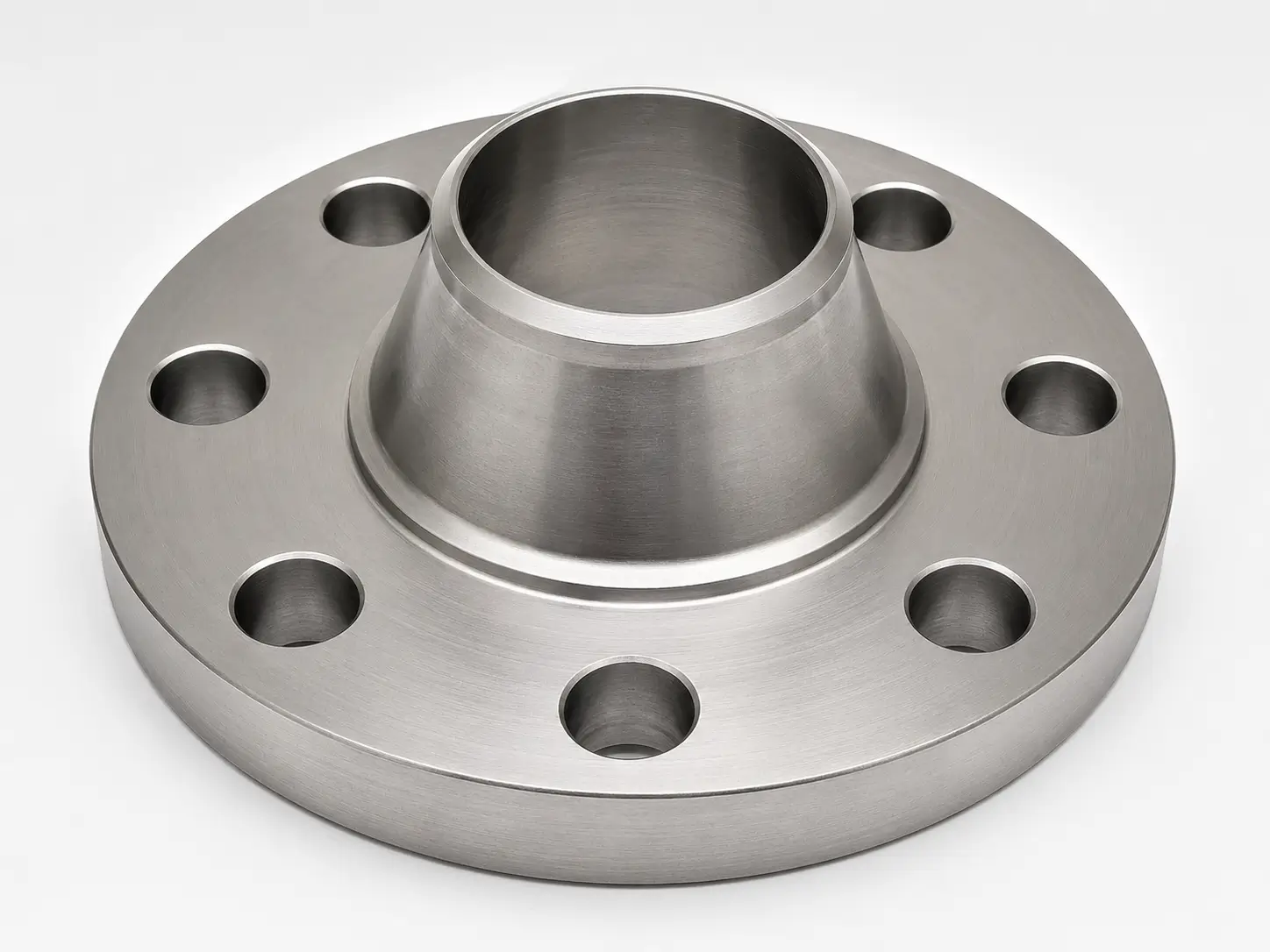
Forged Titanium Flanges
TITANIUM PIPE FLANGES · ASTM B381 MATERIAL OPTIONS

Titanium Pipe Flanges Manufacturer & Supplier

Forged and CNC-machined titanium flanges, including weld neck, slip-on, blind, lap joint and custom flanges, supplied with grade selection, dimensional inspection, MTC and export documentation support.

  • Weld Neck · Slip-On · Blind · Lap Joint
  • Grade / UNS / ASTM B381 Review*
  • NPS / DN · Class / PN
  • RF · FF · RTJ*
  • MTC · Traceability · Dimensional Inspection
PROCUREMENT GUIDE

Titanium Pipe Flange Buying Essentials

Flange Class Is Not a Standalone Working-Pressure Rating

Class or PN is part of the applicable flange standard and design system. Allowable pressure and temperature must be confirmed against the flange material, design code, service temperature, gasket, bolting and complete piping-joint requirements.

Titanium flange sourcing depends on flange type, material grade, raw-material route, NPS or DN, Class or PN, facing, bore or mating pipe schedule, dimensional standard and inspection requirements.

Define these parameters before quotation to match the flange with the piping specification and connection design.

Flange Type & Manufacturing Route

Start with the required flange configuration and confirm whether the component is manufactured from a forged blank, plate-cut blank or another approved raw-material route according to the project specification.

Review: Weld Neck · Slip-On · Blind · Lap Joint · Custom
Material Route: Forged Blank · Plate-Cut Blank · Customer-Specified Route*

Grade & Material Specification

Confirm the titanium grade, UNS or F-Grade and applicable raw-material specification according to the project material requirements and selected manufacturing route.

Review: Grade · UNS · F-Grade · Material Specification
Typical References: ASTM B381 · ASTM B265*

NPS, Class, Face & Bore

Define nominal size, Class or PN, flange facing and bore requirements together with the mating pipe size and wall thickness to establish the required flange geometry.

Review: NPS / DN · Class / PN · RF / FF / RTJ* · Bore
For Weld Neck Flanges: Mating Pipe OD · Schedule / Wall Thickness · Hub / Bore

Inspection & Documentation

Define dimensional, material, surface, marking and NDT requirements according to the flange type, raw-material route, dimensional standard and purchase specification.

Review: MTC · Heat Number · Dimensional Report · PMI* · UT / PT* · Marking

Chinese engineer inspecting titanium flanges, bolt holes, sealing faces and technical drawings in a CNC machining and quality inspection area

*Raw-material route, flange face, PMI/NDT method, dimensional standard and inspection scope depend on flange type, grade, size and project requirements.

PRODUCT RANGE

Titanium Pipe Flange Types

HELE manufactures titanium pipe flanges in standard and drawing-based configurations, with flange type, grade, NPS or DN, Class or PN, face, bore, mating pipe dimensions, dimensional standard and inspection requirements reviewed for each project.

Standard Titanium Flanges

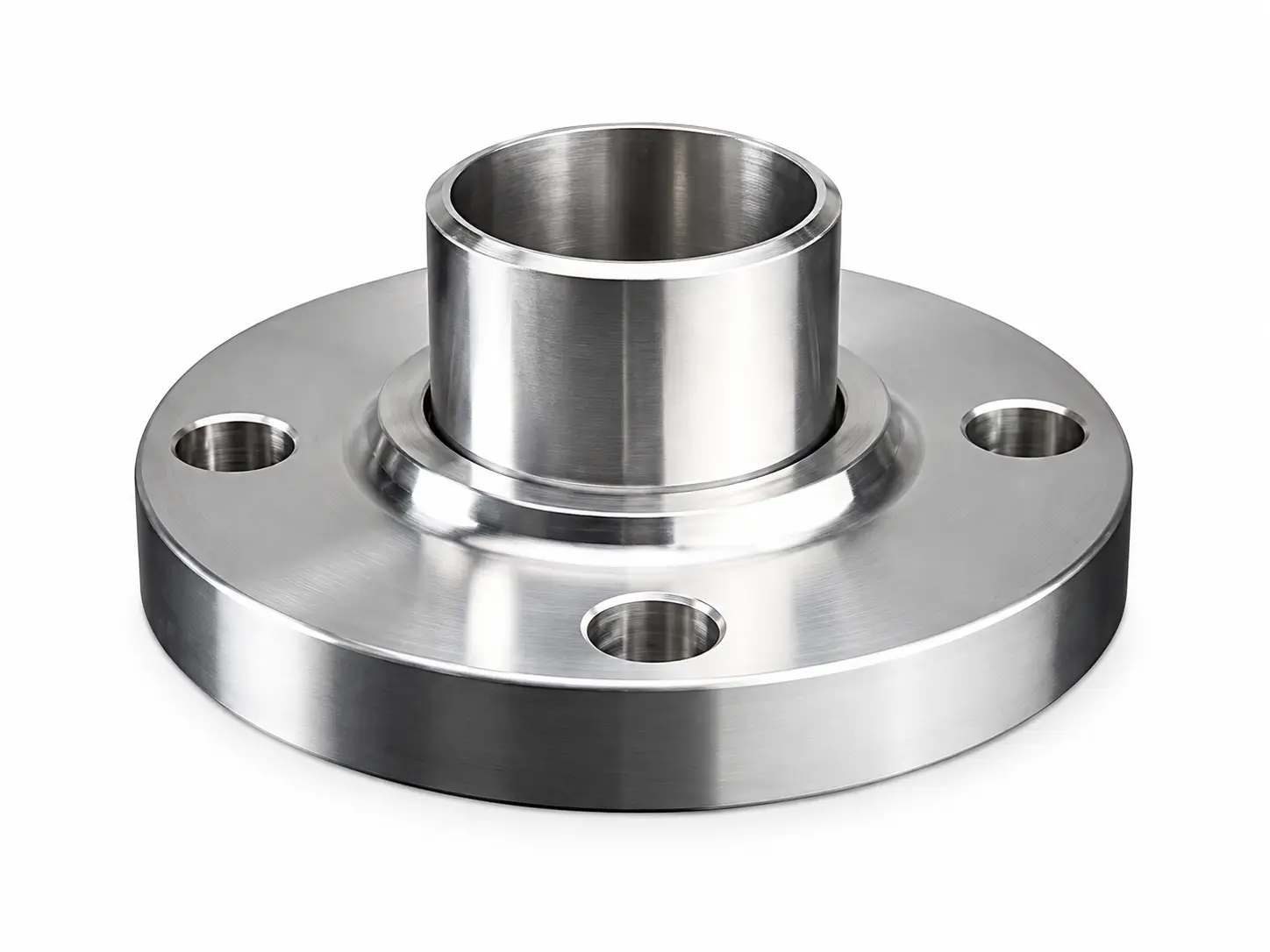
Weld Neck Titanium Flanges

Weld Neck Titanium Flanges

Weld neck flanges are specified with a tapered hub and welding neck, requiring the bore, hub geometry and welding end to be matched with the mating pipe and applicable dimensional requirements.

Specify: NPS / DN · Class / PN · Face · Bore · Pipe Schedule
Geometry Review: Hub · Neck · Welding End · Mating Pipe

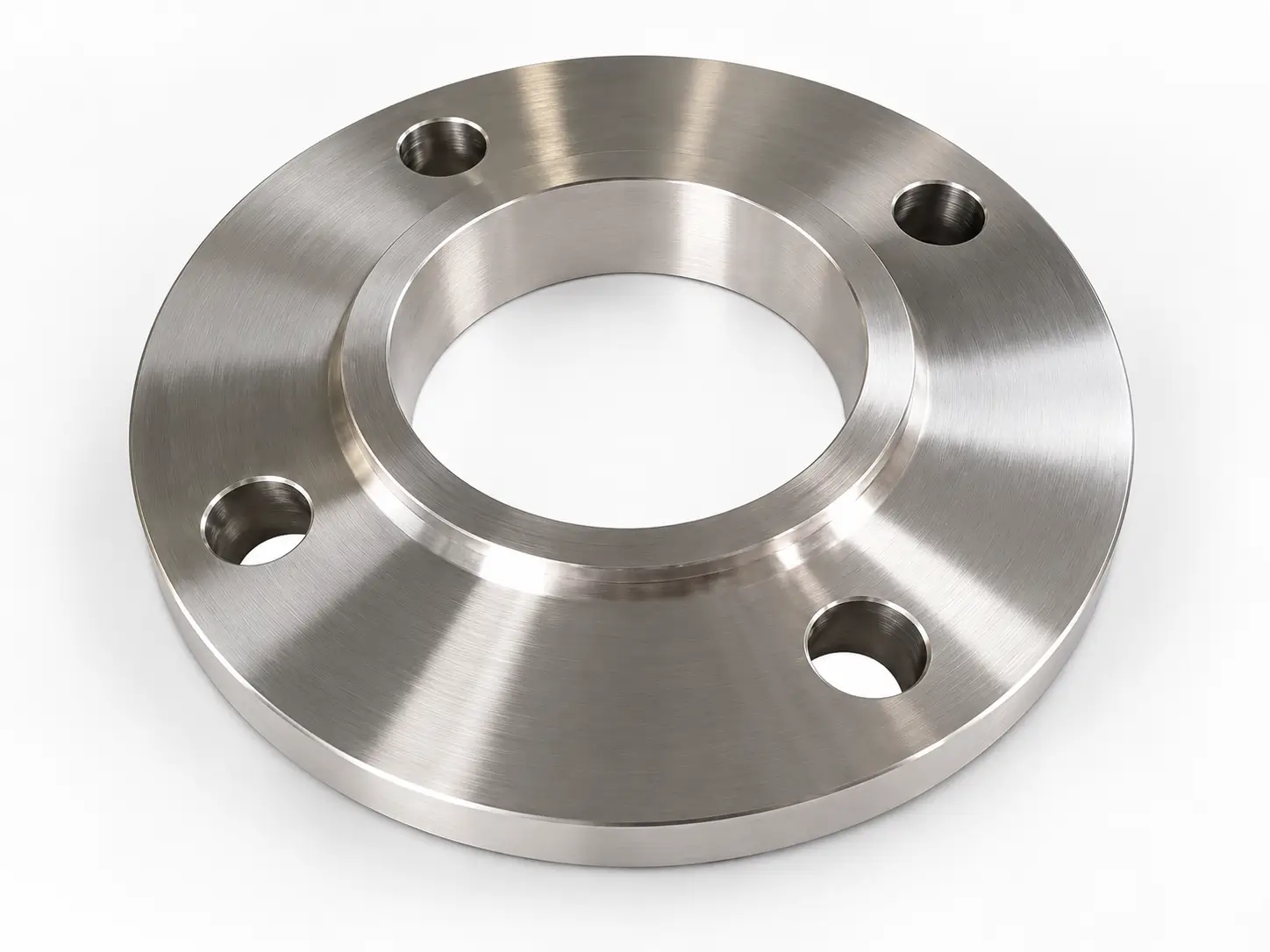
Slip-On Titanium Flanges

Slip-On Titanium Flanges

Slip-on flanges are manufactured with a bore that allows the mating pipe to pass into the flange before welding, with bore, face, outside dimensions and welding requirements confirmed to the project specification.

Specify: NPS / DN · Class / PN · Face · Bore
Review: Pipe OD · Bore Clearance · Flange Thickness · Welding Requirement

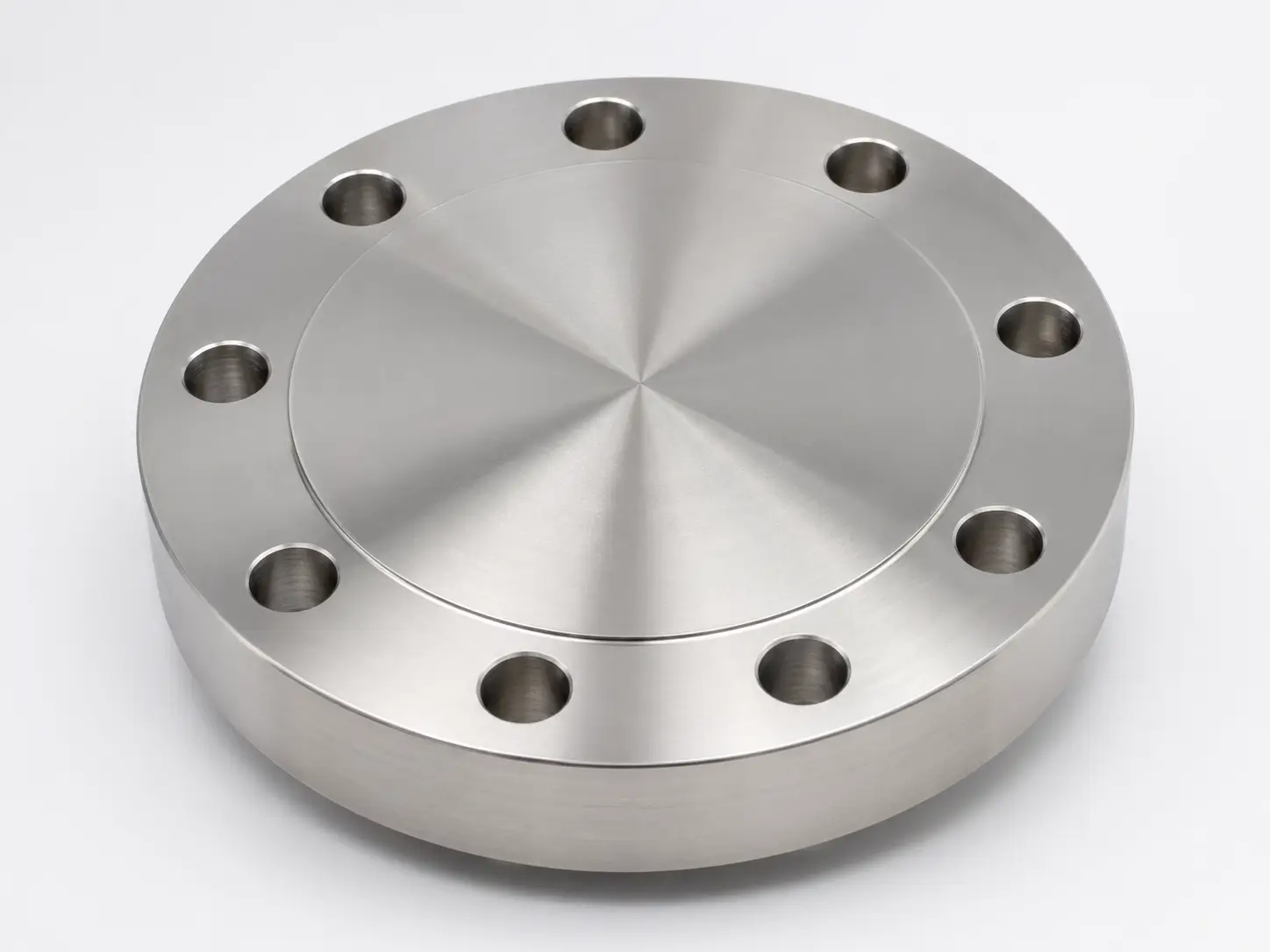
Blind Titanium Flanges

Blind Titanium Flanges

Blind flanges are used to close flanged piping or equipment connections and are specified by size, Class or PN, face, thickness, bolt pattern and applicable dimensional requirements.

Specify: NPS / DN · Class / PN · Face · Thickness
Geometry Review: OD · Bolt Circle · Bolt Holes · No Bore

Lap Joint Titanium Flanges

Lap Joint Titanium Flanges

Lap-joint flanges are reviewed together with the mating stub end, including bore clearance, flange dimensions, face arrangement and compatibility with the complete lap-joint assembly.

Specify: NPS / DN · Class / PN · Bore · Stub-End Match
Assembly Review: Stub End · Lap Geometry · Bolt Pattern · Flange Rotation

Specialty & Custom Solutions

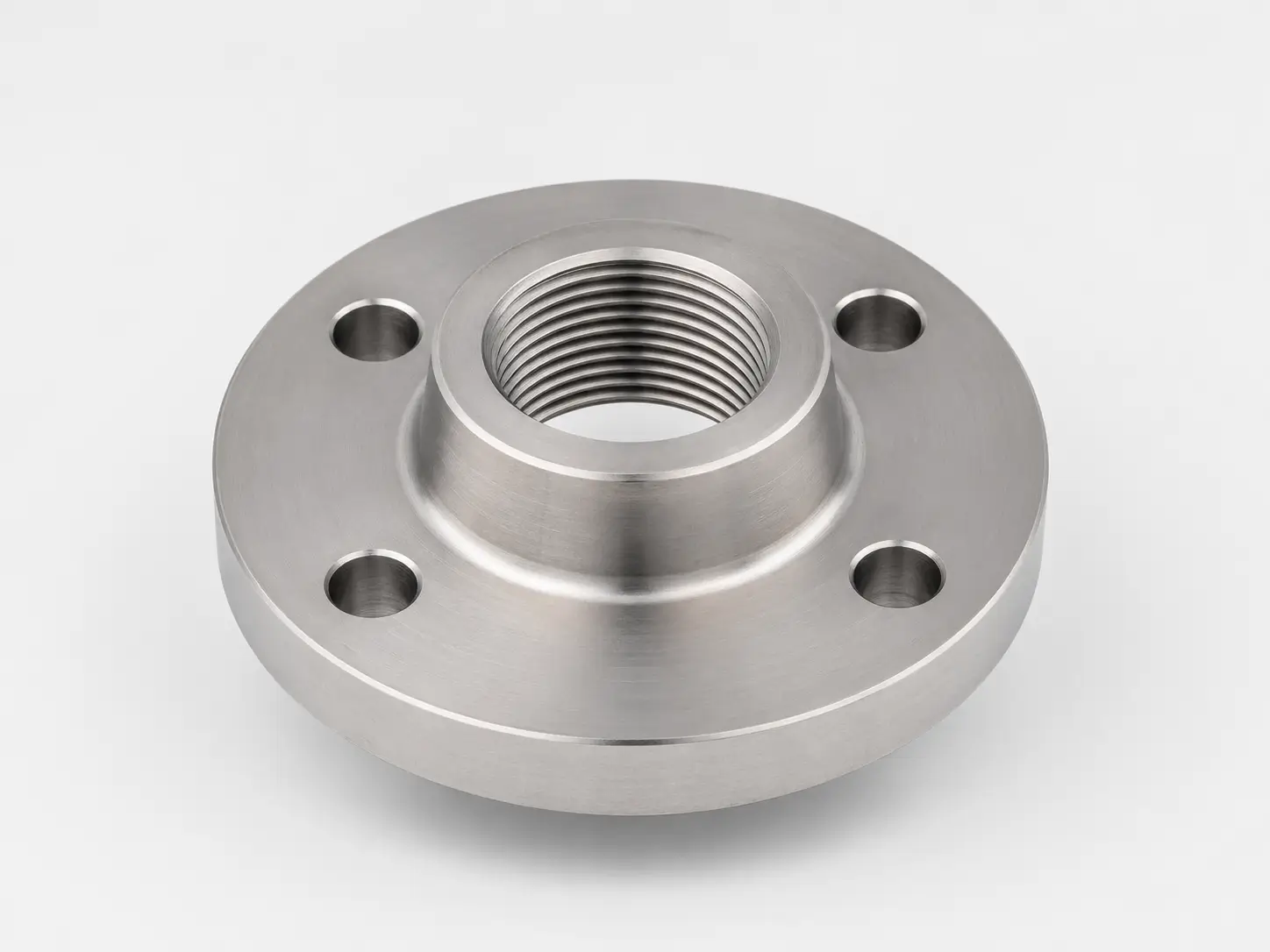
Threaded Titanium Flanges

Threaded Titanium Flanges

Threaded titanium flanges can be reviewed where the project specifies a threaded pipe connection, with thread form, nominal size, Class, face and dimensional requirements defined in the purchase specification.

Specify: NPS / DN · Class / PN · Face · Thread Specification

Socket Weld Titanium Flanges

Socket Weld Titanium Flanges

Socket-weld titanium flanges can be reviewed for projects requiring a socket-type pipe connection, with socket geometry, bore, pipe size, Class and dimensional requirements confirmed before manufacturing.

Specify: NPS / DN · Class · Face · Bore · Socket Dimensions

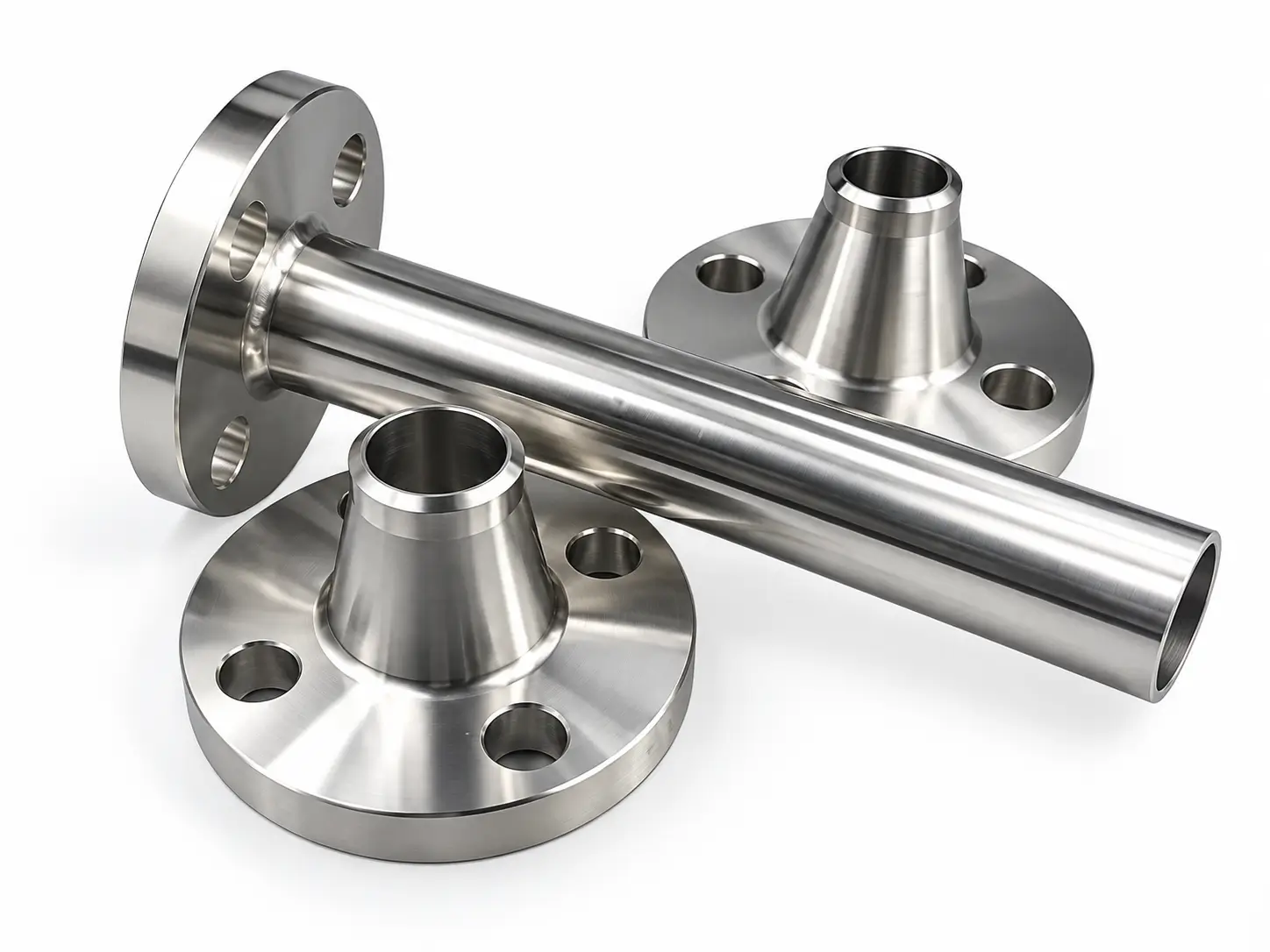
Long Weld Neck Titanium Flanges

Long Weld Neck Titanium Flanges

Long weld neck flanges can be manufactured for drawing-based or project-specific connections requiring an extended neck, controlled bore, hub transition and equipment-side geometry.

Specify: NPS / DN · Class · Face · Bore · Neck Length

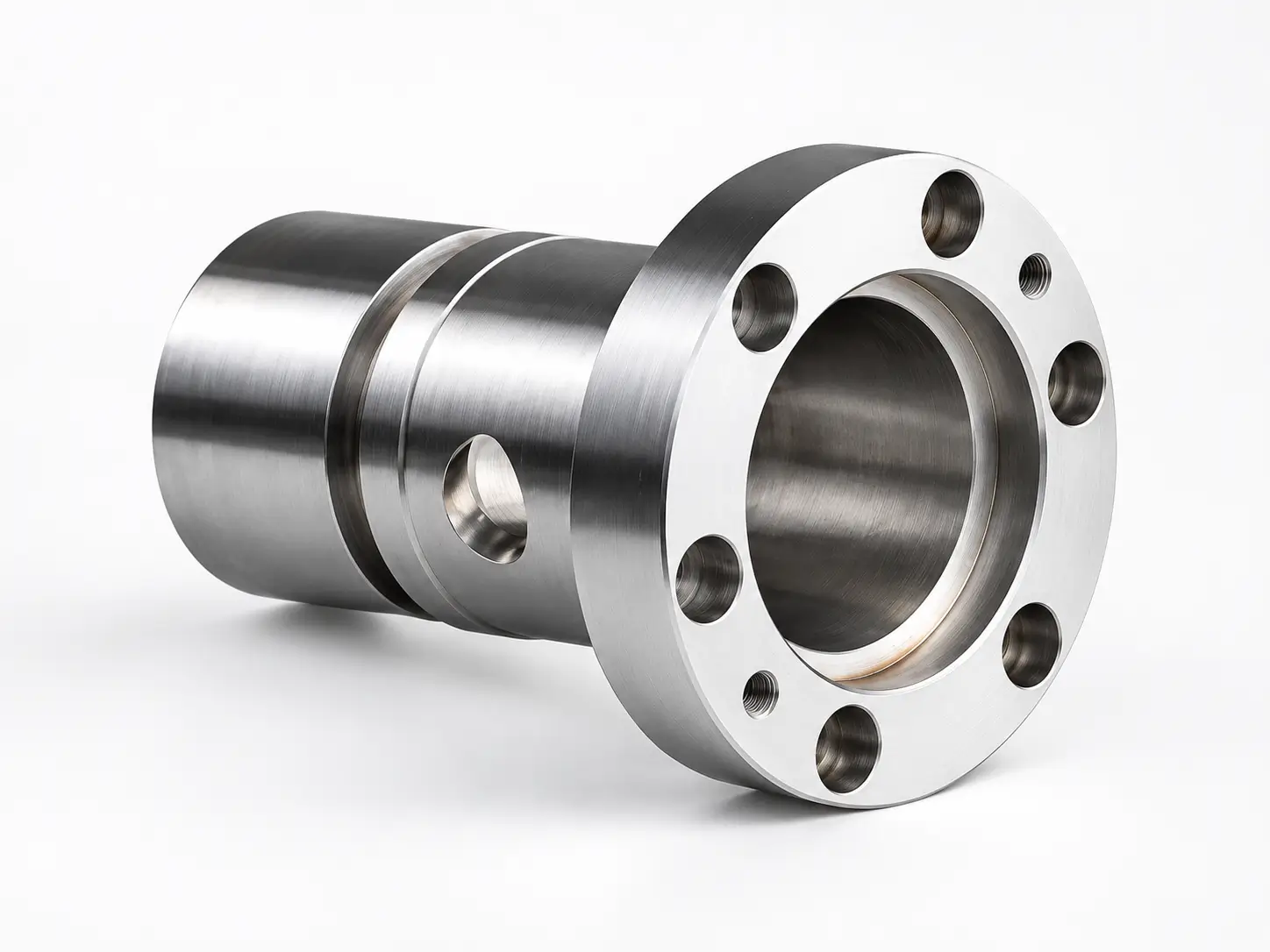
Custom Titanium Flanges

Custom Titanium Flanges

Drawing-based titanium flanges can be manufactured for non-standard dimensions, bolt patterns, bores, hub geometries, faces and connection requirements, with raw-material route, machining and inspection reviewed against the approved drawing.

Specify: Grade · OD · Thickness · Bore · Bolt Pattern · Face
Drawing Review: Bolt Circle · Hole Diameter · Hub · Tolerance · Surface Finish

Finished Pipe Flanges vs. Forged Rings & Custom Rings

This page covers finished titanium pipe flanges manufactured to standard or drawing-based connection requirements. Raw forged rings, rolled rings and forging blanks belong to the titanium forgings product family, while non-flange machined rings should be specified separately as drawing-based machined components.

SELECTION GUIDE

How to Choose the Right Titanium Pipe Flange

Select titanium pipe flanges by flange type, material grade, raw-material route, nominal size, Class or PN, facing, bore, mating pipe dimensions, applicable standard and inspection requirements to match the complete piping-joint specification.

1

Choose the Flange Type

Start with the required connection design and select the flange configuration according to the mating pipe, equipment connection and piping arrangement.

Choose: Weld Neck · Slip-On · Blind · Lap Joint · Socket Weld* · Threaded* · Custom
Type-Specific Review: Hub · Bore · Stub-End Match · Socket · Thread · Drawing Geometry
2

Confirm Grade & Raw-Material Route

Specify the titanium grade, UNS or F-Grade together with the required raw-material route so the flange material and manufacturing process can be reviewed against the project specification.

Review: Grade · UNS · F-Grade · Material Specification
Raw-Material Route: Forged Blank · Plate-Cut Blank · Customer-Specified Material*
3

Define NPS, DN & Class / PN

Specify the nominal flange size and applicable Class or PN designation according to the dimensional standard and project piping specification.

Specify: NPS / DN · Class / PN · Quantity
Also Review: Mating Pipe Size · Design Standard · Project Specification
4

Define Face, Bore & Mating Pipe

Confirm the flange-facing configuration and bore requirements together with the mating pipe OD, Schedule or actual wall thickness and gasket arrangement where applicable.

Face: RF · FF · RTJ* · Project-Specified Face
Bore / Pipe: Bore · Pipe OD · Schedule · Wall Thickness
Joint Review: Gasket Type · Facing Finish · Stub-End Match*
5

Confirm Standard or Drawing

Define the applicable dimensional standard and edition, or provide an approved drawing for custom flange dimensions, bolt pattern, hub geometry, facing and tolerances.

Common References: ASME B16.5 · ASME B16.47* · EN 1092-1* · Customer Drawing
Drawing Review: OD · Thickness · Bolt Circle · Hole Size · Hub · Bore · Tolerance
6

Define Inspection & Documentation

Confirm material traceability, dimensional inspection, surface and facing requirements, marking, NDT and project documentation according to the flange type, manufacturing route and purchase specification.

Review: MTC · Heat Number · Dimensional Report · PMI* · UT / PT* · Marking
Documentation: CoC · EN 10204 Type 3.1* · Third-Party Inspection*

Flange Selection Must Match the Complete Joint Design

Flange type, material, Class or PN, face, bore, mating pipe, gasket, bolting and design temperature should be reviewed together under the applicable piping code and project specification. Product selection on this page does not replace project engineering approval.

Review My Flange Requirement

*Availability of flange type, raw-material route, facing, dimensional standard, NDT and documentation depends on grade, size and project requirements.

MATERIAL SELECTION GUIDE

Titanium Grades for Pipe Flanges

Select the titanium grade according to the project material specification, service environment, mechanical requirements and flange manufacturing route. Final availability is confirmed by flange type, raw-material form, NPS or DN, Class or PN, facing and project requirements.

Material Grade and Flange Standard Are Different Decisions: The titanium grade defines the material chemistry and mechanical requirements, while flange dimensional standards define geometry, dimensions, facing and Class or PN systems. ASTM B381 may apply to forged titanium material, while ASME B16.5, ASME B16.47 or other project standards may define the flange dimensional pattern where applicable.

Availability Note: Not every titanium grade is available in every flange type, size, Class or PN, facing or raw-material route. Final Grade × Type × Size × Class × Face availability is confirmed during quotation review.

Grade 2
Grade 2 titanium flange for chemical and seawater piping

Grade 2 Titanium

UNS R50400 · Commercially Pure Titanium

Grade 2 provides a practical balance of strength, ductility, fabrication performance and corrosion resistance for a broad range of industrial titanium flange and piping applications.

Selection Focus General Industrial Service · Fabrication · Piping Components
Flange Review Weld Neck · Slip-On · Blind · Lap Joint · Custom*
Material Route ASTM B381 forging or other approved raw-material route, as applicable
Grade 5
Grade 5 titanium flange for high-strength mechanical assemblies

Grade 5 Titanium

UNS R56400 · Ti-6Al-4V

Grade 5 offers higher strength than commercially pure titanium and can be reviewed for flange applications where alloy strength, geometry, manufacturing route and project-specific design requirements justify its use.

Selection Focus Higher Strength · Alloy Components · Project-Specific Review
Flange Review Selected Standard Types · Custom Flanges · Drawing-Based Components*
Material Route Forging or other approved material route confirmed per order
Grade 7
Grade 7 titanium flange for severe chemical environments

Grade 7 Titanium

UNS R52400 · Ti-0.2Pd

Grade 7 is a palladium-alloyed commercially pure titanium grade that can be reviewed for corrosion-sensitive flange and piping applications where the project material specification requires enhanced corrosion performance.

Selection Focus Corrosion-Sensitive Service · Chemical Processing · Material Specification Review
Flange Review Weld Neck · Blind · Slip-On · Lap Joint · Custom*
Material Route ASTM B381 forging or other approved raw-material route, as applicable
Grade 12
Grade 12 titanium flange for heat exchangers and pump systems

Grade 12 Titanium

UNS R53400 · Ti-0.3Mo-0.8Ni

Grade 12 combines titanium with molybdenum and nickel and can be reviewed for industrial flange applications requiring a project-specific balance of strength, fabrication performance and corrosion resistance.

Selection Focus Industrial Piping · Corrosion Review · Project-Specific Material Selection
Flange Review Selected Flange Types · Custom Project Requirements*
Material Route Material specification and manufacturing route confirmed per order

Engineering Note: Allowable pressure and temperature depend on the flange geometry, material, dimensional standard, design temperature, gasket, bolting and applicable piping code. Grade selection and flange-joint design should therefore be reviewed as separate but related engineering decisions.

Need help selecting the right grade for your project? Our engineering team is ready to support.

STANDARDS & SPECIFICATIONS

Material Specifications vs. Flange Dimensional Standards

Titanium flange procurement usually involves more than one technical reference. Material specifications define the titanium product and material requirements, while dimensional standards define flange geometry, class systems and interface dimensions. Inspection documents should be specified separately.

The applicable standard, edition and project requirements should be confirmed before quotation and production.

Material Specification

ASTM B381 / ASME SB-381

Covers titanium and titanium-alloy forgings. When specified for a flange, the applicable grade, material condition, heat requirements and inspection documentation should be confirmed against the purchase specification.

Used for forged titanium material
Plate / Sheet Material Specification

ASTM B265

Applies to titanium sheet, strip and plate. It may be relevant to plate-based rings, blind components or custom machined parts where the approved manufacturing route uses plate rather than a forging.

Applicable where the material route requires plate
Flange Dimensional & Class Framework

ASME B16.5

Defines pipe flange dimensional requirements, Class designations, tolerances, marking and related requirements within its applicable scope. Titanium material suitability and pressure-temperature design must still be confirmed for the project.

Dimensional reference — not a titanium material grade
Large-Diameter Flange Framework

ASME B16.47

Used for large-diameter flange dimensional requirements where the project specifically calls for the applicable Series and size range. Material suitability and project design requirements must be reviewed separately.

Large-diameter dimensional reference
Alternative Project Standards

EN / DIN / JIS Dimensional Patterns

European, German or Japanese flange dimensional patterns can be reviewed when specified by the project. Material grade, PN/Class, facing and dimensional compatibility should be verified before production.

Project-specific dimensional review
Inspection Document

EN 10204 3.1

Defines an inspection certificate type for supplied material or products. It is not a flange material specification or dimensional standard. Availability should be confirmed against the order and documentation requirements.

Documentation requirement

Engineering Note

Matching a flange to a dimensional standard does not automatically establish the allowable working pressure for every titanium grade, temperature or service condition. Final joint and pressure design should be approved under the applicable piping code and project engineering requirements.

Need a deeper explanation of flange standards, Class/PN, face type or bore requirements?

Read the Titanium Flange Purchase Guide
MANUFACTURING & MACHINING

Titanium Flange Manufacturing & Precision Machining

HELE manufactures finished titanium pipe flanges using project-appropriate raw-material routes and CNC machining, with flange geometry, bore, hub, bolt pattern, sealing face, dimensional tolerances and inspection requirements reviewed against the applicable standard or approved drawing.

Chinese engineer inspecting custom titanium flanges, sealing faces, bolt holes and technical drawings in a CNC machining and quality inspection area
Manufacturing Route Depends on Flange Type

Weld-neck and other forged flange designs may require forged starting material, while selected blind, loose-ring or drawing-based components may use other approved raw-material routes where permitted by the project specification. Final material route is confirmed before quotation and manufacturing.

01 Raw-Material Route Review

The raw-material route is selected according to flange type, titanium grade, geometry, dimensions and project specification before machining begins.

Review: Forged Blank · Plate-Cut Blank
Ref: ASTM B381 · ASTM B265*

02 CNC Machining & Profile Control

Flange OD, thickness, bore, hub, neck and other machined profiles are produced according to the required dimensional standard or approved customer drawing.

Control: OD · Thickness · Bore · Hub · Neck
Custom: Drawing Dimensions · Tolerances

03 Bolt Pattern, Face & Bore Control

Bolt-circle geometry, hole quantity and diameter, bore dimensions and flange-facing features are machined and inspected according to the specified dimensional pattern and joint requirements.

Geometry: Bolt Circle · Holes · Bore
Facing: RF · FF · RTJ* · Surface Finish

04 Final Inspection, Marking & Traceability

Finished flanges are reviewed for material identity, critical dimensions, sealing-face condition, marking and agreed inspection requirements before shipment.

Inspection: Dimensions · PMI* · UT / PT*
Traceability: Heat No. · Grade · MTC

Material Specification vs. Finished Flange Geometry ASTM B381 defines titanium and titanium-alloy forgings, while dimensional standards such as ASME B16.5 or ASME B16.47 define flange geometry and related dimensional requirements where applicable. A flange manufactured to a dimensional pattern should not be assumed to carry a specific pressure-temperature rating unless the complete material and design requirements are confirmed by the project engineer.

QUALITY & DOCUMENTATION

Titanium Flange Inspection, Traceability & Documentation

Finished titanium flanges are reviewed against the agreed material specification, dimensional standard or drawing, critical geometry, sealing-face requirements, marking and inspection scope, with traceability and project documentation prepared according to the purchase order.

Titanium products with packing list, material certificate and export packing

Material & Heat Traceability

Titanium grade, UNS or F-Grade, raw-material specification and heat or lot identification are reviewed against the agreed flange specification and supporting material records.

Review: Grade · UNS / F-Grade · Heat No. · Raw-Material Specification · MTC

Critical Dimensional Inspection

Finished flange geometry is inspected against the applicable dimensional standard or approved drawing, with the inspection points selected according to flange type and connection requirements.

Inspection: OD · Thickness · Bore · Bolt Circle · Hole Quantity / Diameter
When Applicable: Hub · Neck · Overall Height · Runout · Flatness

Sealing Face & Surface Inspection

Flange-facing geometry and surface condition are reviewed according to the specified face type, gasket arrangement and project acceptance requirements.

Review: RF · FF · RTJ* · Face Dimensions · Surface Finish · Ra / Serration*
Visual Inspection: Surface Condition · Machining Marks · Edge Condition

PMI & NDT Review

PMI and nondestructive examination requirements can be reviewed according to the titanium grade, raw-material route, flange geometry and project inspection specification.

Available for Review: PMI* · UT* · PT* · Visual Inspection
Requirements: Method · Scope · Sampling · Acceptance Criteria · Report

Marking & Product Identification

Product marking and identification can be applied according to the applicable specification and purchase requirements to maintain traceability between the flange, heat records and inspection documents.

Marking Review: Grade · Heat No. · Size · Class / PN · Specification · Manufacturer Identification*

Final Documentation & Shipment Records

Agreed material, dimensional, inspection, identification and shipment records can be prepared according to the project documentation scope before dispatch.

Documents: MTC · Dimensional Report · PMI / NDT Report* · CoC · Packing List
When Specified: EN 10204 Type 3.1* · Third-Party Inspection*
Inspection Scope Depends on Flange Type and Material Route

Inspection requirements differ between forged, plate-cut and drawing-based flanges and may also vary by flange type, grade, size, facing, applicable standard and project specification. Final inspection scope is confirmed during quotation and purchase-order review.

Reliable Doc. Clear Packing. Smooth Delivery.

Hele Titanium can support available shipment documents, traceability records and export packing according to order requirements.

INDUSTRY APPLICATIONS

Titanium Pipe Flanges for Industrial Piping Systems

Titanium pipe flanges are manufactured for chemical processing, marine, process equipment and engineered piping projects where flange type, material grade, size, facing, joint design and inspection requirements are defined by the operating conditions and project specification.

Chemical Processing Piping

Chemical Processing

  • Titanium pipe flanges can be manufactured for chemical-processing systems where material selection, facing, gasket arrangement and inspection requirements are reviewed against the actual medium, concentration, temperature and project corrosion requirements.
Selection Focus: Grade · Medium · Temperature · Face · Gasket · Inspection
Marine, Seawater & Desalination Systems

Marine & Seawater Systems

  • Titanium flanges can be reviewed for seawater handling, marine process piping and related equipment where grade, flange type, facing, bolting, gasket and system design are confirmed for the actual service conditions.
Selection Focus: Grade · Flange Type · Face · Bolting · Gasket · Service Conditions
Heat Exchanger, Pump & Valve Assemblies

Heat Exchanger & Process Equipment

  • Titanium flanges can be manufactured for heat exchangers, vessels, piping connections and process-equipment assemblies where bore, hub, bolt pattern, face and mating-component dimensions must be coordinated with the equipment design.
Selection Focus: Bore · Hub · Bolt Pattern · Face · Mating Equipment · Drawing
Electrochemical & Hydrogen Equipment

EPC & Custom Piping Projects

  • HELE supports project-based titanium flange packages from MTO, datasheet and drawing review through flange specification, custom machining, inspection documentation, packing and delivery coordination.
Selection Focus: MTO · Datasheet · Drawing · Inspection · Documentation · Delivery

Application Alone Does Not Define the Flange Specification

The same application may require different titanium grades, flange types, Class or PN, faces, bores, gasket arrangements and inspection requirements depending on the service medium, design temperature, piping code and project specification. Final joint suitability should be confirmed by the responsible project engineer.

One Partner. Complete Titanium Supply Support.

Hele Titanium is your reliable titanium flange supplier and partner for materials, components and project solutions.

WHY HELE TITANIUM

Why Industrial Buyers Choose HELE as Their Titanium Flange Manufacturer

HELE supports titanium flange projects with specification review, standard and drawing-based manufacturing, CNC machining, dimensional and material inspection, traceability documentation and international project coordination from RFQ through shipment.

Engineering Specification Review
01

Engineering Specification Review

Flange type, titanium grade, NPS or DN, Class or PN, facing, bore, mating pipe dimensions, raw-material route and applicable standard are reviewed together before manufacturing.

Review: Type · Grade · NPS / DN · Class / PN · Face · Bore · Standard

Standard & Custom Flange Manufacturing
02

Standard & Custom Flange Manufacturing

HELE manufactures finished titanium pipe flanges in standard and drawing-based configurations, with raw-material route, CNC machining, hub, bore, bolt pattern and sealing-face requirements reviewed according to the applicable specification or approved drawing.

Manufacturing Scope: Weld Neck · Slip-On · Blind · Lap Joint · Custom Flanges

Manufacturing Review: Forged Blank · Plate-Cut Blank · CNC Machining*

Inspection & Material Traceability
03

Inspection & Material Traceability

Material identity, heat traceability, critical flange dimensions, bore, bolt pattern, sealing face, marking and applicable PMI or NDT requirements can be inspected against the agreed specification and purchase order.

Documentation: MTC · Heat Number · Dimensional Report · PMI / NDT Records* · Marking

Project & Export Coordination
04

Project & Export Coordination

HELE coordinates flange lists, MTOs, drawings, inspection requirements, product identification, protective packing and shipping documentation for OEM, EPC and industrial piping projects.

Support: MTO · Drawing · Inspection · Packing · Identification · Shipping Documents

From Flange Specification to Project Delivery

Send the flange list, MTO or drawing with type, grade, size, Class or PN, face, bore, quantity and inspection requirements for technical and commercial review.

*Raw-material route, facing option, machining scope, PMI/NDT method and documentation depend on flange type, grade, size, applicable specification and purchase-order requirements.

FREQUENTLY ASKED QUESTIONS

Titanium Flange FAQs

Find answers to common questions about titanium flange types, ASTM B381, ASME B16.5, Class and PN, flange faces, bore requirements, material grades, inspection and quotation requirements.

Types & Standards

What types of titanium pipe flanges does HELE manufacture?
HELE manufactures titanium pipe flanges including weld neck, slip-on, blind, lap-joint and drawing-based custom flanges. Socket-weld, threaded and long-weld-neck configurations can also be reviewed where the required material, dimensions and project specification are confirmed.
What is the difference between ASTM B381 and ASME B16.5?
ASTM B381 is a material specification for titanium and titanium-alloy forgings, while ASME B16.5 defines flange dimensions, Class designations, tolerances, facing, marking and other requirements within its applicable scope. A flange project may reference both because they address different parts of the specification. A flange machined to an ASME B16.5 dimensional pattern should not automatically be assumed to carry a specific pressure-temperature rating unless the material and complete design requirements are confirmed.
Does flange Class directly equal working pressure?
No. Class is a designation within the applicable flange standard and should not be treated as a standalone working-pressure value. Allowable pressure and temperature depend on the flange material, dimensional standard, design temperature, gasket, bolting, applicable piping code and complete joint design.
What is the difference between RF, FF and RTJ flange faces?
RF, FF and RTJ describe different flange-facing configurations. The required face depends on the mating flange, gasket system, applicable dimensional standard and project design. RTJ and other specialized facing requirements should be confirmed together with groove geometry, surface finish and inspection requirements.

Specifications & Ordering

How should bore and pipe Schedule be specified for a weld neck flange?
For weld neck flanges, provide the mating pipe OD together with the pipe Schedule or actual wall thickness so the flange bore, hub and welding-end geometry can be reviewed for compatibility with the piping specification.
Which titanium grades are commonly used for pipe flanges?
Grade 2 is commonly reviewed for general industrial titanium flange applications, while Grade 5, Grade 7, Grade 12 and other titanium grades may be considered where the project material specification, service environment and mechanical requirements justify their use. Final availability depends on flange type, size, Class or PN, facing and raw-material route.
What inspection and documentation can be supplied with titanium flanges?
Depending on the flange type, raw-material route and purchase-order requirements, documentation can include the material certificate, heat traceability, dimensional inspection report, product marking, PMI or NDT reports, CoC, packing records and third-party inspection documents. EN 10204 Type 3.1 inspection documentation can be reviewed when specified and available.
What information should I provide for a titanium flange quote?
Please provide the flange type, titanium grade or UNS, NPS or DN, Class or PN, face, bore or mating pipe Schedule, applicable standard and edition, quantity, inspection requirements and delivery destination. For custom or project flanges, upload the drawing, datasheet, MTO or isometric where available.
Titanium Flange Inquiry

Get Your Titanium Flange Solution

Tell us your flange type, pressure class, facing type, titanium grade, standard, size, bolt-circle requirement, and application environment. Our engineering team will recommend the most suitable forged titanium flange solution for your system.

  • 100% Forged Flange Manufacturing
  • CNC-Faced Sealing Precision
  • Traceability, PMI & MTC Support

We typically respond within 24 hours.