Tank operating cycle
Provide wetted area, fill duration, water chemistry, temperature and expected coating condition.

Aluminum and zinc sacrificial anodes supplied for ballast tanks, seawater compartments, newbuild vessels and drydock replacement projects.
Tank area, coating condition, ballast and empty cycles, water salinity and temperature, ventilation, mounting and hydrogen-management requirements must be reviewed in the approved CP design.
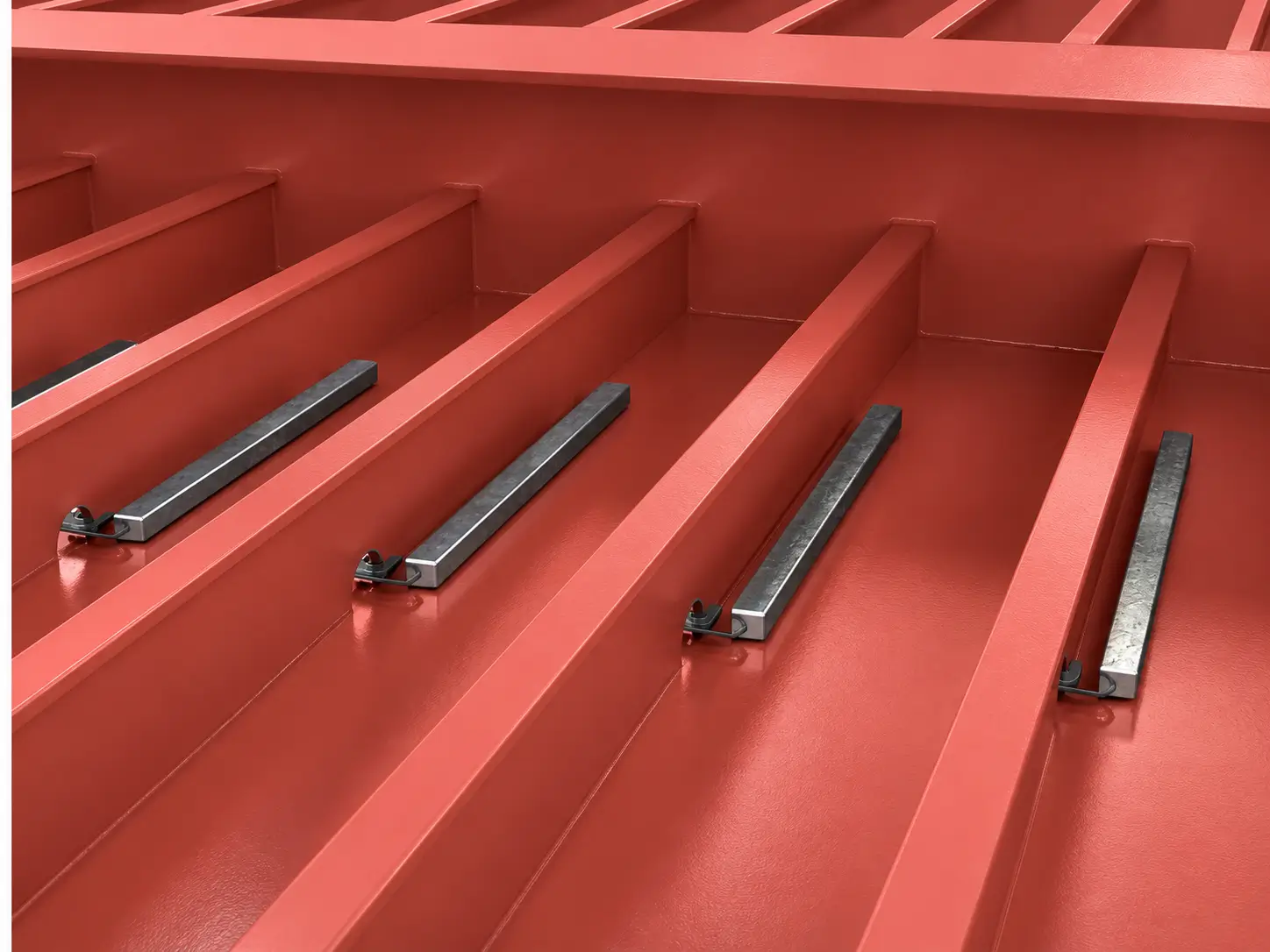
Ballast tanks alternate between wet, dry and partially filled conditions, and their coating condition changes during service. Anode quantity, alloy, mass, location and mounting therefore require an approved calculation using tank area, coating breakdown, water conditions, operating cycle, current demand, design life and applicable vessel or class requirements.
Project review
A ballast tank is not continuously immersed. The vessel CP design must reflect fill and empty cycles, coating breakdown, tank geometry and installation safety.
Provide wetted area, fill duration, water chemistry, temperature and expected coating condition.
Match alloy, net weight, quantity and placement to the approved tank calculation and access plan.
Define welding or bolting, clearances, coating interface and any ventilation or hydrogen review assigned by the vessel specification.
Agree model identification, chemistry, weight, dimensions and class or owner witness requirements.
Final construction follows the approved drawing, alloy specification, mass, attachment and quality plan.
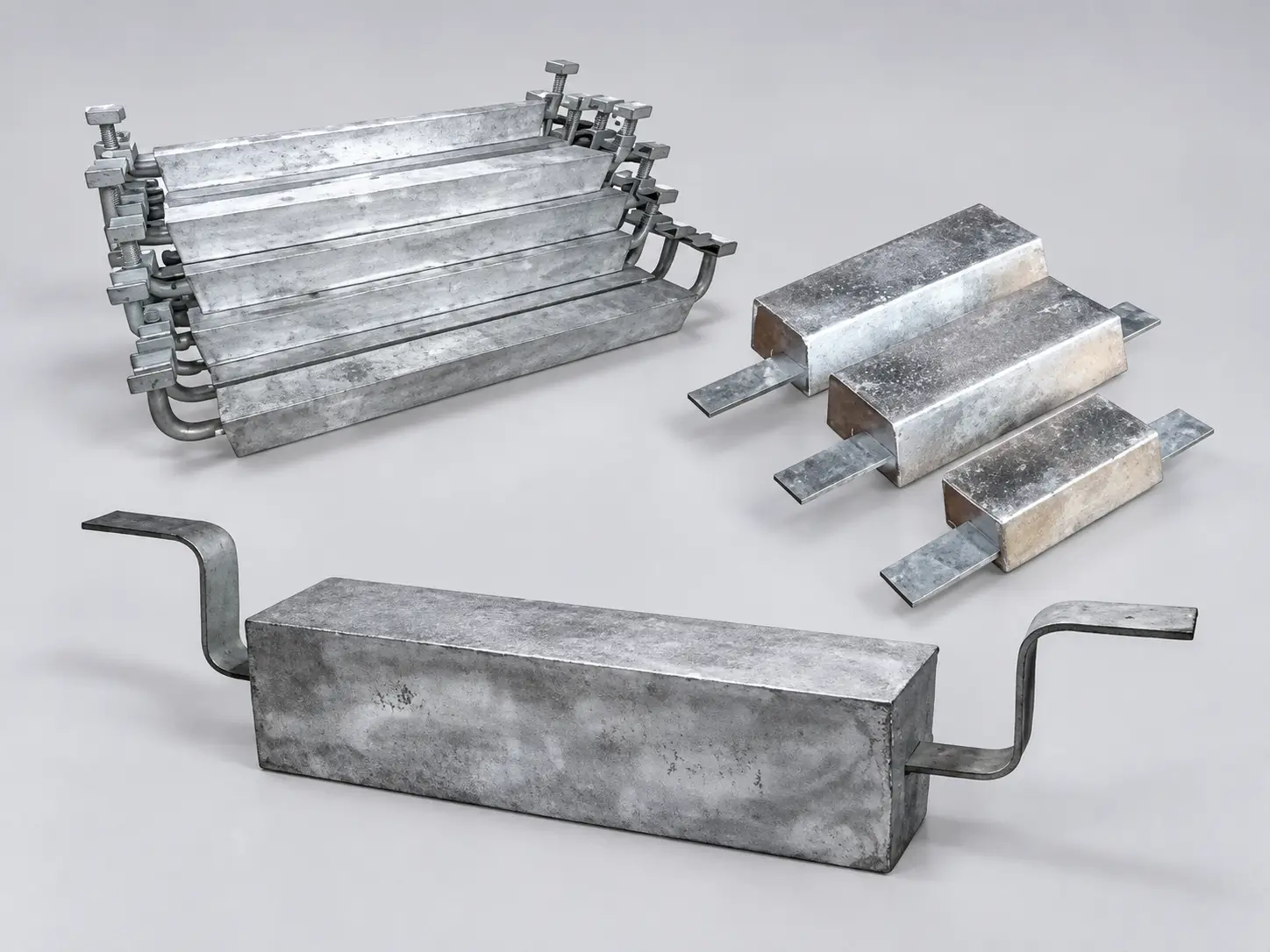
Available to the specified alloy, dimensions, net mass, attachment details, inspection scope and approved project drawing.
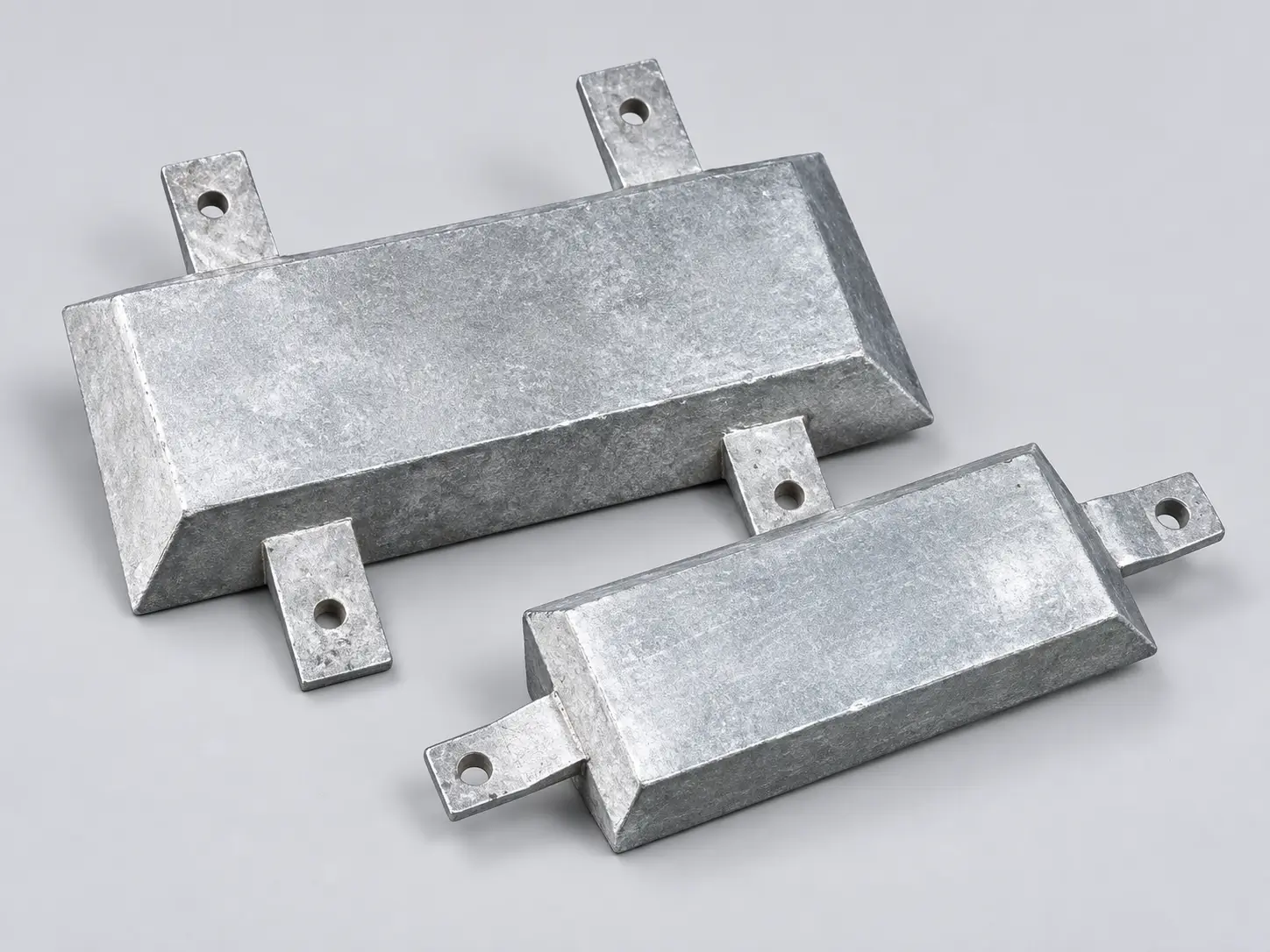
Available to the specified alloy, dimensions, net mass, attachment details, inspection scope and approved project drawing.
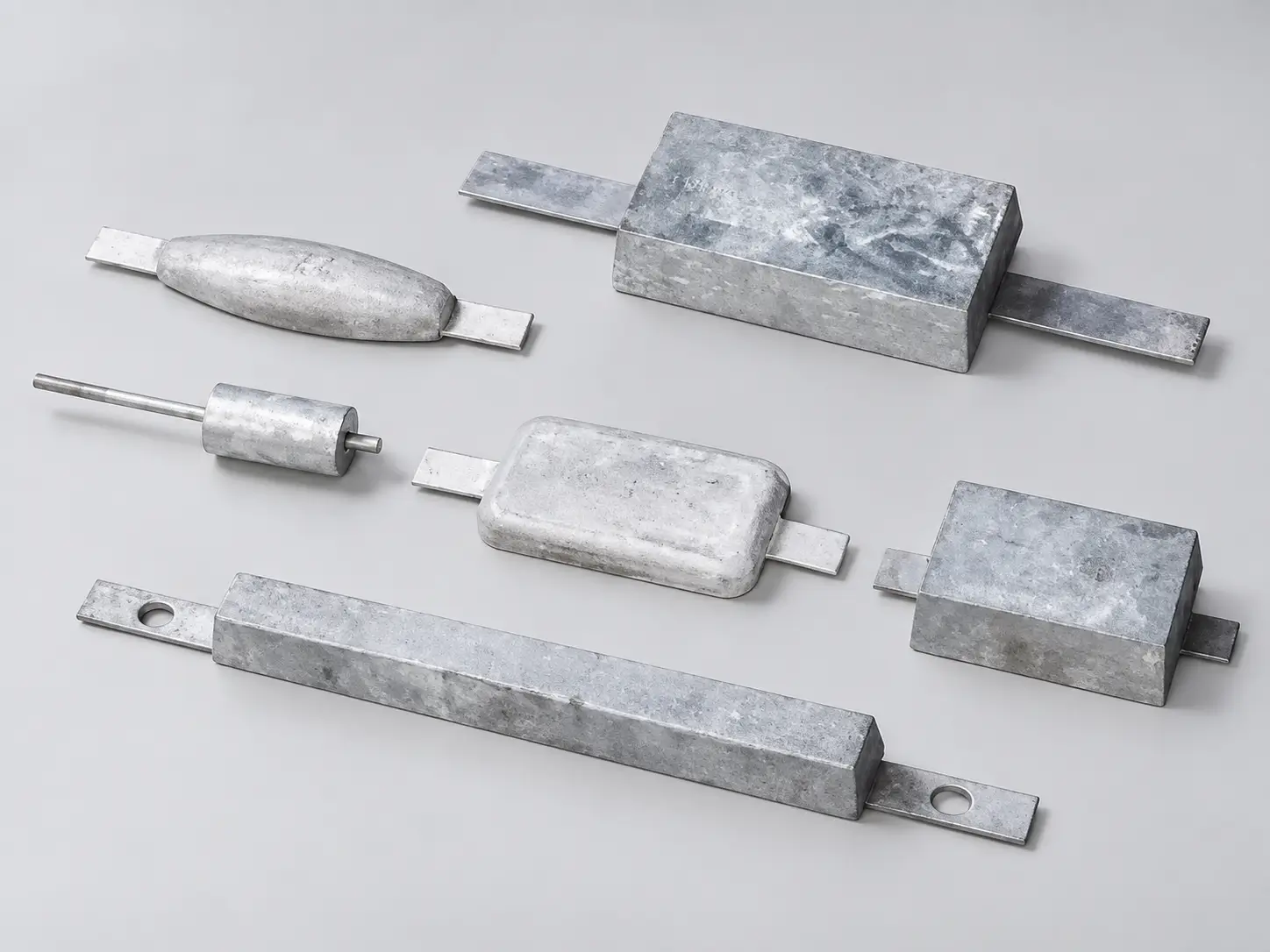
Available to the specified alloy, dimensions, net mass, attachment details, inspection scope and approved project drawing.
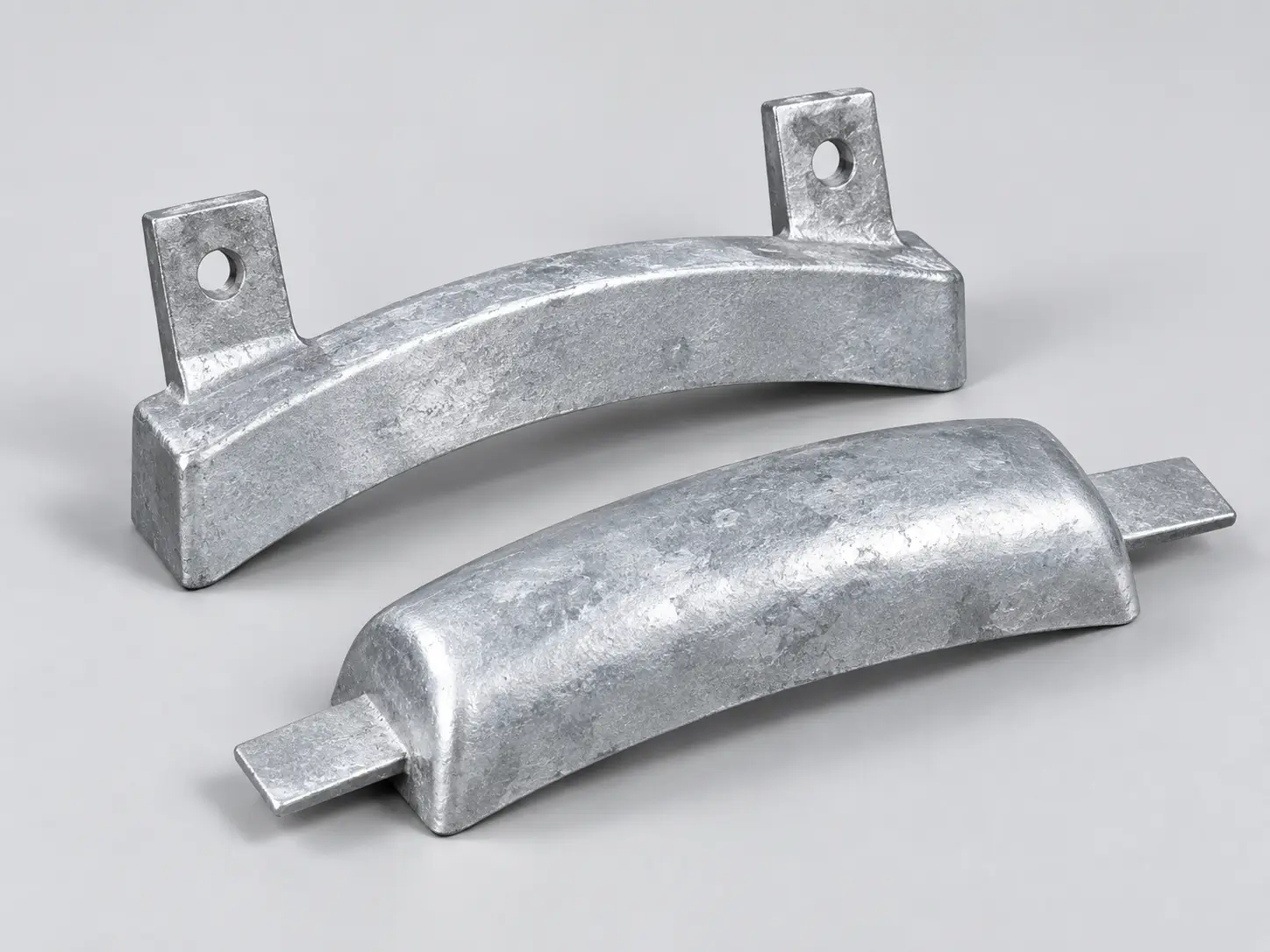
Available to the specified alloy, dimensions, net mass, attachment details, inspection scope and approved project drawing.
Use project-specific values. A generic catalogue value is not a substitute for the approved cathodic-protection calculation or purchase specification.
| Tank data | Tank type, count, wetted surface area, internal geometry, access and location. |
|---|---|
| Coating condition | Coating system, age, breakdown factor and repair or newbuild status. |
| Operating cycle | Ballast frequency, fill duration, empty periods, salinity and temperature range. |
| Anode | Specified aluminum or zinc alloy, shape, net mass, dimensions and quantity. |
| Mounting and safety | Weld-on or bolt-on details, insert, clearance, paint interface, ventilation and hydrogen review. |
| Documents | Approved layout, alloy and inspection records, marking, packing, ITP and class documents by order scope. |
Application labels help route the inquiry; the final anode selection still requires engineering inputs.
Manufacturing review should confirm alloy charge control, mould and core arrangement, insert preparation, casting condition, dimensions, net mass, electrical continuity, marking and packing.
Inspection and document scope must be agreed in the purchase order. Any potential, capacity, efficiency or service-life statement should identify the governing test or calculation conditions.
Inside HELE
Ballast-tank anode production should follow the approved alloy, mass and attachment drawing for each tank location. HELE can provide order-defined chemistry, weight, dimensional, continuity and packing records, with class or owner witnessing arranged when specified.
Confirm the approved alloy, core or insert, geometry and net sacrificial-alloy mass.
Check continuity and the specified cable, weld or bolt attachment where the order requires it.
Use the agreed methods and acceptance limits for chemistry, dimensions, weight and electrochemical evidence.
Match markings, packing and release documents to the approved model and project schedule.
Final cathodic-protection design, installation and commissioning remain with the responsible project team unless expressly included in the contract.
Inquiry
Send the tank arrangement, coating and operating-cycle inputs with the approved anode schedule. We can review casting, attachment and document requirements.
Prefer email?
sales@heletitanium.comFactory & Engineering Center
Titanium Valley, Baoji City, Shaanxi Province, China