Surface mesh
MMO mesh can distribute current beneath a compatible overlay where broad surface coverage is required.

Reinforced Concrete ICCP · MMO Anode Layouts
Reinforced-concrete ICCP distributes current from the anode through the concrete to the steel reinforcement. HELE can supply MMO mesh-ribbon, wire, ribbon or discrete elements to the approved repair and protection-zone drawings.
The anode installation does not replace structural assessment, concrete repair design or reinforcement-continuity verification.
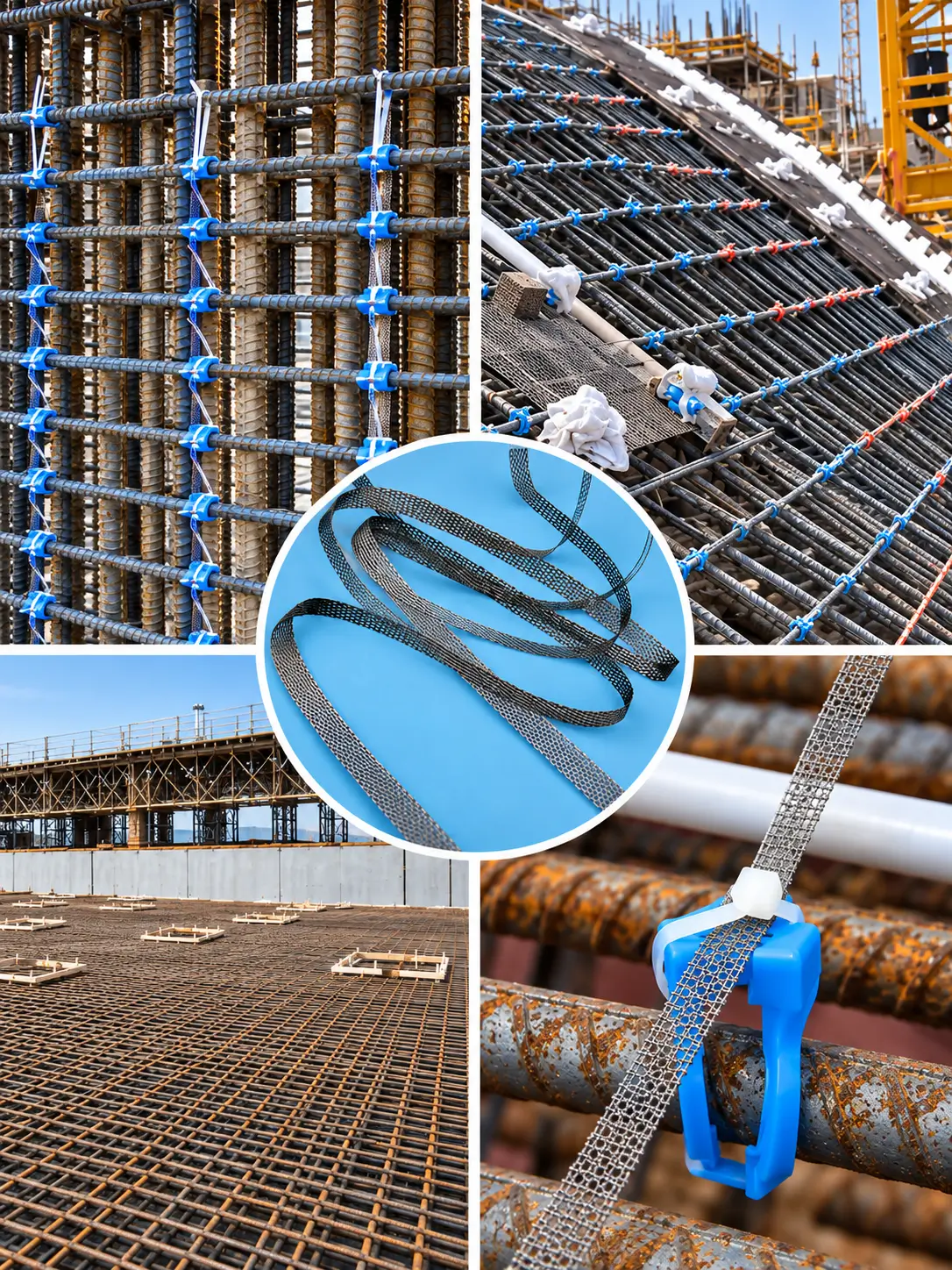
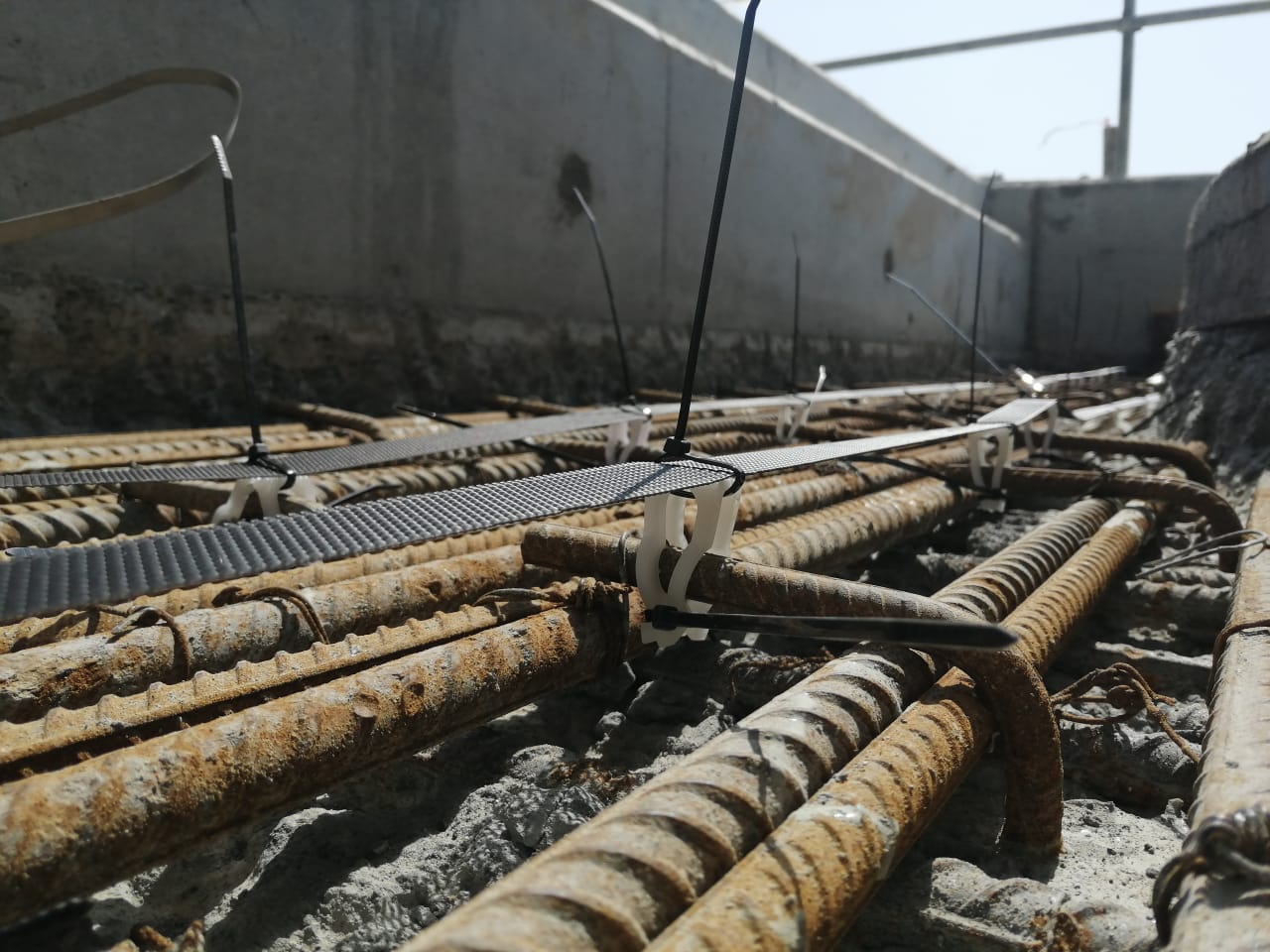
In reinforced-concrete ICCP, the embedded steel reinforcement is the cathode and an MMO titanium system distributes current through the concrete electrolyte. The anode can be installed in an overlay, groove, repair zone, drilled recess or project-specific mounting arrangement, with reference electrodes and test points used for control and verification.
The system must address chloride distribution, concrete resistivity, moisture, cover, electrical continuity, delamination and repair interfaces. The anode manufacturer needs the approved zoning, geometry and connection details; the structural and CP designers retain responsibility for assessment and protection criteria.
Match the anode form to the concrete condition, repair method, accessible surface and required current distribution.
MMO mesh can distribute current beneath a compatible overlay where broad surface coverage is required.
Ribbon or mesh-ribbon can follow designed slots or strips with controlled spacing and connection details.
MMO wire can be routed through approved channels or localized zones where geometry favors a flexible element.
Disc or custom elements can serve localized repairs, columns, beams or complex zones under an engineered layout.
The system type must be compatible with concrete repair materials, placement tolerances, current distribution and monitoring strategy.
Best considered when: Flexible routing is required in grooves, channels or project-defined localized zones.
Confirm: Wire geometry, active length, spacing, connections, cover and repair material.
Best considered when: A strip or distributed mesh layout is integrated with a compatible overlay or repair system.
Confirm: Mesh size, strip width, fixing, crossings, connector tabs and overlay interface.
Best considered when: Low-profile ribbon runs are specified for grooves, strips or zoned concrete surfaces.
Confirm: Ribbon size, coating/loading, spacing, joints, routing and cover depth.
Best considered when: Discrete elements suit localized zones or a designed array in complex concrete geometry.
Confirm: Disc size, connection, recess detail, fixing, backfill/encapsulation and cable route.
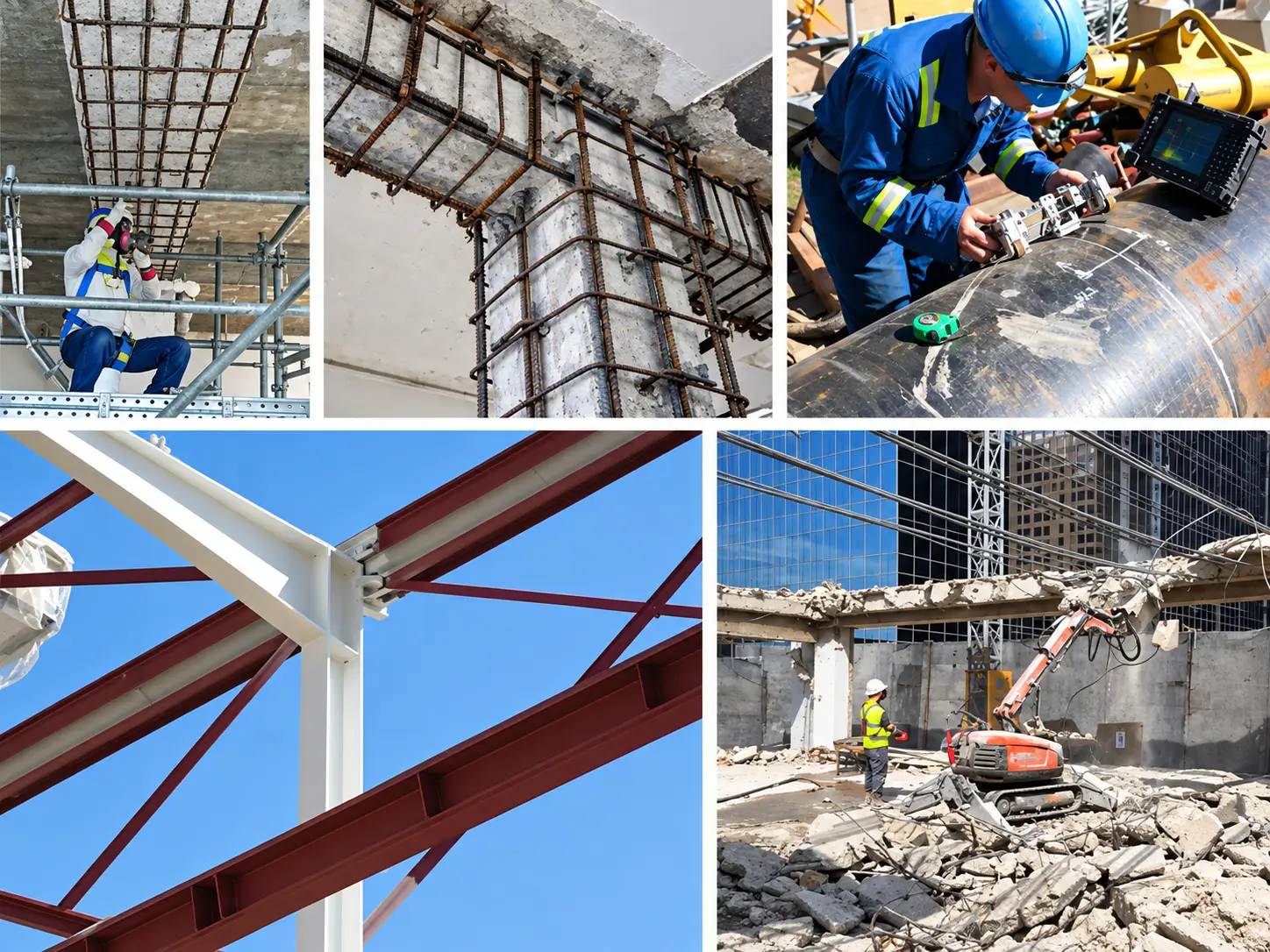
New construction allows anode and monitoring interfaces to be coordinated with reinforcement and concrete placement. Rehabilitation begins with condition assessment, contaminated-concrete removal, repairs and continuity checks before the anode zone is installed. The drawing should define zones, connection points, overlay or repair materials, cover and reference-electrode locations.
The anode system does not replace structural assessment or concrete repair design. Compatibility with repair materials and protection criteria must be approved for the project.
Use these inputs to define the quotation and the approved anode supply schedule. The CP designer confirms the final design values.
| Decision | Why it matters | Evidence to provide |
|---|---|---|
| Concrete condition | Controls repair preparation and current distribution across the structure. | Condition survey, delamination map, cracks, resistivity and moisture. |
| Chloride exposure | Supports risk assessment, targeted zoning and current density selection. | Chloride profile, exposure history and contaminated depth. |
| Reinforcement | Continuity and geometry dictate the effectiveness of the cathode network. | Rebar drawings, cover survey and continuity test plan/results. |
| Anode zone | Defines the physical anode element form, spacing, connections and rating. | Zone drawings, current demand, anode layout and design life. |
| Repair interface | Materials and sequence directly affect anode embedding and long-term stability. | Repair/overlay specification, groove or recess details and curing sequence. |
| Monitoring | Provides the feedback loop for controlled operation and protection verification. | Reference electrodes, decay/criteria basis, test points and zoning. |
Project review
Anode geometry follows the concrete condition, accessible surface and repair method. The connection and overlay details must survive the construction sequence.
Use resistivity, chloride, cover, delamination and moisture information to define where protection is required.
Confirm electrical continuity, isolation and the intended cathode zones before the anode layout is issued.
Specify the overlay, groove, repair mortar or recess geometry and confirm cover and fixing requirements.
Locate reference electrodes, test points, cable routes and connection checks where they remain accessible.
Define responsibilities in the purchase specification. HELE can configure and manufacture agreed anode components or assemblies; complete system engineering is not automatically included.
Inside HELE
HELE can inspect the supplied MMO form, active dimensions, coating zone, connector tabs or leads, and identification against the agreed concrete-zone schedule. Field embedment, overlay compatibility and commissioning remain defined by the project team.
Confirm the supplied titanium form, dimensions, active zone and order identification.
Control the specified coating basis, connection, cable, seal, backfill or mounting features included in the order.
Record continuity, connection or insulation results when the inspection plan defines method and acceptance limits.
Match drawings, inspection records, labels and packing documentation to the approved supply schedule.
Field installation, CP calculations, commissioning and performance acceptance follow the agreed project responsibility matrix.
Inquiry
Share the structure and repair-zone drawings with any concrete condition and current-density information available. HELE can review the anode element and connection supply scope.
Prefer email?
sales@heletitanium.comFactory & Engineering Center
Titanium Valley, Baoji City, Shaanxi Province, China