Pipeline build-up
Send bare pipe OD, anticorrosion coating OD, concrete weight coating and field-joint dimensions.

Custom half-shell, segmented and full-ring bracelet anodes manufactured around pipe outside diameter, coating system, concrete weight coating and approved installation drawings.
A usable bracelet-anode quotation requires the pipe and coating OD, alloy, net anode mass, width, core geometry, clearance, fastening method, current demand and design life.
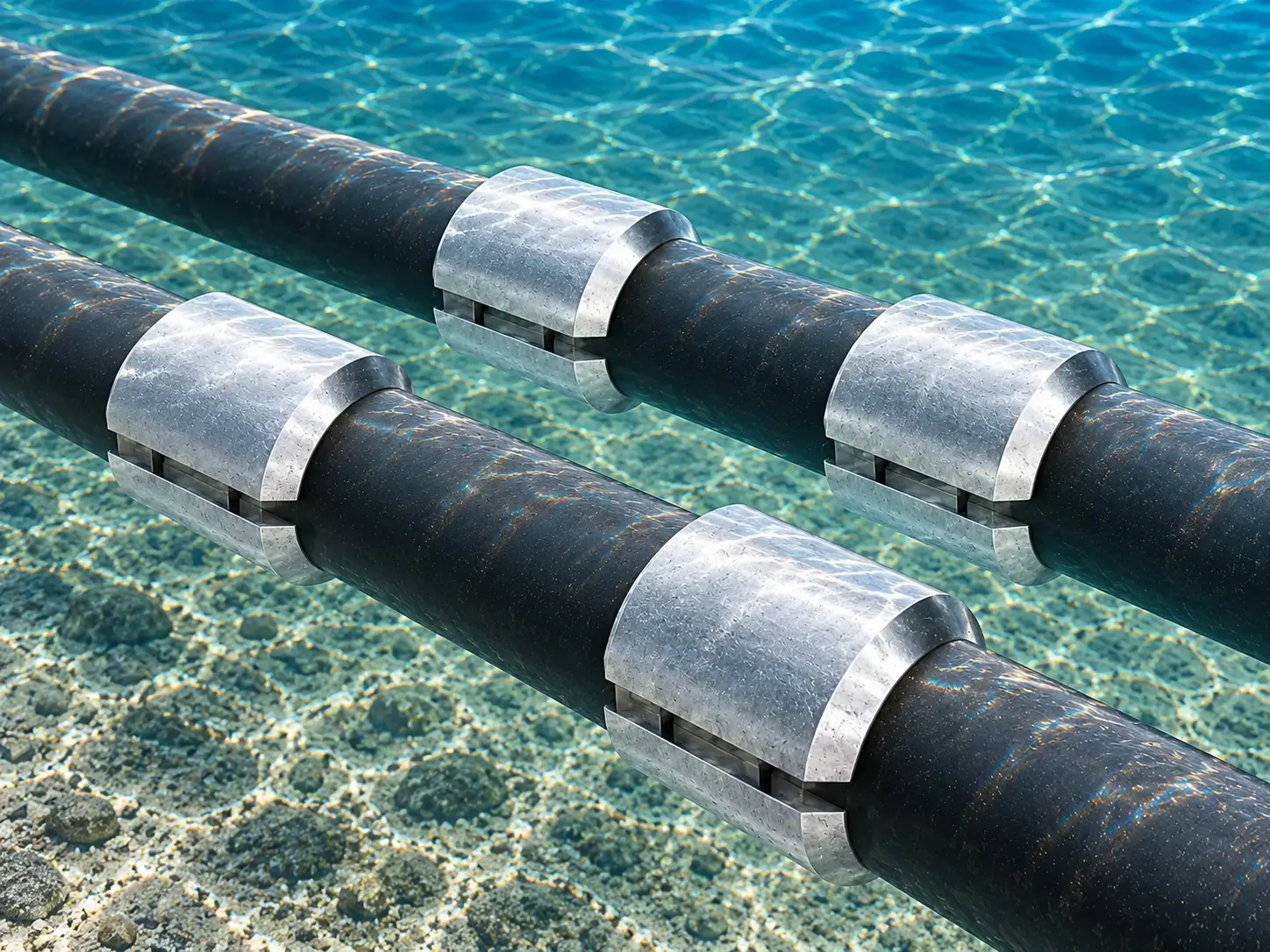
Bracelet anodes distribute sacrificial alloy around a cylindrical asset while maintaining the specified clearance, installation interface and hydrodynamic profile. Geometry must be coordinated with bare pipe OD, anti-corrosion coating, concrete weight coating, field-joint details, steel core, segment connection and installation sequence.
Project review
A bracelet anode must fit the actual coated pipeline and installation sequence. A nominal pipe diameter does not define the inside clearance or field-joint interface.
Send bare pipe OD, anticorrosion coating OD, concrete weight coating and field-joint dimensions.
Define half-shell or ring construction, inside and outside diameters, width, gap and tolerance.
Show cast-in core, lifting and attachment details, welding ears or clamps and required electrical continuity.
Agree segment identification, dimensional fit-up checks, net alloy mass and packing to protect the installation faces.
Final construction follows the approved drawing, alloy specification, mass, attachment and quality plan.
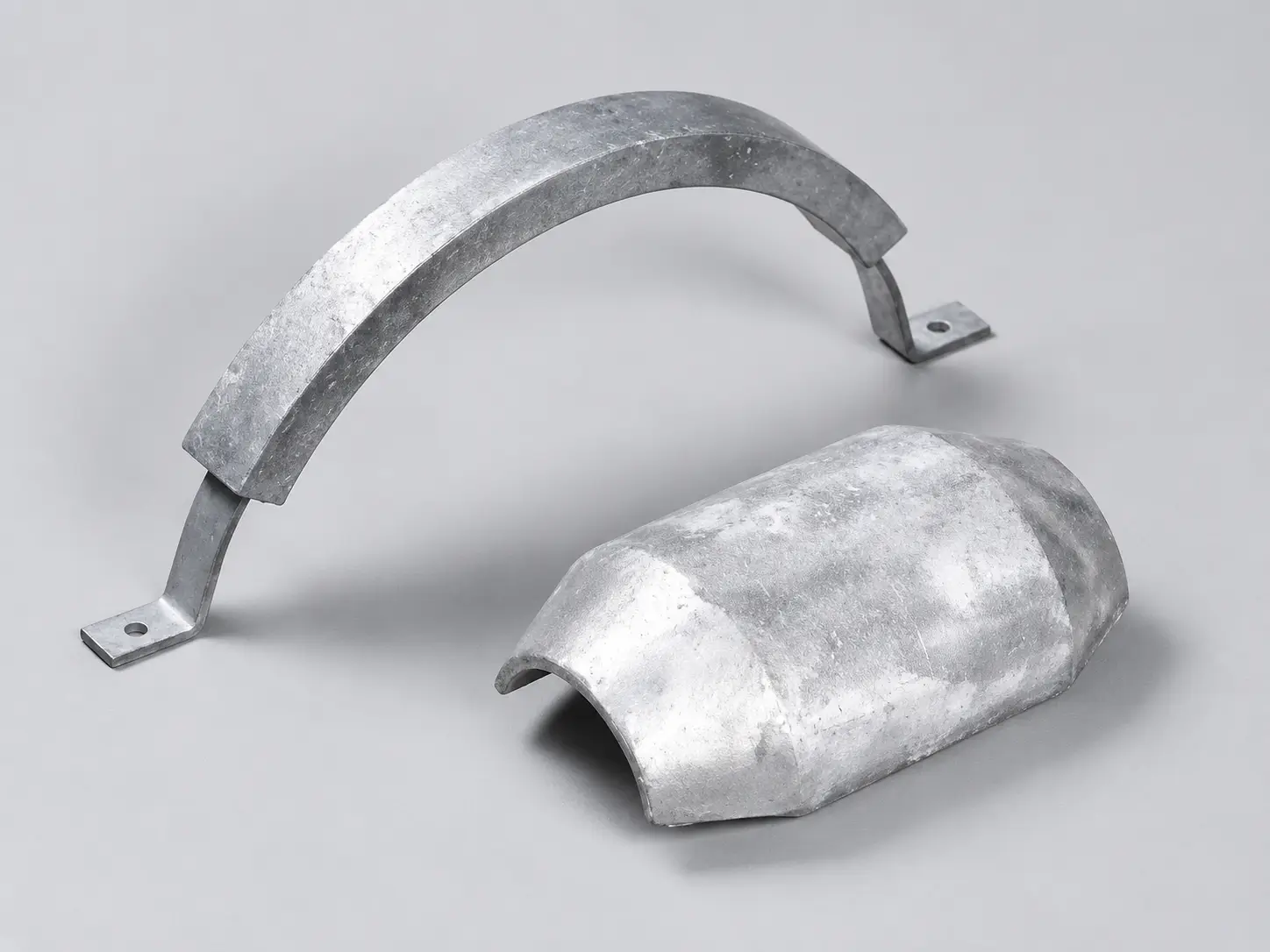
Available to the specified alloy, dimensions, net mass, attachment details, inspection scope and approved project drawing.
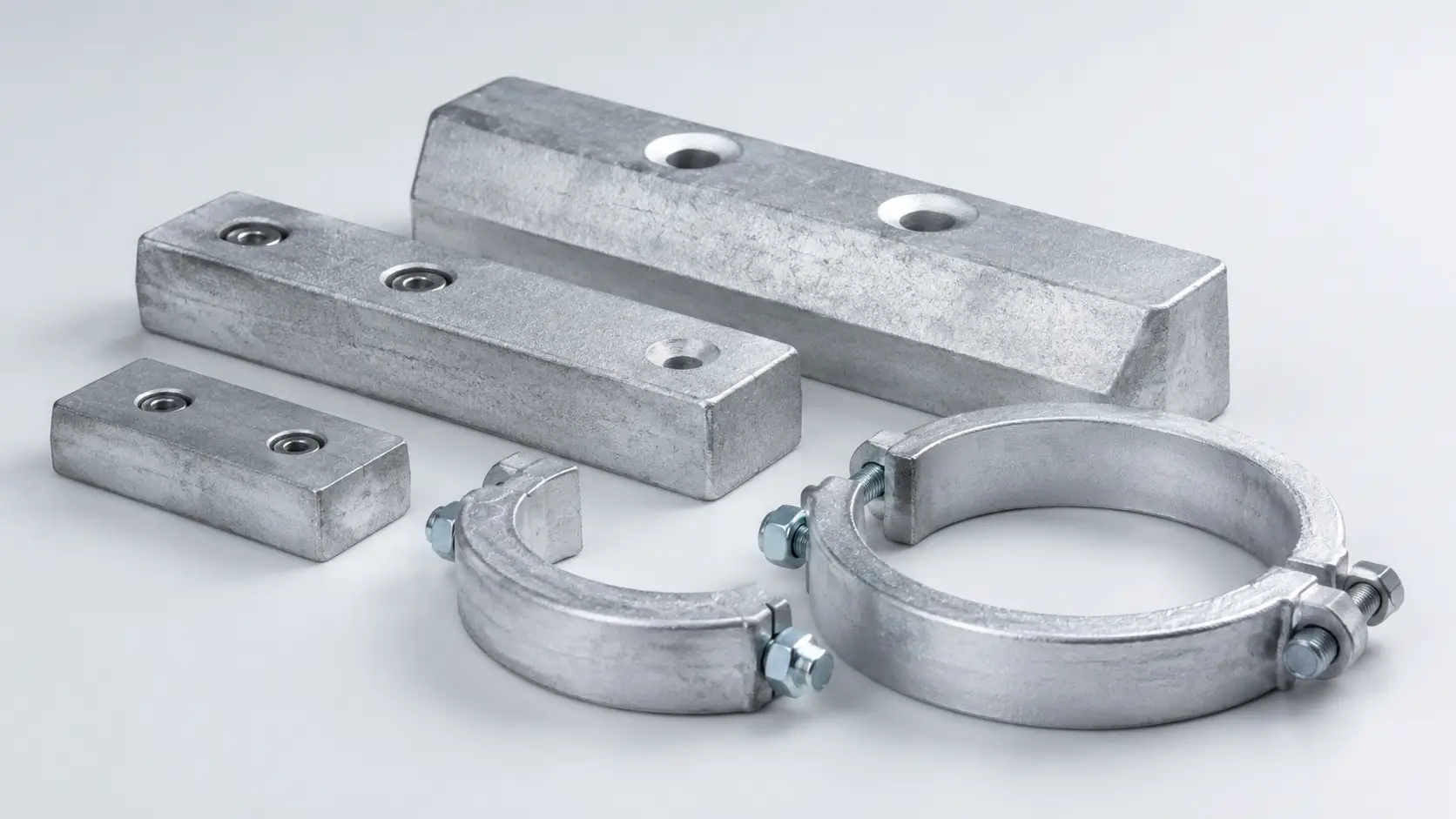
Available to the specified alloy, dimensions, net mass, attachment details, inspection scope and approved project drawing.
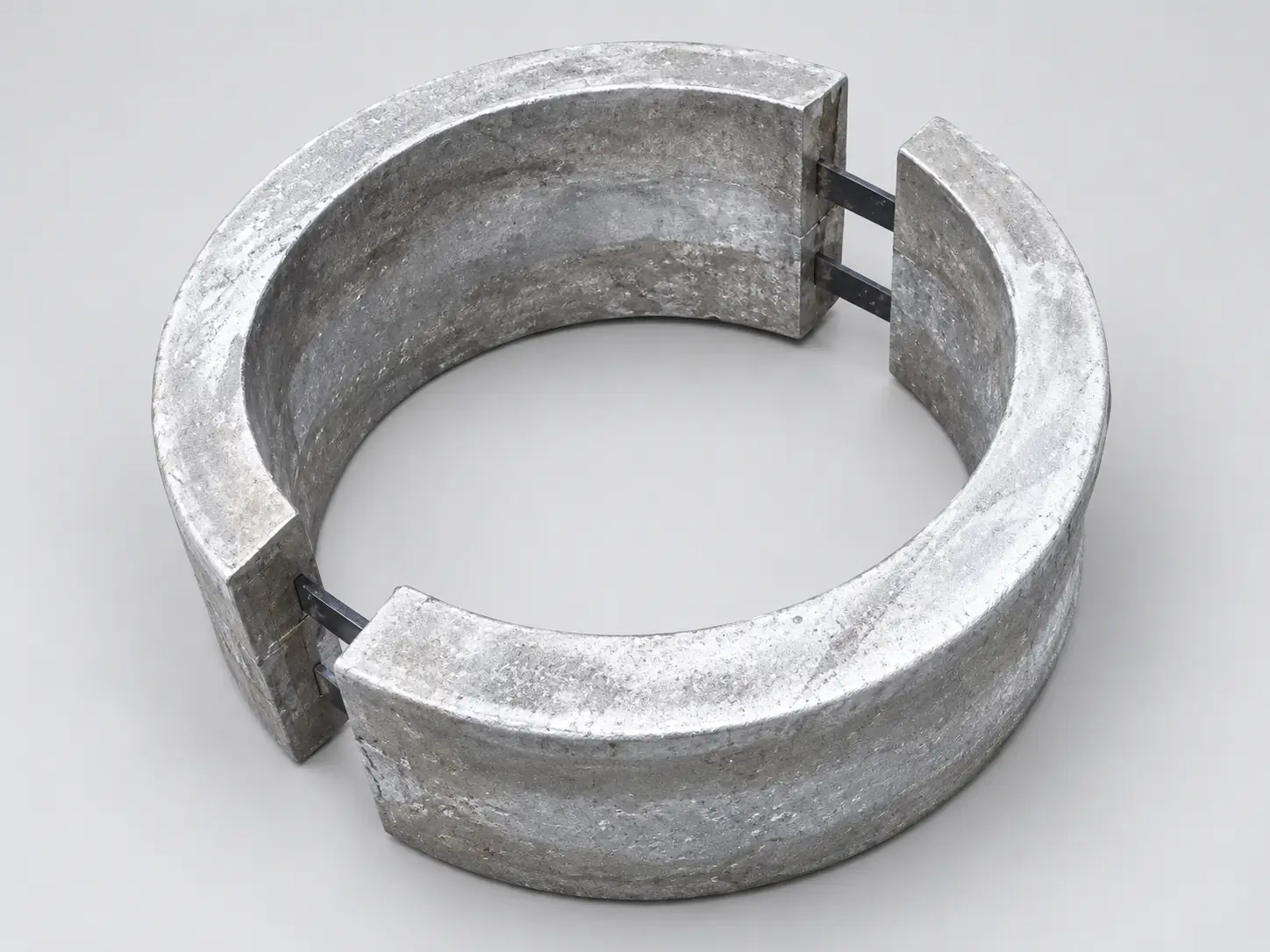
Available to the specified alloy, dimensions, net mass, attachment details, inspection scope and approved project drawing.
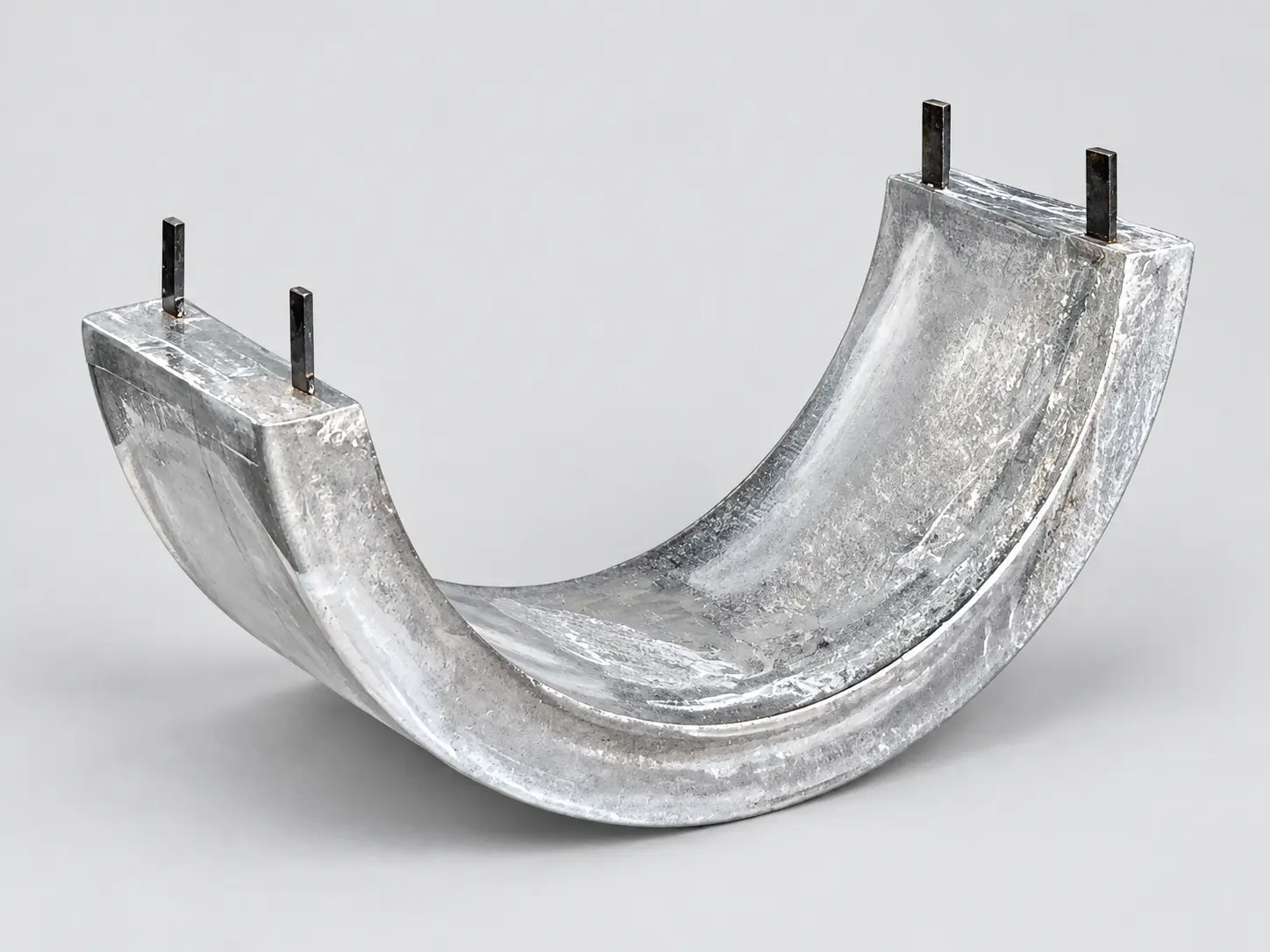
Available to the specified alloy, dimensions, net mass, attachment details, inspection scope and approved project drawing.
Use project-specific values. A generic catalogue value is not a substitute for the approved cathodic-protection calculation or purchase specification.
| Pipe interface | Bare pipe OD, coating OD, concrete weight coating and field-joint geometry. |
|---|---|
| Anode configuration | Half-shell, segmented or full-ring arrangement with specified width and profile. |
| Alloy and mass | Approved aluminum, zinc or magnesium alloy and net sacrificial-alloy mass. |
| Dimensions | Inside diameter, outside diameter, width, segment gap, clearance and tolerance. |
| Core and connection | Steel core, welding ears, clamp or bolted connection to the approved drawing. |
| Inspection | Weight, dimensions, chemistry, surface condition, core position, continuity and project documentation. |
Application labels help route the inquiry; the final anode selection still requires engineering inputs.
Manufacturing review should confirm alloy charge control, mould and core arrangement, insert preparation, casting condition, dimensions, net mass, electrical continuity, marking and packing.
Inspection and document scope must be agreed in the purchase order. Any potential, capacity, efficiency or service-life statement should identify the governing test or calculation conditions.
Inside HELE
Bracelet casting is controlled by the approved pipe-interface drawing, alloy, steel core and segment dimensions. HELE can check net alloy weight, fit-up dimensions, continuity and identification before the halves are packed for the installation sequence.
Confirm the approved alloy, core or insert, geometry and net sacrificial-alloy mass.
Check continuity and the specified cable, weld or bolt attachment where the order requires it.
Use the agreed methods and acceptance limits for chemistry, dimensions, weight and electrochemical evidence.
Match markings, packing and release documents to the approved model and project schedule.
Final cathodic-protection design, installation and commissioning remain with the responsible project team unless expressly included in the contract.
Inquiry
Provide the pipeline coating build-up and bracelet drawing. We can assess casting dimensions, core connection and inspection scope before preparing an offer.
Prefer email?
sales@heletitanium.comFactory & Engineering Center
Titanium Valley, Baoji City, Shaanxi Province, China