Teaching duty
State the power-generation experiments, student level and loads that must be demonstrated.

An integrated teaching platform for demonstrating hydrogen storage, PEM fuel cell power generation, electrical loads, monitored operating data and hydrogen-to-electricity efficiency calculations.
Note: The reference fuel cell is an education-scale configuration, not an engineering power supply. Confirm the hydrogen source, storage module, load experiments, output interface, ventilation, training and local safety requirements.
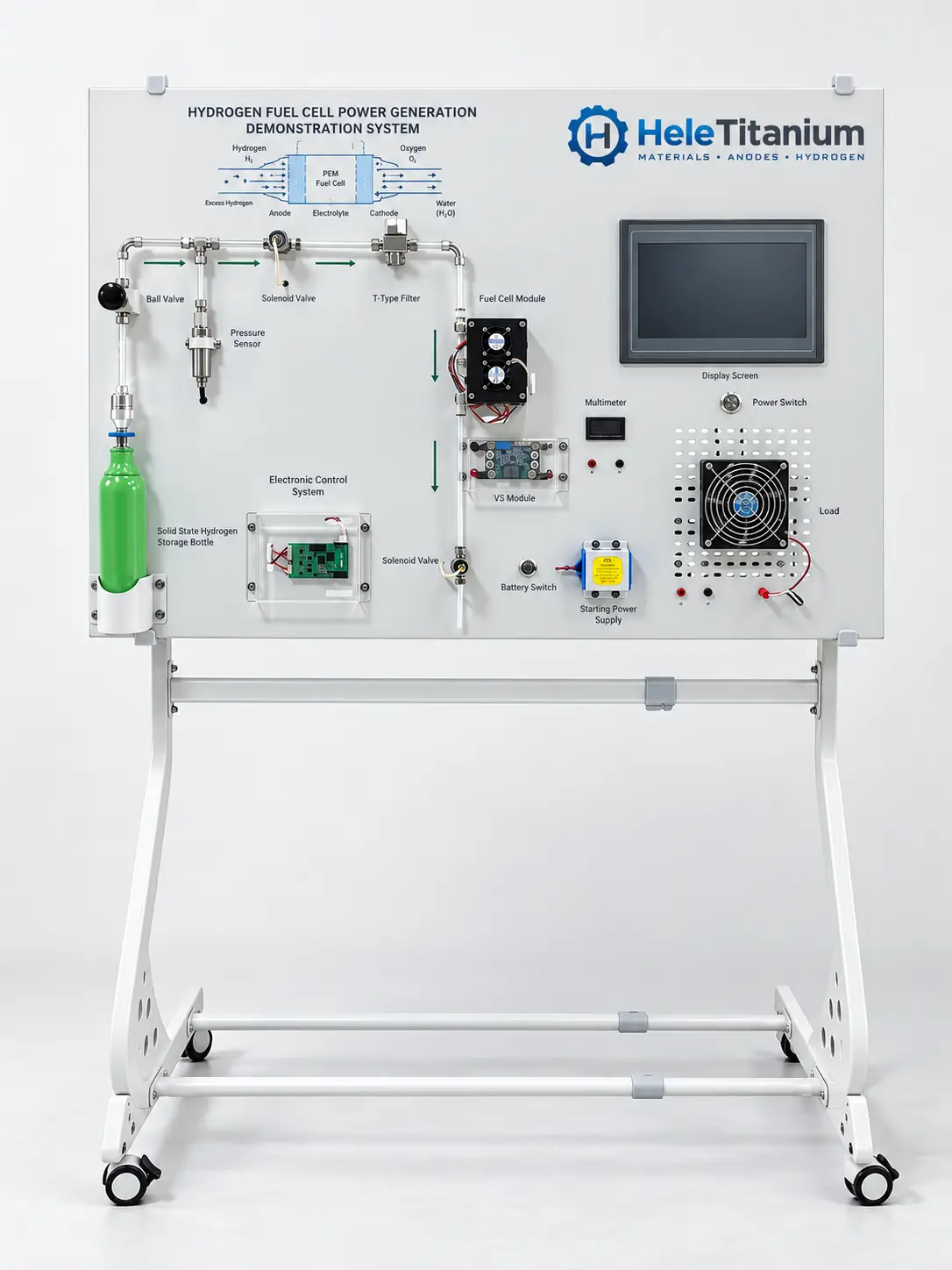
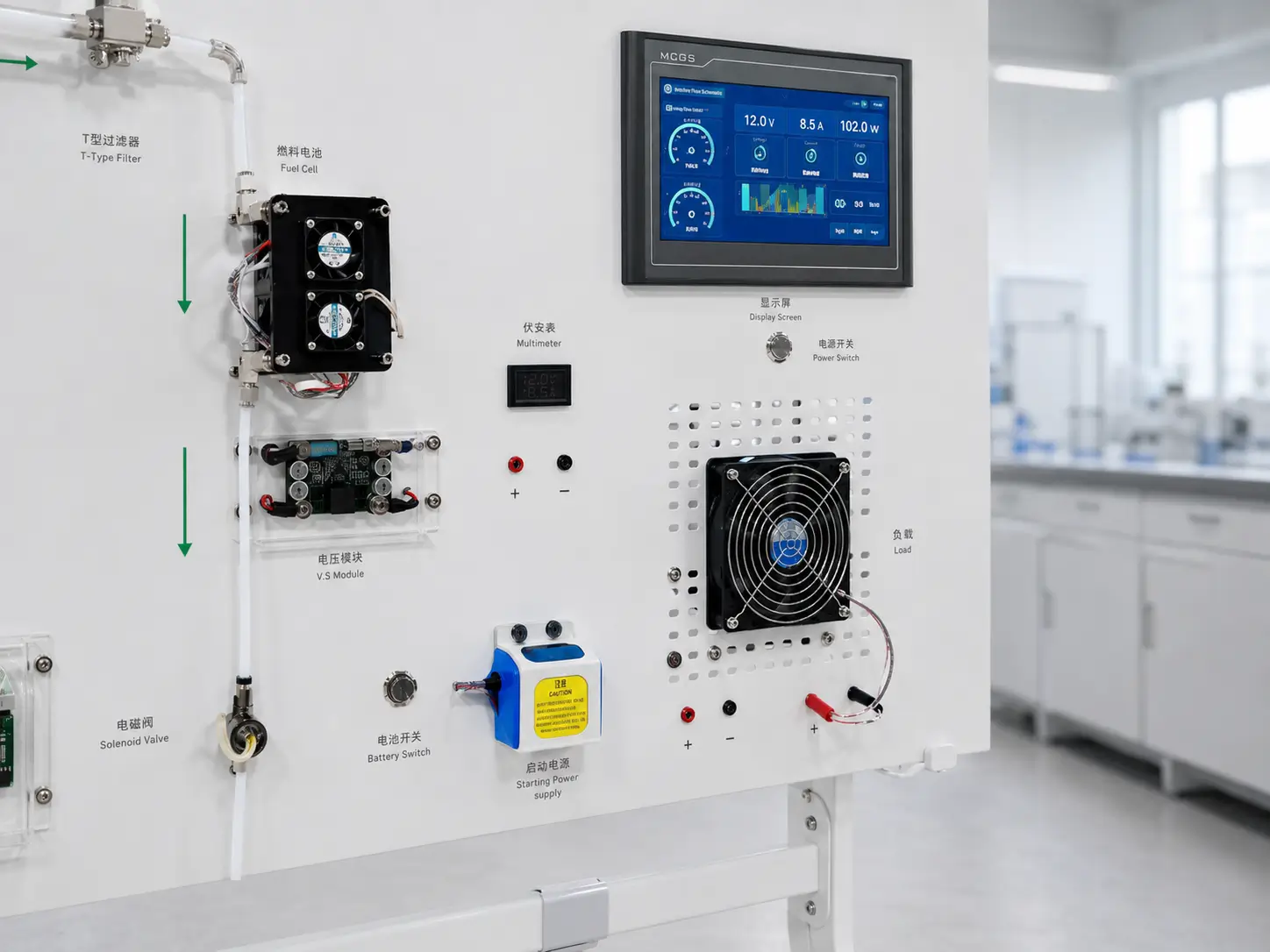
The platform connects a controlled hydrogen source and solid-state storage module to a PEM fuel cell stack, power-management components and a visible electrical load. Learners can observe how stored hydrogen is converted into electrical power and relate gas supply, voltage, current and load to system behavior.
The system supports instructor-led teaching and laboratory exercises in hydrogen energy, electrochemistry, electrical engineering, energy conversion and automation. The reference stack and storage configuration are intended for education and should not be presented as emergency, backup or production power equipment.
A solid-state hydrogen storage cylinder supplies hydrogen under the stated filling, discharge and flow conditions.
The reference teaching stack converts supplied hydrogen and air into DC electrical power for classroom and laboratory experiments.
Power-management components and the supplied demonstration load allow learners to observe electrical response under changing operating conditions.
Relevant operating parameters can be observed during supervised experiments to support quantitative comparison, analysis and laboratory reports.
Configuration review
Start with the application, required measurements and operating boundary. A model label alone does not establish which modules, interfaces or records are included.
State the power-generation experiments, student level and loads that must be demonstrated.
Define supplied storage, compatible fuel source, regulators, connections and laboratory responsibilities.
Specify rated reference output, load functions, values to display and data-recording needs.
Agree ventilation, alarms, shutdown, instructions, functional tests and training scope.
The demonstration sequence focuses on the hydrogen-to-electricity side of fuel-cell technology and separates hydrogen supply from hydrogen production.
Hydrogen is supplied from the solid-state storage module in the reference configuration.
Hydrogen passes through the supply and regulation path before entering the PEM fuel cell.
The PEM fuel cell combines hydrogen with air to generate DC electrical power.
The electrical output is conditioned and managed for stable demonstration and load operation.
Learners observe the electrical load together with relevant operating parameters for analysis.
The values below represent the current reference teaching configuration. Final stack model, operating point, supplied modules, interfaces and acceptance conditions should be confirmed before order release.
| Category | Parameter | Unit | Technical Specification |
|---|---|---|---|
| Solid-State Hydrogen Storage | Cylinder Diameter | mm | 60 |
| Cylinder Height | mm | 258 | |
| Weight | kg | 1.5 | |
| Hydrogen Storage Capacity | g H₂ | >22 | |
| Hydrogen Filling Pressure | MPa | 1.0 | |
| Continuous Hydrogen Discharge Pressure | MPa | 0.6 | |
| Hydrogen Discharge Rate | L/min | >4 | |
| Fuel Cell | Reference Power Class | W | 200 — confirm final model |
| Rated Voltage | V | 19.8 | |
| Rated Current | A | 10.2 | |
| Reference Efficiency | % | ≥45 | |
| Hydrogen Supply Pressure | MPa | 0.035–0.05 | |
| Hydrogen Purity Requirement | % | ≥99.99 H₂; CO ≤1 ppm | |
| Theoretical Hydrogen Consumption at Rated Power | L/min | 2.89 | |
| Theoretical Air Consumption at Rated Power | L/min | 114.6 | |
| Bare Stack Weight | kg | 1.43 | |
| Demonstration System | Dimensions Excluding Bracket (L × W × H) | mm | 1200 × 700 × 276 |
| Weight Excluding Bracket | kg | 15 | |
| Weight Including Bracket | kg | 25 |
Hydrogen purity and pressure are supply-interface requirements. Storage, fuel-cell and complete demonstration-system dimensions and operating values represent separate components and should not be combined.
Rated performance depends on hydrogen quality, inlet pressure, airflow, temperature, electrical load and test conditions. Final interfaces, supplied components and acceptance criteria should be agreed during application review.
Final experiments depend on the supplied load, sensors, monitoring interface and teaching package. The reference platform supports supervised study of fuel-cell electrical response and hydrogen-to-power conversion.
*Only display measurement channels, data recording or data-export functions that are actually included in the confirmed configuration.
Follow the approved hydrogen, air, control and load sequence and observe stack voltage and current.
Apply the supplied demonstration load and observe voltage, current and power response within the approved teaching configuration.
Relate theoretical or measured hydrogen consumption to electrical output under defined operating conditions.
Use the available electrical and hydrogen data with a clearly defined measurement boundary to discuss hydrogen-to-electricity efficiency and conversion losses.
Observe the relationship between the approved hydrogen supply range and stable fuel-cell operation without exceeding operating limits.
Study how fuel-cell output, power-management components, auxiliary supply and the demonstration load interact during operation.
The right teaching configuration depends on the course level, class size, hydrogen supply, required electrical experiments, measurement scope and laboratory safety conditions.
Hydrogen Energy · Fuel Cells · Electrical Engineering · Automation
Define the course and learning objectives so the experiment scope can be matched to the program.
Instructor Demo · Small Group · Laboratory Class
Confirm whether the platform will be used for instructor demonstration, hands-on group experiments or repeated laboratory teaching.
Included Storage · Refill Method · External H₂
Confirm whether the reference solid-state storage module meets the teaching plan and how hydrogen will be filled or supplied at the installation site.
Fuel Cell Output · Load Response · Power Management
Define the electrical experiments and load behavior that learners need to study.
Voltage · Current · Power · Temperature · Pressure · Data
Confirm which parameters need to be displayed, recorded or exported. (Do not imply data export is standard unless verified).
Ventilation · Gas Detection · Supervision · Manual · Training
Confirm laboratory conditions, local safety requirements, document language and instructor-support needs.
The system is intended for supervised education and laboratory use. Hydrogen supply, ventilation, operating procedures, gas interfaces and applicable protection functions should be reviewed together with the installation environment.
The reference configuration includes a solid-state hydrogen storage module with defined filling, discharge and fuel-cell supply-pressure ranges.
The storage module may be included in the reference supply, but whether hydrogen is supplied pre-filled, whether refill equipment is included, or whether an external hydrogen source will be used must be confirmed for the destination and final order scope.
Operate the system in an appropriately ventilated laboratory and keep hydrogen away from ignition sources.
Hydrogen pressure, connection method and gas quality must remain within the approved limits of the storage and fuel-cell modules.
Hydrogen and electrical experiments should be conducted according to the supplied operating procedures and applicable laboratory supervision requirements.
Applicable monitoring, alarm, protection and shutdown functions should be confirmed against the final supplied control configuration.
This is an education-scale hydrogen fuel-cell training platform for studying stored or supplied hydrogen, PEM fuel-cell generation, electrical loads and energy conversion.
Automotive fuel-cell stacks, industrial fuel-cell plants and battery test systems require separate products and engineering review.
IMPORTANT SAFETY NOTE: Hydrogen purity, pressure, ventilation, gas handling, leak-control requirements and instructor supervision are mandatory installation inputs and must be confirmed for the destination laboratory.
Quality & project support
Acceptance should verify the actual fuel-cell model, storage interfaces, hydrogen supply limits, electrical outputs, load functions, monitored values, applicable alarms and safe shutdown behavior against the approved supply configuration.
Agree the documents against the confirmed configuration, teaching scope and purchaser requirements. Available items may include:
Share your curriculum, experiment scope, required documents, language, training, spare-part and acceptance requirements during RFQ review.
Discuss Documentation RequirementsSee the system configuration in use. Playback starts when selected.
Inside HELE
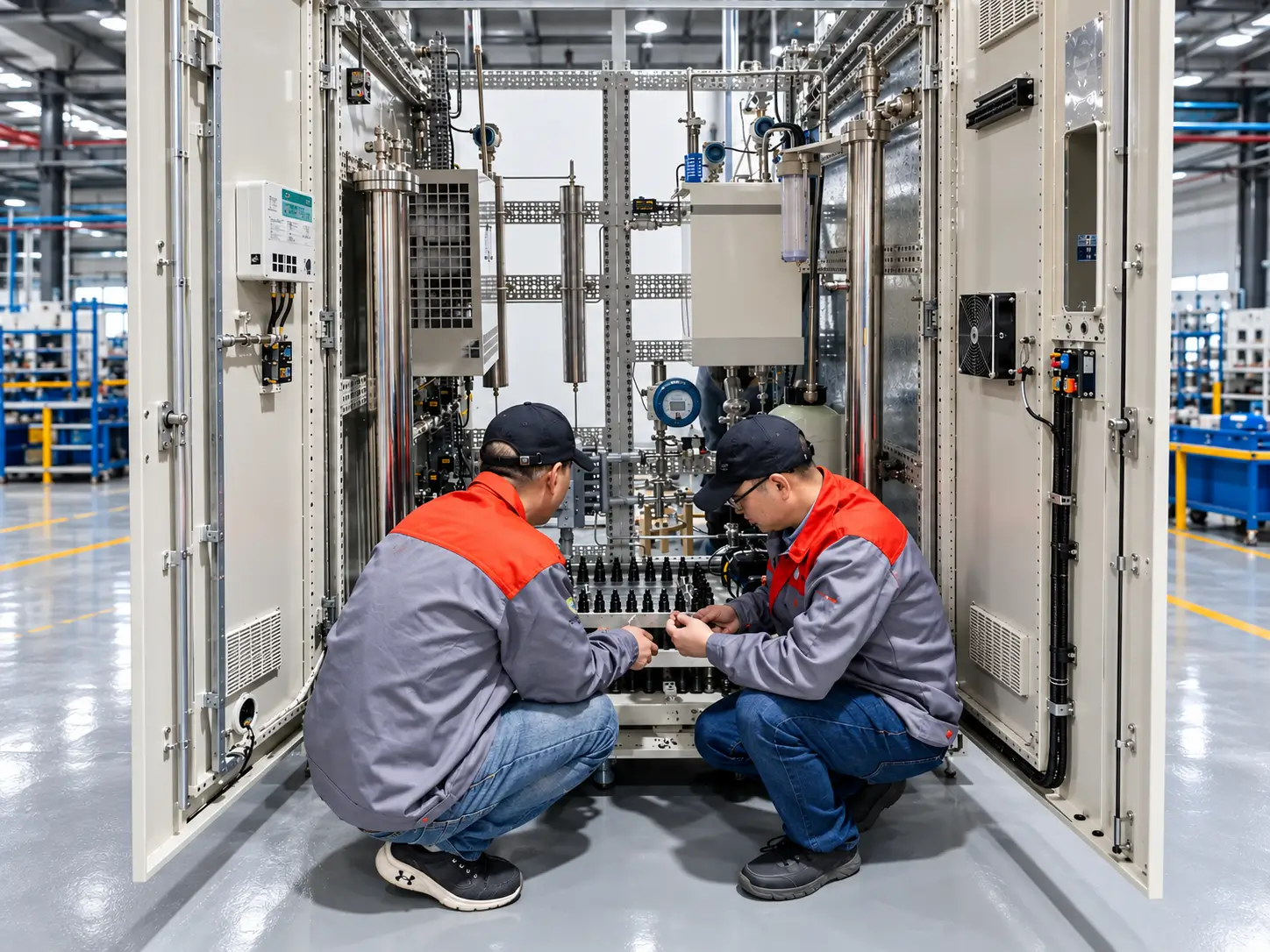
The approved fuel-cell model, hydrogen connections, electrical outputs, load functions, monitored values and shutdown behavior should be checked before release. Inspection records and teaching documents should reflect the actual configuration, including any storage or training items included in the order.
Check the module list, connections and instruments against the order drawing.
Define the test conditions, records and documents required for release.
Inquiry
A fuel-cell demonstration system is selected by the experiment and hydrogen-supply boundary, not by the power label alone. Send the teaching plan, intended loads and available laboratory setup so HELE can review a suitable configuration and documentation package.
Prefer email?
sales@heletitanium.comFactory & Engineering Center
Titanium Valley, Baoji City, Shaanxi Province, China