Learning sequence
Decide which steps students should observe or measure, from PV input to fuel-cell output.

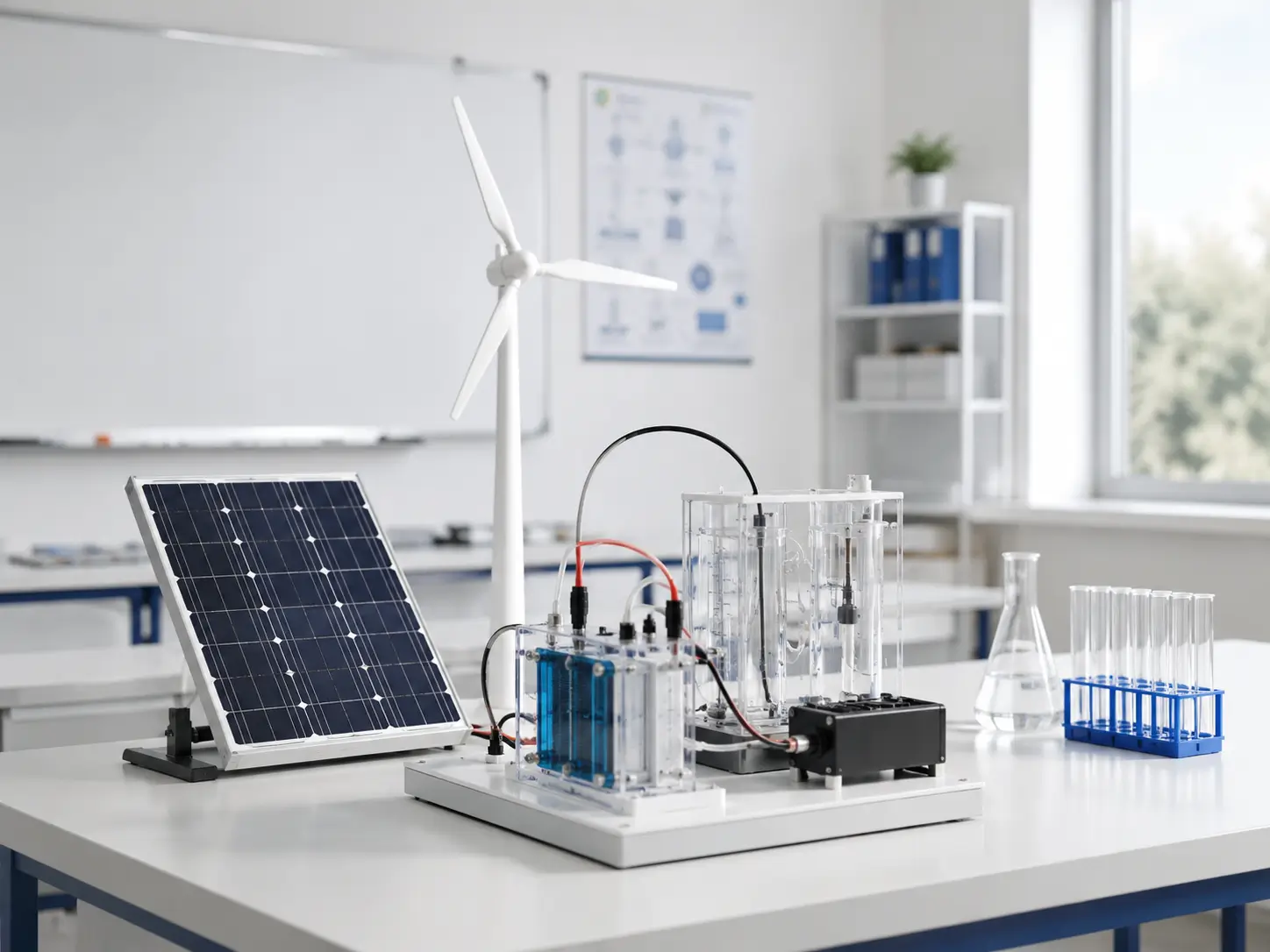
A compact teaching platform that demonstrates the complete solar → electricity → hydrogen → fuel-cell power cycle through visible modules, real-time measurements and hands-on experiments for schools, universities and technical training centers.
Designed for supervised renewable-energy, electrochemistry and hydrogen-technology education.
The system allows students to observe how solar energy is converted into electricity, used to produce hydrogen through PEM water electrolysis, and then converted back into electrical power through a fuel cell.
Light reaches the photovoltaic module.
The solar panel converts light into DC electrical power.
Electrical power drives the PEM electrolyzer to split water into hydrogen and oxygen.
Generated hydrogen is separated and collected for the next stage of the experiment.
Hydrogen is supplied to the PEM fuel cell and converted back into electricity.
The fuel-cell output powers the built-in load, completing the solar → hydrogen → electricity cycle.
Configuration review
Start with the application, required measurements and operating boundary. A model label alone does not establish which modules, interfaces or records are included.
Decide which steps students should observe or measure, from PV input to fuel-cell output.
Confirm whether experiments use sunlight, a simulator or controlled electrical input and how readings are taken.
Define storage, gas connections, ventilation, supervision and permitted demonstrations.
Agree manuals, experiment worksheets, instruments, consumables and replacement components.
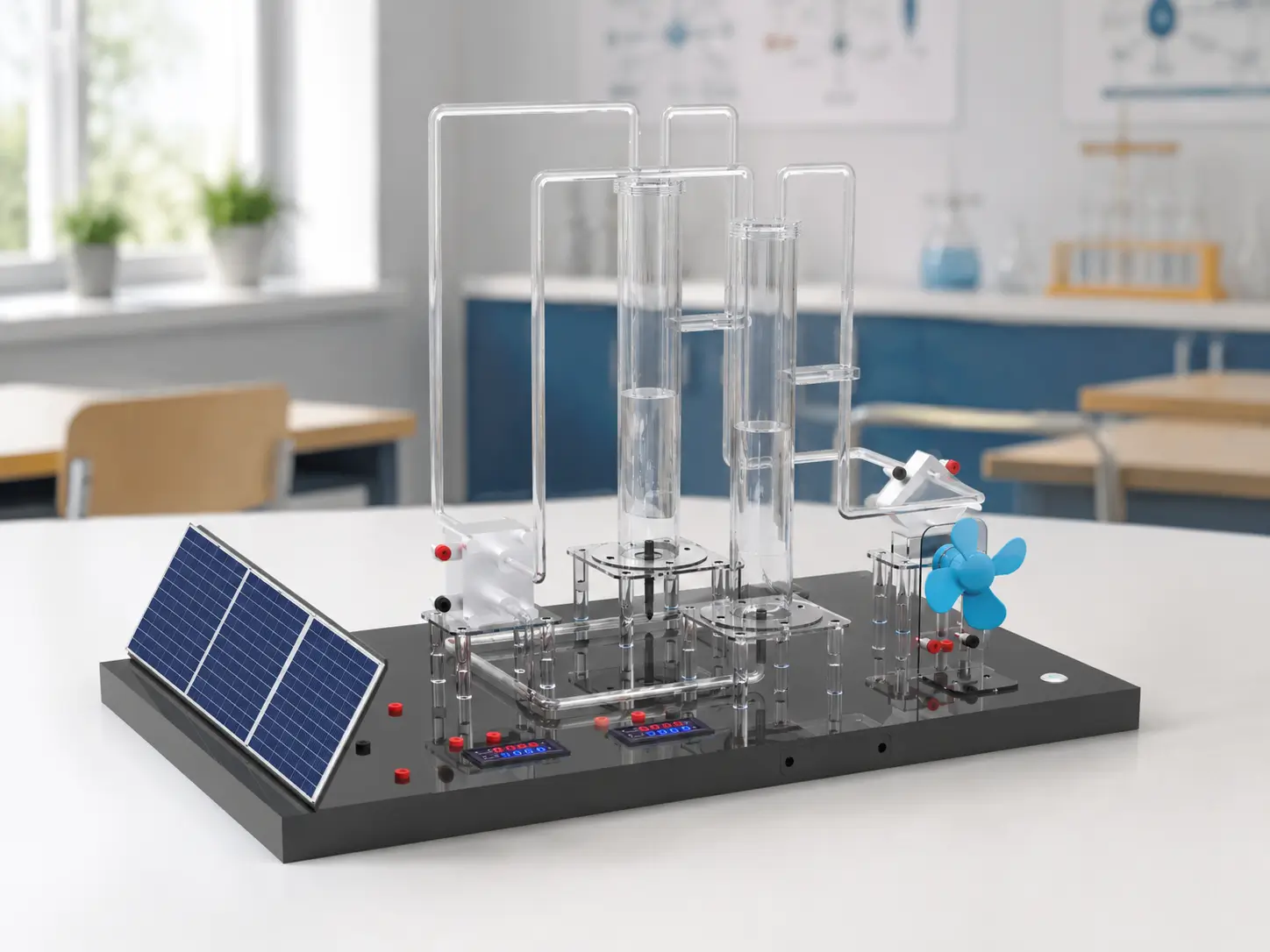
The platform integrates solar power generation, PEM water electrolysis, gas and water management, fuel-cell power generation and electrical measurement into one compact teaching system.
The monocrystalline photovoltaic module converts light into DC power and allows learners to observe changes in voltage, current and system behavior under different light conditions.
The PEM electrolyzer converts electrical energy into hydrogen and oxygen, allowing students to observe water electrolysis and gas generation directly.
The integrated gas-liquid separation and water-management section allows learners to observe gas generation, water separation and circulation during electrolysis.
Collected hydrogen is supplied to the PEM fuel cell and converted back into electrical power, demonstrating hydrogen utilization as an energy-storage medium.
The fuel-cell output powers the built-in demonstration load, providing a visible example of hydrogen energy being converted into useful electrical and mechanical output.
Integrated displays support real-time observation of electrical parameters during photovoltaic generation, electrolysis and fuel-cell operation.
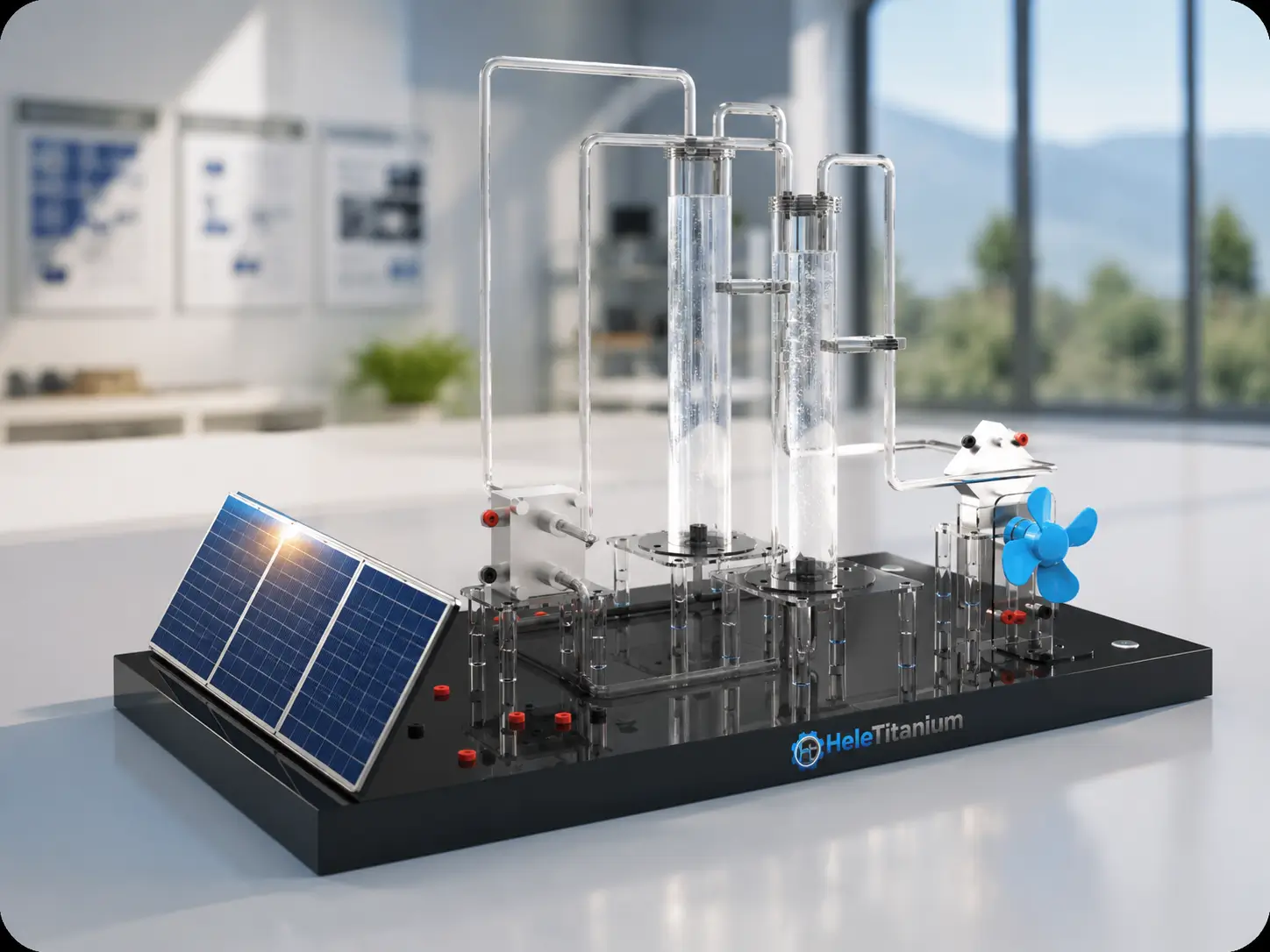
| Module | Parameter | Specification |
|---|---|---|
| Photovoltaic Panel | Total Power | 12 W |
| Rated Voltage | 5 V | |
| Rated Current | 2.4 A | |
| PEM Electrolyzer | Rated Hydrogen Production | 40 mL/min |
| Power Supply Voltage | 3 V | |
| Rated Current | 6 A | |
| Fuel Cell | Rated Power | <1 W |
| Rated Voltage | 0.9 V | |
| Rated Current | 1 A | |
| Load | Power | 0.019 W |
| Rated Voltage | 1 V | |
| Rated Current | 18.9 mA | |
| Complete System | Dimensions | 750 × 420 × 330 mm |
| Weight | 6.2 kg |
Reference values apply to the demonstrated configuration. Final module specifications, accessories and teaching scope should be confirmed against the selected supply configuration before order release.
Observe how changes in light intensity affect photovoltaic voltage, current and available electrical power.
Understand PV performance under variable conditions.
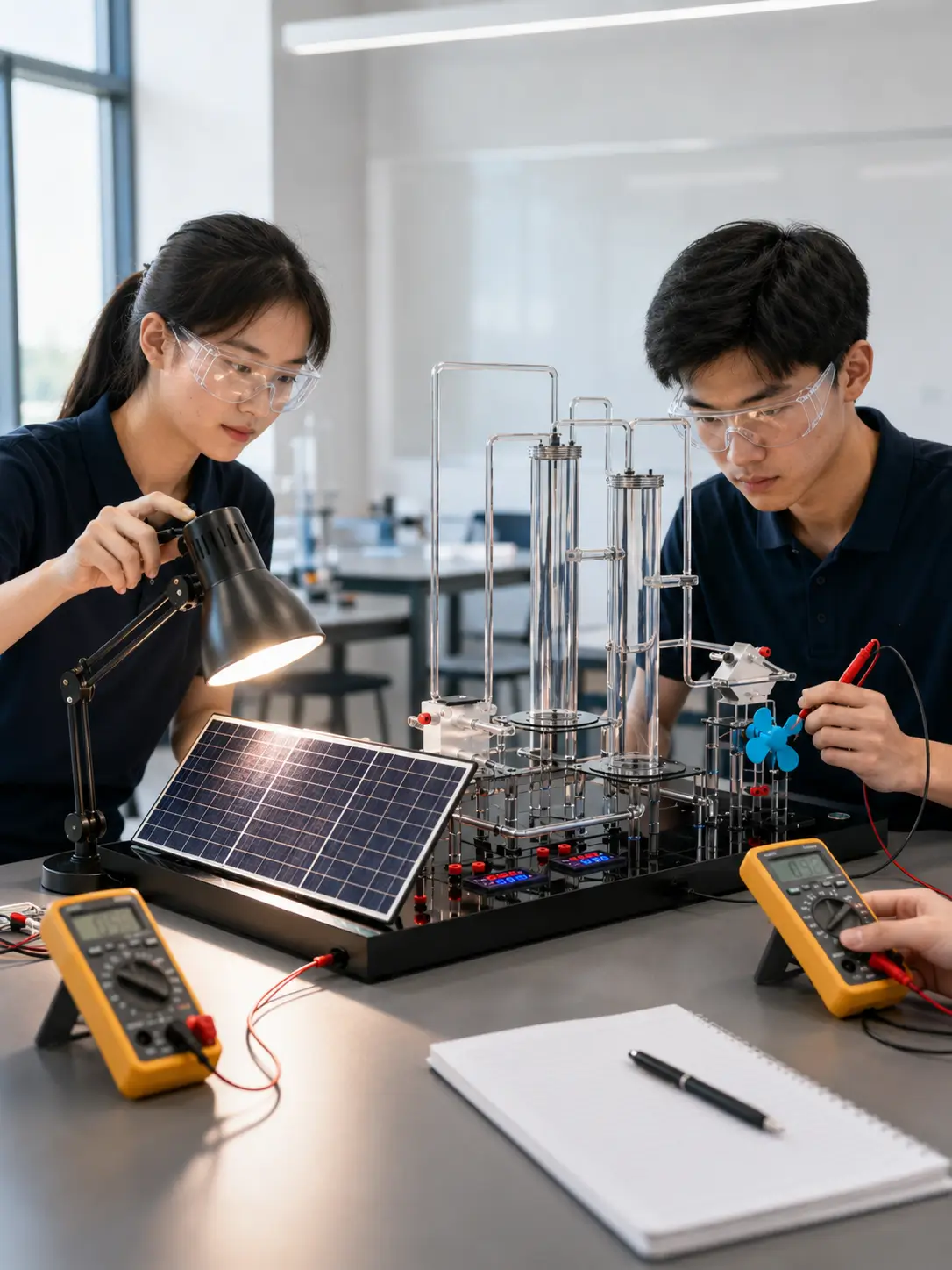
Compare electrolyzer operating conditions with hydrogen-generation behavior to understand the relationship between electrical input and hydrogen production.
Analyze electrolysis efficiency and gas output.
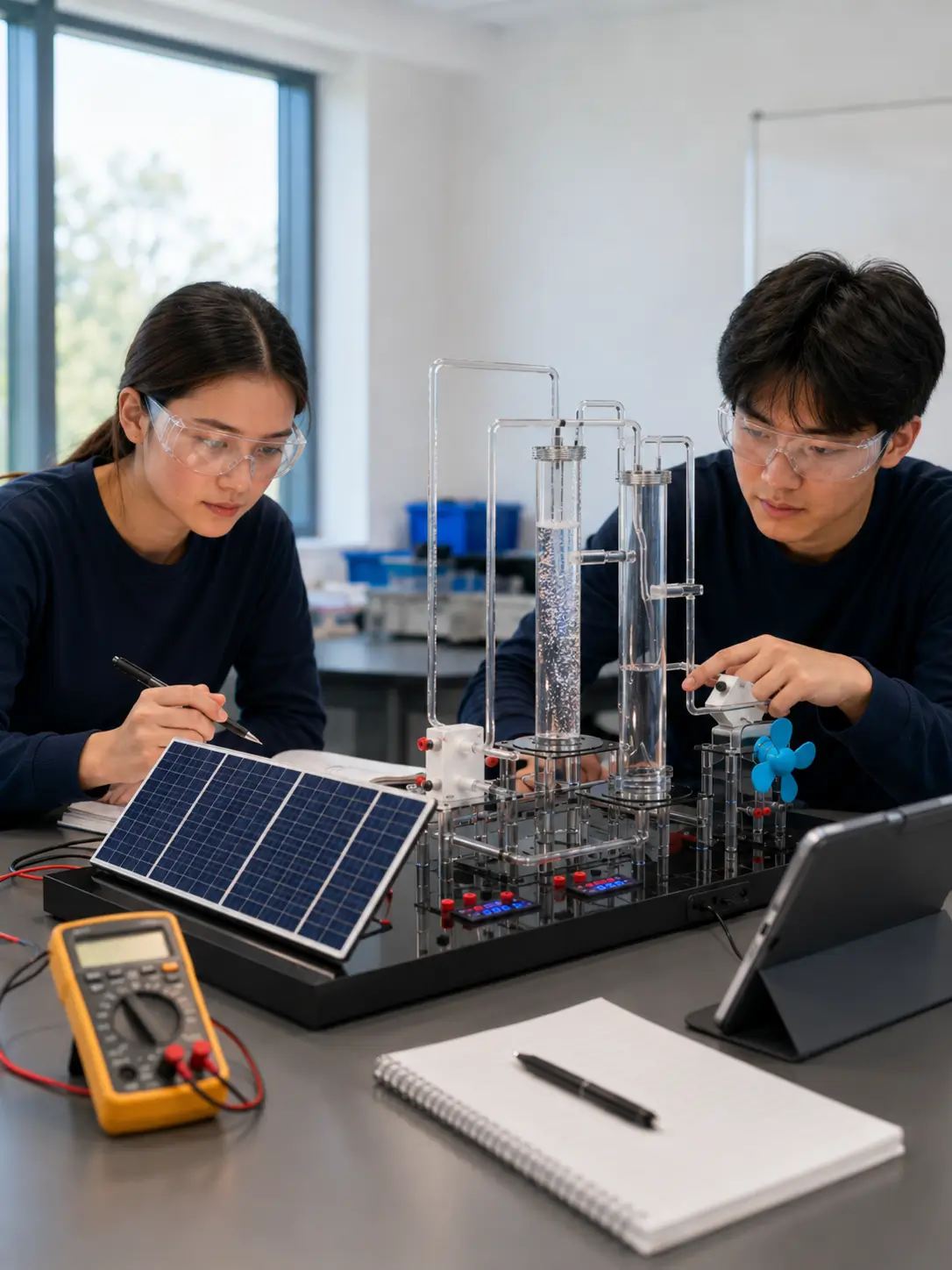
Observe hydrogen and oxygen generation, gas flow and gas-liquid separation during PEM water electrolysis.
Visualize PEM cell operation and fluid dynamics.
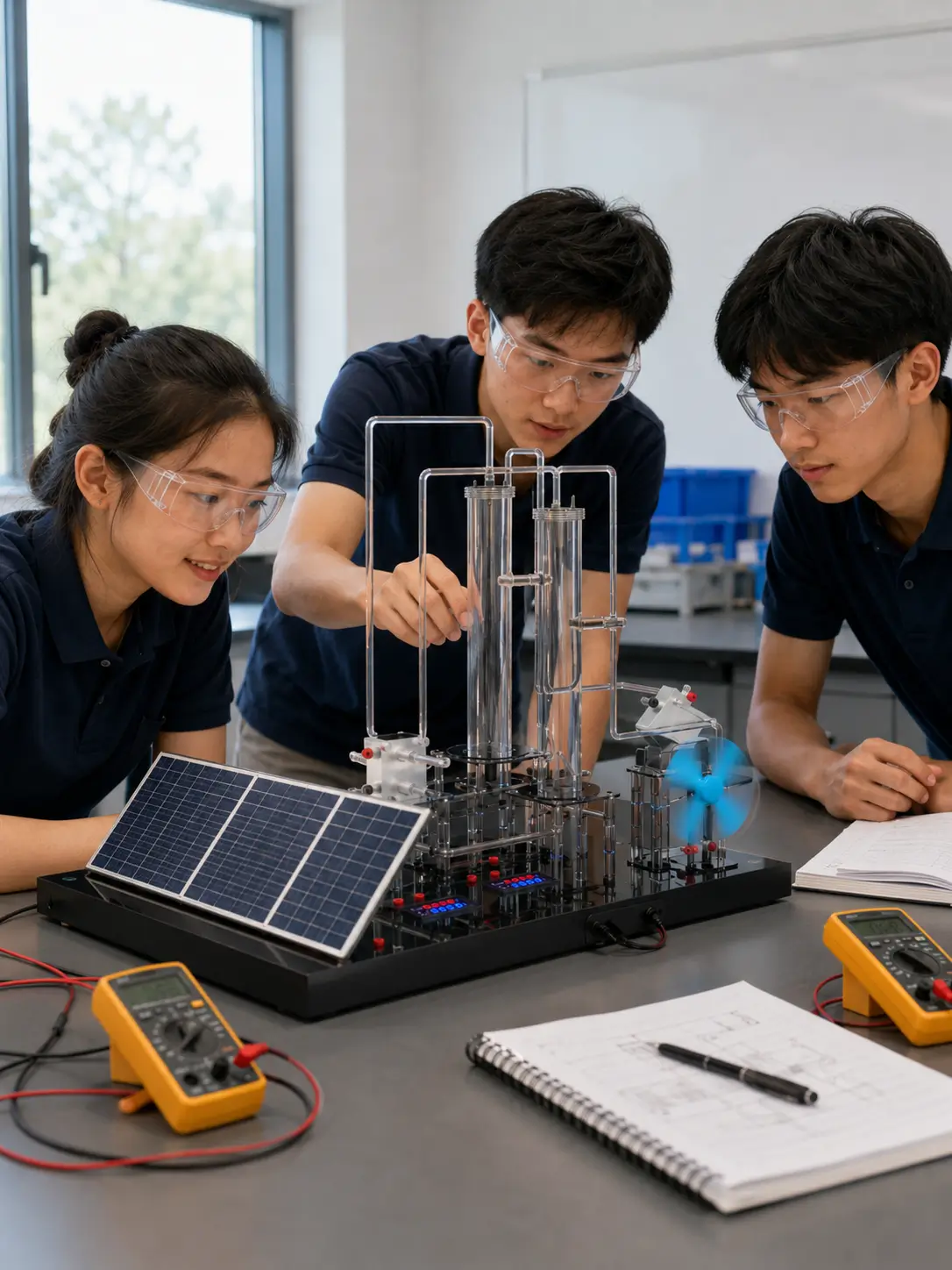
Feed collected hydrogen into the fuel cell and observe how the electrical output changes when driving the demonstration load.
Understand fuel cell power delivery and mechanical output.
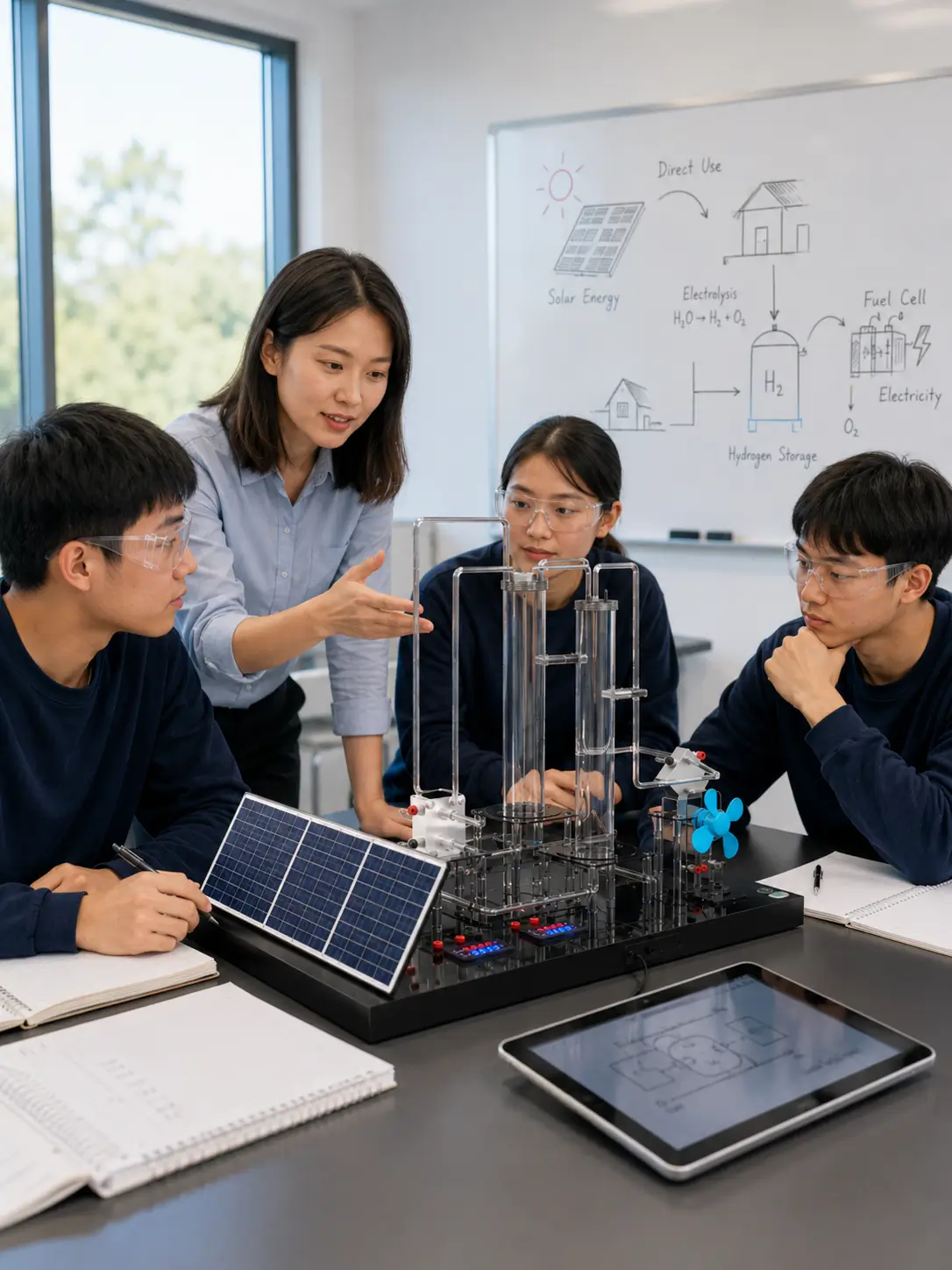
Compare electrical input, hydrogen production and fuel-cell output to discuss energy conversion across the complete renewable-energy cycle.
Evaluate energy conversion losses and efficiency.
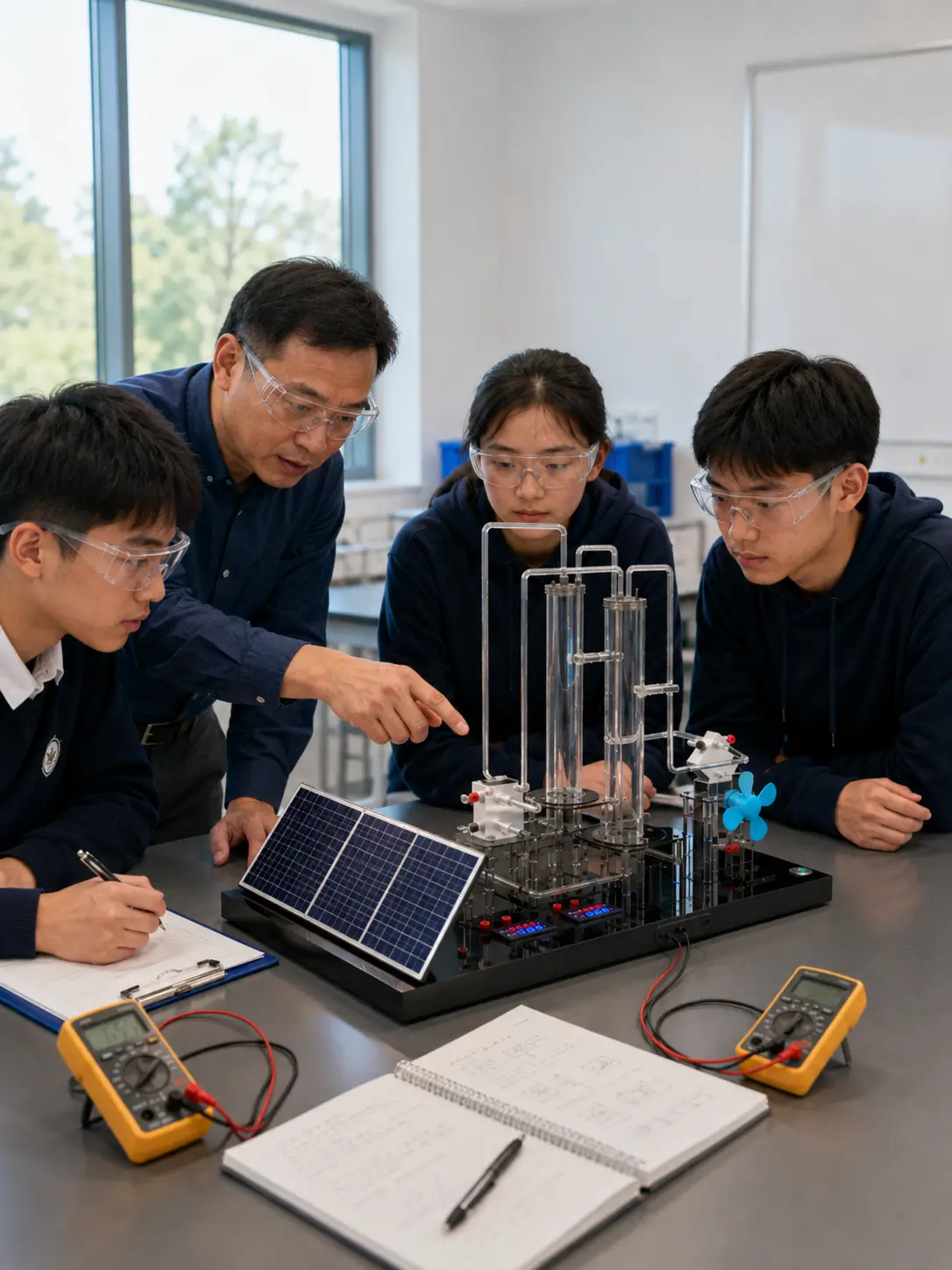
Vary the light input and observe how photovoltaic output, hydrogen generation and downstream system behavior respond.
Study dynamic system behavior under variable inputs.
The right configuration depends on the teaching level, class size, experiment goals, measurement requirements and learning environment. Review these factors before confirming the final teaching package.
School · University · Technical College · Training Center
Define the education level and teaching context so the experiment scope and supporting materials can be matched appropriately.
Demonstration · Small Group · Laboratory Class
Confirm whether the system will be used for instructor demonstration, small-group experiments or repeated laboratory-class use.
Solar · Electrolysis · Hydrogen · Fuel Cell · Energy Efficiency
Identify which parts of the renewable-energy cycle should be emphasized in the course or training program.
Indoor · Outdoor · Controlled Light Source
Confirm where the system will be used and whether natural sunlight or a controlled light source will be used for photovoltaic experiments.
Voltage · Current · Hydrogen Output · Data Logging
Define which parameters students need to observe, record or analyze during the experiments. *Data logging to be confirmed by application review.
Manual · Experiment Guide · Language · Training Support
Confirm the required documentation language, experiment materials and instructor-support requirements before quotation.
The demonstration system is intended for supervised educational use. Hydrogen generation, gas handling, ventilation, operating procedures and classroom supervision should be managed according to the supplied instructions and applicable laboratory requirements.
The platform uses low-voltage electrical modules suitable for controlled teaching demonstrations.
Transparent piping allows instructors and learners to observe gas generation, gas-liquid separation and system flow.
Hydrogen is generated at demonstration scale for supervised educational experiments.
Operate the system in an appropriately ventilated area and keep hydrogen away from ignition sources.
Hydrogen generation and fuel-cell experiments should be performed under appropriate instructor or laboratory supervision.
Available teaching and operating materials should be confirmed according to the selected supply package.
Safety Note: Hydrogen handling procedures, ventilation, storage limits and operating supervision should be confirmed before use in the intended classroom or laboratory environment.
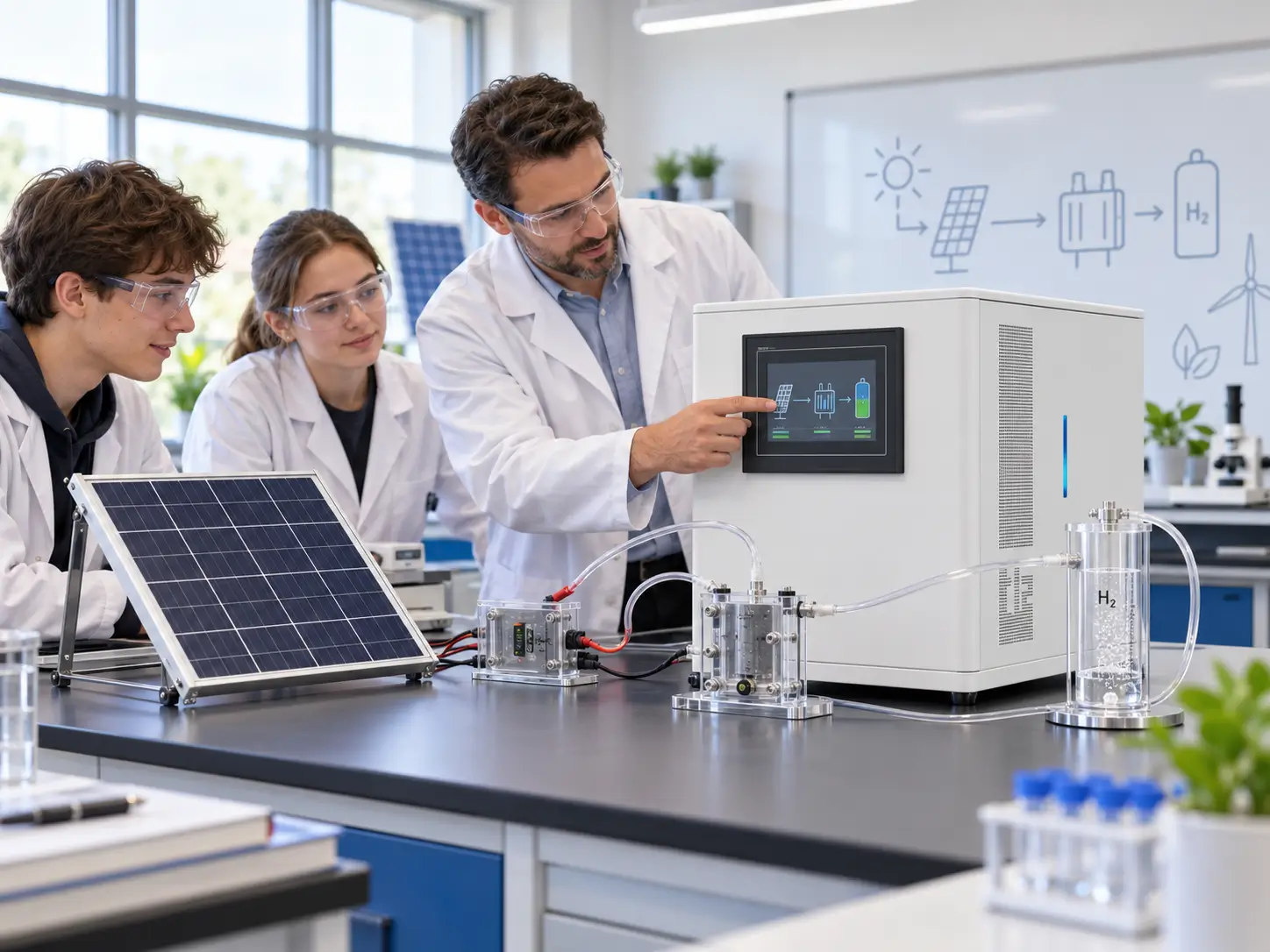
Renewable Energy · Electrochemistry · Hydrogen Engineering
Hands-on demonstration of renewable electricity, PEM electrolysis and fuel-cell energy conversion for university engineering education.
Practical Training · Energy Systems · Technical Education
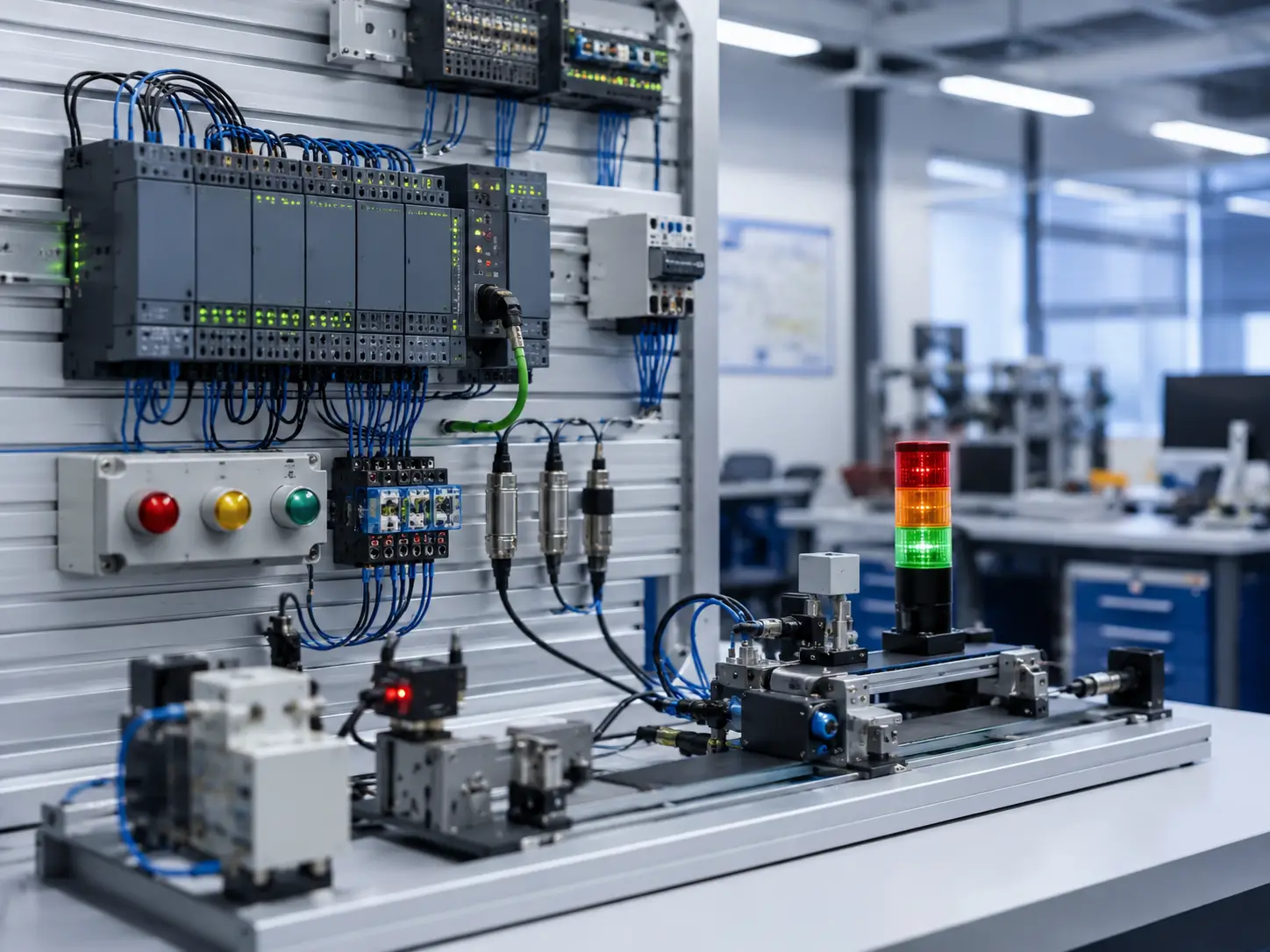
A compact training platform for practical instruction in photovoltaic generation, hydrogen production and fuel-cell operation.
Solar · Hydrogen · Energy Storage
Supports professional and technical training programs covering renewable-energy conversion and hydrogen utilization.
PEM Electrolysis · Fuel Cells · Hydrogen Utilization
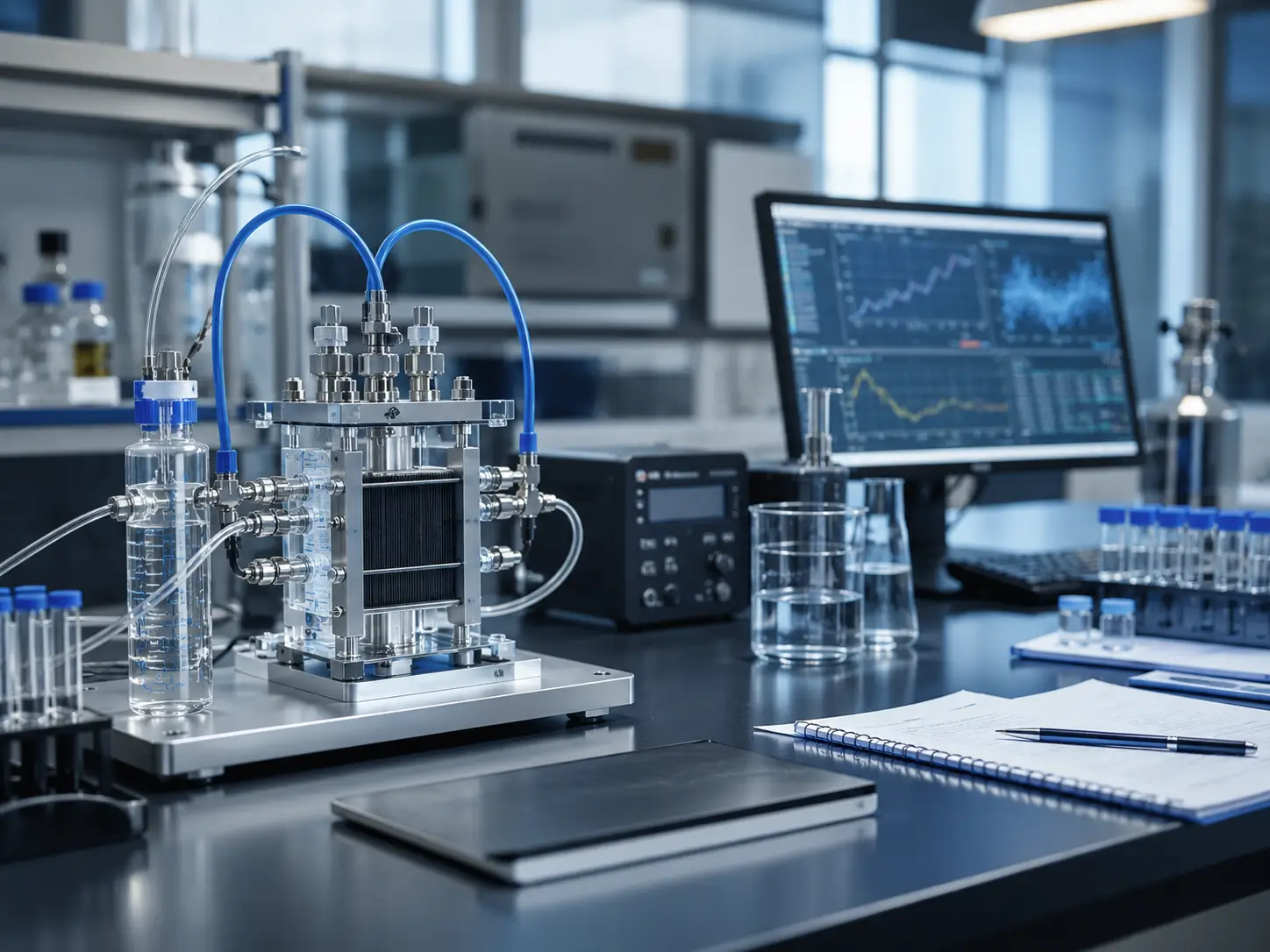
Demonstrates key concepts in hydrogen production, electrochemistry and hydrogen-to-power conversion.
Energy Conversion · Sustainability · Applied Science
A visual teaching platform for structured STEM programs requiring practical renewable-energy experiments.
This product is an educational solar-hydrogen demonstration system. It is not an industrial hydrogen-production system, hydrogen vehicle system or consumer science toy.
Inside HELE
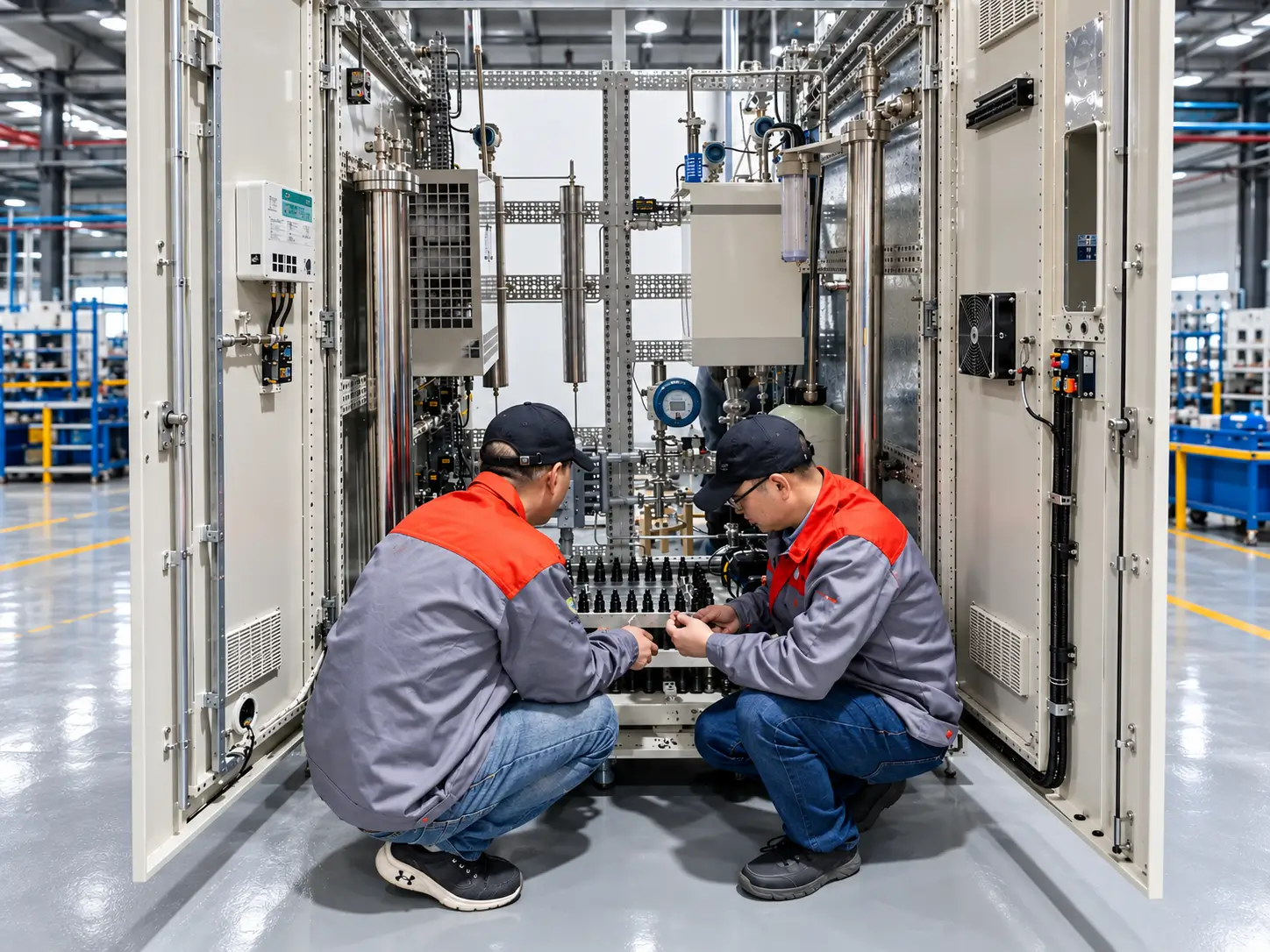
The kit should be checked as a complete teaching loop rather than as separate modules only. Before release, the approved PV, electrolyzer, storage, fuel-cell and load connections should be functionally checked, and the supplied instructions should state the operating and safety limits.
Check the module list, connections and instruments against the order drawing.
Define the test conditions, records and documents required for release.
Common questions about the system's capabilities, educational use, and ordering requirements.
Inquiry
Tell us how the kit will be used: classroom demonstration, laboratory experiment or technical training. HELE can review the PV, PEM electrolysis, storage and fuel-cell modules together with the measurement and supervision requirements.
Prefer email?
sales@heletitanium.comFactory & Engineering Center
Titanium Valley, Baoji City, Shaanxi Province, China