
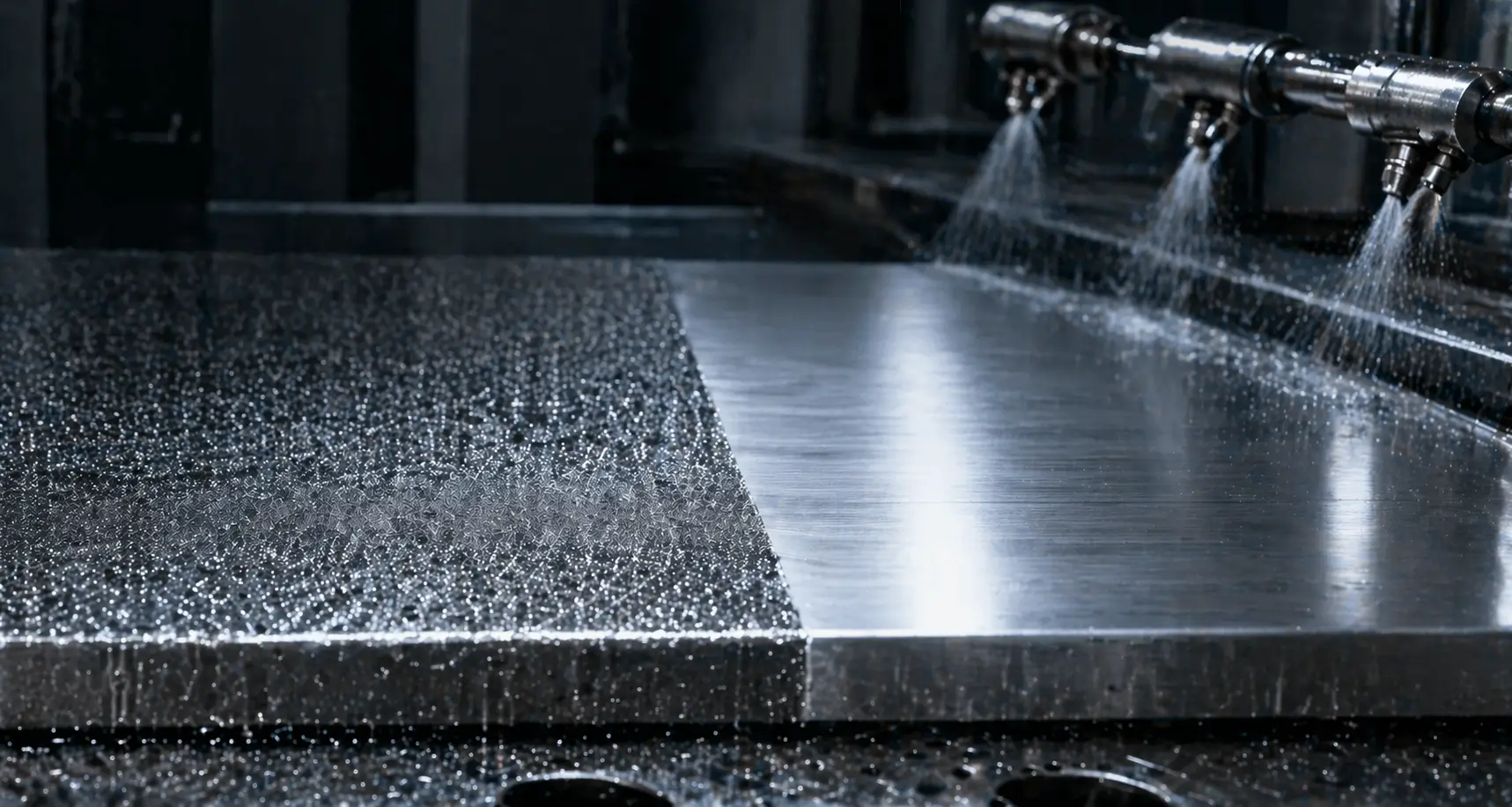
Titanium Surface Treatment & Finishing Services
Surface prep and finishes engineered for absolute corrosion resistance, coating adhesion, and precision aesthetics.
> CONTROLLED ROUGHNESS (Ra) · OXIDE REMOVAL · COATING-READY
Surface Condition Controls Performance
Titanium surface treatment is not only a cosmetic step. For machined, welded, fabricated, or coated titanium components, the surface condition can affect coating adhesion, corrosion behavior, cleanliness, appearance consistency, and downstream assembly.
Hele Titanium helps buyers select the right finishing route based on part geometry, material grade, current surface condition, final application, roughness requirement, coating needs, inspection scope, and documentation requirements.
Surface Texture & Cleanliness
Roughness, oxide layer, machining marks, weld discoloration, oil, dust, and surface contamination can affect final performance and appearance.
Coating / Process Readiness
For titanium anodes, electrodes, and coated parts, surface preparation can directly affect coating adhesion, activation, and process stability.
When Surface Treatment & Finishing Matters Most
Titanium surface treatment should be selected according to the part’s final use, downstream coating process, corrosion environment, cleanliness requirement, and appearance standard.
Coating-Ready Titanium Surfaces
Titanium anodes, electrodes, coated components, and parts requiring surface activation before coating.
Cleaning, pickling, activation, texture control, and coating preparation.
Surface preparation should match the coating system and process requirement.
Welded & Fabricated Part Cleanup
Welded titanium assemblies, fabricated parts, heat-affected areas, and post-welding surface cleanup.
Weld discoloration review, cleaning, pickling, passivation, and appearance improvement.
Surface treatment should be selected based on weld condition, material grade, and service environment.
Corrosion-Critical Service
Marine, chemical, water treatment, electrochemical, and high-corrosion industrial environments.
Pickling, passivation, surface cleaning, and corrosion-service preparation.
Surface condition should be reviewed together with material grade and operating environment.
Appearance & Batch Consistency
Visible titanium parts, batch components, machined parts, and OEM assemblies requiring consistent appearance.
Polishing, brushing, blasting, cleaning, and batch surface consistency support.
Please specify appearance standard, sample reference, or surface finish requirement before production.
How Titanium Surface Treatment Works
A reliable titanium finish starts with understanding the part’s current surface condition, final application, downstream process, and inspection requirement. The right finishing route may combine chemical cleaning, mechanical finishing, activation, passivation, and documentation.
Surface Condition Review
Review machining marks, weld discoloration, oxide layer, oil, dust, scratches, contamination, and current surface condition.
Cleaning & Degreasing
Remove oil, debris, residue, and process contamination before chemical or mechanical finishing.
Pickling / Activation
Use suitable chemical preparation to remove oxide layers, activate titanium surfaces, or prepare for coating processes.
Mechanical Finishing
Apply polishing, brushing, blasting, deburring, or texture control based on roughness and appearance requirements.
Passivation / Neutralization
Support corrosion-service readiness, chemical residue removal, and surface stabilization according to process requirements.
Inspection & Documentation
Check appearance, roughness, critical areas, and provide available records according to project scope.
Surface Quality & Documentation
Measured. Consistent. Process-Ready.
For titanium finishing projects, surface quality depends on the agreed surface requirement, part geometry, process route, inspection scope, and documentation needs.
Surface Requirement Review
Review roughness, appearance, coating preparation, cleanliness, passivation, or downstream assembly requirements before processing.
Roughness / Appearance Check
Surface finish can be reviewed based on agreed roughness, visual standard, sample reference, or drawing notes.
Cleanliness & Process Consistency
Batch surface treatment can be controlled according to process route, part condition, and project-specific requirements.
Traceability & Inspection Records
Available records may include material information, inspection notes, process records, packing list, and project-specific documents.
Batch Packaging & Protection
Finished surfaces can be protected with suitable packing to reduce handling damage during storage and transport.
Finish Types & Surface Support
Hele Titanium supports multiple surface preparation and finishing routes for machined, welded, fabricated, coated, and industrial titanium parts. Final process selection depends on material grade, surface condition, application, and documentation needs.
Pickling & Acid Cleaning
Removing oxide layers, heat tint, scale, and surface contamination from titanium parts.
Welded parts, fabricated components, coating preparation, corrosion-service parts.
Buyer Note: Process selection depends on surface condition, geometry, and final application.
Passivation / Surface Activation
Supporting corrosion-service readiness, surface stabilization, and coating preparation.
Titanium anodes, electrochemical electrodes, chemical equipment, marine parts.
Buyer Note: Passivation or activation requirements should be matched to downstream use.
Mechanical Polishing
Improving surface smoothness, appearance, and handling quality.
Visible parts, machined components, fittings, custom titanium parts.
Buyer Note: Please specify roughness, appearance standard, or sample reference.
Blasting / Texture Control
Creating controlled surface texture, improving coating preparation, or achieving consistent matte appearance.
Coated components, fabricated titanium parts, industrial assemblies.
Buyer Note: Surface profile should be selected according to coating or application requirements.
Coating Preparation
Titanium anodes, MMO coatings, platinum coating, electrochemical electrodes, and coated titanium components.
Surface activation, roughness control, cleaning, pre-coating preparation.
Buyer Note: Coating preparation should match coating chemistry and service conditions.
Deburring / Edge Cleaning
Machined titanium parts, cut parts, holes, slots, threads, and assembly-ready components.
CNC machined parts, custom fittings, precision components, OEM parts.
Buyer Note: Critical edges, sealing areas, and assembly interfaces should be marked in drawings.
* Final surface strategy may depend on alloy grade, target Ra, appearance standard, and subsequent coating or assembly process.
Surface Finishing for Critical Titanium Applications
Different titanium applications require different surface conditions. Hele Titanium supports finishing routes for electrochemical, marine, chemical, medical research, precision machining, and industrial projects.
Electrochemical & Anode Manufacturing
Surface preparation for MMO anodes, platinized titanium anodes, electrodes, and coated titanium components.
Cleaning, activation, roughness control, coating preparation, inspection support.
Medical & Research Components
Surface finishing support for research components, instruments, and development-stage titanium parts based on project requirements.
Polishing, cleaning, surface finish planning, inspection documentation.
Marine & Chemical Equipment
Surface treatment support for seawater-exposed parts, chemical components, fabricated equipment, and corrosion-service applications.
Pickling, passivation, cleaning, surface review, export documentation.
Precision Machined Titanium Parts
Finishing support for CNC machined titanium parts, custom components, fittings, fasteners, and OEM assemblies.
Deburring, polishing, blasting, surface cleaning, inspection records.
Need a specific surface finish?
Send photos, drawings, or sample requirements for review.
Common Titanium Surface Treatment & Finishing Questions
Quick answers to help buyers prepare titanium surface treatment, finishing, coating preparation, or post-machining finishing inquiries.
What surface treatment is suitable for titanium parts?
Can you prepare titanium surfaces for MMO or platinum coating?
Can you support polishing, blasting, pickling, and passivation?
How do I specify surface roughness or appearance requirements?
Can surface treatment be done after CNC machining or welding?
What documents can be provided with surface-treated titanium parts?
What We Need for a Surface Review
To recommend the right titanium finishing route, please share as much surface, application, and documentation information as possible.
1. Titanium Grade / Part Type
Commercially pure titanium, Grade 5, titanium sheet, machined part, welded assembly, anode, electrode, or custom component.
2. Current Surface Condition
Machined, welded, oxidized, scratched, oily, scaled, blasted, polished, coated, or untreated surface condition.
3. Target Surface Requirement
Pickled, passivated, polished, blasted, activated, coating-ready, clean surface, matte finish, or visual appearance target.
4. Downstream Process Requirement
MMO coating, platinum coating, welding, assembly, chemical service, marine service, electrochemical use, or export delivery.
5. Roughness or Appearance Standard
Ra value, sample reference, drawing note, visual standard, matte / polished finish, or batch appearance requirement.
6. Drawing / Photo / Sample
Technical drawings, part photos, surface images, marked critical areas, or sample reference if available.
7. Quantity & Batch Consistency Need
Prototype, sample, batch production, repeat order, OEM supply, or spare part replacement.
8. Inspection & Documentation Needs
Material records, process notes, inspection records, datasheets, packing list, certificates, or project-specific QC documents.
9. Delivery Destination
Destination country, packaging requirement, handling protection, and shipment preference.
Tell Us the Surface Need—We’ll Recommend the Right Finish Route
Send us your part drawings, photos, current surface condition, roughness requirement, or downstream process needs, and our team will review the right titanium surface treatment and finishing route.
- Factory-Direct Surface Treatment Support
- Post-Machining & Post-Welding Surface Review
- Coating Preparation & Cleaning Support
- Inspection & Documentation Support
Prefer email? sales@heletitanium.com
HQ: Titanium Valley, Baoji City, Shaanxi Province, China