
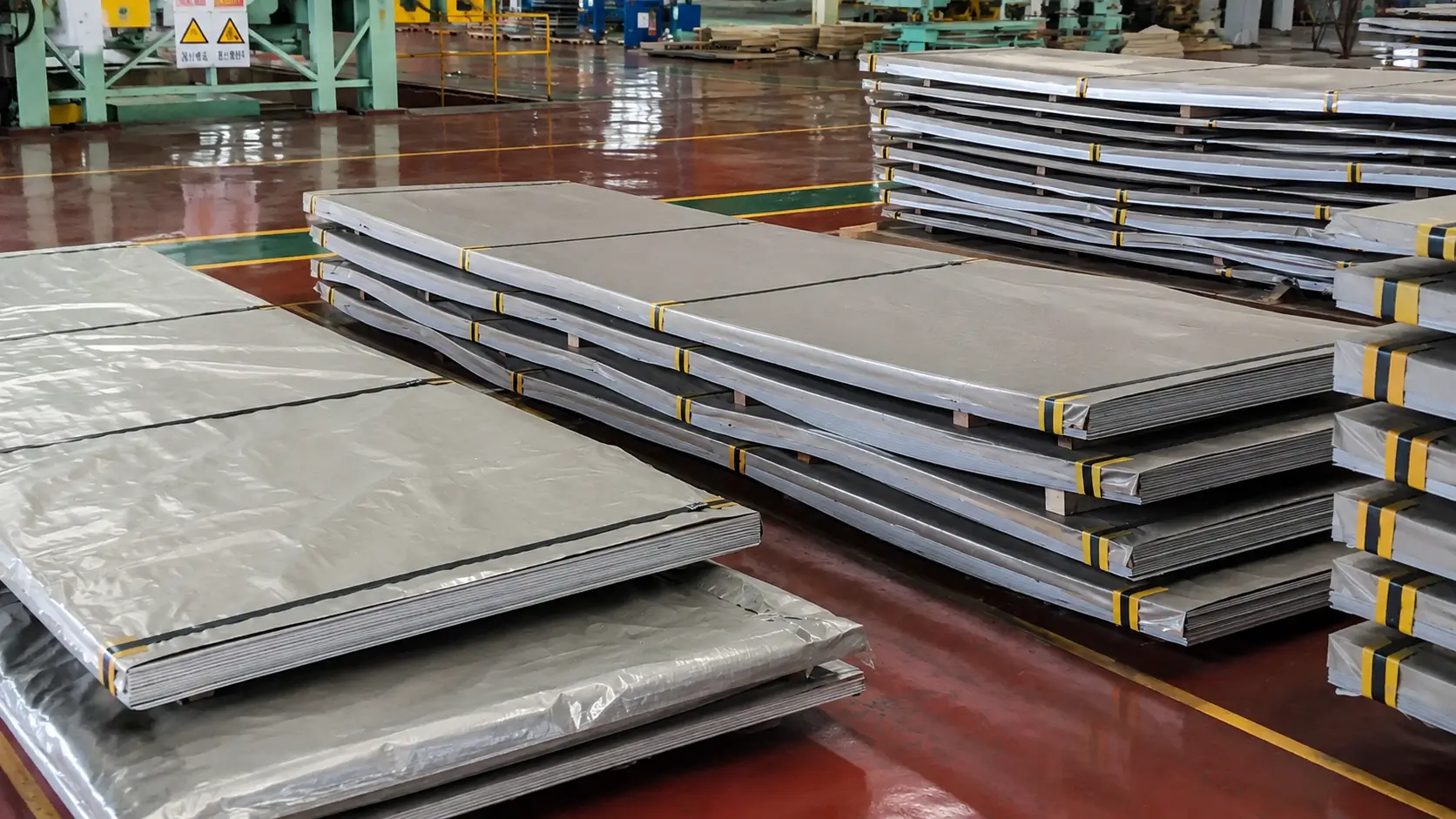
A reliable purchase begins with one controlled order basis. Descriptions such as “Grade 2 plate,” “aerospace grade” or “medical titanium” are incomplete until the specification, revision, condition, geometry, processing, inspection and responsibility boundary are defined.
1. Start with the Service Conditions and Supply Scope
First define what the material or component must do. Record the contacting media, concentration, contaminants, temperature, pressure, mechanical load, cyclic duty, expected fabrication route, governing design code and maintenance environment. Unknown inputs should remain open items rather than being replaced with assumptions.
Purchaser defines
Approved design basis, service data, grade or performance requirement, drawing revision, qualification needs and final acceptance authority.
Supplier confirms
Proposed supply form, availability, processing boundary, technical exceptions, inspection documents, packing and quotation assumptions.
Decision rule: a material recommendation cannot replace the purchaser’s design, code or application approval unless that responsibility is explicitly contracted.
2. Define Sheet, Plate, Foil or Cut Blank
Thickness labels alone are not a safe purchase description because terminology and boundaries can vary. Use the exact dimensions and governing specification.
| Supply form | What to state | Common scope risk |
|---|---|---|
| Sheet | Grade, specification, condition, thickness, width, length, flatness, surface and quantity. | Forming condition, grain direction or flatness is assumed rather than ordered. |
| Plate | Add machining allowance, ultrasonic or other examination only when required, and critical surface criteria. | A general plate tolerance is assumed suitable for a precision part. |
| Foil | Exact thickness, width, temper or condition, coil or cut form, edge and handling requirements. | Thin sheet and foil language is mixed without a controlled thickness. |
| Cut blank | Blank geometry, datum, tolerance, edge, corner, allowance, marking and traceability transfer. | Cut tolerance is confused with finished-part tolerance. |
3. Select Grade and Specification Together
A grade identifies a material family, while the specification and condition define the ordered product requirements. Keep both in the purchase description.
| Common enquiry | Order-basis review | Boundary to state |
|---|---|---|
| Grade 2 / UNS R50400 | ASTM B265 or ASME SB-265 when required by the project. | Verify the actual environment, fabrication route and supplementary requirements. |
| Grade 5 / UNS R56400 | ASTM B265 or AMS 4911 only as explicitly specified. | Do not treat the standards as interchangeable; confirm revision and condition. |
| Grade 7 / UNS R52400 | ASTM B265 or ASME SB-265 when specified. | Enhanced corrosion resistance is service-specific, not a universal guarantee. |
| Grade 23 / UNS R56407 | ASTM B265 or ASTM F136 only when explicitly ordered. | Raw-material compliance is not finished medical-device approval. |
Specification conflicts and revision control
- State the standard revision if the project controls it.
- Identify the precedence among purchase order, drawing, material specification and customer notes.
- Resolve exceptions in writing before order acceptance.
- Do not approve material substitution from a generic equivalence statement alone.
4. Control Dimensions, Flatness, Surface and Edges
Dimensions should describe the supplied material, not only the finished component. For cut blanks, show the relationship between blank size, machining allowance and final geometry.
Dimensions and tolerance
Thickness, width, length, tolerance class, flatness, squareness, datum, critical zones and measurement basis.
Condition and surface
Material condition, surface state, visible-defect criteria, cleaning, protective film or handling limits.
Cut edge
Cut process restrictions, heat-affected-zone concerns, burr, dross, taper, corner radius and edge cleanup.
Inspection method
Characteristic, instrument, sampling, reporting format, witness point and acceptance authority.
Tighter tolerances and cosmetic requirements can change source selection, processing route, yield, inspection time and price. Specify what the next process actually needs.
5. Review the Supply and Processing Route
Ask which activities are included and which are external or excluded. The route should preserve material identity and meet the agreed acceptance plan.
- 1. Source material: grade, form, specification, condition, heat or lot identity and certificate basis.
- 2. Preparation: leveling, surface preparation, cleaning and any material conditioning in scope.
- 3. Cutting or further processing: approved method, blank geometry, allowance, edge and contamination controls.
- 4. Inspection: dimensions, surface, material tests, NDT or third-party steps only as ordered.
- 5. Release: marking, traceability transfer, records, protective packing, shipping marks and delivery basis.
Supplier evidence to request
Request evidence relevant to the proposed product and route: a redacted sample certificate, inspection report format, traceability method, process description or approved external-source control. General factory photographs do not prove an order-specific capability or acceptance result.
6. Compare Cost and Quotation Scope
Material grade and weight are only part of total purchase cost. Yield loss, cut route, tolerance, surface, testing, documentation, packing and commercial terms can materially change the quotation.
Material basis
Grade, source form, condition, dimensions, quantity unit and usable yield.
Processing basis
Cutting, setup, allowance, inspection, cleaning, marking and packing.
Evidence basis
Certificates, test reports, third-party involvement, witness points and record review.
Commercial basis
MOQ, currency, validity, Incoterm, named place, payment, schedule and exclusions.
Comparison rule: a lower unit price is not equivalent if required processing, inspection, documents, packing or freight are excluded.
7. Complete Titanium Plate & Sheet Purchase Guard
Use the following controls before purchase order release. Each requirement should have an owner, evidence source and acceptance decision.
7.1 Material identity and traceability
- State grade, UNS, product form, specification and revision, condition and supplementary requirements.
- Define heat, lot or piece-level traceability and how identity transfers after cutting.
- List the certificate fields that must match the order and marking.
- Reject sample or unrelated certificates as proof for the ordered material.
7.2 Dimensions, tolerance and surface
- Define thickness, width, length, flatness, squareness and other critical characteristics.
- Identify datum references, measurement method, sampling and report format.
- State surface, edge, burr, cleaning, handling and protective requirements.
- Separate blank tolerance from finished-part tolerance.
7.3 Availability, MOQ and schedule
- Ask whether material is physically available, allocated, incoming or planned for production.
- Confirm whether MOQ applies to raw material, mill batch, processing setup, finished blanks or shipping lot.
- Break schedule into material, processing, inspection, document review, packing and transit.
- Record quotation validity and events that reset price or delivery, including revisions and added testing.
7.4 Processing and responsibility boundary
- Separate material supply, leveling, cutting, machining, forming, welding, cleaning, finishing and assembly.
- Identify which activities are internal, externally controlled or excluded.
- State who owns design, grade selection, drawing approval, process qualification and final application validation.
- Require written approval for deviations, substitutions and route changes where necessary.
7.5 Inspection, testing and acceptance
- List required chemical, mechanical, dimensional, surface, NDT or other checks and acceptance criteria.
- Define sampling, witness or hold points, inspector, report format and release authority.
- Agree third-party inspection scope, appointment, cost and schedule before order.
- Define the route for nonconformity, concession, rework, replacement and claim evidence.
7.6 Documents, marking and packing
- Create an order-specific document index instead of asking for “full certification.”
- Align product marking, heat or lot identity, tags, certificate and packing list.
- Specify interleaving, moisture protection, crate or pallet, lifting and surface protection.
- Confirm shipping marks, destination documents and customer-specific labeling.
7.7 Commercial comparability
- Normalize quantity and unit basis: piece, kilogram, sheet, plate or lot.
- Separate material, processing, testing, documents, packing, freight and taxes where needed.
- Align Incoterm and named place, currency, payment terms, delivery split and quotation validity.
- List technical exceptions and exclusions beside the quoted scope.
7.8 Source-chain and substitution control
- Prohibit unapproved changes to grade, standard, revision, condition, source or route when qualification depends on them.
- Check that certificate, marking, heat or lot and packing records form one consistent chain.
- Define identity transfer to cut pieces after original mill marking is removed.
- For higher-risk orders, agree document authentication, PMI or independent verification before production.
7.9 Cleanliness and contamination controls
- Define segregation, clean tools and handling where carbon-steel contact or debris could affect the surface.
- Identify prohibited marking materials, lubricants, cleaners or repair methods relevant to downstream use.
- State cleaning evidence or packaging cleanliness only where contractually required.
- Do not assume generic “clean” material meets an application-specific cleanliness standard.
7.10 Nonconformity and change control
- Require written approval before use-as-is, repair, rework or deviation.
- Define claim evidence: tags, packing photos, measurements, affected quantity, certificate reference and preservation of disputed material.
- Agree notification timing, containment, root-cause response, replacement or credit route.
- Keep one approved record of drawing revisions, questions, concessions and commercial changes.
Evidence matrix for supplier review
| Control question | Evidence to request when applicable | Acceptance decision |
|---|---|---|
| Is the quoted material the ordered grade and form? | Order-linked certificate sample and heat or lot identification method. | Identity fields and traceability route match the purchase basis. |
| Can the proposed route meet the blank or drawing? | Relevant process route, capability record or sample inspection format. | Critical characteristics and responsibility boundaries are covered. |
| Will required inspection records be available? | Inspection plan, report template, witness points and document index. | Each required result has a method, criterion, owner and release point. |
| Is delivery based on the complete scope? | Schedule stages, packing basis, Incoterm, exclusions and quotation validity. | Technical and commercial assumptions are aligned. |
Red flags before purchase order
The offered document cannot be connected to the quoted heat, lot, size or quantity.
“In stock” is stated without confirming grade, specification, dimensions, condition, quantity and reservation.
A low price excludes cutting, testing, documents, packing or freight required elsewhere.
Quotation, drawing, specification and purchase order do not cite the same approved revision.
Decision gate
Do not release the order until the quotation, approved drawing or specification, exceptions, inspection plan, document list, packing basis, delivery term and responsibility boundary are consistent.
8. RFQ and Pre-Order Checklist
Grade, UNS, specification and revision, condition and supplementary requirements.
Thickness, width, length, quantity, tolerance, flatness and blank allowance.
Full-size or cut blank, cut route, edge, surface, cleaning and further fabrication.
MTC, traceability, inspection characteristics, tests, third-party points and reports.
Quantity unit, MOQ, currency, validity, exclusions, payment and Incoterm.
Packing, marking, destination, required date, shipping documents and release route.
9. Titanium Plate & Sheet Purchasing FAQ
Should a buyer start with the grade or the service conditions?
Use the grade stated by an approved drawing, code or customer specification. If the grade is not fixed, define the media, temperature, pressure, mechanical duty, fabrication route and applicable design requirements before reviewing candidate materials.
Does ASTM B265 cover every titanium plate or sheet order?
No. The governing specification depends on the grade, product, industry and contract. State the exact specification and revision required by the project; do not assume that a general reference covers supplementary or customer-specific requirements.
Can AMS 4911 and ASTM B265 be treated as interchangeable?
No. They are separate specifications with their own scope and requirements. The purchaser should name the required specification, revision, material condition and any customer approvals rather than accepting an undocumented substitution.
Does ASTM F136 material make a finished component medically approved?
No. Material conformity is only one input. Finished-device design, manufacturing controls, validation, regulatory approval and customer qualification remain separate unless explicitly included in the contract.
How should two titanium plate quotations be compared?
Normalize grade, specification revision, condition, dimensions, tolerance, surface, quantity basis, processing, inspection, documents, packing, Incoterm, delivery basis and exclusions. A lower price is not equivalent when the scope is different.
When should third-party inspection be specified?
Before quotation. Identify the inspector, witness or hold points, records, acceptance criteria, release authority, cost responsibility and schedule effect.