
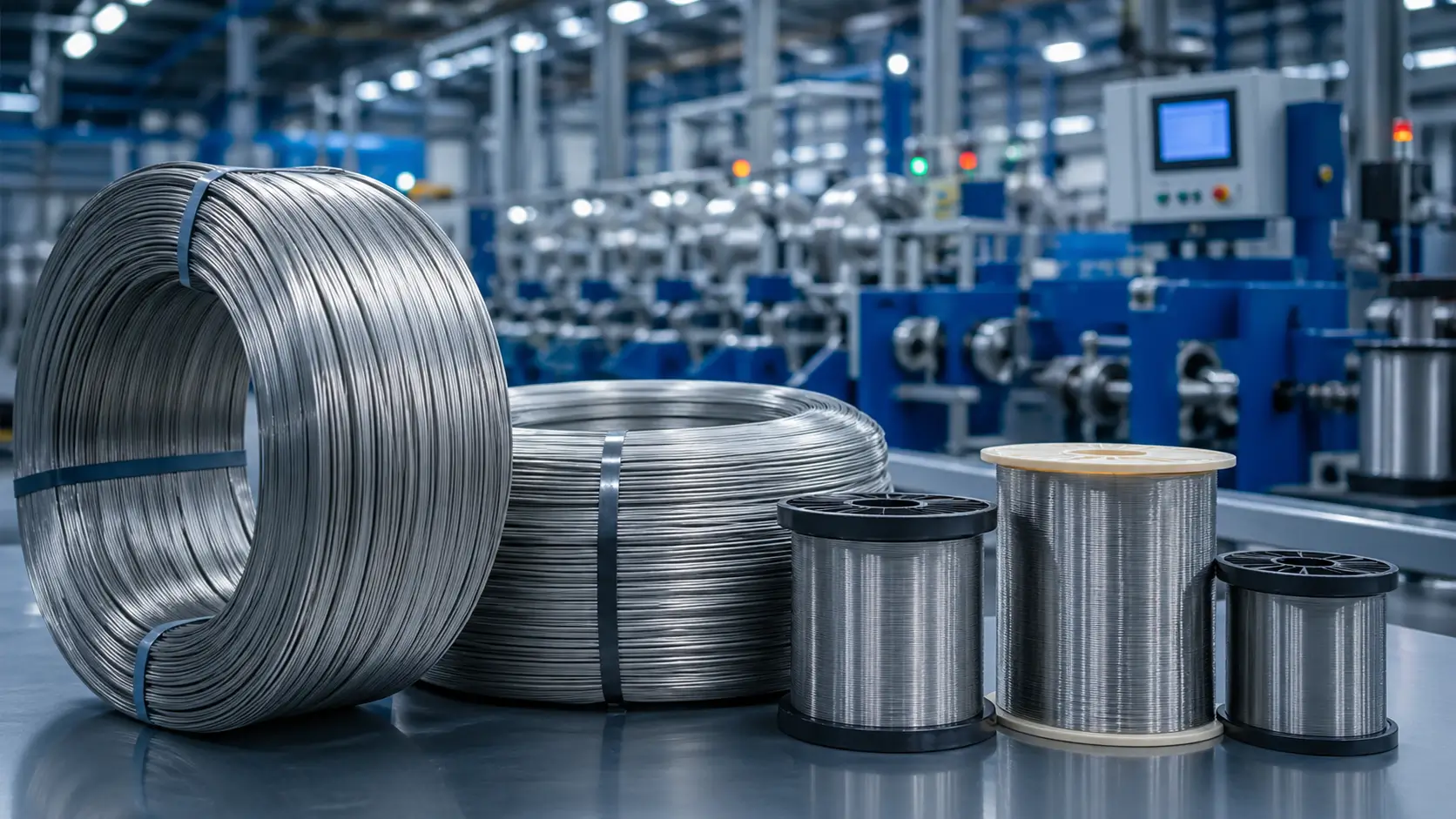
A reliable titanium-wire purchase starts with a controlled order basis—not with a broad phrase such as “pure titanium wire,” “welding grade” or “medical grade.” The buyer and supplier need the same definition of product, standard, material, geometry, process interface, evidence and delivery.
1. Start with the Process and Supply Scope
Record what the wire must do: feed through a welding system, form into a spring, weave into mesh, carry parts in an electrochemical process, enter an additive system or become raw material for a regulated component. State equipment interfaces, temperature, media, loads, forming cycles, cleanliness and qualification requirements where relevant.
Equipment, feed path, forming or joining method, environment, service and acceptance authority.
Material only, straightening, cutting, cleaning, spool winding, identification, tests, packing and documents.
2. Separate Wire, Electrode and Rod
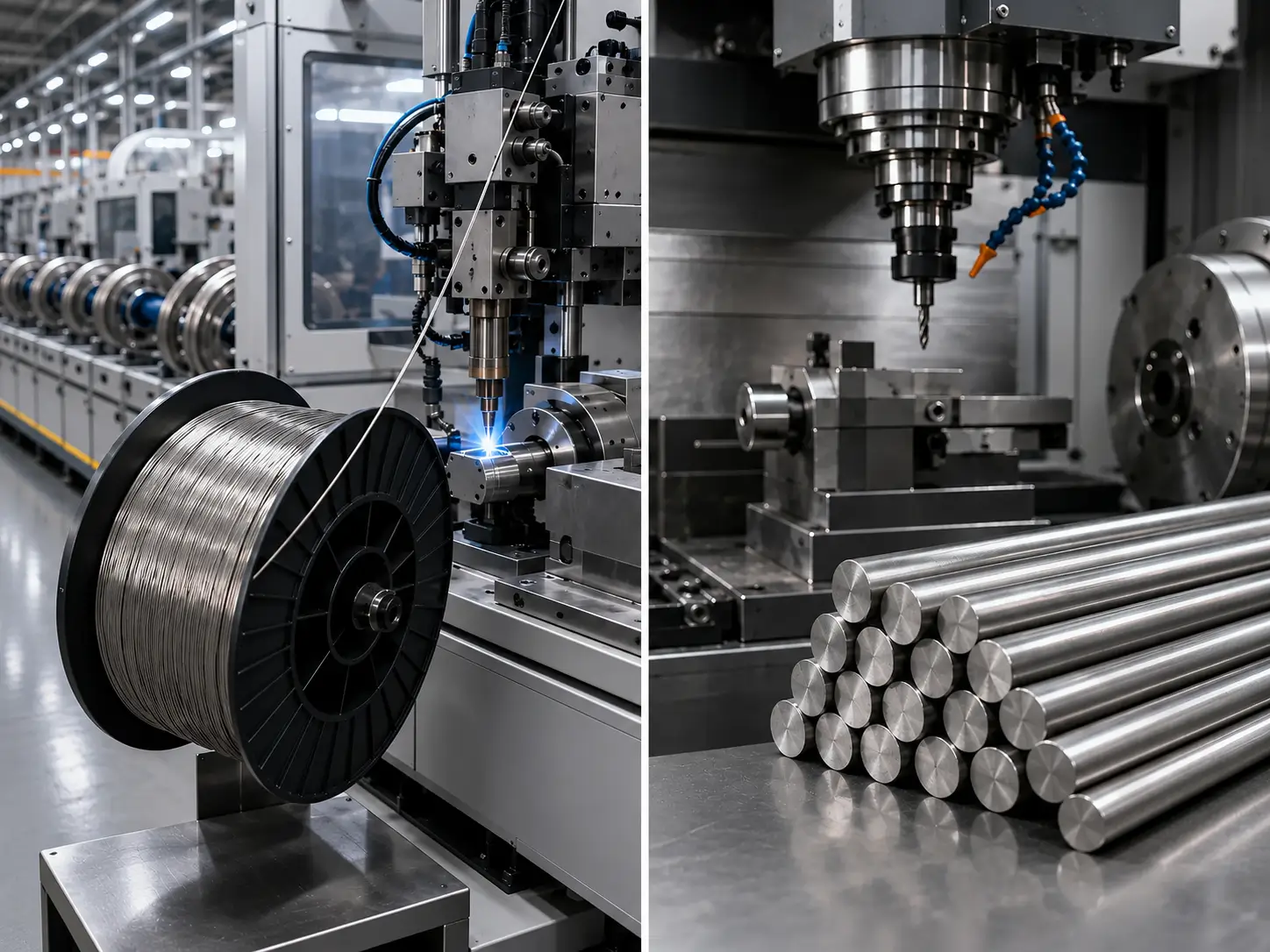
Wire is commonly supplied as coil, spool or cut length and controlled for downstream forming or feeding. Welding specifications may use the terms solid wire electrode, solid wire and rod. General bar or rod ordered to a bar specification should not be relabeled as classified welding consumable without the required product and evidence.
| Product description | Typical delivery | Purchase focus |
|---|---|---|
| General titanium wire | Coil, spool, straight or cut length | Grade, diameter, condition, surface, mechanical properties |
| Welding wire electrode | Spool or coil for a wire-feed process | ERTi classification, chemistry, diameter, package, identity, approved procedure |
| Welding rod | Cut straight lengths | Classification, diameter, length, marking, cleanliness and package |
| Bar/rod feedstock | Straight length | Bar specification, size, condition and machining/forming requirements |
3. Standards and Revision Control
ASTM B863 covers titanium and titanium-alloy wire. AWS A5.16/A5.16M covers classification of titanium and titanium-alloy welding electrodes and rods. These are not interchangeable labels, and neither should be described as a company certification.
Write the designation and required revision in the RFQ and purchase order. If the contract uses “latest edition,” confirm which edition controls before production. Identify supplementary, customer or project requirements separately.
4. Grade, UNS and ERTi Classification
For general wire, state the grade and UNS where needed. For welding consumables, state the required ERTi classification and the approved procedure basis. Do not select from the commercial grade name alone.
| Material family | What to state | Engineering check |
|---|---|---|
| Commercially pure titanium | Grade, UNS, specification, condition | Strength, ductility, corrosion environment, forming |
| Titanium alloy | Grade/alloy, UNS, condition, property requirements | Heat treatment, forming, fatigue or service needs |
| Welding consumable | ERTi classification, specification revision, diameter and package | WPS/PQR, base materials, dilution, joint, service and required weld properties |
| Medical raw material | Ordered material specification, grade, route and traceability | Device maker’s qualification and regulatory system |
Grade 12 is a titanium alloy containing molybdenum and nickel; it should not be described as a beta alloy. Grade 23 is an extra-low-interstitial variant of Ti-6Al-4V, but material designation alone does not establish finished-device suitability.
5. Diameter, Tolerance, Condition, Surface and Package
These five groups should be written as measurable requirements. Generic words such as “precision,” “ultra clean” or “tangle free” are not acceptance criteria.
Nominal diameter, tolerance, roundness, straightness, length and continuous-length requirement.
Annealed, cold worked or another ordered condition plus required mechanical properties.
Finish, cleaning method, defect limits, residues, lubricants, handling and protection.
Coil, spool or straight length; dimensions, net weight, winding, cast, helix, payoff and labels.
6. Welding Wire Selection

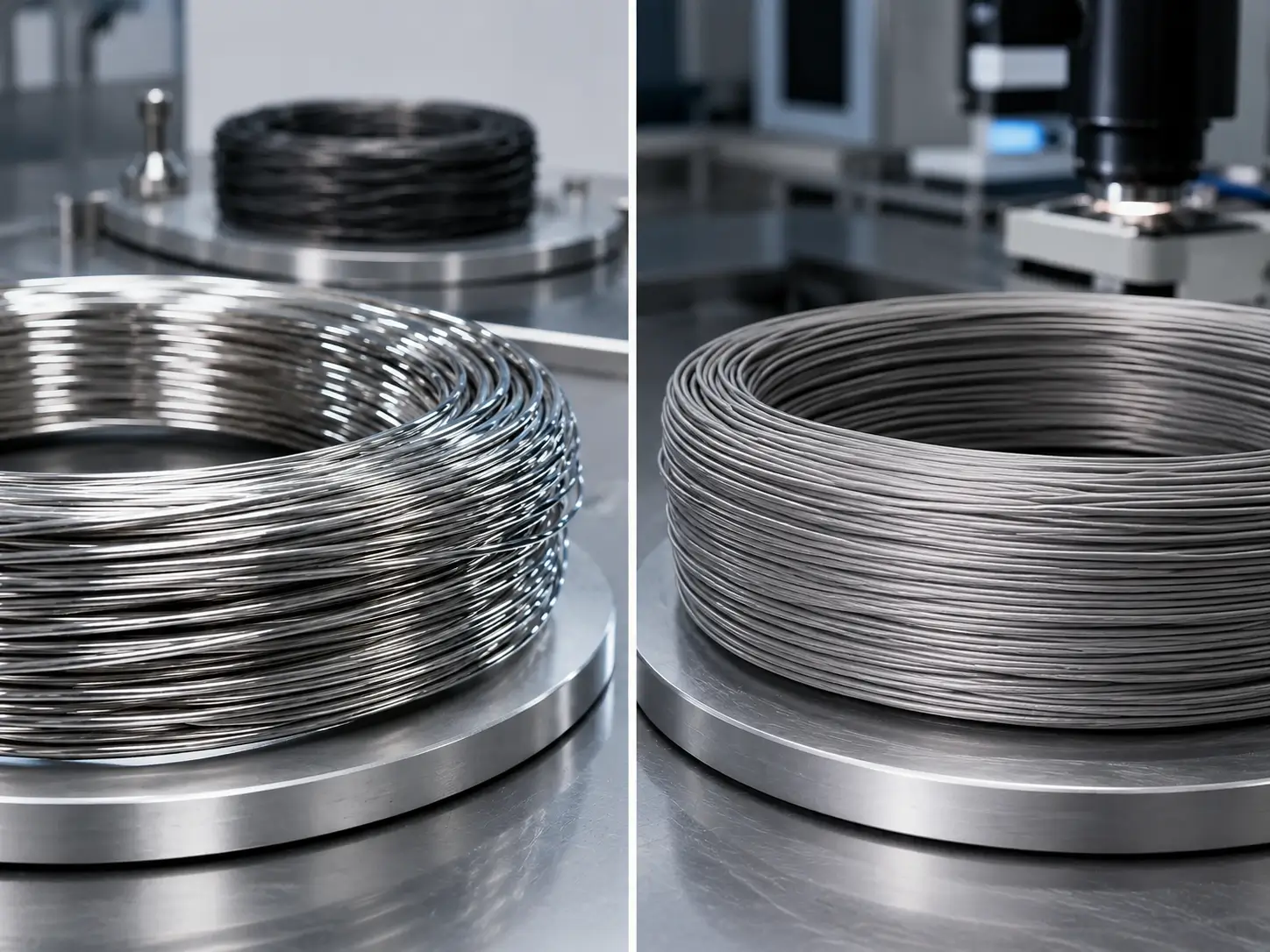
Filler selection is an engineering and welding-procedure decision. The base-metal grade may be one input, but it does not create a universal one-to-one rule. The responsible team should review both base materials, thickness, joint design, process, shielding, dilution, service, post-weld condition, required properties and the governing project specification.
What belongs in a welding-wire RFQ
- AWS A5.16/A5.16M revision and ERTi classification.
- GTAW, GMAW or other approved process and WPS/PQR reference.
- Diameter, cut length or spool details, net weight and winding requirements.
- Chemistry, identity, marking, certificate, cleanliness and packaging requirements.
- Any customer specification, batch qualification, witness or retained-sample requirement.
7. Specialized Wire Boundaries
Material conformity is only one input to a medical device. Do not claim device approval, biocompatibility, implant safety or clinical suitability from raw-material certification alone.
Diameter tolerance, surface, cast, helix, spool geometry, payoff and feed stability require qualification in the actual machine and process window.
Condition, mechanical-property range, surface, coil set, continuous length and forming trials may matter more than a broad grade label.
Nickel-titanium wire is a separate material family with composition, transformation-temperature and application controls. It should not be substituted into an unalloyed or conventional titanium-wire order.
8. Process Route and Order Evidence
Transforming source material into finished wire may involve drawing, intermediate heat treatment, cleaning, straightening, cutting and winding. The supplier should disclose the order-specific route and whether operations are internal or externally controlled rather than relying on a generic factory statement.
| Control point | Possible evidence when required | Buyer decision |
|---|---|---|
| Material identity | MTC, heat/lot link, grade or ERTi classification and identity-transfer record | Certificate, marking and order agree |
| Geometry | Diameter/tolerance report, straightness or spool data, calibrated method | Critical equipment interface is covered |
| Condition and surface | Heat-treatment record, mechanical results, visual/cleanliness method | Ordered condition and surface criteria are met |
| Package and release | Spool drawing, winding record, label, packing list and document index | Wire can be received, identified and used as intended |
9. Cost and Quotation Comparison
Price is influenced by alloy and source material, finished diameter, drawing yield, condition, surface and cleaning, straightening or precision winding, spool type, testing, documentation, lot size, packing and logistics. Fine diameter or tighter tolerance can increase process steps and yield loss, but the actual premium must come from the supplier’s confirmed route.
- Compare the same product type, specification revision and material identity.
- Normalize quantity by kilogram, meter, spool, coil or piece.
- Separate material, processing, tests, special package, freight and taxes where needed.
- Record quotation validity, MOQ basis, schedule assumptions, exclusions and approved deviations.
10. Complete Titanium Wire Purchase Guard
10.1 Product and specification identity
- State general wire, electrode, welding rod, straight wire, spool or drawing-specific product.
- Name the standard and revision plus grade, UNS or ERTi classification.
- List customer and process specifications separately.
- Prohibit unapproved changes to product, material, route or source when qualification depends on them.
10.2 Diameter, length and tolerance
- Define nominal diameter, units and tolerance; add roundness or local variation where relevant.
- For straight wire, state cut length, length tolerance and straightness.
- For continuous wire, state minimum continuous length, permitted joins if any and lot definition.
- Agree measurement method, sampling and report format.
10.3 Condition and mechanical properties
- State annealed, cold worked or another permitted condition.
- Define tensile, yield, elongation, hardness, wrap/bend or other requirements only when applicable.
- Identify sample orientation, test method, sampling and acceptance criteria.
- Do not infer downstream formability or fatigue life from one certificate value alone.
10.4 Surface and cleanliness
- Define the finish and measurable visual or defect acceptance criteria.
- Specify cleaning, permitted residues, lubricants, markers and handling restrictions.
- For welding or additive use, align cleanliness with the approved process specification.
- Agree protective wrapping and conditions that trigger rejection or re-cleaning.
10.5 Coil, spool and payoff
- Provide the spool standard or drawing, flange/barrel/bore dimensions and material.
- State net wire weight, winding pattern, traverse, payoff direction and tie-down method.
- Define cast, helix and continuous-length requirements when they affect feeding.
- Agree label location, barcode or lot data and returnable-spool terms if applicable.
10.6 Welding-consumable controls
- Reference the approved WPS/PQR, base materials, process and ERTi classification.
- Define diameter, rod length or spool, chemistry, identity and packaging.
- Specify batch tests, witness points or retained sample only where required.
- Do not replace engineering approval with a generic filler-selection rule.
10.7 Tests, documents and traceability
- Create an order-specific inspection and document index.
- For every test, state method, sampling, acceptance, witness and report requirement.
- Link heat/lot identity through cutting, winding, labels, MTC and packing list.
- Reject unrelated or generic certificates as evidence for the ordered lot.
10.8 Availability, MOQ and schedule
- Ask whether material is physically available, incoming, mill-order or planned for processing.
- Confirm whether MOQ is driven by source material, drawing setup, heat treatment, spool or shipping lot.
- Break lead time into source material, processing, tests, documents, packing and transit.
- Record events that reset price or schedule.
10.9 Commercial comparability and change control
- Normalize quantity unit, currency, Incoterm and named place.
- List technical exceptions and exclusions beside the quoted scope.
- Require written approval for deviations, substitutions and route changes.
- Define nonconformity, concession, rework, replacement and claim handling.
10.10 Packing, storage and handling
- Protect fine wire, straightness, spool flanges and clean surfaces during transport.
- Define moisture, dust, contact-material and segregation controls where needed.
- Align outer labels, inner identity, packing list and certificate.
- Record storage, opening, respooling and return-to-storage rules for sensitive processes.
Red flags before purchase order
The quotation treats B863 wire, welding electrode, additive feedstock and medical material as interchangeable.
A material classification specification is presented as a blanket company or product certification.
“Ultra clean,” “tangle free” or “micron precision” appears without method and acceptance criteria.
Diameter is stated, but spool drawing, winding, cast, helix, payoff and net weight are missing.
Decision gate
Do not release the order until product identity, material, geometry, condition, surface, package, process interface, evidence, exceptions and delivery terms tell the same story.
11. RFQ and Pre-Order Checklist
General wire, electrode/rod, straight, coil or spool; standard and revision.
Grade, UNS or ERTi classification, condition and required properties.
Diameter/tolerance, length/straightness or continuous-length requirement.
Finish, cleanliness, coil/spool data, winding, cast, helix and protection.
MTC, lot traceability, dimensional/mechanical tests, witness and reports.
Quantity basis, MOQ, validity, packing, destination, Incoterm and required date.
12. Titanium Wire Purchasing FAQ
Should an RFQ say wire, welding electrode or rod?
Yes. Identify the actual product form and intended process. General wire, solid wire electrode and cut-length welding rod are not interchangeable descriptions.
Is AWS A5.16 an AWS certification for a supplier?
No. AWS A5.16/A5.16M is a classification specification for titanium and titanium-alloy welding electrodes and rods. Order evidence should show the applicable classification and required test results.
Is ERTi-5 always required for welding Grade 5 titanium?
Not as a universal rule. Filler selection depends on the approved welding procedure, base materials, joint design, service, required properties and project specification.
Can B863 wire be used as welding filler automatically?
No. Chemical similarity alone does not establish compliance with the ordered welding-consumable classification, packaging, testing, identity and application requirements.
What must be specified for a spool?
State spool standard or drawing, flange and barrel dimensions, bore, traverse, net weight, winding pattern, cast and helix where relevant, continuous length, payoff direction, labels and protection.
How should two titanium wire quotations be compared?
Normalize product type, standard revision, grade or classification, diameter and tolerance, condition, surface, length or spool data, tests, documents, quantity basis, packing, Incoterm, schedule assumptions and exclusions.