
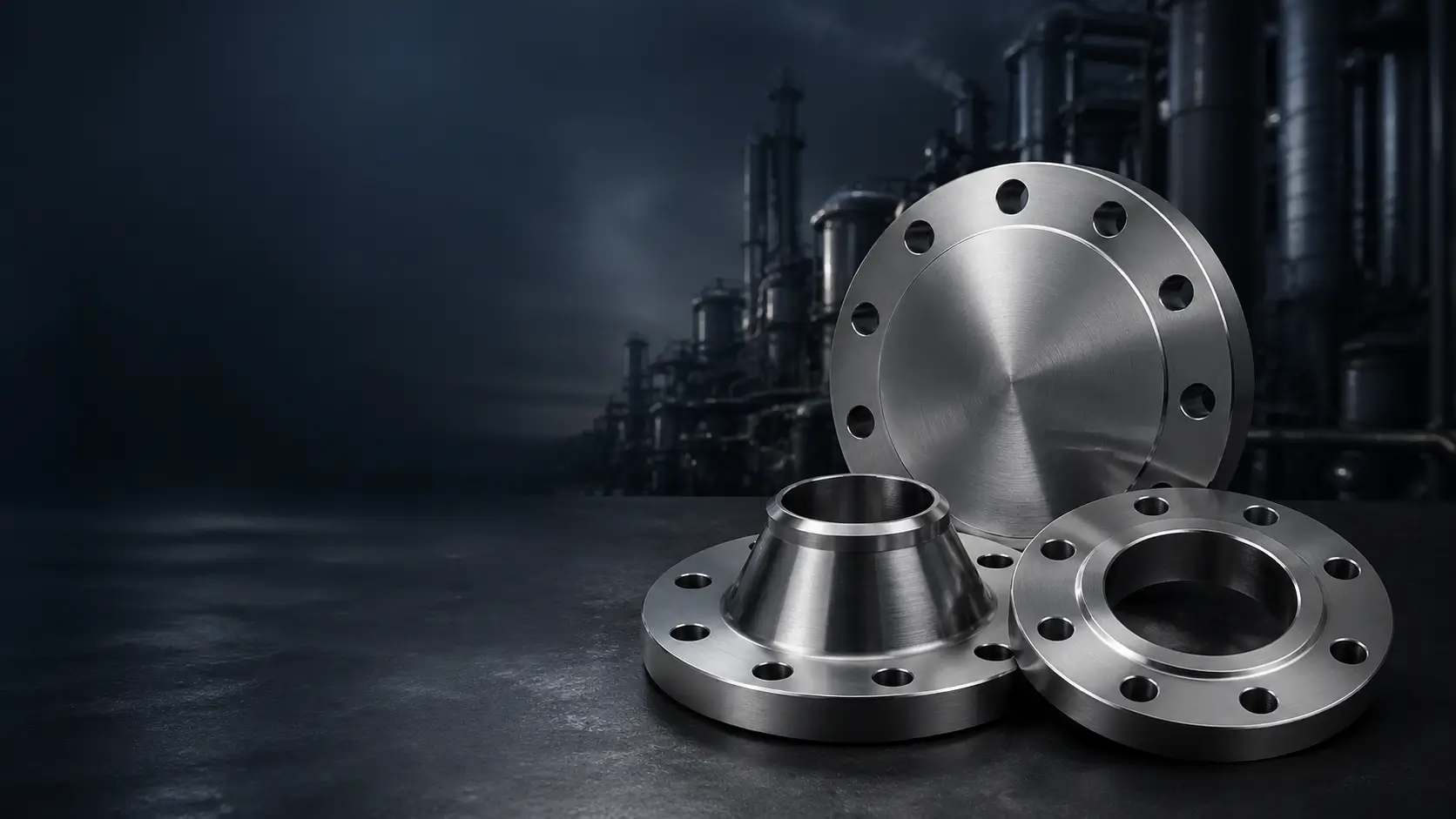
Titanium Flanges Manufacturer for Chemical, Marine and Industrial Piping Systems
Forged and CNC-machined titanium flanges, including weld neck, slip-on, blind, lap joint and custom flanges, supplied with grade selection, dimensional inspection, MTC and export documentation support.
- 100% Forged (No Casting)
- ASME B16.5 / EN 1092 / DIN
- Gr2 / Gr5 / Gr7 / Gr12
- RF / FF / RTJ CNC Machined
- PMI / MTC / NDT Support
Flange Details That Decide Sealing, Alignment and Service Reliability
The right flange structure supports pressure reliability.
The right sealing face improves connection stability and service performance.
Titanium flanges may look like standard piping components, but long-term performance depends on titanium grade, flange type, pressure class, standard, bolt circle, bore size, facing finish, gasket compatibility, machining accuracy and inspection requirements. If these factors are not properly reviewed, projects may face leakage risk, poor alignment, gasket sealing issues, bolt-hole mismatch, corrosion problems or unexpected maintenance cost.
Hele Titanium supplies titanium weld neck flanges, slip-on flanges, blind flanges, lap joint flanges, threaded flanges, socket weld flanges, flange rings and custom titanium flanges made from commercially pure titanium and titanium alloys. We support grade selection, ASTM B381 / ASME B16.5 standard review, CNC machining, facing finish review, bolt-hole inspection, PMI / dimensional inspection when required, traceability and export documentation according to project requirements.
Flange Type Selection
Choose weld neck, slip-on, blind, lap joint, threaded, socket weld, flange ring or custom titanium flange according to piping connection needs.
Grade Matching
Review Grade 2, Grade 5, Grade 7, Grade 12 and other titanium grades according to corrosion resistance, pressure condition, temperature, chemical medium and application needs.
Pressure Class & Facing Review
Support pressure class, bore size, bolt circle, raised face, flat face, sealing face finish and gasket compatibility review when applicable.
Inspection & Documentation
Dimensional inspection, bolt-hole inspection, facing finish review, PMI, MTC, heat number traceability and export documents can be supported when required.

Supply Forms
Weld Neck / Slip-On / Blind / Lap Joint / Threaded / Socket Weld / Custom Flanges
Applicable Standards
ASTM B381 / ASME B16.5 / DIN / JIS / EN or drawing-based requirements available for review
Size Range
Small-diameter to large-diameter titanium flanges available according to project requirements
Facing Options
Raised Face / Flat Face / Custom Sealing Face when applicable
Testing Support
Dimensional Inspection / Bolt-Hole Check / Facing Review / PMI when required
Documentation Support
MTC, heat number traceability, inspection records, packing list and export documents
Designed for: chemical processing piping, seawater systems, marine equipment, desalination systems, heat exchangers, pump and valve assemblies, pressure piping, electrochemical equipment, hydrogen systems and custom industrial titanium flange projects.
Titanium Flange Product Range
Hele Titanium supplies standard and custom titanium flanges for chemical piping, marine systems, heat exchangers, pump and valve assemblies, electrochemical equipment and industrial projects. Product selection can be reviewed according to flange type, titanium grade, standard, pressure class, size, facing type, bolt circle, machining tolerance, inspection requirements and application environment.
Standard Titanium Flanges
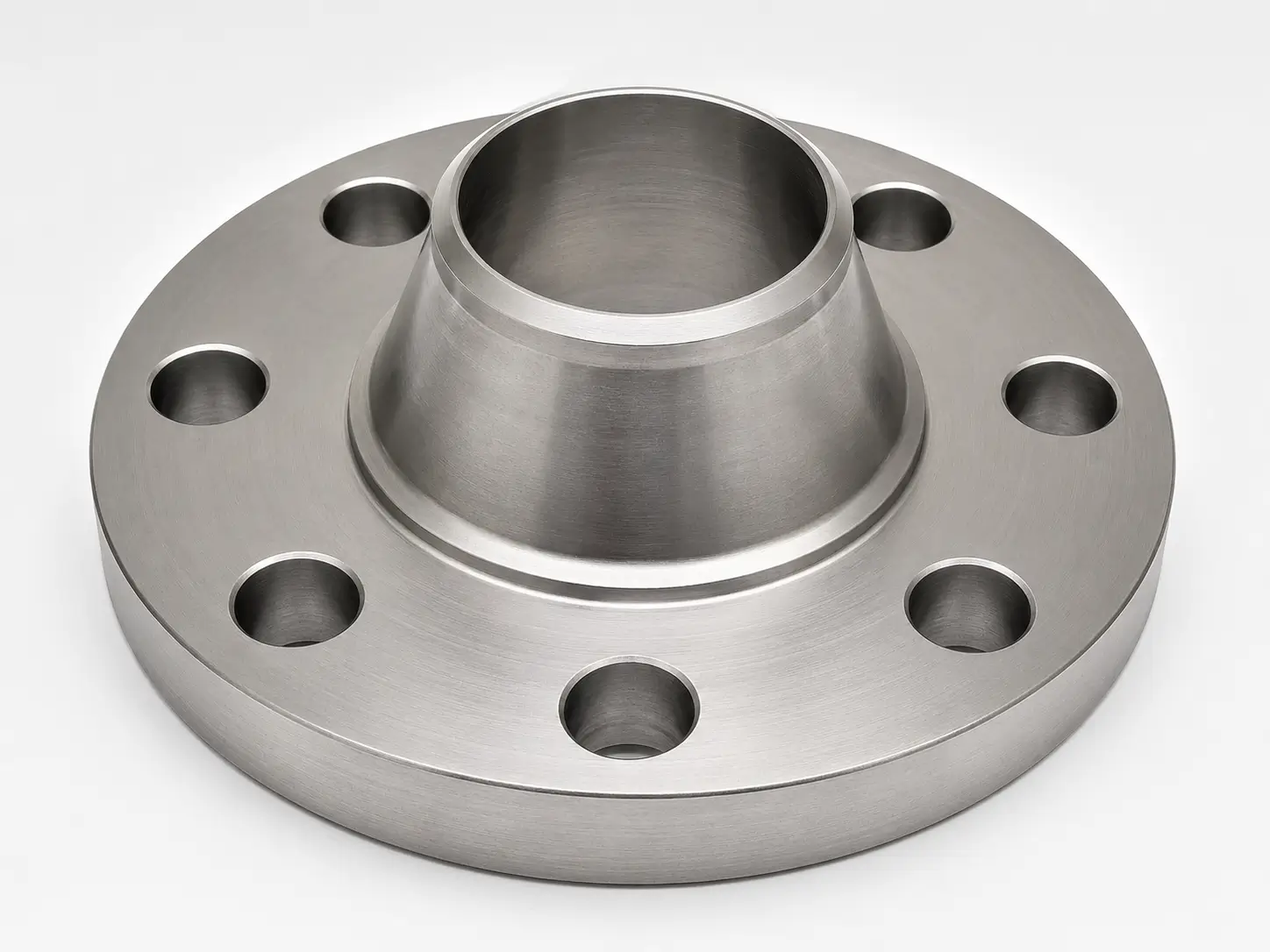
Titanium Weld Neck Flanges
Key Review: Grade, NPS / DN size, pressure class, bore size, neck thickness, facing finish, welding requirement and standard.
For high-pressure piping, chemical systems and welded connections requiring reliable joint strength and smooth flow transition.
Options: Raised face, flat face, long weld neck, custom bore and drawing-based weld neck flange requirements.
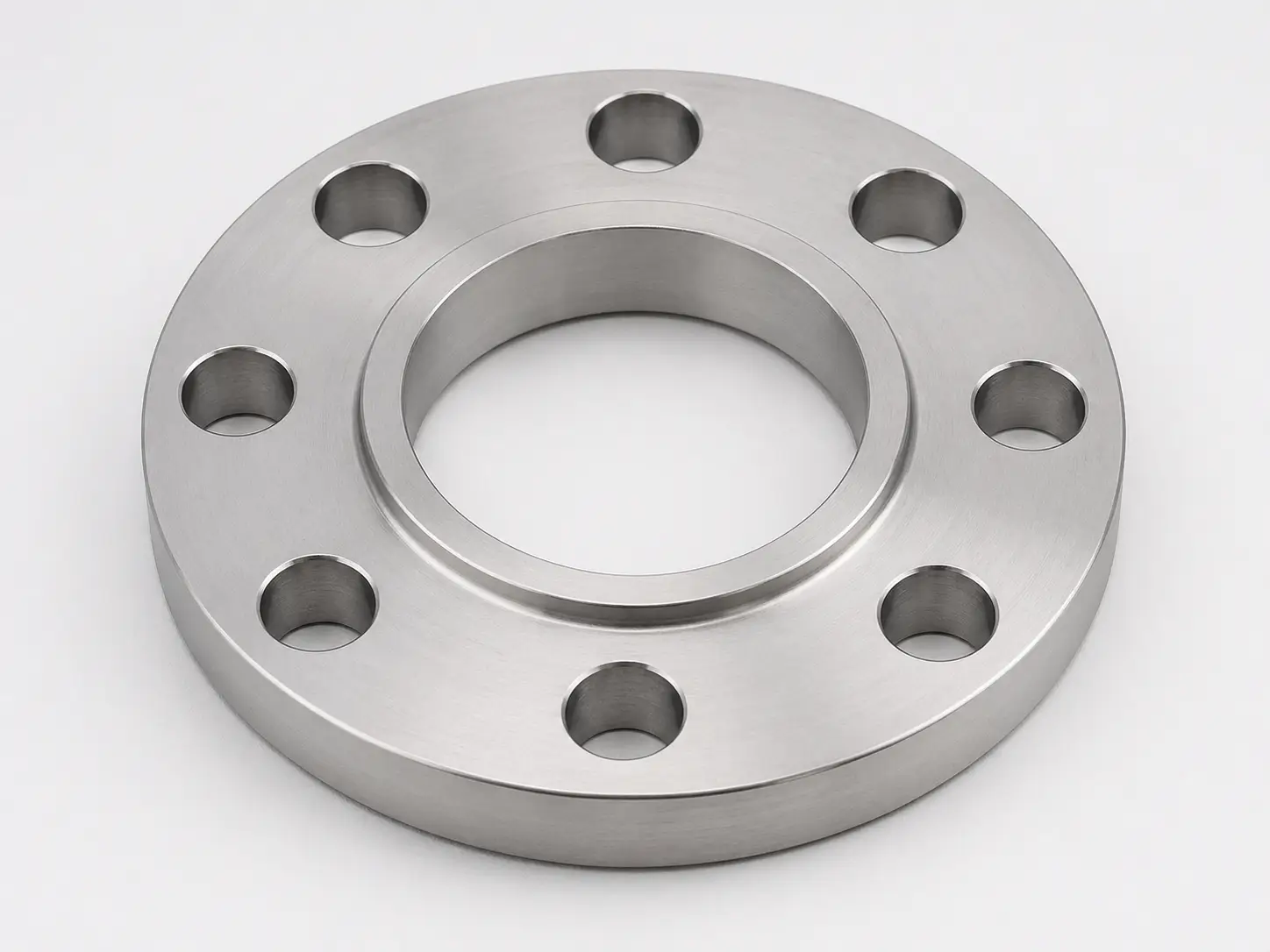
Titanium Slip-On Flanges
Key Review: Pipe OD, pressure class, flange thickness, bolt circle, facing type, welding method and corrosion environment.
For lower-pressure piping systems, equipment connections and cost-sensitive industrial assemblies.
Options: Standard slip-on flanges, custom thickness, raised face, flat face and project-specific machining support.
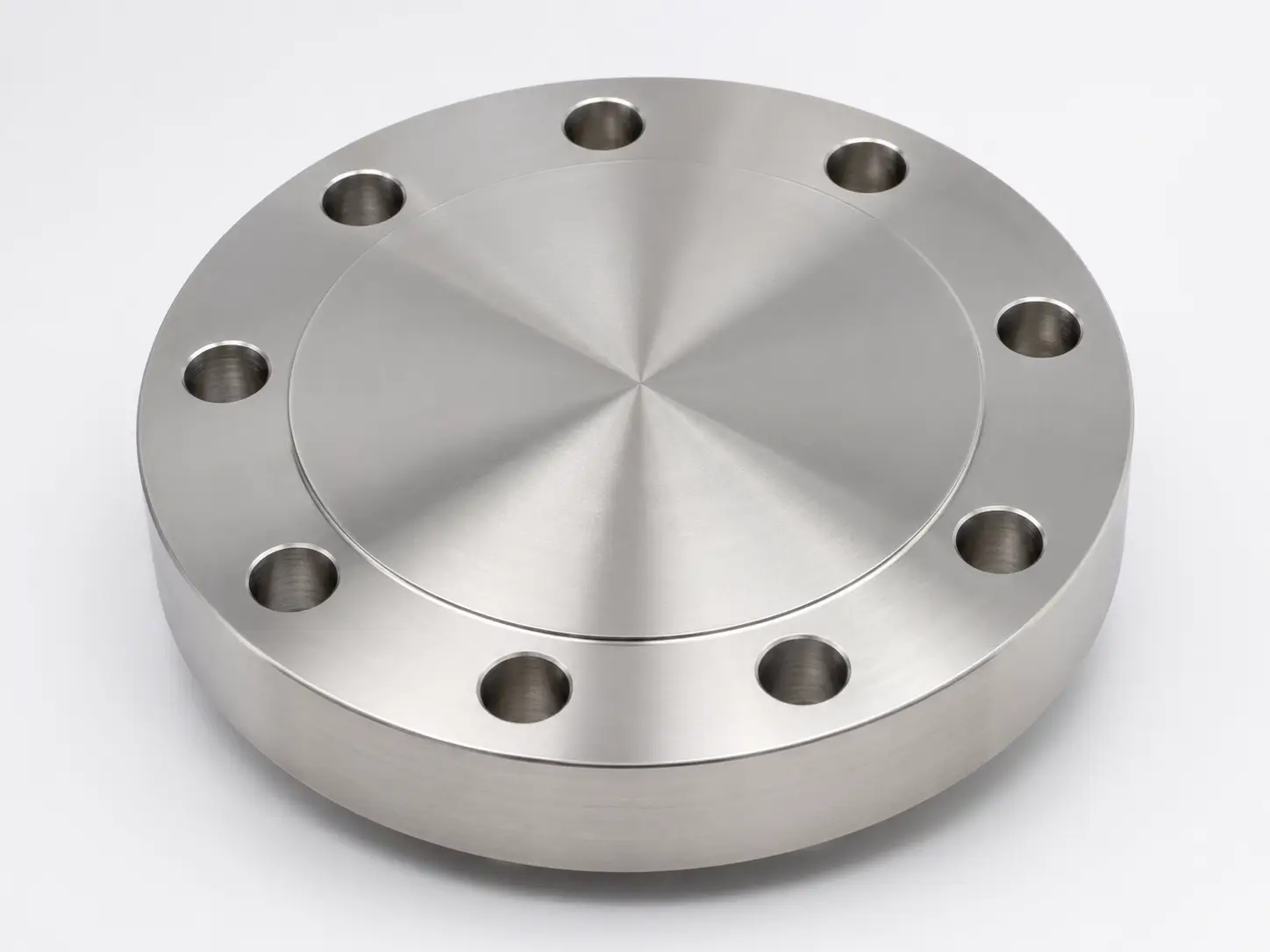
Titanium Blind Flanges
Key Review: Pressure class, flange diameter, thickness, sealing face, bolt hole quantity, gasket requirement and inspection scope.
For closing pipe ends, pressure vessels, inspection ports, maintenance access points and system isolation.
Options: Raised face blind flanges, flat face blind flanges, custom thickness blind flanges and drawing-based blind flange parts.
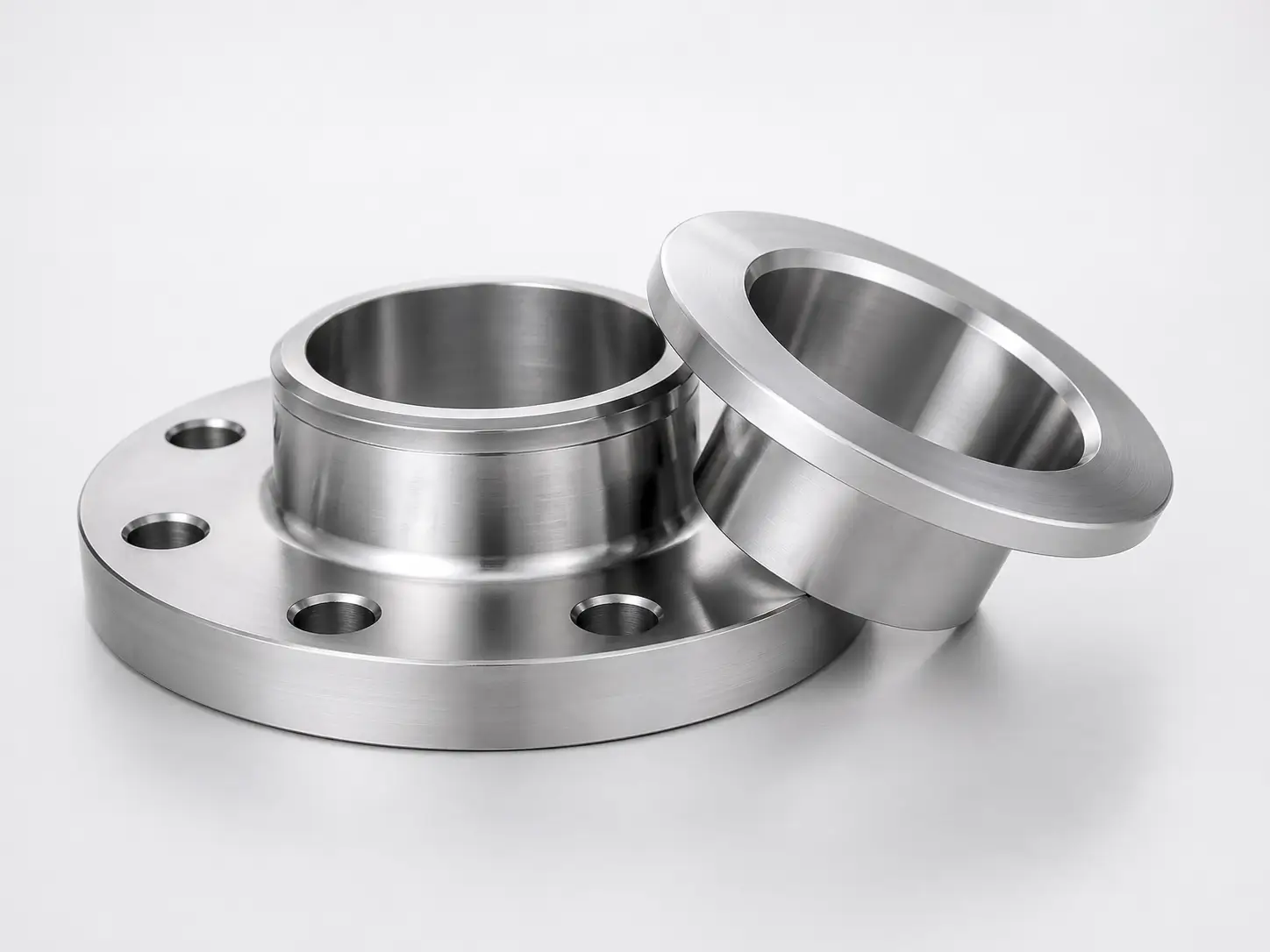
Titanium Lap Joint Flanges
Key Review: Stub-end size, flange rotation, bolt circle, gasket type, alignment requirement, grade and installation condition.
For piping systems requiring easy alignment, frequent dismantling or stub-end connections.
Options: Lap joint flanges, loose flanges, stub-end matching support and custom bolt circle requirements.
Specialty & Custom Solutions
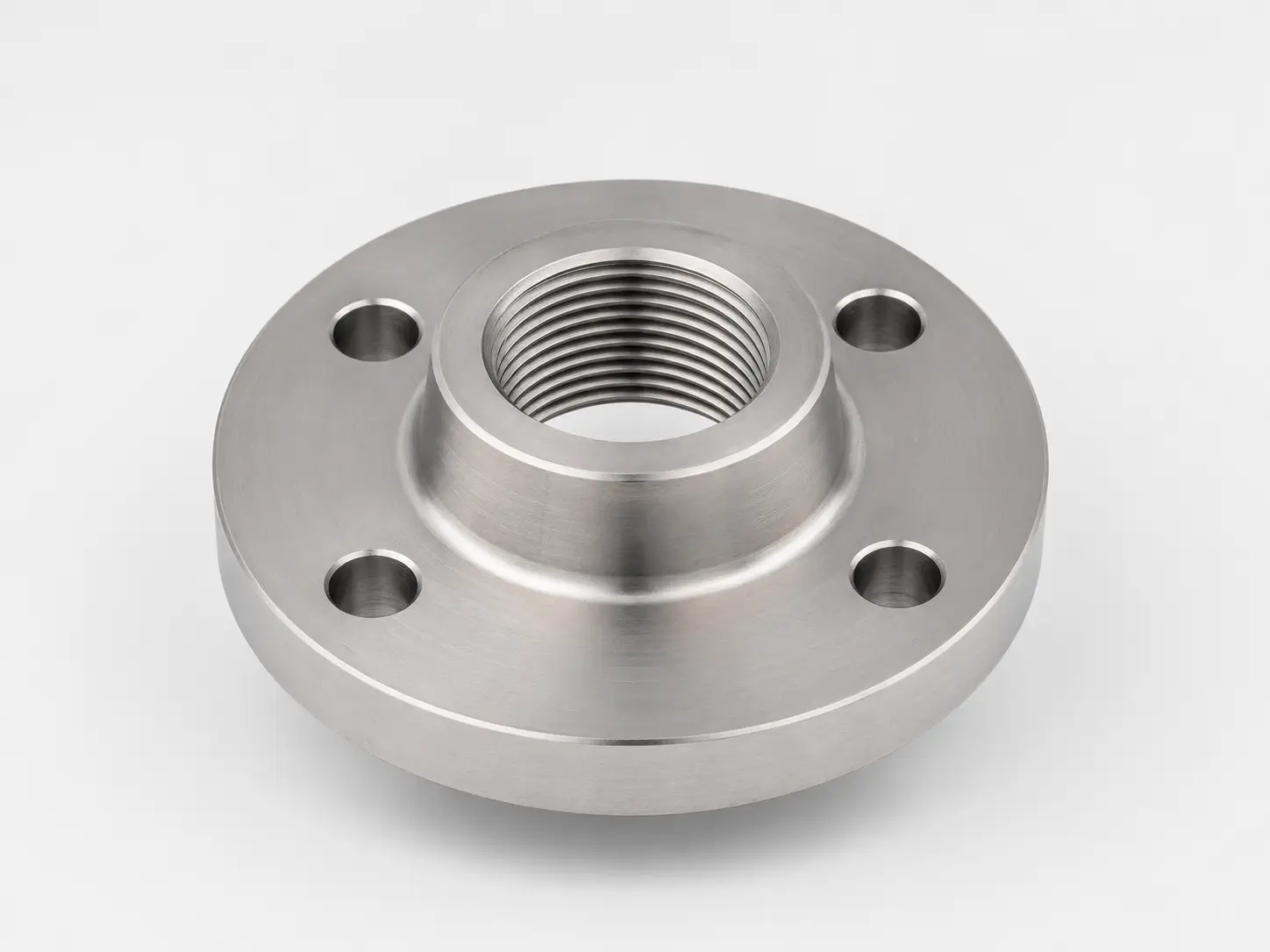
Titanium Threaded Flanges
Key Review: Thread standard, thread depth, pipe size, pressure condition, sealing method, grade and installation environment.
For compact piping systems, small-diameter connections and applications where welding is not preferred.
Options: Threaded titanium flanges, custom thread types, small-size flanges and drawing-based threaded connections.
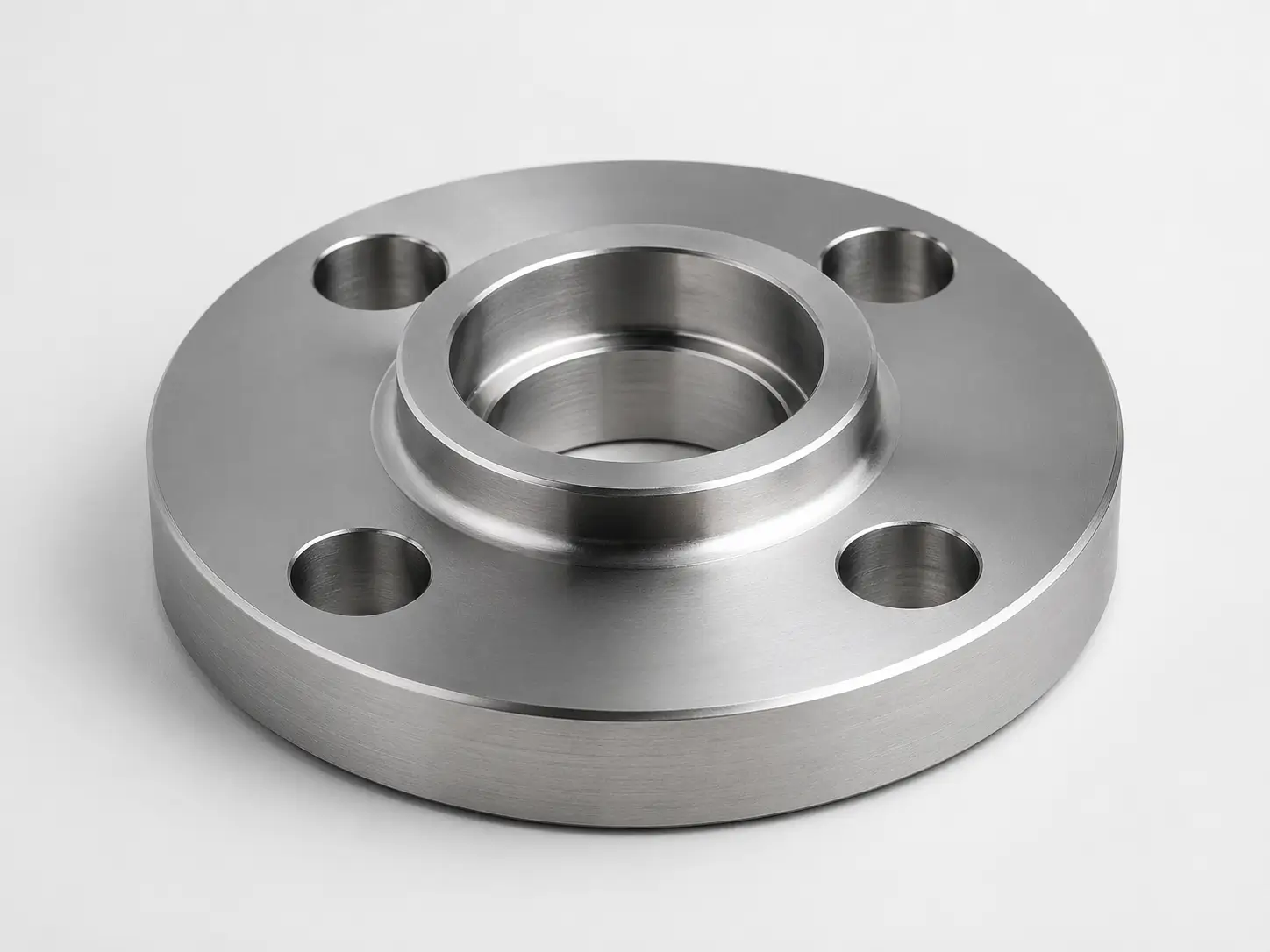
Titanium Socket Weld Flanges
Key Review: Socket depth, bore size, pressure class, weld requirement, dimensional tolerance, facing finish and inspection needs.
For small-diameter high-integrity piping connections, compact systems and project-specific installation needs.
Options: Socket weld flanges, custom bore, raised face, flat face and small-diameter flange machining support.
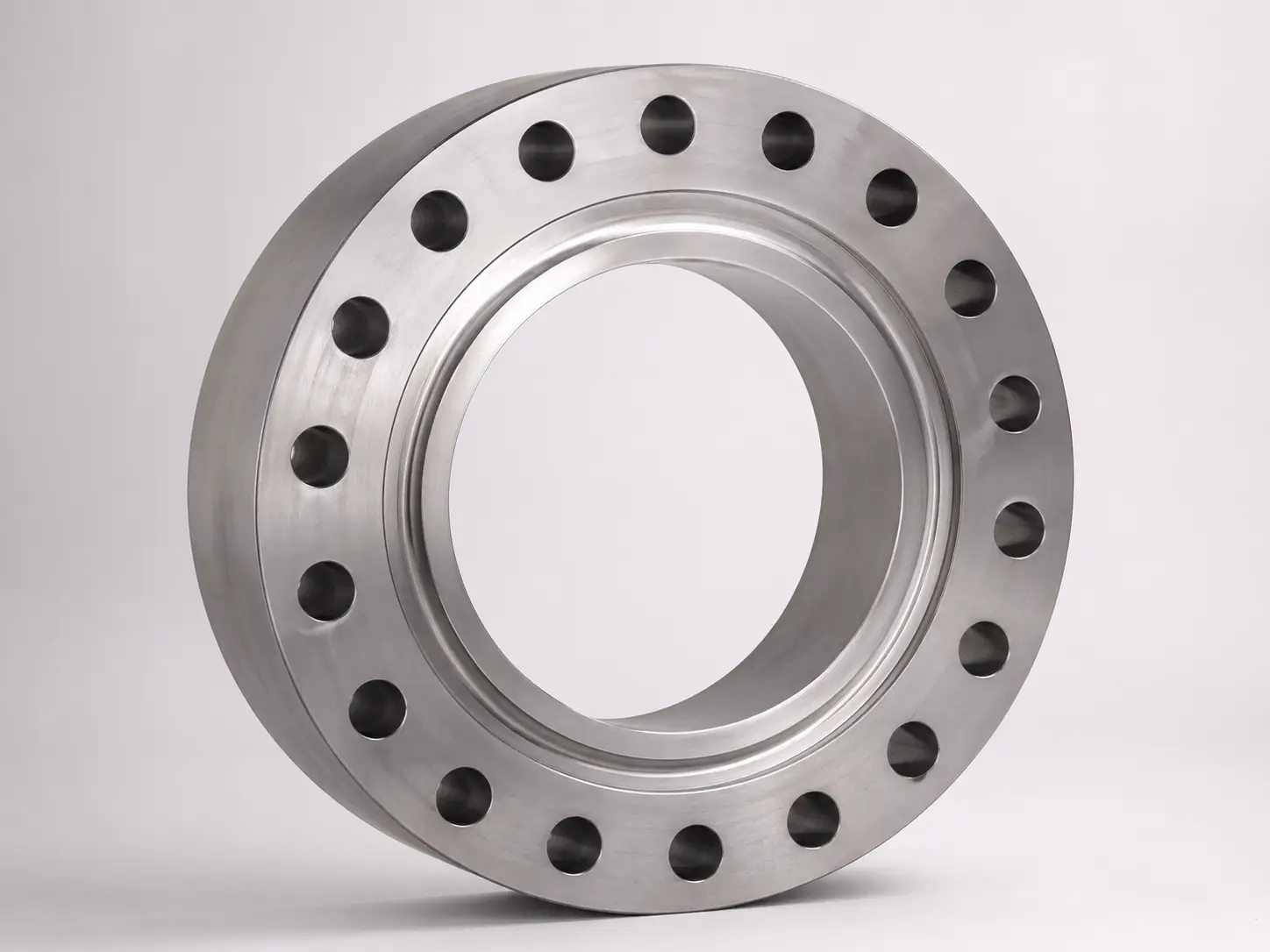
Titanium Flange Rings
Key Review: OD, ID, thickness, bolt circle, hole size, flatness, surface condition and drawing tolerance.
For equipment connections, lining systems, loose flange assemblies and custom industrial piping projects.
Options: Titanium flange rings, backing rings, loose rings, spacer rings and custom machined ring components.
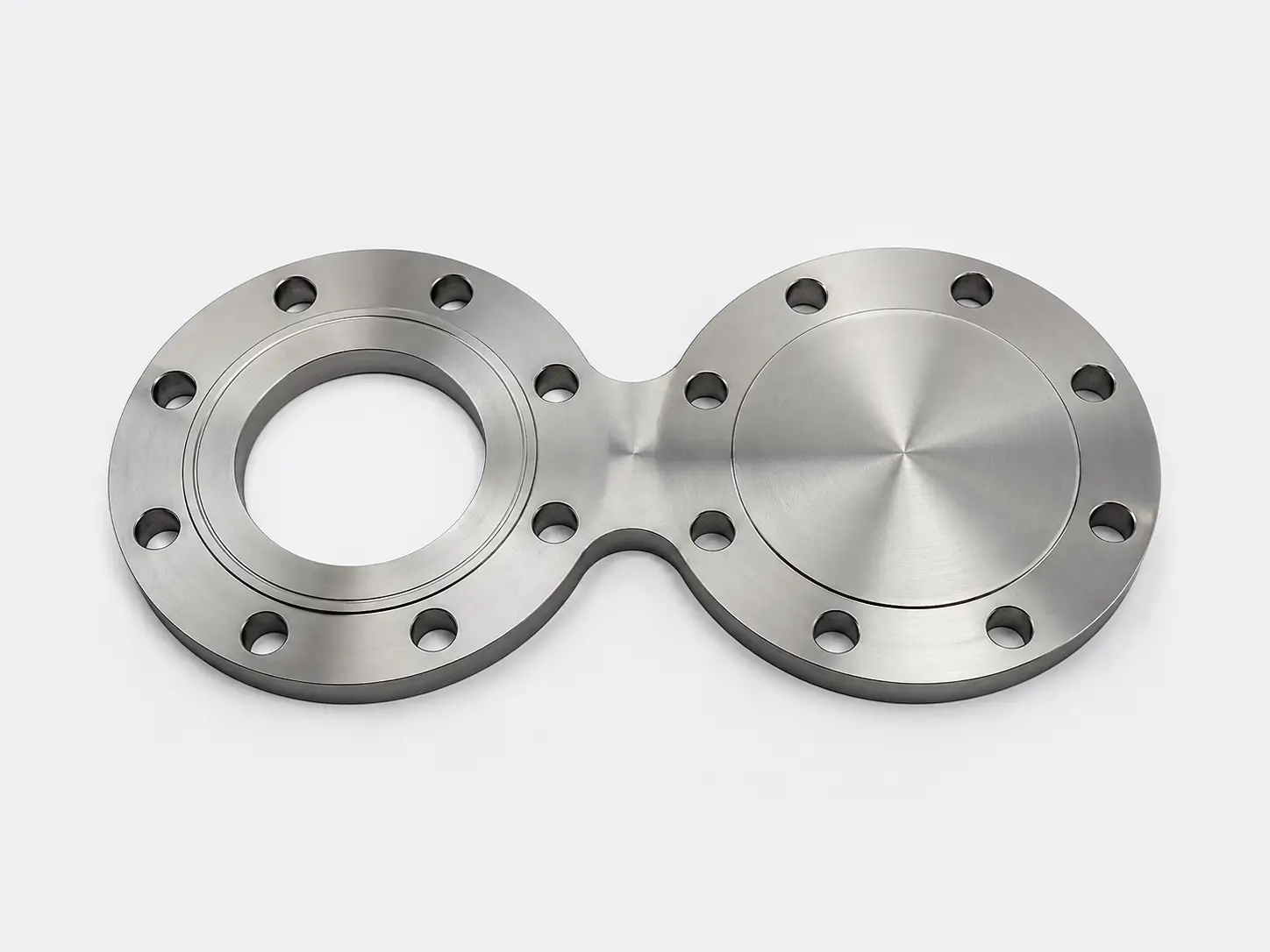
Custom Titanium Flanges
Key Review: Drawing, grade, standard, pressure class, bolt circle, bore size, facing finish, quantity, inspection documents.
For large diameter, non-standard bolt circles, special facing, custom thickness or drawing-based flange requirements.
Options: Large titanium flanges, non-standard flanges, CNC machined flanges, special facing flanges and custom flange components.
Product Selection Note
Final titanium flange selection should be reviewed according to flange type, titanium grade, pressure class, applicable standard, pipe size, bore size, bolt circle, facing type, gasket compatibility, corrosion medium, inspection level and documentation requirements.
Need help selecting the right titanium flange type?
How to Choose the Right Titanium Flange
Titanium flange selection should be reviewed according to flange type, standard, pressure class, size, bore, bolt circle, titanium grade, facing requirement, gasket compatibility, inspection scope and documentation needs.
Confirm Flange Type
Review weld neck, slip-on, blind, lap joint, threaded, socket weld or custom flanges according to piping and equipment connection needs.
Define Standard & Pressure Class
Confirm ASME, DIN, EN or other project standards together with class or PN rating according to system pressure and design conditions.
Confirm Size, Bore & Bolt Circle
Check nominal size, bore, wall match, bolt circle, hole quantity and flange thickness to ensure correct installation fit.
Match Titanium Grade to Medium
Review Grade 2, Grade 7, Grade 12, Grade 5 or other titanium grades according to seawater, chemical media, temperature and service environment.
Select Facing & Gasket Requirement
Review raised face, flat face or other facing requirements together with gasket compatibility, sealing surface finish and leak-prevention needs.
Prepare Inspection & Documentation
Confirm dimensional inspection, PMI, MTC, heat number traceability, packing and export documents according to project requirements.
Need help reviewing flange specification details?
Selection Note: Final titanium flange selection should be confirmed according to flange type, pressure class, bore, bolt circle, facing finish, gasket compatibility, titanium grade, PMI, MTC, dimensional inspection and delivery requirements.
Common Titanium Grades for Flanges
Titanium flange grade selection should be reviewed according to corrosion medium, operating temperature, pressure class, flange standard, gasket type, welding requirement and documentation needs.
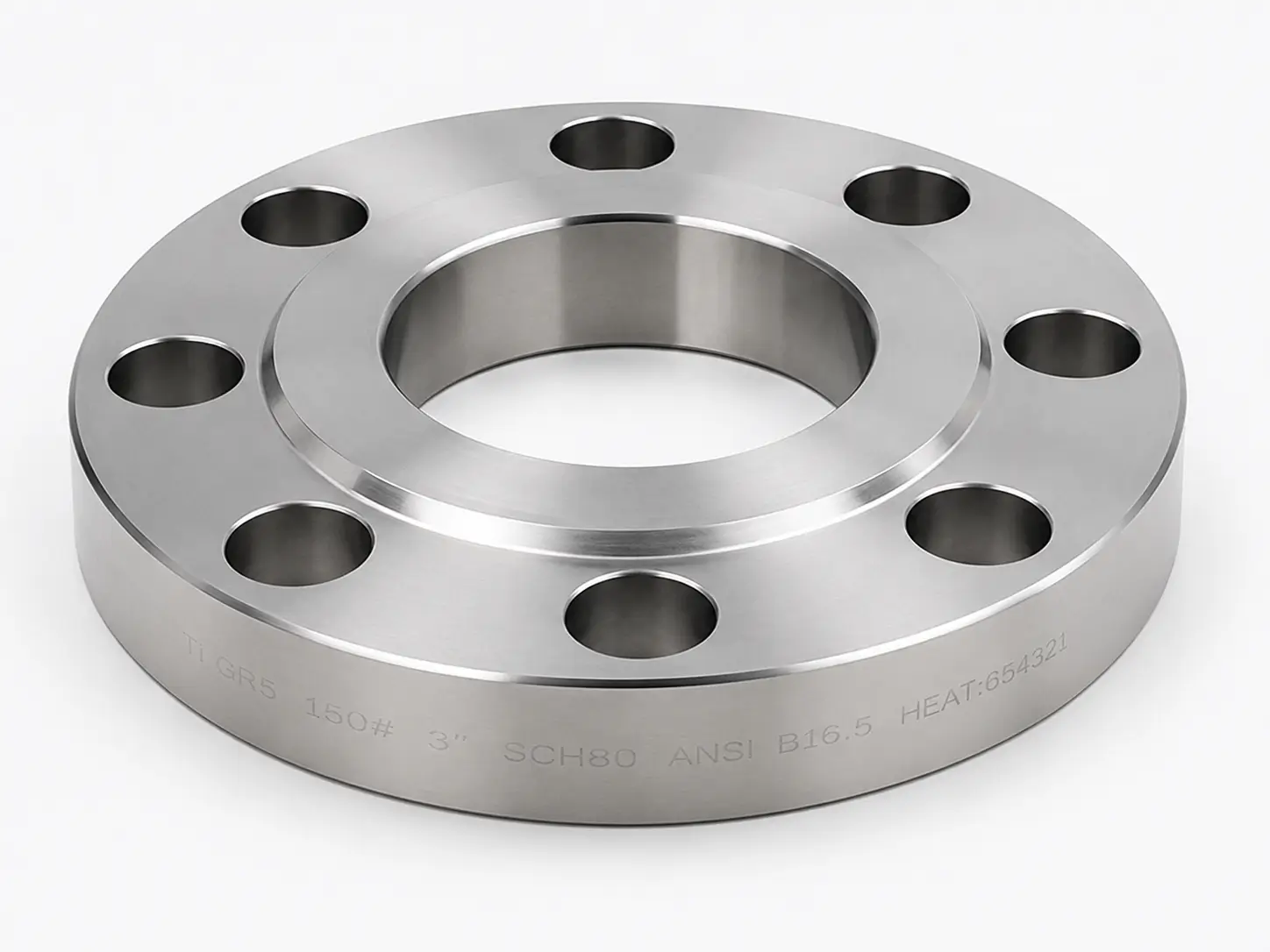
Commercially Pure Titanium
General corrosion resistance and good mechanical properties. Widely used in chemical processing, seawater systems and industrial piping.
- Corrosion Resistance: Excellent general resistance
- Strength: Good for standard applications
- Weldability: Excellent
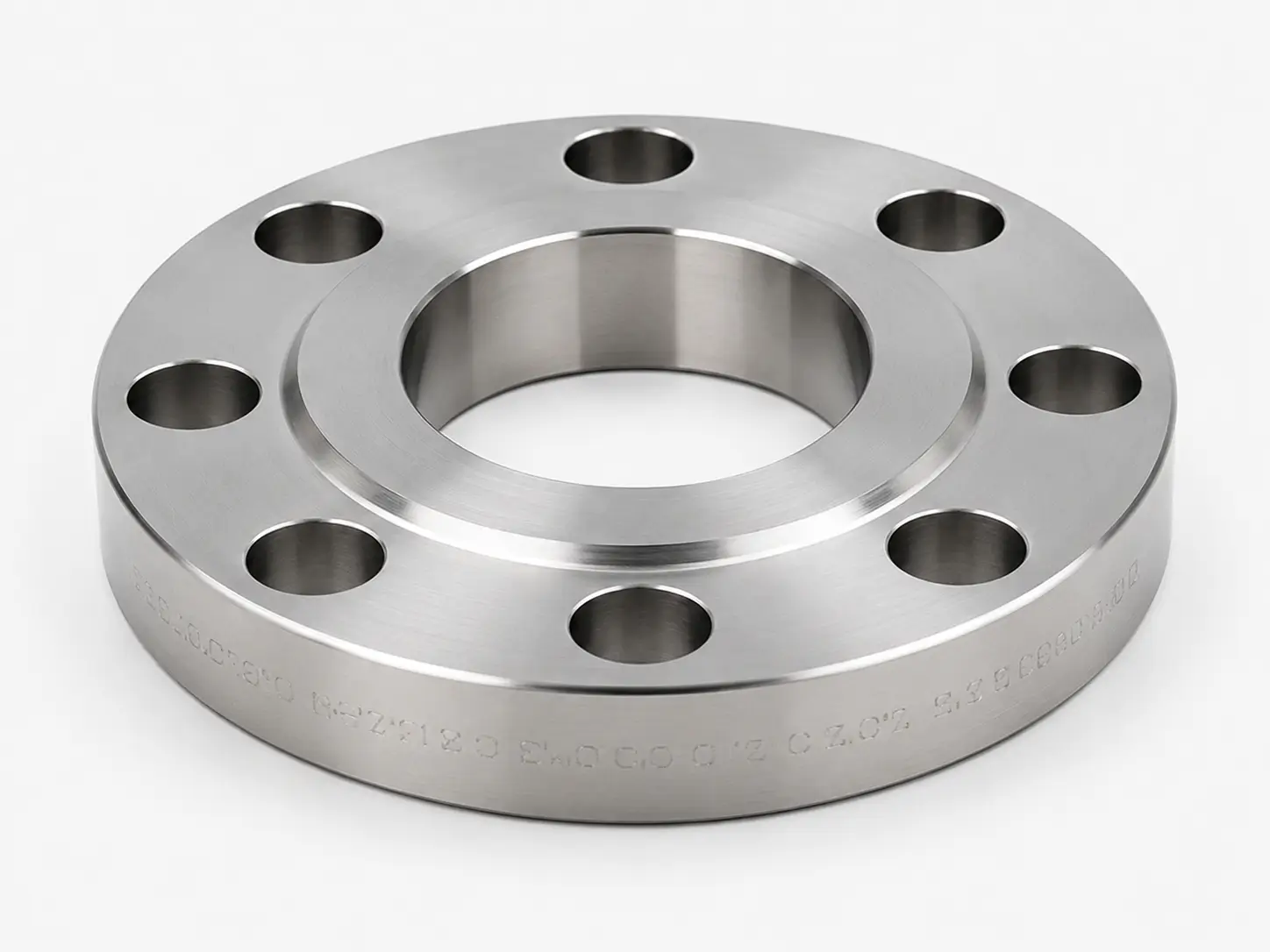
Ti-6Al-4V Titanium Alloy
High strength-to-weight ratio and good corrosion resistance. Suitable for high-strength structures and demanding mechanical connections.
- Corrosion Resistance: Good
- Strength: High
- Weldability: Good when properly reviewed
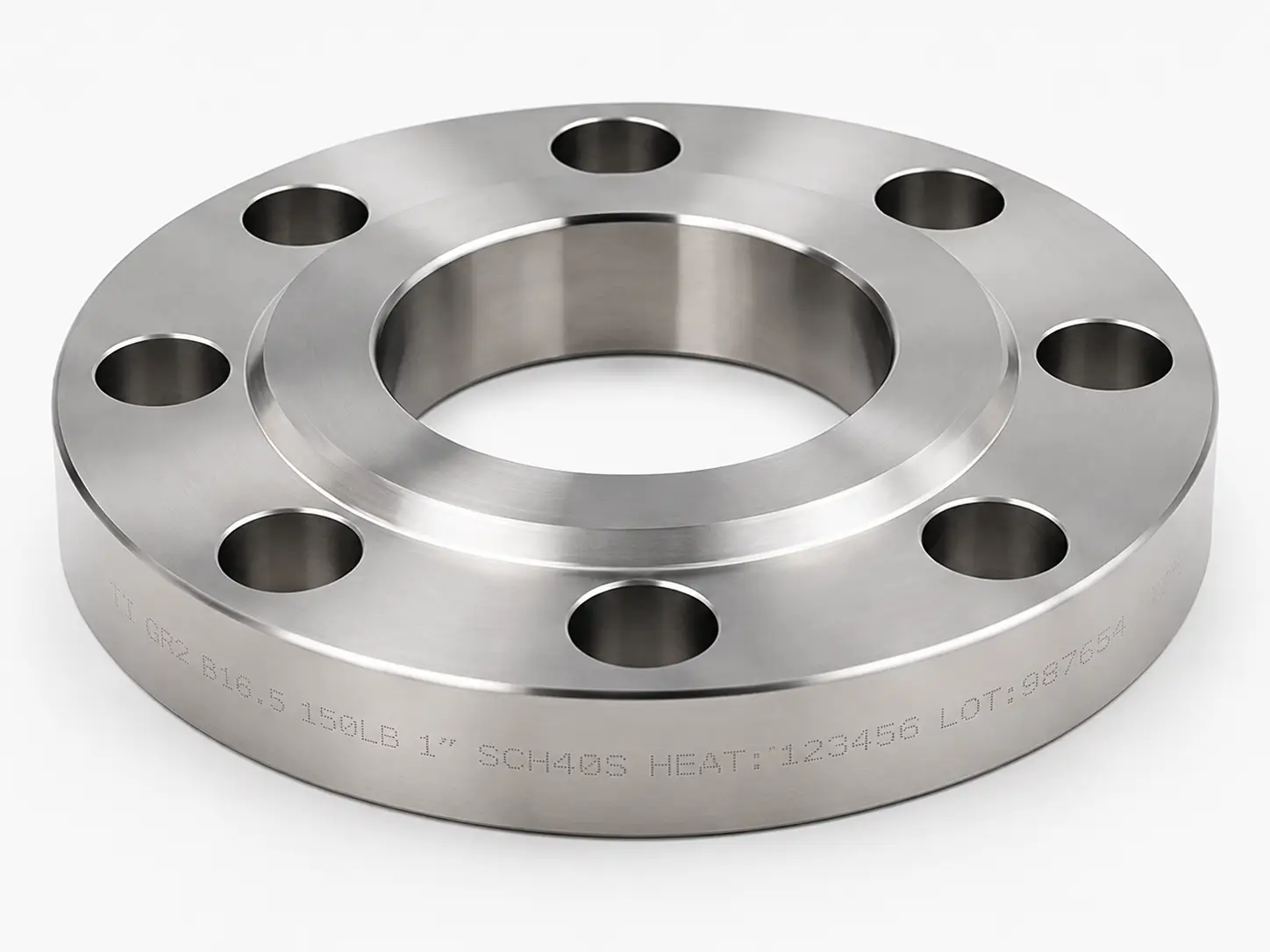
Palladium-Enhanced CP
Enhanced corrosion resistance compared with Grade 2. Often reviewed for harsh chemical environments, acidic media and chloride-related conditions.
- Corrosion Resistance: Very good in severe chemical environments
- Strength: Similar to commercially pure grades
- Weldability: Excellent
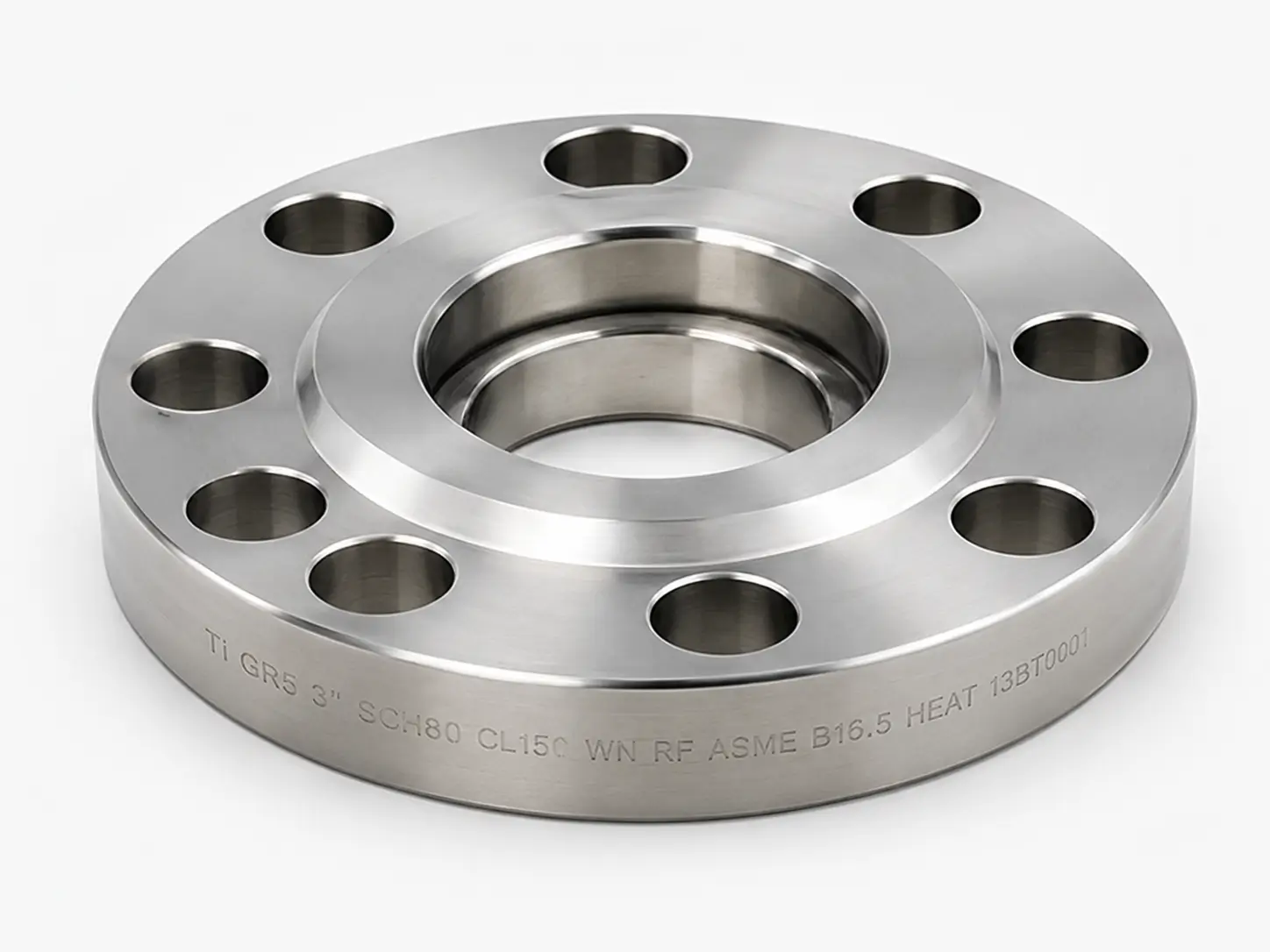
Ti-Mo-Ni Titanium Alloy
Industrial corrosion-resistant titanium alloy for chemical equipment, heat exchangers, pump systems and valve assemblies.
- Corrosion Resistance: Excellent in many industrial media
- Strength: Good
- Weldability: Excellent when properly reviewed
Selection Note: Final grade selection should be confirmed according to corrosion medium, temperature, pressure class, flange standard, gasket type, welding requirement, inspection level and project documentation requirements.
Need help selecting the right grade for your project? Our engineering team is ready to support.
Custom Titanium Flange Fabrication for Standards, Drawings and Project Requirements
Beyond standard titanium flange supply, Hele Titanium supports custom titanium flange fabrication for pressure piping, chemical equipment, marine systems, heat exchangers, pump and valve assemblies and project-based industrial applications. We can review flange type, titanium grade, applicable standard, pressure class, bore size, bolt circle, facing requirement, machining tolerance, inspection scope and export packing according to drawings, specifications and project requirements.

Final fabrication capability should be reviewed according to titanium grade, flange type, size, pressure class, applicable standard, drawing tolerance, machining scope, inspection requirement, quantity and delivery schedule. Forged titanium flange requirements can be reviewed according to grade, size, pressure class, quantity and applicable standard.
Forging & Material Route Review
Forged titanium flange requirements, machined flange routes or drawing-based material preparation can be reviewed according to flange standard, pressure class, size, grade and order quantity.
CNC Turning & Bore Machining
CNC turning, bore machining, OD / ID control, flange thickness control and drawing-based dimensional machining can be supported according to project requirements.
CNC Facing & Sealing Surface Machining
Raised face, flat face, custom sealing face, gasket contact surface and facing finish requirements can be reviewed according to flange type and sealing requirements.
Bolt Hole Drilling & Bolt Circle Control
Bolt hole drilling, bolt circle diameter, hole quantity, hole size, hole position and alignment can be machined and inspected according to applicable standards or drawings.
Large Diameter & Non-Standard Flange Review
Large titanium flanges, non-standard bolt circles, custom thickness, special facing and project-specific flange geometry can be reviewed based on drawings or technical specifications.
Inspection, Marking & Export Packing
Drawing-based dimensional inspection, facing review, bolt-hole inspection, product marking, labels, protective packing, wooden cases and export documentation can be arranged according to order requirements.
Designed for chemical processing piping, seawater systems, desalination equipment, heat exchangers, pump and valve assemblies, pressure piping, electrochemical equipment, hydrogen systems and custom industrial titanium flange projects.
Quality Control for Titanium Flanges
Titanium flange quality depends on material grade, manufacturing route, flange standard, pressure class, machining accuracy, bolt-hole position, facing finish, traceability and shipment preparation. Hele Titanium supports flange-specific inspection procedures to help buyers reduce fit-up risk, sealing issues and documentation uncertainty.
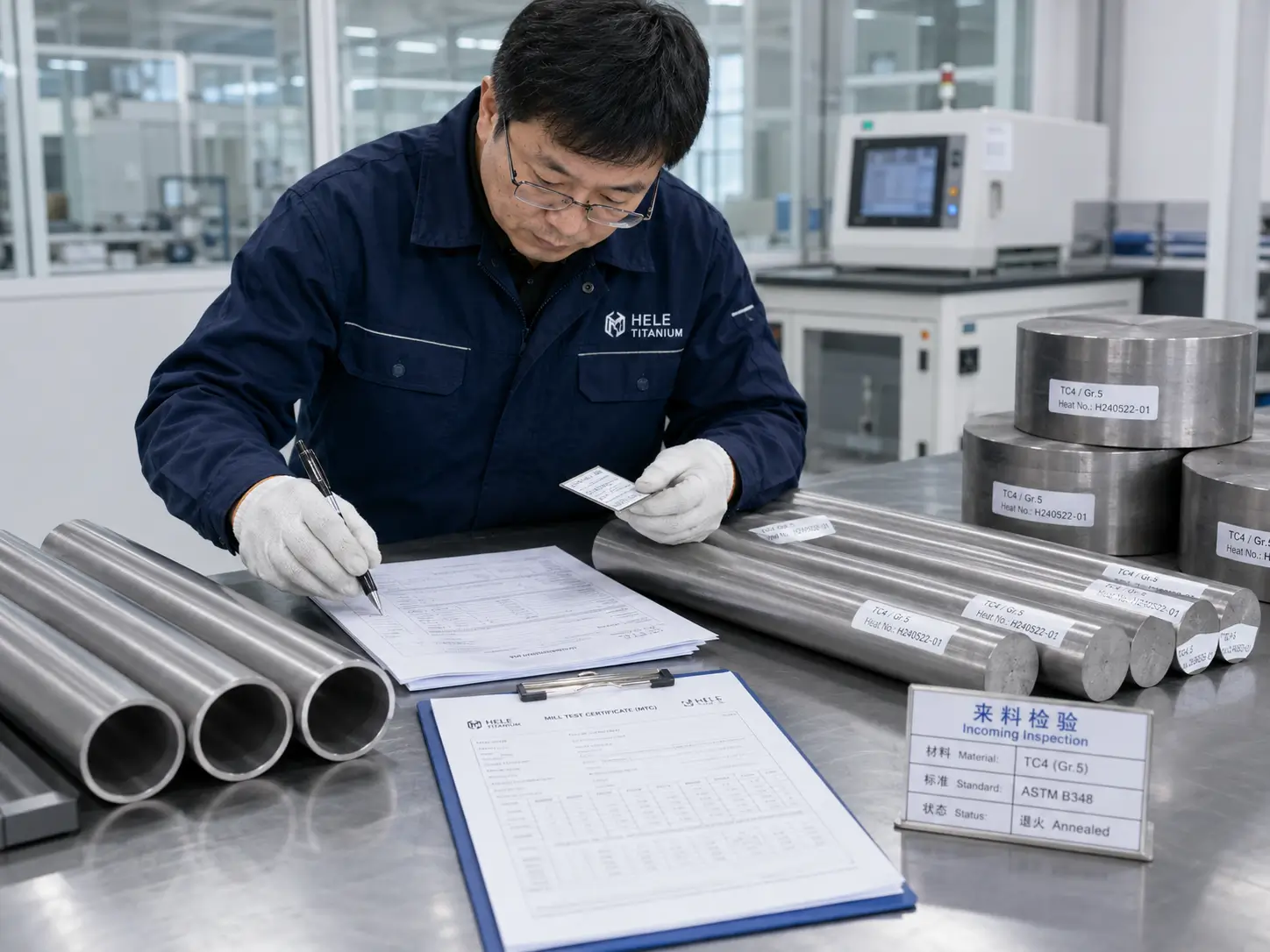
Raw Material & Grade Verification
Titanium grade, chemical composition, heat number and incoming material records can be reviewed before flange production according to order requirements.
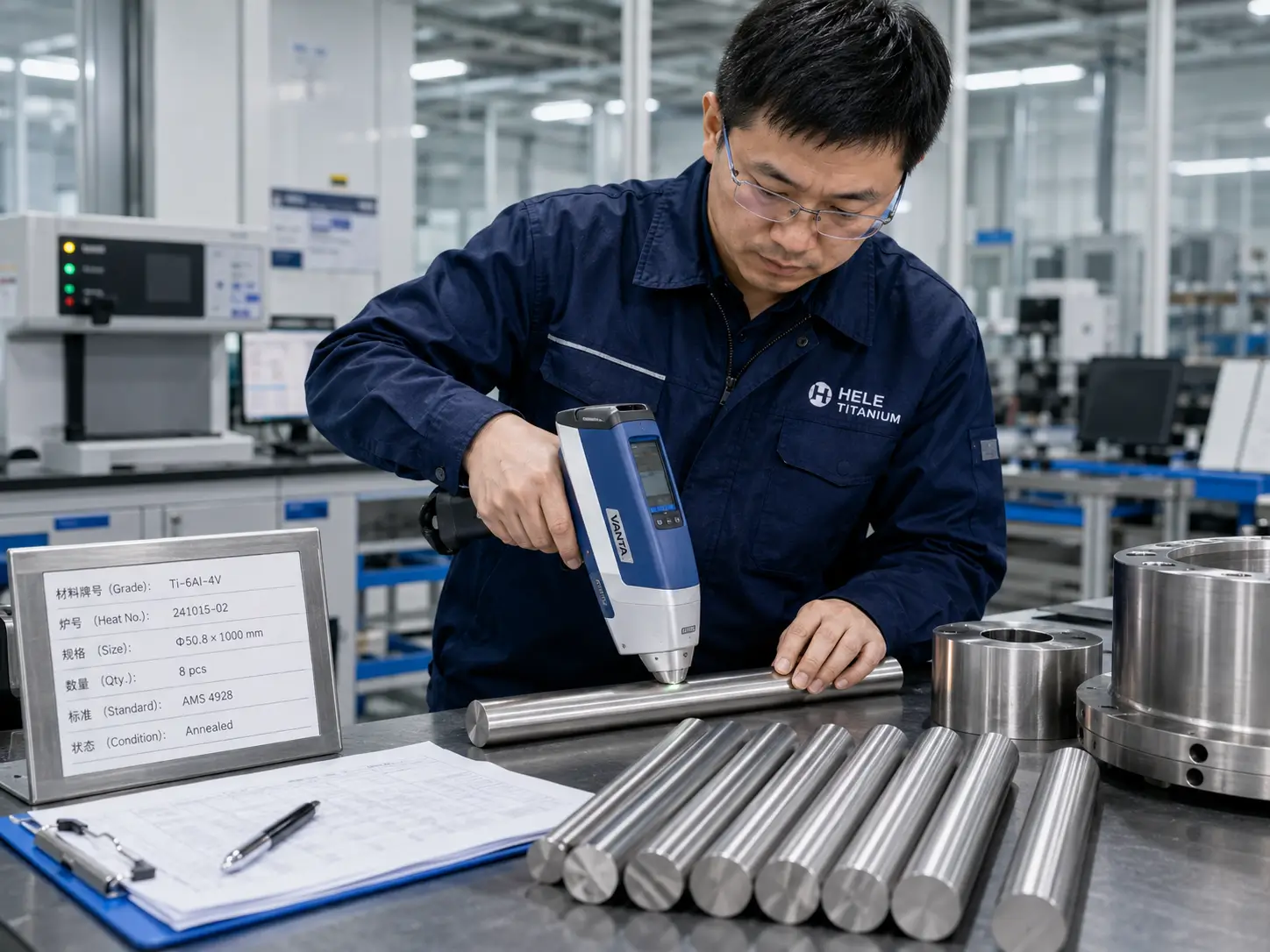
Forging / Material Route Review
Forged flange or machined flange requirements can be reviewed according to flange standard, pressure class, size, grade, quantity and project specification.
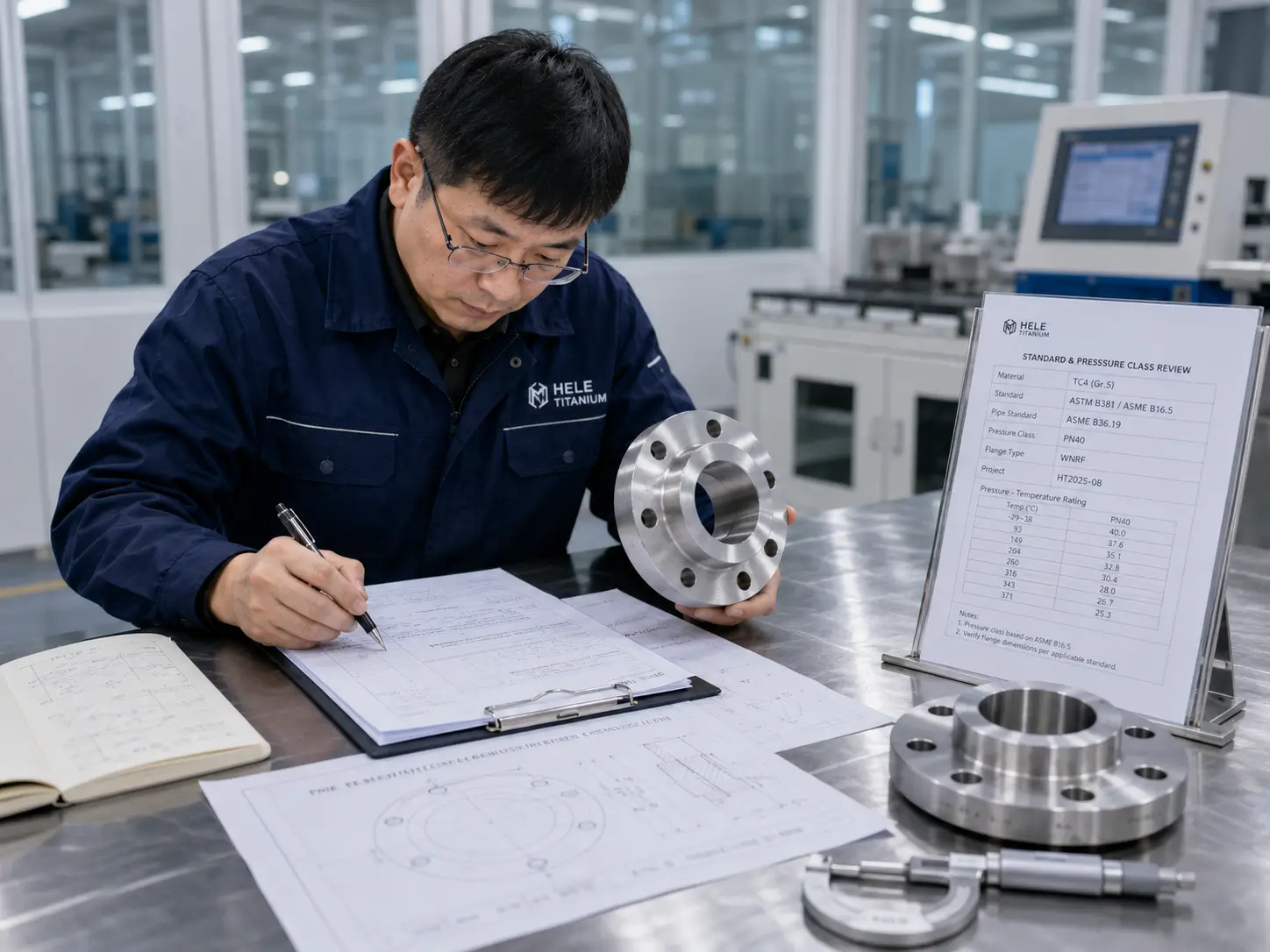
Standard & Pressure Class Review
Applicable standards, pressure class, PN rating, flange type and project specification can be checked before machining to support correct flange selection and production control.
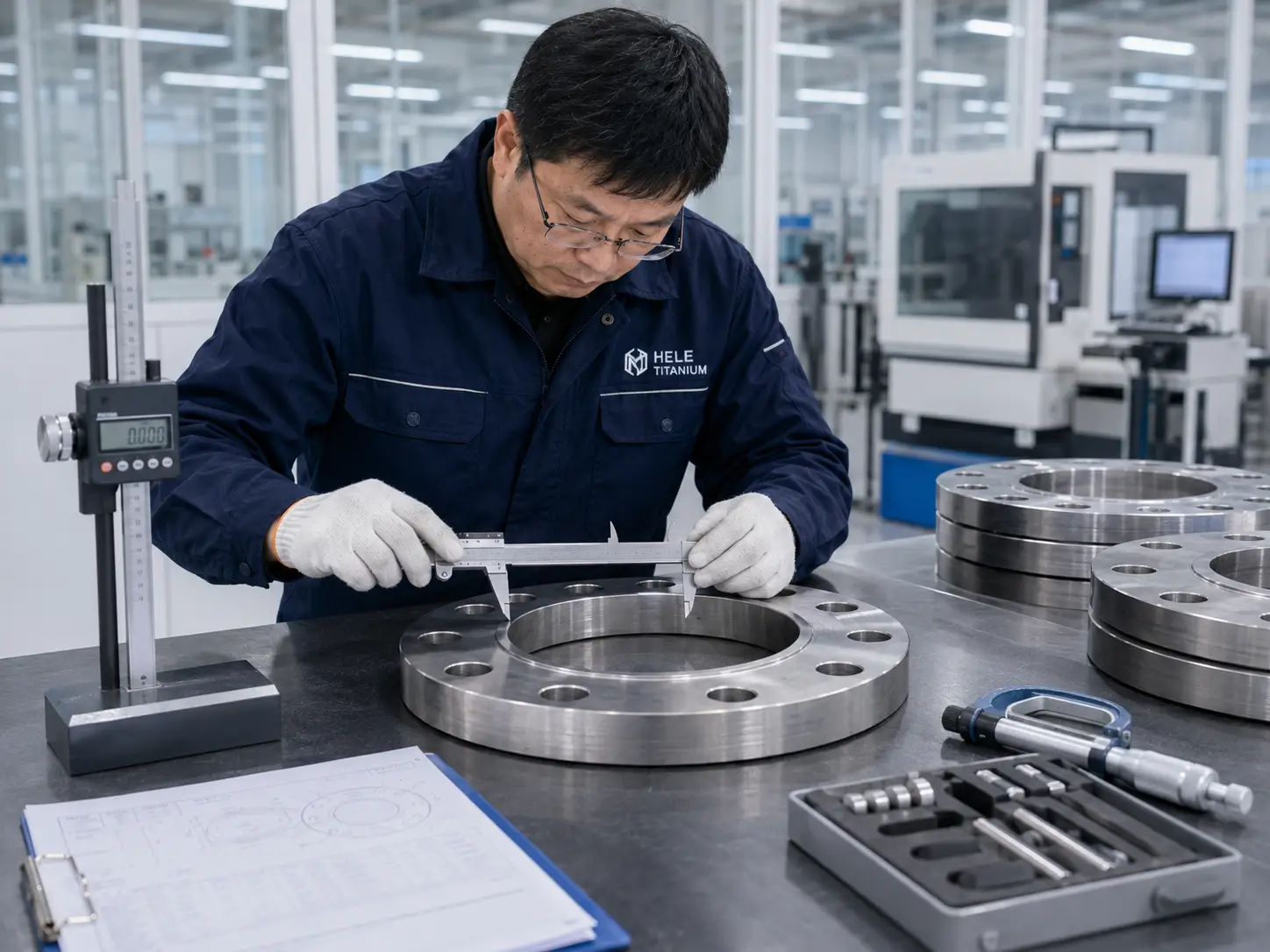
CNC Dimensional Inspection
OD, ID, thickness, bore size, flange height, raised face height and drawing-based dimensions can be inspected according to agreed standards or customer drawings.
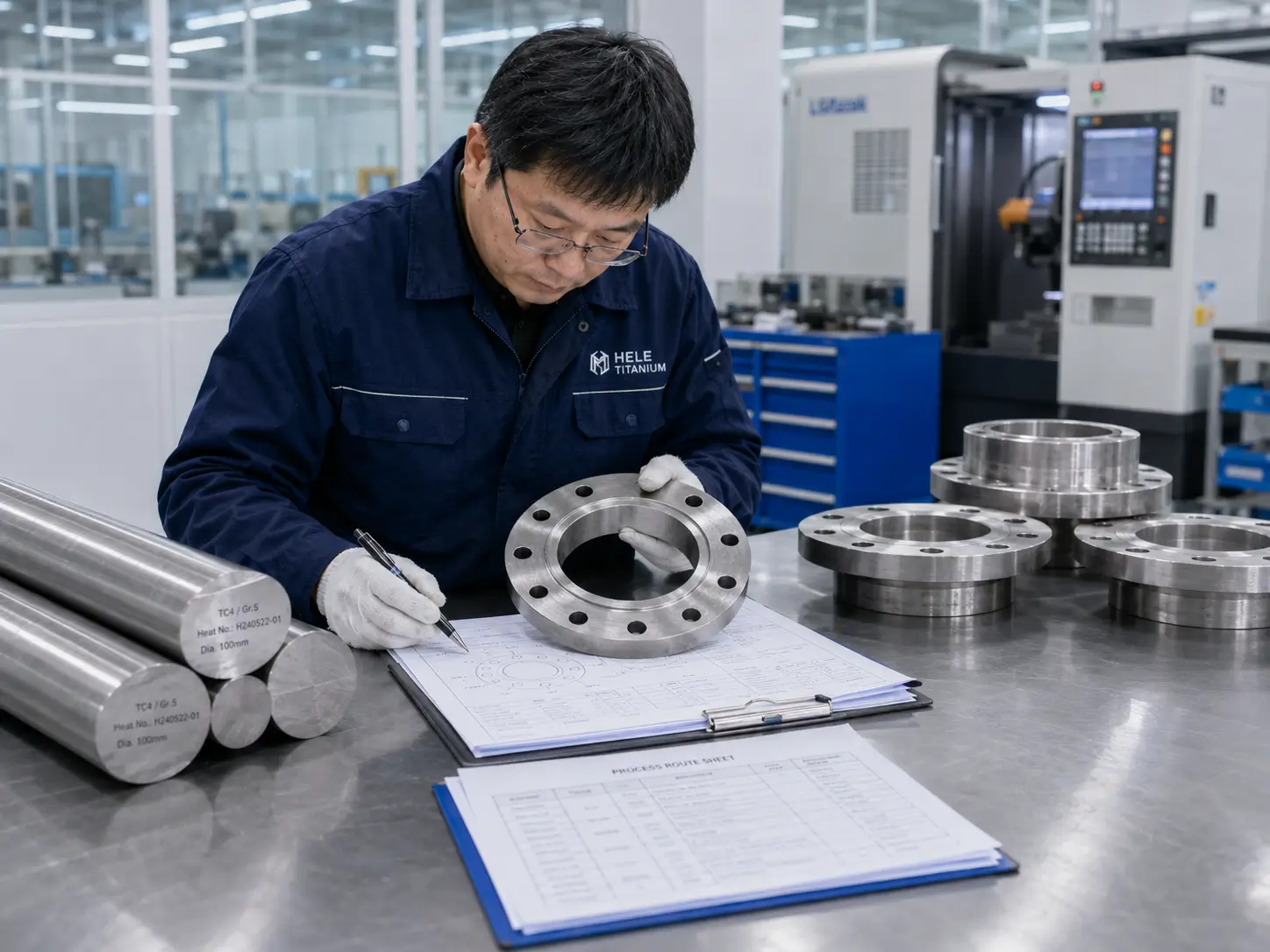
Bolt Hole & Bolt Circle Check
Bolt circle diameter, bolt hole quantity, bolt hole size, hole position and alignment can be checked to support proper fit-up with piping, valves, pumps and equipment connections.
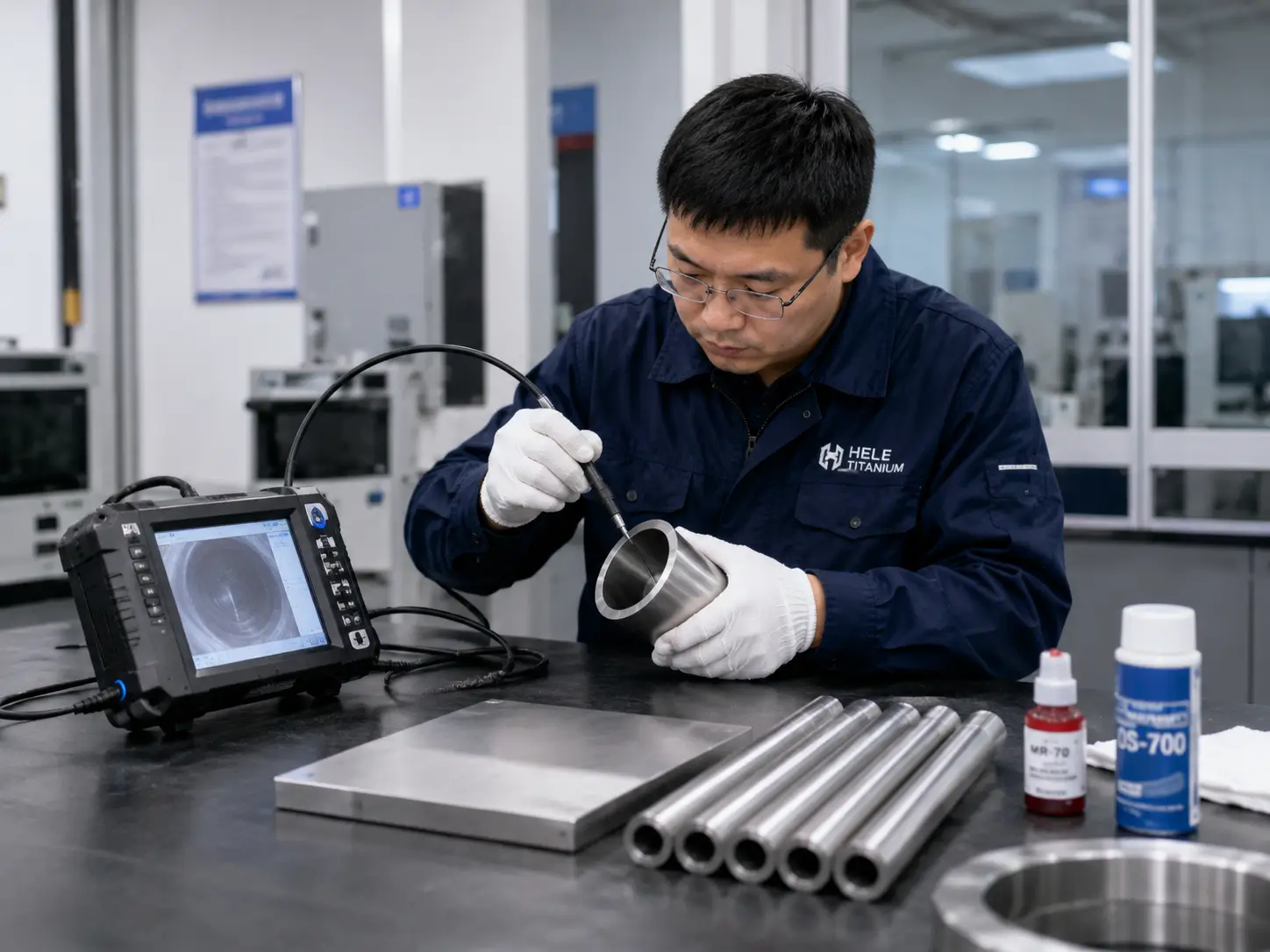
Facing Finish Inspection
Raised face, flat face, sealing face finish, gasket contact surface and machining marks can be reviewed according to flange type, gasket requirement and application conditions.

PMI / MTC / Traceability Review
PMI, Material Certificate / MTC, heat number traceability, chemical composition records and inspection records can be supported when required by order scope.
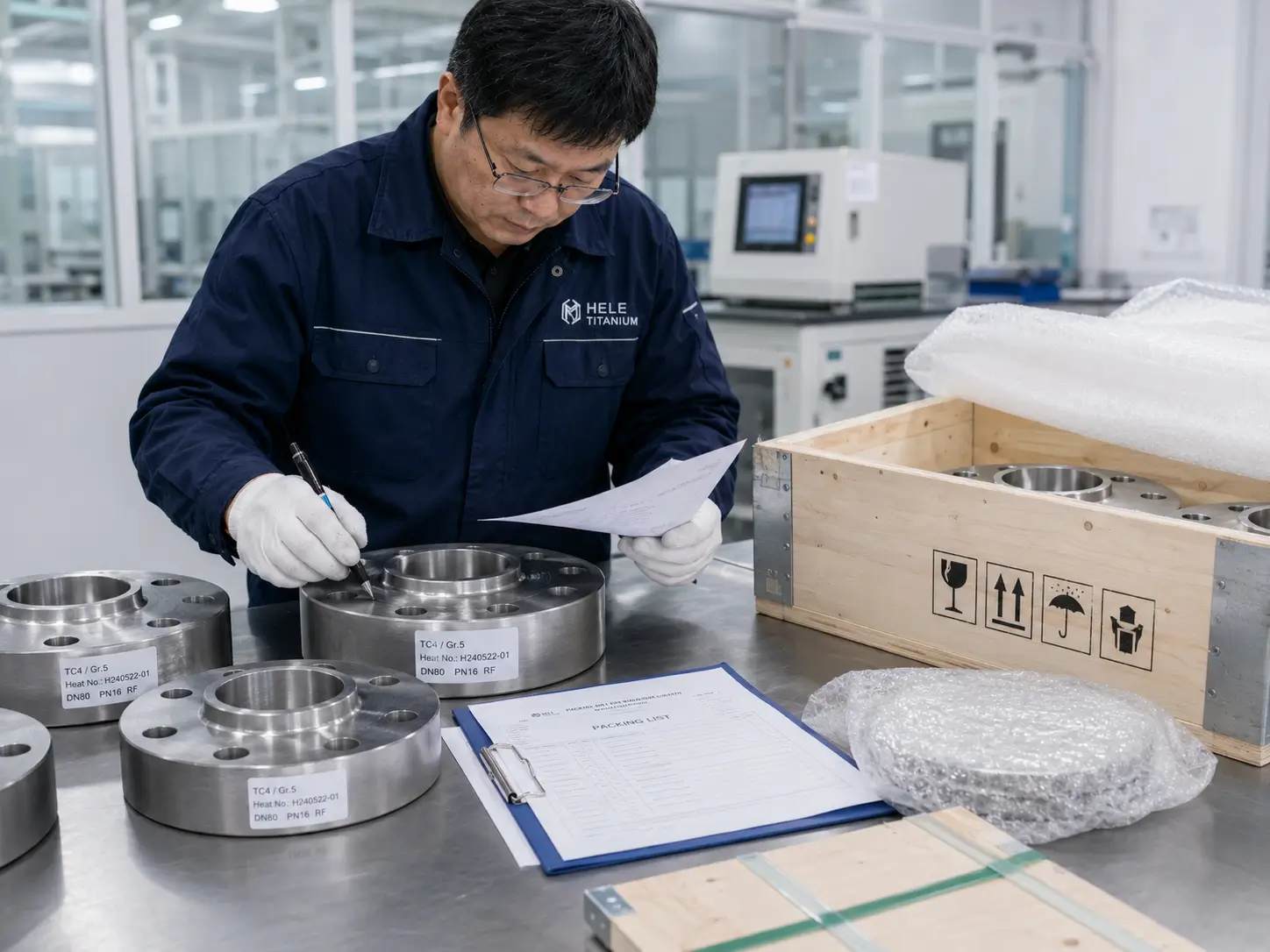
Final Marking, Packing & Shipment Review
Product marking, flange labels, surface protection, packing list, wooden case packing and export documents can be checked before shipment according to destination and order requirements.
Available Shipment Documents & Support
Titanium flange shipments can be supported with inspection documents and traceability records according to project requirements.
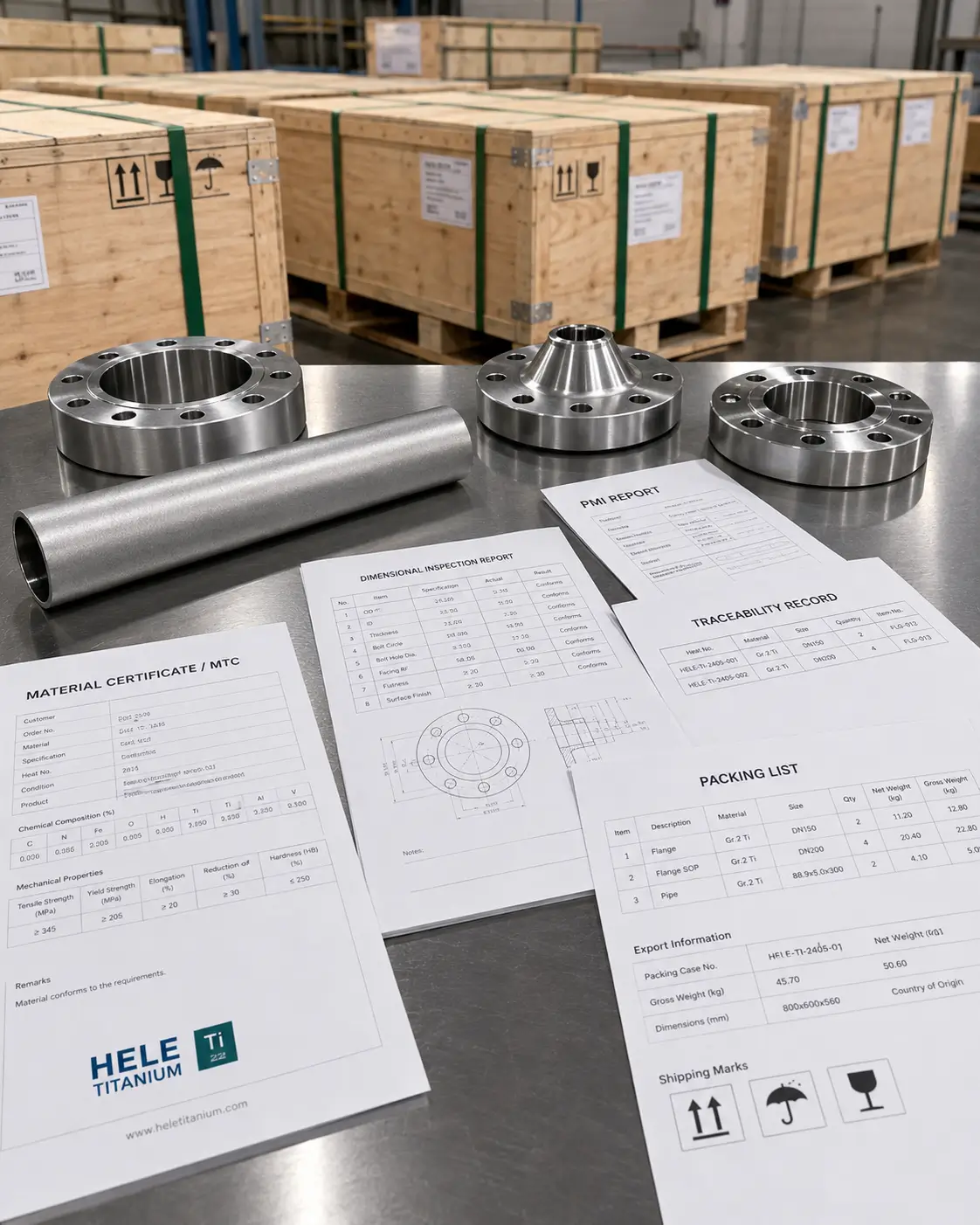
Material Certificate / MTC support
Heat number traceability
PMI report when required
Standard and pressure class review records when required
Dimensional inspection records
Bolt circle and bolt hole inspection records
Facing finish inspection notes when required
Packing list and export documents
Final document scope should be confirmed according to titanium grade, product form, order standard, inspection level, destination country and customer requirements.
Reliable Documents. Clear Packing. Smooth Delivery.
Hele Titanium can support available shipment documents, traceability records and export packing according to order requirements.
Titanium Flange Applications for Industrial Piping and Equipment Systems
Titanium flanges are selected for piping and equipment systems where corrosion resistance, sealing reliability, pressure class, flange geometry, material traceability and export documentation are important. Hele Titanium supports titanium weld neck flanges, slip-on flanges, blind flanges, lap joint flanges, flange rings and custom titanium flanges for chemical, marine, heat exchanger, electrochemical and hydrogen-related projects.

Chemical Processing Piping
CORROSION-RESISTANT PIPING CONNECTIONS- Application: Titanium flanges can be reviewed for chemical processing piping, reactors, tanks, pressure vessels, flange connections and corrosion-resistant industrial systems where chemical compatibility and documentation are critical.
- Recommended Products: Grade 2 / Grade 7 / Grade 12 titanium weld neck flanges, slip-on flanges and blind flanges
- Key Requirements: Chemical medium, pressure class, gasket type, facing finish, corrosion resistance, flange standard and documentation

Marine, Seawater & Desalination Systems
SEAWATER-RESISTANT FLANGE CONNECTIONS- Application: Titanium flanges can support seawater piping, marine equipment, desalination systems, offshore assemblies and corrosion-resistant flange connections exposed to chloride-rich environments.
- Recommended Products: Titanium slip-on flanges, lap joint flanges, blind flanges and custom titanium flanges
- Key Requirements: Seawater corrosion resistance, bolt circle, sealing face, gasket compatibility, surface condition, inspection records and export packing

Heat Exchanger, Pump & Valve Assemblies
SEALING CONNECTIONS FOR INDUSTRIAL EQUIPMENT- Application: Titanium flanges can be used for heat exchanger connections, pump housings, valve bodies, flange rings, blind covers and equipment assemblies requiring accurate sealing surfaces and dimensional fit-up.
- Recommended Products: Titanium flanges, flange rings, blind flanges and custom machined titanium flanges
- Key Requirements: Sealing connection, pressure condition, bore size, facing finish, bolt-hole accuracy, dimensional tolerance and inspection records

Electrochemical & Hydrogen Equipment
CLEAN AND CORROSION-RESISTANT EQUIPMENT CONNECTIONS- Application: Titanium flanges can be reviewed for electrochemical cells, electrolyzer systems, hydrogen equipment, anode assemblies and custom industrial systems requiring corrosion resistance, cleanliness and traceable components.
- Recommended Products: Titanium custom flanges, blind flanges, small-diameter flanges and drawing-based flange parts
- Key Requirements: Corrosion resistance, cleanliness, dimensional tolerance, sealing face condition, traceability, protective packing and export documentation
Application Note
Final titanium flange selection should be reviewed according to titanium grade, flange type, applicable standard, pressure class, corrosion medium, gasket compatibility, facing finish, bolt circle, bore size, inspection level and documentation requirements.
One Partner. Complete Titanium Supply Support.
Hele Titanium is your reliable titanium fasteners supplier and partner for materials, components and project solutions.
Why Partner with Hele Titanium for Your Flange Requirements?
Do not compromise your pressure boundary with uncertain raw material, incomplete traceability, or poorly machined sealing faces. As a direct manufacturer with integrated forging and CNC capability, we control the process from billet to final flange.
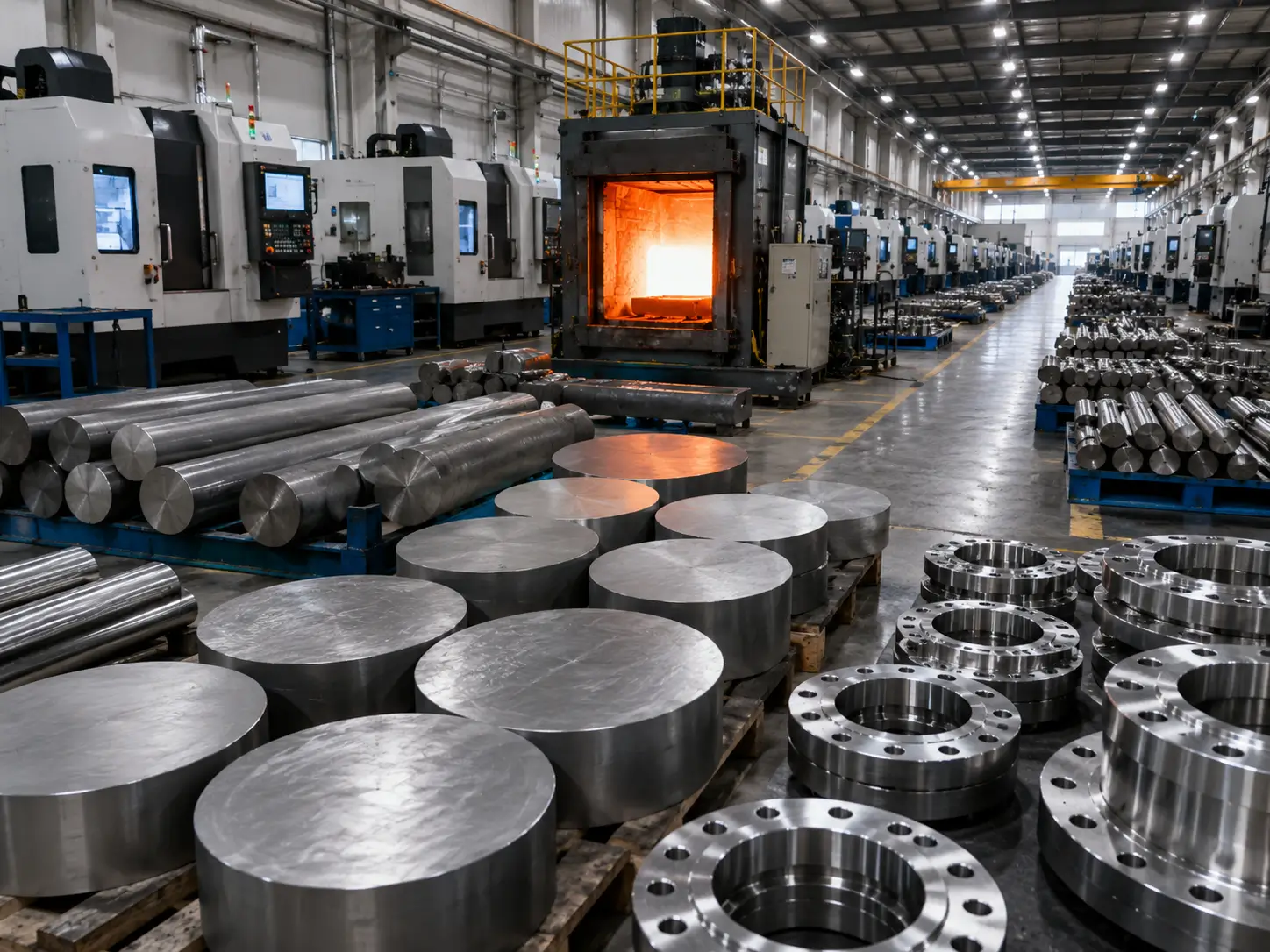
100% In-House Forging
Forged directly from solid titanium billets in our own facility, eliminating porosity risks and guaranteeing a dense, high-integrity grain structure for critical pressure boundaries.
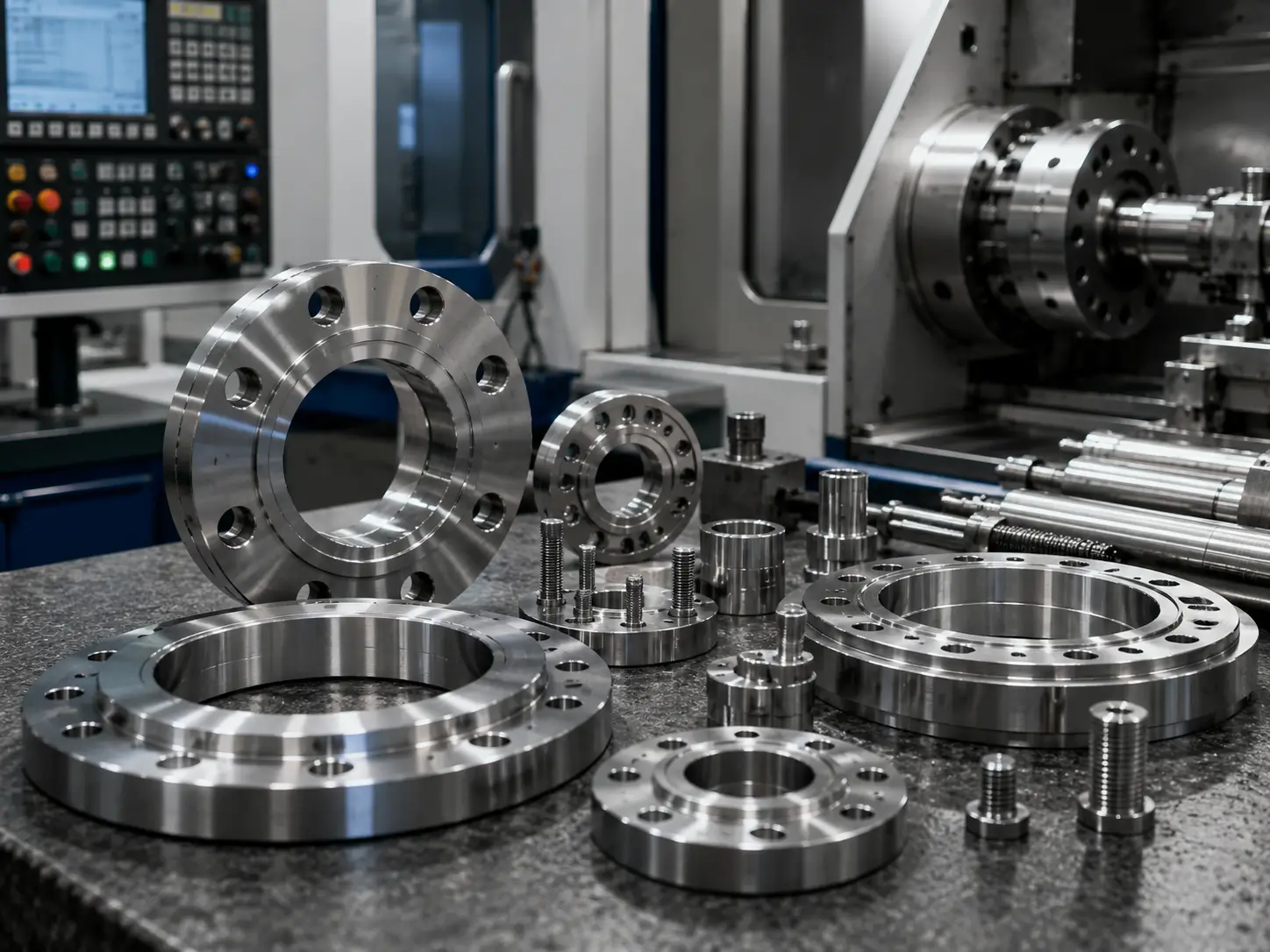
CNC Face & PCD Machining
Precision CNC turning and milling ensures exact Pitch Circle Diameters (PCD) and flawless sealing face finishes (RF, FF, RTJ) held to strict ASME B16.5/B16.47 tolerances.
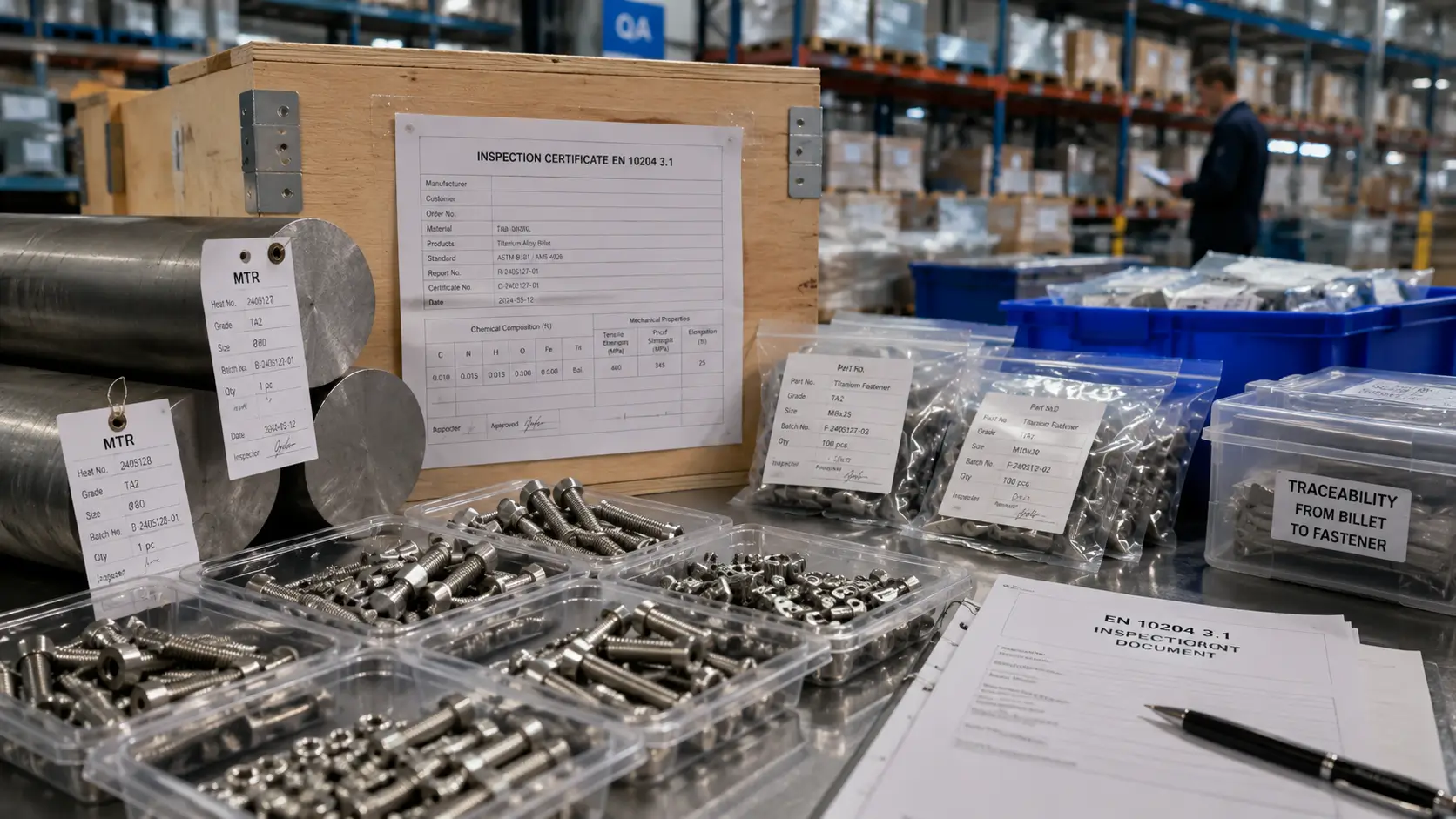
Full Heat-Lot Traceability
Every flange is permanently laser-marked with its heat number, backed by comprehensive EN 10204 3.1 certification linking the final geometry directly to the original titanium ingot.

Custom Orifice / Special Bolt Circle Support
Beyond catalog standards. We engineer and machine custom orifice taps, non-standard bolt-hole patterns, and specialized blind flanges tailored to your exact piping configurations.
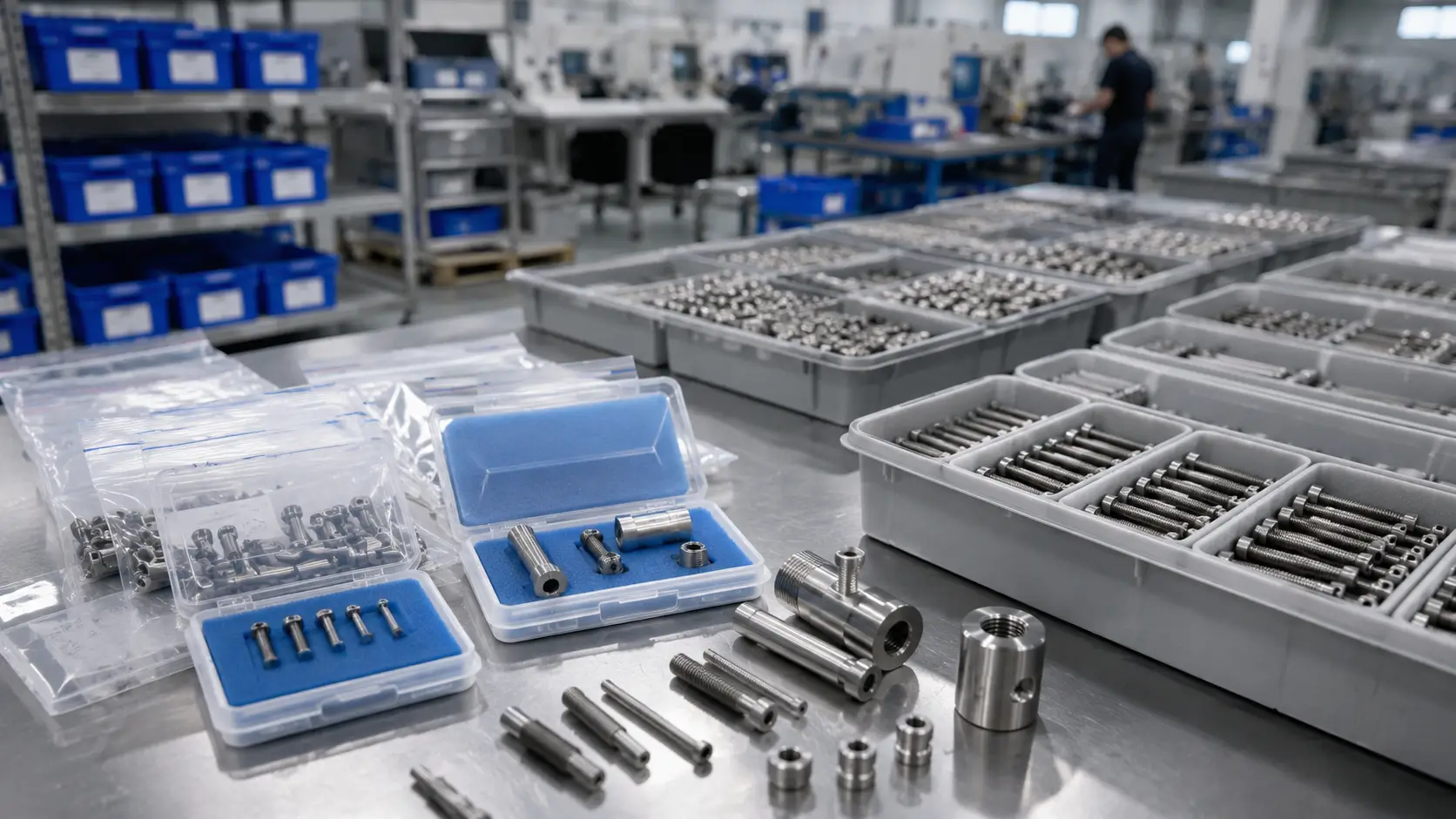
MRO Fast-Track Availability
Rapid response for plant turnarounds. We maintain strategic stock of standard ASME titanium blanks ready for expedited final machining to support your time-sensitive maintenance.

UT / PT / PMI / Hydro Support
Certified Non-Destructive Testing (NDT) capabilities including Ultrasonic Testing (UT), Penetrant Testing (PT), Positive Material Identification (PMI), and custom pressure verification.
10+ Years
Titanium industry experience.
Factory Direct Supply
Stable capacity and competitive price.
1000+
Products and specifications.
Full Documentation
MTC, reports and certificates.
Global Delivery
100+ countries and regions.
Professional Support
Quick response and technical review.
Reliable Titanium Fasterner Partner for Your Project
Hele Titanium is committed to providing high-quality titanium products, professional support and reliable delivery for global industrial buyers.
Frequently Asked Questions
Find quick answers about flange selection, sealing-face design, gasket compatibility, forging standards, and installation-critical precautions.
Selection & Design
Slip-On vs. Weld Neck: which should I choose?
What is a Lap Joint Flange used for?
When should I specify RTJ instead of RF?
How do I choose between Gr2, Gr7, Gr12, and Gr5 for flanges?
Installation & Compliance
Do I need special gaskets for titanium flanges?
How do I prevent thread galling during flange assembly?
Why is ASTM B381 the standard for flanges instead of ASTM B265?
What documents do you provide with shipment?
The Definitive Guide to Titanium Flanges (Manufacturer’s Expert Edition)
A titanium flange is not just a ring with holes. It is the critical pressure boundary and sealing interface that determines whether your piping system remains safe under thermal cycling, chemical attack, and heavy bolted loads. This guide helps project engineers, procurement teams, and facility managers specify forged titanium flanges that are structurally sound, strictly standards-compliant, and optimized for decades of leak-free service.
Before You RFQ Titanium Flanges, Confirm These 3 Critical Details
- Which flange type best matches your pressure duty and installation constraints: WN, SO, BL, SW, LJ, or custom?
- Which face design and finish are required: RF, FF, RTJ, stock finish, or a smoother special finish to match your gaskets?
- Does your service environment require Grade 2, Grade 7, Grade 12, or Grade 5 based on corrosion levels, heat, and mechanical strength?
1. Quality Metrics: What Defines a High-Quality Flange?
Quality in a titanium flange extends far beyond basic dimensional compliance. It is fundamentally determined by the forging ratio, which ensures a dense, directional grain flow that resists metal fatigue under extreme pressure. Furthermore, precise face flatness, accurate bolt-hole metrology, and fully traceable metallurgy (verified by Positive Material Identification and Mill Test Certificates) are non-negotiable metrics. For project engineers and procurement teams, these quality indicators mean the difference between a seamless, lifelong installation and catastrophic, costly leaks during plant operation.
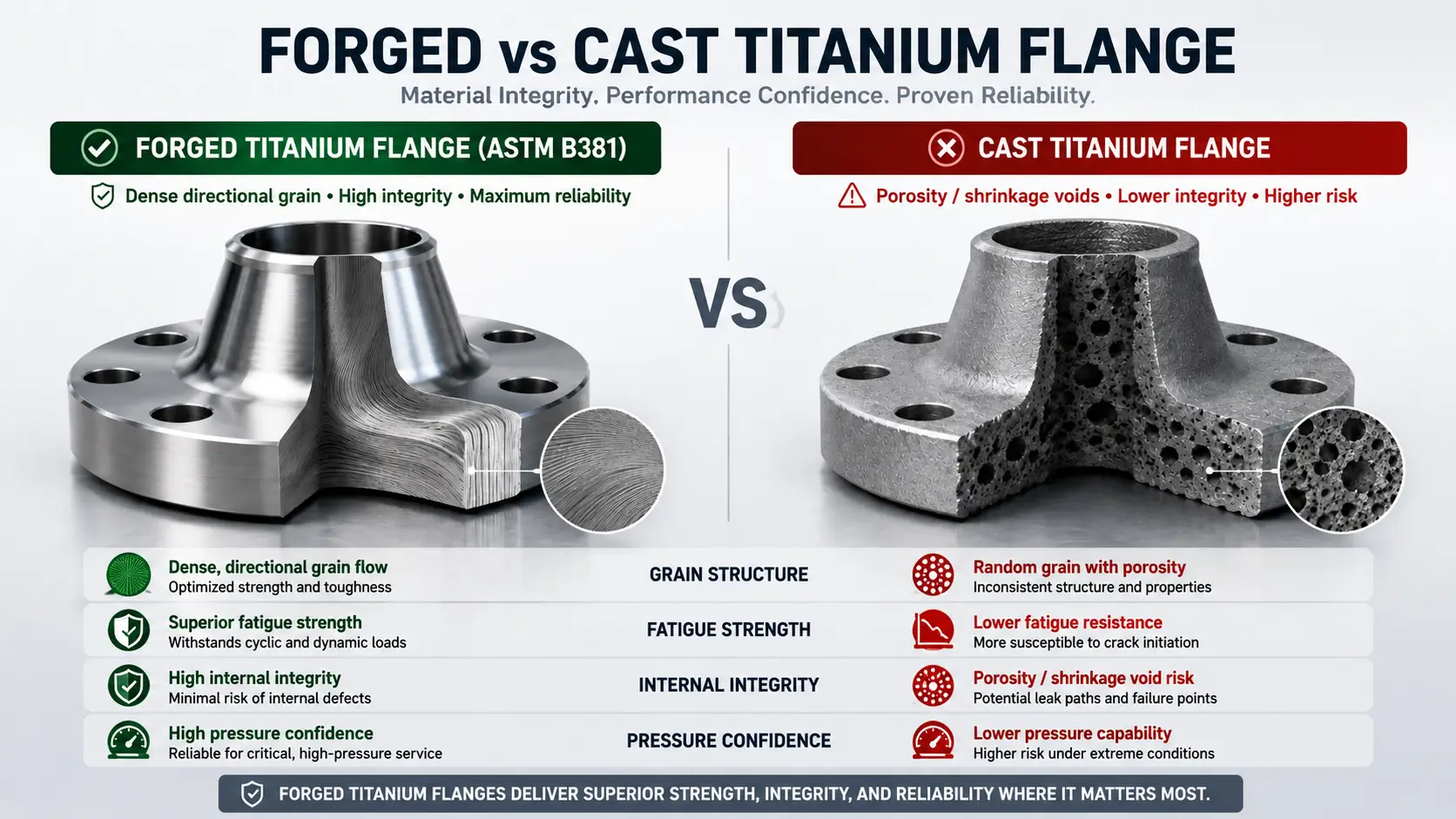
2. Forging vs. Casting: The Hidden Risk to Your Operations
Unlike standard steel, cast titanium is highly susceptible to internal shrinkage voids, porosity, and coarse grain structures. When sourcing for critical infrastructure like hydrogen processing or chemical plants, the risk of a cast flange failing under thermal shock is simply too high. Forged titanium (ASTM B381) undergoes severe plastic deformation, refining the microstructure and perfectly aligning the grain flow with the flange's contour. This is why forged flanges are mandatory for ensuring absolute confidence and code compliance in your pressure boundaries.
| Feature | Forged Titanium Flange (ASTM B381) | Cast Titanium Flange |
|---|---|---|
| Grain Structure | Refined, directional, dense | Coarse, random |
| Fatigue Strength | Excellent under cyclic loads | Lower, prone to cracking |
| Internal Integrity | Free of voids/porosity | High risk of internal shrinkage voids |
| Pressure Confidence | High (Code compliant) | Low (Requires heavy NDT) |
3. Titanium vs. Super Duplex & Nickel Alloys
While the initial material cost of titanium may appear higher than standard stainless steel, its unparalleled lifecycle value makes it the smartest choice for corrosive environments. When you factor in zero maintenance, the elimination of replacement cycles, and heavily reduced plant downtime, Titanium consistently outperforms Super Duplex and Nickel alloys in long-term Return on Investment (ROI).
| Metric | Titanium Grade 2 | Super Duplex 2507 | Hastelloy C276 |
|---|---|---|---|
| Corrosion Resistance | Immune to chlorides/seawater | High, but susceptible to pitting | Excellent in severe acids |
| Weight Ratio | Light (~4.5 g/cm³) | Heavy (~7.8 g/cm³) | Very Heavy (~8.9 g/cm³) |
| Relative TCO | Lowest (Zero maintenance) | Medium (Replacement risk) | Highest (Material cost) |
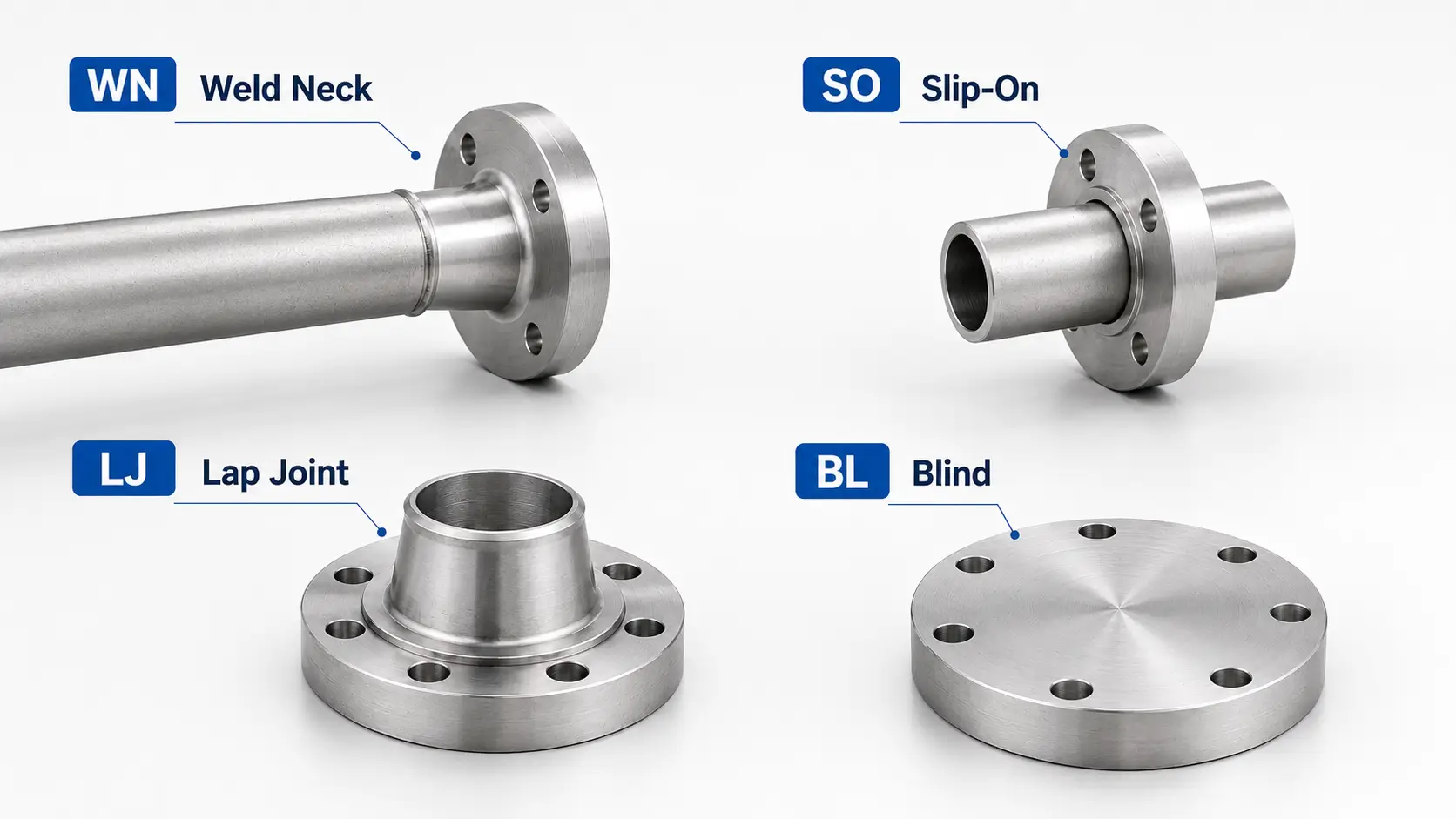
4. Flange Types & Engineering Logic
Selecting the correct flange type is a critical engineering decision based on system pressure, space constraints, and project budget.
WN Weld Neck
Best for severe conditions. The long tapered hub provides gradual stress transfer from flange to pipe. Mandatory for high pressure, sub-zero, or elevated temperatures where structural integrity cannot be compromised.
SO Slip-On
Slips over the pipe, requiring two fillet welds. Lower initial cost but lower fatigue strength (approx 1/3 of WN). Ideal for low-pressure, non-critical services where quick assembly and budget are priorities.
LJ Lap Joint
Used with a titanium stub end. The flange itself is loose, allowing easy bolt alignment. Extremely cost-effective for large-diameter lines, as the backing flange can be standard carbon steel, saving significant premium material costs.
BL Blind
Solid disk used to blank off pipelines or vessels. Subjected to high bending stresses, making titanium's high strength-to-weight ratio highly advantageous for maintenance access points.
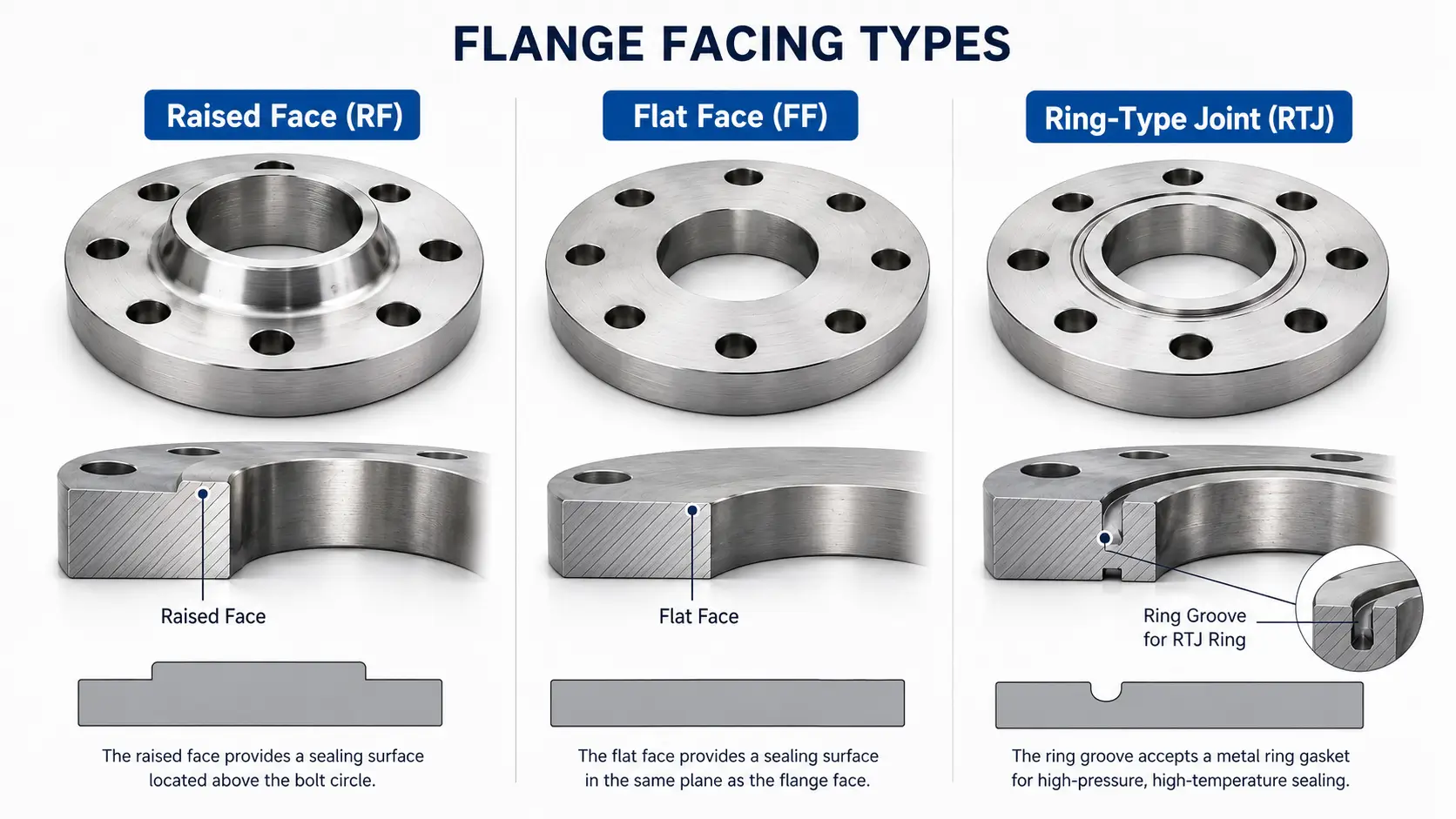
5. Facing Types: RF, FF, RTJ
The face is the sealing battlefield. Choosing the wrong face can lead to catastrophic gasket failure or costly damage to mating equipment.
-
RFRaised Face
The industrial standard for plant piping. Concentrates the bolt load onto a smaller gasket area, increasing sealing pressure. Standard finish is typically 125-250 µin Ra to grip the gasket securely and prevent blowouts.
-
FFFlat Face
The mating face has no raised area. Essential when bolting to fragile equipment like cast iron pumps, fiberglass (FRP) tanks, or plastic flanges to prevent bending and cracking the brittle mating flange during torquing.
-
RTJRing-Type Joint
Features a precision-machined groove for a metal ring gasket. Reserved for extreme high-pressure (Class 600+) and high-temperature services, such as offshore platforms, where a standard sheet gasket would fail.
6. Engineering Tools: Dimensions & Weight
Standard flanges follow ASME B16.5 up to 24 inches. For large diameter applications (>24"), ASME B16.47 Series A or B dictates dimensions. Titanium's low density (nearly half of steel) significantly alters weight calculations. For EPC contractors and installation teams, this means reduced pipe support infrastructure, lower shipping costs, and much easier, safer handling during installation—especially in tight or elevated spaces.
7. Grade Selection Strategy by Service Medium
| Titanium Grade | Service Medium & Application |
|---|---|
| Grade 2 (Unalloyed) | The industrial workhorse for general chemical processing. Excellent for seawater, brackish water, wet chlorine, and mild oxidizing acids up to 300°C. |
| Grade 7 (Ti-0.15Pd) | Contains Palladium. The ultimate choice for highly aggressive hot reducing acids (HCl, H2SO4) and environments highly prone to crevice corrosion where standard grades fail. |
| Grade 12 (Ti-0.3Mo-0.8Ni) | Offers a sweet spot of higher temperature resistance and strength. Often specified for critical heat exchangers and pressurized chemical reactors. |
| Grade 5 (Ti-6Al-4V) | High strength alloy used where extreme mechanical load, rather than just corrosion, is the primary challenge (e.g., aerospace components, subsea high-pressure equipment). |
8. Manufacturer’s Pre-Order Checklist
-
Confirm pipe schedule for bore match. Crucial for WN and SW flanges. A mismatch creates an internal step, leading to flow turbulence, erosion-corrosion, and premature failure at the weld joint.
-
Confirm facing type & surface roughness (Ra). Ensure the finish matches your specific gasket requirements (e.g., 125-250 µin for standard spiral wound gaskets) to guarantee a leak-proof seal.
-
Verify ASTM B381 Forging. Confirm material is forged, not cut from plate (ASTM B265), to guarantee directional strength and prevent delamination under operational stress.
-
Demand 3.1 MTC & PMI. Ensure full traceability of chemistry and mechanical properties before installation. This is critical for regulatory compliance and safety audits.
9. Field Guide: Torque, Gaskets & Bolting
Titanium flanges must be paired with the right gasket to ensure system longevity. For RF flanges, spiral wound gaskets (with graphite or PTFE filler) are standard. Strictly avoid gaskets containing leachable chlorides or those that might induce galvanic corrosion in the flange face.
Critical Warning: Anti-Galling & Bolting
Titanium’s passive oxide layer makes its threads highly susceptible to galling (cold welding) under heavy bolt load. If a bolt galls during assembly, it often must be cut off, delaying your project. Never assemble titanium bolting dry. Always apply a high-quality, metal-free anti-seize compound (like molybdenum disulfide) or use PTFE tape. Alternatively, consider using dissimilar metal bolting (e.g., Stainless Steel or Monel) coupled with insulating sleeve and washer kits to prevent galvanic corrosion in wet environments.
10. Red Flags: 3 Common Specifying Mistakes to Avoid
- Plate-Cut vs. Forged: Accepting flanges cut from ASTM B265 plate instead of forged B381. Plate lacks the required directional strength and is prone to lamellar tearing. This is a common shortcut taken by low-end suppliers that severely compromises safety.
- Wrong Face Finish: Specifying a generic finish that doesn't match the gasket type (e.g., a smooth finish for a spiral wound gasket that needs a serrated grip), resulting in micro-leaks that are notoriously difficult to diagnose and fix.
- Grade Confusion: Specifying Grade 2 for hot reducing acids where crevice corrosion will rapidly occur, instead of upgrading to Grade 7 or 12. Using the wrong grade will lead to rapid equipment failure and potential safety hazards.
Get Your Titanium Flange Solution
Tell us your flange type, pressure class, facing type, titanium grade, standard, size, bolt-circle requirement, and application environment. Our engineering team will recommend the most suitable forged titanium flange solution for your system.
- 100% Forged Flange Manufacturing
- CNC-Faced Sealing Precision
- Traceability, PMI & MTC Support