Before you request a quote
A reliable order begins with the service conditions and the finished function of salt chlorinators for pools—not with the product name alone. For applications involving on-site chlorine generation from pool saltwater with controlled sanitation, circulation and water balance, pool volume alone does not size a chlorinator; bather load, climate, stabilizer, target residual, pump schedule, salt, water balance and cell-cleaning conditions determine chlorine demand.
Before comparing suppliers, define the operating conditions, required configuration, interfaces, supply boundary and acceptance evidence. Require each quotation to identify the proposed basis, assumptions, exclusions and deliverable records so that technical differences remain visible.
A dependable order begins with one controlled basis connecting the process or asset, product identity, operating conditions, interfaces, measurable evidence, responsibility and commercial scope.
1. Define Pool, Market and Supply Scope
Identify commercial/public pool, hotel, resort, spa, aquatic facility, OEM platform or replacement project and the destination jurisdiction.
- List cell, controller, power supply, housing, sensors, cables, plumbing and spares.
- Assign certification, labeling, firmware, installation and commissioning responsibility.
- Control product/manual revisions and target market.
Procurement recommendation
Define Pool, Market and Supply Scope is not an isolated specification line. For salt chlorinators for pools used in on-site chlorine generation from pool saltwater with controlled sanitation, circulation and water balance, pool volume alone does not size a chlorinator; bather load, climate, stabilizer, target residual, pump schedule, salt, water balance and cell-cleaning conditions determine chlorine demand. Connect this requirement to the actual service conditions, interfaces and acceptance evidence before releasing the order.
Select output from the actual daily demand and circulation window, with margin for climate and load; do not size only from a marketing maximum pool volume. Record the selected basis, supplier assumptions and any unresolved interface in the quotation and approved order documents.
- pool volume and type
- daily chlorine demand and operating hours
- salt range and source-water chemistry
- cell output basis, current and controller
- model/cell identification
- output test basis
2. Calculate Chlorine Demand
Use pool volume with turnover, bather load, sunlight, temperature, cover, water features, source water, operating hours and contamination events.
- Separate average, peak and recovery demand.
- State target residual and local code/operator basis.
- Define redundancy and downtime assumptions.
Procurement recommendation
Calculate Chlorine Demand is not an isolated specification line. For salt chlorinators for pools used in on-site chlorine generation from pool saltwater with controlled sanitation, circulation and water balance, pool volume alone does not size a chlorinator; bather load, climate, stabilizer, target residual, pump schedule, salt, water balance and cell-cleaning conditions determine chlorine demand. Connect this requirement to the actual service conditions, interfaces and acceptance evidence before releasing the order.
Select output from the actual daily demand and circulation window, with margin for climate and load; do not size only from a marketing maximum pool volume. Record the selected basis, supplier assumptions and any unresolved interface in the quotation and approved order documents.
- daily chlorine demand and operating hours
- salt range and source-water chemistry
- cell output basis, current and controller
- flow, pressure, plumbing and power
- output test basis
- electrical/safety documentation
3. Define Pool Water and Salt Quality
State salinity range, temperature, pH, alkalinity, hardness, stabilizer, bromide/iodide or other relevant impurities and source-water variability.
- Use pool-grade salt meeting the applicable approval basis.
- Set low/high salt and temperature operating limits.
- Define water-balance and corrosion-management responsibility.
Inspection and acceptance evidence
Inspection is useful only when the characteristic, method, sampling, instrument, acceptance criterion and responsible party are known. For salt chlorinators for pools, a certificate can confirm the items within its scope; it does not prove unrelated dimensions, field performance or service life.
Agree the inspection and test plan before production. Identify review, witness and hold points, the treatment of nonconformances and whether raw readings, summarized reports or third-party records are required with shipment.
Records to request
- electrical/safety documentation
- cell material/coating evidence as agreed
- installation and maintenance instructions
- salt range and source-water chemistry
- cell output basis, current and controller
- flow, pressure, plumbing and power
4. Specify Chlorine Output Correctly
State output units and the salinity, temperature, flow, voltage/current and test method used to establish it.
- Separate rated, adjustable, normal and peak production.
- Define cell count and staging.
- Do not equate theoretical Faradaic output with delivered system performance without test evidence.
Procurement recommendation
Specify Chlorine Output Correctly is not an isolated specification line. For salt chlorinators for pools used in on-site chlorine generation from pool saltwater with controlled sanitation, circulation and water balance, pool volume alone does not size a chlorinator; bather load, climate, stabilizer, target residual, pump schedule, salt, water balance and cell-cleaning conditions determine chlorine demand. Connect this requirement to the actual service conditions, interfaces and acceptance evidence before releasing the order.
Select output from the actual daily demand and circulation window, with margin for climate and load; do not size only from a marketing maximum pool volume. Record the selected basis, supplier assumptions and any unresolved interface in the quotation and approved order documents.
- cell output basis, current and controller
- flow, pressure, plumbing and power
- cleaning, polarity reversal, safety and replacement-cell plan
- pool volume and type
- cell material/coating evidence as agreed
- installation and maintenance instructions
5. Freeze Cell and Coating Basis
Define titanium substrate/form, MMO coating duty, plate/tube geometry, effective area, spacing, coated zones, electrical feeds and cell housing.
- Do not use precious-metal ratio alone as the specification.
- Define polarity-reversal duty and cleaning boundary.
- Link cell identity to controller compatibility.
Material or coating specification
Select output from the actual daily demand and circulation window, with margin for climate and load; do not size only from a marketing maximum pool volume. The material or coating designation should appear beside the governing product specification, condition and service assumptions. A familiar grade name used under the wrong product standard can still produce the wrong supply.
Ask the supplier to identify the offered basis, permitted substitutions and the evidence used to confirm it. For proprietary or process-sensitive items, measurable acceptance and controlled change notification are more useful than demanding confidential formulation details.
- flow, pressure, plumbing and power
- cleaning, polarity reversal, safety and replacement-cell plan
- pool volume and type
- daily chlorine demand and operating hours
- installation and maintenance instructions
- model/cell identification
6. Define Hydraulics and Plumbing
State circulation and cell flow, pressure, pressure loss, pipe size, orientation, bypass, check valves, sensors, drainage, winterization and service clearance.
- Prevent operation without adequate flow.
- Avoid gas accumulation and unapproved orientation.
- Show factory and field piping boundaries.
Procurement recommendation
Define Hydraulics and Plumbing is not an isolated specification line. For salt chlorinators for pools used in on-site chlorine generation from pool saltwater with controlled sanitation, circulation and water balance, pool volume alone does not size a chlorinator; bather load, climate, stabilizer, target residual, pump schedule, salt, water balance and cell-cleaning conditions determine chlorine demand. Connect this requirement to the actual service conditions, interfaces and acceptance evidence before releasing the order.
Select output from the actual daily demand and circulation window, with margin for climate and load; do not size only from a marketing maximum pool volume. Record the selected basis, supplier assumptions and any unresolved interface in the quotation and approved order documents.
- cleaning, polarity reversal, safety and replacement-cell plan
- pool volume and type
- daily chlorine demand and operating hours
- salt range and source-water chemistry
- model/cell identification
- output test basis
7. Specify Power, Controller and Interlocks
Define AC input, DC output/control range, cell current/voltage, salt/TDS and temperature inputs, flow interlock, polarity reversal, alarms and communications.
- Define safe shutdown and restart behavior.
- State enclosure/environmental rating and grounding/bonding.
- Control firmware/configuration revisions.
Procurement recommendation
Specify Power, Controller and Interlocks is not an isolated specification line. For salt chlorinators for pools used in on-site chlorine generation from pool saltwater with controlled sanitation, circulation and water balance, pool volume alone does not size a chlorinator; bather load, climate, stabilizer, target residual, pump schedule, salt, water balance and cell-cleaning conditions determine chlorine demand. Connect this requirement to the actual service conditions, interfaces and acceptance evidence before releasing the order.
Select output from the actual daily demand and circulation window, with margin for climate and load; do not size only from a marketing maximum pool volume. Record the selected basis, supplier assumptions and any unresolved interface in the quotation and approved order documents.
- pool volume and type
- daily chlorine demand and operating hours
- salt range and source-water chemistry
- cell output basis, current and controller
- output test basis
- electrical/safety documentation
8. Separate Sanitizer from Complete Treatment
A salt generator supplies chlorine but does not replace circulation, filtration, pH control, water balance, operator testing or secondary treatment required by code.
- Assign automated-controller and chemical-feed interfaces.
- Define residual verification and records.
- Address Cryptosporidium or other code-driven secondary-treatment requirements separately.
Procurement recommendation
Separate Sanitizer from Complete Treatment is not an isolated specification line. For salt chlorinators for pools used in on-site chlorine generation from pool saltwater with controlled sanitation, circulation and water balance, pool volume alone does not size a chlorinator; bather load, climate, stabilizer, target residual, pump schedule, salt, water balance and cell-cleaning conditions determine chlorine demand. Connect this requirement to the actual service conditions, interfaces and acceptance evidence before releasing the order.
Select output from the actual daily demand and circulation window, with margin for climate and load; do not size only from a marketing maximum pool volume. Record the selected basis, supplier assumptions and any unresolved interface in the quotation and approved order documents.
- daily chlorine demand and operating hours
- salt range and source-water chemistry
- cell output basis, current and controller
- flow, pressure, plumbing and power
- electrical/safety documentation
- cell material/coating evidence as agreed
9. Confirm Applicable Codes and Listings
Identify jurisdiction, aquatic-facility code, electrical safety, sanitation-equipment listing, plumbing and chemical requirements before design freeze.
- CDC MAHC is guidance and becomes enforceable only where adopted.
- Confirm required UL/NSF or other market-specific listings with the authority having jurisdiction.
- Do not display a certification logo without scope evidence.
Procurement recommendation
Confirm Applicable Codes and Listings is not an isolated specification line. For salt chlorinators for pools used in on-site chlorine generation from pool saltwater with controlled sanitation, circulation and water balance, pool volume alone does not size a chlorinator; bather load, climate, stabilizer, target residual, pump schedule, salt, water balance and cell-cleaning conditions determine chlorine demand. Connect this requirement to the actual service conditions, interfaces and acceptance evidence before releasing the order.
Select output from the actual daily demand and circulation window, with margin for climate and load; do not size only from a marketing maximum pool volume. Record the selected basis, supplier assumptions and any unresolved interface in the quotation and approved order documents.
- salt range and source-water chemistry
- cell output basis, current and controller
- flow, pressure, plumbing and power
- cleaning, polarity reversal, safety and replacement-cell plan
- cell material/coating evidence as agreed
- installation and maintenance instructions
10. Plan OEM Integration and Change Control
Freeze mechanical envelope, electronics, firmware, UI, labels, manuals, packaging, brand ownership, approvals and service responsibilities.
- Define golden sample and first-article approval.
- Control cell/coating/electronics/firmware supplier changes.
- Separate private-label marketing from certification ownership.
Manufacturing route and change control
Cell coating, assembly, controller calibration and leak/electrical tests should match the offered model. The quotation should identify which operations are performed in-house, by an approved external processor or by the original mill/component producer. This is particularly important when heat treatment, coating, welding, NDE or calibration affects acceptance.
A process change is not automatically unacceptable, but its effect on dimensions, properties, surface, interfaces and previous qualification should be reviewed. Define which changes require notification or customer approval and which records remain traceable to the delivered lot or serial number.
- cell output basis, current and controller
- flow, pressure, plumbing and power
- cleaning, polarity reversal, safety and replacement-cell plan
- installation and maintenance instructions
- model/cell identification
- output test basis
11. Qualify Replacement Compatibility
Use the existing make/model, drawings, connector, cell current/voltage, flow housing, sensors, controller logic and failure history.
- Outside dimensions alone do not prove compatibility.
- Define whether original listing/certification is affected.
- Document all deviations and field-adapter boundaries.
Procurement recommendation
Qualify Replacement Compatibility is not an isolated specification line. For salt chlorinators for pools used in on-site chlorine generation from pool saltwater with controlled sanitation, circulation and water balance, pool volume alone does not size a chlorinator; bather load, climate, stabilizer, target residual, pump schedule, salt, water balance and cell-cleaning conditions determine chlorine demand. Connect this requirement to the actual service conditions, interfaces and acceptance evidence before releasing the order.
Select output from the actual daily demand and circulation window, with margin for climate and load; do not size only from a marketing maximum pool volume. Record the selected basis, supplier assumptions and any unresolved interface in the quotation and approved order documents.
- flow, pressure, plumbing and power
- cleaning, polarity reversal, safety and replacement-cell plan
- pool volume and type
- daily chlorine demand and operating hours
- model/cell identification
- output test basis
12. Define Testing and Release Evidence
Create an inspection plan for materials, dimensions, seals/leaks, hydraulics, electrical safety, control functions, output and documentation.
- State test water, salinity, temperature and flow.
- Define output test and instrument accuracy.
- Link serial/lot identity to records.
Inspection and acceptance evidence
Inspection is useful only when the characteristic, method, sampling, instrument, acceptance criterion and responsible party are known. For salt chlorinators for pools, a certificate can confirm the items within its scope; it does not prove unrelated dimensions, field performance or service life.
Agree the inspection and test plan before production. Identify review, witness and hold points, the treatment of nonconformances and whether raw readings, summarized reports or third-party records are required with shipment.
Records to request
- output test basis
- electrical/safety documentation
- cell material/coating evidence as agreed
- cleaning, polarity reversal, safety and replacement-cell plan
- pool volume and type
- daily chlorine demand and operating hours
13. Build Cell-Life and Warranty Bases
Life depends on coating, effective area, current duty, salinity, temperature, hardness/scale, reversal, cleaning, flow and end point.
- Separate design target, accelerated test, field expectation and warranty.
- Define allowed cleaning agents/procedure.
- State operating logs and exclusions.
Life, output and capacity assumptions
Service life, output or capacity is conditional. Undersizing, low flow, scaling, low/high salt, poor bonding, sensor error and overcleaning shorten cell service. A defensible value names the service environment, geometry or active area, load/current, duty cycle, utilization or end point, maintenance assumptions and the calculation or test method.
Separate design calculation, laboratory qualification, production acceptance, field expectation and warranty. They answer different questions. Accelerated or short-duration tests need stated conditions and an explanation of how far the result can be extrapolated.
- pool volume and type
- daily chlorine demand and operating hours
- salt range and source-water chemistry
- cell output basis, current and controller
- electrical/safety documentation
- cell material/coating evidence as agreed
14. Install and Commission Safely
Verify plumbing orientation, flow interlock, bonding/grounding, sensors, salt level, controller setup, leak tightness and baseline water chemistry.
- Follow approved manuals and local rules.
- Do not energize without proven flow.
- Record output, residual, pH and alarms during commissioning.
Installation and operating controls
Maintain salt and water balance, flow and cell cleanliness; record output settings and avoid acid-cleaning damage. Installation and operating instructions should state permitted loads, chemistry or environment, handling, cleaning, inspection intervals and the data required for warranty review.
If performance changes, preserve the original condition and operating record before repair or adjustment. Undersizing, low flow, scaling, low/high salt, poor bonding, sensor error and overcleaning shorten cell service. Photographs, measurements, alarms, water/electrolyte data, electrical data and maintenance history can distinguish a product defect from an interface or operating problem.
- daily chlorine demand and operating hours
- salt range and source-water chemistry
- cell output basis, current and controller
- flow, pressure, plumbing and power
- cell material/coating evidence as agreed
- installation and maintenance instructions
15. Operate, Test and Maintain
Maintain required salt range, water balance, residual and pH; inspect scale, housing, connections, sensors and controller trends.
- Clean only by approved method and frequency.
- Calibrate sensors and retain records.
- Define winterization and prolonged-shutdown procedure.
Installation and operating controls
Maintain salt and water balance, flow and cell cleanliness; record output settings and avoid acid-cleaning damage. Installation and operating instructions should state permitted loads, chemistry or environment, handling, cleaning, inspection intervals and the data required for warranty review.
If performance changes, preserve the original condition and operating record before repair or adjustment. Undersizing, low flow, scaling, low/high salt, poor bonding, sensor error and overcleaning shorten cell service. Photographs, measurements, alarms, water/electrolyte data, electrical data and maintenance history can distinguish a product defect from an interface or operating problem.
- salt range and source-water chemistry
- cell output basis, current and controller
- flow, pressure, plumbing and power
- cleaning, polarity reversal, safety and replacement-cell plan
- installation and maintenance instructions
- model/cell identification
16. Troubleshoot Low Output or Scale
Check water demand and chemistry before assigning cell failure. Preserve salt, temperature, flow, current/voltage, residual, pH, scale and alarm history.
- Check hydraulic bypass and sensor/interlock state.
- Check cell polarity, connection and coating condition.
- Separate high demand from low production.
Installation and operating controls
Maintain salt and water balance, flow and cell cleanliness; record output settings and avoid acid-cleaning damage. Installation and operating instructions should state permitted loads, chemistry or environment, handling, cleaning, inspection intervals and the data required for warranty review.
If performance changes, preserve the original condition and operating record before repair or adjustment. Undersizing, low flow, scaling, low/high salt, poor bonding, sensor error and overcleaning shorten cell service. Photographs, measurements, alarms, water/electrolyte data, electrical data and maintenance history can distinguish a product defect from an interface or operating problem.
- cell output basis, current and controller
- flow, pressure, plumbing and power
- cleaning, polarity reversal, safety and replacement-cell plan
- pool volume and type
- model/cell identification
- output test basis
17. Complete Salt Chlorinator Purchase Guard
Do not release the order until demand, water/salt window, cell, controller, hydraulics, power, interlocks, code, tests and responsibility are aligned.
- Freeze technical and software revisions.
- List certifications and their exact scope.
- Record open items, assumptions and exceptions.
Decision gate
Do not release the order until every technical requirement, test, interface, responsibility, assumption and exception describes one verifiable deliverable.
Quotation comparison
For salt chlorinators for pools, a low unit price can conceal a different material basis, unfinished processing, reduced inspection, missing accessories or a narrower delivery responsibility. Compare offers only after each supplier has answered the same technical schedule and returned a marked list of assumptions, options and exclusions.
Chlorine output, cell size, controller, sensors, housing, certification, replacement policy and warranty basis drive price. The commercial comparison should also include document review, samples or destructive tests, packing, Incoterm, tooling or setup, first-article approval, spares and the treatment of deviations or rework.
Before order release
- flow, pressure, plumbing and power
- cleaning, polarity reversal, safety and replacement-cell plan
- pool volume and type
- daily chlorine demand and operating hours
- salt range and source-water chemistry
- output test basis
- electrical/safety documentation
- cell material/coating evidence as agreed
Selection recommendation: Select output from the actual daily demand and circulation window, with margin for climate and load; do not size only from a marketing maximum pool volume.
18. RFQ, Commercial Terms and References
Normalize system scope, output/test basis, cell quantity, controller, plumbing, sensors, spares, approvals, documents, packing, Incoterm and warranty.
- Use the current CDC MAHC as guidance where relevant.
- Confirm actual local adoption and authority requirements.
- Compare lifecycle claims only on matched chemistry, duty and maintenance assumptions.
Technical references
External sources provide terminology, code or technical context. They are not evidence of HELE-specific capability or a performance guarantee.
Purchasing FAQ
Can a salt chlorinator be sized from pool volume only?
No. Turnover, bather and environmental load, operating hours, temperature, sunlight, stabilizer and required residual affect chlorine demand.
Does salt chlorination mean a chlorine-free pool?
No. The system generates chlorine from salt. The pool still requires disinfectant residual and water-quality control under the applicable rules.
Can any replacement cell fit an existing controller?
No. Geometry, connection, current/voltage control, sensors, flow housing, polarity reversal and certification compatibility must be reviewed.
Is cell life a fixed number of hours?
No. Life depends on chemistry, salinity, temperature, current duty, scale, polarity reversal, cleaning, flow and the defined end point.
What safety functions should be defined?
At minimum review flow interlock, salt/TDS indication, temperature/current/voltage protection, alarms, safe shutdown, enclosure and market-specific electrical requirements.
What should an OEM quotation include?
Freeze cell, controller, housing/plumbing, firmware/interface, labels, manuals, certification owner, tests, warranty, spares and change control.
Where the answer depends on service conditions
Questions about salt chlorinators for pools often have conditional answers. Chemistry, load, geometry, quantity, operating duty and the applicable code can change the recommendation. Include the relevant conditions when asking a supplier to confirm suitability.
- cleaning, polarity reversal, safety and replacement-cell plan
- pool volume and type
- daily chlorine demand and operating hours
- salt range and source-water chemistry
Request a response tied to the offered drawing, specification and inspection plan. If supporting evidence is not available, record the point as an item for technical review rather than treating it as a guaranteed characteristic.
Product, Processing and Inspection Reference
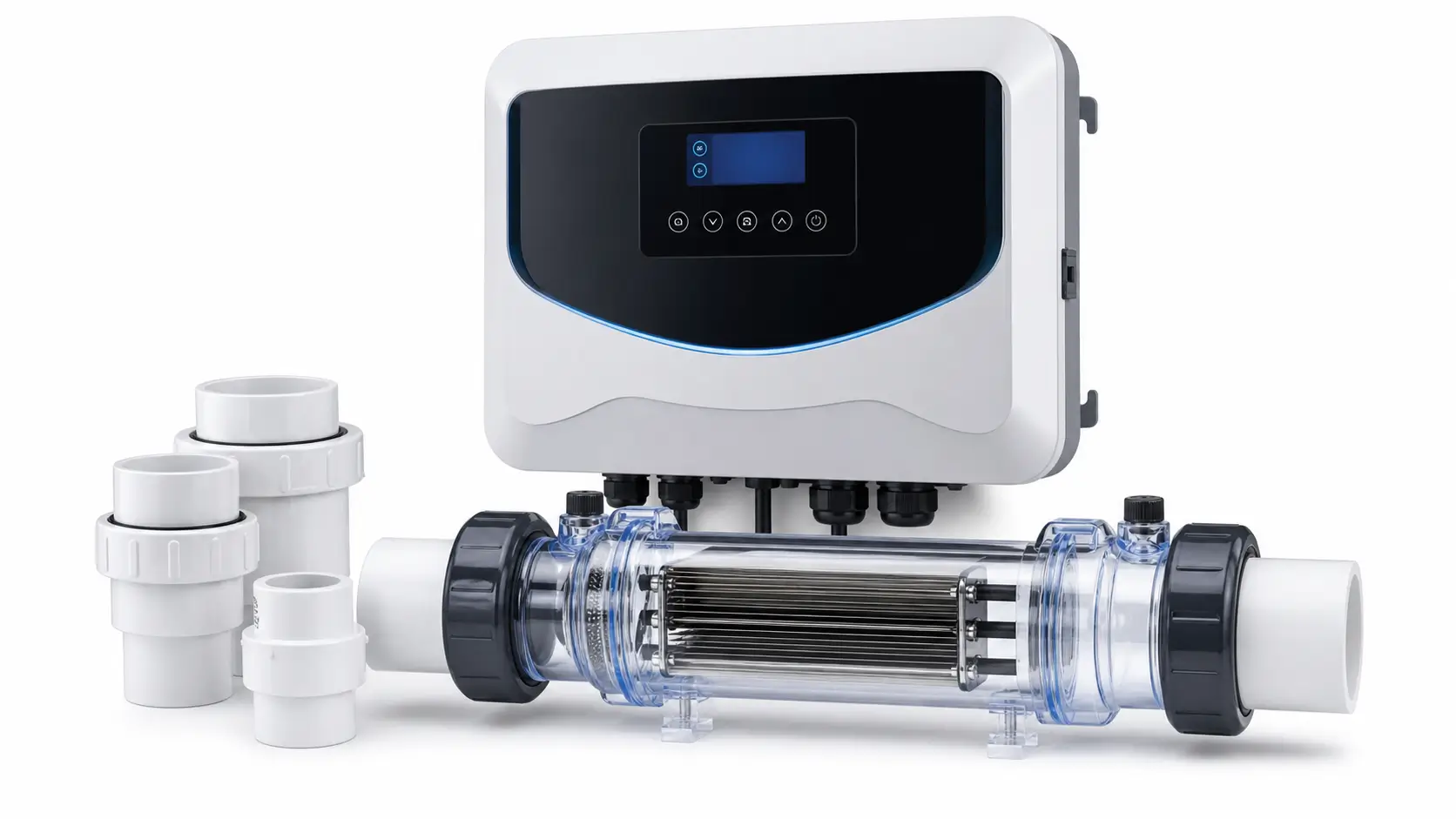
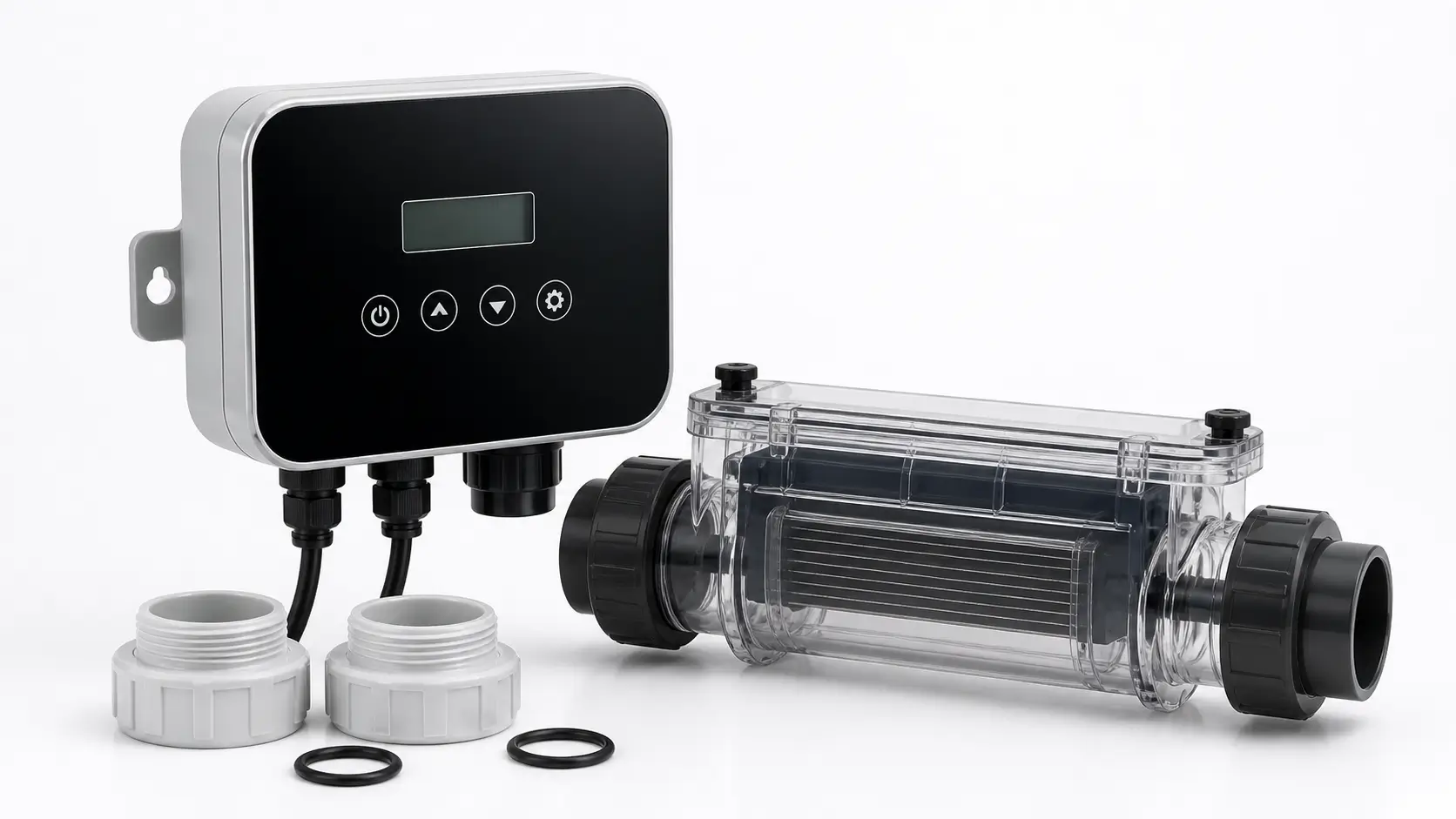
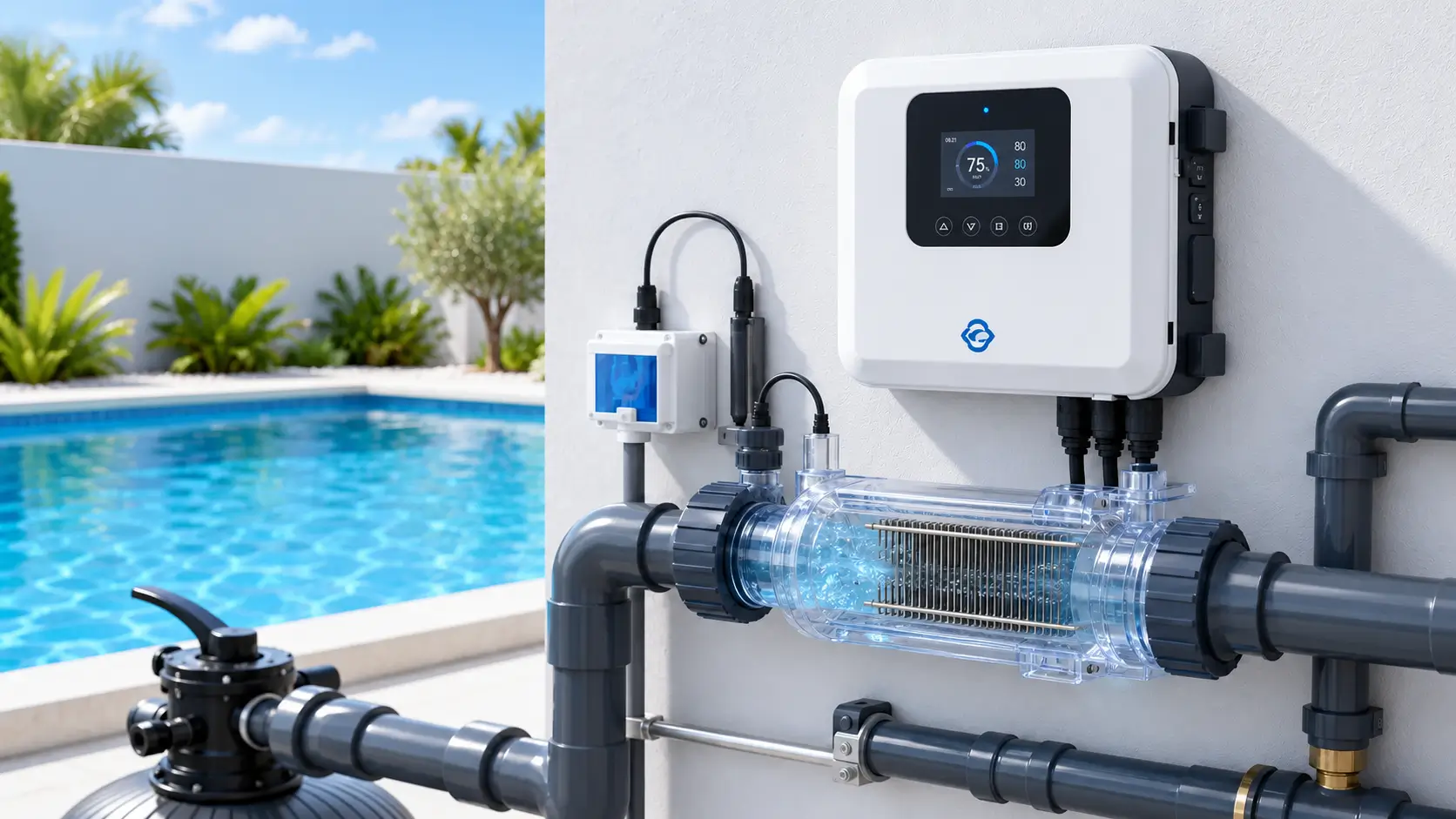
These images provide visual context for salt chlorinators for pools. They do not replace the approved drawing, specification, manufacturing route, inspection plan or order-specific evidence.