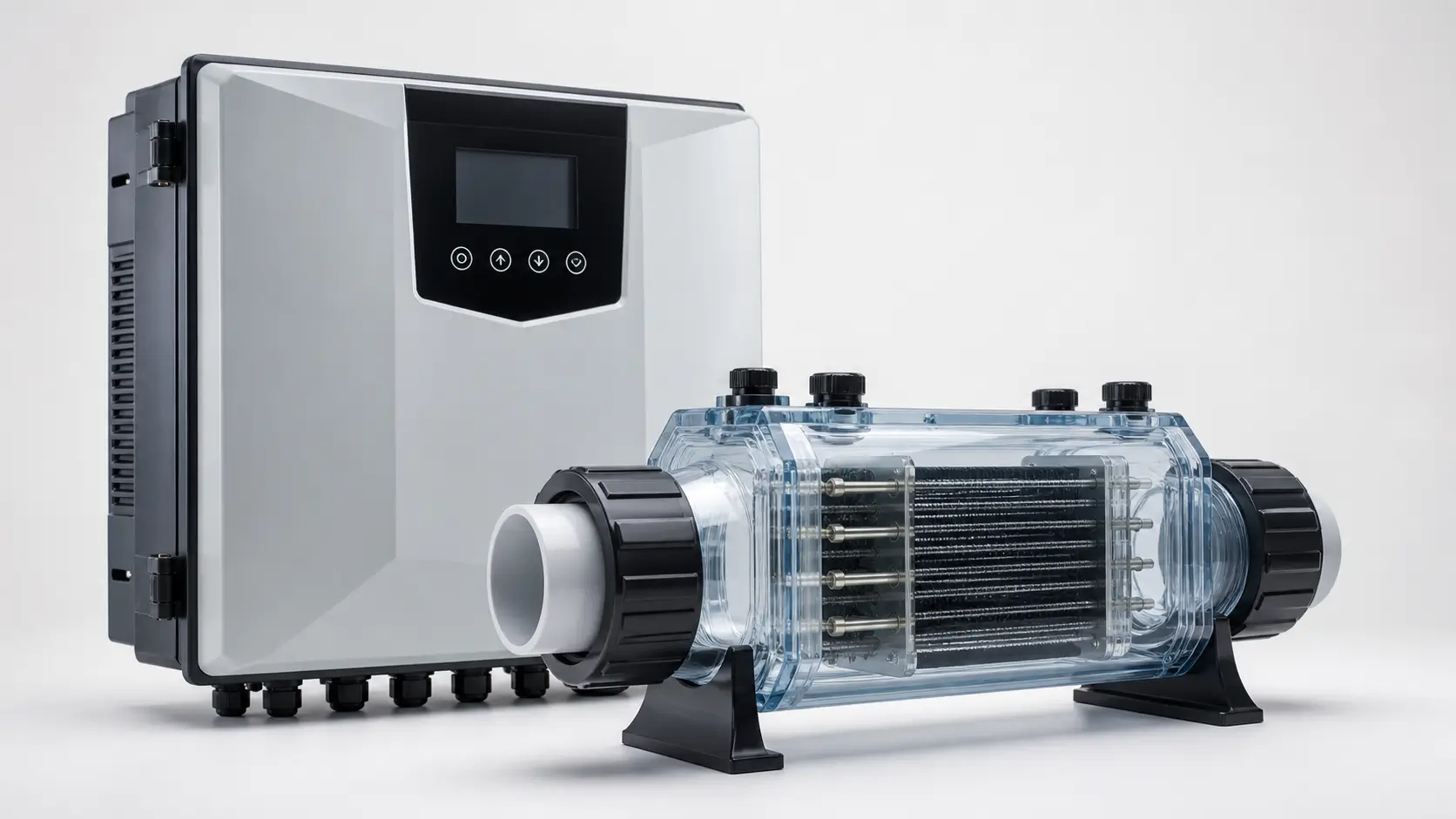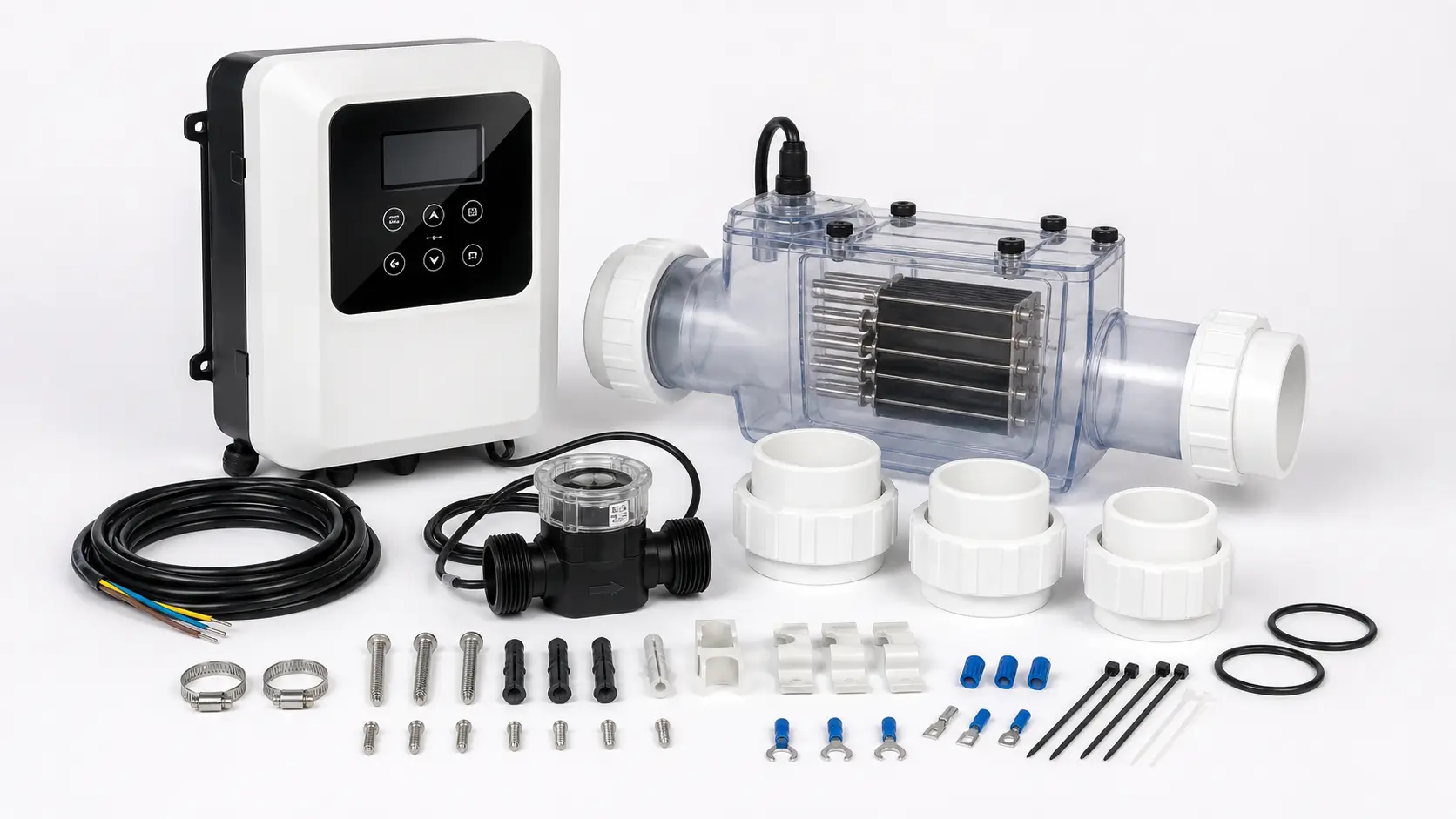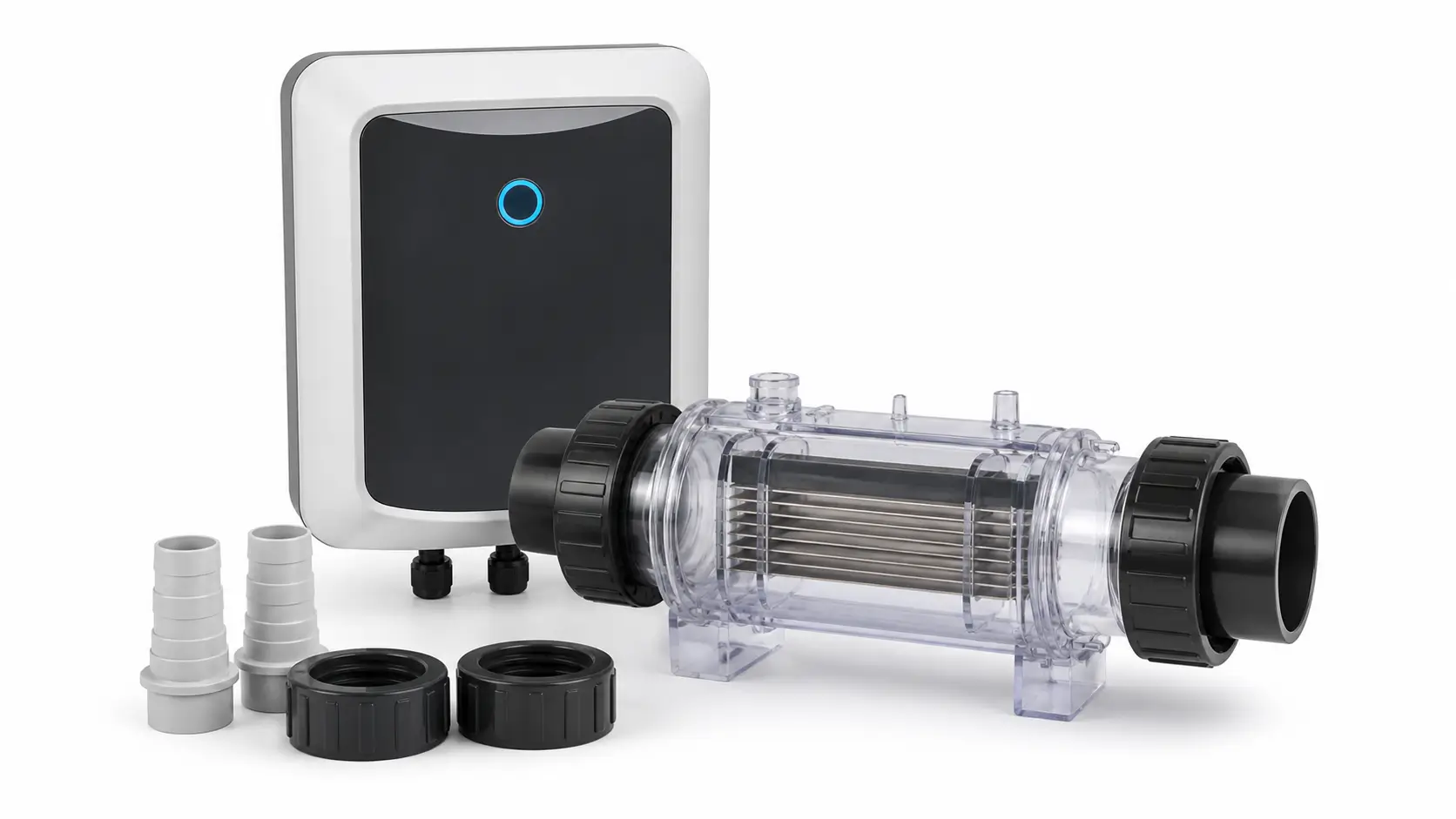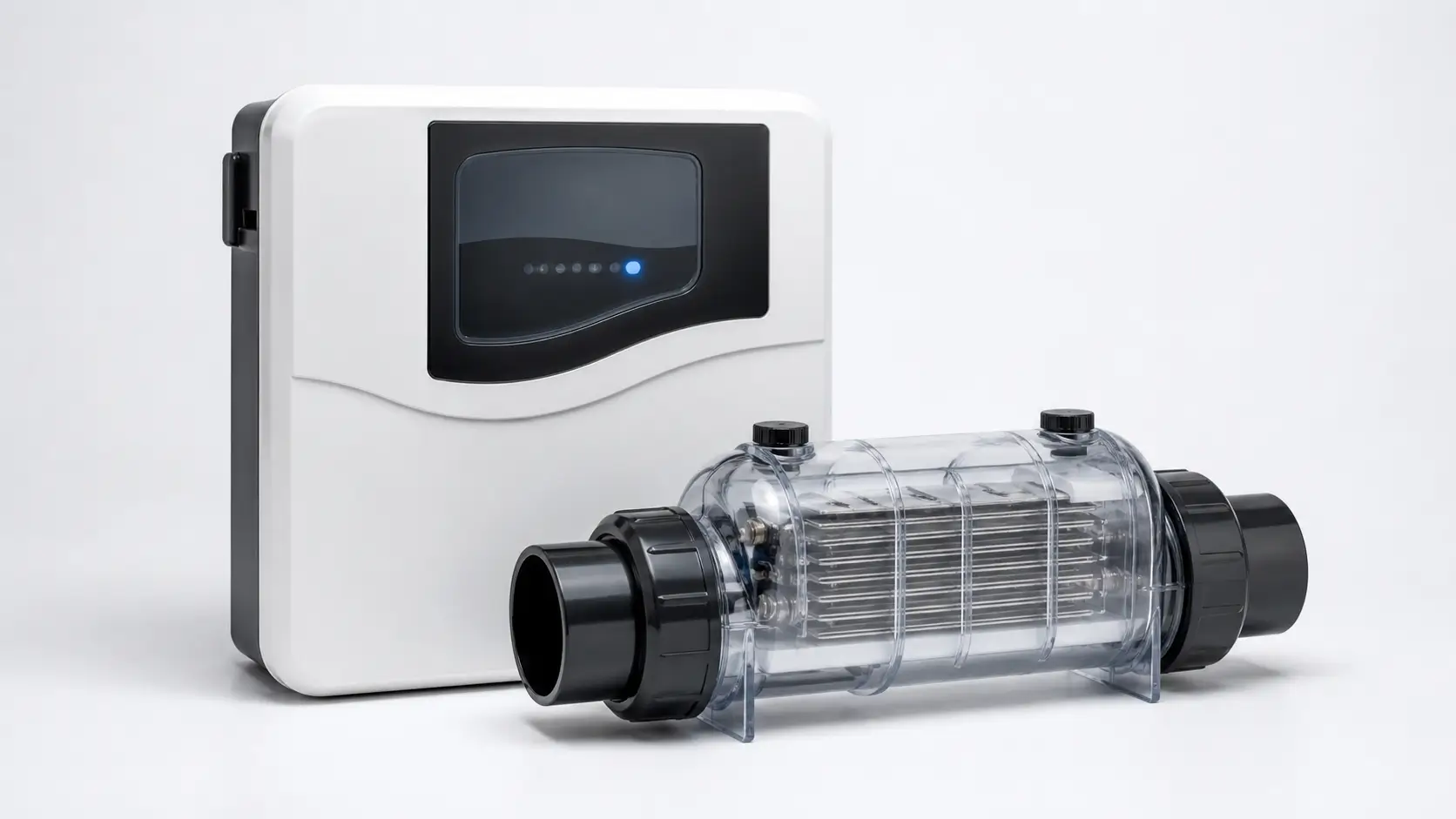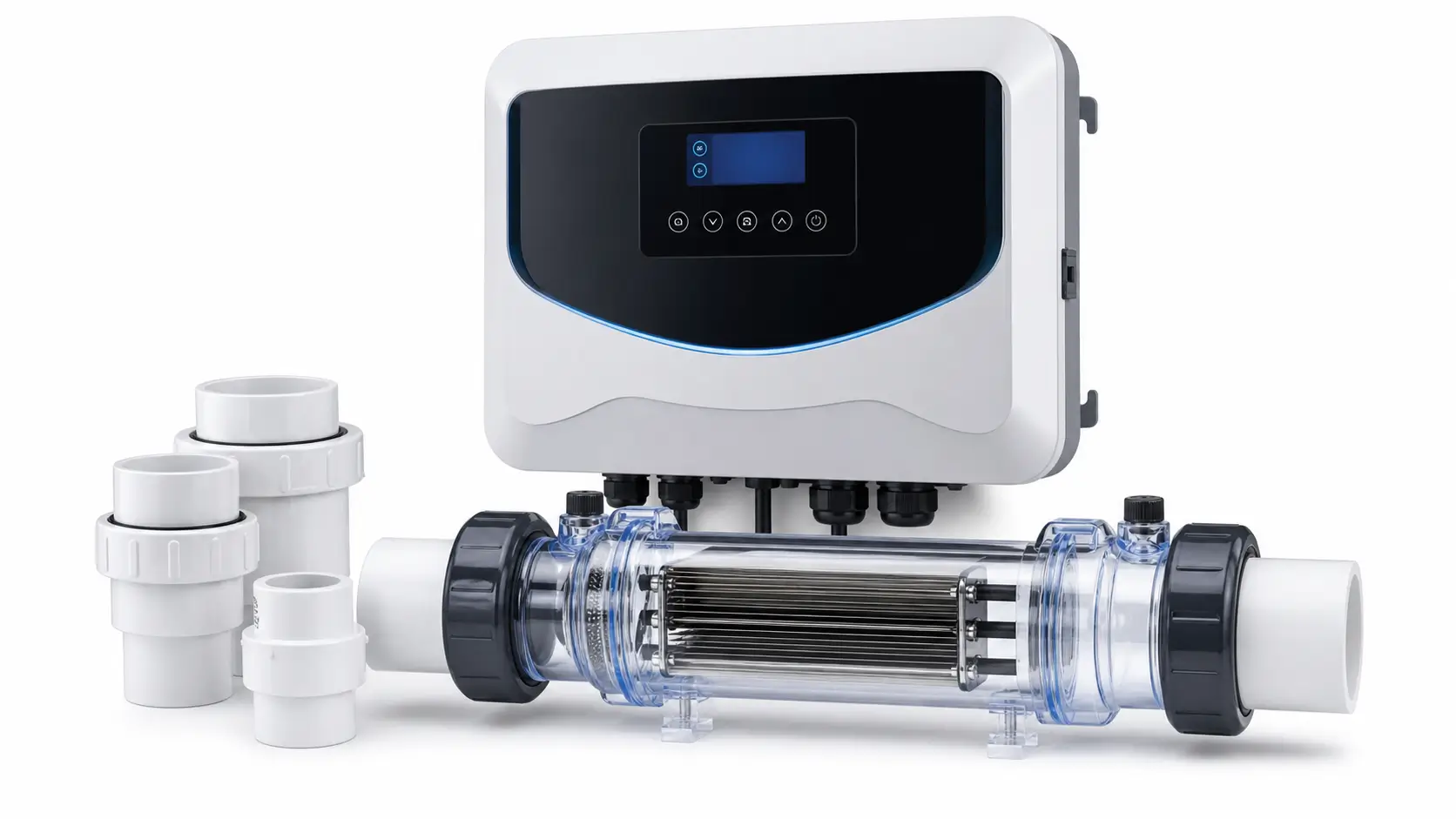
Premium Salt Chlorinator for Pool Systems
Salt Chlorinator for Pool Systems

Pool Salt Chlorinator Systems & Salt Chlorine Generators

Factory-direct salt chlorinator systems, salt chlorine generator cells, self-cleaning titanium electrolytic cells, replacement salt cells, control boxes, and OEM pool chlorination solutions for residential pools, commercial pools, spas, and pool equipment brands.

  • Salt Chlorinator Systems
  • Titanium Salt Cells
  • Self-Cleaning Function
  • OEM/ODM Support
  • Export Documentation
SALT CHLORINATOR MANUFACTURING

Your One-Stop Supplier for
Complete Salt Chlorinator Solutions

The salt cell drives chlorine output. The right system design supports easier operation and stable product programs.

System reliability depends on titanium cell quality, coating stability, and smart controller logic.

Hele Titanium provides complete salt chlorinator systems, replacement cells, and OEM/ODM solutions tailored to your market needs.

Titanium Salt Cell Mfg

Coated titanium electrodes configured for specific chlorine output.

System Matching

Control box, cell size, and power supply configured for systems.

OEM / ODM Support

Logo, housing, and market-specific configurations fully supported.

Replacement Cells

Compatible options based on existing dimensions and electricals.

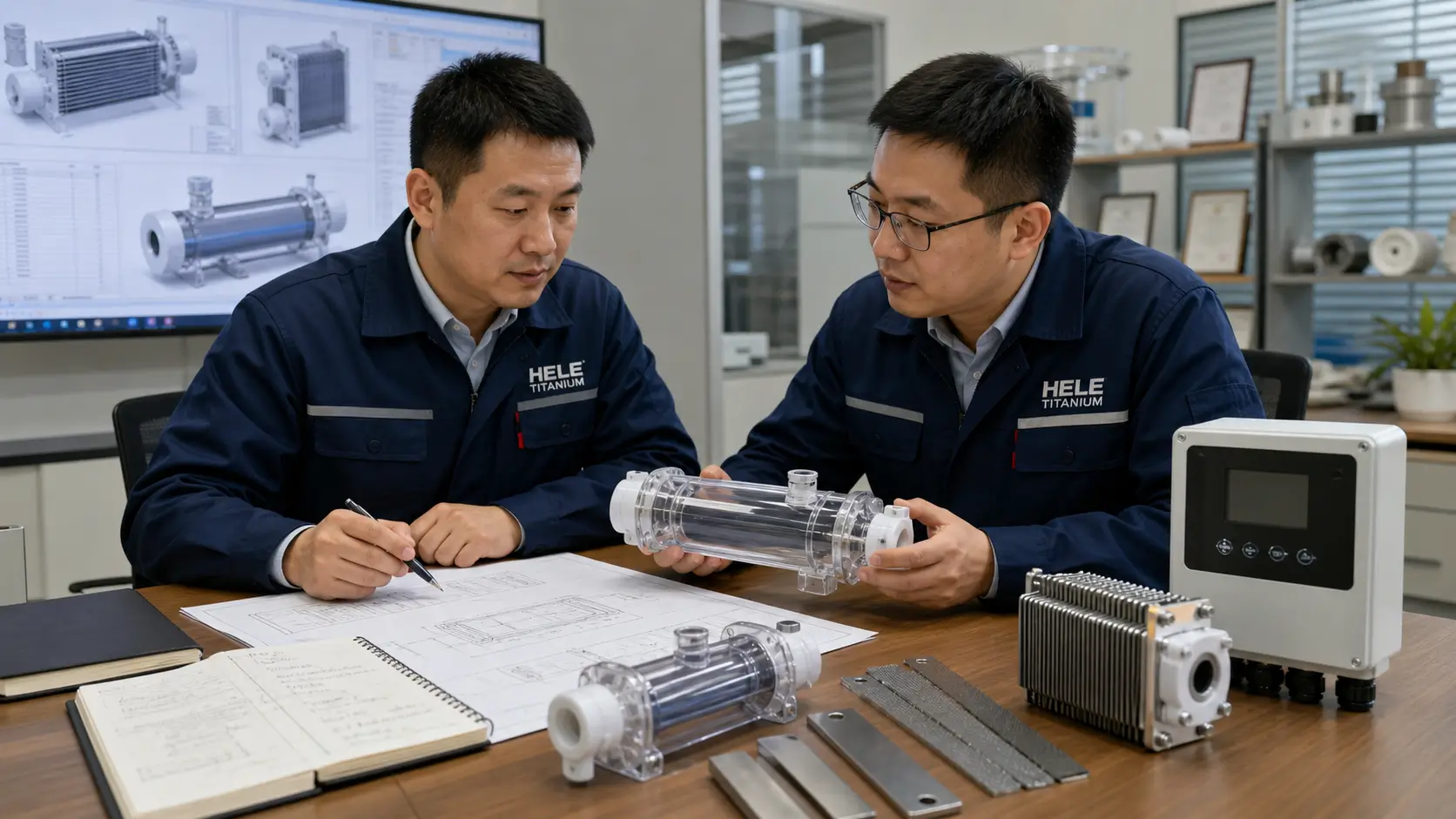
Engineer inspecting salt chlorinator systems and titanium salt cells
SALT CELL ENGINEERING REVIEW
Titanium Salt Cell
Configured for chlorine output
Controller Matching
Reviewed by system needs
OEM Documentation
Labels and packing support
Designed for:
Residential Pools
Commercial Pools
Spas & Hot Tubs
Pool Equipment Brands
Replacement Cell Programs
OEM / ODM Projects

Explore Our Salt Chlorinator Product Line

Choose from residential salt chlorinator systems, commercial salt chlorine generators, titanium salt cells, replacement cells, control boxes, self-cleaning cells, OEM kits, and custom pool chlorination solutions according to pool size, chlorine output, salinity range, installation requirements, and market positioning.

Residential Salt Chlorinator Systems

Residential Salt Chlorinator Systems

Best For: Private swimming pools, villas, residential pool projects, and pool equipment distributors.
Available Options: Compact controller, titanium salt cell, flow switch, standard plumbing connection, and self-cleaning function.
Key Review Factors: Pool volume, chlorine output, salinity range, pump run time, installation space, and local market requirements.
View Residential Systems
Commercial Pool Salt Chlorinators

Commercial Pool Salt Chlorinators

Best For: Hotels, resorts, schools, gyms, public pools, and commercial pool contractors.
Available Options: Higher chlorine output, larger salt cell, external control cabinet, multiple-cell configuration, and project documentation.
Key Review Factors: Pool volume, bather load, operating hours, water temperature, circulation system, and service access.
View Commercial Systems
Titanium Salt Chlorinator Cells

Titanium Salt Chlorinator Cells

Best For: Salt chlorine generator manufacturers, replacement cell programs, and OEM pool equipment brands.
Available Options: Plate cell, grid cell, clear housing cell, custom electrode size, cable connection, and self-cleaning polarity reversal.
Key Review Factors: Chlorine output, electrode size, coating type, cell voltage, current, salinity range, and housing compatibility.
View Titanium Salt Cells
Replacement Salt Cells

Replacement Salt Cells

Best For: Distributors and service companies supporting existing pool salt chlorinator systems.
Available Options: Standard replacement cells, compatible cell design, custom cable, threaded connection, and labeled packaging.
Key Review Factors: Existing model, cell dimension, connector type, voltage/current range, flow direction, and market compatibility.
Discuss Replacement Cells
Salt Chlorinator Control Boxes

Salt Chlorinator Control Boxes

Best For: Complete salt chlorinator systems, OEM pool equipment projects, and product line development.
Available Options: Digital display, timer, output control, alarm function, flow detection, salinity warning, and self-cleaning control logic.
Key Review Factors: Power supply, control function, housing design, interface, protection level, language, and certification requirements.
View Control Boxes
Self-Cleaning Salt Chlorinator Cells

Self-Cleaning Salt Chlorinator Cells

Best For: Pool systems requiring reduced scale buildup and easier cell maintenance.
Available Options: Reverse polarity function, controller matching, titanium electrode configuration, and cell housing design.
Key Review Factors: Water hardness, polarity reversal cycle, salinity, calcium scaling tendency, controller logic, and maintenance expectations.
Discuss Self-Cleaning Cells
OEM / ODM Salt Chlorinator Kits

OEM / ODM Salt Chlorinator Kits

Best For: Pool equipment brands, distributors, and private-label product programs.
Available Options: Logo, housing color, packaging, manual, controller design, salt cell configuration, and product series planning.
Key Review Factors: Target market, price level, pool size range, certification needs, labeling, documentation, and order quantity.
Request OEM Program
Custom Pool Chlorination Solutions

Custom Pool Chlorination Solutions

Best For: Special pool projects, spa systems, commercial pools, and non-standard installation requirements.
Available Options: Custom salt cell, control system, electrode design, plumbing connection, wiring, and project-specific documentation.
Key Review Factors: Pool volume, water chemistry, installation layout, chlorine demand, operating hours, and technical requirements.
Upload Project Requirements
Section 6

Titanium Salt Cell Technology for Stable Chlorine Generation

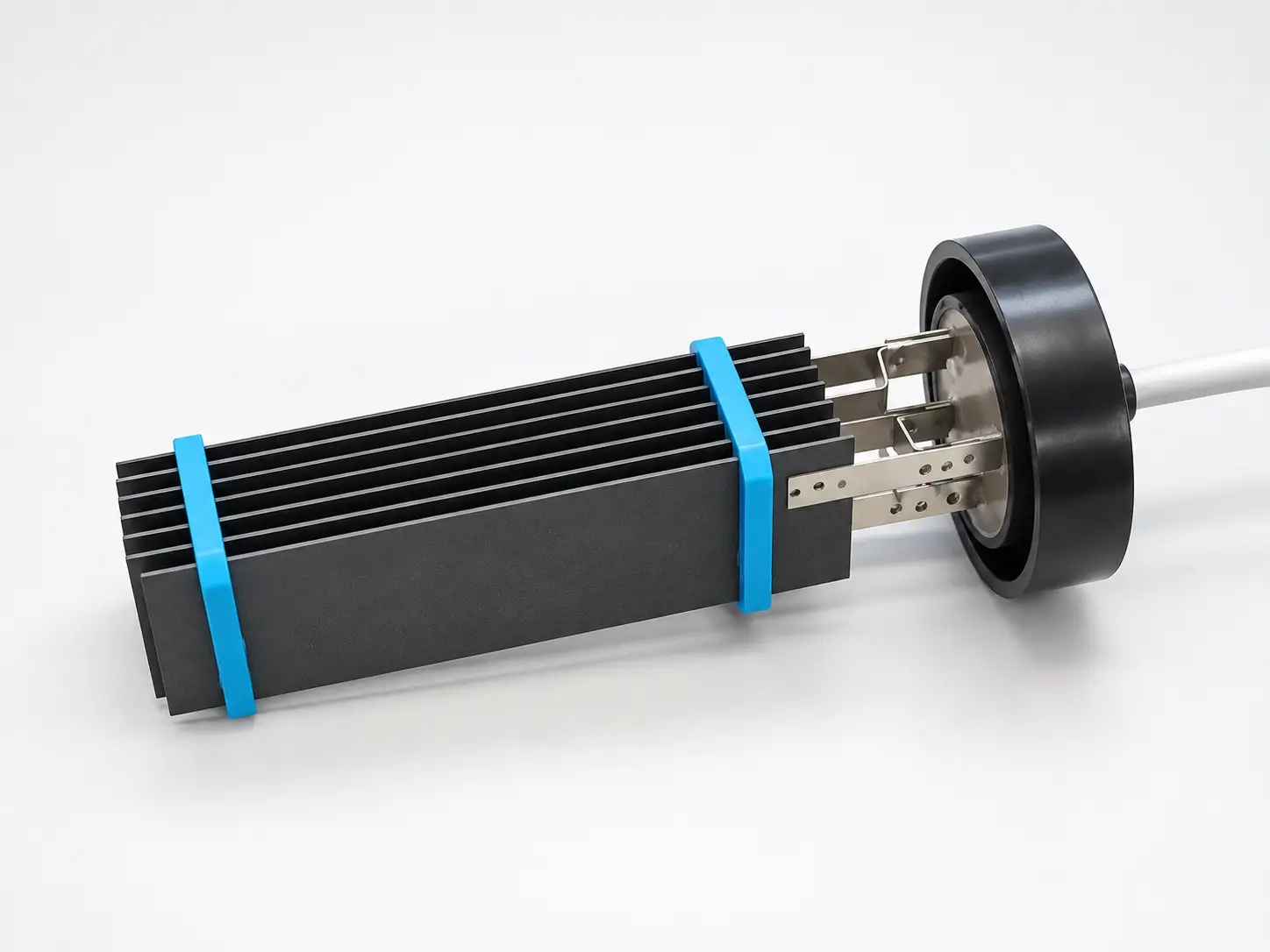
The salt cell is the core component of a salt chlorine generator. Its performance depends on titanium electrode quality, coating system, active area, current density, water flow, salinity range, polarity reversal, and controller matching.

Titanium Salt Cell Technology

Coated Titanium Electrodes

Titanium electrodes are coated for chlorine generation in saltwater electrolysis conditions according to project requirements.

Active Area & Output Matching

Electrode surface area and cell structure should match the required chlorine output and operating schedule.

Clear Cell Housing Options

Transparent or compact cell housing can support installation visibility, inspection, and service convenience.

Reverse Polarity Self-Cleaning

Polarity reversal can help reduce scale buildup depending on water hardness, water balance, and controller settings.

Flow & Safety Interface

Flow switch, water flow direction, plumbing connection, and electrical interface should be reviewed during system design.

Replacement Cell Compatibility

Cell dimensions, connector type, voltage/current range, and housing design can be reviewed for replacement cell programs.

Choose the Right Salt Chlorinator by Pool Size & Output

The right salt chlorinator depends on pool volume, chlorine output, salinity range, cell quality, self-cleaning function, controller features, plumbing compatibility, and OEM requirements.

Selection Factor Buyer Question Recommendation
Pool Size How many gallons or cubic meters is the pool? Choose a model rated above the actual pool volume when needed.
Chlorine Output How many g/hr of chlorine output is required? Match output to pool size, climate, bather load, and daily runtime.
Salt Level What salinity range does the system support? Confirm operating salt range, low-salt warning, and protection functions.
Titanium Cell What electrode material and coating are used? Use titanium electrode cells with suitable MMO coating for chlorine generation.
Self-Cleaning Does the system support reverse polarity? Reverse polarity helps reduce scale buildup and maintenance frequency.
Controller Is the controller easy to use and service? Check display, alarms, diagnostics, timer, and fault protection.
Installation Will it fit the pool plumbing? Confirm pipe size, union fitting, flow direction, bypass, and installation space.
OEM Support Do you need private label or custom product design? Confirm housing, controller, logo, packaging, manual, and certification needs.

What Affects Salt Chlorinator Performance?

Salt chlorinator performance depends not only on the equipment itself. Pool volume, salt concentration, water temperature, pH, stabilizer level, calcium hardness, pump run time, sunlight exposure, bather load, and installation quality can all affect chlorine generation and user experience.

Pool Volume

1. Pool Volume

Correct pool size matching helps determine the required chlorine output and system model.

Salt Concentration

2. Salt Concentration

Salt level should stay within the recommended operating range for the selected salt chlorinator model.

Water Temperature

3. Water Temperature

Low water temperature may reduce chlorine generation efficiency or affect system operation depending on controller design.

pH & Water Balance

4. pH & Water Balance

pH, alkalinity, calcium hardness, and stabilizer level should be managed according to pool operation guidelines.

Pump Run Time

5. Pump Run Time

Daily operating hours affect total chlorine generation and system sizing.

Installation & Flow Direction

6. Installation & Flow Direction

Cell position, water flow direction, plumbing size, cable routing, and service access should be reviewed before installation.

Buyer Note

A salt chlorinator reduces manual chlorine dosing and supports continuous chlorine generation, but pool water still requires regular water testing and maintenance, correct salt level, balanced chemistry, and routine cell inspection.

Custom Salt Chlorinator Systems
Built Around Your Market

Custom Pool Salt Chlorinator Engineering for OEM Brands

Custom engineering salt chlorinator

Custom salt chlorinator development should be reviewed according to chlorine output, pool size range, titanium cell design, controller logic, self-cleaning function, housing design, plumbing connection, certification needs, packaging, and after-sales support requirements.

Chlorine Output Matching

Review pool volume, daily chlorine demand, operating hours, and target output range.

Titanium Cell Design

Review electrode size, coating, cell housing, cable connection, flow direction, and salinity range.

Self-Cleaning Function

Support reverse polarity configuration and controller matching based on water hardness and scaling conditions.

Controller & Interface Design

Review display, button layout, alarm logic, flow switch, salinity warning, timer, and user interface needs.

OEM Branding & Packaging

Logo, label, housing color, manual, carton, product series, and private-label packaging can be supported when required.

Testing & Documentation

Function test, visual inspection, packing list, product labels, export documents, and project-specific records can be prepared when required.

Designing Your Custom Salt Chlorinator: 4 Simple Steps

A custom salt chlorinator project becomes easier when the product requirements are clear from the beginning. Our process helps convert your pool size range, chlorine output target, salt cell requirement, controller function, and branding needs into a production-ready configuration for your OEM salt chlorinator or pool equipment brand.

01
Share Your Market & Pool Size Range

Share Your Market & Pool Size Range

Tell us your target market, pool volume range, residential or commercial use, expected chlorine output, salinity range, and product positioning for your salt chlorine generator.

Output: We identify the basic product category, output range, and suitable salt chlorinator configuration direction.
02
Confirm Salt Cell & Controller Configuration

Confirm Salt Cell & Controller Configuration

We review titanium salt cell size, controller functions, self-cleaning salt cell logic, power supply, flow switch, alarm function, and plumbing connection.

Output: We recommend a practical system configuration based on chlorine output, installation requirements, and market needs.
03
Review Branding, Packaging & Sample

Review Branding, Packaging & Sample

Confirm logo, product label, manual, carton design, product appearance, sample testing requirements, and any private-label details for your salt chlorinator project.

Output: Your sample or pre-production configuration becomes ready for review and approval.
04
Approve Production & Delivery Plan

Approve Production & Delivery Plan

After sample or specification confirmation, we prepare salt chlorinator production, function testing, inspection, packing, export documentation, and shipment coordination.

Output: Your order moves into production and delivery with agreed specifications and documentation.

Salt Chlorinator Quality Control: Cell, Controller & Output Testing

Salt chlorinator reliability depends on titanium electrode quality, cell sealing, reverse polarity function, controller stability, electrical safety, chlorine output, and final packing. Hele Titanium checks each key point before shipment.

Titanium Cell Inspection

We inspect electrode plates, spacing, coating condition, and cell assembly before final system testing.

Cell Sealing & Leak Test

Housing, unions, seals, and water-contact areas are checked to reduce leakage risk during pool operation.

Controller Function Test

Power-on function, display, buttons, alarms, timer, and control logic are verified before packing.

Reverse Polarity Test

Self-cleaning reverse polarity function is checked to support scale reduction and cell maintenance.

Chlorine Output Test

Chlorine output, current behavior, salinity response, and working stability are reviewed according to model requirements.

Salt Chlorinator Quality Assurance Testing Parameters

Quality Item What We Verify Why It Matters
Titanium Electrode Cell Electrode plate quality, coating condition, spacing, and assembly Supports stable chlorine generation and cell lifespan
Cell Housing Sealing, union fittings, water-contact parts, and leak resistance Helps prevent leakage and installation problems
Electrical Safety Controller, wiring, insulation, connectors, and power function Supports safe and reliable pool operation
Reverse Polarity Self-cleaning polarity switching function Helps reduce scale buildup on the cell
Flow Protection Flow switch or no-flow protection function if included Protects the cell when water flow is insufficient
Chlorine Output Rated output in g/hr under test conditions Confirms the system matches pool sanitation demand
Aging / Runtime Test Continuous operation and controller stability Improves reliability before shipment
Final Packing Check Labels, manuals, accessories, packaging, and export readiness Supports distributor and OEM delivery requirements

Performance Proof for Pool Equipment Buyers

For qualified orders, Hele Titanium can provide cell inspection records, output test data, electrical test records, packing documents, and OEM support files.

Choose Salt Chlorinators
by Pool Type

Different pool types require different chlorine output, controller features, installation design, and maintenance expectations. Use this guide to match the salt chlorinator system to your pool application.

Clear Pool Water Application
Pool Type Recommended System Buyer Priority Key RFQ Input
Small Pool / Spa Compact 10–15 g/hr unit Space-saving, easy operation, lower cost Pool volume, pipe size, installation space
Residential Inground Pool 20–30 g/hr standard unit Reliability, self-cleaning, simple control Pool volume, climate, usage frequency, power standard
Above-Ground Pool Adapted compact model Easy installation and simplified operation Pool size, pipe size, mounting space, voltage
Hotel / Villa Pool 30–50 g/hr system Stable chlorine output and reliable daily operation Water volume, daily users, runtime, maintenance plan
Commercial Aquatic Pool 50 g/hr or multiple-unit configuration High output, durability, service support Pool volume, turnover rate, bather load, installation layout
OEM Pool Equipment Brand Custom cell + controller Private label, integration, repeatable supply Drawings, housing style, controller specs, logo, quantity

Empowering Our Partners: Tailored Salt Chlorinator Solutions

We do not just manufacture salt chlorinators. We support pool industry partners with product design, private labeling, technical compatibility, and supply reliability so they can grow their business with fewer service issues.

Pool Equipment Distributors

Pool Equipment Distributors & Wholesalers

Pain Point

Need reliable, margin-friendly products that are easy to inventory and sell.

Hele Value

Factory-direct supply, stable product quality, private labeling, tiered B2B pricing, and reliable bulk order support.

Pool Builders & Installers

Pool Builders & Installers

Pain Point

Need equipment that installs smoothly and reduces costly callbacks.

Hele Value

Straightforward plumbing integration, clear diagnostics, durable salt cells, and installation-friendly system design.

Pool Service & Maintenance

Pool Service & Maintenance

Pain Point

Need long-life replacement cells and equipment that technicians can troubleshoot quickly.

Hele Value

Extended cell life, user-friendly alerts, smart diagnostics, and support for replacement cell programs.

Commercial Pool Operators

Commercial Pool Operators

Pain Point

Need high-output systems that can handle heavy bather loads and demanding facility schedules.

Hele Value

Commercial-grade salt chlorinator options, higher output models, reliable control systems, and ORP / pH integration support.

Why Pool Equipment Brands Choose Hele Titanium

Hele Titanium supports global buyers with titanium electrode cell manufacturing, salt chlorinator system assembly, controller customization, quality testing, OEM branding, and export-ready documentation.

Titanium Electrode Manufacturing Background

Hele Titanium brings coated titanium electrode and electrolytic cell experience into salt chlorinator cell manufacturing.

Factory-Direct System Supply

Salt chlorinator systems, salt cells, controllers, replacement cells, and accessories can be supplied from one manufacturing source.

OEM / ODM Configuration Support

Housing, labels, packaging, product series, and market-specific configurations can be reviewed for brand customers.

Custom Salt Cell Capability

Titanium electrode size, housing design, cable connection, and output configuration can be reviewed according to project needs.

Quality & Documentation Support

Function tests, visual inspection, packing documents, labels, and project-specific records can be prepared when required.

Global B2B Export Support

Export packing, shipping coordination, product documentation, and international delivery support are available.

Pool Salt Chlorinator FAQ

Find practical answers about pool salt chlorinators, sizing, commercial use, OEM customization, and maintenance.

What is a pool salt chlorinator?
A pool salt chlorinator is an electrolytic system that converts dissolved salt in pool water into chlorine, providing a continuous supply of sanitizer to maintain water quality without manual dosing.
How does a salt chlorine generator work?
Pool water with a specific salt concentration passes through an electrolytic cell containing titanium plates. An electrical current is applied, triggering electrolysis that generates active chlorine to sanitize the pool.
What is the difference between a salt chlorinator system and a salt cell?
A complete salt chlorinator system includes the power supply controller and the electrolytic cell. The salt cell is the consumable component where the electrolysis occurs, containing the coated titanium electrodes.
How do I choose the right salt chlorinator for my pool size?
Selection depends on pool volume, water balance, salinity, temperature, pump run time, and operating conditions. It is generally recommended to choose a system rated for a capacity 20-30% larger than your actual pool volume.
What chlorine output do I need for my pool?
Required chlorine output depends on pool volume, bather load, and climate. Residential pools typically require 15-50 g/hr, while commercial applications may need higher output or multiple units.
What salt level is required for a salt chlorinator?
Most standard pool salt chlorinators operate efficiently at a salinity level between 3,000 and 4,000 ppm. Always refer to the specific model's requirements, as operating outside this range can affect efficiency and cell lifespan.
What is a self-cleaning salt chlorinator cell?
A self-cleaning cell uses reverse polarity technology. The controller periodically reverses the electrical current direction, which helps shed calcium and mineral scale buildup from the titanium plates, extending the time between manual cleanings.
Do salt chlorinator cells still need maintenance?
Yes. While self-cleaning features reduce scale buildup, cells still require periodic visual inspection and occasional manual cleaning with a mild acid solution to remove stubborn mineral deposits and ensure optimal performance.
Can you supply replacement salt cells?
Yes, we manufacture and supply replacement salt cells for various standard systems. We can also produce custom replacement cells based on your specifications, dimensions, and coating requirements.
Can you customize salt chlorinator systems for OEM brands?
Yes, Hele Titanium provides comprehensive OEM and private-label services. We can customize the cell design, controller interface, housing, branding, packaging, and specific functional requirements for your market.
What information is needed for a salt chlorinator quote?
To provide an accurate quote, please share the target pool volume, required chlorine output (g/hr), expected salinity range, specific controller features, OEM branding requirements, order quantity, and destination market.
Can you provide packing and export documentation?
Yes, we provide standard export packaging designed to protect the equipment during transit. We also supply all necessary export documentation, including commercial invoices, packing lists, and certificates of origin as required.

Inside Our Salt Chlorinator Manufacturing & Quality System

See how we prepare titanium salt cells, assemble pool salt chlorinator systems, test controller functions, inspect packaging, and support OEM pool equipment projects.

Need production photos, product specifications, packing records, or export documents? Contact our team for salt chlorinator project support.

Request Documentation

Salt Chlorinator Selection Guide: Simple & Clear for Pool Professionals

Read Time: 16 Minutes Author: Hele Titanium Engineering Team Last Updated: 2026

When your business relies on clear, low-maintenance pools and fewer service calls, the right salt chlorinator system makes a direct difference. This guide helps pool professionals, distributors, installers, OEM buyers, and commercial operators evaluate salt chlorine generator capacity, titanium cell quality, system functions, maintenance needs, and manufacturer reliability.

Before You RFQ Salt Chlorinators, Confirm These 5 Things

  1. Pool type: inground, above-ground, spa, residential, commercial, or OEM private label
  2. Pool volume and usage: liters / gallons, filtration hours, climate, and bather load
  3. Chlorine output: required g/hr capacity and safety margin
  4. System features: reverse polarity, boost mode, diagnostics, voltage, flow sensor
  5. Branding and supply needs: OEM logo, housing, packaging, quantity, and target price

1. What Is a Salt Chlorinator?

Understand the fundamental definition and purpose of automated salt chlorine generation systems.

A salt chlorinator, also called a salt chlorine generator, is an automated on-site chlorine production unit for pools. It uses dissolved salt and an electrolytic titanium cell to generate active chlorine for sanitation, replacing the need to manually add traditional liquid or granular chlorine.

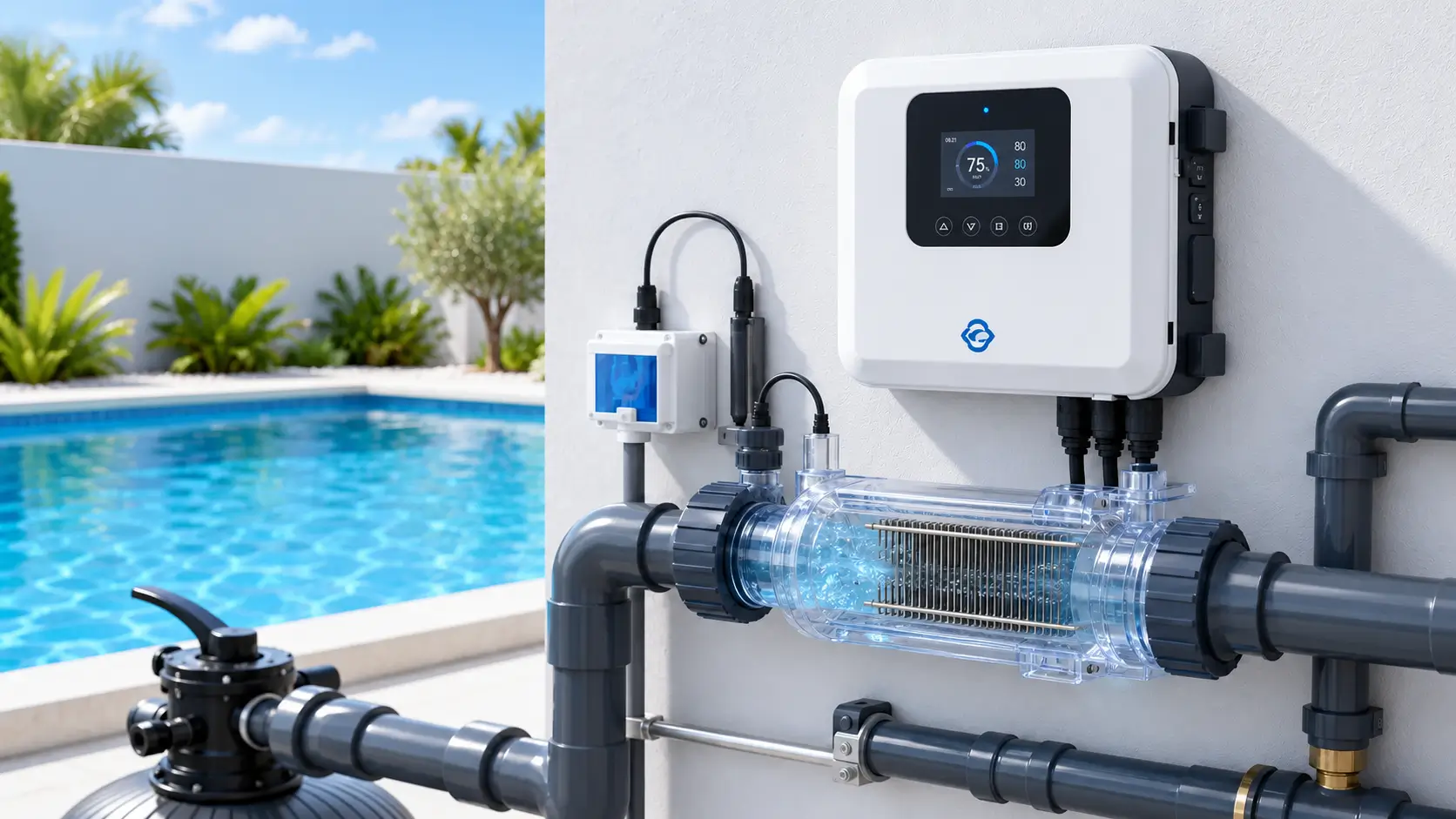
Salt Chlorinator System Overview

2. How Pool Salt Chlorination Works

A step-by-step breakdown of the electrolytic process that converts saltwater into active sanitizer.

Salt chlorinators reduce manual chlorine handling through a simple, continuous cycle:

  1. Salt is added to the pool water.
  2. The pump circulates saltwater through the electrolytic cell.
  3. Titanium plates inside the cell receive low-voltage DC current.
  4. Electrolysis generates chlorine.
  5. Chlorine forms hypochlorous acid for sanitation.
  6. After use, chlorine reverts back toward chloride, continuing the cycle.
How Pool Salt Chlorination Works

3. Salt Chlorinator vs Traditional Chlorine

Compare the operational, chemical, and cost differences between automated salt systems and manual chlorination.

Feature Salt Chlorinator Pool Traditional Chlorine Pool
Sanitizer generationAutomated on-siteManual addition
Water comfortSofter feel, less irritationCan be harsh on eyes/skin
Chemical handlingMinimal (add salt occasionally)Frequent handling/storage
Long-term costLower chemical costsOngoing chemical purchases

4. Core Components of a Salt Chlorinator System

Identify the essential hardware elements required for reliable and efficient chlorine production.

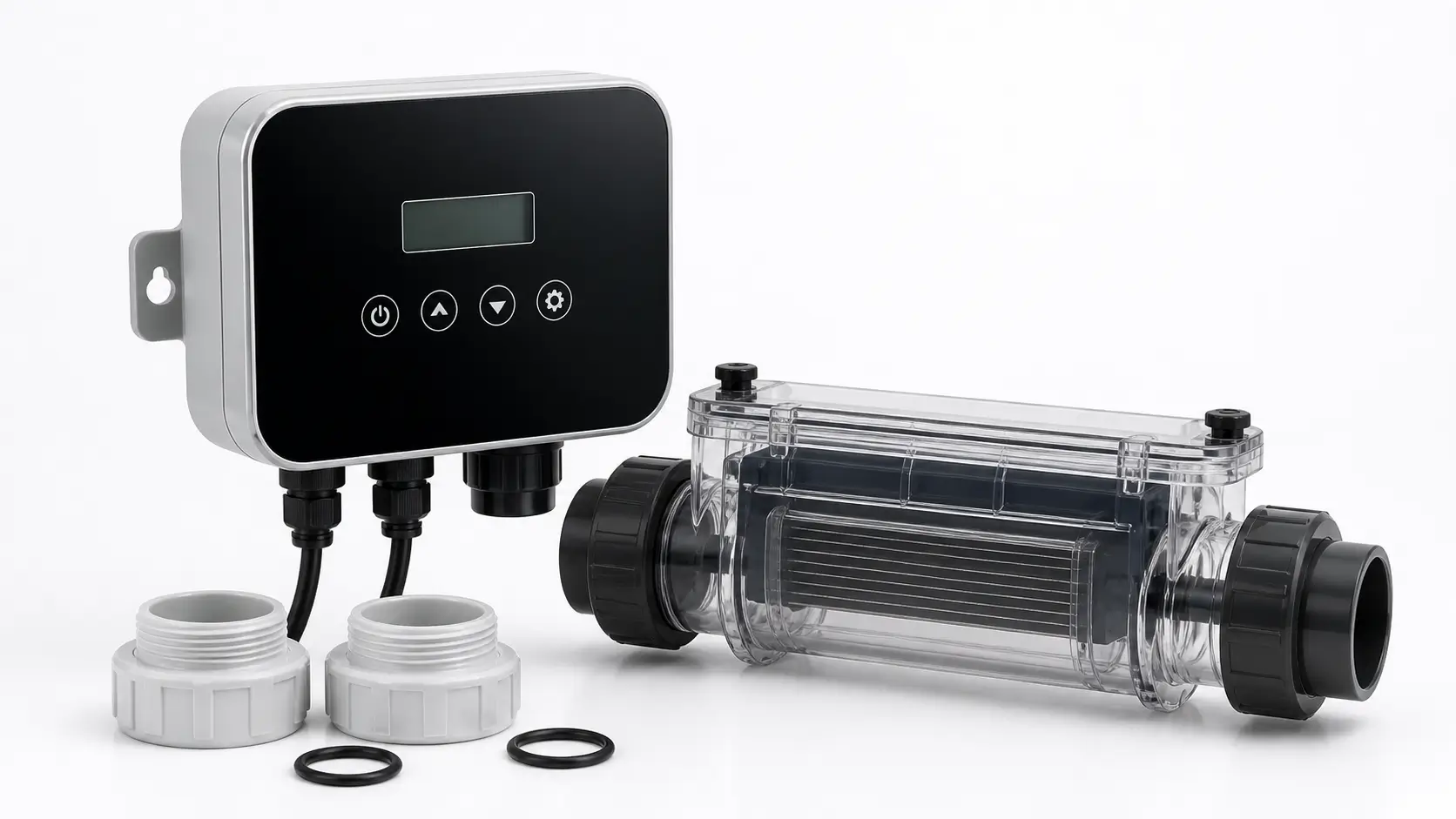
  • Control panel / power supply
  • Electrolytic salt cell
  • Titanium MMO-coated plates
  • Flow sensor / flow switch
  • Salt level detection & diagnostic display
  • Plumbing unions and installation fittings
Core Components of a Salt Chlorinator System

5. Chlorine Output and Pool Size Matching

Learn how to accurately calculate and select the correct g/hr capacity for varying pool volumes and demands.

Selecting the correct chlorine output (measured in grams per hour, g/hr) is critical for maintaining proper sanitation levels. An undersized unit will fail to keep up with chlorine demand, especially during peak summer months or heavy bather loads.

Chlorine Output Typical Pool Volume (m³) Typical Pool Volume (Gallons)
10 - 15 g/hrUp to 40 m³Up to 10,000 gal
20 - 30 g/hr40 - 80 m³10,000 - 21,000 gal
30 - 50 g/hr80 - 120+ m³21,000 - 32,000+ gal

6. Titanium Cell and Electrode Quality

Discover why premium titanium substrates and MMO coatings are critical for maximizing cell lifespan.

The electrolytic cell is the heart of the system. To maximize the 8,000 to 10,000+ hour potential of the cell, ensure the manufacturer utilizes:

  • Grade 1 pure titanium substrate
  • High-quality Mixed Metal Oxide (MMO) coating
  • Optimized plate spacing for efficient electrolysis
  • Durable housing resistant to UV and pool chemicals

7. Self-Cleaning / Reverse Polarity Function

Explore how modern reverse polarity technology prevents scale buildup and reduces maintenance downtime.

Modern salt chlorinators feature a reverse polarity (self-cleaning) function. By periodically reversing the direction of the electrical current across the titanium plates, the system automatically sheds calcium and mineral scale buildup. This drastically reduces the need for manual acid washing and extends the lifespan of the MMO coating.

8. How to Select the Right Salt Chlorinator

A comprehensive checklist for evaluating system specifications, features, and manufacturer reliability.

  1. Size the system above actual pool volume when needed.
  2. Check chlorine output in g/hr.
  3. Verify titanium cell quality and coating.
  4. Confirm reverse polarity self-cleaning.
  5. Review diagnostics, alarms, timer, and service features.
  6. Check compatibility with plumbing and automation.
  7. Evaluate warranty, spare cells, OEM support, and manufacturer documentation.

9. Applications by Pool Type

Tailored recommendations for matching chlorinator capacities to specific residential, commercial, and OEM applications.

Pool Type Recommended System Buyer Priority
Small Pool / Spa10–15 g/hr compact unitSpace-saving, easy operation, cost
Residential Inground20–30 g/hr standard unitReliability, self-cleaning, easy use
Above-Ground PoolAdapted compact modelEasy installation
Hotel / Villa Pool30–50 g/hr systemStable output, daily reliability
Commercial Aquatic50 g/hr or multiple unitsHigh output, durability, service support
OEM Pool EquipmentCustom cell + controllerBranding, integration, repeatable supply

10. Installation & Plumbing Considerations

Best practices for integrating salt cells into existing pool plumbing and equipment pads safely.

  • Placement: Install the salt cell as the last piece of equipment on the return line (after the filter and heater) to prevent concentrated chlorine from damaging other components.
  • Orientation: Ensure the cell is installed according to the manufacturer's flow direction arrows. Some models support both horizontal and vertical installation.
  • Flow Switch: A reliable flow switch is mandatory to ensure the system only generates chlorine when water is actively circulating, preventing dangerous gas buildup.

11. Maintenance and Troubleshooting

Essential guidelines for inspecting, cleaning, and maintaining your electrolytic cell to ensure optimal performance.

Important Maintenance Warning

Salt chlorinators reduce manual chlorine handling, but they do not eliminate pool water management. Proper salt level, pH, calcium hardness, stabilizer, and flow conditions are still required for reliable sanitation and cell life.

  • Inspect cell every 2–3 months; clean only when scale is visible.
  • Use diluted acid carefully for cleaning.
  • Never scrape plates with metal tools.
  • Adjust output seasonally.
  • Inspect connectors with power off.

12. Supplier Evaluation Checklist

Key criteria for assessing manufacturers, ensuring quality control, and securing reliable OEM/ODM partnerships.

  • Do they manufacture or control the titanium salt cell?
  • Can they verify coating quality and provide chlorine output test data?
  • Do they support OEM / ODM customization?
  • Can they provide installation manuals and troubleshooting guides?
  • Do they supply replacement cells and support stable lead times?

13. RFQ Checklist

The critical specifications and project details required to receive an accurate and comprehensive technical quote.

When requesting a quote, please provide the following details to ensure an accurate proposal:

  • Pool type
  • Pool volume in m³ or gallons
  • Required chlorine output in g/hr
  • Salt range / salinity requirement
  • Power standard: 110V / 220V / 50Hz / 60Hz / custom
  • Pipe size and plumbing layout
  • Controller function requirements
  • Reverse polarity requirement
  • Flow switch / protection requirement
  • OEM logo or private-label needs
  • Housing style or product drawings
  • Quantity
  • Target market
  • Certification or documentation requirements
  • Delivery schedule

Need Help Selecting the Right Salt Chlorinator?

Send your pool volume, pool type, required chlorine output, salt range, pipe size, power standard, controller requirements, OEM branding needs, and quantity to Hele Titanium. Our team will help you select or customize the right pool salt chlorinator system.

SALT CHLORINATOR INQUIRY

Get Your Custom Salt Chlorinator Recommendation

Tell us your pool type, pool volume, required chlorine output, salt range, power standard, pipe size, controller requirements, OEM branding needs, and target market. Our engineering team will recommend the most suitable pool salt chlorinator system for your project.

  • Titanium Electrode Cell & Stable Chlorine Output
  • Residential, Commercial & OEM Salt Chlorinator Systems
  • Reverse Polarity, Controller Testing & Export Support

Direct Contact:

sales@heletitanium.com

Room 1206, Building 1, Huaxia Yue World

Request a Salt Chlorinator Quote

We typically respond within 24 hours.