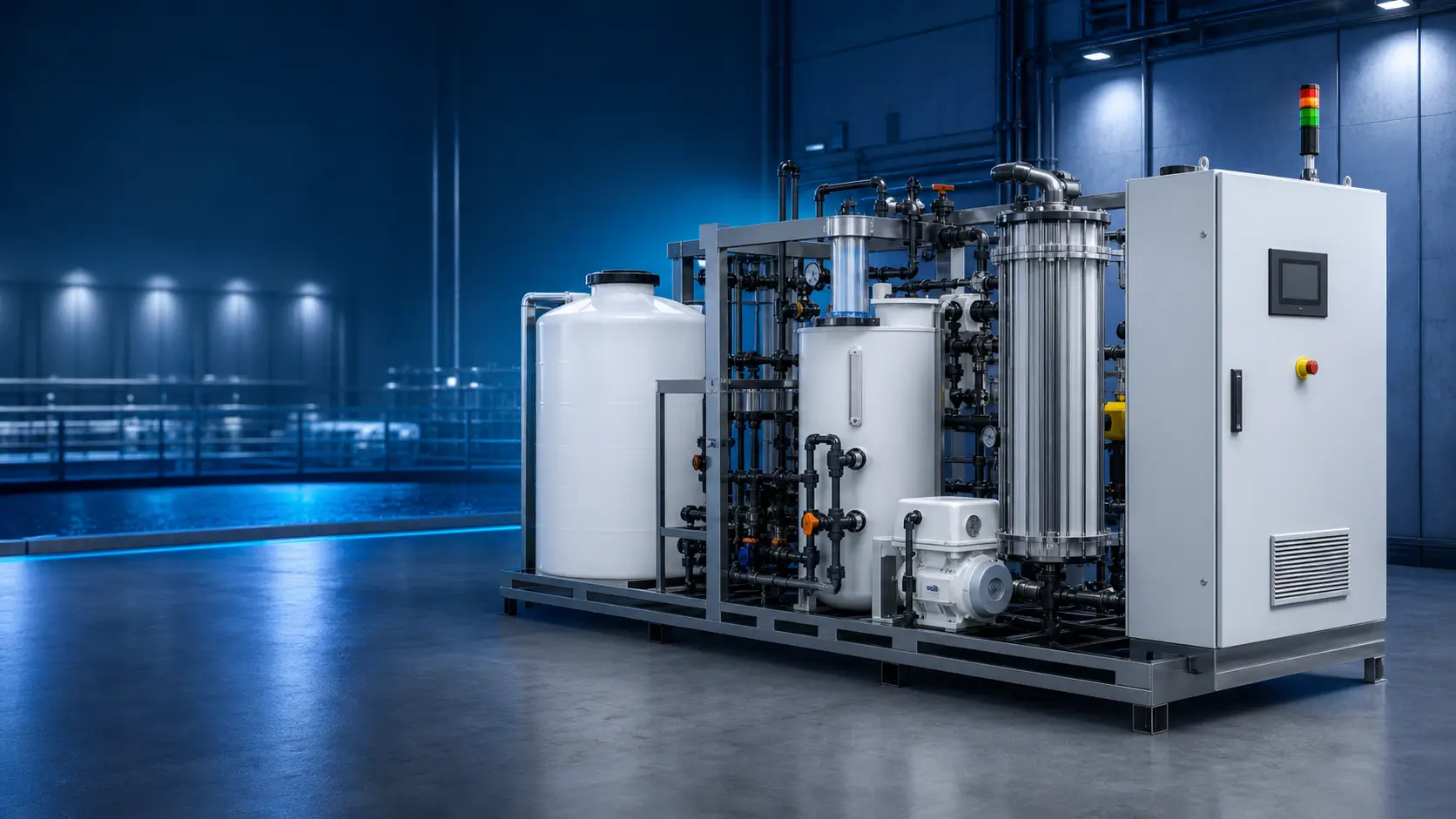
Sodium Hypochlorite Generation Systems
for Water Treatment
Factory-direct sodium hypochlorite generation systems engineered for on-site chlorine production from salt, water, and electricity, supporting drinking water treatment, wastewater disinfection, cooling water systems, industrial sanitation, and OEM chlorination projects.
- On-Site NaOCl Production
- Brine Electrochlorination
- Water & Wastewater Disinfection
- Skid / Containerized Options
- Automation & Dosing Integration
Engineering That Goes Beyond One-Size-Fits-All
Generate disinfectant where you need it, when you need it, with safer operation and lower long-term chemical dependency.
Traditional chlorine supply depends on transporting, storing, and dosing hazardous chemicals. On-site sodium hypochlorite generation helps facilities produce dilute NaOCl from salt, water, and electricity, reducing bulk chemical logistics while improving supply control and operational safety.
Hele Titanium designs complete sodium hypochlorite generator systems around your required chlorine demand, feedwater source, footprint, automation level, safety requirements, dosing logic, and long-term operating cost. From small skid-mounted units to large municipal, industrial, and marine electrochlorination systems, we help you build a safer and more reliable disinfection process.
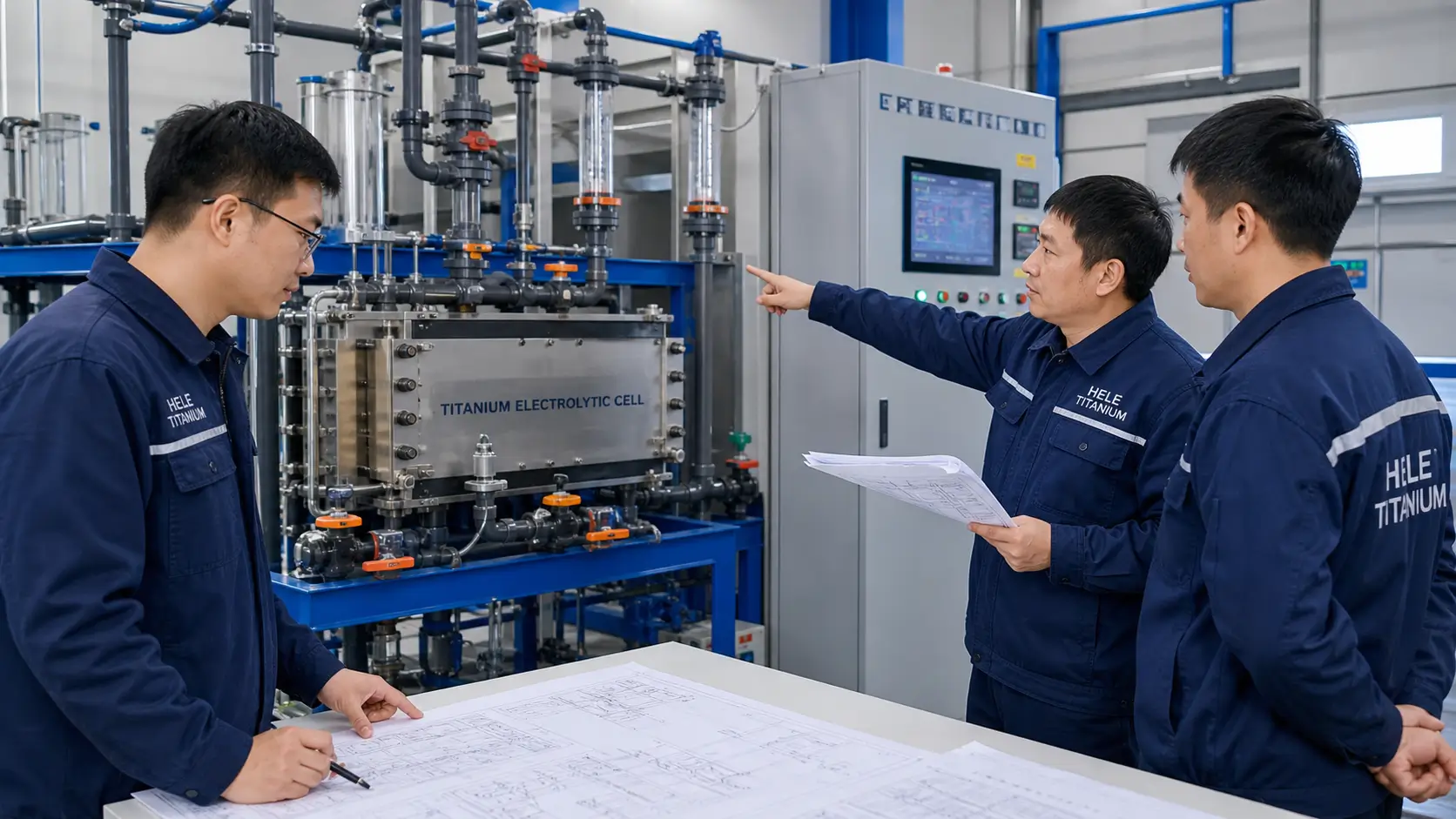
Sodium Hypochlorite Generator
vs Salt Chlorinator
vs Titanium Electrolytic Cell
These products are related through saltwater electrolysis, but they solve different buyer needs. This comparison helps buyers choose the right product page before requesting a quote.
| Buyer Need | Best Product Page | What It Includes | Typical Buyer |
|---|---|---|---|
| I need a complete industrial or municipal system to produce sodium hypochlorite on-site. | Sodium Hypochlorite Generator | Brine preparation, electrolyzer, power supply, control cabinet, piping, safety design, storage integration, and dosing support. | Municipal water plant, wastewater facility, EPC contractor, industrial plant, engineering buyer. |
| I need a complete pool sanitation device. | Salt Chlorinator for Pool Systems | Pool controller, salt cell, housing, reverse polarity cleaning, and pool plumbing compatibility. | Pool equipment distributor, pool contractor, pool OEM buyer. |
| I need the electrolysis cell module only. | Titanium Electrolytic Cells | MMO-coated titanium electrode cell module, housing, terminals, and OEM / replacement cell support. | System integrator, OEM equipment builder, replacement part buyer. |
Buyer Note
If your project requires complete on-site sodium hypochlorite production with process integration and dosing capability, this Sodium Hypochlorite Generators page is the right starting point.
How On-Site Sodium Hypochlorite Generation Works
A sodium hypochlorite generator converts salt, softened water or seawater, and electricity into dilute sodium hypochlorite solution for disinfection. The system integrates brine preparation, electrolysis, hydrogen venting, product storage, dosing, and PLC-based control.
Salt & Water Preparation
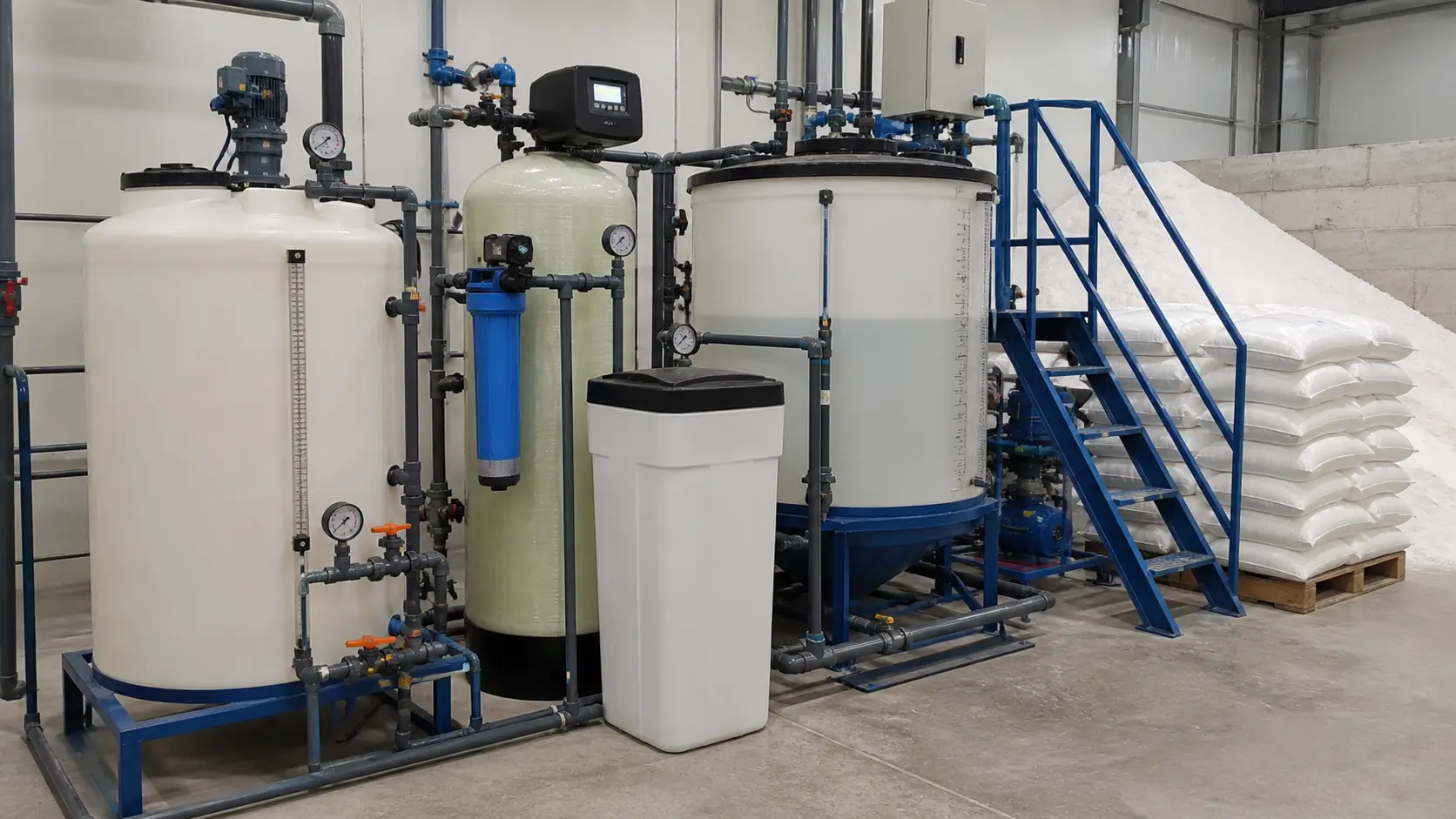
High-purity salt and softened water are used to prepare a controlled brine solution, or filtered seawater is used directly in seawater systems.
Brine Feeding & Flow Control
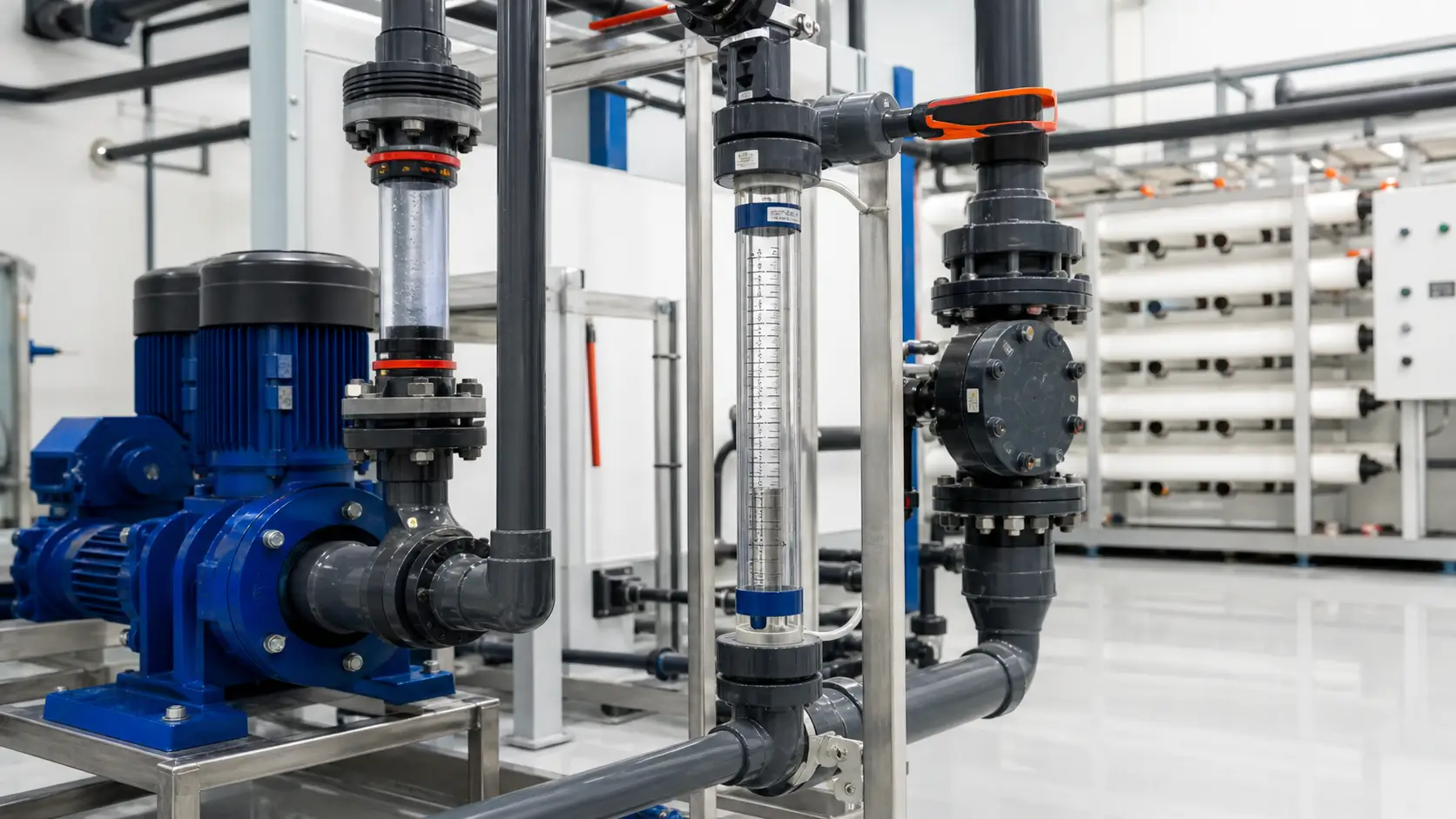
A brine pump or feed system delivers electrolyte at the required flow rate into the electrolytic cell.
Electrolysis in Titanium Cells
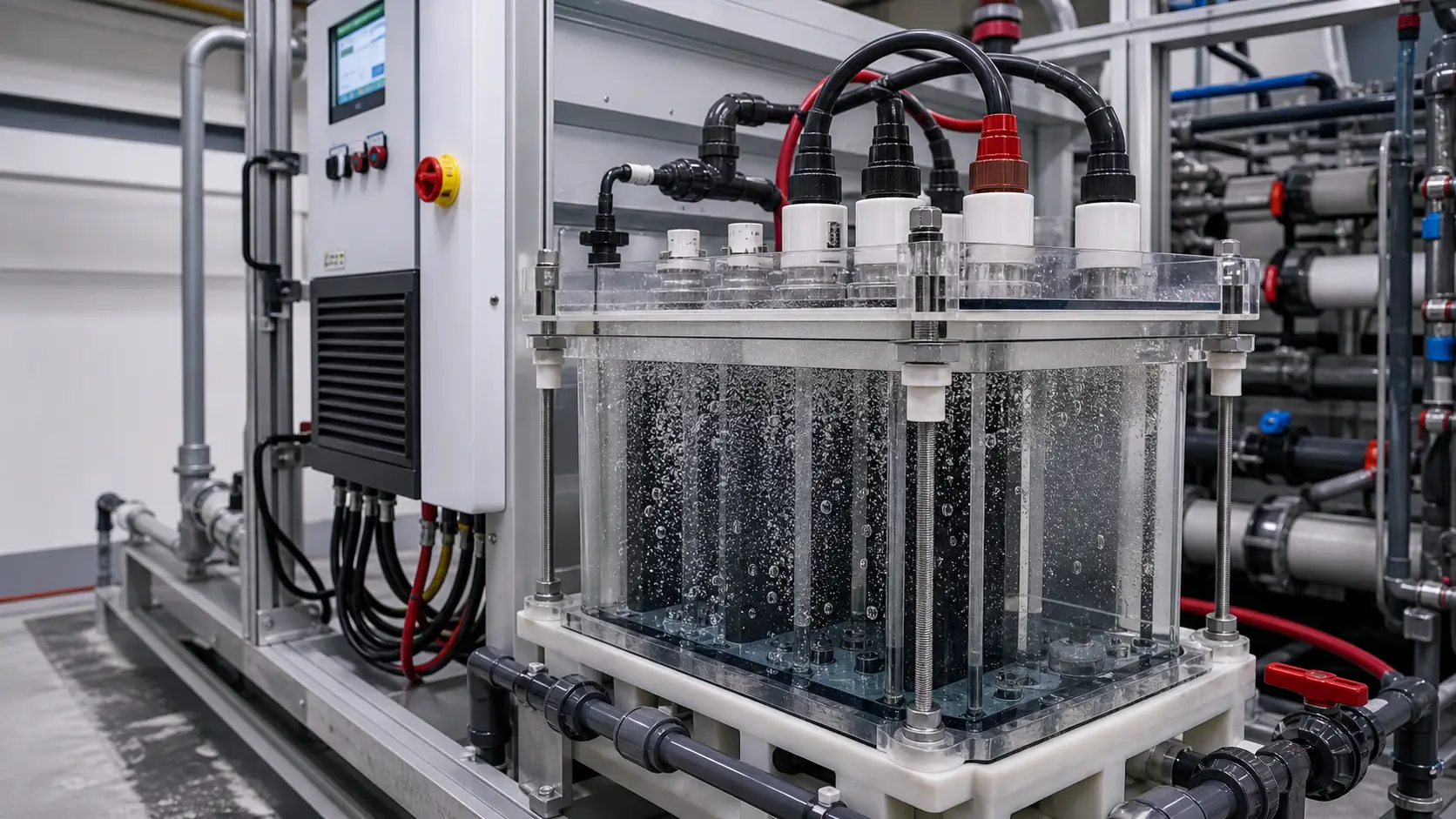
DC power drives electrolysis inside MMO-coated titanium electrolytic cells, generating chlorine and cathodic byproducts.
NaOCl Formation
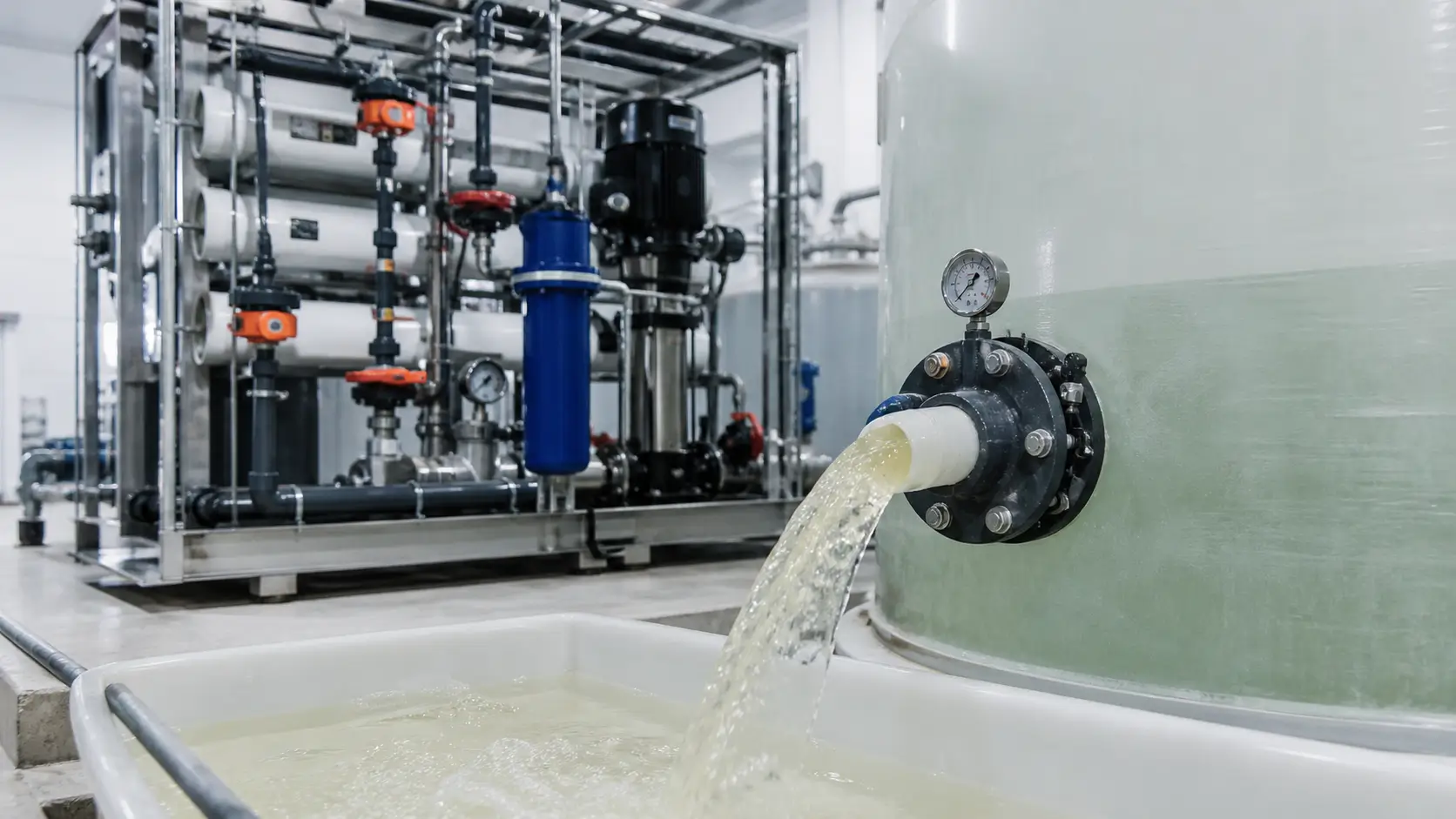
Generated chlorine reacts in solution to form sodium hypochlorite, typically a dilute disinfectant suitable for on-site dosing.
Hydrogen Venting & Safety
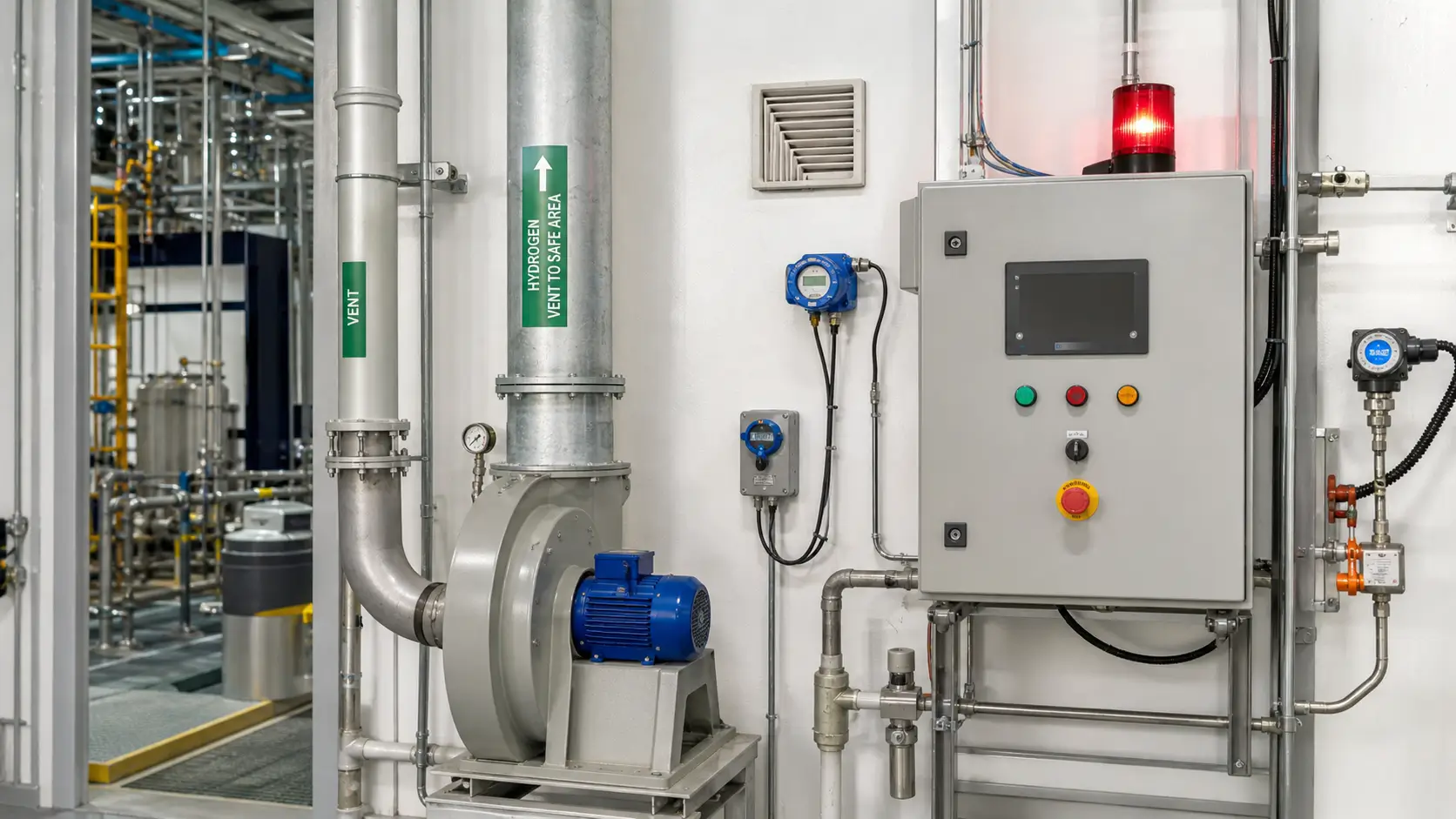
Hydrogen gas is diluted and safely vented through dedicated safety features and monitored system design.
Storage, Dosing & Automation
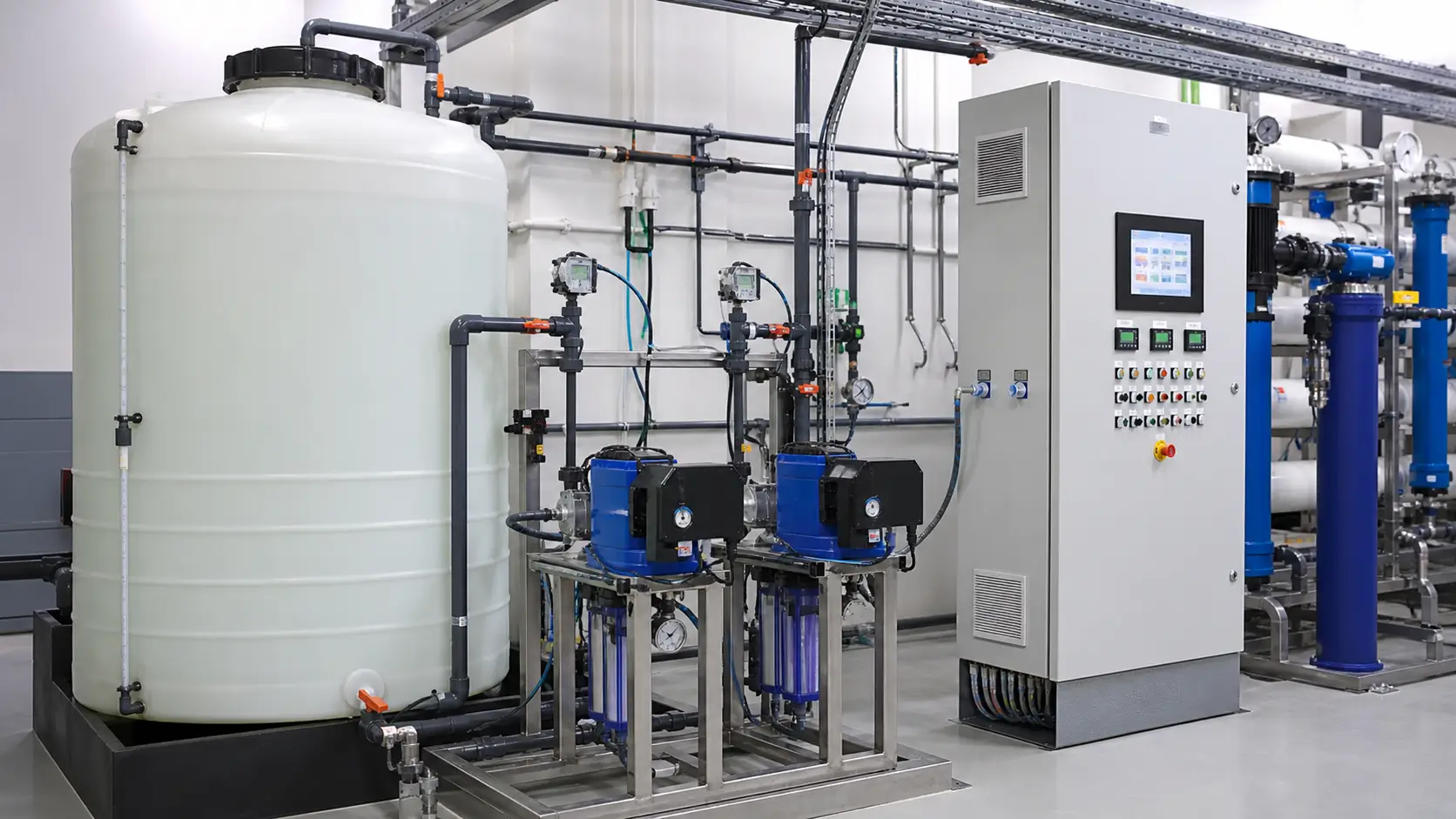
The product is stored in a tank and dosed into the water stream based on flow, residual chlorine, or plant control logic.
Sodium Hypochlorite Generator System Range
Hele Titanium provides on-site sodium hypochlorite generation systems in multiple configurations for drinking water disinfection, wastewater treatment, cooling water systems, industrial sanitation, and OEM chlorine generation projects.
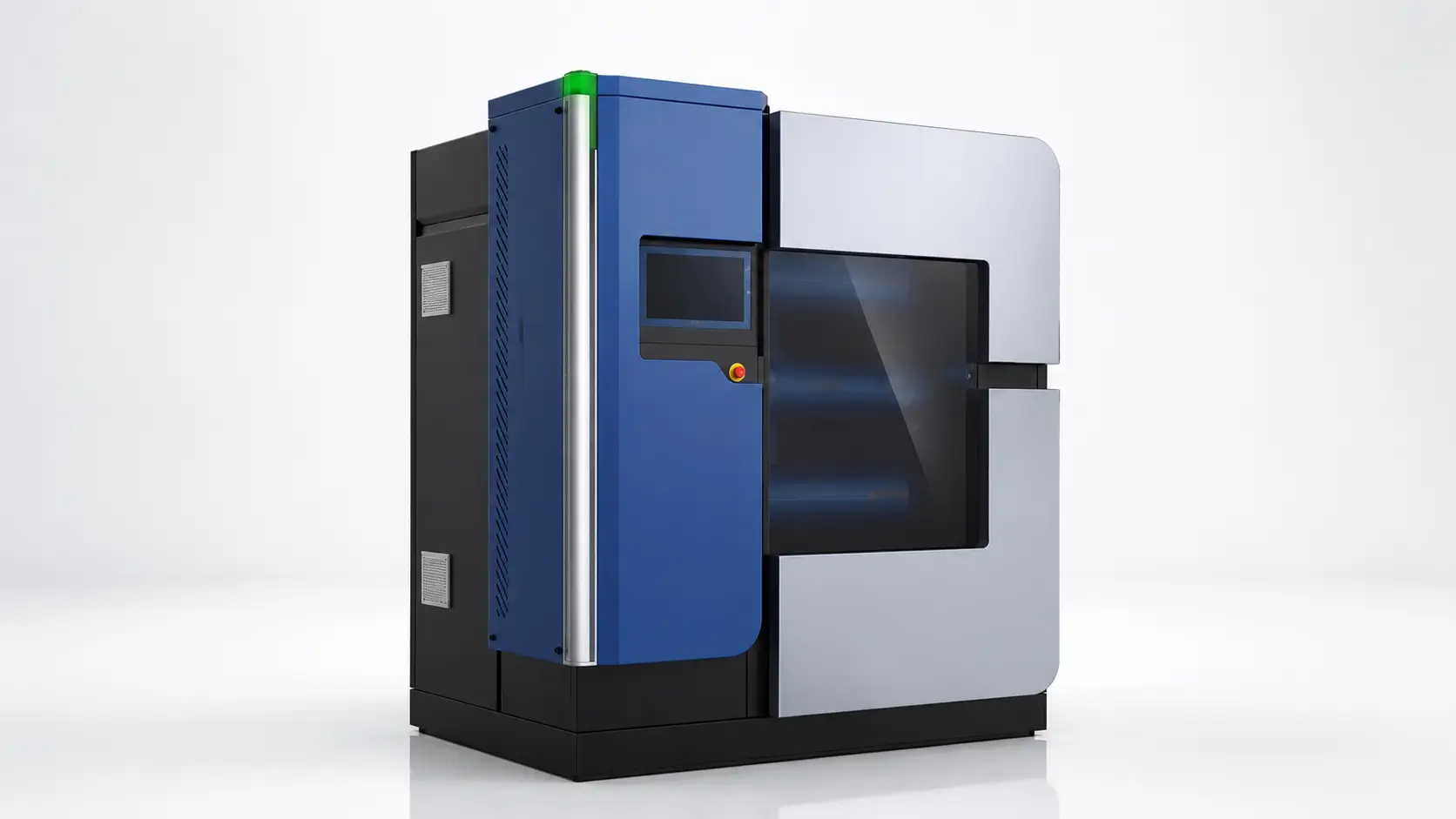
Compact On-Site Sodium Hypochlorite Generator
Best For: Small water systems, packaged equipment, pilot projects, and light industrial disinfection
Typical Capacity: Low to medium daily chlorine demand
System Scope: Compact skid, integrated electrolyzer, simple control logic, and easy installation
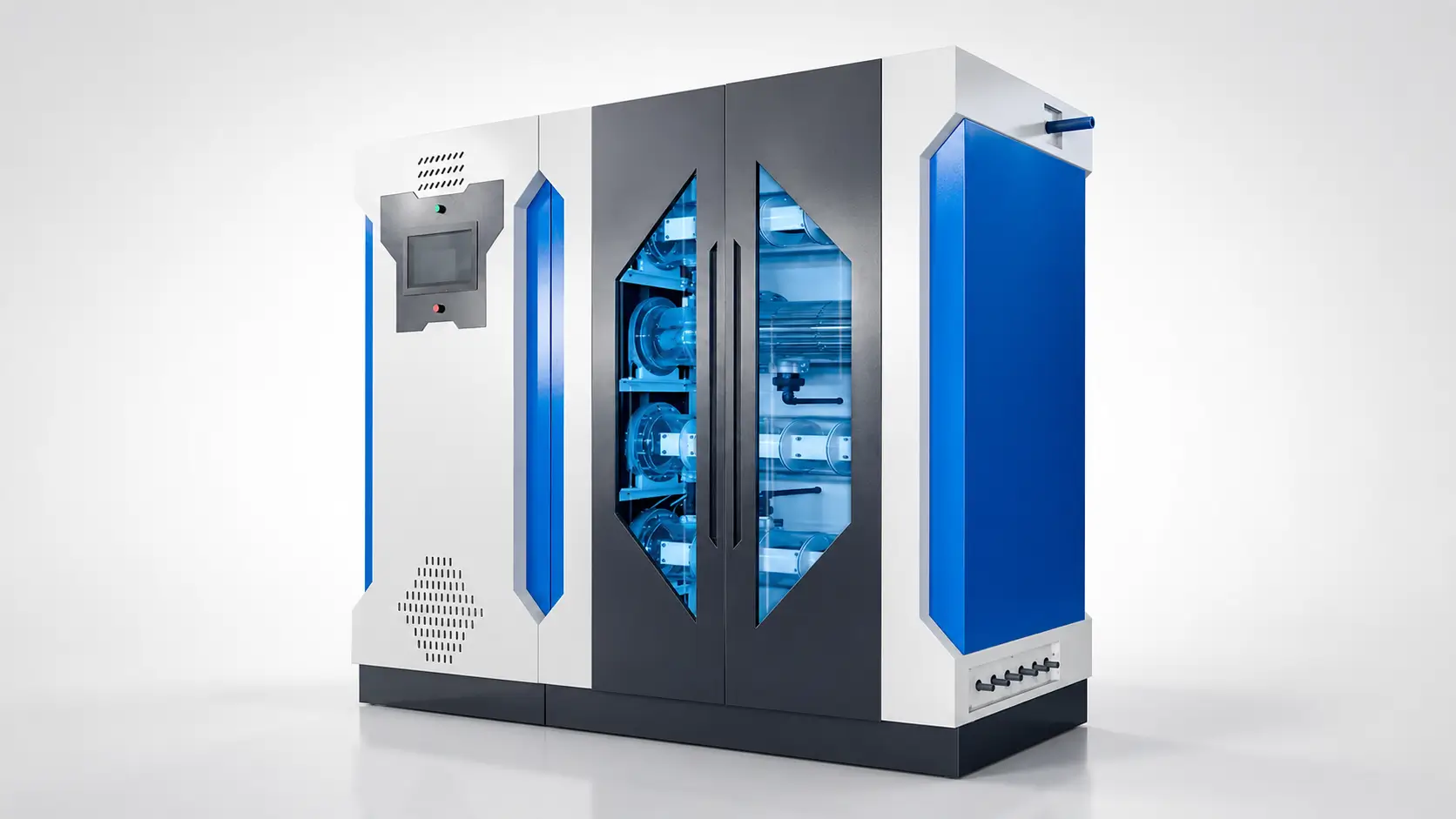
Municipal Water Sodium Hypochlorite Generation System
Best For: Drinking water plants, municipal utilities, and rural water supply systems
Typical Capacity: Medium to large daily chlorine demand
System Scope: Brine preparation, electrolyzer, power supply, control cabinet, storage tank integration, and dosing interface
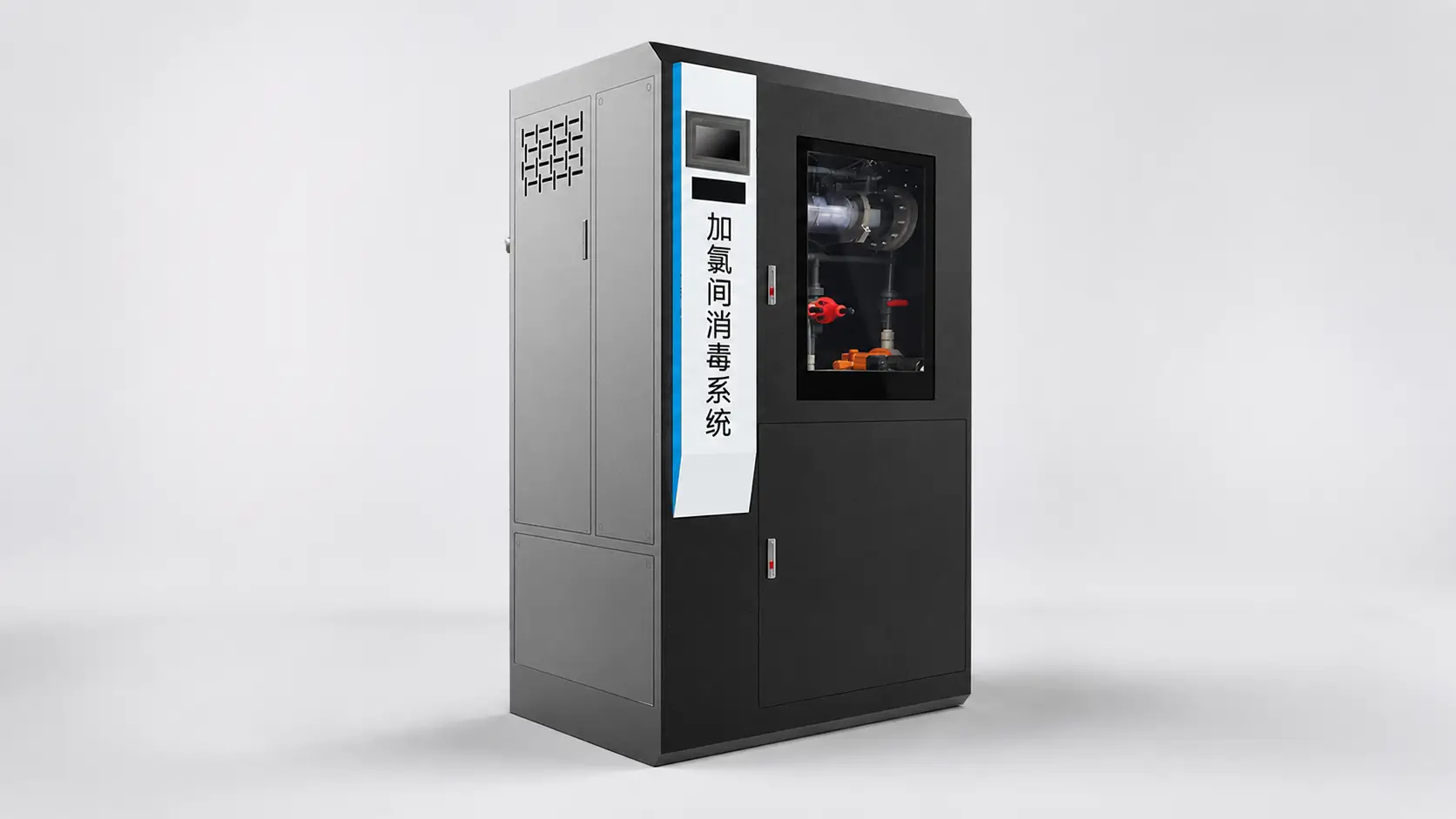
Wastewater Disinfection NaOCl Generator
Best For: Wastewater plants, recycled water systems, and industrial effluent treatment
Typical Capacity: Medium to high chlorine demand
System Scope: Industrial electrolyzer system, corrosion-resistant piping, control cabinet, and dosing compatibility
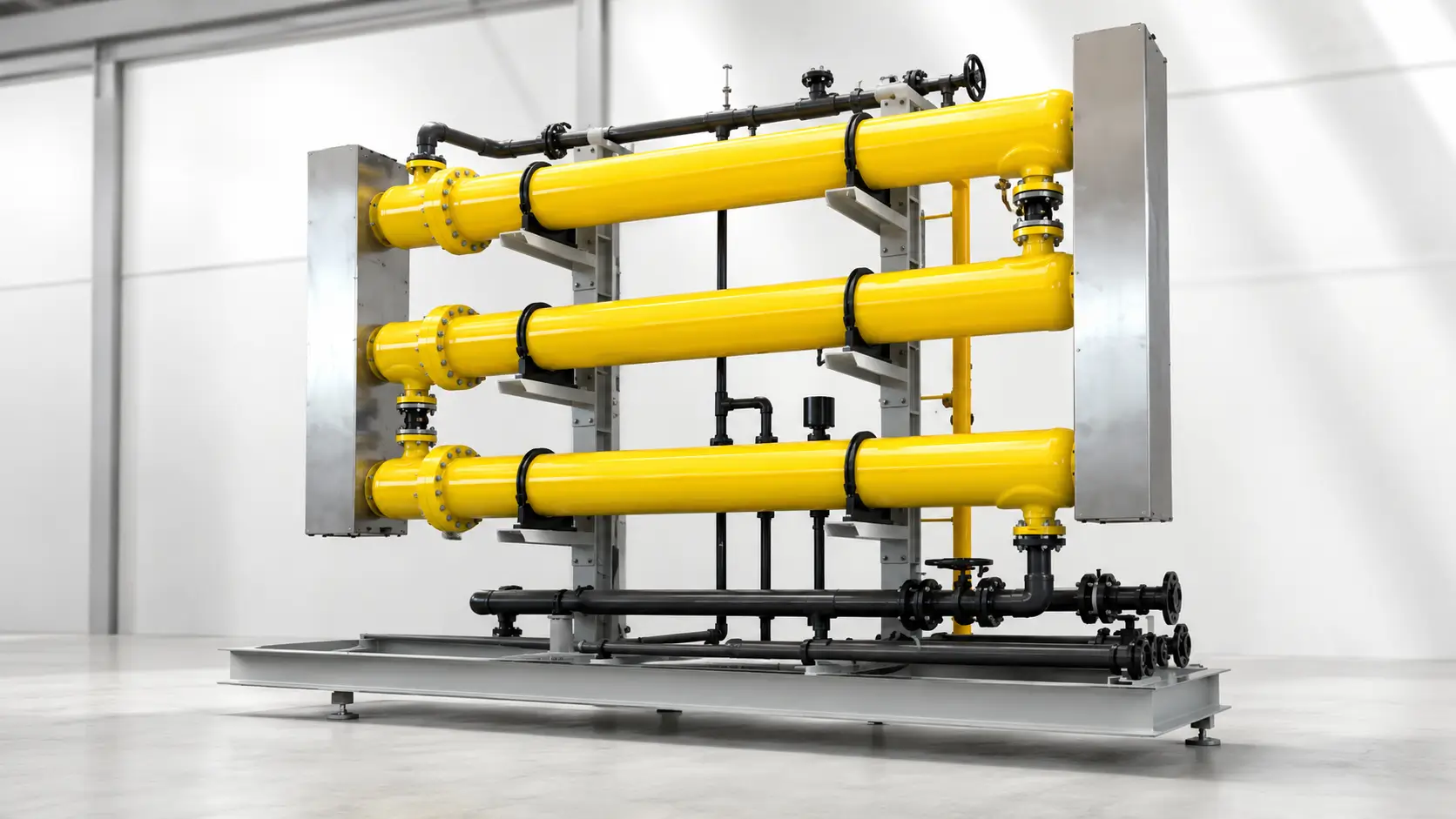
Cooling Water Electrochlorination System
Best For: Cooling towers, process water, utility water, and industrial recirculating systems
Typical Capacity: Continuous or intermittent dosing requirement
System Scope: Brine feed, electrochlorination cell, automatic control, and dosing integration
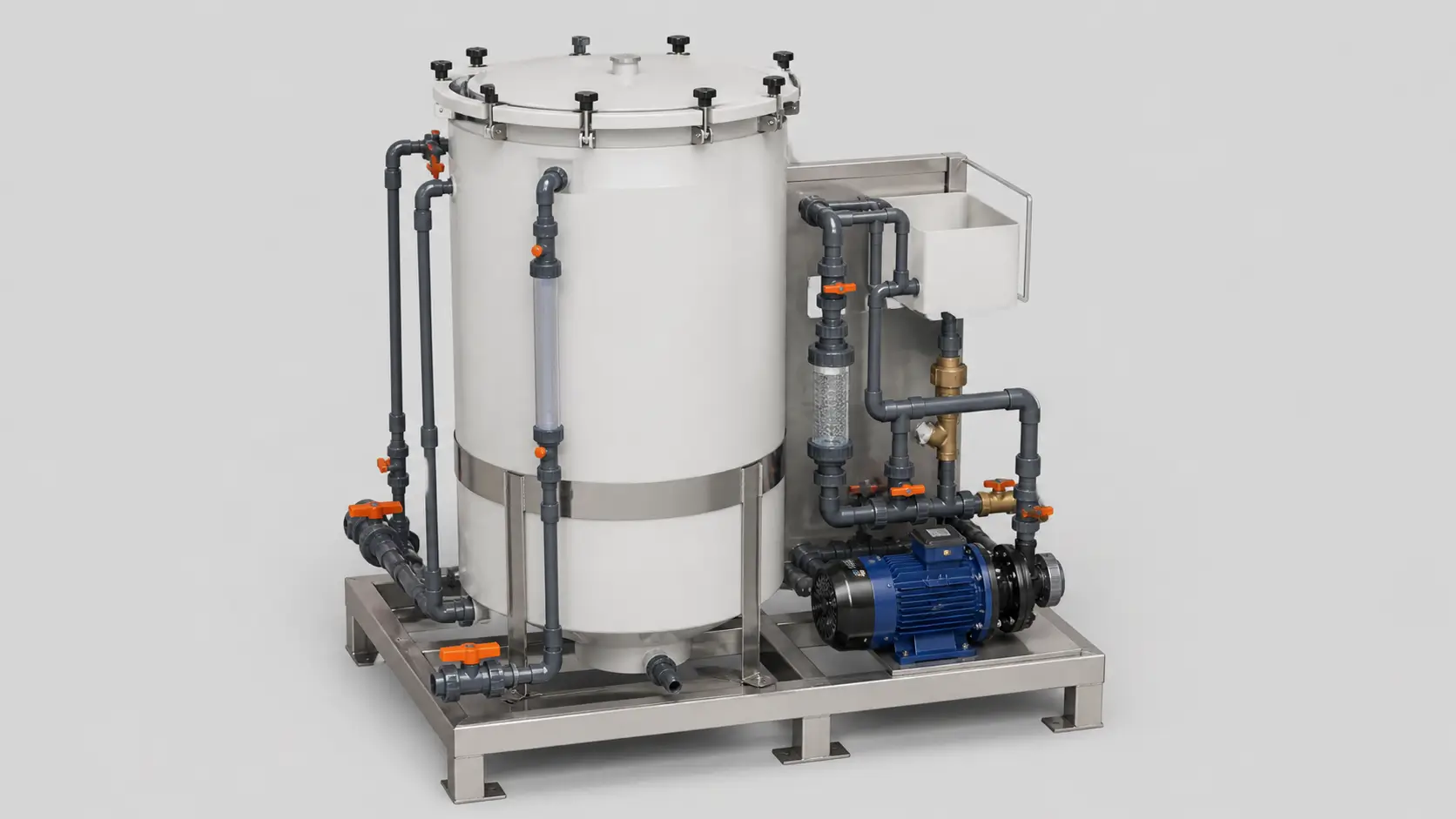
Skid-Mounted Sodium Hypochlorite Generator
Best For: EPC projects, remote utilities, modular plants, and turnkey integration
Typical Capacity: Project-specific
System Scope: Skid-mounted structure, piping, electrolyzer, power cabinet, control system, and connection-ready layout
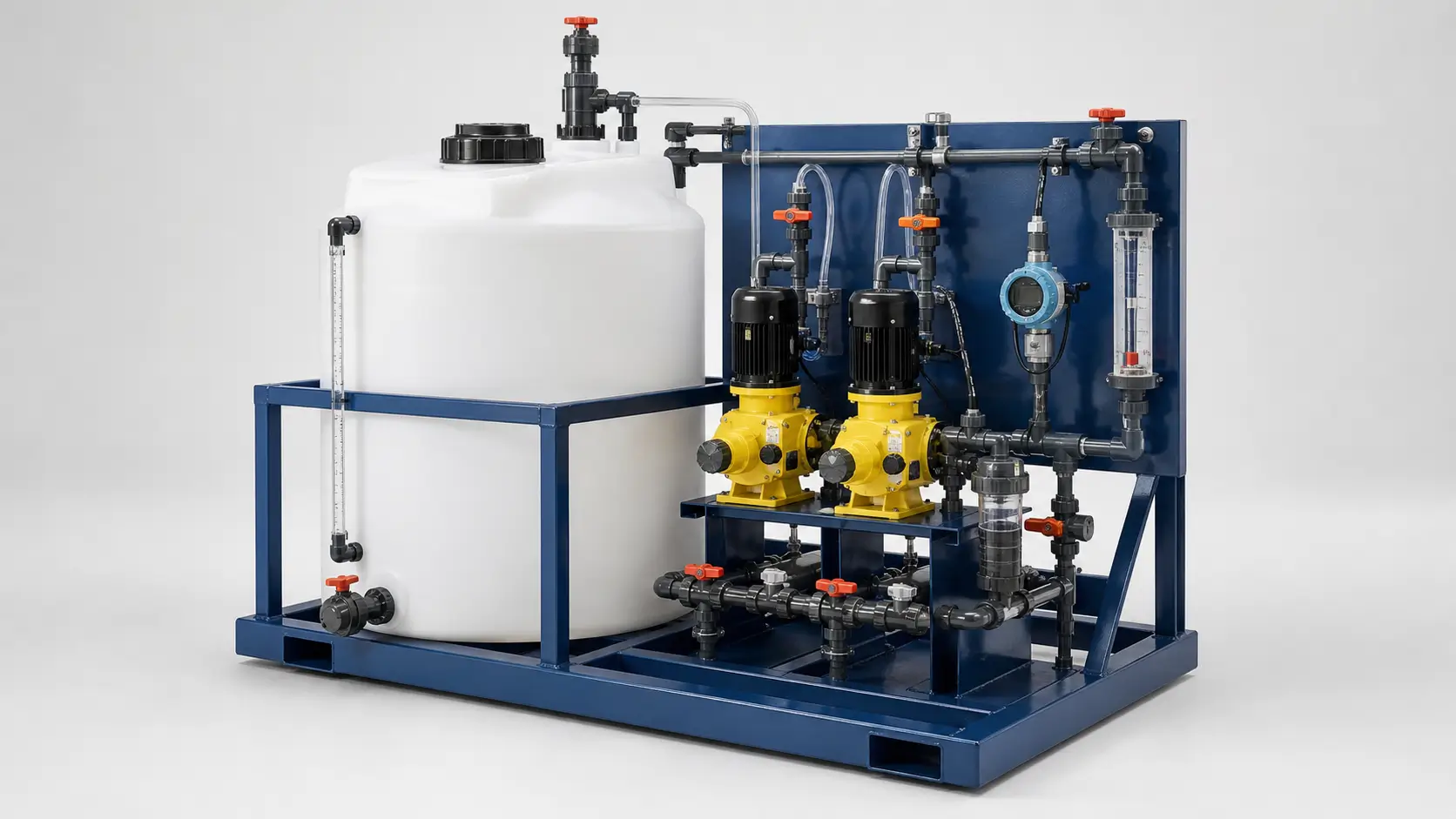
Custom OEM Sodium Hypochlorite Generation System
Best For: OEM manufacturers, engineering companies, and integrated disinfection equipment builders
Typical Capacity: Custom-designed
System Scope: Custom electrolyzer sizing, control logic, cabinet design, piping layout, and interface integration
Choose Brine-Based or Seawater-Based Generation
The right sodium hypochlorite generator depends on your feed source, salinity, water quality, output concentration, installation environment, and disinfection objective. Hele Titanium helps you select and engineer the system architecture that fits your site.
Brine-Based Sodium Hypochlorite Generators
Best For: Municipal water, wastewater, cooling towers, industrial process water, commercial facilities, and sites without seawater access
How It Works: High-purity salt and softened water are prepared into brine and electrolyzed into dilute NaOCl.
- Controlled feed chemistry
- Stable output concentration
- Suitable for inland facilities
- Easier scaling control with proper water softening
- Broad municipal and industrial use
Seawater Electrochlorination Generators
Best For: Coastal power plants, desalination plants, offshore platforms, vessels, marine cooling systems, and biofouling control
How It Works: Filtered natural seawater is electrolyzed directly to generate active chlorine species.
- No prepared salt brine required
- Ideal where seawater is naturally available
- Effective for continuous biofouling control
- Suitable for marine and coastal infrastructure
| Selection Factor | Brine-Based System | Seawater-Based System |
|---|---|---|
| Feed Source | Salt + softened water | Natural seawater |
| Output Control | High control over salinity and concentration | Depends on seawater salinity and temperature |
| Typical Output | Dilute NaOCl solution | Active chlorine in seawater |
| Best Applications | Water plants, wastewater, cooling towers, industrial sites | Marine, offshore, desalination, coastal power plants |
| Scaling Risk | Managed by water softening | Depends on seawater hardness and design |
| System Layout | Brine tank + cell + storage + dosing | Intake filtration + cell + dosing/circulation |
| Best Buyer | Municipal / industrial utility | Marine / coastal facility / offshore integrator |
What’s Inside a Complete Sodium Hypochlorite Generator?
A reliable sodium hypochlorite generator requires more than an electrolytic cell. Each subsystem must work together to maintain stable output, safe hydrogen handling, accurate dosing, and long equipment life.
Water Softener
Removes calcium and magnesium hardness to reduce scale formation inside the electrolytic cell.
Value: Improves cell efficiency and reduces cleaning frequency.
Salt Dissolving / Brine Tank
Prepares consistent brine concentration for electrolysis.
Value: Supports stable NaOCl output and predictable system operation.
Brine Pump & Flow Control
Delivers electrolyte at a controlled flow rate to the electrolytic cell.
Value: Maintains production consistency and protects system balance.
Titanium Electrolytic Cell
Converts brine or seawater into active chlorine using MMO-coated titanium electrodes.
Value: Determines system efficiency, service life, and output stability.
DC Power Supply / Rectifier
Provides stable DC current for electrolysis.
Value: Controls energy efficiency, current stability, and cell protection.
Product Storage Tank
Stores generated dilute NaOCl solution before dosing.
Value: Provides buffer capacity for continuous disinfection demand.
Dosing Pumps
Inject generated NaOCl into the target water stream.
Value: Supports accurate dosing based on flow or residual control.
Hydrogen Venting System
Dilutes and safely vents hydrogen gas generated during electrolysis.
Value: Critical for safe system operation and compliance.
PLC / HMI Control System
Automates operation, alarms, interlocks, monitoring, and data logging.
Value: Reduces operator workload and improves safety control.
How to Size an On-Site Sodium Hypochlorite Generator
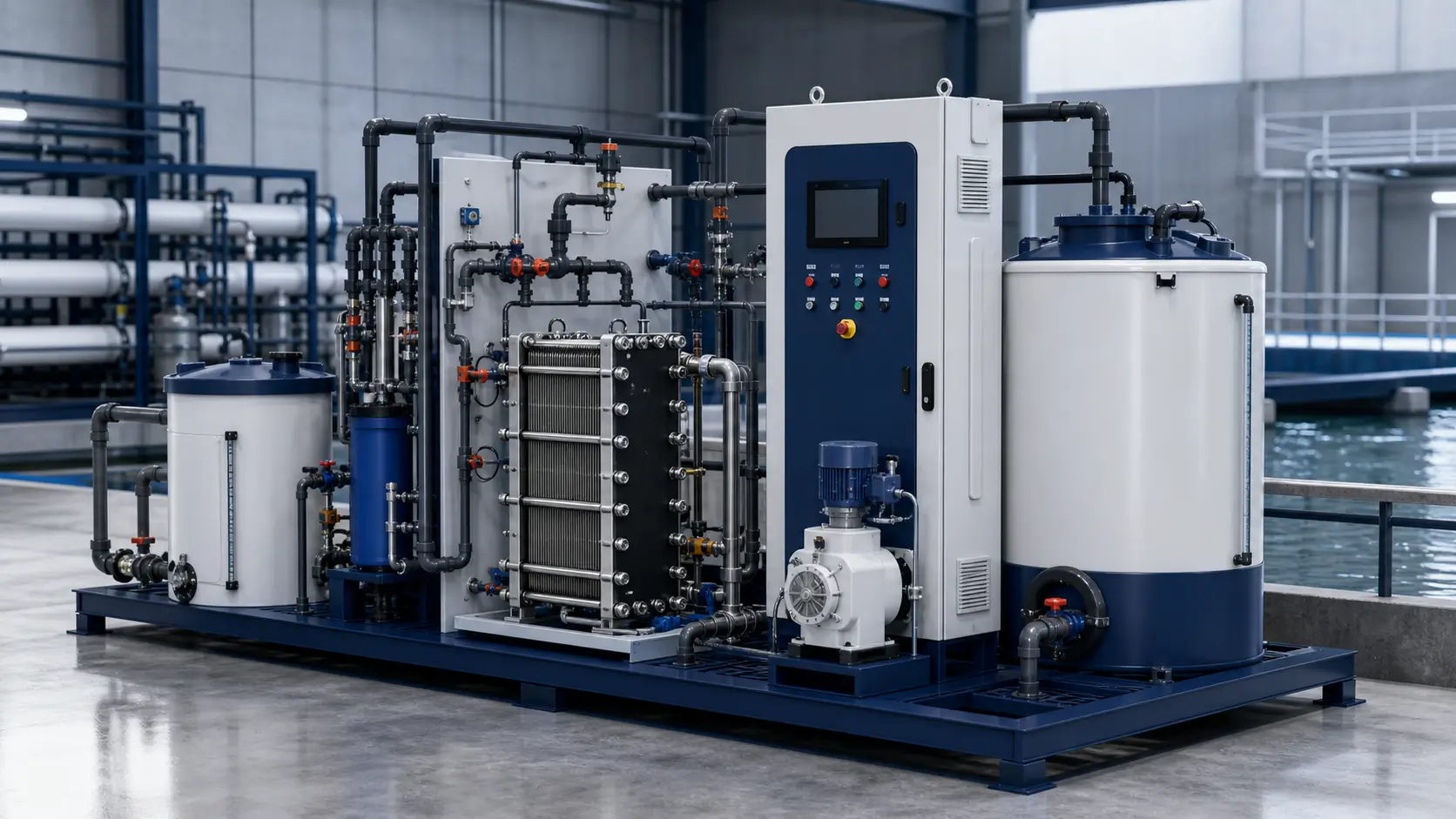
The correct system capacity depends on daily chlorine demand, target available chlorine concentration, treatment flow, operating hours, salt and water quality, power supply, and dosing strategy.
| Selection Factor | Buyer Question | Why It Matters |
|---|---|---|
| Daily Chlorine Demand | How many kg/day of available chlorine are required? | Determines system output size. |
| Target NaOCl Concentration | What solution strength is required? | Affects electrolysis design, storage, and dosing logic. |
| Water Flow | What is the treatment flow rate? | Supports dosing calculation and system capacity planning. |
| Operating Hours | Continuous or batch operation? | Affects equipment sizing and daily production planning. |
| Salt and Water Quality | What salt and water source are available? | Affects brine stability, scaling risk, and maintenance. |
| Power Supply | What voltage, phase, and frequency are available? | Affects rectifier and control cabinet design. |
| Storage and Dosing | Is storage tank and dosing pump integration required? | Determines complete system scope and installation planning. |
Custom Sodium Hypochlorite System Engineering for Your Project
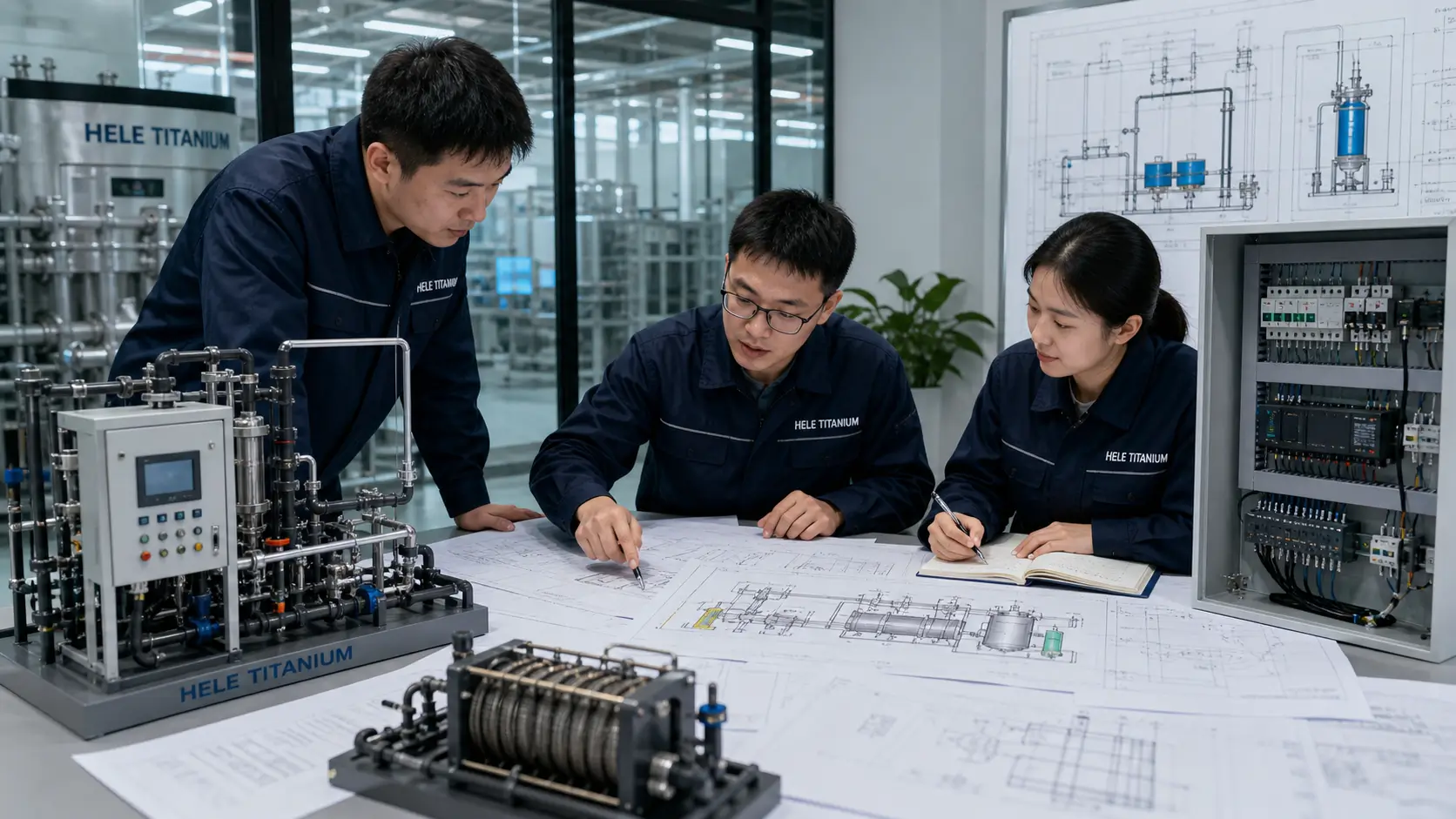
Standard sodium hypochlorite generation systems may not meet every project’s output target, footprint, salinity control method, automation requirement, dosing layout, or site condition.
Hele Titanium supports custom system engineering for industrial and municipal on-site chlorine generation applications.
Output Capacity Design
System size can be engineered according to daily chlorine demand, required available chlorine concentration, and dosing schedule.
Brine & Water Treatment Design
Salt dissolution, brine concentration control, and water pretreatment can be reviewed based on feedwater condition.
Electrolyzer Configuration
Electrolyzer cell quantity, coating selection, hydraulic layout, and electrochemical performance can be matched to the application.
Control & Automation
PLC logic, alarms, operating modes, remote monitoring, and HMI interface options can be reviewed according to project needs.
Skid / Cabinet / Layout Integration
Piping arrangement, cabinet design, skid layout, and modular system footprint can be customized.
Dosing & Downstream Integration
The system can be prepared for integration with storage tanks, dosing pumps, disinfection pipelines, or existing treatment infrastructure.
What We Need From You
- Application and treated water type
- Required chlorine demand & dosage
- Brine or seawater source
- Feedwater analysis (if available)
- Target NaOCl concentration
- Site footprint constraints
- Automation and SCADA needs
- Storage and dosing requirements
Solutions by Industry: Empowering Your Operations
A municipal water plant, marine integrator, industrial facility, and EPC contractor all have different requirements. Hele Titanium provides sodium hypochlorite generator systems tailored to each sector’s compliance, uptime, safety, and OPEX priorities.
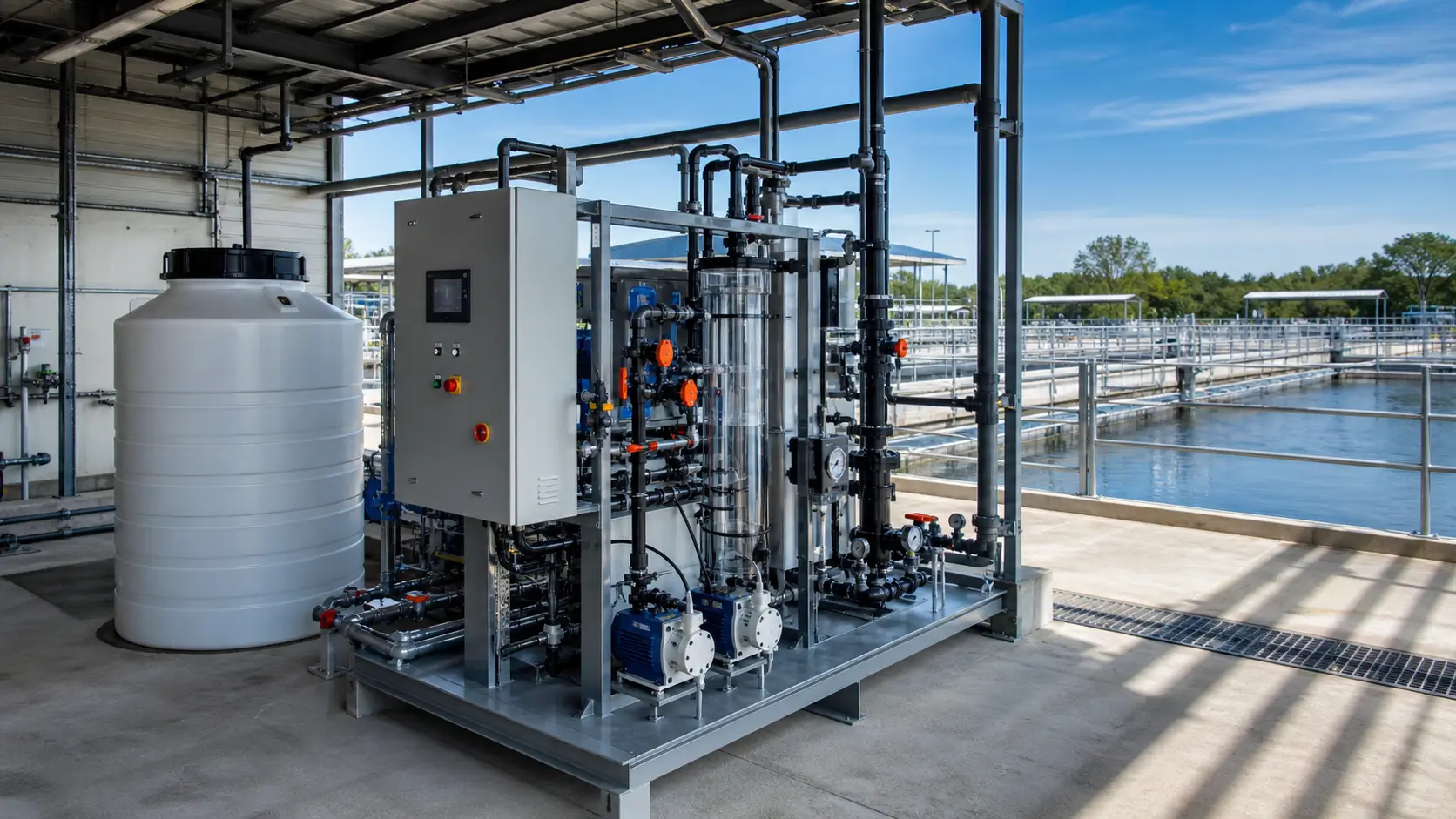
Municipal Water Authorities
Pain Point:
Need reliable public health disinfection, stable residual control, and safer chemical handling.
Hele Value:
On-site NaOCl generation reduces bulk chlorine logistics, supports dosing control, and can scale with water demand.
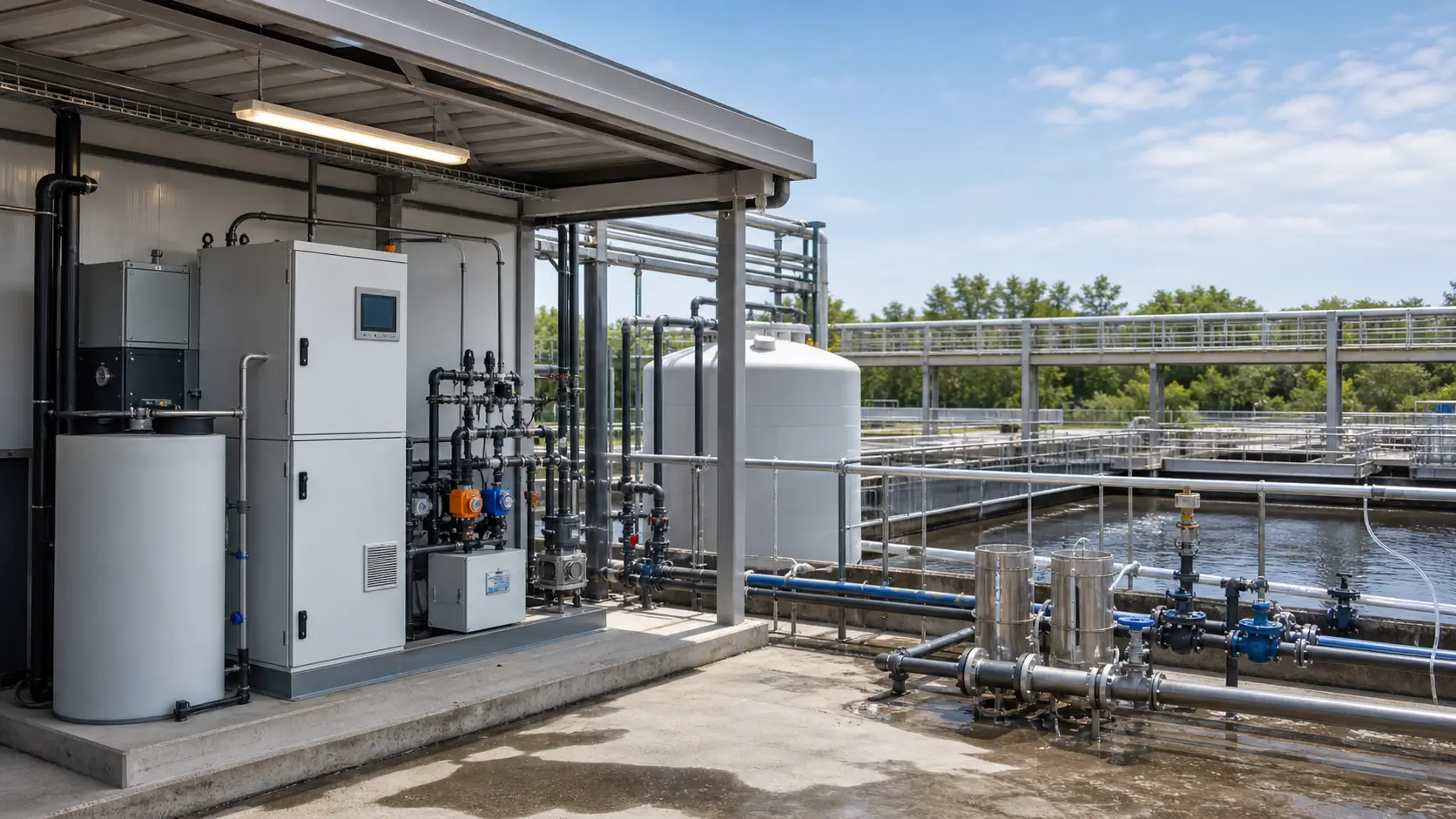
Wastewater Treatment Plants
Pain Point:
Need reliable pathogen control and discharge compliance under variable effluent conditions.
Hele Value:
Robust systems support final effluent disinfection, odor control, and reduced dependence on delivered chemicals.
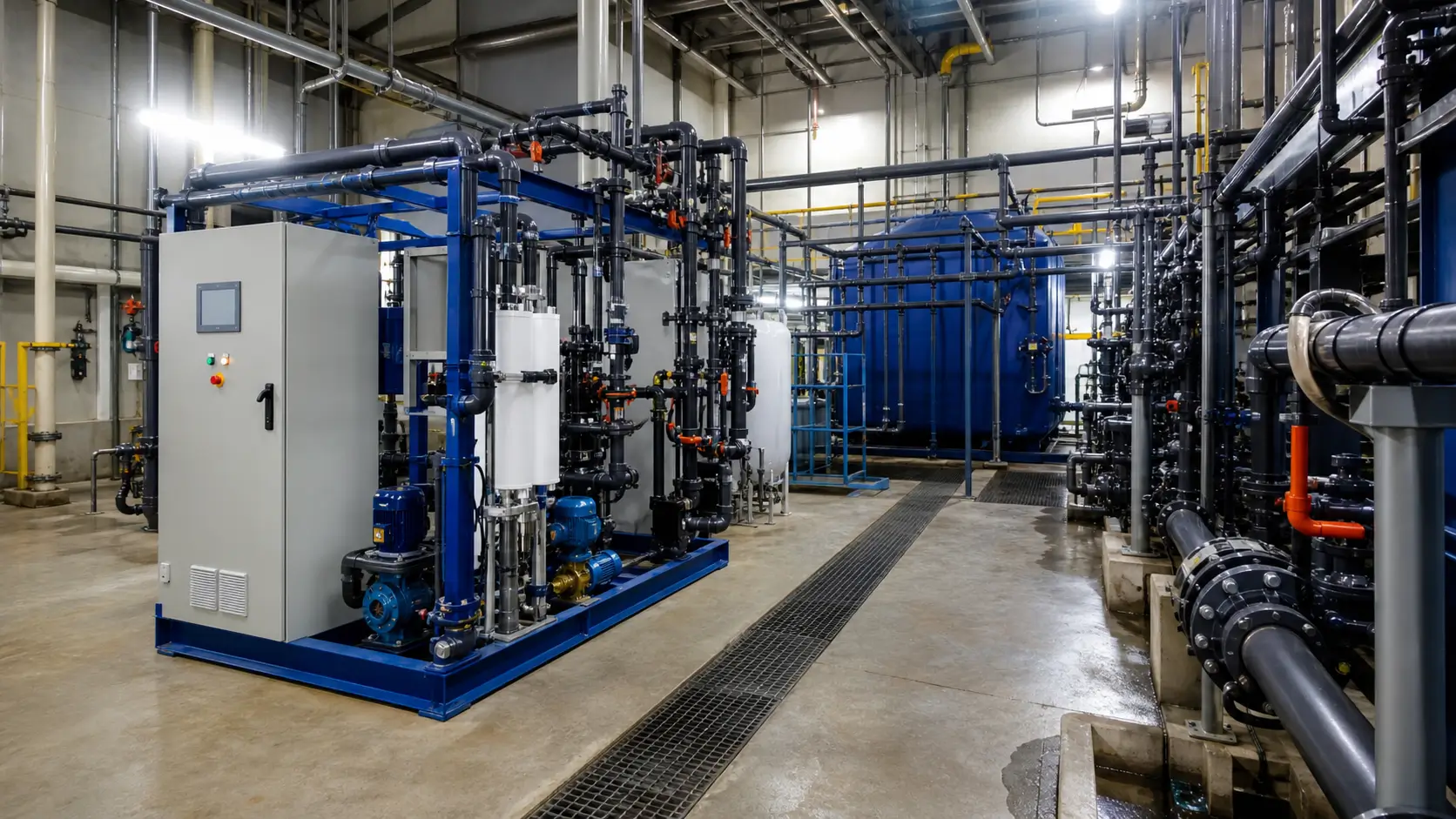
Industrial Plant Engineers
Pain Point:
Need microbial control in cooling towers and process water without frequent downtime.
Hele Value:
Customized systems protect heat exchangers, process lines, and water circuits while supporting OPEX reduction.
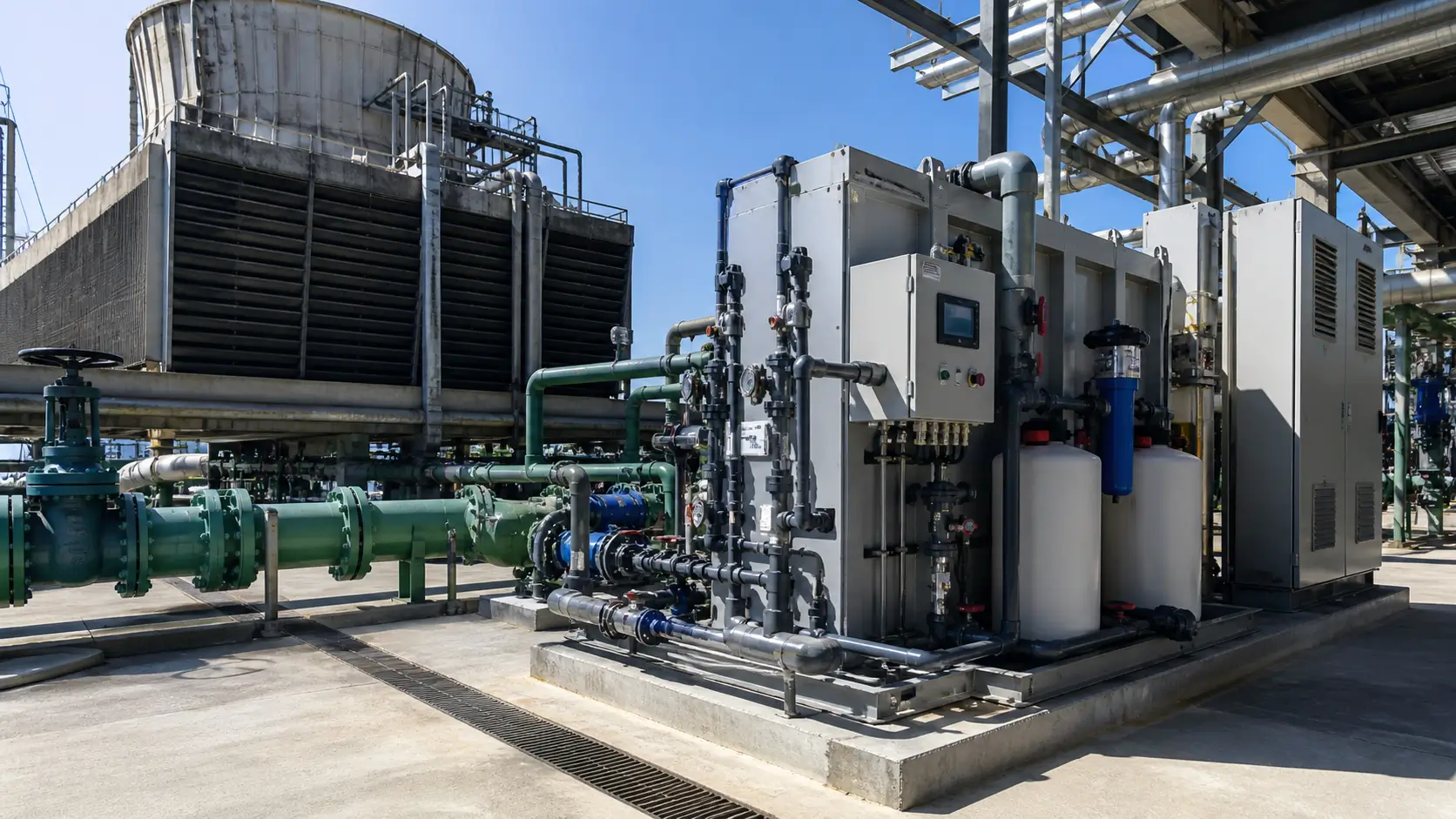
Marine & Offshore Integrators
Pain Point:
Need compact, corrosion-resistant electrochlorination systems for harsh seawater environments.
Hele Value:
Seawater electrochlorination systems support biofouling control, ballast water treatment support, and offshore integration.
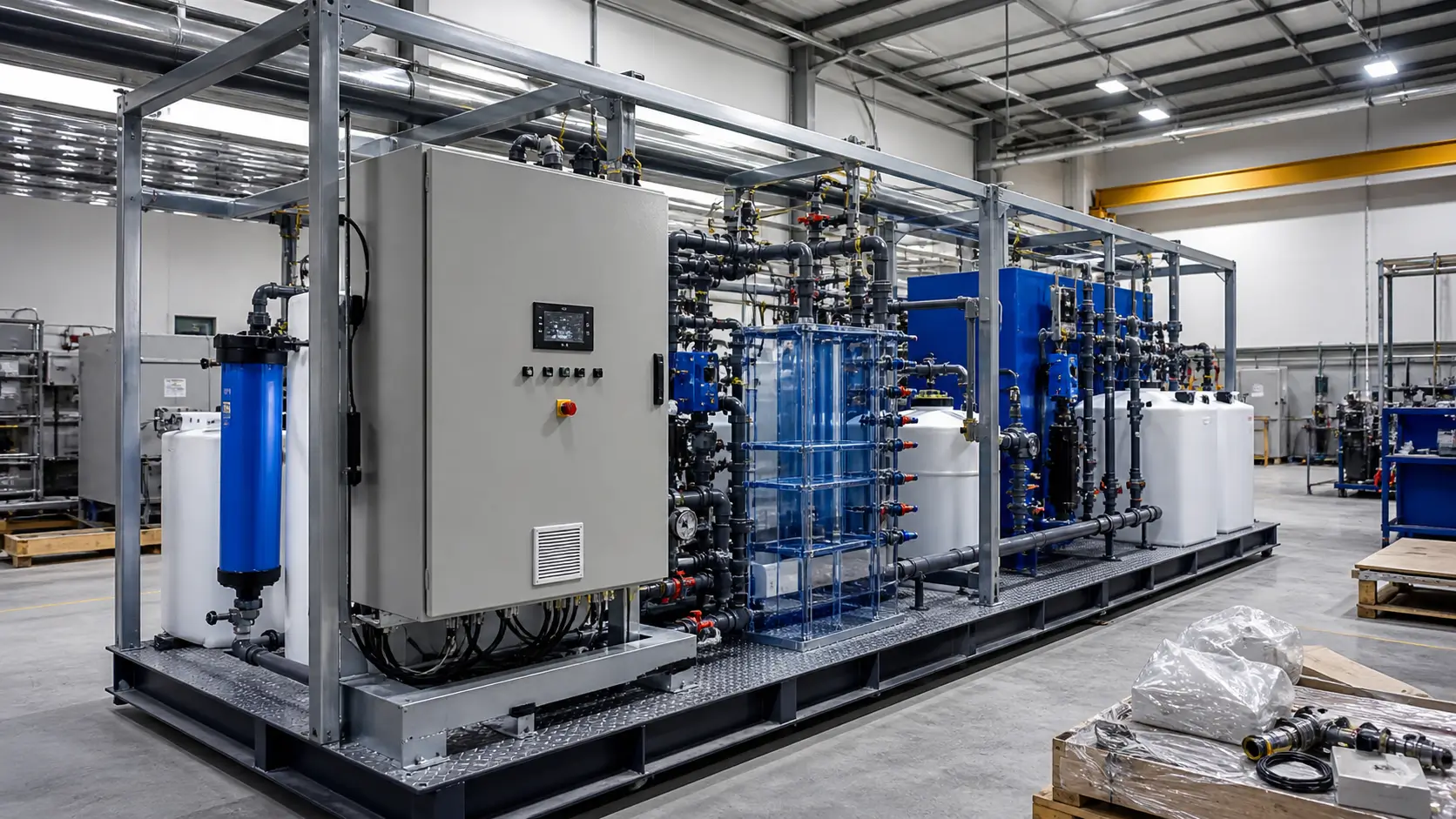
EPC Contractors
Pain Point:
Need dependable system suppliers with documentation, drawings, and integration support.
Hele Value:
We provide technical specifications, CAD support, project-oriented lead times, and engineering communication.
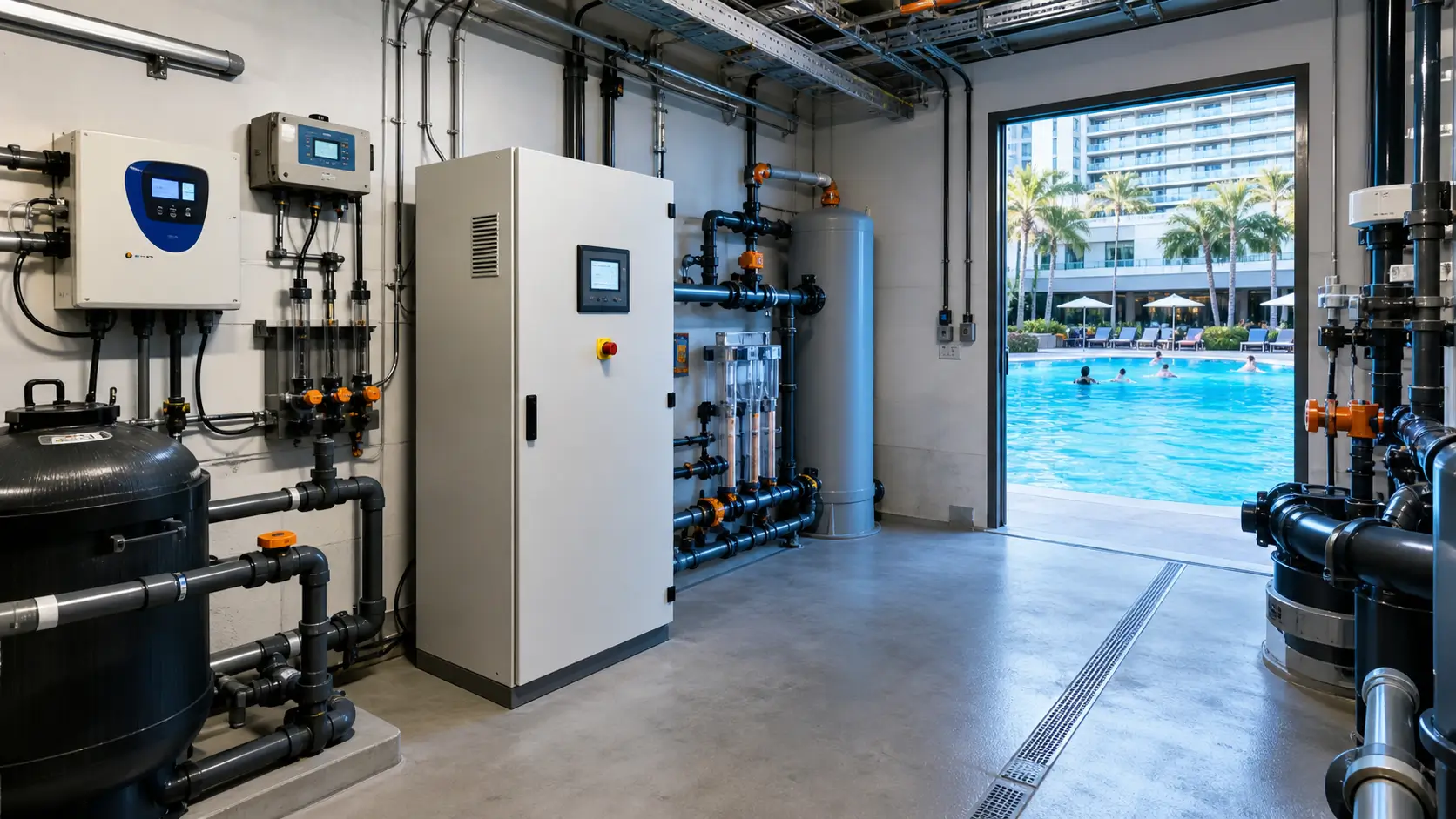
Disinfection System OEMs
Pain Point:
Need reliable systems, private label options, and competitive factory-direct supply.
Hele Value:
OEM / ODM customization, partner support, stable manufacturing, and technical training help grow your business.
Quality Assurance: Safe, Stable & Verified NaOCl Output
A sodium hypochlorite generator must deliver stable disinfectant output while operating safely over years of service. Our QA process verifies system assembly, titanium electrolytic cell performance, PLC control, hydrogen venting, flow stability, dosing accuracy, and documentation before shipment.
Sodium Hypochlorite Generator Quality Testing Parameters
| Test Item | Test Conditions | Qualification Standard | Purpose |
|---|---|---|---|
| Titanium Electrolytic Cell Inspection | Material, coating, assembly, electrical terminals | Matches project specification & passes internal inspection | Confirms long-term electrochemical reliability |
| Available Chlorine Output | Run under specified flow and power input | Output meets rated capacity within tolerance | Verifies disinfectant production capacity |
| NaOCl Concentration Check | Sample generated product solution during test | Meets design range (e.g., 0.7%–0.8%) | Confirms stable product quality |
| Power Consumption | Operate at rated output and record energy use | Within agreed kWh/kg Cl₂ design range | Supports OPEX calculation and efficiency validation |
| Salt Consumption | Operate under standard brine concentration | Within agreed kg salt/kg Cl₂ range | Verifies raw material efficiency |
| PLC / HMI Function Test | Run sequences (start, stop, alarm, interlock) | Correct control logic and alarm response | Ensures safe and easy operation |
| Hydrogen Venting Safety Check | Review ventilation path, fan, interlock, alarms | Hydrogen dilution design meets requirement | Reduces gas accumulation risk |
| Leak & Hydraulic Test | Run water/brine through piping, tanks, cell | No leakage or abnormal pressure issue | Confirms system integrity before shipment |
| Factory Acceptance Test (FAT) | System-level functional test before packing | Operates according to agreed specification | Reduces site commissioning risk |
System Confidence Before Shipment
- Electrolytic cell and coating verification
- Available chlorine output test
- NaOCl concentration validation
- PLC / HMI and alarm function check
- Hydrogen venting design review
- Leak and hydraulic inspection
- Factory acceptance test support
- Project documentation and export records
Why Partner with Hele Titanium?
With deep experience in titanium electrochemical technology and on-site disinfection systems, Hele Titanium provides factory-direct sodium hypochlorite generators engineered for safe operation, stable output, and long-term system value.
Deep Electrochlorination Expertise
Focused experience in titanium electrolytic cells, MMO coatings, and on-site chlorine generation for municipal, industrial, and marine systems.
Factory-Direct Manufacturing
Direct support from system engineering through cell production, assembly, testing, packing, and export.
Custom System Engineering
Capacity, layout, automation, feedwater, materials, storage, dosing, and control logic can be tailored to your project.
Safety-Centered Design
Hydrogen venting, alarms, interlocks, chemical handling reduction, and safer dilute NaOCl generation support responsible operation.
OPEX Optimization
Systems are engineered around salt consumption, power consumption, cell life, maintenance access, and total cost of ownership.
PLC / HMI Automation
Automated operation, alarm logic, sensor integration, remote monitoring, and SCADA compatibility can be configured.
Lifecycle Support
Installation guidance, commissioning support, operator training, spare parts, and technical troubleshooting support long-term operation.
Global Project Support
Export-ready packaging, documentation, production planning, and technical communication support international projects.
Technical FAQ: Sodium Hypochlorite Generators
Find practical answers about on-site sodium hypochlorite generation, system sizing, raw materials, safety, maintenance, cost, lifespan, automation, and project customization.
Basics & Working Principle
1. What is a sodium hypochlorite generator?
2. How does on-site NaOCl generation work?
3. What raw materials are required?
4. What concentration of sodium hypochlorite is typically produced?
System Selection & Sizing
1. How do I determine the right generator capacity?
2. Should I choose a brine-based or seawater-based system?
3. What information is needed for a technical proposal?
Safety & Compliance
1. Is on-site generation safer than chlorine gas or bulk bleach?
2. What safety measures are needed for hydrogen gas?
Operation & Maintenance
1. What maintenance is required?
2. What affects electrode lifespan?
Cost, Lifecycle & Support
1. How does on-site generation reduce OPEX?
2. What after-sales support does Hele Titanium provide?
Inside Our Manufacturing & Quality System
See how we produce, inspect, and document sodium hypochlorite generation systems as a direct manufacturing partner.
See how sodium hypochlorite generation systems move from component preparation through electrolyzer integration, skid assembly, control wiring, functional testing, and final packing.
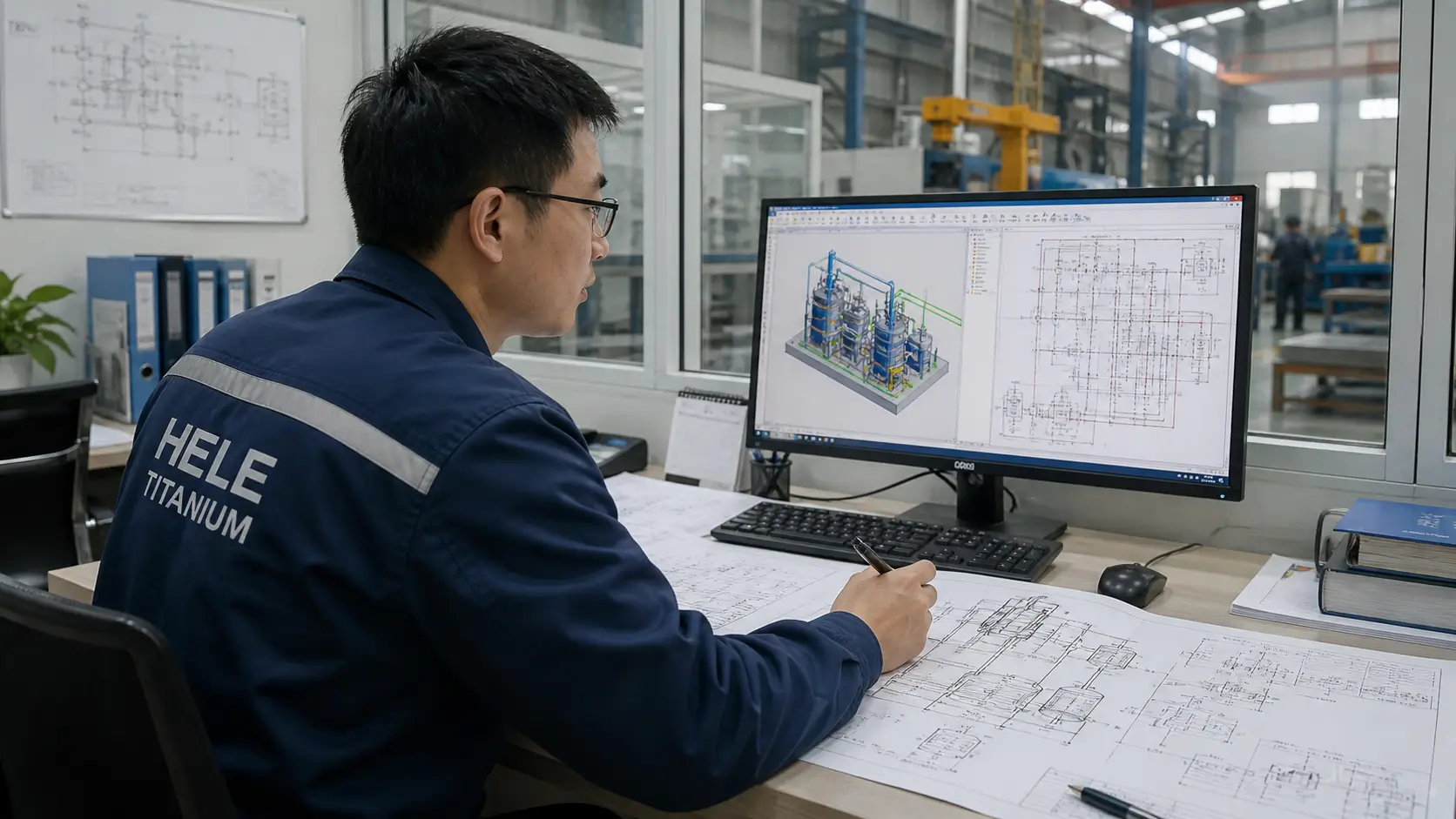 Core Component Preparation
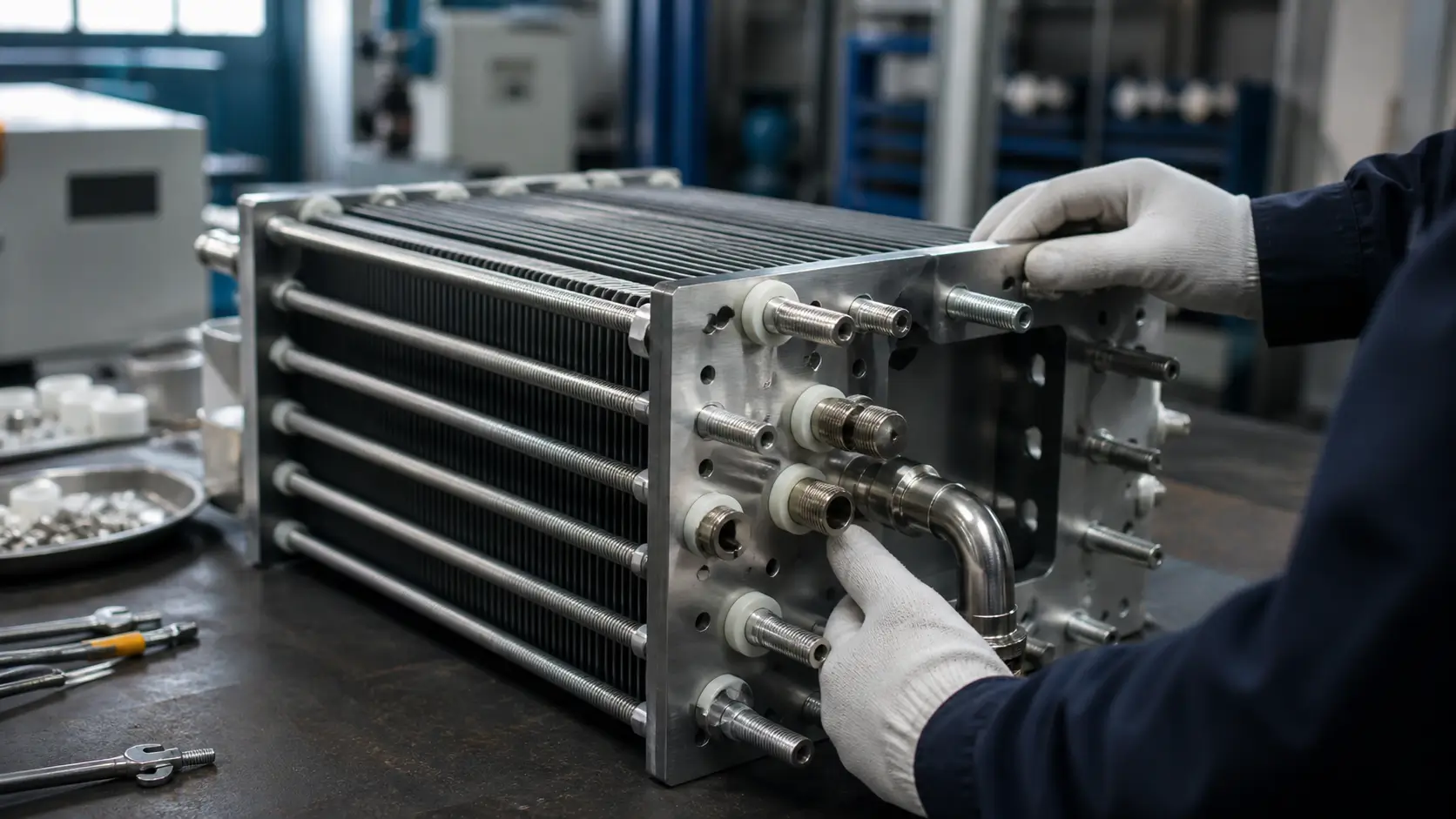 Electrolyzer & Piping Integration
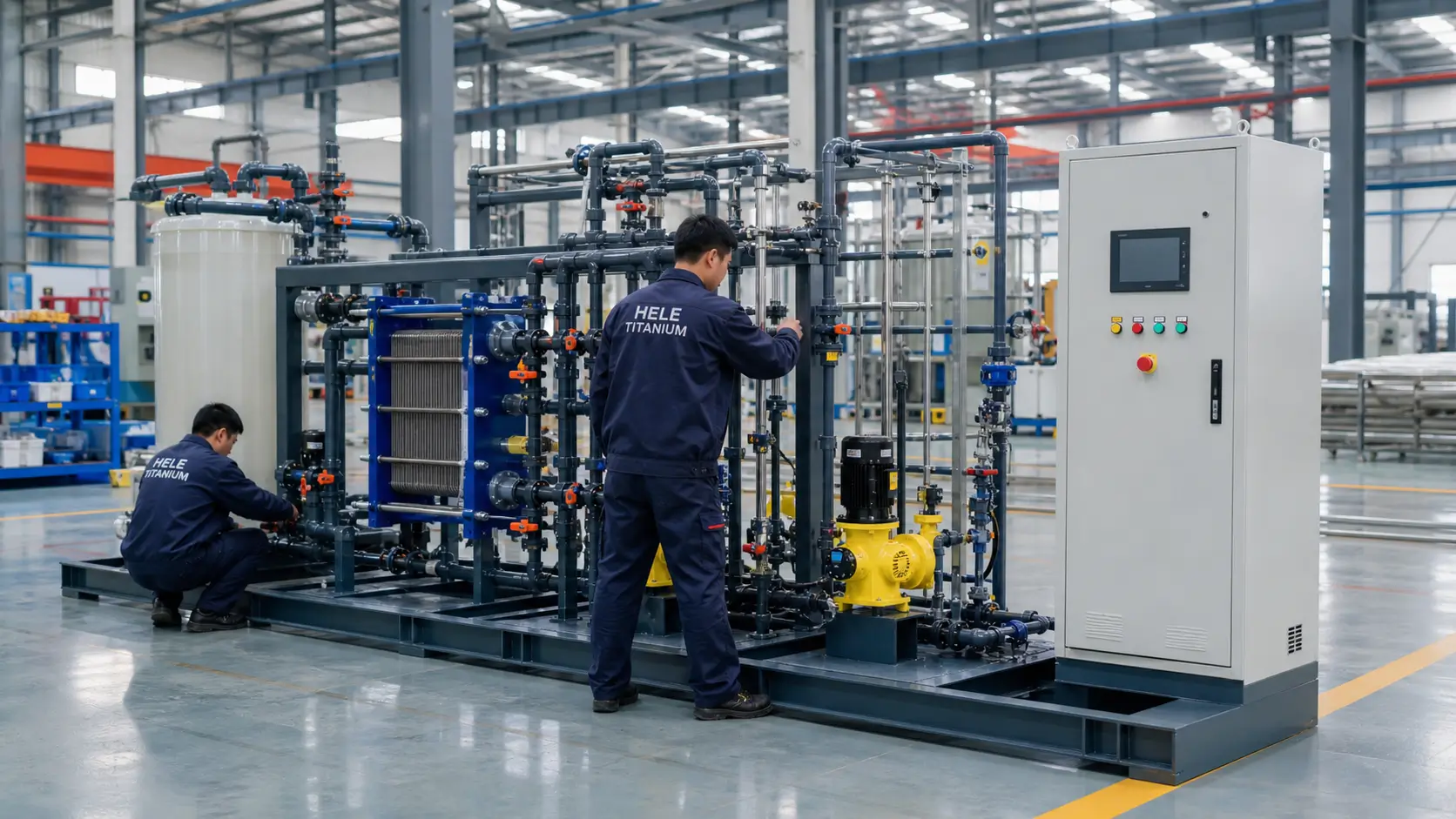 Control Cabinet Assembly
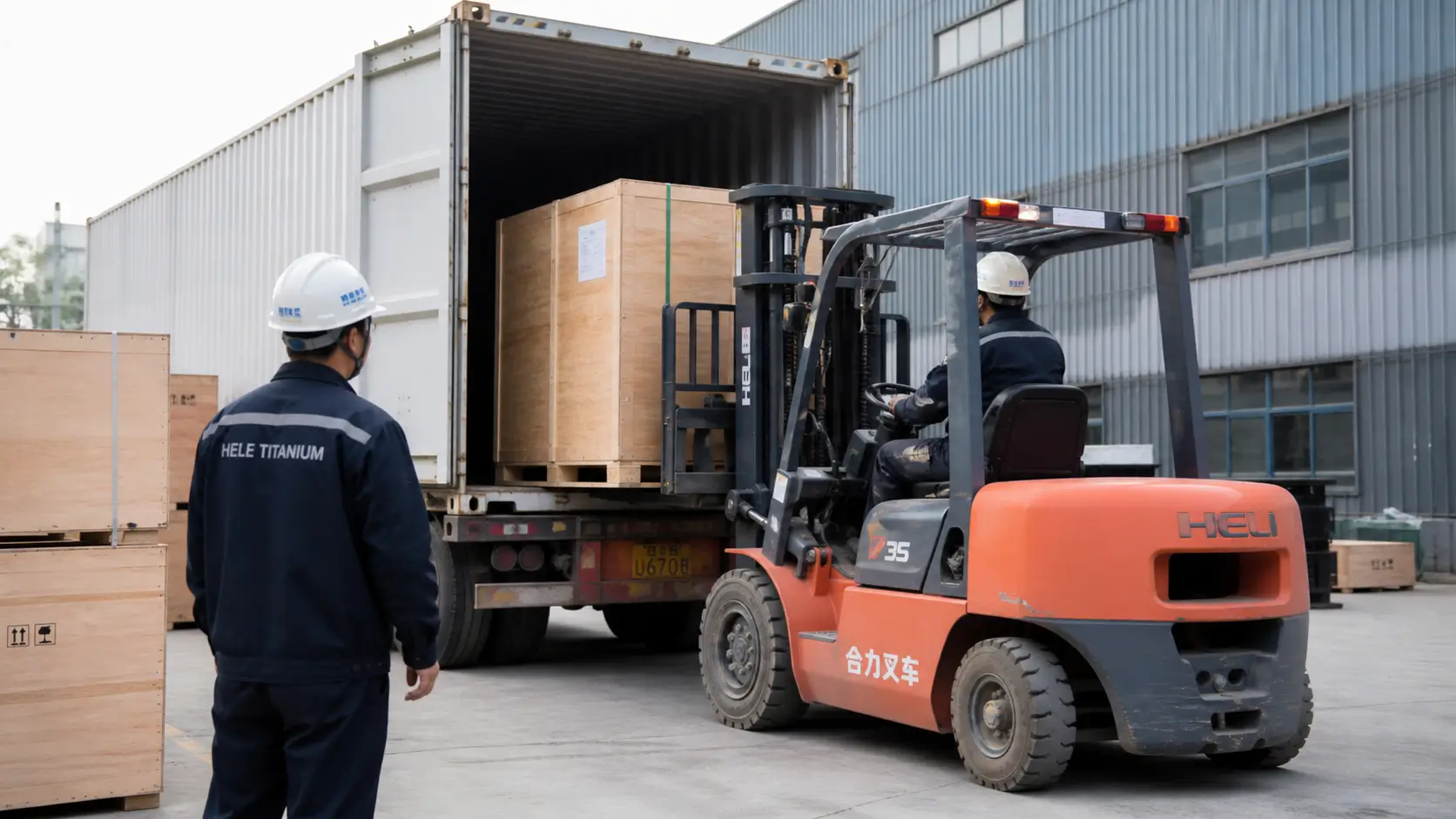 Final System Packing & Release
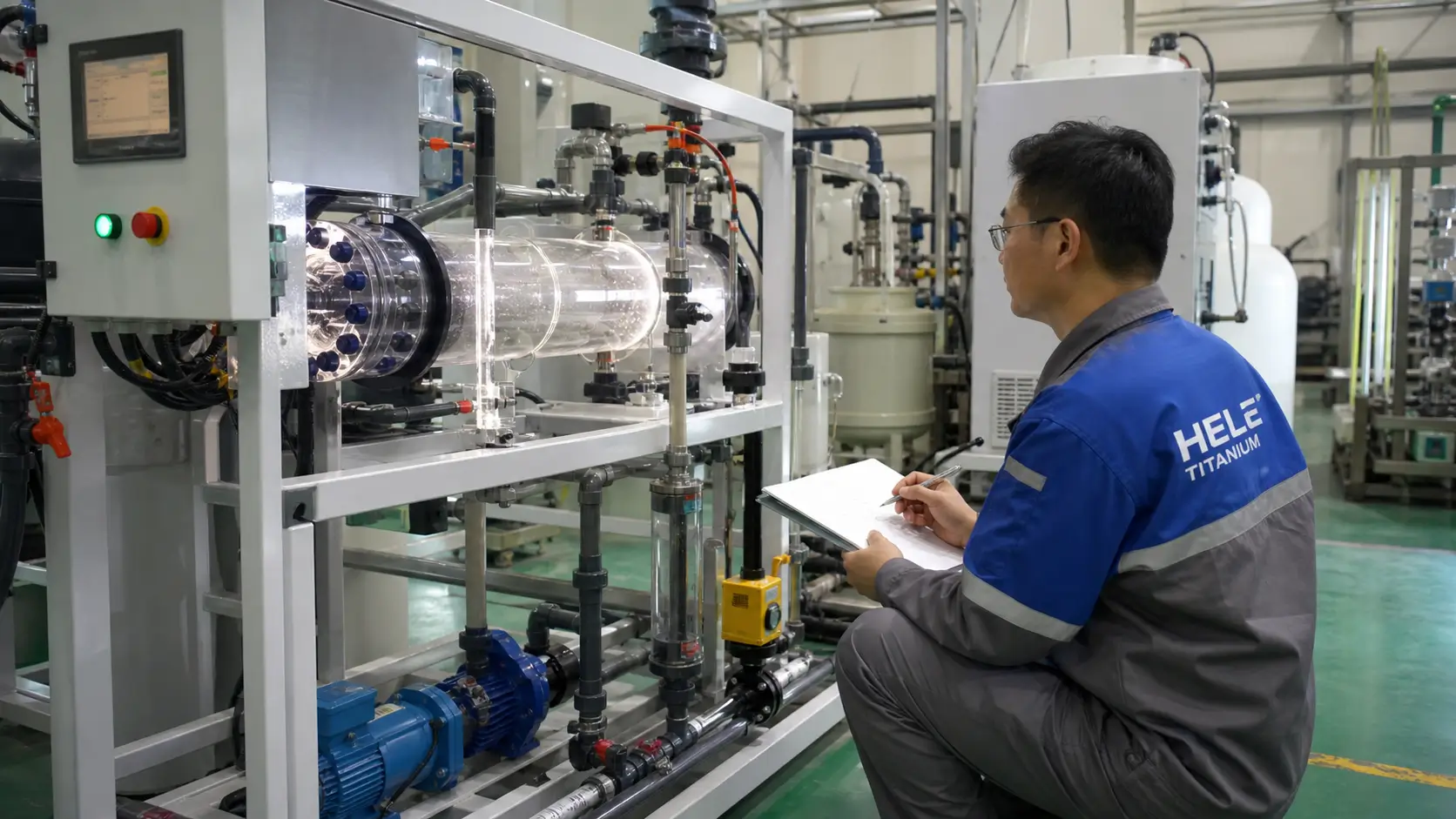
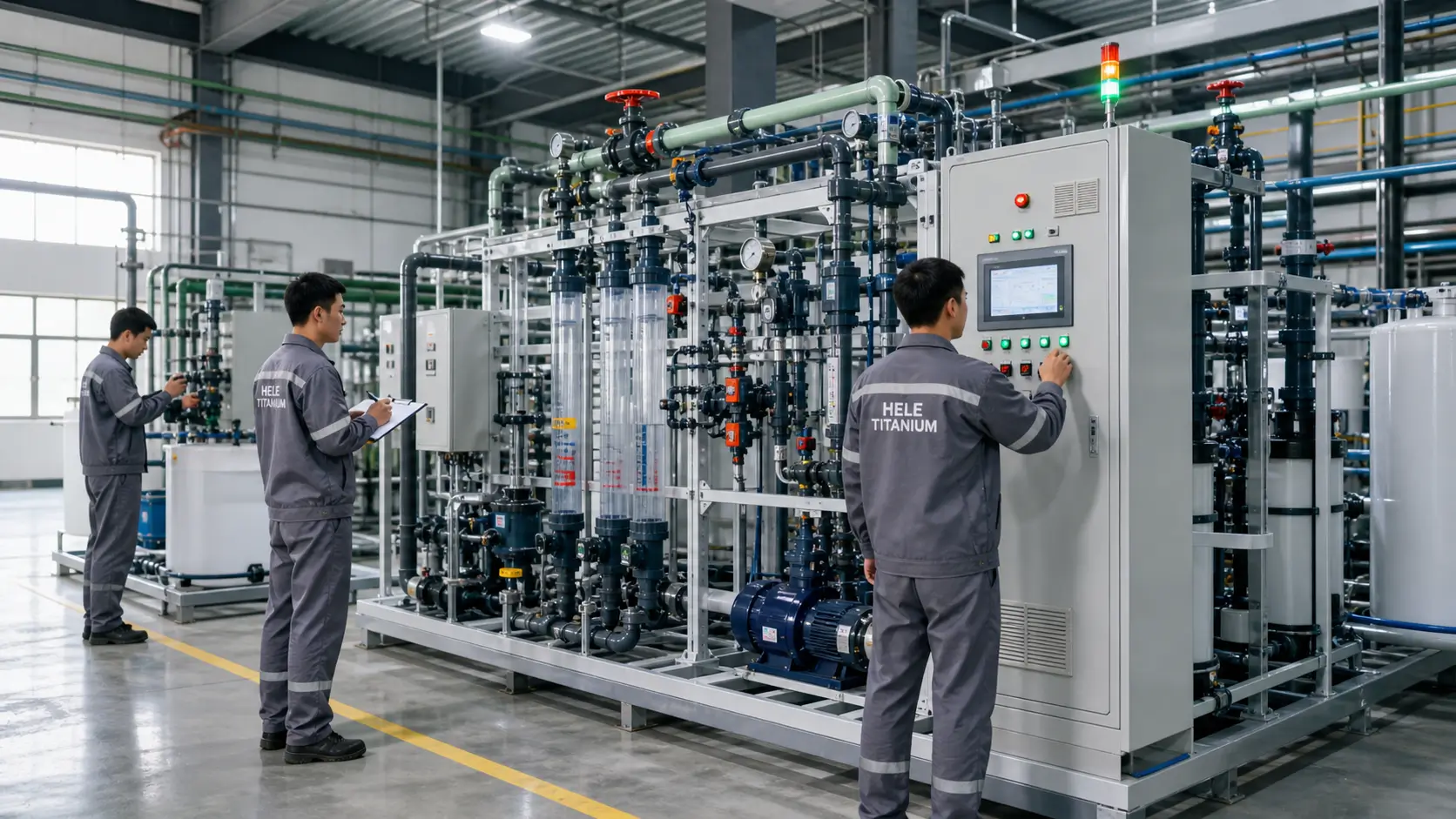
A look inside the production areas where sodium hypochlorite generators are assembled, wired, integrated, and prepared for shipment.
 System Assembly Area
 Electrolyzer Integration Station
Electrical Control Cabinet Area
Electrolyzer Integration Station
Electrical Control Cabinet Area
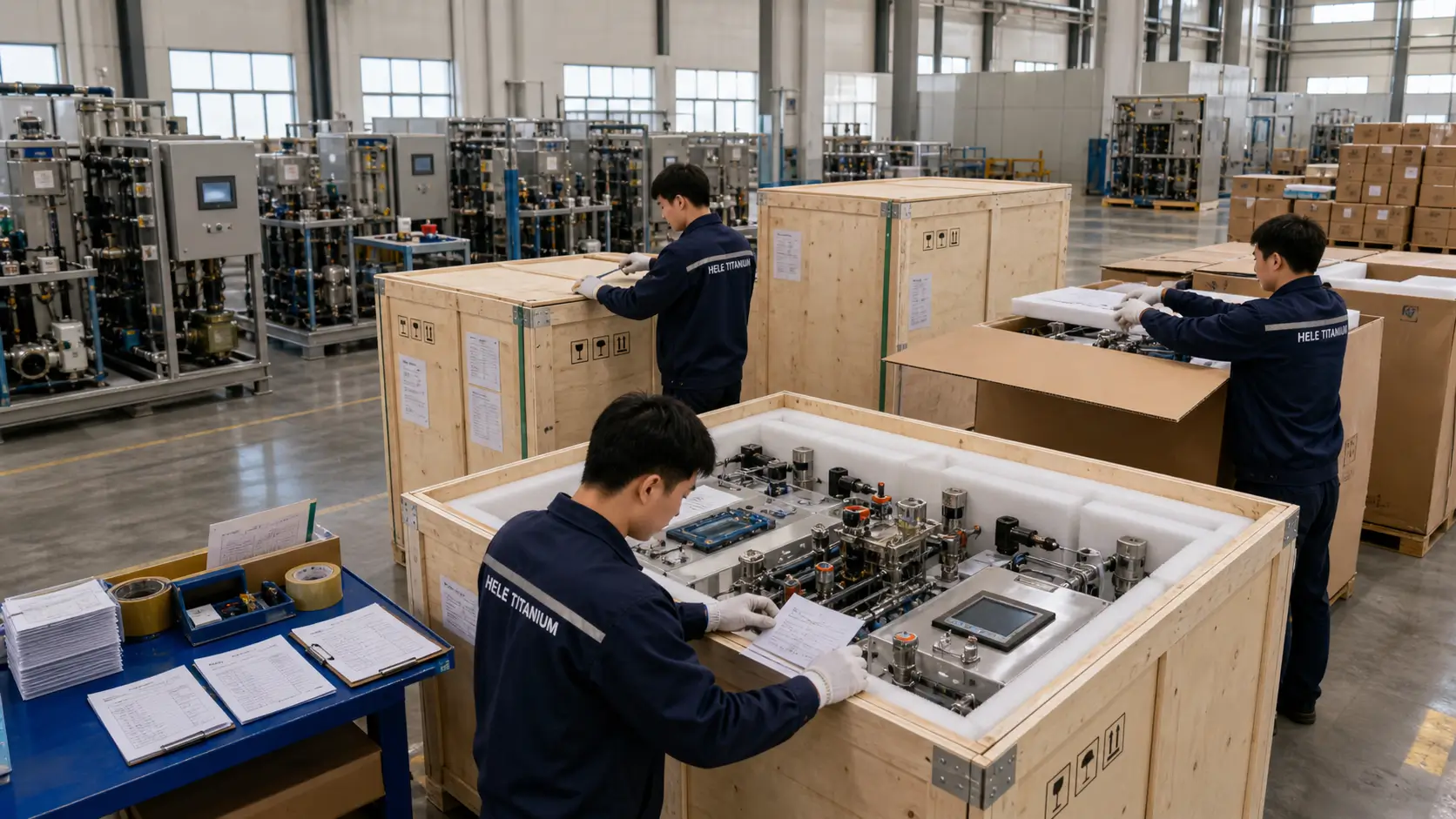 Skid Packing & Dispatch Area
Our inspection system verifies system assembly quality, piping integrity, control performance, functional operation, and final documentation before shipment.
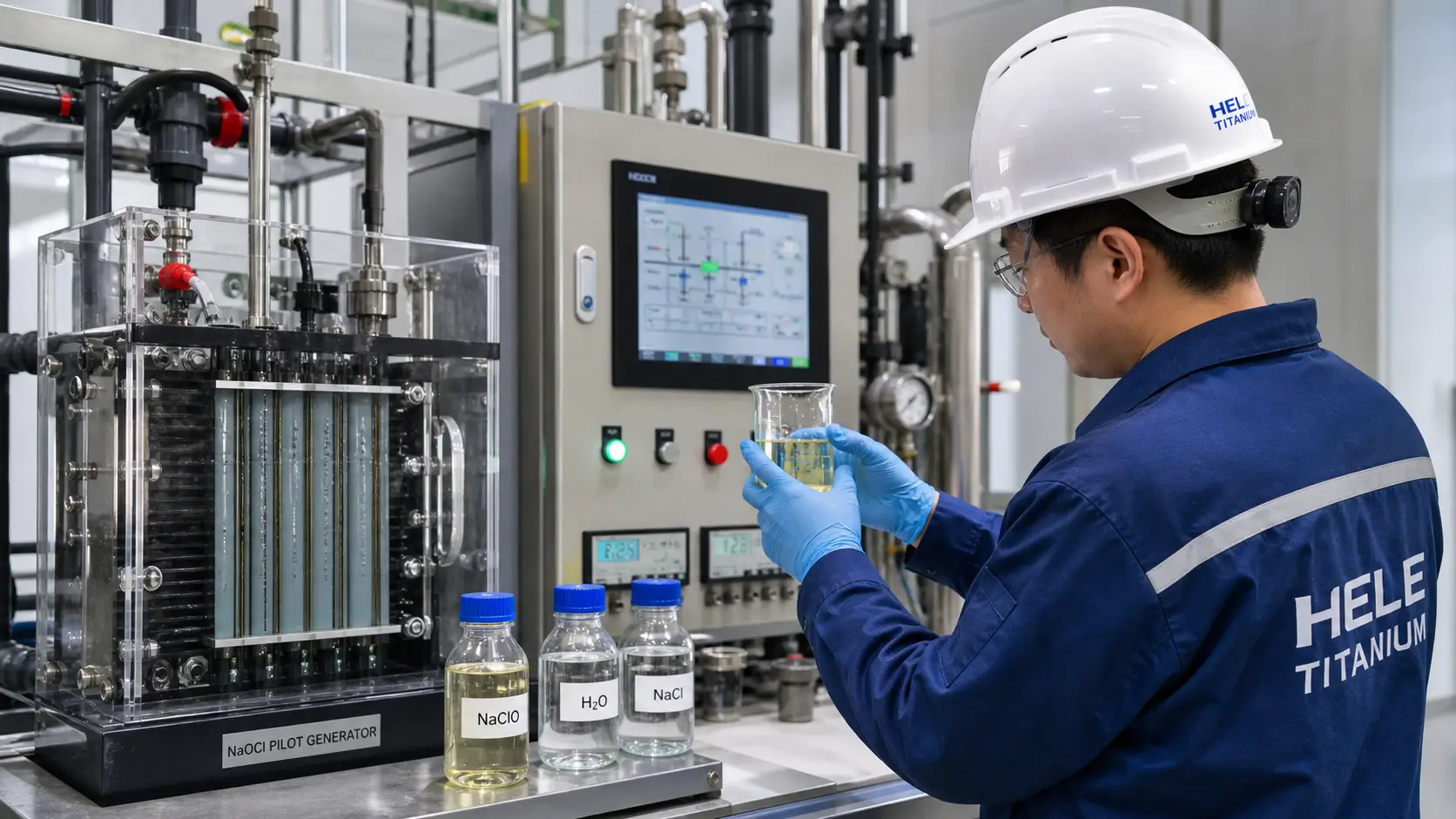 Component Inspection
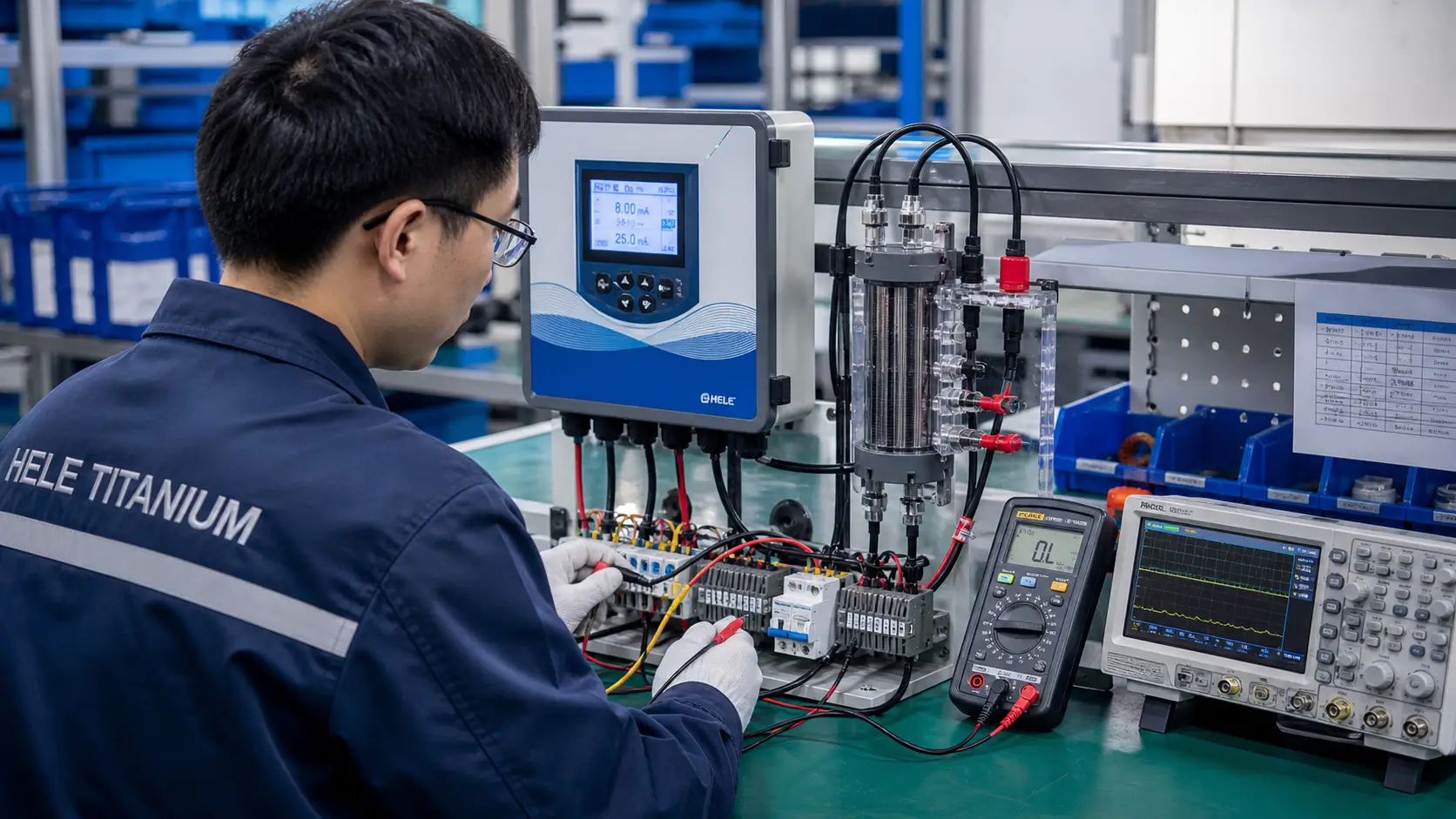 Piping & Leak Test
Control Logic & Electrical Check
Final Functional Inspection
Piping & Leak Test
Control Logic & Electrical Check
Final Functional Inspection
Documentation and traceability are important for municipal, industrial, OEM, and project-based sodium hypochlorite generation systems.
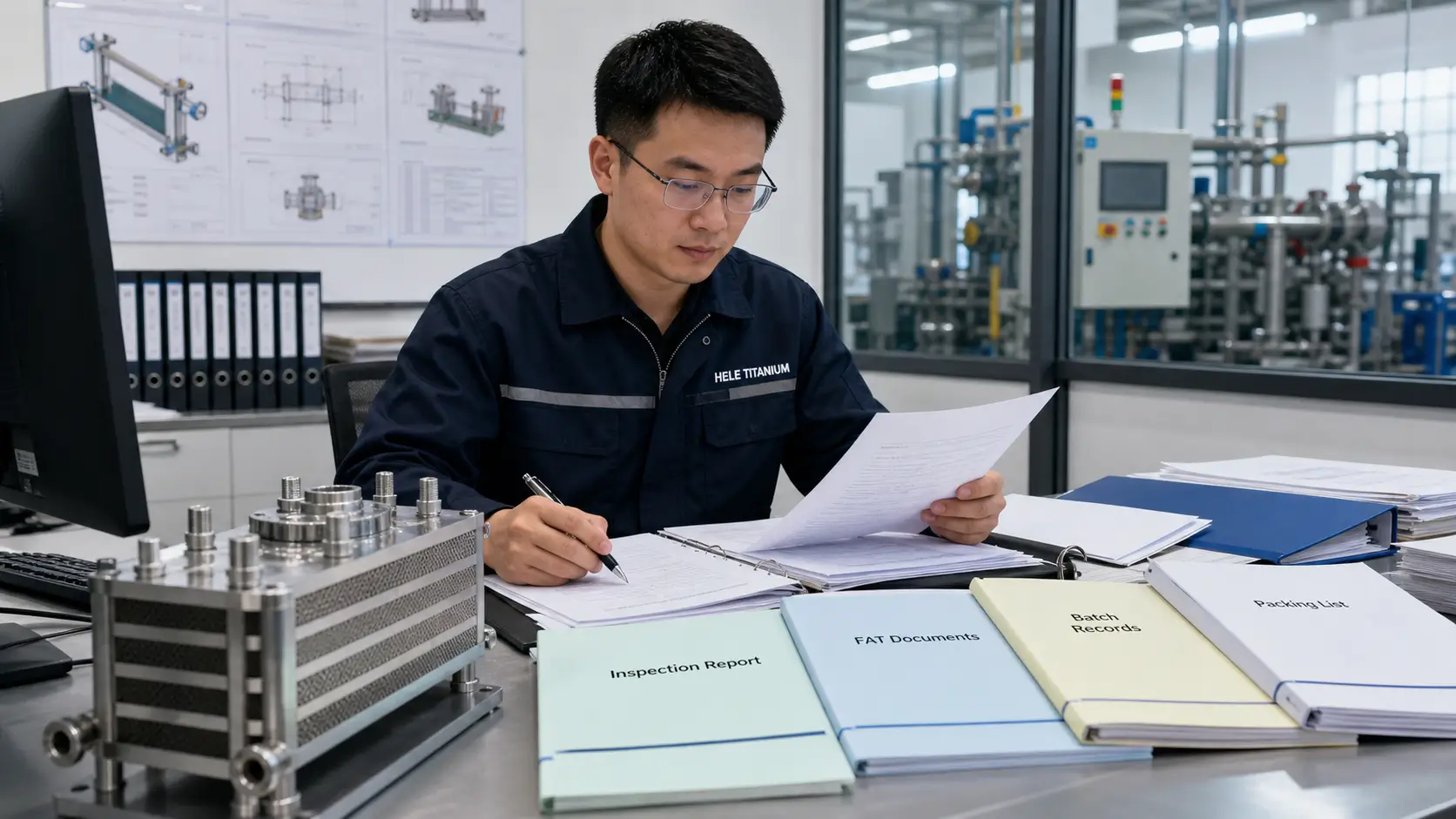 Material / Component Documentation
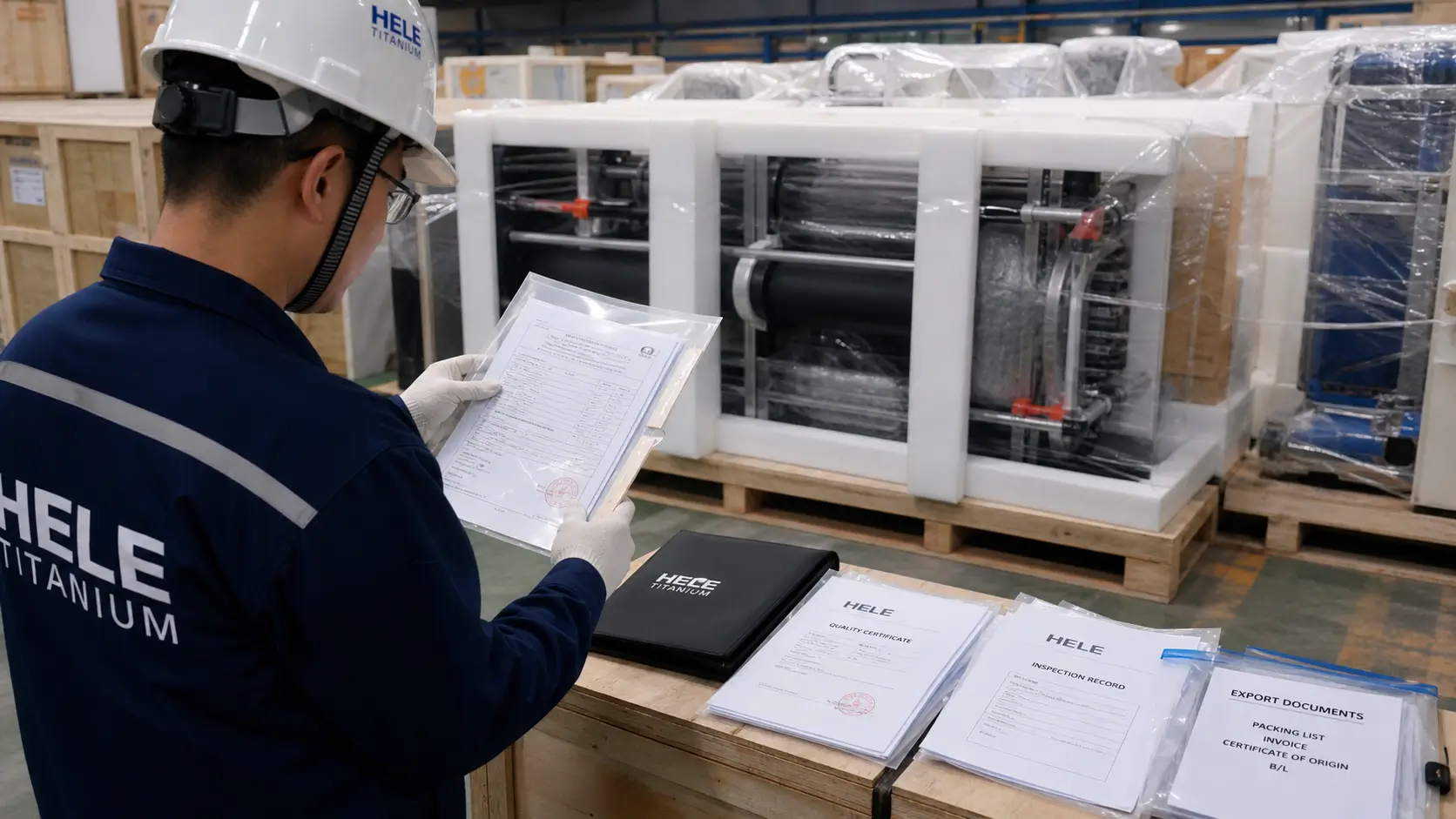 Inspection Record Example
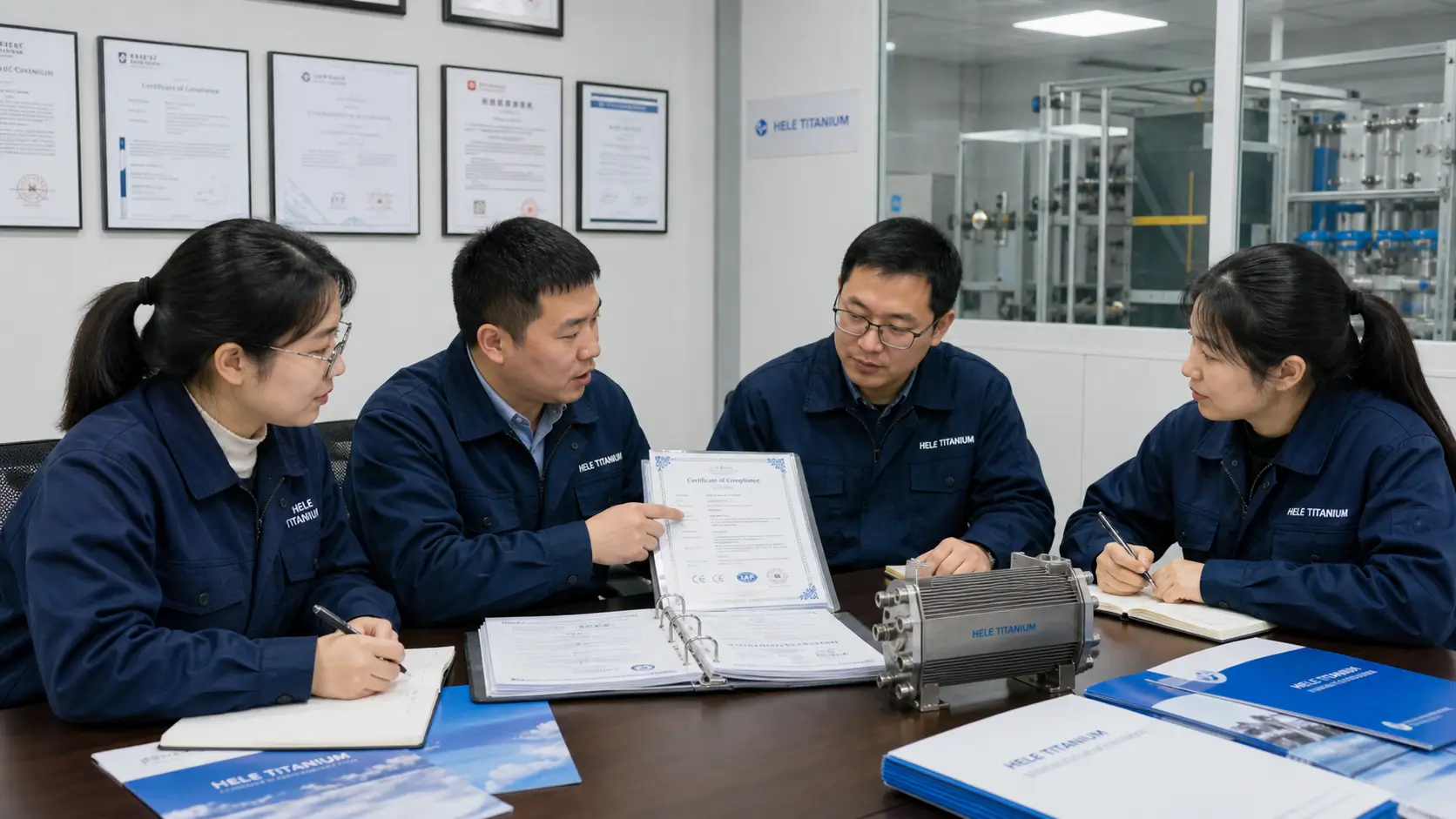 System Test Report
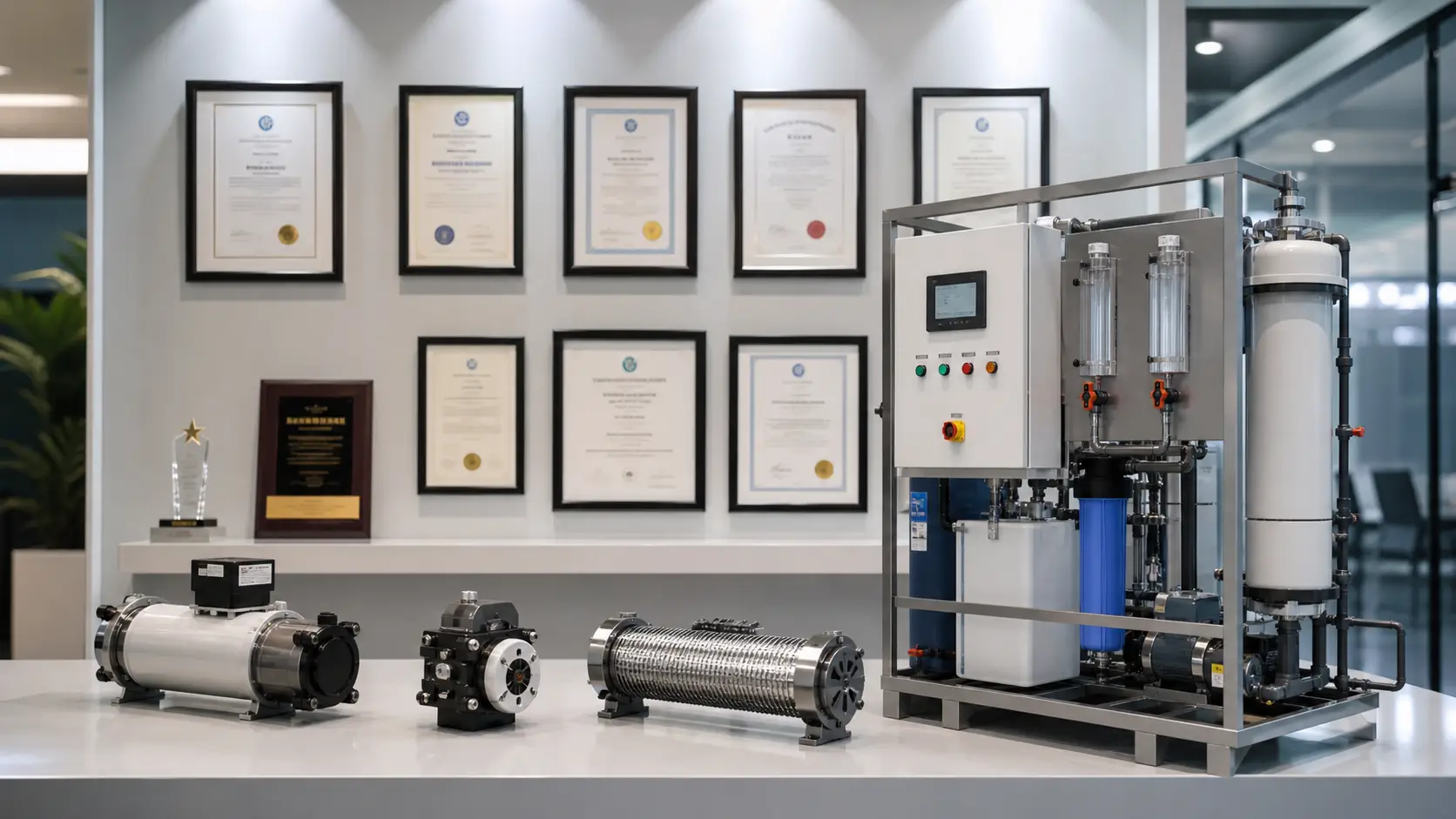 Export & Traceability Documentation
Need production photos, system assembly records, quality documents, or technical support materials? Contact our team for direct factory assistance.
Table of Contents
- 1. What Is a Sodium Hypochlorite Generator?
- 2. How On-Site NaOCl Generation Works
- 3. On-Site vs Traditional Disinfection
- 4. Key System Components
- 5. Types of Generators
- 6. Capacity & Specifications
- 7. Brine vs Seawater Systems
- 8. Automation & Hydrogen Venting
- 9. Applications by Industry
- 10. Maintenance & Lifecycle
- 11. ROI & Total Cost of Ownership
- 12. Supplier Evaluation Checklist
- 13. Summary & RFQ Guidance
Sodium Hypochlorite Generation Made Simple: A Guide for Water Treatment and Disinfection Engineers
When disinfection efficiency, chemical safety, and operational reliability matter, on-site sodium hypochlorite generation provides a safer and more controllable alternative to transporting and storing bulk chlorine chemicals. This guide helps engineers, operators, EPC contractors, and procurement teams evaluate system capacity, feedwater source, components, automation, safety, maintenance, OPEX, and supplier reliability.
Before You RFQ Sodium Hypochlorite Generators, Confirm These 5 Things
- Application: drinking water, wastewater, industrial process water, cooling tower, marine, pool, or OEM system
- Chlorine demand: g/h, kg/h, kg/day, target dosage, flow rate, and peak demand
- Feed source: brine, softened water, seawater, or site-specific water chemistry
- System design: skid-mounted, containerized, automation level, storage, dosing, footprint, and safety requirements
- Documentation needs: P&ID, layout drawing, FAT report, QC report, manual, export docs, or project certification support
1. What Is a Sodium Hypochlorite Generator?
A sodium hypochlorite generator is a complete on-site system that produces dilute NaOCl from salt, water, and electricity. It is not just a single component; it is an integrated plant that includes electrolytic cells, brine preparation, DC power supply, product storage, dosing pumps, PLC automation, and critical safety systems for hydrogen venting.
2. How On-Site NaOCl Generation Works
- Salt and water or seawater are prepared as electrolyte.
- The electrolyte enters the titanium electrolytic cell.
- DC power drives electrolysis across MMO-coated electrodes.
- Chlorine and cathodic products are generated.
- Sodium hypochlorite forms in solution.
- Hydrogen gas is separated, diluted, and vented safely.
- Product is stored and dosed into the target water stream.
3. On-Site Generation vs Traditional Disinfection Methods
| Feature | On-Site NaOCl Generation | Bulk Chlorine / Bleach | Ozone | UV |
|---|---|---|---|---|
| Disinfection residual | Yes (stable) | Yes | No | No |
| Safety profile | High (dilute 0.8% output) | Low (hazardous gas/15% bleach) | Moderate | High |
| Chemical logistics | Only salt delivery | High risk & frequent delivery | None | None |
| Operating cost | Low (salt + electricity) | High (chemical purchasing) | High (energy) | Moderate |
| Maintenance | Cell cleaning, salt refill | Piping/valve replacement | Complex | Lamp replacement |
4. Key System Components
- Water Softener: Prevents cell scaling by removing calcium/magnesium.
- Brine Tank & Pump: Prepares and delivers consistent electrolyte.
- Titanium Electrolytic Cell: The core reactor with MMO coatings.
- Rectifier: Supplies stable DC power.
- Hydrogen Venting System: Critical safety dilution blowers and piping.
- PLC / HMI: Automates logic, alarms, and dosing control.
5. Types of Sodium Hypochlorite Generators
Systems are categorized by scale and feed source:
- Small-scale commercial units: 50–500 g/h
- Medium and large industrial units: 1,000–64,000 g/h or project-specific
- Skid-mounted systems (plug-and-play)
- Containerized systems (for remote or outdoor sites)
- Brine-based vs. Seawater-based systems
6. Capacity, Output & Technical Specifications
| Output concentration | Typically 0.7%–0.8% NaOCl (brine systems) |
| Salt consumption | Project-specific, commonly ~2.5–3.5 kg/kg Cl₂ |
| Power consumption | Project-specific, commonly ~4.0–5.5 kWh/kg Cl₂ |
| Current efficiency | Project-specific design |
| Automation | PLC / HMI / remote monitoring SCADA |
7. Brine-Based vs Seawater-Based Systems
Brine systems offer high control over salinity and output concentration, making them ideal for municipal and industrial sites. Seawater systems use natural feed, eliminating salt logistics entirely, which is perfect for coastal power plants, offshore rigs, and marine biofouling control.
8. Automation, Safety & Hydrogen Venting
Modern generators utilize PLC/HMI automation for remote monitoring, alarm logic, and emergency shutdowns. Sensors track flow, level, temperature, and chlorine output.
⚠️ Safety Warning: Hydrogen Venting
Hydrogen gas is generated during electrolysis. Proper ventilation, active dilution blowers, interlocks, and strict operating procedures are essential for safe sodium hypochlorite generator operation to prevent explosive accumulation.
9. Applications by Industry
- Municipal Drinking Water: Primary and residual disinfection.
- Wastewater Treatment: Effluent pathogen control and odor reduction.
- Cooling Towers: Continuous biofouling and legionella control.
- Marine & Offshore: Seawater electrochlorination for intake protection.
- Commercial Pools: Automated large-scale sanitization.
10. Maintenance & Lifecycle Cost
Routine Maintenance Checklist
- Replenish salt in brine tank
- Inspect brine tank and pumps
- Monitor cell voltage and current
- Clean electrolytic cell when scale appears
- Check water softener performance
- Inspect dosing pumps & calibrate sensors
- Check hydrogen vent path & blowers
- Inspect PLC alarms & record data
11. ROI & Total Cost of Ownership
While CAPEX is higher than a simple bleach dosing pump, on-site generation slashes OPEX by eliminating bulk chemical purchasing and delivery fees. The ROI is calculated based on salt consumption, electricity costs, water usage, and the reduction in maintenance labor and chemical handling risks.
12. Supplier Evaluation Checklist
- Does the supplier manufacture or control titanium electrolytic cells?
- Can they support both brine and seawater systems?
- Can they provide P&ID, layout, and engineering documents?
- Do they rigorously address hydrogen venting and safety interlocks?
- Can they provide FAT and QC documents?
- Do they support installation, commissioning, and spare parts?
13. Summary & RFQ Guidance
The best sodium hypochlorite generator should match your exact chlorine demand, feedwater chemistry, safety requirements, and footprint. Partner with a manufacturer that understands both the electrochemical core and the complex system integration required for reliable operation.
Ready to Specify the Right Sodium Hypochlorite Generator?
Hele Titanium provides custom sodium hypochlorite generators backed by titanium electrolytic cell expertise, brine and seawater system engineering, PLC automation, hydrogen venting design, factory acceptance testing, and factory-direct project support.
Request a Technical ProposalGet Your Custom On-Site NaOCl Generation System
Tell us your application, water flow rate, required chlorine dosage, daily chlorine demand, feedwater source, site footprint, automation level, storage and dosing requirements, and safety standards. Our engineering team will recommend the most suitable sodium hypochlorite generator system for your project.
- Brine & Seawater-Based Systems
- Titanium Electrolytic Cells with MMO Coatings
- Skid-Mounted & Containerized Designs
- PLC Automation, Hydrogen Venting & FAT Support
Direct Contact:
sales@heletitanium.com
Room 1206, Building 1, Huaxia Yue World
Request a Sodium Hypochlorite Generator Quote
Request an Engineering Quote
Share your drawings, application, material grade, coating requirement, quantity, and delivery target. Our team will review your request within 1 business day.
Email Us
sales@heletitanium.comWhatsApp / Call Us
+86 13857402537Factory & Engineering Center
Titanium Valley, Baoji City, Shaanxi Province, China