
A salt chlorinator generates chlorine in an electrolytic cell, but the unit’s rated daily output is not the same as the disinfectant residual a busy commercial pool will maintain. The equipment must be sized around bather load, water conditions and the circulation system.
Salt electrolysis is a chlorine-delivery method, not a chlorine-free pool. The operator still needs to monitor disinfectant residual and pH and meet local aquatic-venue requirements. A cell with a large catalog output cannot compensate for missing flow interlocks or inadequate real-world runtime.
The short answer: Send pool volume and use profile, circulation flow and schedule, salt and water conditions, target residual-control scheme and local code requirements. Ask for chlorine-output test conditions, cell life basis, interlocks and replacement scope.
1. What does a salt chlorinator supply?
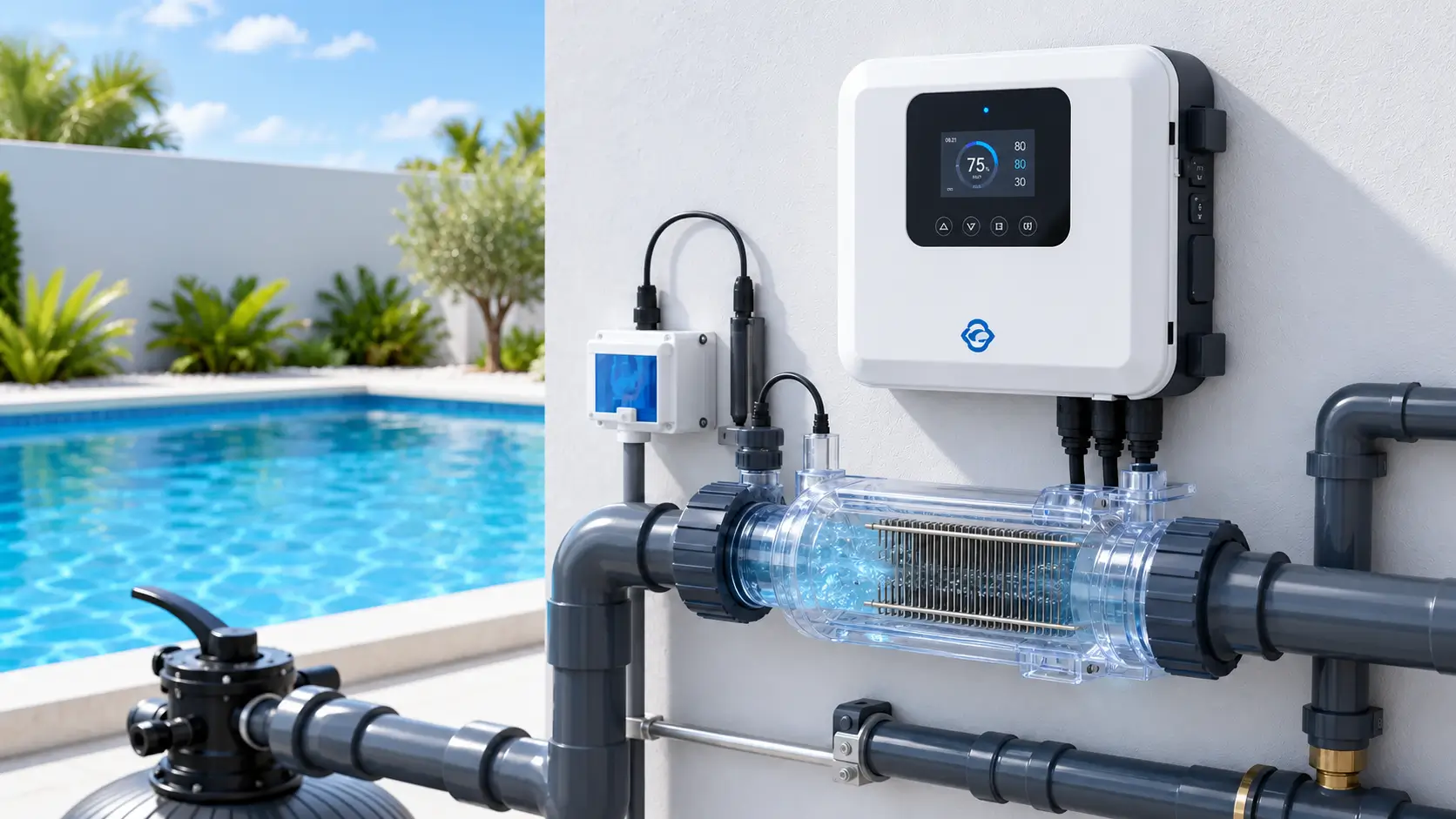
An in-line cell uses dissolved salt in circulating pool water to generate chlorine species for disinfection. It does not eliminate the need to test and control free chlorine and pH. CDC’s Model Aquatic Health Code discusses salt electrolytic chlorine generators in public aquatic venues; actual legal requirements depend on jurisdiction. The venue operator and designer must confirm the applicable code before equipment is ordered.
This guide addresses commercial pools and OEM systems, not a consumer “best chlorinator” ranking. State whether the buyer needs a complete generator, an OEM cell, a controller-integrated package or a replacement electrode cartridge. Those packages have different wiring, sensor, plumbing and approval responsibilities.
2. How much chlorine does the venue really need?
Pool volume alone cannot size the cell. Bather load, sunlight, indoor/outdoor location, make-up water, contaminants, operating hours and supplementary treatment change chlorine demand. The designer should establish a peak and normal demand and compare them with generator output during realistic pump runtime. If the circulation pump runs only part of a day, a 24-hour nameplate output should not be used as though the cell produces continuously.
| Sizing input | Why it matters | Buyer supplies |
|---|---|---|
| Volume and circulation schedule | Defines contact and hours available for generation. | Pool and pump data. |
| Bather and contaminant load | Changes the chlorine consumed between tests. | Operating profile and historical demand. |
| Target control range | Connects output to health-code compliance. | Local code and operator setpoints. |
| Backup or supplementary feed | Covers peaks, outages or commissioning. | System design and responsibility. |
Do not translate a supplier's “grams per day” into a promised pool residual without a demand model and monitoring plan. The operator can assess actual free chlorine trends during a representative trial.
For a new pool without operating history, state the assumed bather pattern and ask the designer how the peak load will be covered. An OEM may need a supplementary feed route or a second cell to maintain operation during cleaning or failure. Those are system choices, not faults in a single electrode. The quote should make clear whether redundancy is included or left to the integrator.
3. Which water and hydraulic conditions affect output?
Ask for the salt concentration range at the cell, temperature, pH, hardness, stabilizer or other treatment chemicals, and expected scaling tendency. State circulation flow and pressure at the intended installation point. A generator’s output can vary with these conditions; compare suppliers at the same stated test basis.
Locate the cell so it receives the required flow and can be isolated for service. The piping arrangement should avoid operation without water flow and should address the manufacturer’s specified orientation and gas handling. A cell that produces its nominal output on a bench may be unsuitable in a plant with poor flow or frequent high-scale conditions.
4. What monitoring and safety features are in scope?
Define whether the package includes salt readout, low-salt indication, flow interlock, output adjustment, temperature sensing, alarms and integration with a free-chlorine/pH controller. The CDC MAHC addresses these topics for public venues; do not state that a HELE unit carries a particular listing or certification unless a current certificate for the exact model is available.
Controls should disable generation when circulation is inadequate and allow the operator to observe faults. The pool owner still performs water testing and chemical management. If an OEM integrates the cell into a broader panel, allocate sensor selection, wiring, alarm logic and commissioning tests explicitly between supplier and integrator.
Ask how the controller responds when a sensor fails, a pump stops or salinity falls outside the approved window. An alarm alone may not be enough if generation must stop. The integrator should document the cause-and-effect logic and test it at commissioning. This is especially relevant to a cell-only purchase, because the electrode supplier may not supply or certify the final control panel.
5. What will the operator replace and maintain?
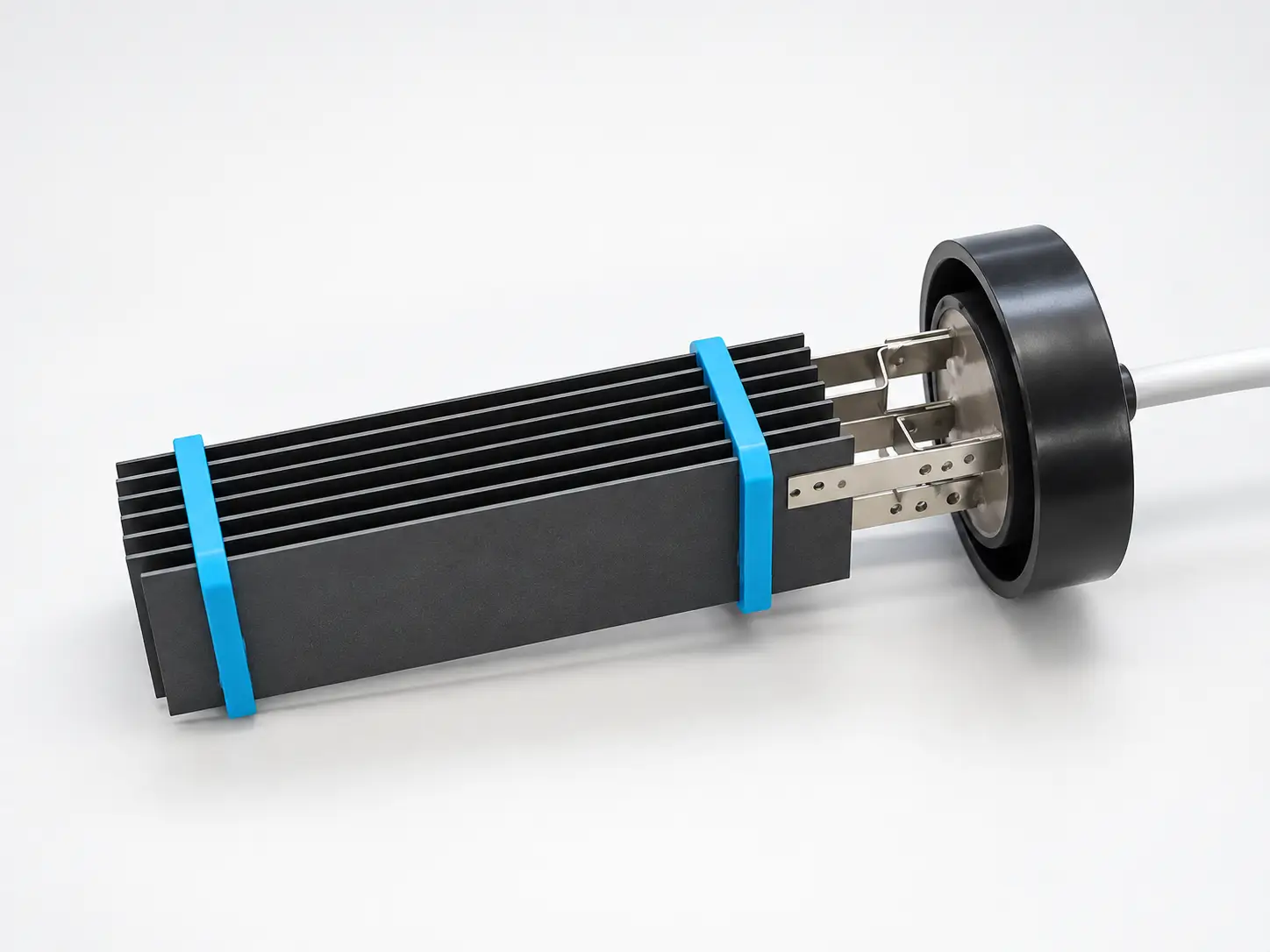
Ask what the replaceable item is: coated electrode cell, housing, seals, power lead or complete cartridge. A replacement must match plumbing envelope, connector, controller, polarity program and rated current. A cell that physically screws into the pipe is not necessarily electrically compatible with the installed controller.
Scale accumulation can reduce output and affect current. State the cleaning method permitted for the offered cell, expected access and any polarity-reversal program. Life claims should include salt, temperature, runtime, current and cleaning assumptions; a calendar number alone is weak purchasing evidence.
For an OEM, a spare-cell policy matters commercially. Ask whether replacement cells remain compatible across controller revisions and how a failed unit is identified. Good labeling and a component drawing reduce downtime and prevent the wrong cartridge being installed.
Compare replacement cost over an operating horizon, not only the first cell price. The model should include expected runtime, cleaning labor, spare-cell availability and the evidence behind life estimates. Do not use a generic life in years if the venue operates only seasonally or at a different current setting from the test basis.
6. What makes competing offers comparable?
Compare chlorine output at a defined salt level, water temperature, flow, electrical input and runtime. Then compare included controller, sensors, housing, fittings, interlocks, spares and test documents. One bidder may quote a cell only, another a complete package. Do not compare their unit prices as if the delivered systems were identical.
The HELE salt chlorinator page is the product entry point. Capacity, certification, cell life, MOQ and lead time require model- and market-specific confirmation in the quotation. The site owner or OEM must verify the final installation against local electrical and aquatic-health requirements.
7. What should a commercial-pool RFQ include?
- Venue type, pool volume, bather load and historical/estimated chlorine demand.
- Circulation flow, pump schedule, pipe size, salt, temperature, hardness and pH ranges.
- Cell-only or complete-generator boundary, controller integration and power supply.
- Required flow interlock, monitoring, alarms and local certifications for the target market.
- Output test basis, spare cells, cleaning plan, quantity and delivery schedule.
Questions buyers often ask
Is a saltwater pool chlorine-free?
No. The electrolytic unit generates chlorine; operators still monitor free chlorine and pH.
Can I choose by pool volume alone?
No. Demand, bather load, circulation runtime, salt, temperature and water conditions affect the required output.
Does a cell-only quote include compliant controls and certification?
Not necessarily. Ask for the exact model, included interlocks and verified approvals required in the installation market.