
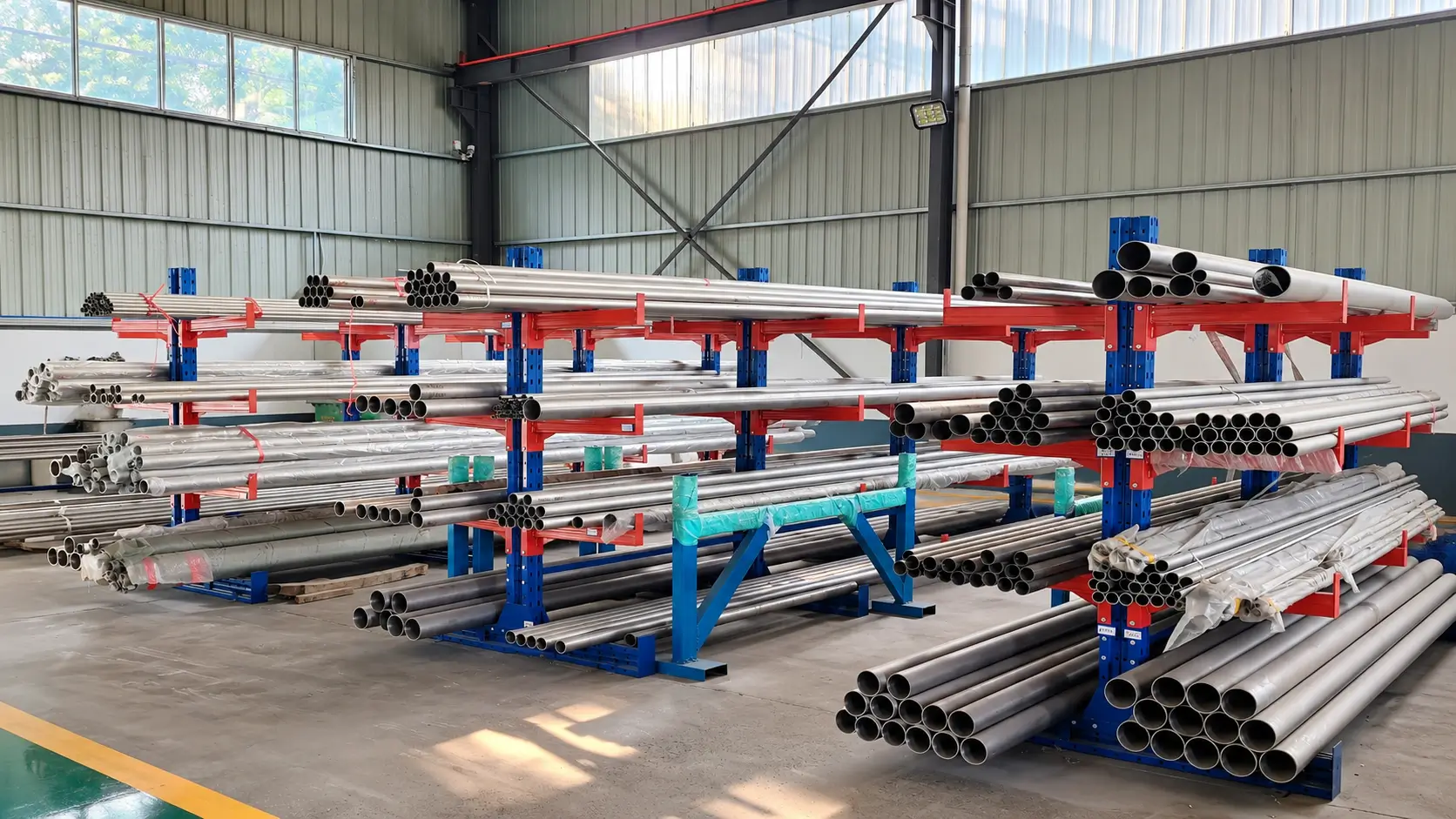
Two quotations can both say “Grade 2 titanium tube” and still describe different products. One may be thin-wall heat-exchanger tubing with a defined test route; the other may be process pipe sized for a different connection and acceptance basis.
The material grade matters, but it does not settle whether the delivered item can be expanded into a tubesheet, welded into a piping system or installed in a specified pressure circuit. Those decisions need different product and inspection information.
The short answer: Describe the equipment duty first, then select the applicable tube or pipe standard. Put grade, OD or NPS, wall, length, seamless/welded route, end condition, inspection and traceability on the same RFQ.
1. Is the requirement for heat-exchanger tube or process pipe?
“Tube” and “pipe” overlap in everyday language. On a purchase order they can lead to different specifications, sizing conventions and tests. Heat-exchanger tubing is usually communicated by outside diameter, wall thickness and length. Process piping may be described by nominal pipe size and schedule, or by OD and wall where the project requires it. The delivered item can also be a U-bend, a cut tube, or a fabricated spool rather than a straight mill length.
| Purchase route | Typical dimensional basis | Relevant specification route | Buyer’s decision |
|---|---|---|---|
| Condenser or heat-exchanger tube | OD × wall × straight length | ASTM B338 for applicable seamless or welded tubing. | Will it fit the tubesheet, support plates and inspection plan? |
| Seamless process pipe | NPS × schedule or OD × wall | ASTM B861 when specified. | Does the pipe match the piping design, joining and testing basis? |
| Welded process pipe | NPS × schedule or OD × wall | ASTM B862 when specified. | Are the weld route, dimensions and ordered tests acceptable? |
| Custom shape or assembly | Controlled drawing and interface dimensions | Customer drawing plus an agreed applicable material and fabrication basis. | Which party owns design, fabrication and final acceptance? |
These are separate routes, not three badges to place on every tube. ASTM B338 addresses tubes for condensers and heat exchangers; B861 and B862 address seamless and welded pipe, respectively. The project’s chosen edition and any supplementary requirements need to be stated on the order. A square tube or formed assembly should not be labeled B861 by analogy with a round seamless pipe.
Start at the point of installation
For a replacement bundle, share the existing tube drawing, tubesheet hole size, expansion or welding method and required straight length. For process pipe, share the line class, applicable code, mating flanges or fittings and weld preparation. If you only have a removed sample, measure it and identify what was measured; wear, corrosion or prior expansion can make an old part an imperfect dimensional master.
2. When does seamless or welded construction change the decision?
Seamless and welded are manufacturing routes, not simple quality rankings. Each can be appropriate when the selected product standard, grade, dimension and qualification plan support the duty. The useful question is whether the offered route meets the required wall, length, service and inspection requirements at a sensible total cost.
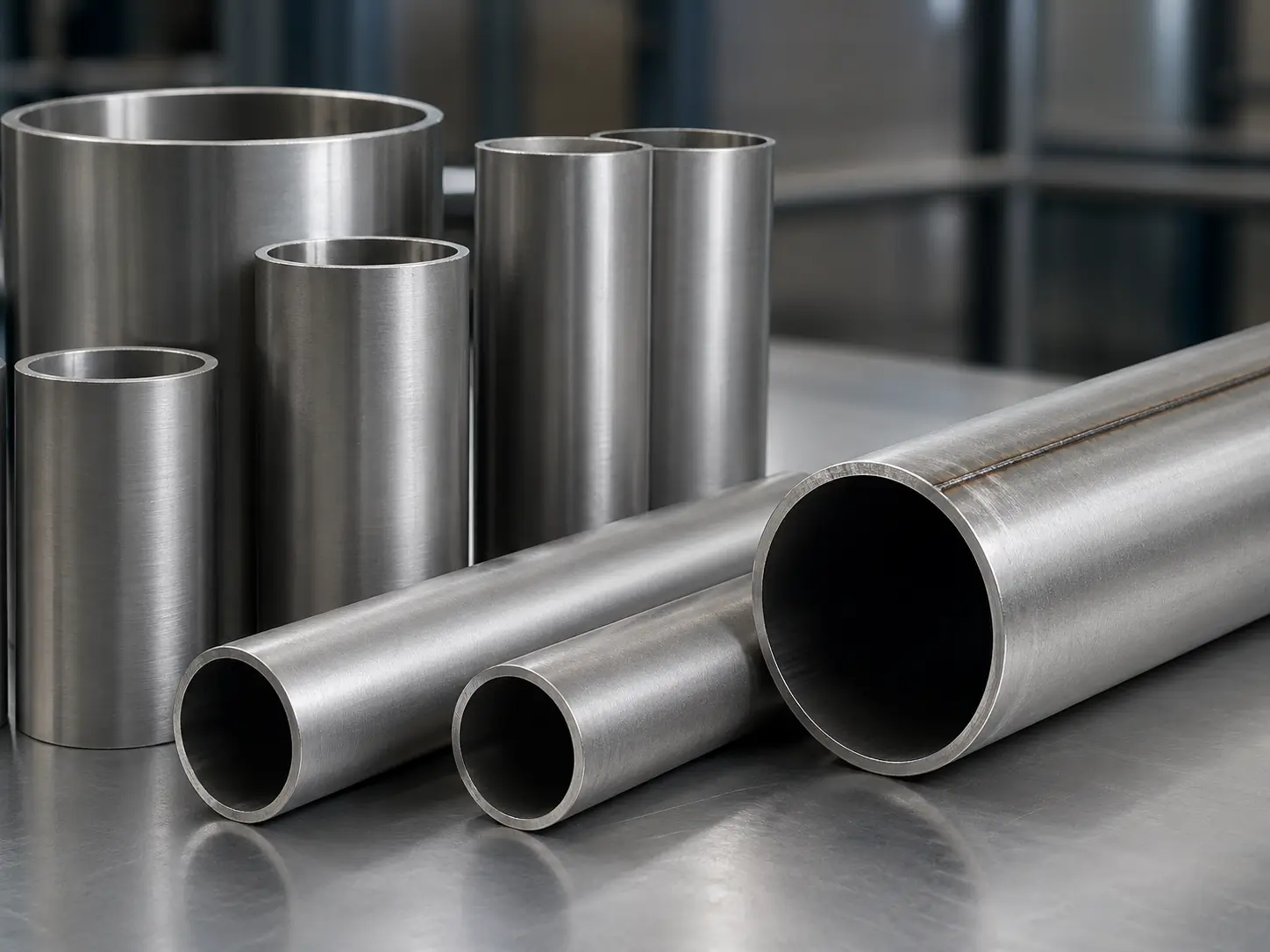
For heat-exchanger tubing, the B338 product route includes seamless and welded forms. Welded tube introduces a seam whose manufacture and inspection are part of the acceptance picture. Seamless tube has no longitudinal weld seam, but it still has dimensional, material and integrity requirements. For piping, B861 and B862 are distinct product specifications. Do not accept a change from one to the other because the outside diameter happens to match.
When a tube will be bent into a U, coiled or joined into a fabrication, qualify the delivered form rather than assuming the straight parent tube is the entire purchase. Bend radius, ovality, minimum wall after bending, leg length, weld location and post-form inspection can all affect whether the assembly fits and survives its service. HELE’s tube and pipe range is a product-family starting point; order-specific forming and fabrication scope should be confirmed separately.
3. Which dimensions and conditions control usability?
Outside diameter and wall thickness set more than a catalog line. They affect flow area, pressure-design calculations, joint preparation and the ability to insert, expand or weld the tube. A nominal wall does not tell the installer the accepted minimum wall at every point; the selected standard, tolerances and any project-specific requirement do.
- Diameter and wall: state OD × wall or NPS × schedule with the governing dimensional basis. For a close-fit exchanger, identify the critical tolerance and how it is measured.
- Length: distinguish ordered mill length from usable cut length, and include allowance for facing or end preparation.
- Straightness and ovality: call them out when they govern insertion, tube expansion or automatic welding.
- Grade and condition: provide the specified grade, material condition and actual service medium and temperature for review.
- Ends and surface: define plain, beveled, prepared or otherwise finished ends and any cleanliness or protection requirement.
Be careful with generic “pressure-rated” descriptions. The allowable pressure of an installed line depends on the design code, grade, temperature, wall, joint efficiency, corrosion allowance and system details. A supplier’s material certificate is not a pressure-design calculation. If the project has a pressure boundary, the engineer of record should provide the design basis and required acceptance tests.
Material selection needs the real fluid
Titanium can be a strong choice in selected corrosive services, but “corrosion immune” is not an engineering specification. Describe the fluid composition, concentration, temperature, flow, crevices and cleaning chemistry. Grade 2, Grade 7, Grade 12 and other grades do not become interchangeable merely because they share the word titanium. If the design specifies one grade, an alternate must go through the project’s material approval route.
4. What happens at the tubesheet or piping connection?
Many replacement failures begin at the interface rather than in the straight length. A tube that meets its material standard can still be too short after facing, too oval for a tubesheet hole or unsuitable for the specified expansion method. A pipe can match the nominal size and still arrive with the wrong end preparation, length or weld documentation for the site plan.
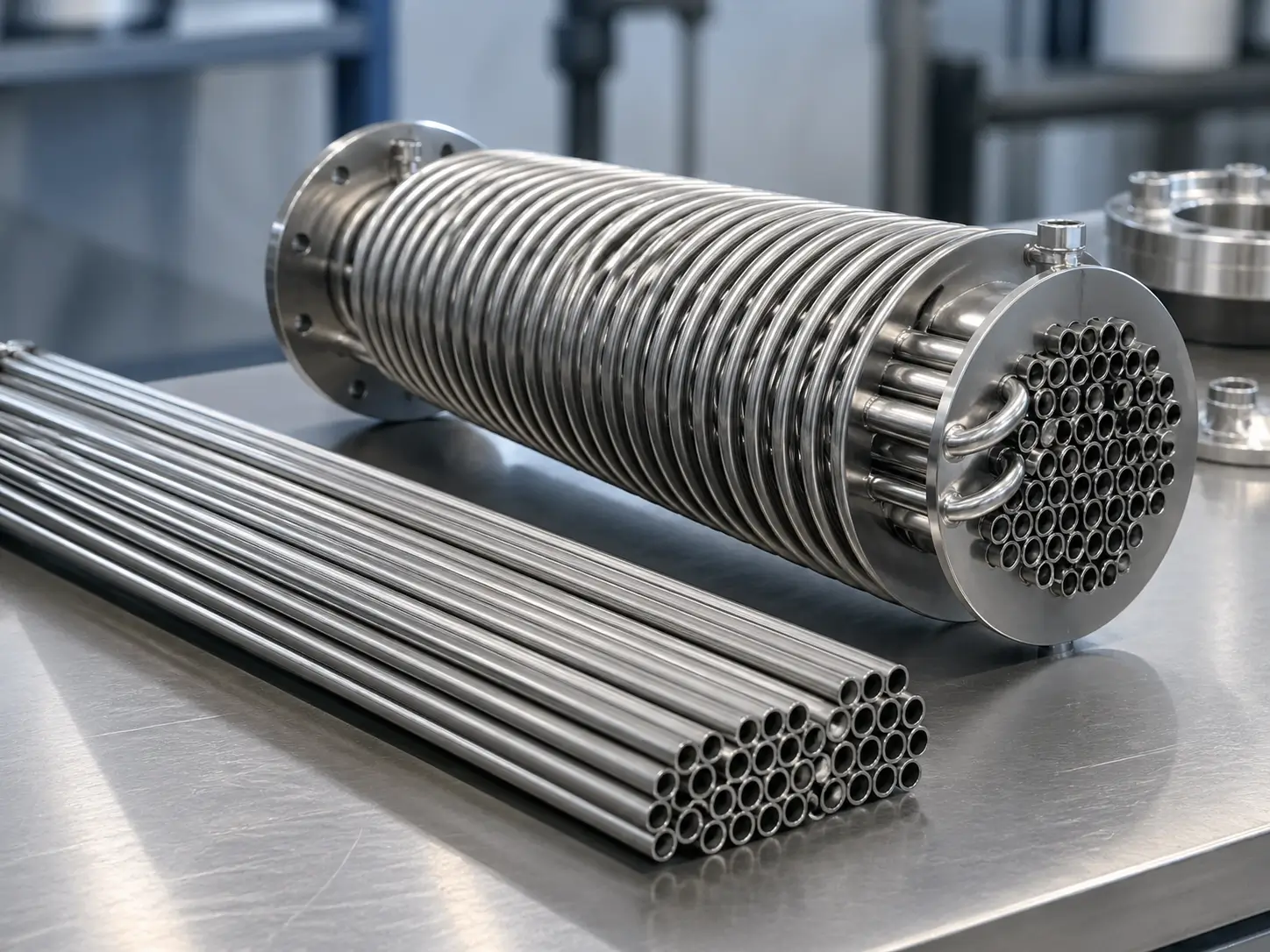
For exchanger tubes, identify whether installation uses mechanical expansion, seal welding, strength welding or another approved method. Show the tubesheet and support-plate interfaces, insertion direction and any controlled surface area near the joint. If a U-bend is needed, add a bend drawing with centerline radius and leg lengths. The buyer or designer owns the joint design; a tube supplier can then quote the material and any agreed conversion work against it.
For pipe and fabricated spools, attach the isometric drawing or line specification. Separate the base pipe from shop welds, fittings, flanges, NDE and final pressure test in the quotation. Otherwise a low pipe price may be compared with a much more complete fabricated scope. The same distinction helps plan delivery: a finished spool may require dimensional checks that straight pipe does not.
5. Which tests and records should accompany delivery?
Do not use one universal “100% tested” line for every form. The test package should follow the chosen standard edition and the purchase order. ASTM B338’s published summary describes form-specific inspection paths for seamless and welded exchanger tubes. B861 and B862 have their own pipe requirements. The exact required method, extent, acceptance level and report are matters for the ordered specification and project documents.
| Record or check | Decision it supports | Scope to put on the order |
|---|---|---|
| Material test certificate | Does the identified heat meet the ordered grade and specification? | Heat link, standard edition and certificate type. |
| Dimensions and visual condition | Will the supplied pieces fit the installation interface? | OD, wall, length, straightness, ends and sample plan. |
| Integrity testing | Is the tube or pipe accepted to the agreed product/project method? | Hydrostatic, pneumatic, electromagnetic, ultrasonic or other tests as applicable—not an assumed blanket list. |
| Fabrication record | Can an assembly be accepted as built? | Weld, bend, NDE and final-dimension scope when fabrication is ordered. |
Labels and packing lists must keep each bundle or cut length tied to the correct heat. If mixed grades or heats are accepted, say whether they may be combined in one package. At receiving, the team can then compare labels, certificates, count and key dimensions before the material enters a bundle or piping work package.
6. Why do comparable-looking offers have different prices?
Source route, grade, size and quantity are only the first layer. Conversion to cut lengths, bend work, end preparation, special inspection, documentation and packing can change the delivered cost. Small quantities in a rare size may require an entirely different sourcing path from a common exchanger tube. Availability and lead time must be confirmed for the particular grade and form; they should not be presented as a permanent promise on a generic guide.
Ask each bidder to show what is included: straight tube or pipe only, cut and prepared ends, U-bends, fabricated spool, testing, reports and freight. A quote for a straight mill tube cannot be compared directly with a quote for an installed-ready assembly. Where alternatives are permitted, ask for seamless and welded or for stock and made-to-order routes as clearly separated options.
Useful commercial comparison: calculate cost per accepted, installation-ready length or assembly at the specified test scope. Price per kilogram alone ignores cutting yield, conversion and site rework.
7. What should a useful RFQ contain?
- Equipment or line duty, operating fluid, temperature, design conditions and whether the item is a heat-exchanger tube, process pipe or assembly.
- Grade, product specification and edition, seamless/welded route, and any approved alternates.
- OD × wall × length or NPS × schedule, quantity, tolerance-critical dimensions and end condition.
- Tubesheet, bend, spool or joint drawing and installation method where relevant.
- Material certificate, product-standard and project tests, marking, packing and delivery location.
When information is incomplete, share the existing drawing and mark the unknowns. It is better for a supplier to identify a missing interface or test basis before quotation than for both sides to discover it after the material arrives.
Questions buyers often ask
Does ASTM B338 cover all titanium pipe?
No. ASTM B338 addresses condenser and heat-exchanger tubing. Seamless and welded process pipe have separate specification routes such as ASTM B861 and B862 when ordered.
Is seamless always better than welded?
No. The appropriate route depends on the service, dimensions, selected standard, qualification and economics. Compare both only when the design permits both.
Does a mill certificate establish a pipe pressure rating?
No. It documents material against the stated specification. Pressure design and installed-system acceptance depend on the applicable code, dimensions, joints, temperature and project tests.