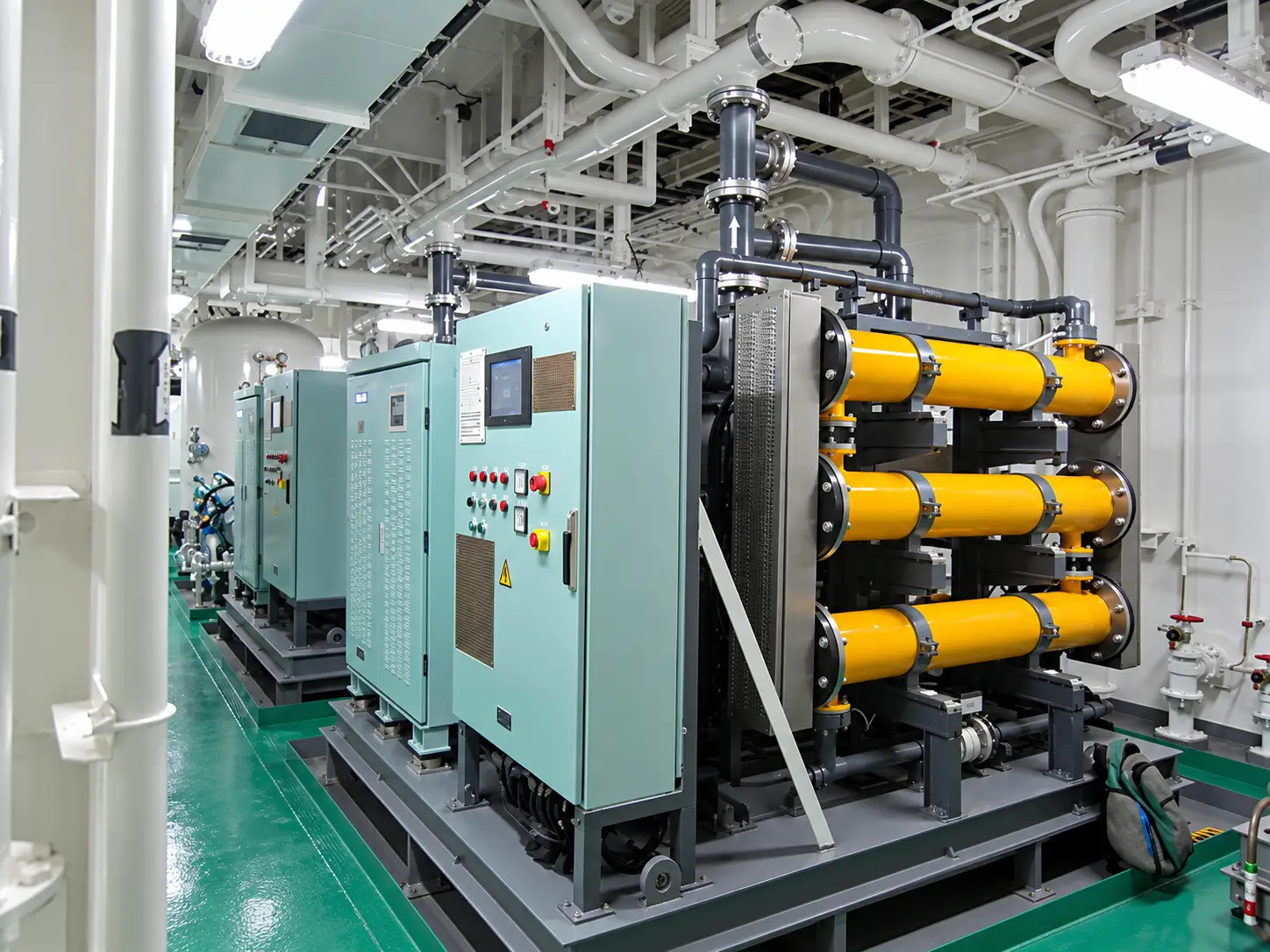
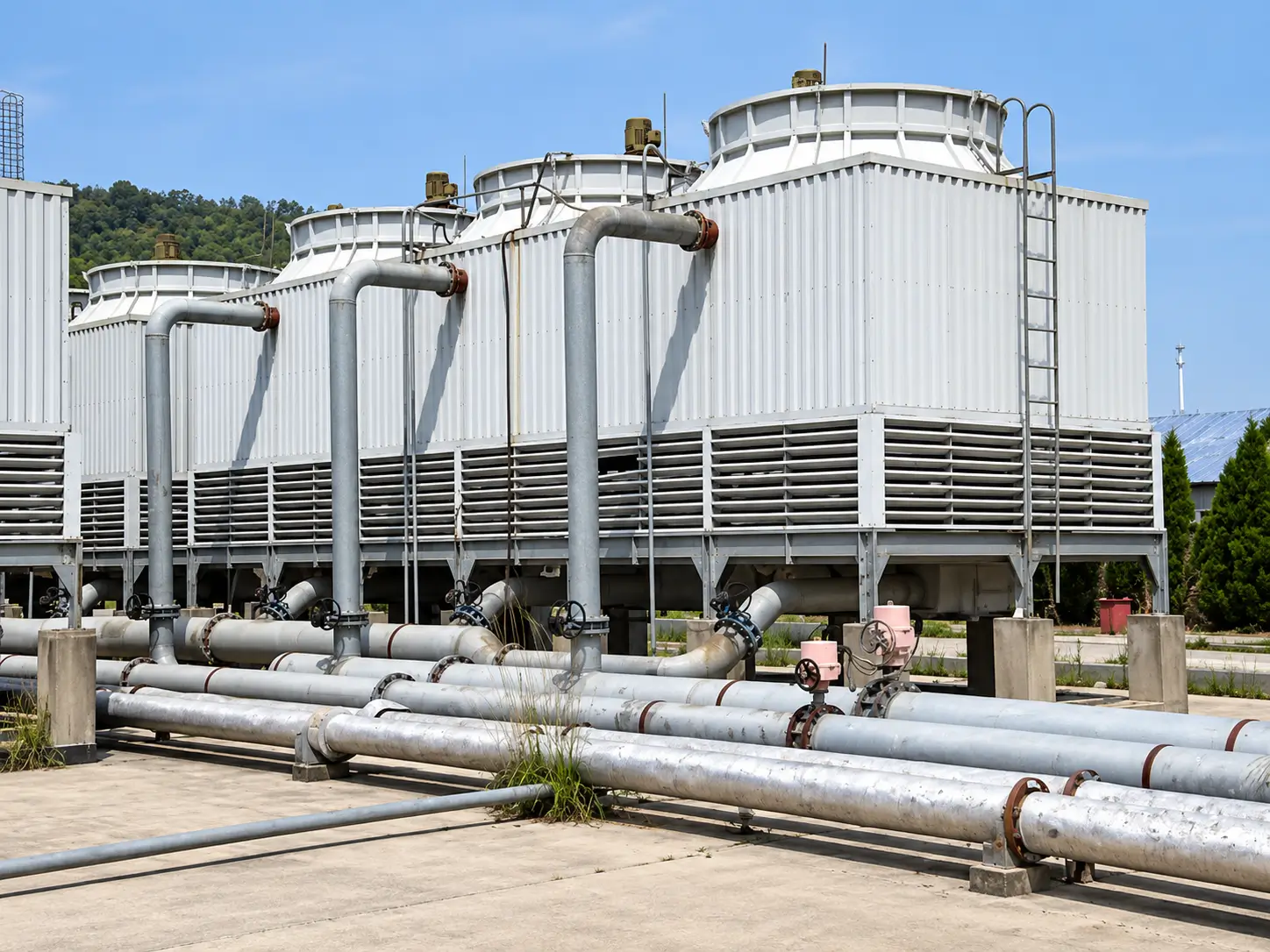
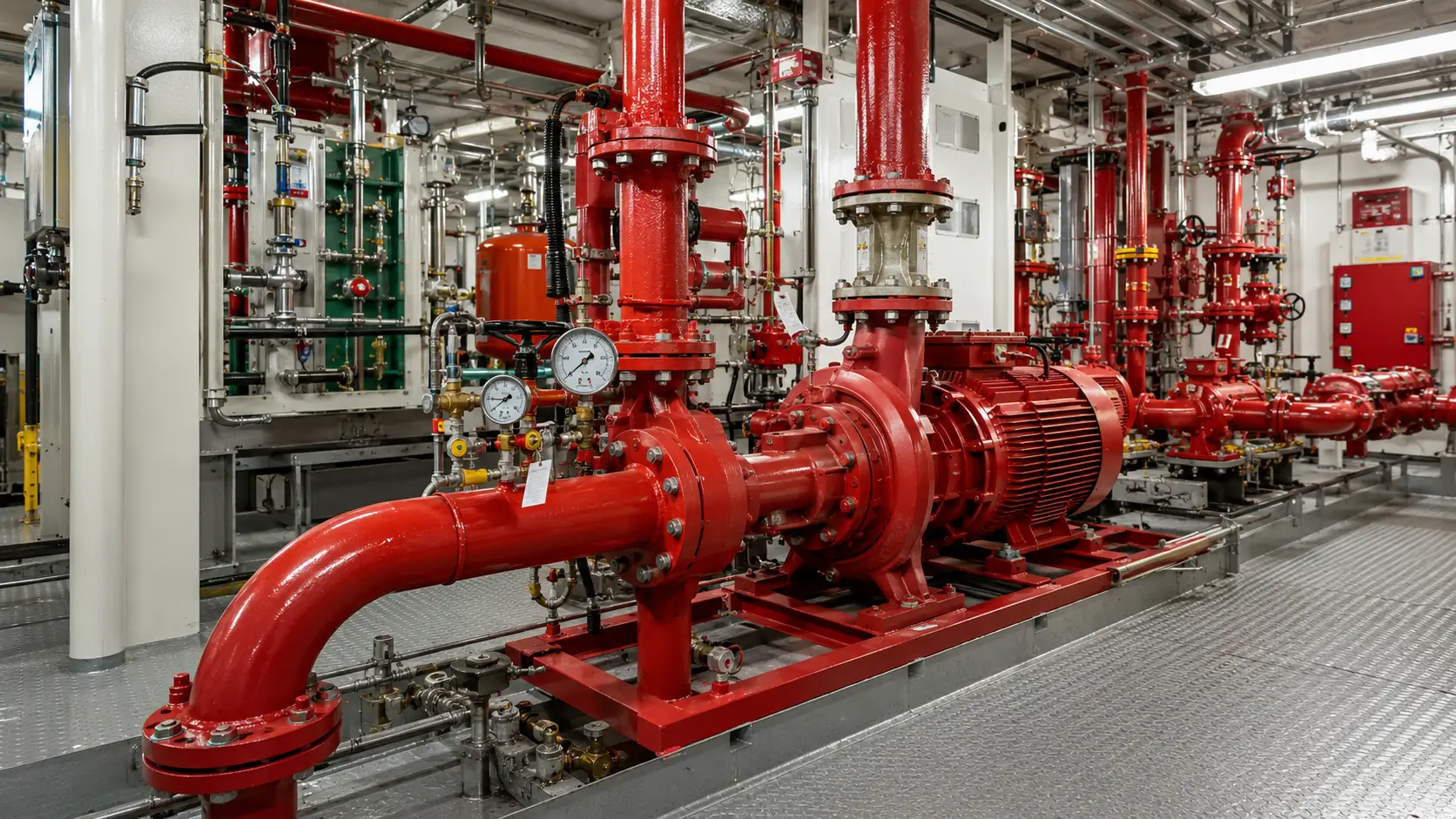
Industrial Seawater Intake System

// HELE TITANIUM · ELECTROCHLORINATION SOLUTIONS

Electrochlorination Systems for Seawater Disinfection

Engineered for seawater chlorination, cooling water disinfection, marine biofouling control, and on-site sodium hypochlorite generation. Hele Titanium provides MMO titanium electrodes, electrochlorination cells, coated titanium anodes, and system-ready electrode assemblies for reliable active chlorine production.

Seawater Chlorination
Cooling Water Disinfection
MMO Titanium Electrodes
Custom Cell Assemblies

Principle of Operation

Electrochlorination Converts Chloride-Rich Water into Active Disinfection

Electrochlorination uses electrical energy to convert dissolved chloride ions in seawater or brine into active chlorine species for continuous disinfection, biofouling control, and water treatment.

Inside the electrolytic cell, MMO titanium electrodes drive the chlorine evolution reaction under controlled current. The generated oxidants help control biological growth in seawater intakes, cooling water circuits, marine systems, desalination plants, and sodium hypochlorite generation applications.

On-site active chlorine generation

Continuous biofouling and disinfection support

Reduced dependence on transported chemical dosing

Process Overview

How Seawater Electrochlorination Works

A seawater electrochlorination system uses MMO titanium electrodes inside an electrolytic cell to convert chloride-containing water into active chlorine species. The process depends on water chemistry, current density, electrode coating, cell geometry, and safe management of hydrogen by-product.

01

Seawater or Brine Enters the Cell

Chloride-containing water flows through the electrolytic cell at a controlled rate.

02

MMO Electrodes Drive Chlorine Generation

Coated titanium electrodes convert chloride ions into active chlorine species under DC power.

03

Active Chlorine Supports Disinfection

Generated oxidants help control biological growth in seawater intake, cooling water, marine, and process water systems.

04

Hydrogen By-Product Is Managed Safely

Hydrogen generated during electrolysis must be vented, diluted, or managed through proper system design.

View Detailed Electrochemical Reactions

Anode Reaction

2Cl⁻ → Cl₂ + 2e⁻

Chloride ions lose electrons at the anode surface and form chlorine gas.

Cathode Reaction

2H₂O + 2e⁻ → H₂ + 2OH⁻

Water is reduced at the cathode, producing hydrogen gas and hydroxide ions.

Secondary Reaction

Cl₂ + H₂O → HOCl + HCl

The chlorine produced reacts with water to form hypochlorous acid, which contributes to sodium hypochlorite formation in the system.

SYSTEM CONFIGURATION

Typical Seawater Electrochlorination System

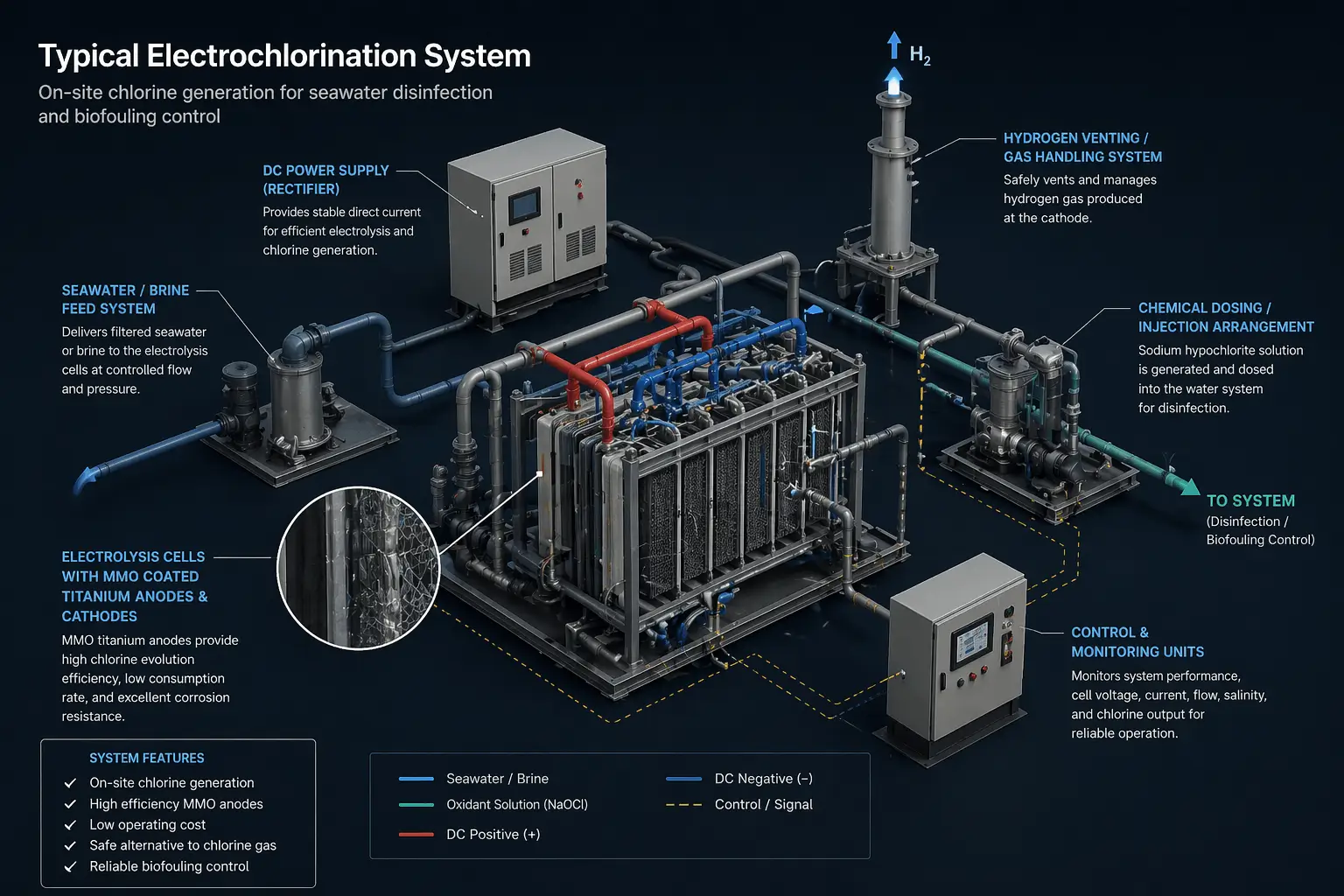
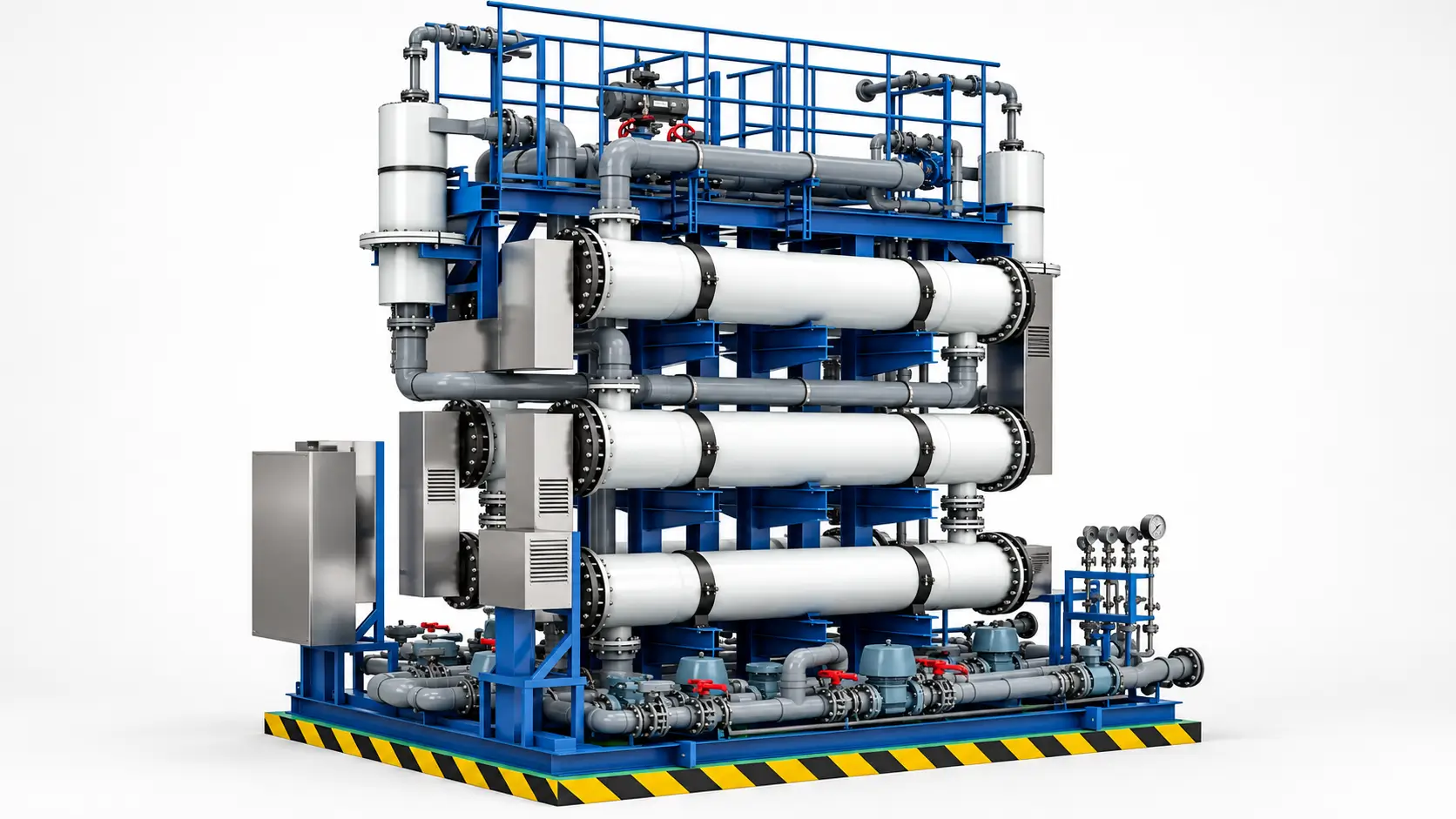
A typical electrochlorination system combines seawater or brine feed, MMO titanium electrodes, an electrolytic cell, DC power supply, hydrogen management, dosing control, and monitoring instruments to generate active chlorine on site.

Electrochlorination System Schematic

System Components

  • Seawater / Brine Feed
  • MMO Titanium Electrodes
  • Electrolytic Cell
  • DC Power Supply / Rectifier
  • Hydrogen Vent / Degassing
  • Dosing & Control System
  • Monitoring Instruments
  • Active Chlorine Outlet

Configuration Note: Final system configuration depends on water source, salinity, flow rate, target chlorine output, scaling tendency, operating hours, installation environment, and safety requirements

Choose the Right Electrode Format for Your System

Different electrochlorination projects require different electrode geometries, flow paths, surface areas, and maintenance strategies. Hele Titanium provides multiple MMO titanium electrode formats to match seawater, brine, cooling water, marine, and sodium hypochlorite generation applications.

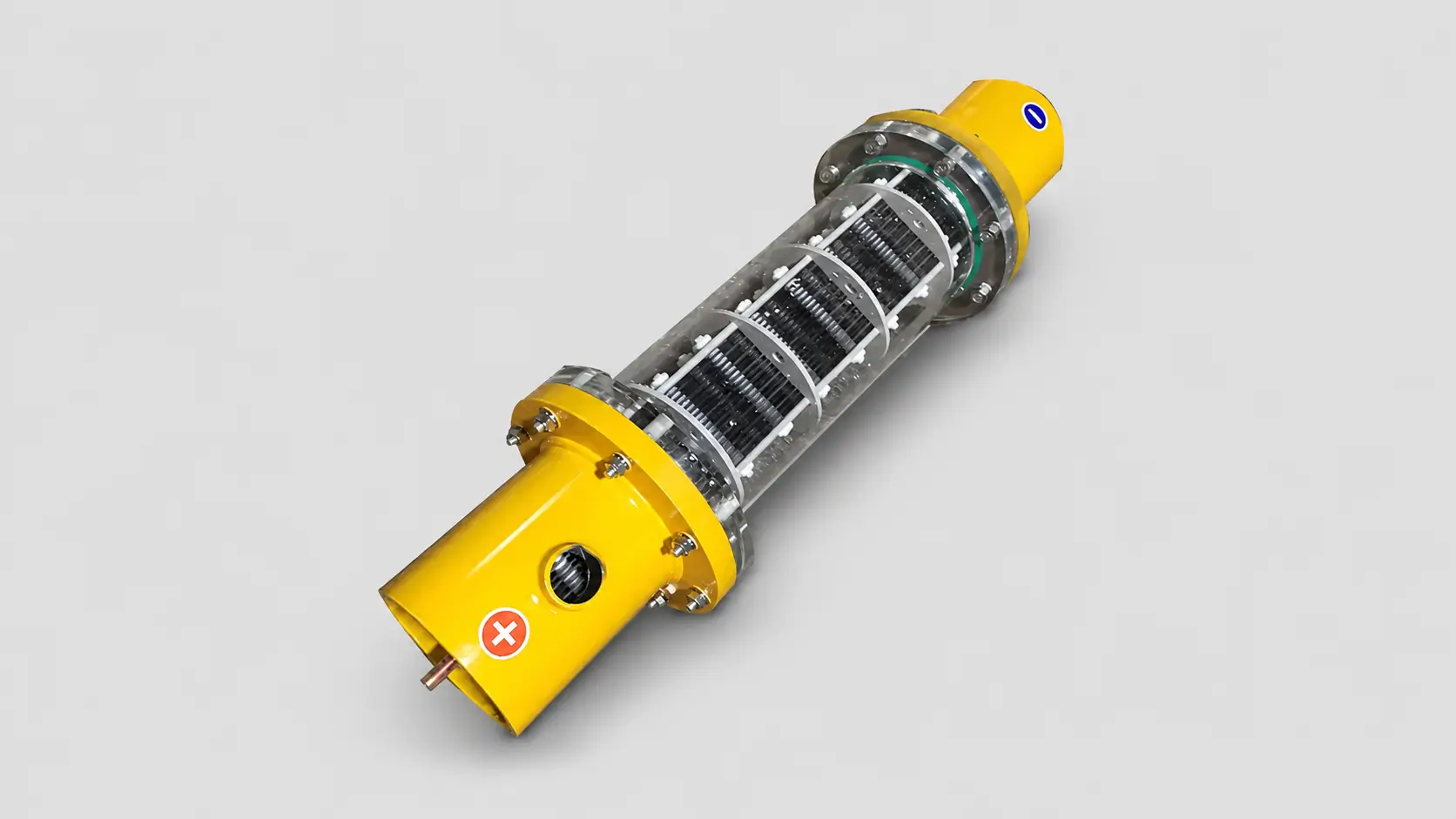
Concentric / Tubular Electrolytic Cells

Concentric / Tubular Electrolytic Cells

Best For

Pipe-type flow-through systems, compact layouts, and seawater chlorination units.

Typical Use

Seawater intake treatment, marine systems, cooling water loops, and small-to-medium electrochlorination systems.

Buyer Note

Tubular or concentric designs can support compact installation and controlled flow through the electrode zone.

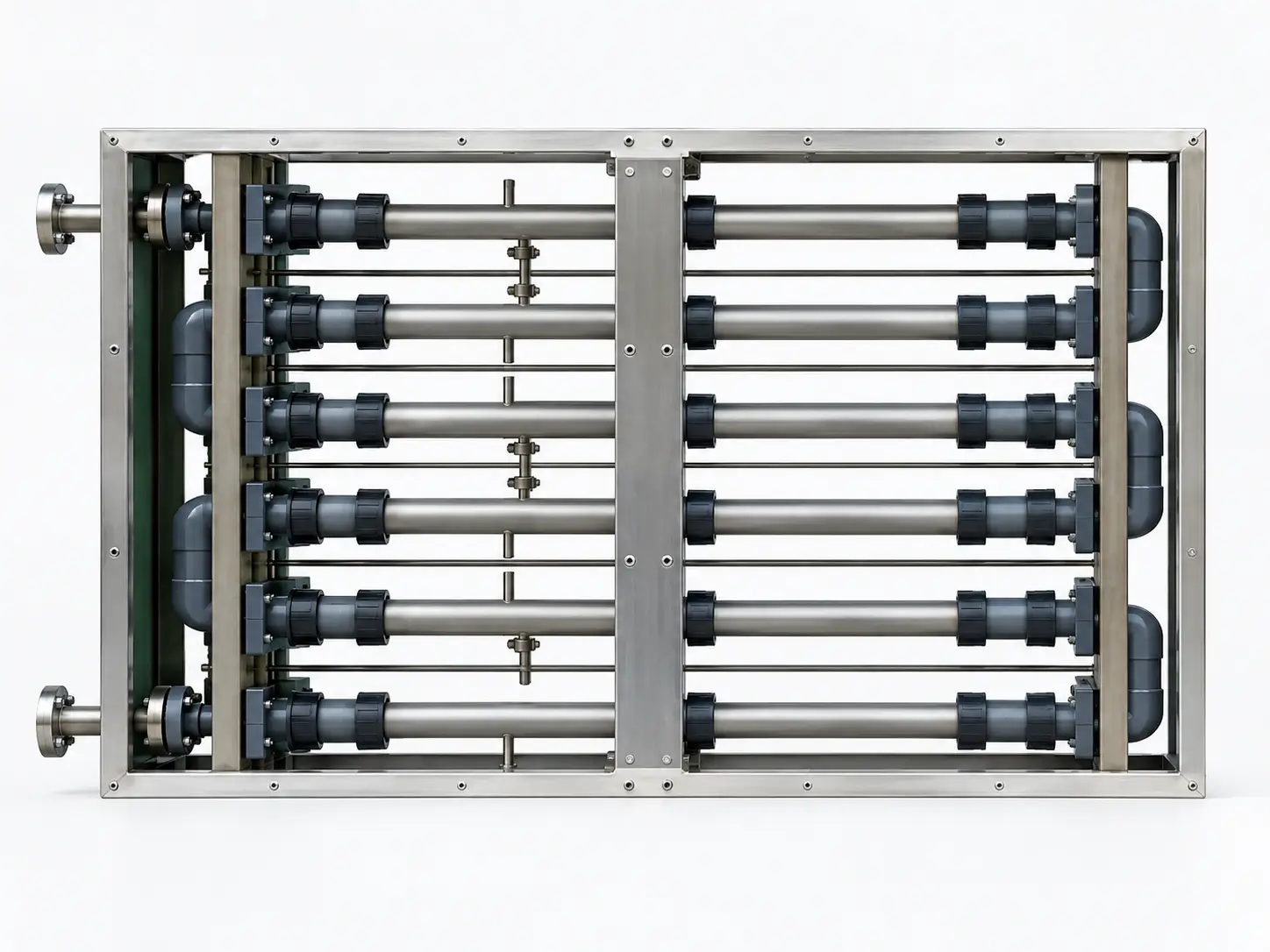
Plate-Type Electrolytic Cells

Plate-Type Electrolytic Cells

Best For

Continuous chlorine generation, larger treatment capacity, and modular system design.

Typical Use

Cooling water disinfection, desalination intake protection, and sodium hypochlorite generation systems.

Buyer Note

Plate-type cells provide scalable electrode area and can be configured for different output requirements.

High-Surface-Area Electrodes

High-Surface-Area Electrodes

Best For

Higher active surface area, improved current distribution, and compact chlorine generation systems.

Typical Use

Brine electrolysis, seawater chlorination, compact electrochemical reactors, and high-efficiency cell designs.

Buyer Note

Expanded mesh, perforated, or structured electrodes help improve active area and flow contact.

Custom Electrode Assemblies

Custom Electrode Assemblies

Best For

Project-specific cell geometry, replacement electrodes, OEM systems, and retrofit applications.

Typical Use

Custom electrochlorination skids, marine anti-fouling systems, sodium hypochlorite generators, and special cell designs.

Buyer Note

Electrode size, coating, connection, and mounting can be customized based on system drawings and operating conditions.

Critical Challenges in Seawater Electrolysis

Electrochlorination systems must maintain stable chlorine generation while managing seawater variability, scaling risk, corrosion exposure, and hydrogen by-product safety.

01

Biofouling in Seawater Intake Systems

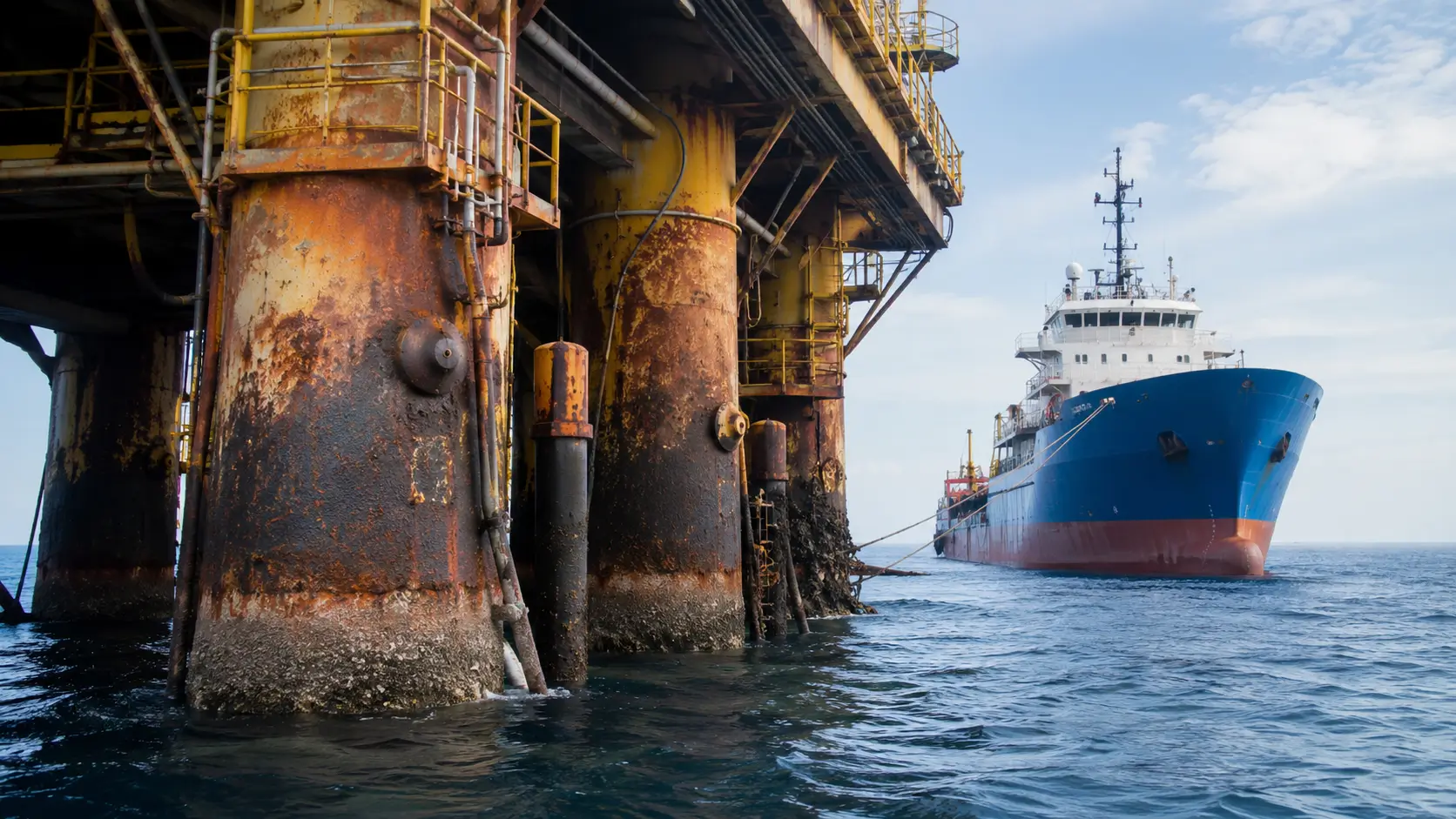
Seawater systems can experience biological growth that reduces flow, blocks equipment, and lowers heat transfer efficiency.

Hele Titanium Supports

MMO titanium electrodes and electrochlorination cells for on-site active chlorine generation and biofouling control.

02

Mineral Scaling in Electrolytic Cells

Seawater hardness, temperature, pH shift, and operating current can cause mineral deposits inside the cell.

Hele Titanium Supports

Optimized electrode geometry, MMO coating selection, polarity strategy support, and maintainable cell design.

03

Corrosion in High-Salinity Environments

High chloride levels, seawater exposure, and oxidizing conditions can damage unsuitable metals and unstable components.

Hele Titanium Supports

Corrosion-resistant titanium substrates, MMO coatings, custom titanium hardware, and seawater-compatible electrode assemblies.

04

Hydrogen By-Product Management

Hydrogen generated during electrolysis must be safely vented, diluted, or managed in accordance with system design.

Hele Titanium Supports

Electrode design support and system configuration guidance for safe hydrogen release and process integration.

Proven Across Seawater & Disinfection Applications

Electrochlorination electrodes and systems support applications where seawater disinfection, biofouling control, cooling water treatment, and on-site oxidant generation are required.

Marine & Offshore

Marine & Offshore

Electrochlorination and MGPS support for seawater intake systems, offshore platforms, vessels, and marine cooling circuits.

MMO electrodes Electrochlorination cells MGPS electrodes
Explore Marine Applications
Water Treatment & Desalination

Water Treatment & Desalination

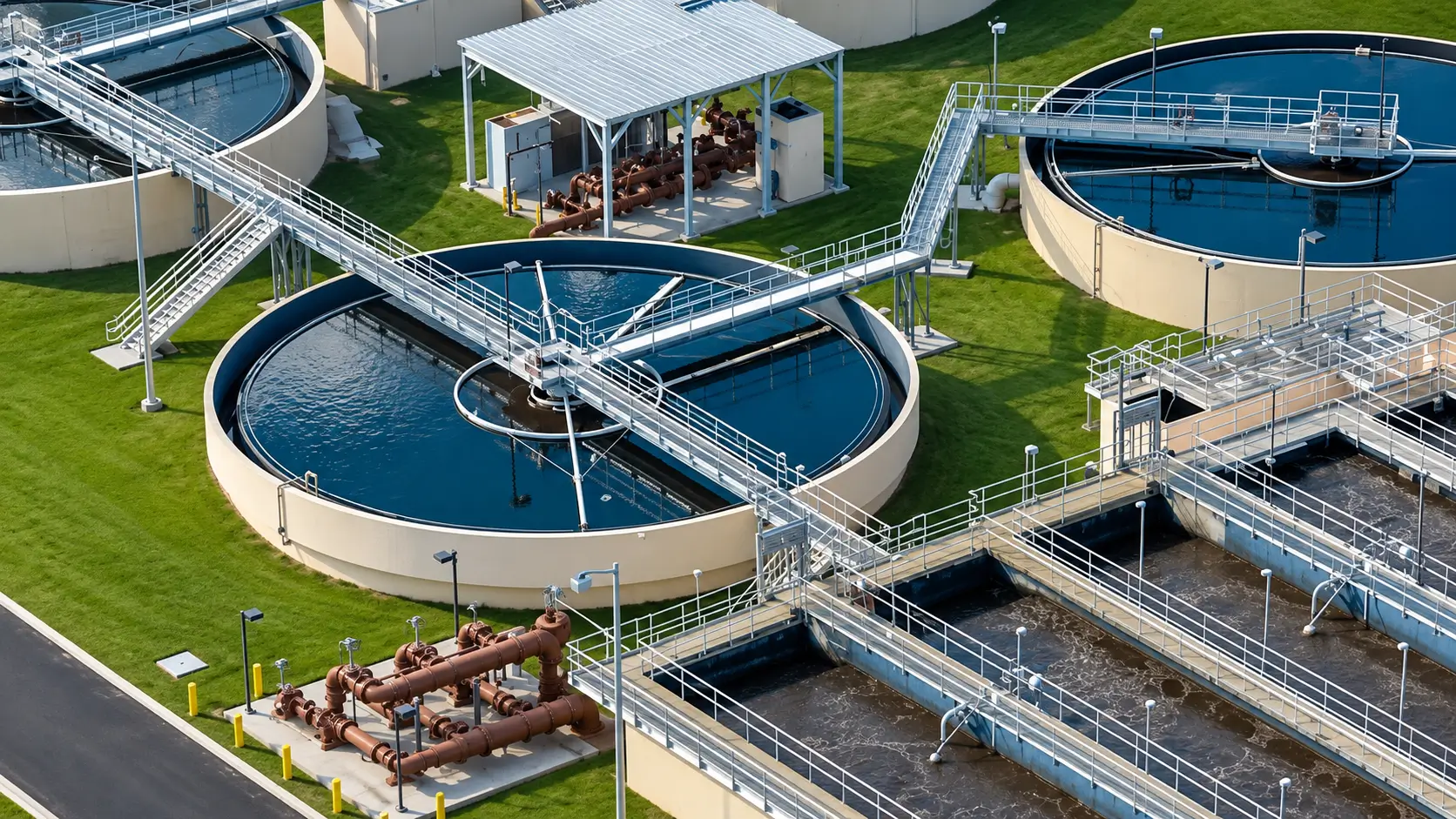
Seawater chlorination and intake protection for desalination plants, drinking water systems, and pretreatment processes.

Electrochlorination electrodes Sodium hypochlorite generator electrodes MMO anodes
Explore Water Treatment
Power Plants & Cooling Water

Power Plants & Cooling Water

On-site chlorination support for power plant cooling systems, heat exchangers, and industrial seawater circuits.

Cooling water disinfection electrodes MMO titanium electrodes Electrochlorination cells
Explore Cooling Water Solutions
Industrial Seawater / Process Water Systems

Industrial Seawater / Process Water

Electrochemical disinfection and oxidant generation for industrial plants using seawater, brine, or process water.

Custom electrode assemblies Coated titanium anodes Sodium hypochlorite generator electrodes
Explore Industrial Systems

What We Need for an Electrochlorination System Review

To recommend the right MMO electrode, cell format, coating system, and configuration, please share as much project information as possible.

Water Source & Salinity

Seawater, brine, cooling water, diluted salt water, or process water, including chloride concentration if available.

Flow Rate

Treatment flow rate, circulation flow rate, or dosing flow requirement.

Target Chlorine Output / FAC Level

Required chlorine generation capacity, target free available chlorine, or dosing concentration.

Operating Conditions

Temperature, pH, pressure, conductivity, operating hours, and duty cycle.

Scaling & Water Quality Conditions

Hardness, calcium / magnesium level, suspended solids, scaling tendency, and pretreatment condition.

Installation Environment

Marine vessel, offshore platform, desalination plant, power plant, industrial facility, or skid-mounted system.

System Scope

Electrode only, replacement cell, complete electrolytic cell, skid system, or OEM electrode assembly.

Safety & Documentation Requirements

Hydrogen venting needs, control requirements, datasheets, inspection records, coating information, and project-specific documents.

Common Electrochlorination Engineering Questions

Quick answers to help procurement teams, water treatment engineers, and marine system integrators prepare an electrochlorination electrode or system inquiry.

What information is needed for an electrochlorination electrode quotation?
Please provide water source, chloride concentration, flow rate, target chlorine output, operating hours, electrode size, cell type, installation environment, and documentation requirements.
Can Hele Titanium customize electrochlorination cells?
Yes. Electrode size, coating, geometry, connection type, mounting method, and cell configuration can be customized based on drawings and operating conditions.
Which MMO coating is suitable for seawater chlorination?
Coating selection depends on water chemistry, current density, chlorine output target, operating hours, and service life expectations. Ru-Ir based MMO coatings are commonly used for chlorine evolution applications.
How do we manage scaling inside electrochlorination cells?
Scaling depends on water hardness, pH shift, temperature, current density, and cell operation. Electrode geometry, cleaning access, polarity strategy, and water pretreatment should be considered during design.
Can Hele Titanium provide electrodes for sodium hypochlorite generators?
Yes. Hele Titanium can provide MMO titanium electrodes and electrode assemblies for sodium hypochlorite generation systems.
What documents can be provided with electrode orders?
Available documents may include coating information, inspection records, material records, datasheets, packing lists, and project-specific quality documents.

ELECTROCHLORINATION INQUIRY

Build Reliable Seawater Disinfection Systems

Tell us about your water source, salinity, flow rate, target chlorine output, operating hours, scaling risk, installation environment, and documentation needs. Our engineering team will recommend the right MMO titanium electrode, electrochlorination cell, or electrode assembly.

Factory-Direct Technical Support
Electrochlorination Process Engineering
MMO Electrode & Cell Format Selection
Traceable Quality Documentation

Prefer email?

[email protected]

HQ: Titanium Valley, Baoji City, Shaanxi Province, China