
A lead dioxide anode may be considered for a demanding oxidation process, but the electrode cannot be evaluated by oxidation performance alone. Stability, potential lead release and handling responsibilities must be part of the same buying decision.
PbO₂ is not another name for a low-voltage oxygen-evolution catalyst. In some oxidation designs, its electrochemical behavior is useful precisely because competing oxygen evolution is less favored under stated conditions. Whether that helps the process must be shown with the actual electrolyte and treatment target.
The short answer: Provide target contaminants or process reaction, feed chemistry, operating current, cell drawing and discharge limits. Require a proposal that states electrode architecture, stability test, possible lead-release monitoring and who handles the used electrode.
1. Is this the right oxidation route for the job?
PbO₂ anodes are discussed for selected electrochemical oxidation and hydrometallurgical duties. The buyer should identify what must change in the process: contaminant concentration, current efficiency, product purity or another measurable result. A dark electrode surface or a broad claim of “strong oxidation” is not a substitute for a treatability objective.
List feed composition, target species, conductivity, pH, temperature, flow and known chloride or other constituents that may produce competing reactions or by-products. If wastewater varies significantly, provide representative samples or an operating envelope. A trial in synthetic water may be useful for screening but should not be reported as proof for a complex industrial effluent.
Compare PbO₂ with other anode routes on the full basis: treatment result, energy, electrode stability, environmental control and disposal. The design team should determine whether a lead-containing electrode is permitted at the site before price is used to narrow options.
Before commissioning a large cell, a small trial can establish whether the feed is treatable at an acceptable charge dose. The trial should not only record removal of the named pollutant; it should also check what appears after treatment, including regulated by-products where relevant. This prevents a procurement decision based on a single declining contaminant curve while the overall discharge question remains unanswered.
2. What electrode is the supplier actually offering?
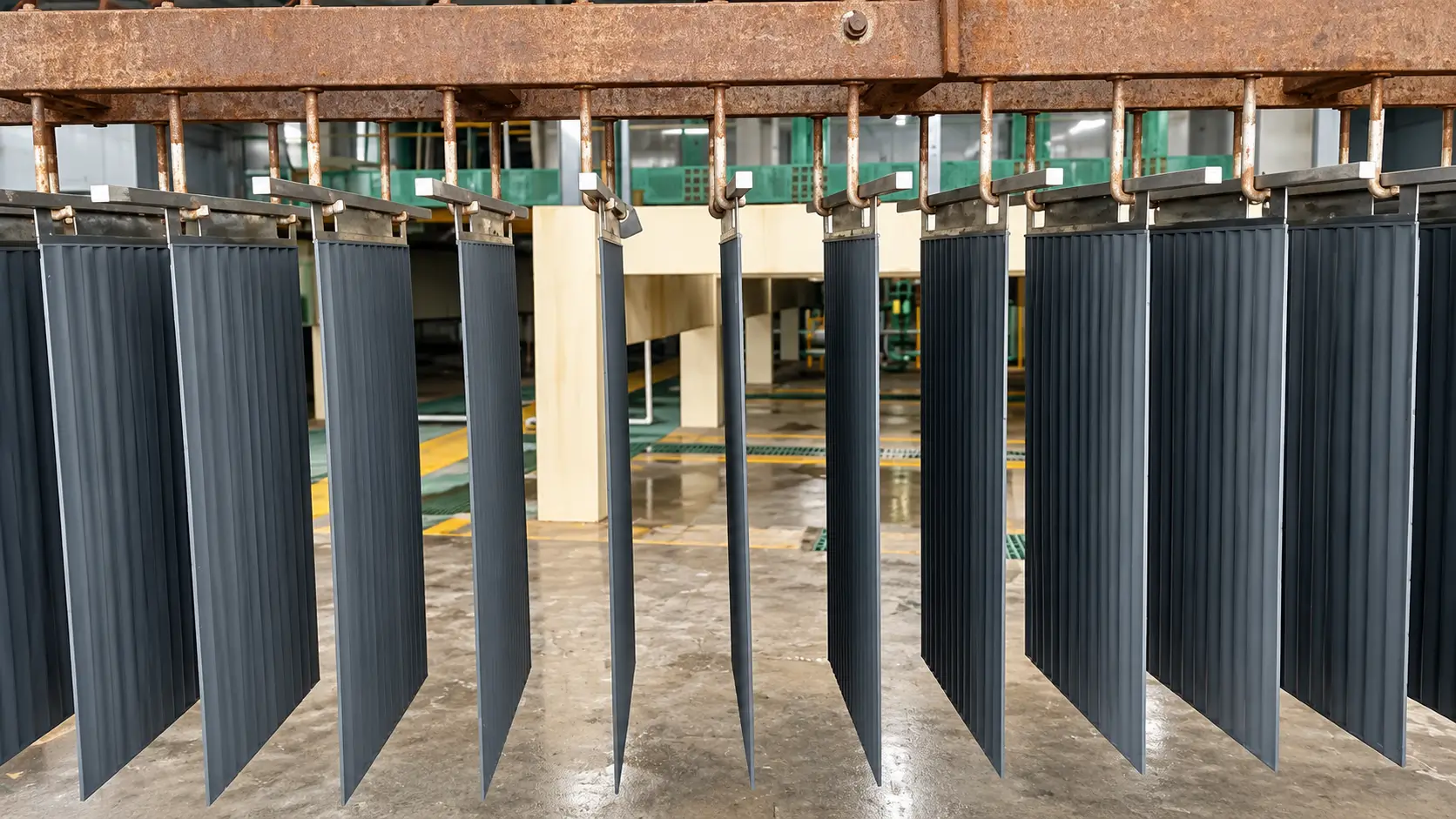
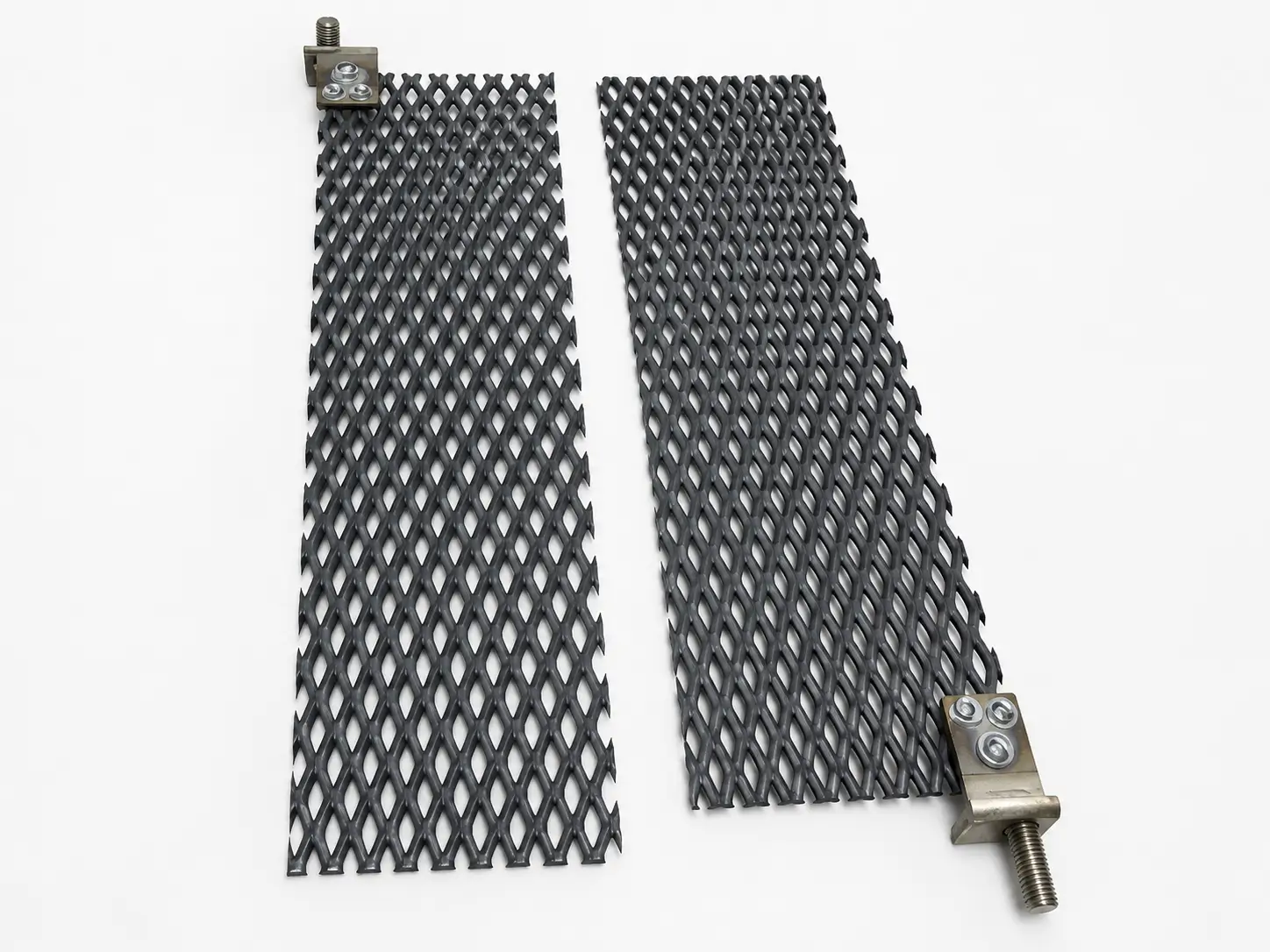
A PbO₂ anode is an engineered layer and substrate assembly, not simply “lead oxide on titanium.” Ask which substrate and intermediate layers are proposed, where the PbO₂ working surface begins and ends, and how current enters. Manufacturing and acceptance of a multilayer electrode differ from a platinized titanium part; do not accept platinum-coating process descriptions as evidence for PbO₂.
| Feature | Buyer needs to know | Risk if omitted |
|---|---|---|
| Substrate and interlayer | Material and covered/exposed regions. | Interface failure or unexpected substrate attack. |
| PbO₂ working layer | Coverage, defects and agreed test basis. | Local degradation or lead release. |
| Current feed and seals | Terminal, insulation and wetted boundary. | Heating, leakage or stray current. |
| Replacement form | Plate, mesh, tube or module dimensions. | Cell interference or altered hydraulics. |
Ask for a drawing of active and inactive zones. A material certificate for the base metal does not certify the deposited PbO₂. If a vendor claims a specific crystal phase, ask for a phase-appropriate method such as X-ray diffraction; a scanning electron micrograph primarily describes morphology or cross-section, not phase identity by itself.
3. Which conditions control stability and treatment?
State normal and maximum current, active-area convention, voltage, temperature, pH, hydraulic residence time, duty cycle and cleaning procedure. The coating may encounter very different conditions during startup, shutdown or a feed upset than during a steady test. If reverse polarity is contemplated, disclose it before any coating recommendation.
System performance depends on the cathode, power source, mass transfer and downstream separation. A PbO₂ electrode cannot by itself guarantee a discharge concentration. Define the process measurement and sampling plan for an installation trial, including energy use and effluent quality under stated feed conditions.
4. How will lead exposure and release be controlled?
Lead-containing equipment requires a deliberate environmental and occupational-health review. The buyer should identify applicable local limits for water, sludge, worker exposure, transport and waste. Do not assume that a stable-looking electrode has zero release in all service. If the process treats water or discharges liquid, agree whether dissolved and particulate lead will be monitored, by whom and at which sample points.
Plan receiving, installation, maintenance and disposal before the first order. A damaged electrode, removed scale or cleaning liquid may require controlled handling. HELE can describe the supplied component and agreed test records, but the plant owner and qualified local specialists must approve site procedures and legal compliance. This guide does not assert a universal regulatory limit.
The monitoring plan should identify blank/background levels and detection limits, not merely say “lead tested.” Sampling only the treated outlet can miss material collected in sludge or on a filter. Where the site’s rules require it, specify the handling and analysis of each waste stream and define the action if a result exceeds the project limit. This is a site decision, not a certificate a component supplier can issue universally.
5. Which tests answer which question?
Substrate identity, layer structure, dimensional fit, electrical continuity and representative electrochemical performance are separate acceptance questions. XRF may help with elemental analysis under a suitable method; its ability to quantify layer thickness depends on calibration and geometry. SEM can inspect morphology or a cross-section; XRD may address crystalline phases when specified. No single technique establishes stability in every electrolyte.
Ask for an accelerated or process test only with its sample, electrolyte, current density, temperature, time, endpoint and measurement method. For field qualification, define feed, treatment target, energy basis and lead monitoring together. A headline “life” value copied from a different process should not drive a purchase.
Make the acceptance report traceable to the delivered design: substrate, intermediate layers, coating zone, connection and process revision. If the trial sample has different dimensions or current distribution, explain how its result is being used and what still needs a larger-scale check. That distinction lets procurement use evidence without pretending that a short laboratory test settles every plant risk.
6. How should offers be compared?
Compare the complete electrode and risk-control scope: substrate, layer, connection, tests, documentation, packaging and return or disposal responsibility. A low price for an untested plate is not directly comparable with a documented ready-to-install assembly.
The HELE PbO₂ product page identifies the supply family. Exact geometry, production route, test capability and lead-handling obligations must be confirmed for the order; do not infer them from a generic equipment list.
7. What should the RFQ include?
- Application and treatment target, representative feed analysis and discharge requirements.
- Electrode drawing, working surface, current, temperature, pH, flow and duty cycle.
- Required construction details, dimensions, electrical interface and coatings tests.
- Effluent/solid lead-monitoring plan and site handling or disposal boundary.
- Trial acceptance criteria, record package, quantity and installation date.

Questions buyers often ask
Is PbO₂ a low-overpotential oxygen-evolution catalyst?
Do not assume so. An oxidation application must be evaluated for target reaction and competing oxygen evolution under its specific conditions.
Does SEM prove the PbO₂ crystal phase?
No. SEM primarily images morphology; an appropriate diffraction method is needed when crystal-phase identification is required.
Can a factory test prove there will be no lead release?
No. An agreed stability test can provide bounded evidence; site feed, operation and monitoring determine the installed risk.