
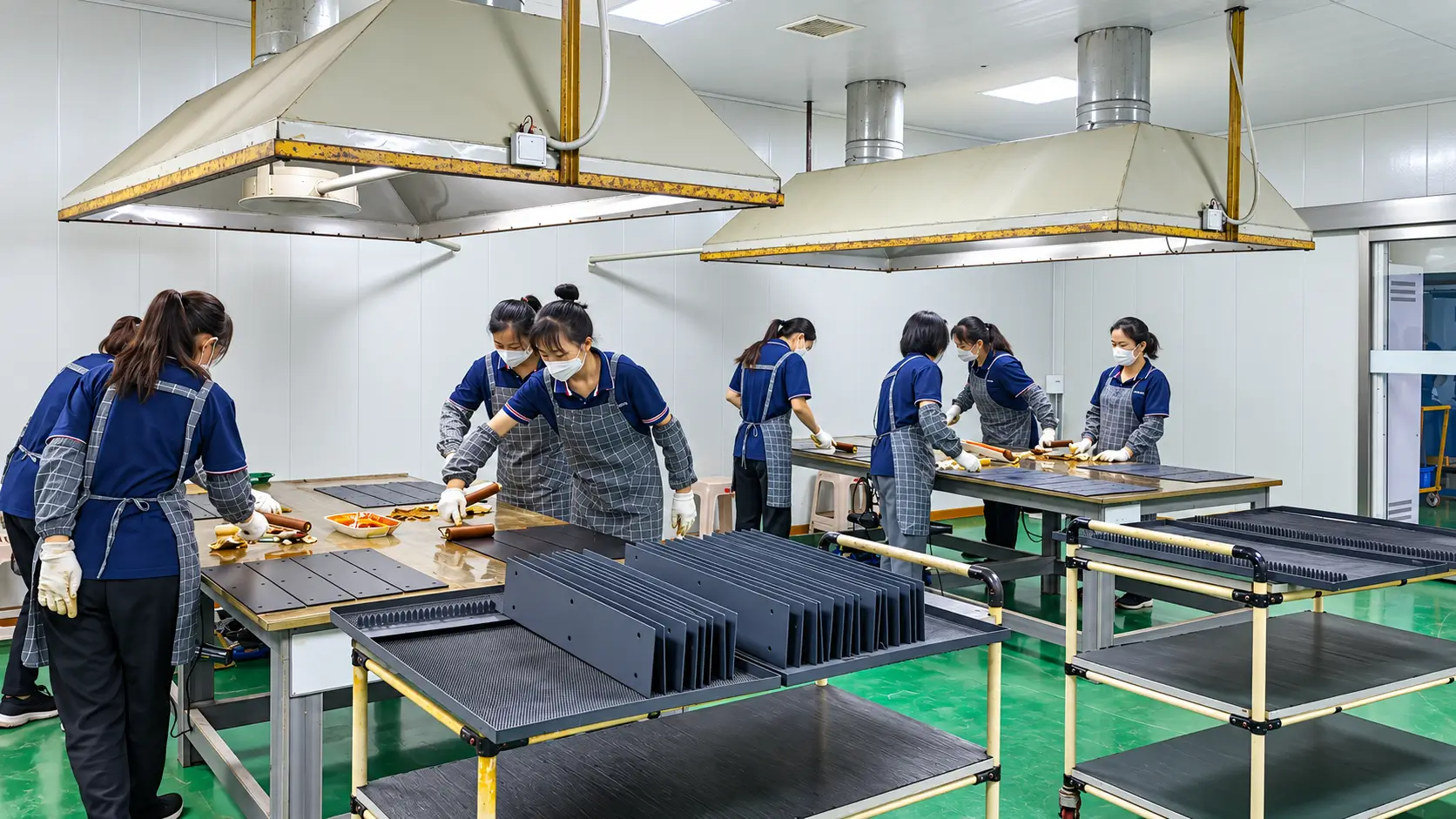
A titanium plate is not automatically an electrochemical anode. In many anodic environments bare titanium develops a passive oxide layer; the working anode is usually an engineered assembly with an active surface and a controlled electrical connection.
The broad term “titanium anode” can hide more than it reveals. A buyer may be replacing an MMO-coated mesh, evaluating a platinized rod or specifying a substrate for a new cell. The right questions differ even when all three share titanium as a base material.
The short answer: Start with the target reaction or protection function and the electrolyte. Then state operating current, voltage limits, temperature, duty cycle, geometry, available space, connection, coating-life target and how the supplied assembly will be inspected and accepted.
1. What does the anode need to do in the system?
Begin with the process result. Is the cell intended to evolve chlorine, evolve oxygen, support electrochemical oxidation, or deliver impressed current for corrosion protection? The same word “anode” appears in each case, but the electrolyte, coating, current density and success measure differ. If the request is simply “titanium anode for water,” the supplier cannot responsibly select a surface without the water chemistry and reaction target.
Separate the anode from the system around it. The anode supplier can quote a coated assembly to agreed inputs and tests. The buyer or system designer owns the cell arrangement, cathode, power supply, hydraulics, process control and safety case unless the contract explicitly expands the scope. An anode that passes an incoming inspection can still perform poorly in a cell with insufficient flow, the wrong polarity or a damaged connection.
| Duty | First input to share | Why the label alone is insufficient |
|---|---|---|
| Chlorine evolution | Chloride concentration and broader electrolyte chemistry. | Competing reactions and operating conditions affect selection. |
| Oxygen evolution | Electrolyte, pH, temperature and current. | Coating families are not interchangeable by appearance. |
| Impressed-current protection | Structure, environment, design current and installation. | Current distribution is a system calculation. |
| Special oxidation process | Target compound/reaction and process window. | Electrode plus cell conditions determine observed result. |
A soluble metal anode or anode basket is a different product from a coated, nominally insoluble titanium anode. If metal dissolution is intended, do not use this guide as a shortcut for selecting an MMO coating.
2. Which surface family should be evaluated?
“MMO” describes a family of mixed-metal-oxide coatings, not a single recipe. Ru-based and Ir-based systems are commonly discussed for different anodic duties, but the selected chemistry depends on electrolyte, reaction and operating window. HELE’s titanium anode family page helps route the initial inquiry. Specific MMO or platinized titanium product discussions require the project data before an equivalent can be asserted.
Do not choose from coating color, marketing name or an old purchase-order abbreviation alone. If an installed anode says “Ir-Ta,” record the exact historical part number, drawing, supplier specification and service. A similarly named replacement might have a different active loading, coating process, coverage or test basis. Coating formulation can remain commercially confidential while the quotation still identifies function, active zone, current basis and acceptance tests.
Some technologies use a coated titanium substrate, while other electrode products use different architectures or materials. A BDD electrode, lead-dioxide anode and titanium anode basket should not be placed under one generic “titanium anode” specification without confirming the actual design. This parent guide routes the decision; the specialized product guide should control detailed qualification.
3. Which operating conditions change the answer?
Provide the full electrolyte composition, not only the most prominent ion. Concentration, pH, temperature, contaminants, flow, solids and cleaning chemicals can change the environment at the coating. State normal and upset conditions separately. Duty cycle and reversal or shutdown practices matter because the anode may see different electrochemical and chemical conditions while operating and while idle.
- Electrical: total operating current, maximum current, waveform or reversal, available voltage and hours of operation.
- Chemical: main constituents, concentration range, pH, temperature, contaminants and cleaning exposure.
- Hydraulic: immersion, flow, gas release and whether the surface is shielded by a nearby structure.
- Performance: required reaction or protection outcome and how the system measures it.
- Service target: desired life and what the buyer considers end of life.
Controller capacity, design current and measured operating current should be kept distinct. A power unit rated for a high current does not mean the anode normally carries it, and a snapshot operating reading may not describe future peak duty. Give each value with its source and basis so the active-area and life review uses the correct one.
For an existing plant, a simple operating log can be more useful than a broad equipment brochure. Record current and voltage at normal load, flow or level, temperature, electrolyte analysis and the date of any cleaning or upset. The measurements may reveal whether the proposed anode will see a steady duty or repeated excursions. If the installation has no reliable history, mark that uncertainty rather than deriving an apparently precise life target from one reading.
4. How do active area and connection define the assembly?
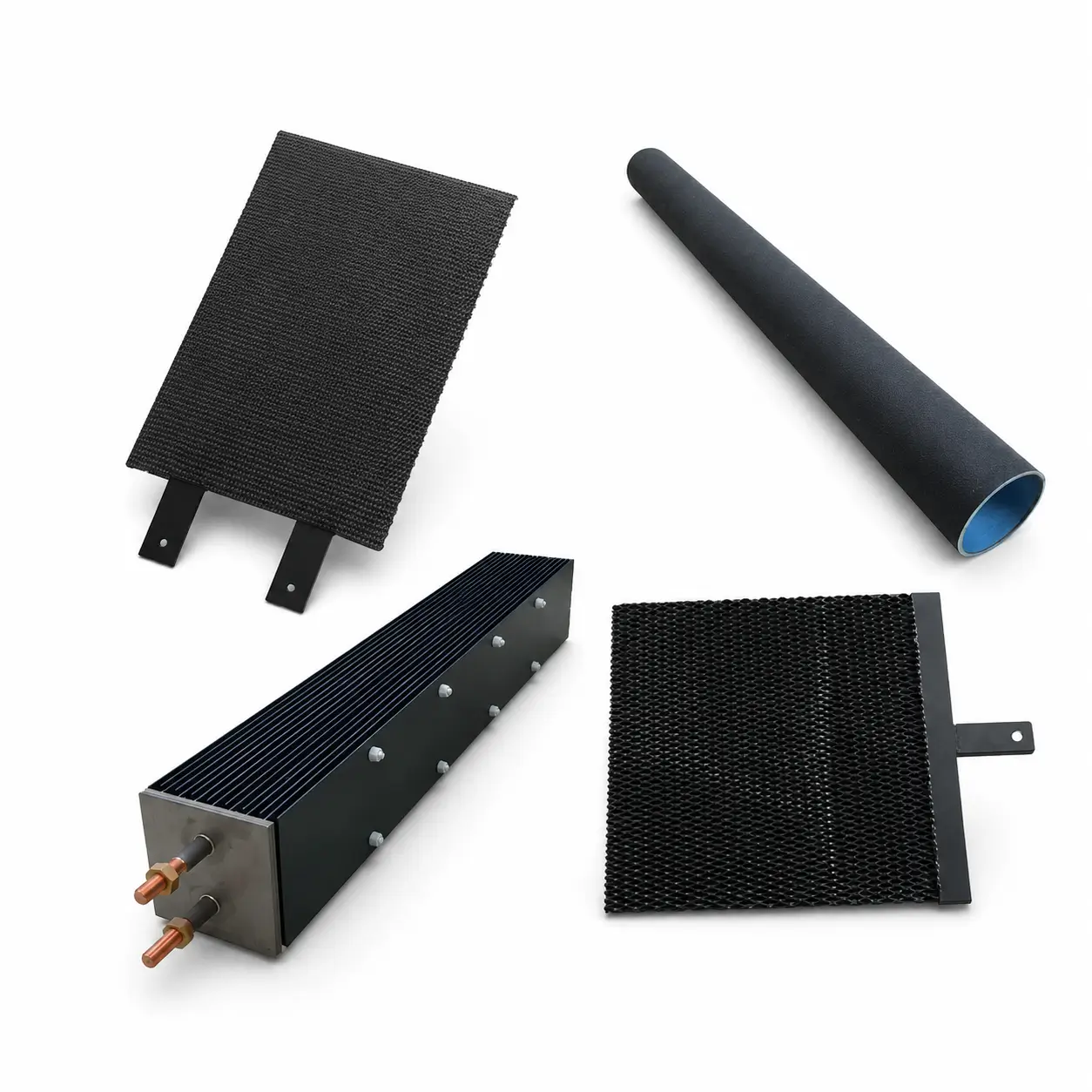
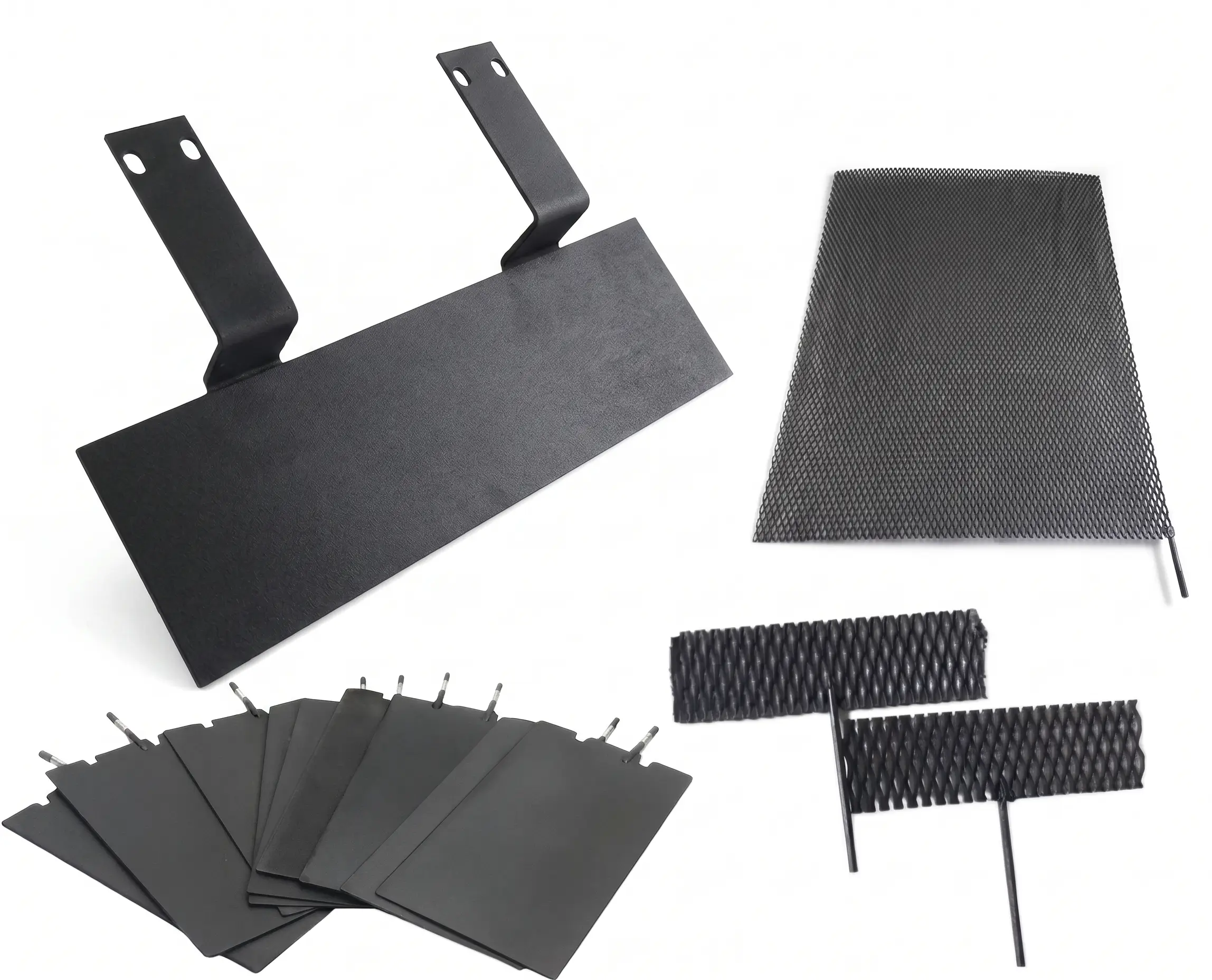
Mesh, plate, rod, tube and wire have different exposed area and field distribution. A dimensioned drawing should identify which surfaces are active, which remain uncoated, and where current enters. Current density calculated on projected area can differ from a value based on actual coated area; ask the supplier to state the area convention rather than comparing unexplained figures.
The connection is often the weakest interface in a replacement. Thread size, weld, cable, seal, insulation and penetration fit must be compatible with the installed system. A correctly coated active surface cannot compensate for a poor electrical joint or a leak through a cable seal. If an uncoated titanium region touches another conductive part, check whether it is intentionally current-carrying or needs isolation.
| Assembly feature | Buyer supplies | Supplier confirms |
|---|---|---|
| Active zone | Drawing, immersion and required coverage. | Coated area and exclusions on delivered assembly. |
| Current path | Electrical load and connection interface. | Connection geometry and inspection scope. |
| Mounting | Available envelope, supports and access. | Overall fit, clearances and protected surfaces. |
| Sealing/insulation | Process exposure and penetration details. | Included materials, boundary and test method. |
For a replacement, collect dimensions from an original drawing where possible. A corroded or worn unit can misrepresent original active area, cable length or sealing detail. If the replacement is intended as “equivalent,” define equivalence in terms of interface and agreed performance evidence, not appearance alone.
Active area belongs on the manufacturing drawing. A tube may have an inactive end under a clamp; mesh can have uncoated weld margins; a rod may be coated on its sides but not at the connection. If the supplier calculates current density from all metal surface while the buyer assumes only exposed coated area, their figures describe different duties. Put the area convention beside the current basis in the RFQ.
5. What does a coating-life claim actually mean?
Life depends on coating system, loading, current density, electrolyte, temperature, duty cycle, contaminants and the definition of failure. A quoted number of years without these assumptions is not a purchase specification. Ask for the reference operating basis, the acceptance criterion at end of life and the conditions under which the supplier’s estimate was made. A design-life estimate is not a calendar-date guarantee.
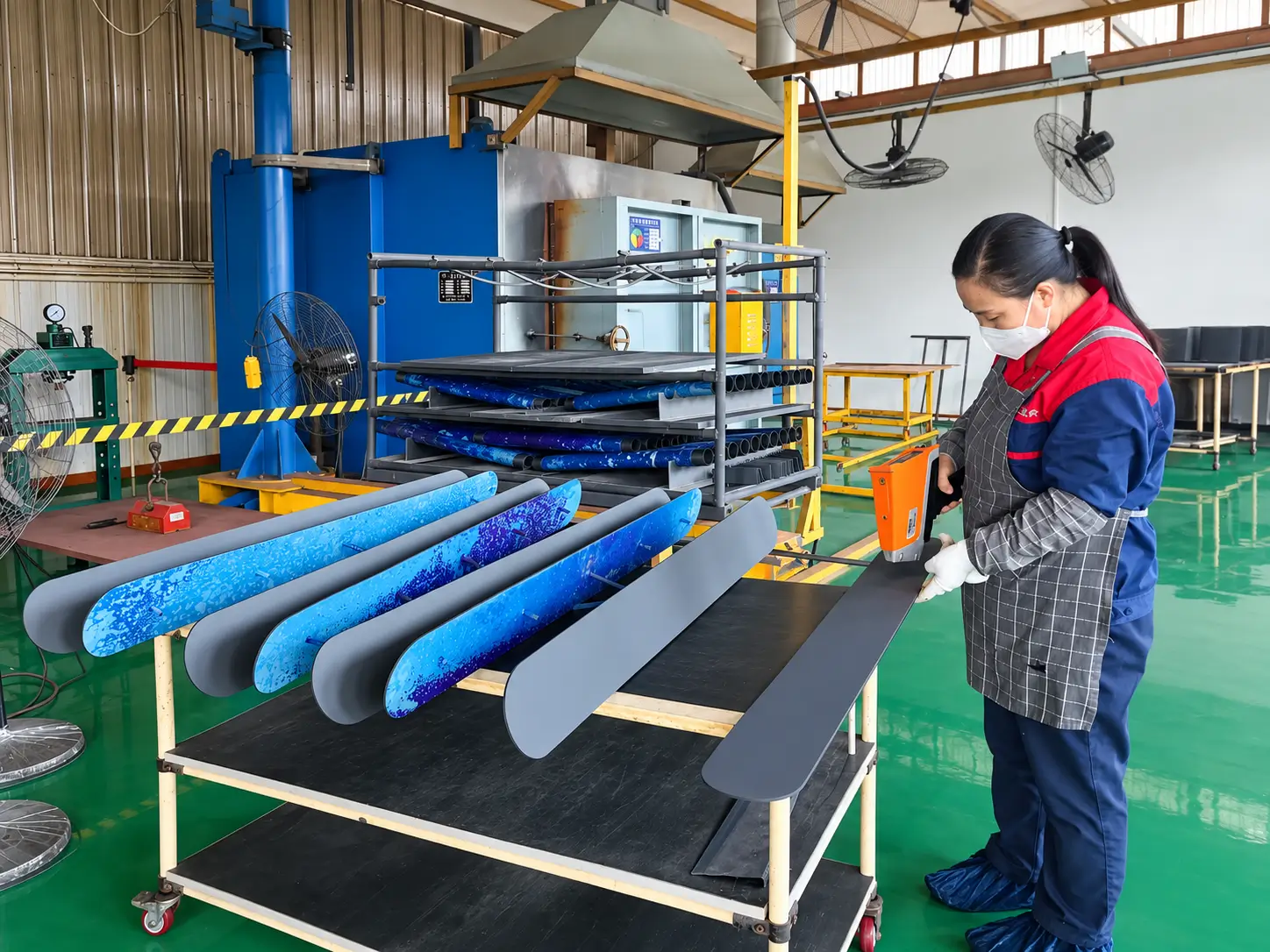
X-ray fluorescence can help examine coating elemental composition or loading when appropriately calibrated, but it cannot alone prove adhesion, selectivity or service life. An accelerated-life test can be informative only when the electrolyte, temperature, current density, sample geometry, endpoint and extrapolation method are stated. A result from a different coating or operating duty should not be copied into this project without review.
For acceptance, agree what the supplier will provide: material identity, dimensions, coating coverage, electrical continuity, selected surface/adhesion checks, test coupons or sample records as appropriate. A certificate pack is useful when each report is linked to the delivered lot and to a decision the buyer must make. More pages of data are not automatically better evidence.
6. Is the order for a new anode, a replacement or recoating?
A new anode can be designed around a fresh substrate and connection. A replacement must match an installed envelope and may have legacy assumptions that are not written down. Recoating asks whether the used substrate, welds, connection and seals can be safely reused after service. These are different quotation routes.
Before considering recoating, inspect the exposed titanium, joints, dimensions, contamination and history. A worn coating does not necessarily mean the base assembly is sound. Cleaning and preparation may remove material or reveal defects; a recoated part should be accepted against a specific refurbished condition, not promised to “restore original performance” automatically.
For replacements, share the controller record, operating current history and failure observations if available. A short service life might reflect the wrong coating, but it might also reflect unexpected chemistry, excessive current, poor flow or a connection problem. The supplier should distinguish these possibilities before repeating the old part.
Replacement scope also affects downtime. Ask whether the offer includes a ready-to-install assembly, only the active element, or a refurbished component returned after inspection. Cable terminations, sleeves and mounting hardware can be small line items with a large effect on installation time. List them in the offer, and use the old part number as a reference rather than as a complete specification.
7. What should an anode RFQ include?
- Target reaction/protection duty, process diagram and electrolyte with normal and upset ranges.
- Design, controller and measured current separately; voltage, waveform, operating hours and target life.
- Drawing of active area, coated/uncoated zones, mount, connection, cable, seal and insulation.
- New, replacement or recoating route; original part details and observed service history if relevant.
- Required qualification method, incoming inspection records, quantity and delivered scope.
A buyer need not know the final coating formula before sending an inquiry. It is more valuable to provide a reliable operating window and installation drawing. HELE can then discuss candidate supply routes and make the assumptions behind each quote visible.
Questions buyers often ask
Is bare titanium plate an active anode in any electrolyte?
No. Bare titanium can passivate under many anodic conditions. The active surface must be specified for the actual electrochemical duty.
Does “MMO-coated” identify an equivalent replacement?
No. Coating family, active area, loading or qualification basis, operating window and connection may all differ.
Can an accelerated-life test alone prove a service-life number?
No. Its sample, test conditions, failure endpoint and extrapolation must be compared with the real service.