Cathodic Protection Environments
CATHODIC PROTECTION ANODES

Cathodic Protection Anodes for ICCP & Sacrificial Systems

Factory-direct ICCP and sacrificial anodes engineered for pipelines, tanks, marine structures, offshore platforms, and reinforced concrete corrosion protection.

ICCP / GACP MMO / Zinc / Mg / Al Custom Anode Forms XRF & ALT Tested Global Supply
Request Anode Specifications
ENGINEERING REALITY

Corrosion Protection Starts with the Right Anode

Cathodic protection performance depends on more than choosing a metal. Soil resistivity, seawater exposure, current demand, coating condition, service life, cable sealing, and installation method all affect whether your system can protect critical assets reliably over time.

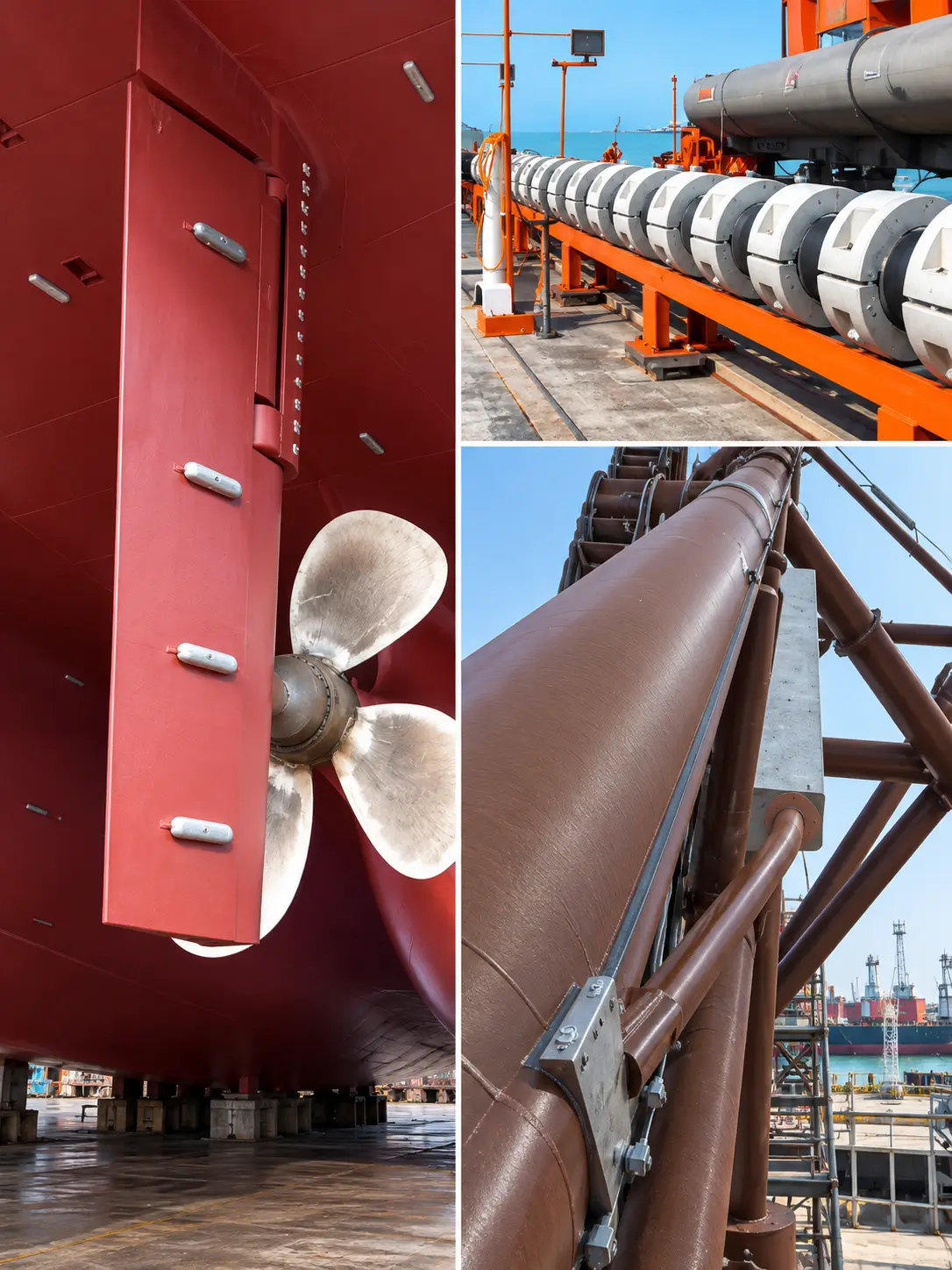
Hele Titanium manufactures custom cathodic protection anodes for seawater, brackish water, soil, freshwater, reinforced concrete, tank bottoms, and deep-well groundbed environments. Each anode can be engineered around your project conditions and long-term protection targets.

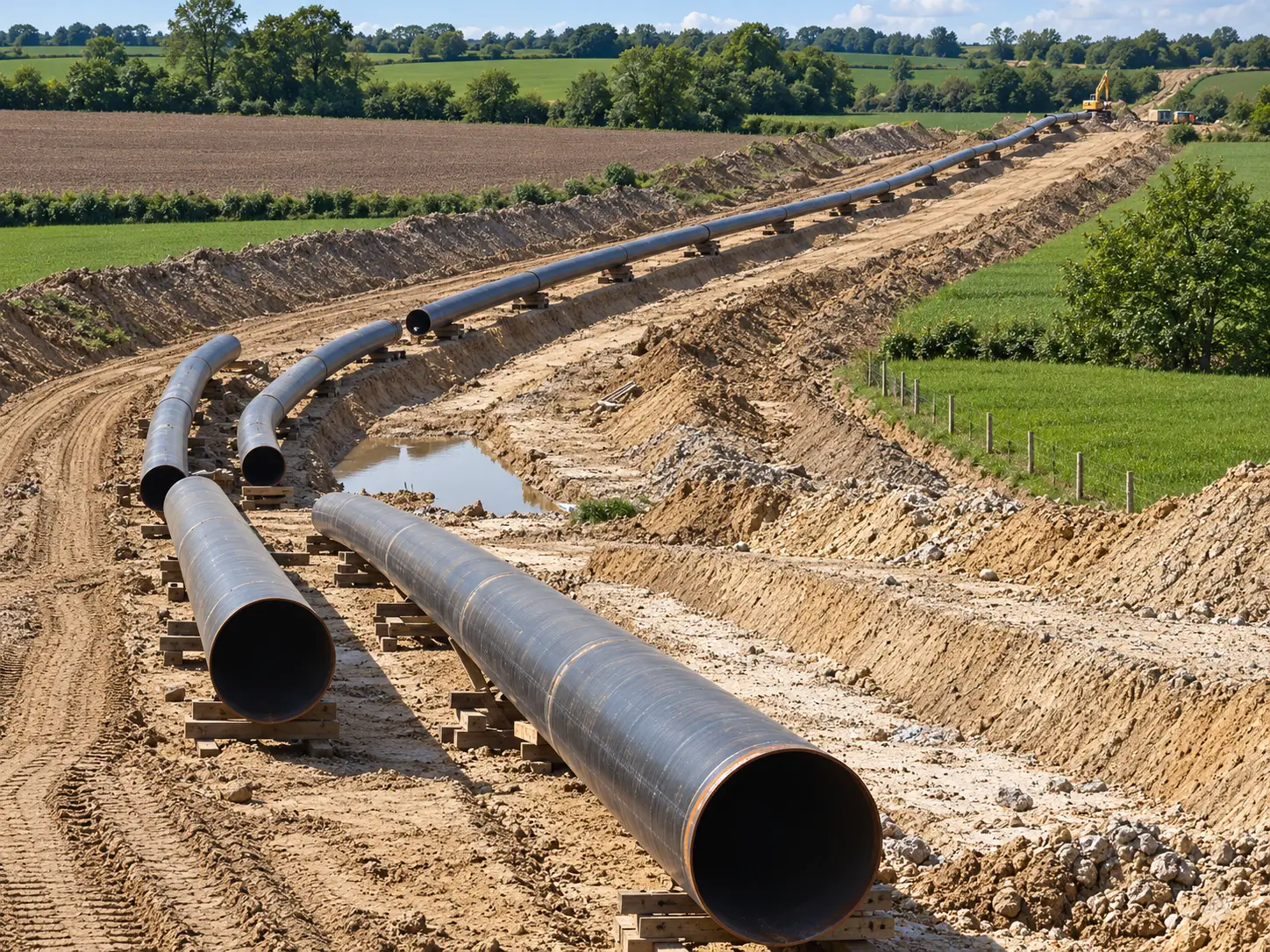
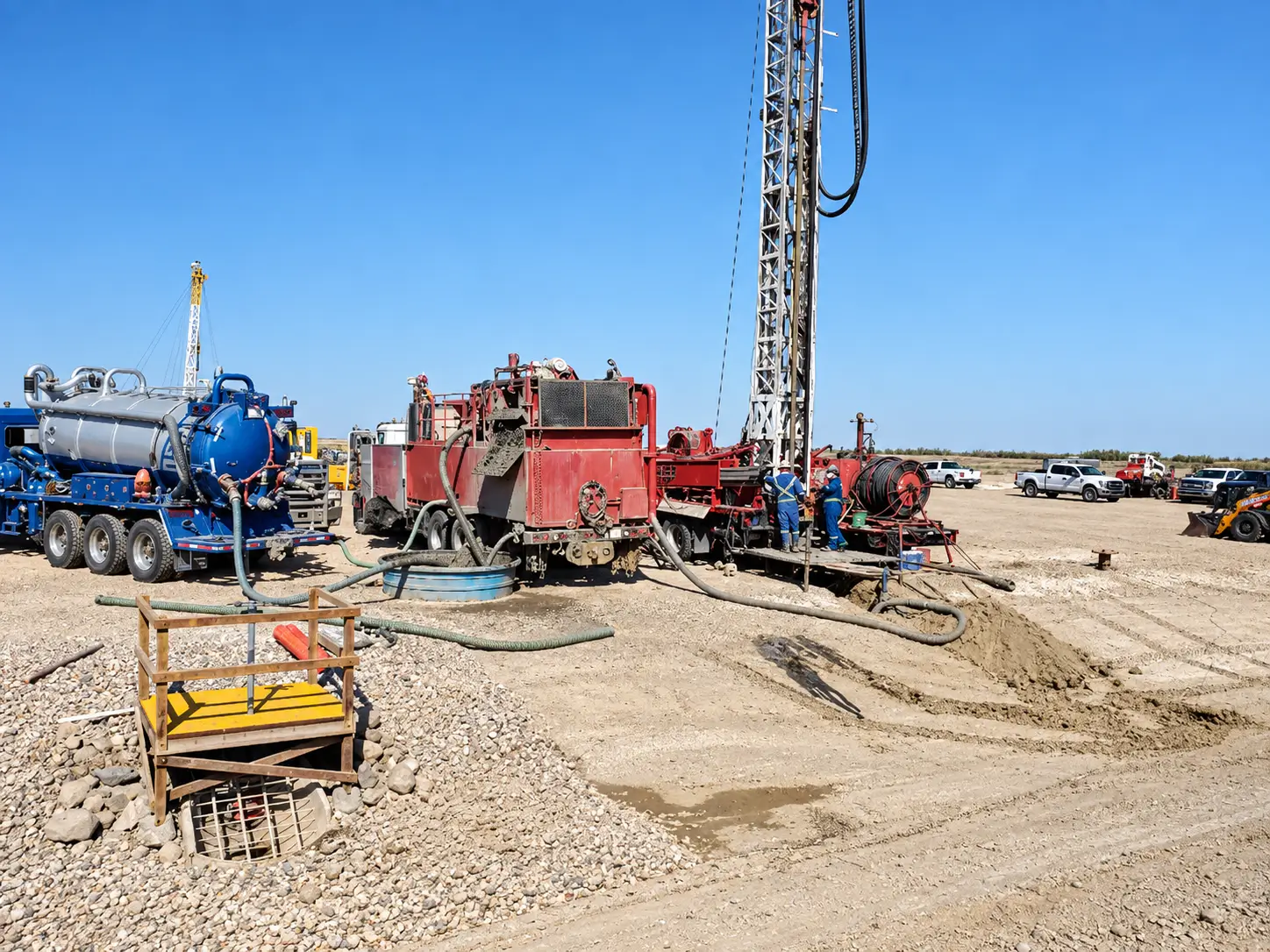
Pipelines & Buried Assets

Soil resistivity, coating defects, and current distribution gaps require carefully selected CP anodes.

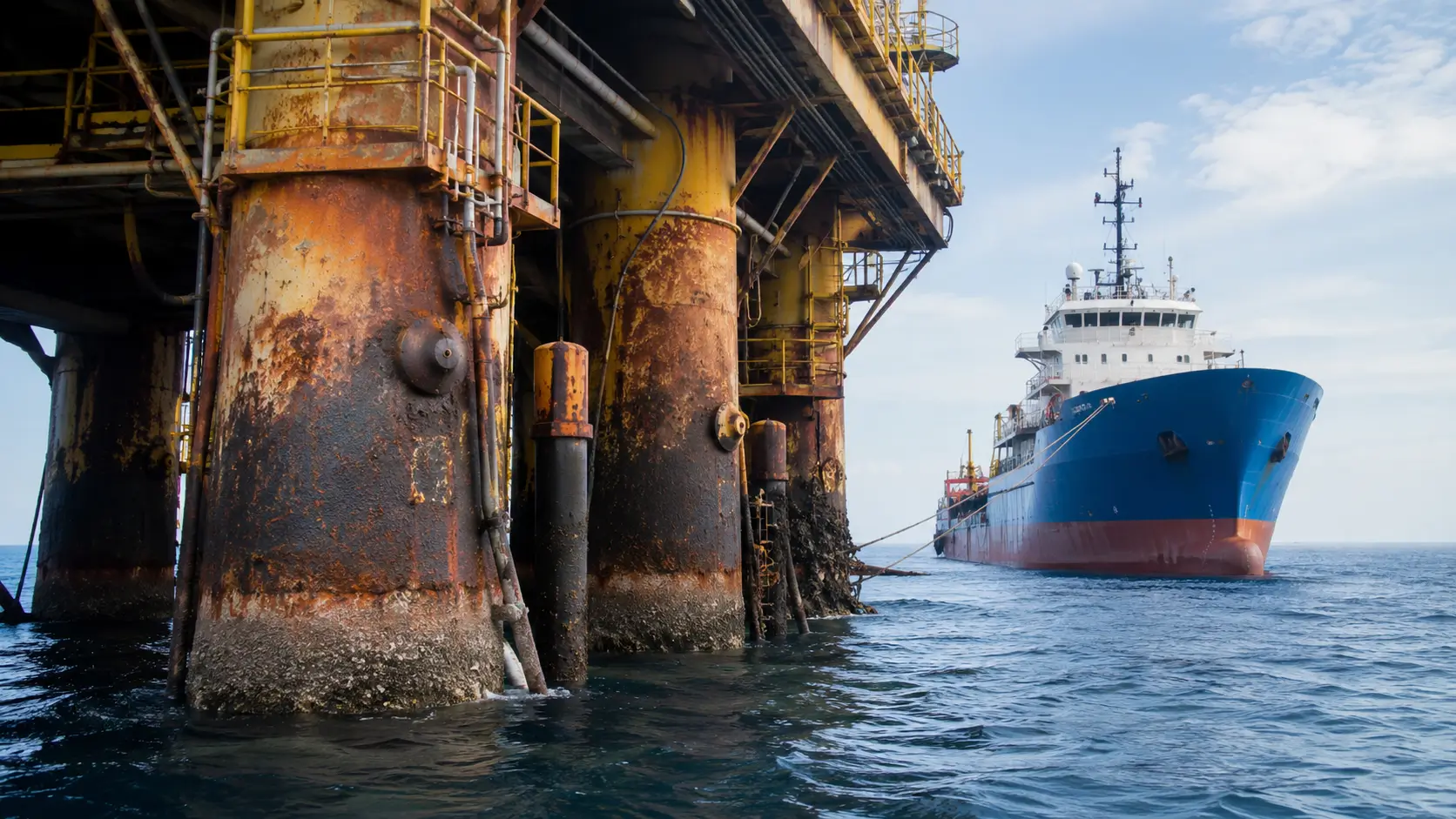
Marine & Offshore Structures

Seawater, splash zones, and chloride-rich environments demand stable anode output and long service life.

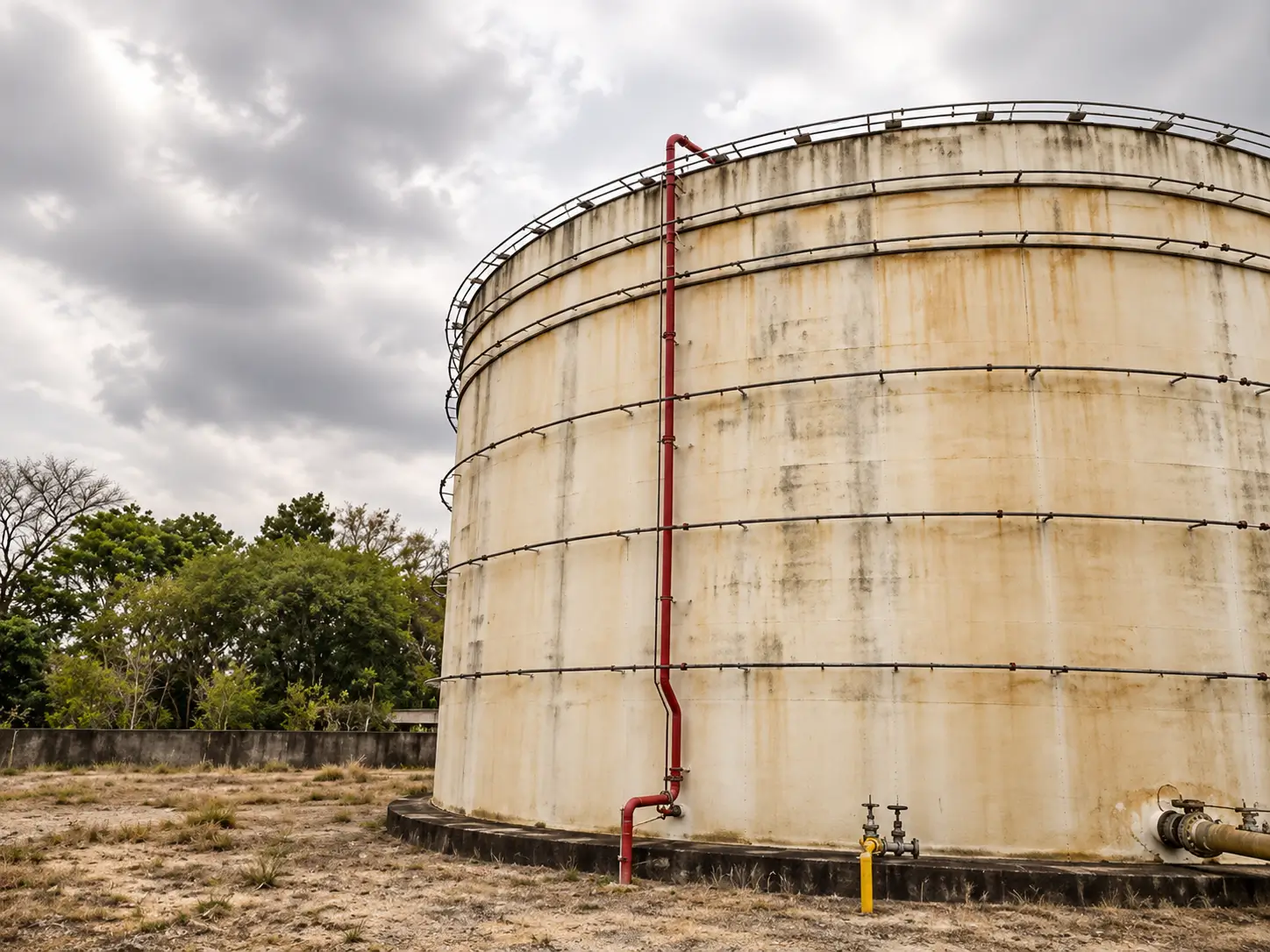
Storage Tanks & Refineries

Tank bottoms and industrial assets require reliable CP design to reduce leakage, downtime, and maintenance risk.

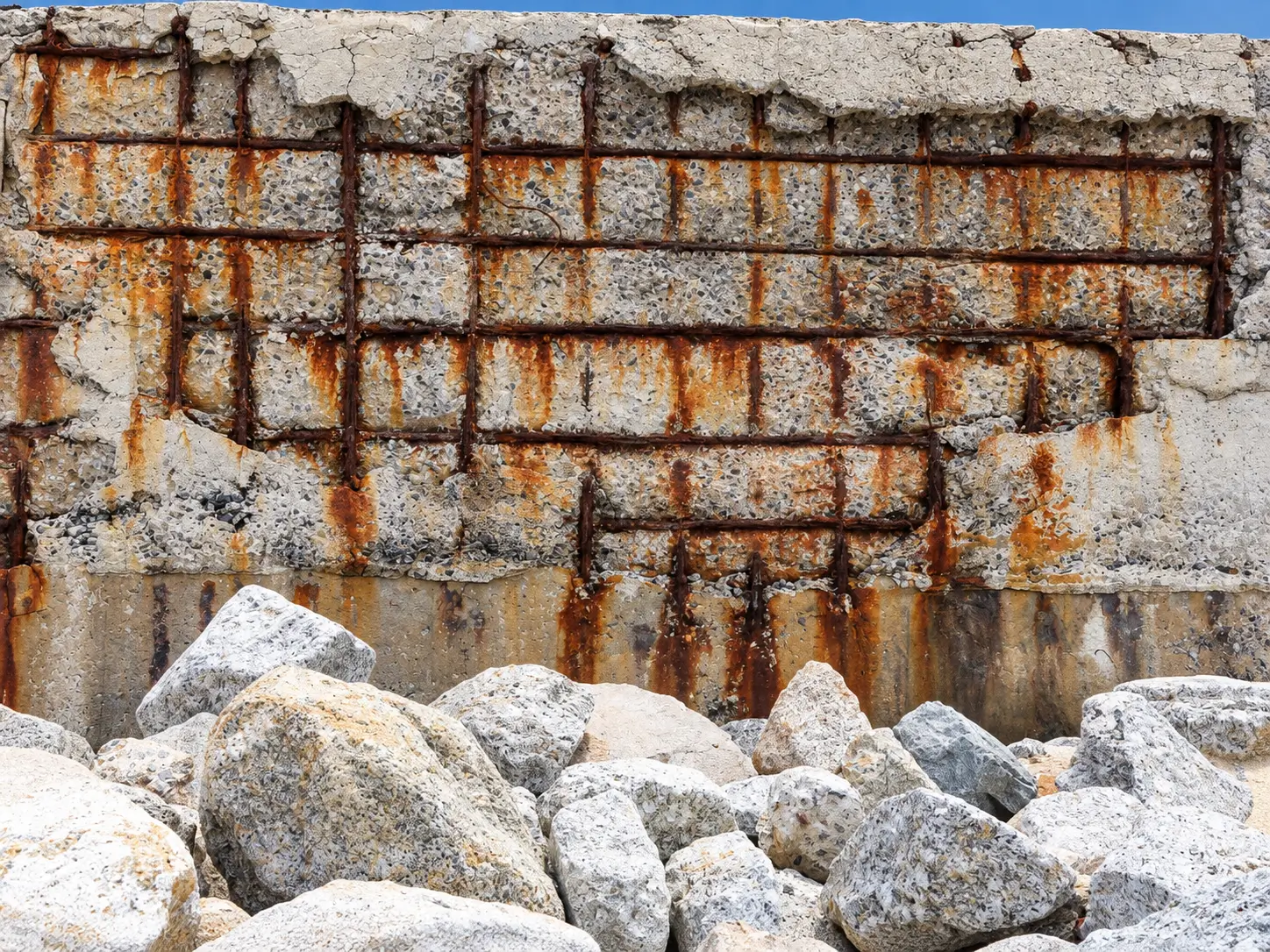
Reinforced Concrete

MMO mesh, ribbon, or hybrid systems help control rebar corrosion caused by chloride ingress and carbonation.

PRODUCT SERIES

Cathodic Protection Anode Product Range

From advanced MMO ICCP anodes to proven sacrificial zinc, magnesium, aluminum, and high-silicon cast iron designs, Hele Titanium supplies engineered anode solutions for different environments, structures, and design life requirements.

ICCP / Impressed Current Anodes

Long-life impressed current anodes for pipelines, offshore platforms, storage tanks, reinforced concrete, and deep-well groundbeds.

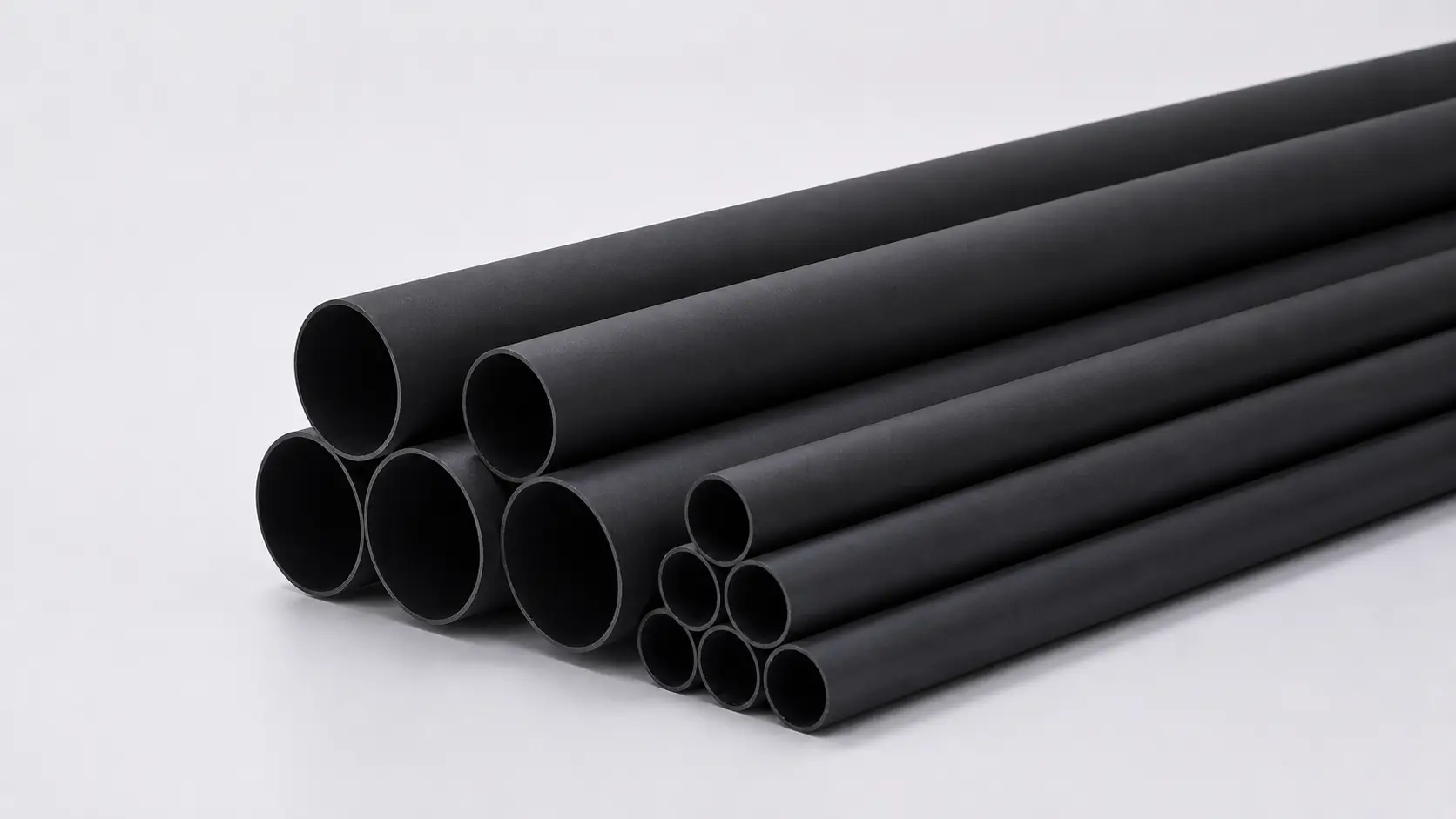
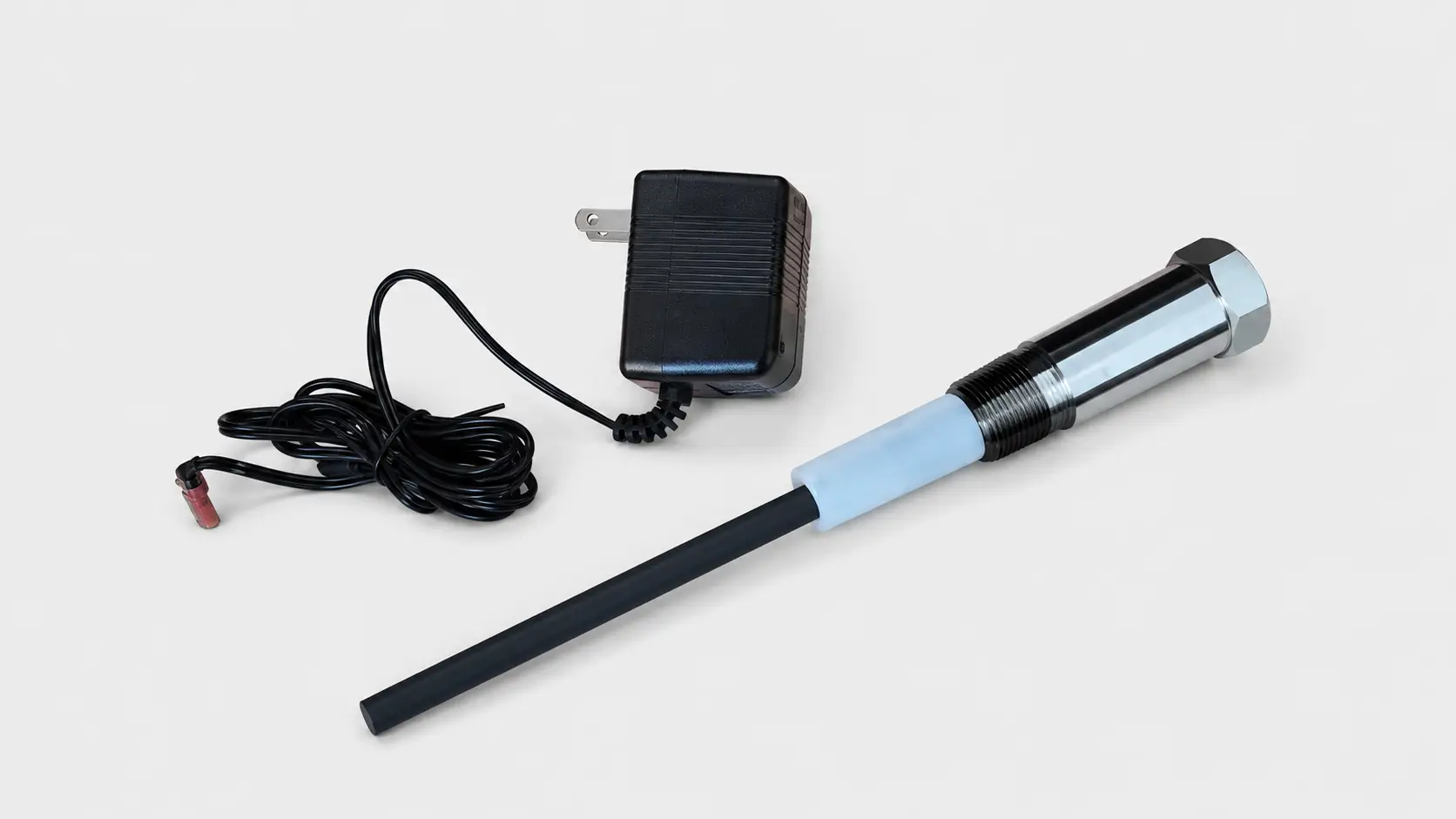
MMO Tubular Anodes

MMO Tubular Anodes

High-output MMO-coated titanium tubular anodes for deep wells, soil, seawater, pipelines, tanks, and offshore structures.

  • High current output
  • Long design life
  • Durable MMO coating
Material: Titanium tube with MMO coating
MMO Ribbon Anodes

MMO Ribbon Anodes

Flexible ribbon anodes for distributed current protection in reinforced concrete, tank bottoms, confined areas, and linear CP systems.

  • Uniform current distribution
  • Easy layout for concrete and tank systems
  • Suitable for long linear protection
Material: Titanium ribbon with MMO coating
MMO Wire Anodes

MMO Wire Anodes

Flexible MMO wire anodes for HDD, shallow burial, pipeline loops, and distributed cathodic protection systems.

  • Flexible installation
  • Good for distributed systems
  • Custom length available
Material: Titanium wire with MMO coating
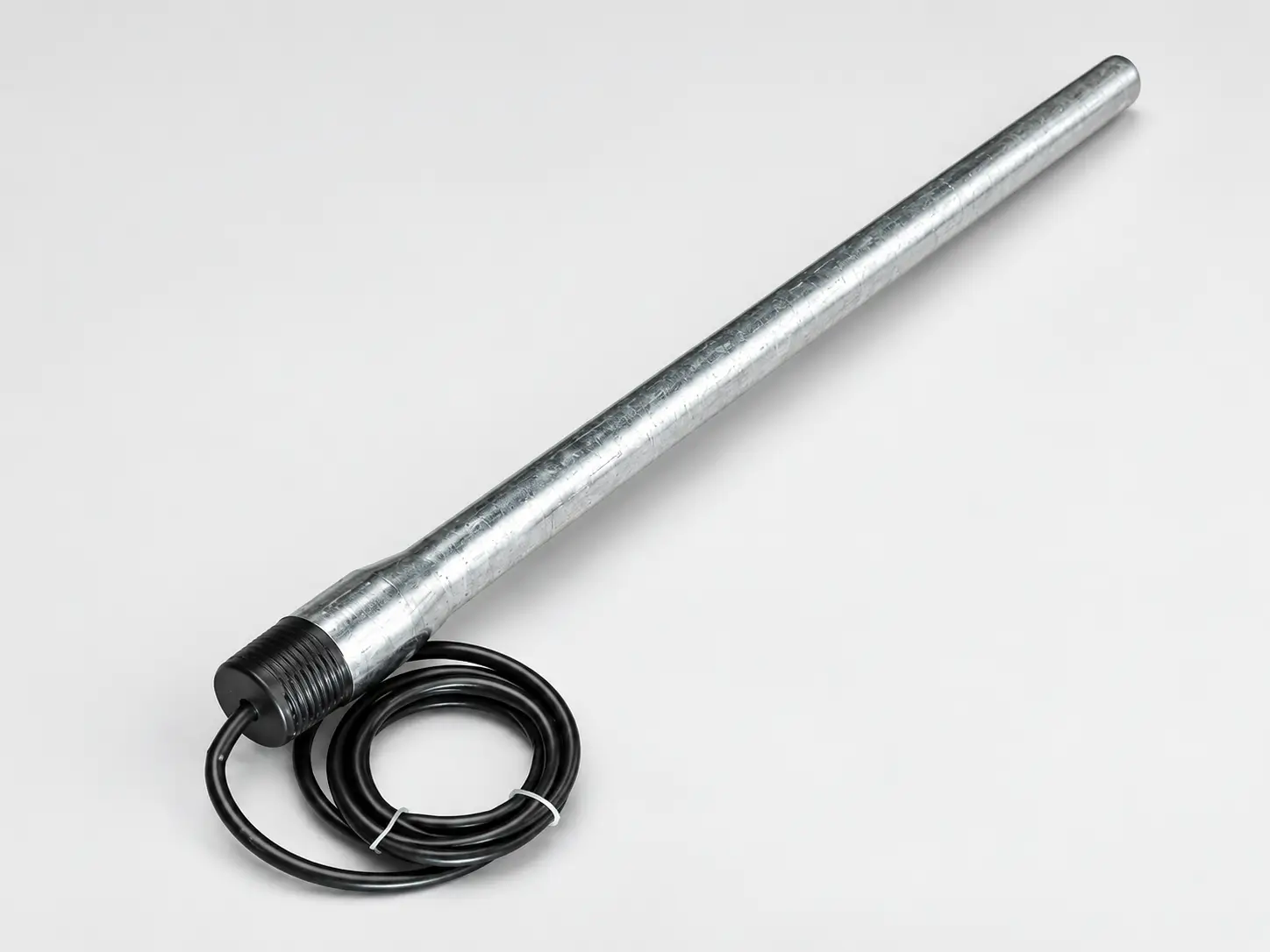
MMO Canister Anodes

MMO Canister Anodes

Pre-packaged ICCP anodes with coke backfill for buried pipelines, storage tanks, remote groundbeds, and high-resistivity soil.

  • Installation-ready package
  • Reduced groundbed resistance
  • Suitable for tough soil conditions
Material: MMO titanium rod with coke backfill
MMO Mesh Anodes

MMO Mesh Anodes

High-surface-area MMO mesh anodes for reinforced concrete, bridge decks, piles, beams, marine structures, and splash zones.

  • High surface area
  • Strong bonding performance
  • Ideal for concrete CP systems
Material: Titanium mesh with MMO coating
High-Silicon Cast Iron Anodes

High-Silicon Cast Iron Anodes

Reliable and cost-effective ICCP anodes for soil, freshwater, deep-well groundbeds, pipelines, and tank farms.

  • Proven field performance
  • Cost-effective current output
  • Suitable for groundbeds
Material: High-silicon cast iron

Sacrificial / Galvanic Anodes

Self-powered galvanic anodes for marine, soil, freshwater, storage tank, and smaller-scale protection applications.

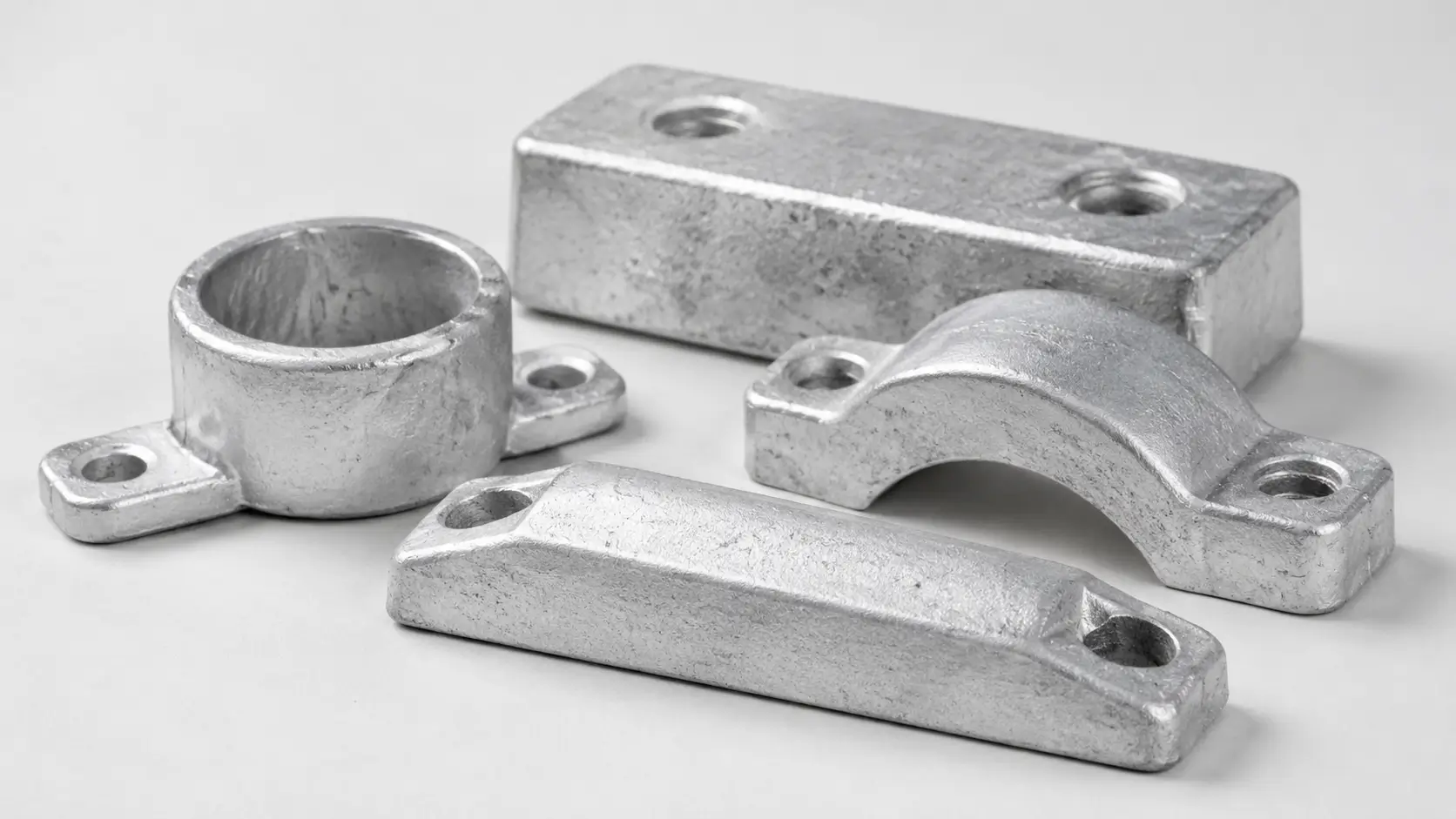
Zinc Sacrificial Anodes

Zinc Sacrificial Anodes

Stable zinc anodes for seawater, brackish water, ship hulls, ballast tanks, submerged pipelines, and marine structures.

  • Stable performance
  • Maintenance-friendly
  • Proven marine use
Material: High-purity zinc alloy
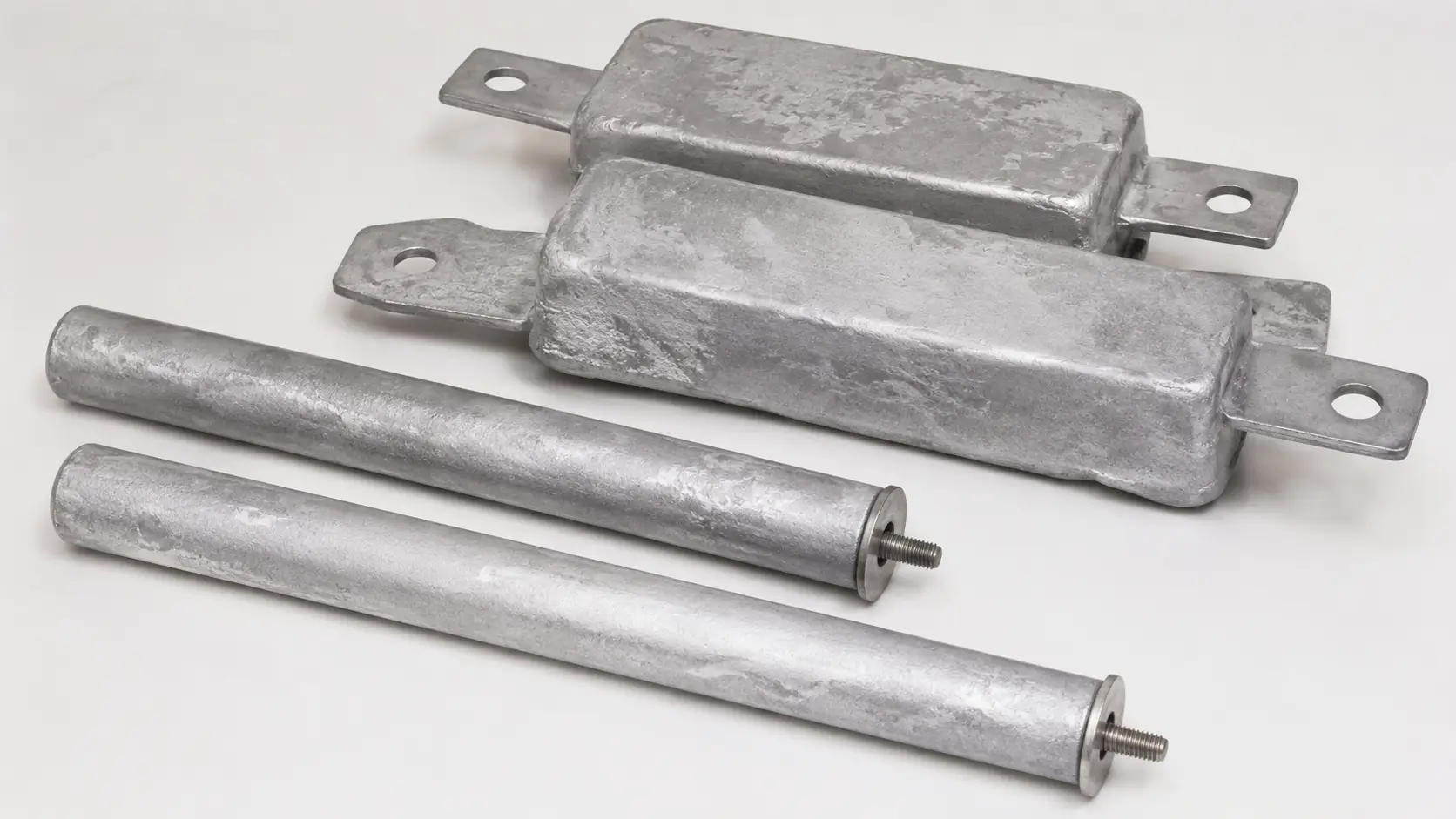
Magnesium Sacrificial Anodes

Magnesium Sacrificial Anodes

High-driving-potential magnesium anodes for soil, freshwater, buried pipelines, tanks, and water heater applications.

  • High driving voltage
  • Effective in soil and freshwater
  • Self-powered protection
Material: Magnesium alloy
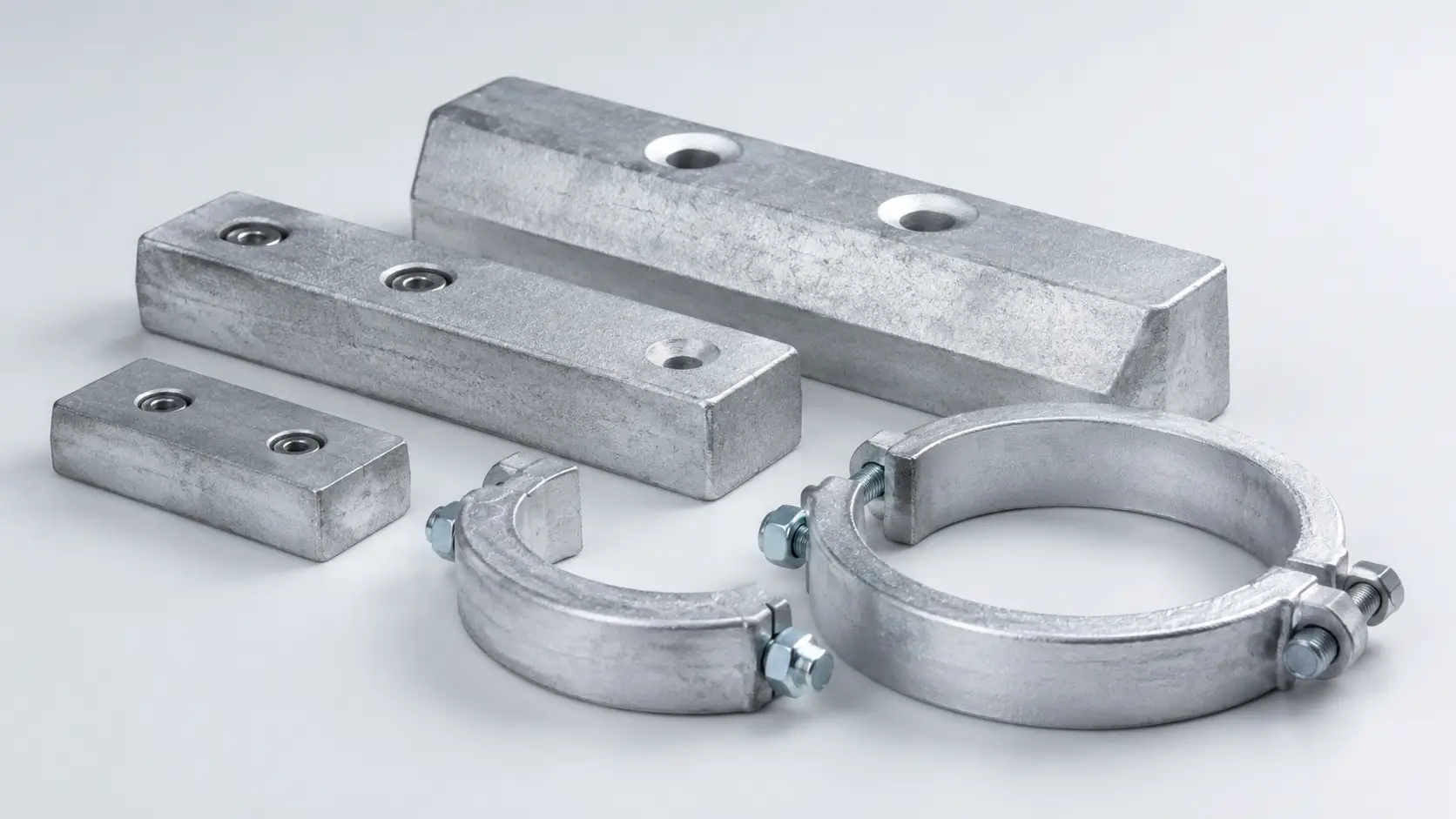
Aluminum Sacrificial Anodes

Aluminum Sacrificial Anodes

Lightweight, high-capacity aluminum anodes for offshore platforms, vessels, subsea pipelines, docks, and marine systems.

  • High electrochemical capacity
  • Lightweight design
  • Cost-effective for marine structures
Material: Al-Zn-In aluminum alloy
QUICK SELECTION

How to Select the Right Cathodic Protection Anode

The right anode depends on electrolyte resistivity, structure size, current demand, service life, installation environment, and system control requirements. Use this selection guide as a starting point before requesting a detailed engineering review.

Request a CP Anode Design Review
Environment / Asset Recommended Anodes Typical CP Type Selection Notes
Seawater & Brackish Water Zinc, aluminum, Ru-Ir MMO GACP / ICCP Common for marine structures, offshore platforms, ship hulls, and submerged pipelines.
Freshwater Magnesium, Ir-Ta MMO, HSCI GACP / ICCP Higher resistivity may require higher driving potential or impressed current design.
Soil / Buried Pipelines Magnesium, MMO tubular, MMO canister, HSCI GACP / ICCP Selection depends on soil resistivity, coating condition, current demand, and pipeline length.
High-Resistivity Soil MMO ICCP, magnesium ICCP / GACP Current output, backfill, anode spacing, and groundbed resistance are critical.
Reinforced Concrete MMO mesh, MMO ribbon, zinc systems ICCP / GACP Used for rebar corrosion control in bridges, decks, piles, beams, and splash zones.
Tank Bottoms MMO ribbon grids, MMO canister, HSCI, magnesium ICCP / GACP Design depends on AST or UST structure, soil condition, and current distribution needs.
Deep-Well Groundbeds MMO canister, MMO tubular, HSCI ICCP Requires reliable cable sealing, backfill control, and long-term resistance management.
Marine Hulls & Platforms Zinc, aluminum, MMO, Pt-Ti GACP / ICCP Selection depends on vessel size, control requirements, and service environment.
CUSTOM ENGINEERING

Custom Cathodic Protection Anodes Built Around Your Project

Standard anodes often fall short when protecting critical infrastructure in aggressive environments. Hele Titanium designs and manufactures both ICCP and sacrificial anodes according to your environment, current output, design life, installation method, and technical specifications.

Send Your CP Anode Requirements

MMO Coating Formulations

Ru-Ir coatings can be selected for marine, brackish water, or chlorine-evolution environments. Ir-Ta coatings can be selected for soil, freshwater, concrete, or oxygen-evolution applications. Custom MMO coating blends are available for special chemistries.

Sacrificial Alloy Options

Zinc, magnesium, and aluminum alloys can be supplied in standard or customized grades to match driving potential, consumption rate, operating environment, and service life requirements.

Custom Forms & Dimensions

Tubular, rod, wire, ribbon, mesh, plate, disc, canister, sled, and custom assemblies can be manufactured according to drawings, installation constraints, and system requirements.

Performance-Tuned Parameters

Coating load, thickness, surface area, current output, and design life can be engineered around required current density and system design life.

Integration-Ready Designs

Cable type, cable length, sealing method, connectors, terminal blocks, mounting hardware, and backfill packaging can be customized for easier installation and long-term reliability.

QUALITY CONTROL

Cathodic Protection Anode Quality — Built for Performance, Proven by Testing

When corrosion protection is critical, quality is non-negotiable. Every cathodic protection anode must deliver stable current output, reliable coating or alloy performance, secure cable sealing, dimensional accuracy, and predictable service life.

Certified Raw Materials

Titanium substrates, MMO coating materials, zinc, magnesium, aluminum, and high-silicon cast iron materials are checked against project specifications and supplier documentation before production.

Controlled Manufacturing Process

Coating, casting, machining, welding, cable connection, sealing, and assembly steps are controlled to maintain stable current output and installation reliability.

Application-Specific Testing

Testing programs can be adapted for deep wells, buried pipelines, marine tanks, reinforced concrete, seawater exposure, and soil environments.

Test Item Purpose Method / Standard
Material & Coating Selection Match substrate, alloy, and coating to the operating environment Certificate + design specification review
Coating Adhesion Confirm MMO layer bonds securely to titanium ASTM D3359 / Mandrel bend test
Coating Load / Thickness Verify precious metal loading and design life requirements XRF spectrometry
Coating Uniformity Prevent hotspots and uneven current distribution Multi-point XRF variation check
Accelerated Life Testing Predict durability under extreme current and temperature conditions ALT in NaCl / Na₂SO₄ media
Electrochemical Performance Confirm voltage behavior and catalytic efficiency In-lab service condition simulation
Visual Inspection Detect cracks, peeling, surface defects, or casting issues Magnified surface review
Dimensional Accuracy Ensure fit for installation and drawing compliance Precision measurement per drawings
Cable & Seal Verification Confirm reliable sealing and electrical safety Pull test, IR Test, hydrostatic test

Documentation That Supports Engineering Approval

For qualified projects, Hele Titanium can provide drawings, material certificates, inspection reports, coating test records, dimensional reports, and export documentation to support procurement, EPC review, and installation planning.

Request QA Documentation
APPLICATIONS

Cathodic Protection Anodes for Critical Infrastructure

From buried pipelines to offshore platforms, every asset faces different corrosion risks. Hele Titanium helps customers match anode material, form, and current output to the actual service environment.

Pipeline Protection

Pipeline Protection

Corrosion Risk

Soil exposure, coating defects, seawater crossings, and long-distance current distribution.

Recommended Anodes

MMO tubular, MMO wire, MMO canister, HSCI, magnesium, zinc

Storage Tank Protection

Storage Tank Protection

Corrosion Risk

Tank bottom corrosion, water accumulation, grounding complexity, and stray current.

Recommended Anodes

MMO ribbon grids, MMO canister, HSCI, magnesium, zinc

Marine & Offshore Structures

Marine & Offshore Structures

Corrosion Risk

Seawater corrosion, splash zones, submerged steel, and chloride-rich exposure.

Recommended Anodes

Aluminum, zinc, MMO, Pt-Ti

Reinforced Concrete Structures

Reinforced Concrete Structures

Corrosion Risk

Chloride ingress, carbonation, rebar corrosion, and concrete cracking.

Recommended Anodes

MMO mesh, MMO ribbon, zinc systems

Deep-Well Groundbeds

Deep-Well Groundbeds

Corrosion Risk

High soil resistance, depth-related maintenance challenges, and long-term output stability.

Recommended Anodes

MMO canister, MMO tubular, HSCI

Water Systems & Specialty Assets

Water Systems & Specialty Assets

Corrosion Risk

Localized corrosion in tanks, heaters, well casings, and smaller steel systems.

Recommended Anodes

Magnesium, aluminum, zinc, MMO

WHY CHOOSE HELE TITANIUM

A Factory-Direct CP Anode Partner for Long-Term Corrosion Protection

Hele Titanium combines anode manufacturing experience, coating expertise, custom engineering, testing, and global supply support to help customers protect critical infrastructure with confidence.

CP Anode Engineering Experience

10+ years of experience manufacturing MMO-coated titanium anodes and sacrificial anodes for industrial, marine, pipeline, tank, and infrastructure environments.

ICCP & Sacrificial Product Coverage

One supplier for MMO tubular, ribbon, wire, mesh, canister, zinc, magnesium, aluminum, and high-silicon cast iron anode requirements.

Custom Coating & Alloy Support

Ru-Ir, Ir-Ta, custom MMO formulations, and galvanic alloy options are selected according to environment, current demand, and design life.

Testing & Documentation

XRF, adhesion testing, ALT, dimensional inspection, visual inspection, and cable sealing checks help support reliable procurement decisions.

Flexible Project Support

From prototypes and replacement anodes to large-scale project production, we support different order sizes, technical stages, and project schedules.

Global Export Capability

We support international buyers with documentation, packaging, communication, and logistics coordination for global CP projects.

FAQ

Cathodic Protection Anode FAQs

Practical answers for engineers, procurement teams, EPC contractors, and asset owners sourcing ICCP or sacrificial anodes.

What is a cathodic protection anode?
A cathodic protection anode supplies protective current to a metal structure such as a pipeline, tank, offshore platform, vessel, or reinforced concrete system. This current helps prevent the protected structure from corroding.
What is the difference between ICCP and sacrificial anodes?
ICCP anodes use an external DC power source and are typically made from MMO-coated titanium, platinized titanium, high-silicon cast iron, or graphite. Sacrificial anodes are made from active metals such as zinc, magnesium, or aluminum and corrode in place of the protected structure.
Which anode type is right for my project?
ICCP is generally suitable for large structures, offshore platforms, long pipelines, high-resistivity environments, or long service life requirements. Sacrificial anodes are often suitable for smaller, remote, or power-limited systems.
How do I choose the right anode material?
Choose based on environment, current demand, resistivity, service life, and installation method. Zinc and aluminum are commonly used in seawater. Magnesium is often used in soil or freshwater. MMO is used for adjustable, long-life ICCP systems.
Can you customize cathodic protection anodes?
Yes. Hele Titanium can customize anode shape, size, coating type, alloy type, cable length, sealing method, connectors, current output, and design life according to project requirements.
What information do you need for a quote?
Please provide the application environment, target service life, structure type, required current output, preferred anode form, cable details, drawings, standards, or technical specifications.
What is the typical lifespan of cathodic protection anodes?
MMO ICCP anodes can often be designed for 20–30+ years depending on coating load and current density. Sacrificial anode life depends on consumption rate, alloy type, environment, and required current output.
What testing can you provide?
Typical checks include XRF coating analysis, coating adhesion testing, accelerated life testing, visual inspection, dimensional inspection, electrochemical performance checks, and cable/seal verification.
Which MMO coating should I choose, Ru-Ir or Ir-Ta?
Ru-Ir coatings are commonly used for chlorine-evolution environments such as seawater or brackish water. Ir-Ta coatings are often used for oxygen-evolution environments such as soil, freshwater, or concrete.
Do you provide drawings and technical data sheets?
Yes. Hele Titanium can provide drawings, material certificates, inspection reports, technical data sheets, and other documentation required for procurement and project approval.
Can your anodes be used in reinforced concrete?
Yes. MMO mesh and MMO ribbon anodes are commonly used for reinforced concrete structures such as bridges, decks, piles, beams, and splash zone repairs.
Do you ship worldwide?
Yes. Hele Titanium supports global shipping for industrial customers, including buyers in North America, Europe, Southeast Asia, the Middle East, Australia, and other regions.

Inside Our Manufacturing & Quality System

Every cathodic protection anode is manufactured through controlled material verification, coating or alloy processing, electrical testing, and documentation review — helping buyers reduce specification risk and improve long-term field reliability.

From titanium substrate preparation and MMO coating to sacrificial alloy casting, machining, welding, cabling, and sealing, each process step is controlled according to project specifications.

Titanium substrate preparation Titanium substrate preparation for MMO coating
Controlled coating process Controlled coating process for ICCP anodes
Sacrificial alloy casting Sacrificial alloy casting for galvanic anodes
Drawing-based machining Drawing-based machining and assembly
Cable sealing Cable sealing for long-term field reliability

Our production workshop supports multiple cathodic protection anode forms, including tubular, ribbon, wire, mesh, canister, plate, sled, and sacrificial alloy designs.

CP anode production area Workshop support for custom CP anode production
Titanium anode workshop Manufacturing capability for ICCP anode forms
Sacrificial anode workshop Sacrificial anode production and finishing
Cable assembly station Cable assembly and connection preparation
Packing and inspection area Export-ready packing for global delivery

Quality checks focus on material verification, coating load, coating adhesion, dimensional accuracy, electrochemical behavior, cable sealing, and documentation traceability.

XRF testing XRF coating analysis for precious metal loading
Coating adhesion testing Adhesion testing for MMO coating reliability
Dimensional measurement Dimensional inspection according to drawings
Visual inspection Visual review for surface quality
Cable pull test Cable and seal verification before shipment
Inspection report preparation Inspection records prepared for project approval

For qualified projects, Hele Titanium can provide material certificates, inspection reports, coating test records, drawings, traceability documents, and export documentation.

Material test certificates Material documentation for procurement review
Inspection reports Inspection reports for quality verification
Coating analysis reports Coating test records for technical approval
Product drawings Drawings and specifications for project alignment
Packing documents Export documentation support for global buyers

Need production details, inspection records, or project-specific documentation for your cathodic protection anodes?

Request Manufacturing & QC Details
BUYER’S GUIDE

Cathodic Protection Anode Sourcing Guide for Industrial Buyers

Reading Time: 8–10 min Buyer Type: Engineers / EPCs / OEMs / Procurement Teams Product Scope: ICCP & Sacrificial CP Anodes

Cathodic protection is one of the most effective ways to protect pipelines, tanks, marine assets, and reinforced concrete from corrosion. But system performance depends on selecting the right anode type, material, form, and configuration. This guide helps industrial buyers understand the key decisions before sending an RFQ.

1. Why Cathodic Protection Matters

A brief overview of the fundamental value and purpose of corrosion control in industrial assets.

Corrosion can cause premature failure, leakage, downtime, safety risks, and high maintenance cost for pipelines, tanks, marine structures, and reinforced concrete. Cathodic protection helps extend asset life by controlling the electrochemical corrosion reaction before it damages the protected structure.

Warning: Corrosion protection should not be treated as a simple spare-part purchase. The right anode system depends on environment, current demand, structure size, service life, and installation method.

Cathodic Protection

2. How Cathodic Protection Works

Understanding the electrochemical principles and basic steps to establish an effective protection system.

Cathodic protection works by shifting the protected steel structure into the cathodic state. Protective current flows from the anode through the surrounding medium, such as soil, seawater, freshwater, or concrete, and reduces the corrosion tendency of the structure.

  • Identify the structure to protect
  • Understand the electrolyte environment
  • Estimate current demand
  • Confirm service life target
  • Select the correct anode material and form
How Cathodic Protection Works

3. What CP Anodes Do

The core function of anodes in delivering protective current to vulnerable structures.

A cathodic protection anode supplies the protective current required to suppress corrosion. In sacrificial systems, the anode consumes itself. In ICCP systems, the anode works with an external power source to deliver controlled current.

4. ICCP vs Sacrificial Systems

A comparative guide to choosing between impressed current and galvanic anode systems.

Factor Sacrificial / Galvanic Anodes ICCP / Impressed Current Anodes
Power Source Self-powered External DC rectifier
Typical Materials Zinc, magnesium, aluminum MMO, Pt, HSCI, graphite
Current Output Limited Adjustable and high
Best For Small or remote systems Large or aggressive systems
Service Life Short to medium Long-term
Maintenance Replace consumed anodes Monitor electrical output
Initial Cost Lower Higher
Control Fixed output Adjustable output

Procurement Note: Sacrificial systems are usually simpler, while ICCP systems offer better control for large or long-life infrastructure.

5. Galvanic Anode Materials

Characteristics and optimal environments for magnesium, zinc, and aluminum sacrificial anodes.

Magnesium Anodes

Magnesium anodes provide high driving potential and are commonly used in soil or freshwater applications where stronger current output is needed.

Zinc Anodes

Zinc anodes are widely used in seawater and brackish water environments for ship hulls, ballast tanks, offshore structures, and submerged pipelines.

Aluminum Anodes

Aluminum anodes offer high electrochemical capacity and lightweight performance, making them suitable for marine, offshore, subsea, and dock structures.

Material Best Environment Common Use
Magnesium Soil, freshwater Buried pipelines, tanks, water heaters
Zinc Seawater, brackish water Ship hulls, ballast tanks, submerged pipelines
Aluminum Marine, offshore, subsea Platforms, vessels, subsea pipelines

6. ICCP Anode Materials

High-performance impressed current options including MMO, Platinum, HSCI, and Graphite.

MMO Anodes

MMO-coated titanium anodes are widely used in modern ICCP systems because they provide long life, stable output, and low maintenance across soil, seawater, freshwater, and concrete environments.

Platinum-Coated Anodes

Platinum-coated titanium or niobium anodes are used for high-value, compact, or aggressive environments where high current density and excellent corrosion resistance are needed.

High-Silicon Cast Iron Anodes

HSCI anodes are cost-effective impressed current anodes used in soil, freshwater, and deep-well groundbed applications.

Graphite Anodes

Graphite anodes are economical legacy ICCP anodes, but they are more brittle and typically have shorter service life than MMO or platinum-coated options.

7. Common Applications

Typical use cases and recommended anode solutions across various industrial sectors.

Application Recommended Anodes Notes
Pipelines MMO, HSCI, graphite, magnesium, zinc Depends on length, coating, and soil resistivity
Tank Bottoms MMO ribbon, HSCI, magnesium Grid or groundbed layout may be required
Marine Hulls Zinc, aluminum, MMO, Pt-Ti Depends on vessel size and power availability
Offshore Platforms Aluminum, zinc, MMO Marine environment and design life are critical
Reinforced Concrete MMO mesh, MMO ribbon, zinc Used for rebar corrosion control
Deep-Well Groundbeds MMO canister, HSCI Requires cable sealing and backfill design

8. Selection Factors

Key variables and environmental considerations critical to specifying the right CP system.

The right CP anode should be selected based on environment, resistivity, current demand, design life, structure size, installation method, and lifecycle cost.

  • Environment: soil, seawater, freshwater, concrete, brackish water
  • Structure type: pipeline, tank, hull, platform, rebar, well casing
  • Current output requirement
  • Target service life
  • Anode form and spacing
  • Cable type and sealing method
  • Testing and documentation requirements
  • Shipping and installation schedule

Warning: Choosing an anode only by price can create long-term system risk. Incorrect anode selection may lead to under-protection, over-protection, premature consumption, or difficult maintenance.

9. Design & Installation Notes

Best practices for ensuring long-term performance and reliability during deployment.

Long-term performance depends on proper design and installation. Engineers should consider current distribution, anode spacing, groundbed resistance, cable routing, sealing quality, backfill, and monitoring access.

  • Confirm current demand before selecting anode quantity
  • Match coating or alloy to the environment
  • Use proper backfill for soil applications
  • Verify cable sealing for buried or submerged anodes
  • Avoid installation layouts that create shielding or current gaps
  • Keep documentation for maintenance and compliance

10. Monitoring & Maintenance

Essential procedures for verifying system efficacy and extending operational lifespan.

Cathodic protection systems require periodic monitoring to confirm that the protected structure remains within the required potential range. ICCP systems also require rectifier output checks, reference electrode verification, and groundbed performance monitoring.

  • Structure-to-electrolyte potential readings
  • Rectifier voltage and current output
  • Anode consumption or output trend
  • Cable and junction box condition
  • Reference electrode calibration
  • Inspection and maintenance records

11. Common CP System Issues

Troubleshooting typical problems, from under-protection to component degradation.

Issue Possible Cause Action
Under-protection Insufficient current, failed anode, coating damage Add anodes or adjust system output
Over-protection Excessive current output Reduce rectifier setting
Stray current Nearby DC source or adjacent CP system Coordinate mitigation and bonding
Reference electrode drift Aging or contamination Calibrate or replace reference cell
Cable failure Water ingress or insulation damage Inspect and replace cable or seal

12. RFQ Checklist

A comprehensive list of required technical details to streamline your quotation process.

To receive a faster and more accurate quotation, provide as much of the following information as possible.

  • Application environment
  • Structure type
  • Target service life
  • Required current output
  • Preferred anode material
  • Preferred anode form
  • Cable type and cable length
  • Drawing or dimension requirements
  • Coating type if known
  • Testing or documentation requirements
  • Quantity and delivery schedule
  • Destination country or port

Need Help Selecting the Right CP Anode?

Send your environment, structure type, service life target, and technical requirements to Hele Titanium. Our team will help you review the best-fit ICCP or sacrificial anode solution for your project.

Request CP Anode Selection Support
CP Installation
CP ANODE INQUIRY

Ready to Extend the Life of Your Assets?

Tell us your environment, structure type, current demand, or drawing requirements, and our team will recommend the right ICCP or sacrificial anode solution.

  • Factory-Direct CP Anode Support
  • Custom ICCP & Sacrificial Options
  • Testing Documentation Available

Prefer email? sales@heletitanium.com

We typically respond within 24 hours.