
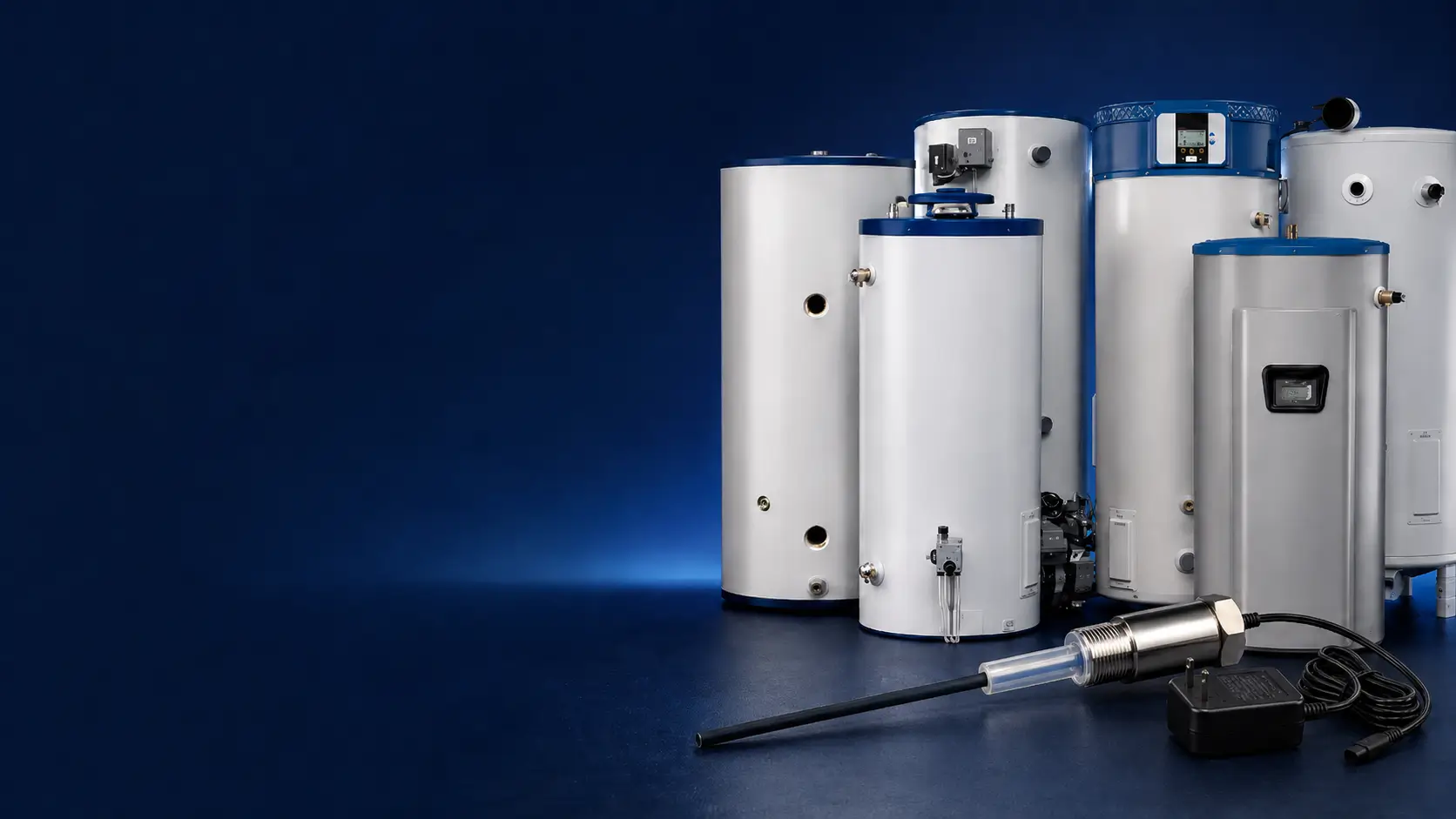
Powered Titanium Anode Rods for Water Heaters & Storage Tanks
HELE supplies powered titanium anode rod assemblies for water heaters, storage tanks and OEM equipment, with configurable rod length, mounting thread, controller, cable and electrical interface according to tank geometry and operating requirements.
Powered Anode Rod Assemblies for Water Heaters & Storage Tanks
A powered anode rod is an electrically powered corrosion-protection component used inside compatible steel water tanks. It typically combines a titanium-based active anode element with a controller or power source to provide controlled protective current inside the tank.
Unlike a conventional sacrificial anode rod, which gradually consumes during operation, a powered anode operates as part of an electrically powered corrosion-protection assembly.
HELE supplies and customizes powered anode rod assemblies for water heaters, hot water tanks, storage tanks and OEM equipment. The configuration can be reviewed around the tank geometry, mounting interface, anode element, cable, connector, controller or power interface and OEM integration requirements.
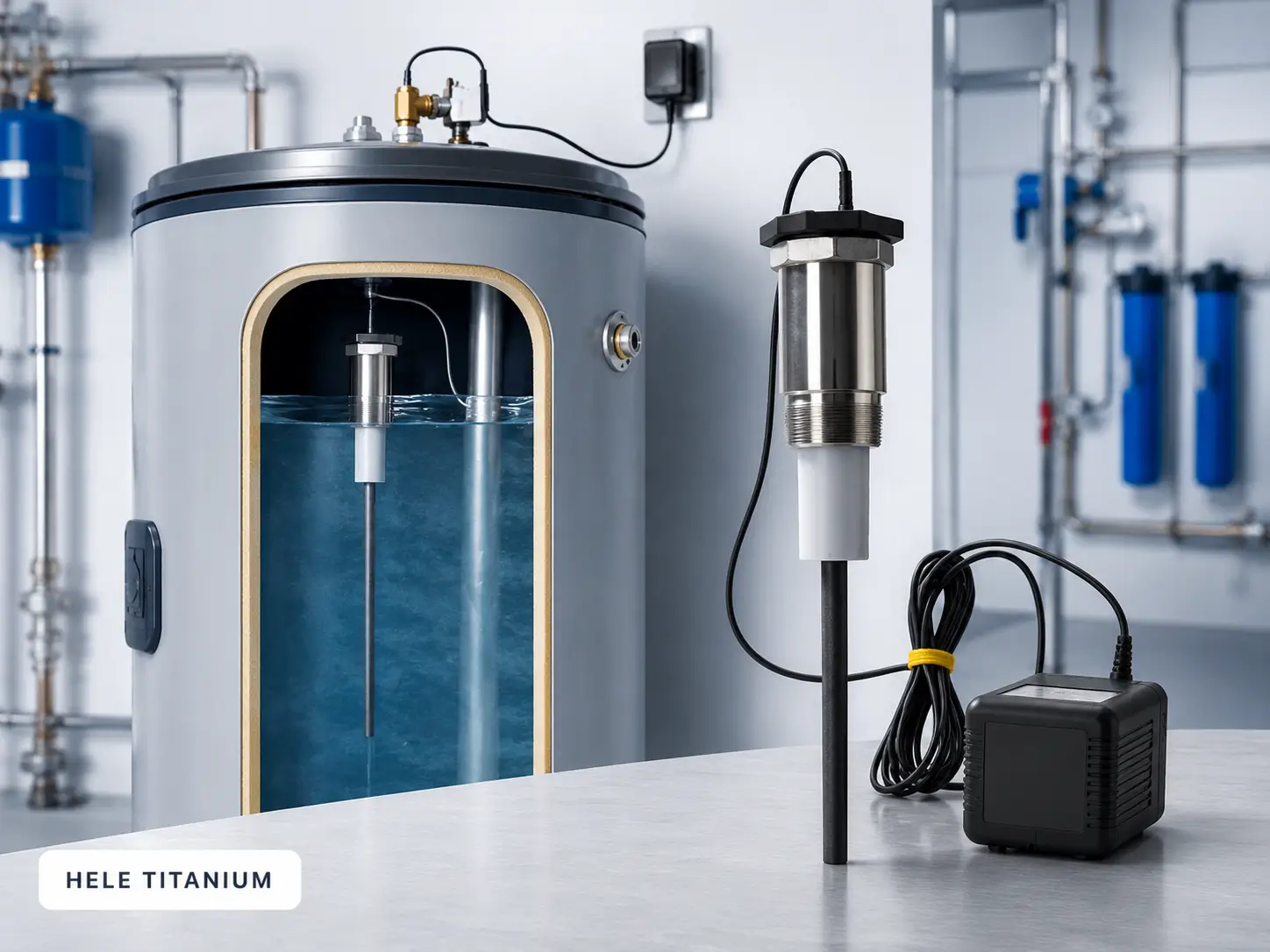
Powered Anode Element
Titanium-Based Active Element The powered anode element is configured according to the required rod geometry, active length, operating conditions and approved product specification.
Mounting Interface
Thread · Seal · Mechanical Connection Thread size, mounting geometry and sealing interface should be matched to the tank opening or approved OEM equipment drawing.
Cable & Connector
Cable Length · Connector · Routing Cable length, connector type and routing can be reviewed according to the controller position, equipment layout and OEM assembly requirements.
Controller / Power Interface
Power Supply · Electrical Connection · System Interface The controller or power interface should be confirmed according to the selected powered-anode configuration, electrical requirements and equipment design.
Engineering Note
Rod dimensions, mounting interface, electrical ratings, controller requirements and operating limits should be confirmed against the actual tank, application conditions and approved technical specification before quotation.
Powered Anode Rod vs MMO Rod Anode
A powered anode rod and an MMO rod anode may both use an MMO-coated titanium active element, but they serve different product and system roles.
Powered anode rod = an equipment-level powered corrosion-protection assembly for water heaters and tanks, typically reviewed together with the mounting interface, cable, connector and controller or power interface.
MMO rod anode = the coated titanium electrode itself, supplied as an active anode component for industrial cathodic protection, electrolysis, water treatment and custom electrochemical equipment.
Powered Anode Rod
Complete equipment-level powered protection assembly
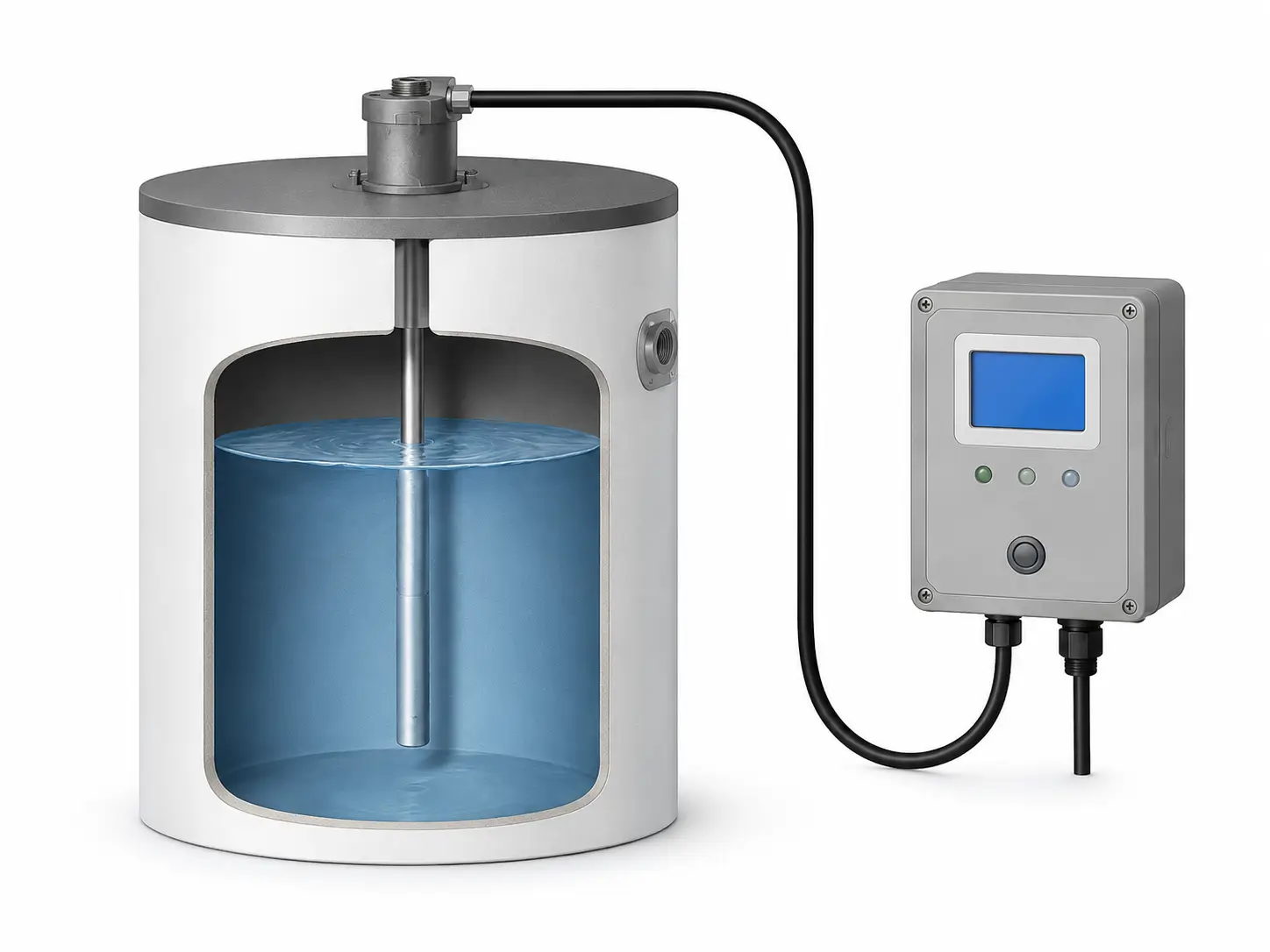
- Powered anode element
- Threaded mounting interface
- Cable and connector
- Controller / power interface by configuration
- OEM labeling and packaging where required
Typical Applications
Water heaters · Hot water tanks · Storage tanks · OEM water equipment
MMO Rod Anode
Industrial coated titanium electrode component
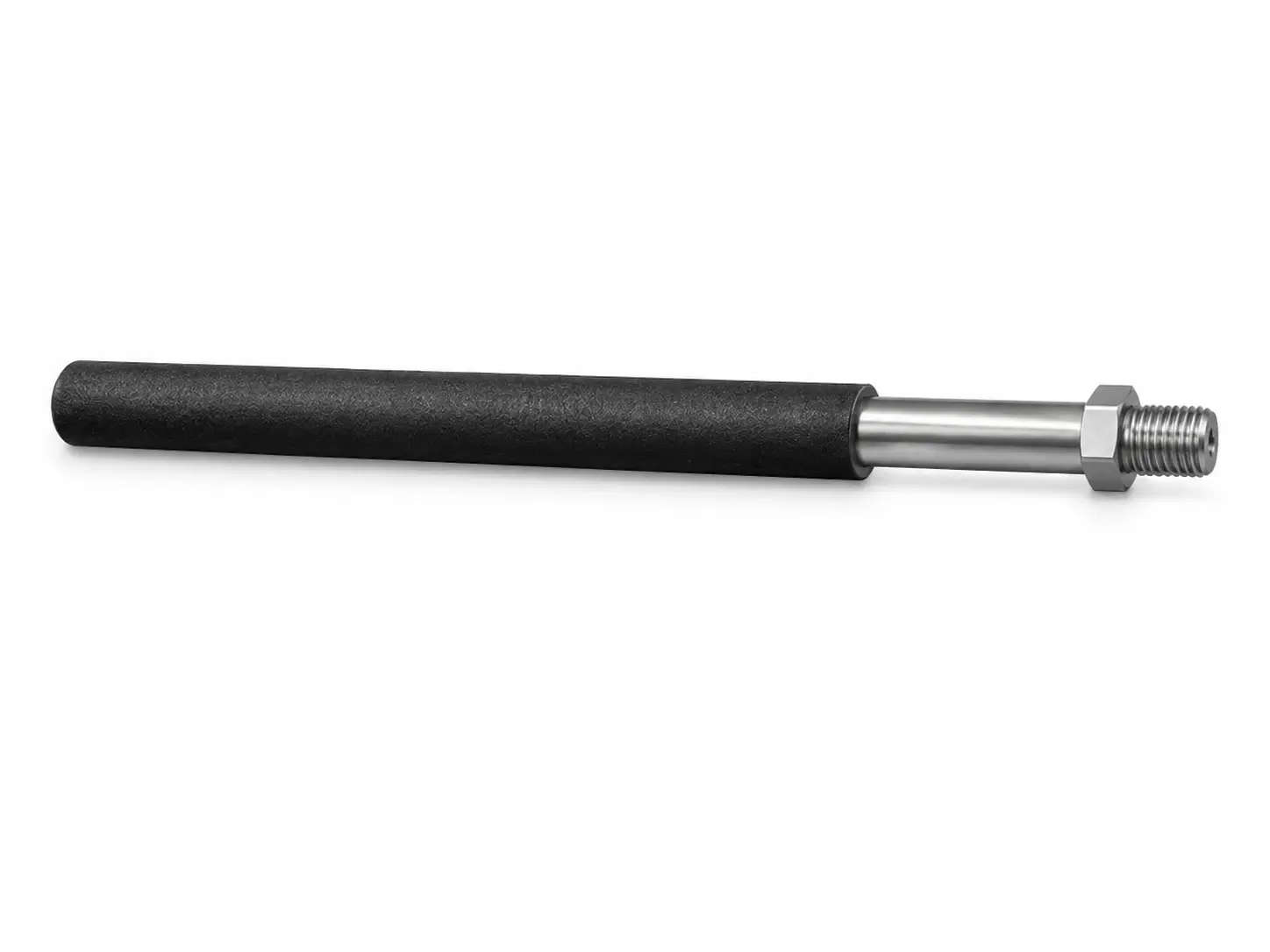
- MMO-coated titanium rod
- Project-defined active length
- Connection / mounting interface
- Supplied as an electrochemical anode component
- Custom geometry and coating requirements by project
Typical Applications
Industrial ICCP · Electrolysis · Water treatment · Pilot systems · Custom electrochemical equipment
| Comparison Point | Powered Anode Rod | MMO Rod Anode |
|---|---|---|
|
|
Water heaters, storage tanks and powered tank corrosion-protection assemblies | Industrial CP, electrolysis, water treatment and custom electrochemical systems |
|
|
Equipment-level assembly including the powered anode element and project-defined electrical / mechanical interfaces | MMO-coated titanium electrode component |
|
|
Water-heater manufacturers, tank OEMs, distributors and replacement-program suppliers | CP contractors, electrochemical engineers, equipment manufacturers and R&D teams |
|
|
Uses a powered active anode element as part of a tank-protection assembly | Serves as the active coated electrode inside a larger electrochemical system |
|
|
Tank geometry · Thread · Rod length · Controller · Cable · Water conditions · OEM requirements | Rod diameter · Active length · Active area · Current density · Electrolyte · Connection · Mounting |
|
|
Anode element · Mounting interface · Cable · Connector · Controller / power interface as specified · Labels / packaging | MMO-coated titanium rod · Connection end · Project-specific geometry and coating specification |
Selection note: If you need a powered corrosion-protection assembly for a water heater or storage tank, start with the Powered Anode Rod. If you need an MMO-coated titanium electrode for industrial CP, electrolysis, water treatment or equipment integration, review the MMO Rod Anode specifications.
Powered Anode Rod Options We Supply
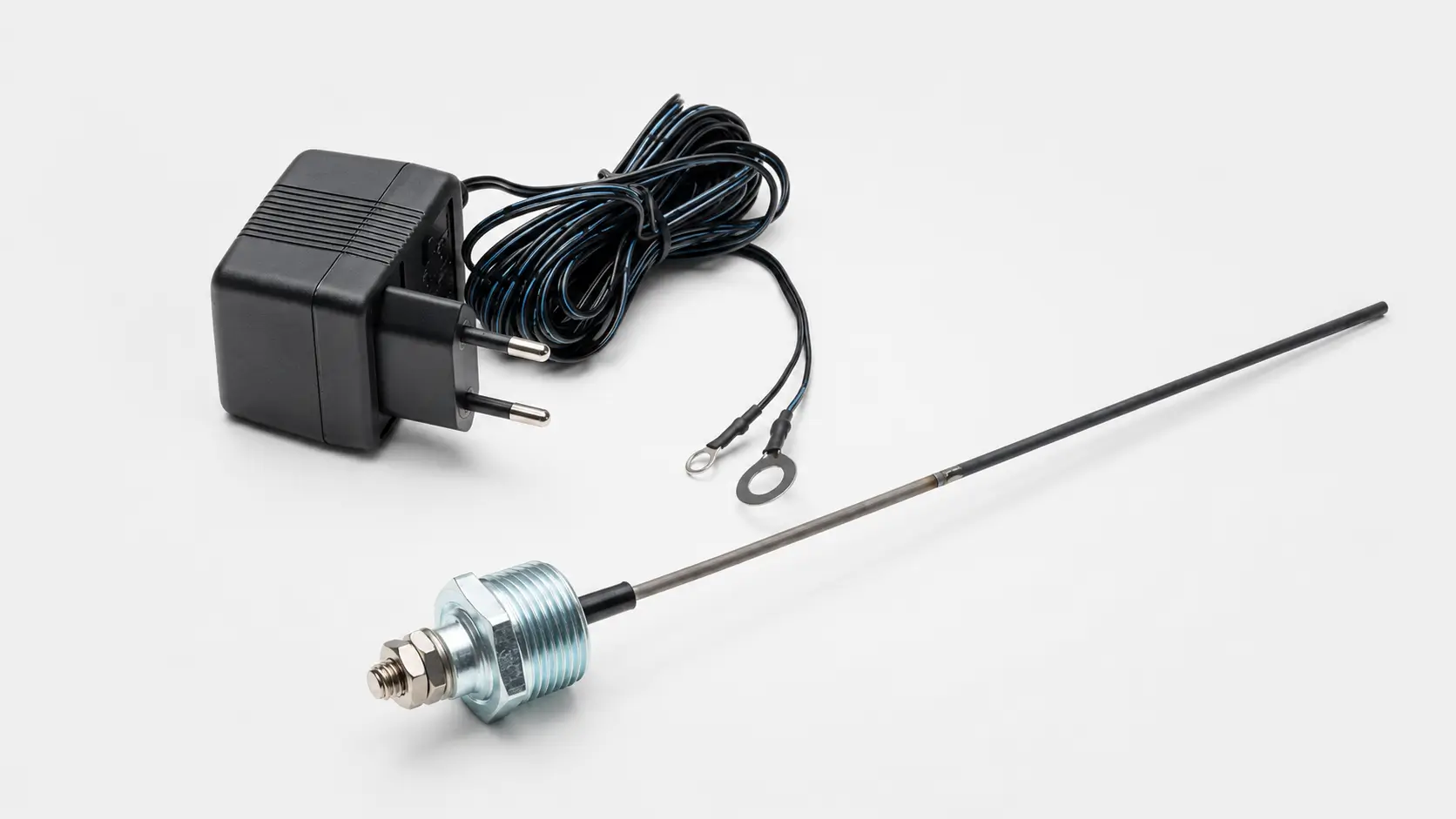
Standard Powered Anode Rod
A powered titanium anode rod assembly configured around a defined tank interface and operating requirement.
Water heaters · Commercial hot water tanks
Rod length · Thread · Tank volume · Controller · Cable
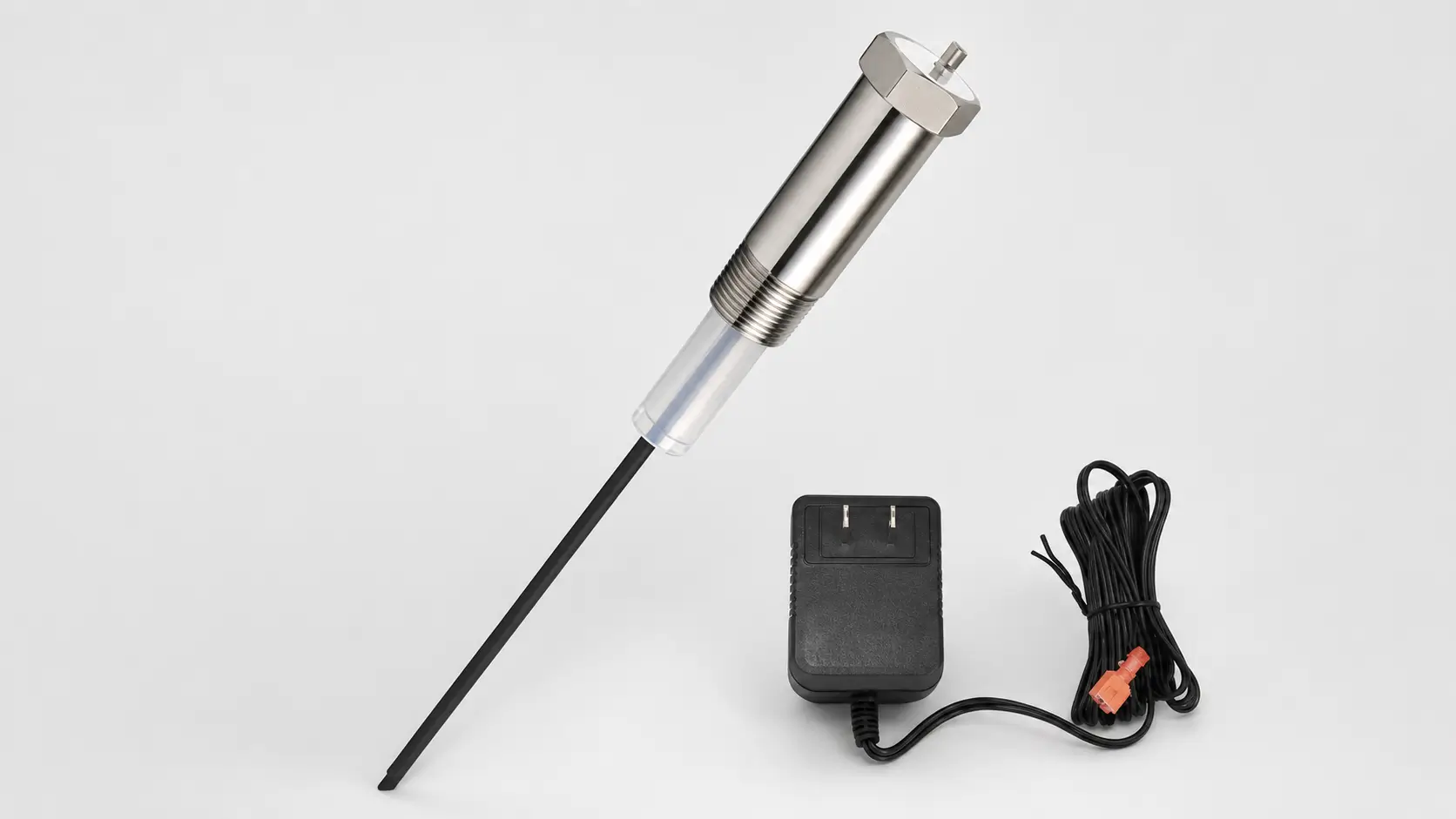
OEM Powered Anode Rod Assembly
Drawing-based powered anode assemblies developed for integration into OEM equipment and repeat production programs.
Water heater manufacturers · Tank manufacturers · Equipment OEMs
Rod geometry · Thread · Controller · Connector · Label · Packaging
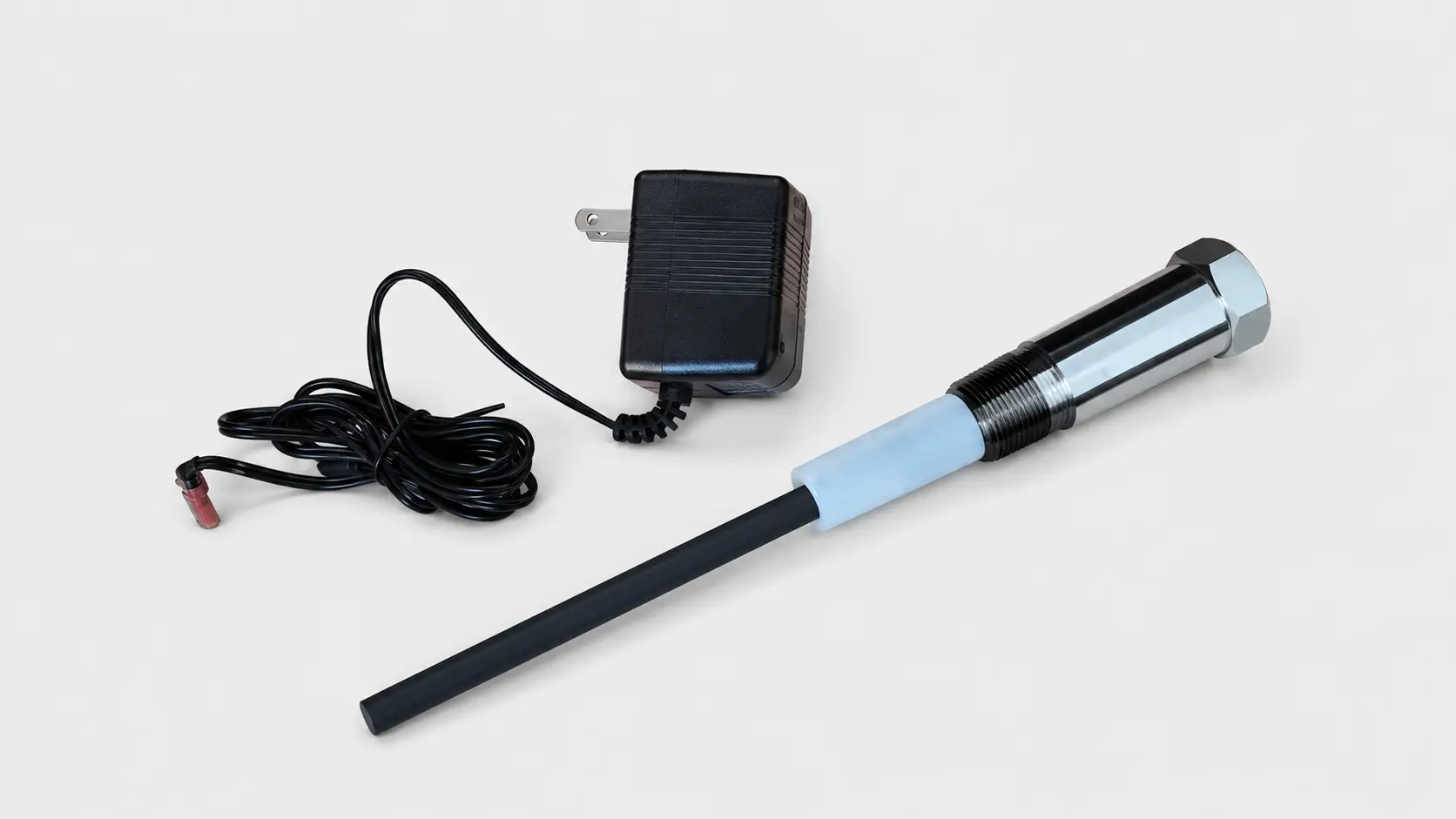
Replacement Powered Anode Rod
Replacement configurations reviewed against the original tank connection, mechanical dimensions and electrical interface.
Replacement programs · Service suppliers · Existing tank designs
Existing dimensions · Thread · Installation clearance · Connector · Controller
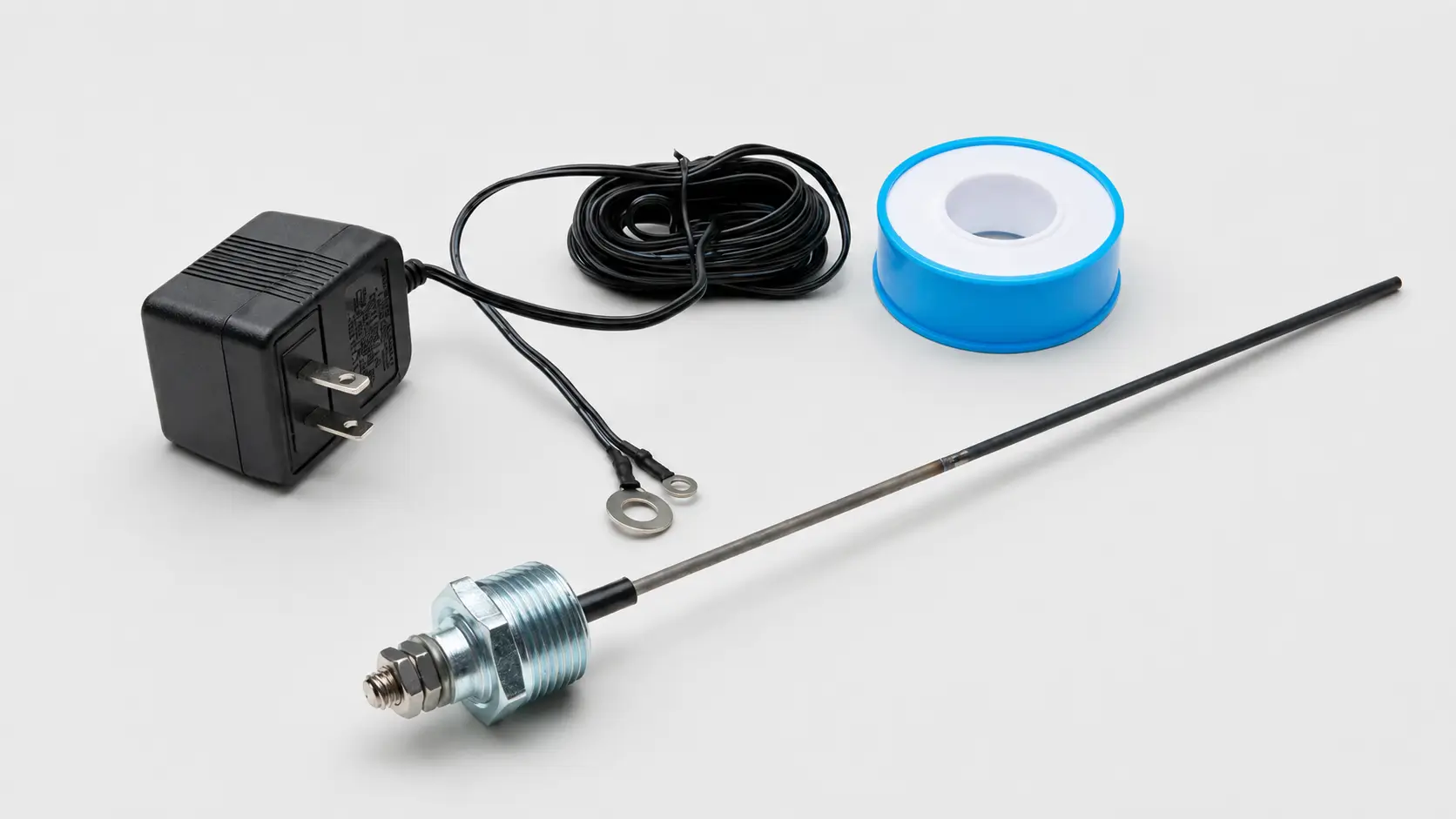
Custom Powered Anode Rod System
Custom powered-anode configurations for applications requiring project-specific mechanical or electrical integration.
Non-standard tanks · Custom equipment · Special integration projects
Tank drawing · Water chemistry · Electrical requirement · Installation geometry · Controller
Powered Anode Rod Technical Specifications
Powered anode rod specifications should be confirmed against the tank geometry, mounting interface, water conditions, controller requirements and OEM equipment design.
| Parameter | Typical Options / Review Basis |
|---|---|
| Anode Element | Titanium-based powered anode element; MMO-coated titanium rod or project-specific active element according to the confirmed design |
| Rod Length | Standard or custom length according to tank depth and available installation clearance |
| Rod Diameter | Reviewed according to mechanical requirements, electrical duty and approved configuration |
| Thread / Mounting | Thread size, mounting head, sealing / gasket and connection interface according to the tank or OEM drawing |
| Cable / Connector | Cable length, insulation, connector type, sealing, strain relief and labeling as required |
| Controller / Power Supply | Input / output requirements, connection, plug, housing, indicator or custom controller according to the confirmed electrical configuration |
| Tank / Equipment Type | Water heaters, hot water tanks, storage tanks and OEM water equipment |
| Water Conditions | TDS / conductivity, hardness, chloride, pH, temperature and other relevant water data |
| Current Output | Reviewed according to tank geometry, water conditions, controller configuration and protection requirement |
| OEM / Packing | Product labeling, individual packing, bulk packing, private-label packing or export packaging as agreed |
| Documentation | Product drawing / specification, inspection records, labels, packing list and agreed project documents |
Engineering Note: Final specifications should be confirmed according to the actual tank, water conditions, installation interface, controller configuration and project requirements before quotation.
What We Need to Review Your Powered Anode Rod
Powered anode selection depends on the tank, mounting interface, water conditions and electrical configuration. Share the following information for application review.
Tank
Mounting
Anode Rod
Water Conditions
Electrical Interface
OEM Requirements
Powered Anode Rod Applications
| Application | Description |
|---|---|
|
|
Powered anode rod assemblies for compatible residential, commercial and OEM water-heating tank designs. |
|
|
Powered corrosion-protection configurations reviewed against tank volume, connection, operating conditions and controller requirements. |
|
|
Powered anode assemblies for suitable water-containing steel tanks where the mechanical and electrical interfaces have been confirmed. |
|
|
Custom powered-anode assemblies developed around customer drawings, equipment interfaces and production requirements. |
|
|
HELE does not claim universal compatibility with every water-heater brand, tank model or controller. Compatibility should be confirmed using the actual equipment dimensions, mounting connection and electrical requirements. |
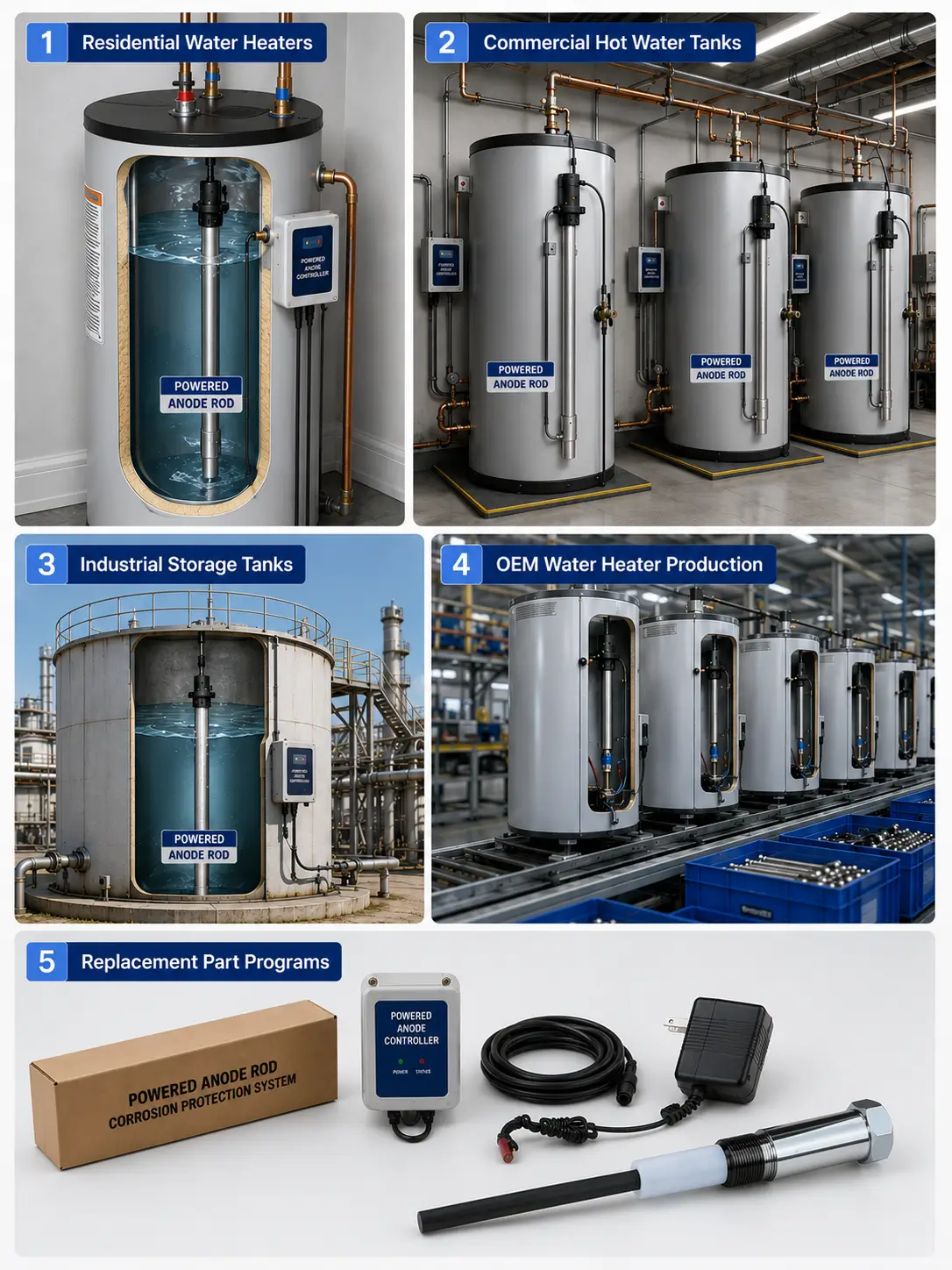
Not sure whether powered anode rods are suitable for your project?
Share your tank design, water chemistry, operating temperature, required current output, and available installation space for engineering review.
Custom Powered Anode Rods Built Around Your Tank and Market
Powered anode rod selection should be reviewed according to tank size, water chemistry, rod length, thread type, cable connection, controller output, plug type, labeling, packing, and target market requirements.
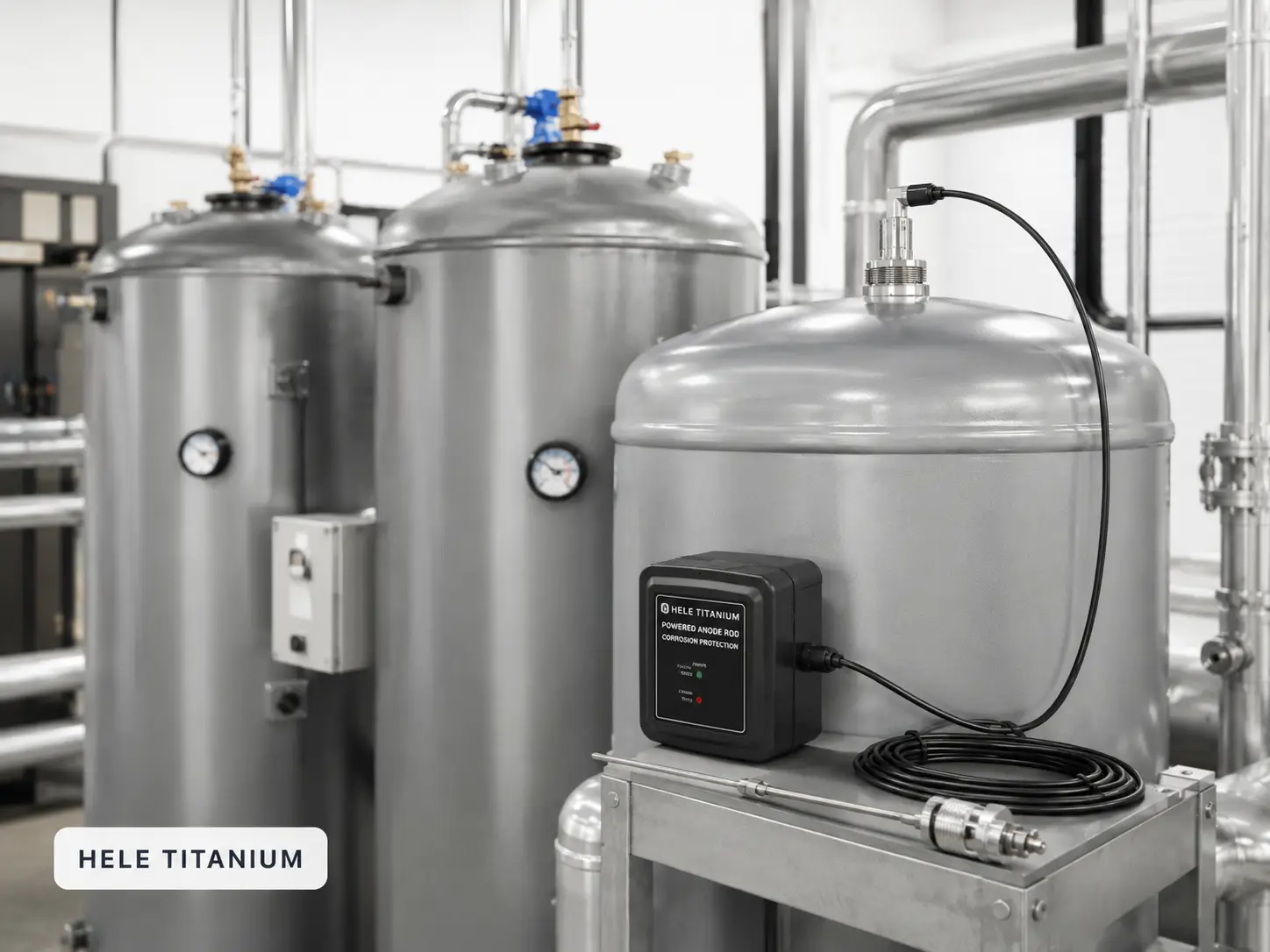
Review tank size, tank depth, thread type, installation space, and existing anode rod dimensions.
Review rod length, rod diameter, coating requirement, active area, and current output needs.
Review output current, input voltage, plug type, indicator function, housing design, and market requirements.
Customize cable length, connector type, insulation, sealing, strain relief, and labeling.
Support logo, label, instruction manual, individual box, bulk packing, and private label requirements when needed.
Product specification, inspection notes, packing documents, labels, and project files can be prepared when required.
What We Need From You
- • Application
- • Tank type and tank capacity
- • Tank depth or rod length requirement
- • Thread size / mounting interface
- • Water chemistry if available
- • Power input and controller requirement
- • Cable length and connector type
- • OEM logo / label / packing requirement
- • Quantity and delivery destination
- • Target market or standard if applicable
Powered Anode Rod Inspection & OEM Documentation
Quality verification should follow the confirmed product construction, approved drawing and agreed inspection requirements.
Material Review
Titanium material and other specified components are reviewed against the confirmed product requirements and available material documentation.
Dimensional Inspection
Rod length, mounting thread, cable length and critical assembly dimensions can be inspected against the approved drawing.
Electrical Verification
Applicable continuity and controller / anode electrical checks can be performed according to the confirmed product specification.
Assembly Inspection
Threaded interface, cable connection, connector condition, sealing, identification and final assembly can be reviewed before shipment.
Available Documentation
- Product Drawing
- Dimensional Record
- Material Records
- Electrical Inspection Record
- Assembly Inspection Record
- Packing List
- Product Identification
- OEM-Specific QC Documents
Documentation Note: Document availability, format and inspection scope should be confirmed before order placement.
Powered Anode Rod vs Sacrificial Anode Rod
Powered anode rods and sacrificial anode rods are both used for tank corrosion protection, but they work through different protection mechanisms. The right choice depends on tank design, water chemistry, power availability, maintenance expectations, installation space, and market requirements.
Which One Should You Choose?
Powered anode rods are usually selected when the tank system needs controlled current output and a powered system rather than scheduled replacement of a consumable rod. Sacrificial anode rods are simpler and use magnesium, aluminum, or zinc alloy consumption to provide protection, but they gradually wear out and may require periodic replacement. Final selection should consider tank design, water chemistry, power availability, installation space, service expectations, and customer requirements.
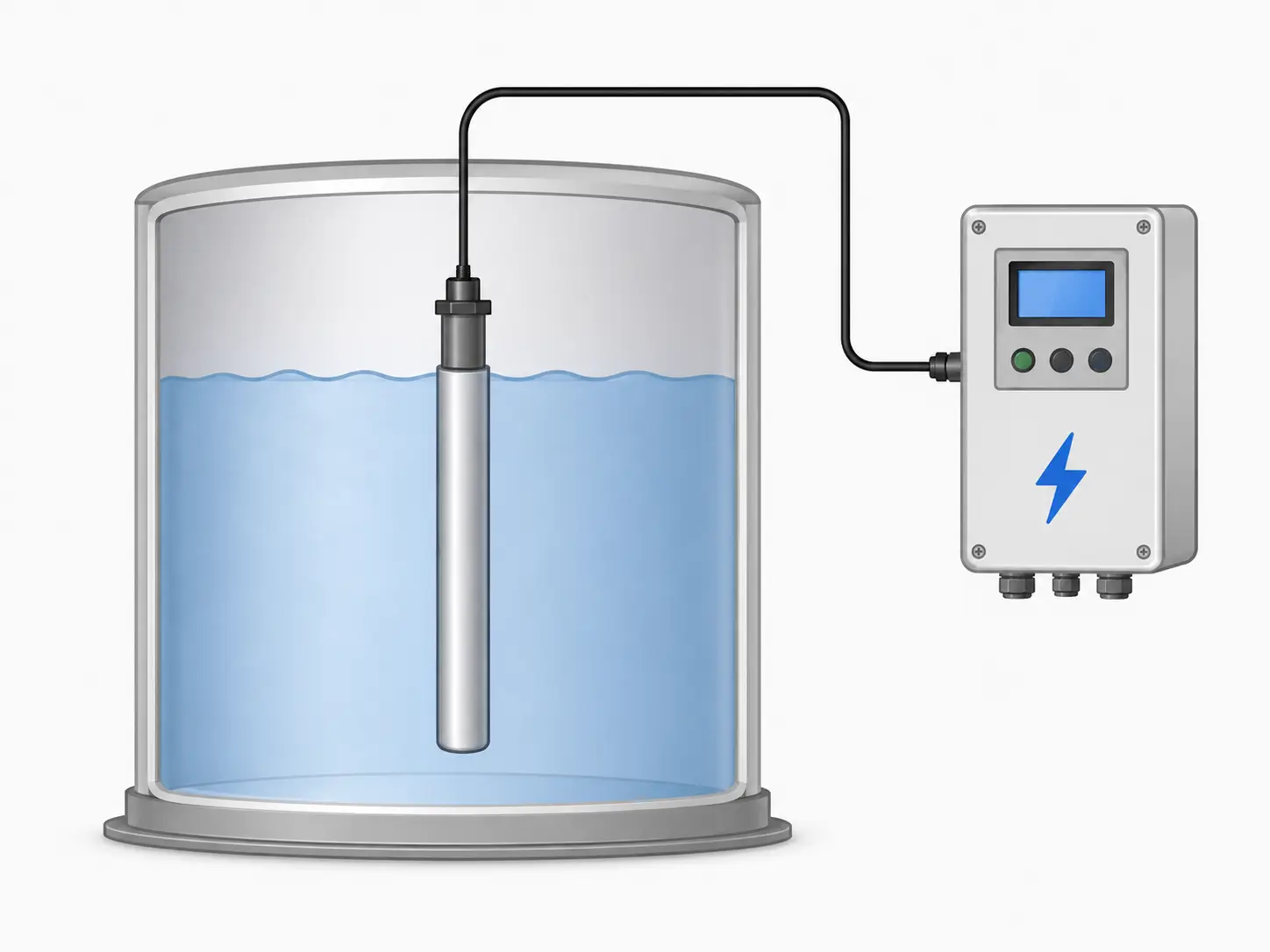
Powered Anode Rod
- Power Supply / Controller
- Controlled current from power supply
- Performance depends on the approved equipment and operating conditions
- Adjustable output & monitoring
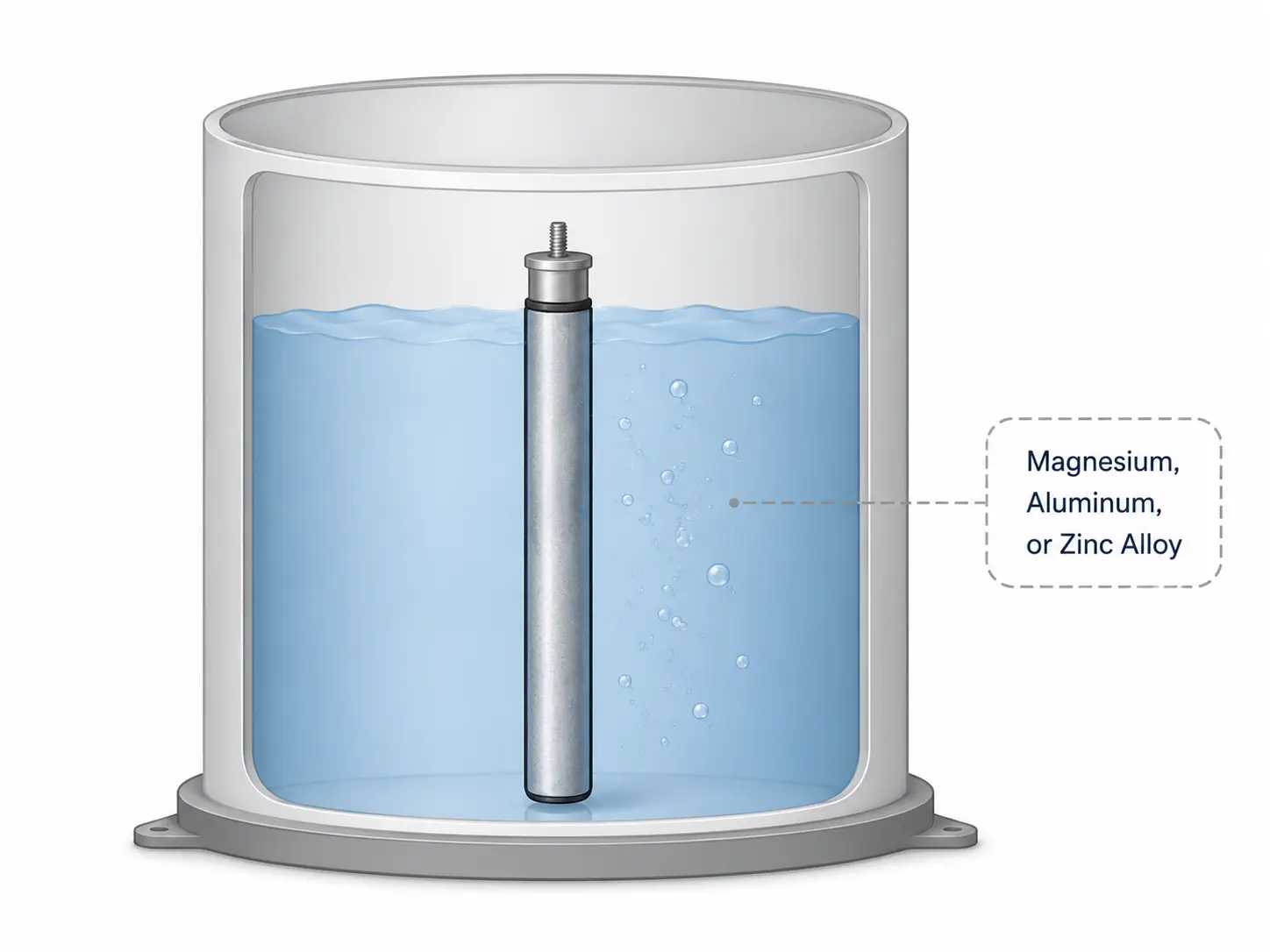
Sacrificial Anode Rod
- Magnesium, Aluminum or Zinc Alloy
- Sacrificial metal consumption
- Simple system & easy to install
- Gradual wear & periodic replacement
| Comparison Point | Powered Anode Rod | Sacrificial Anode Rod |
|---|---|---|
|
|
Tanks requiring controlled current output, reduced replacement frequency, or premium corrosion protection. | Tanks using simple consumable metal anode protection and periodic replacement. |
|
|
Uses controlled low-voltage current from a power supply or controller to support corrosion protection. | Uses consumable sacrificial metal such as magnesium, aluminum, or zinc alloy to protect the tank. |
|
|
Often uses an MMO coated titanium rod as the active anode element. | Uses a consumable metal rod that gradually dissolves during service. |
|
|
Designed for controlled electrical operation and stable current output. | Gradually consumes over time and may require periodic inspection or replacement. |
|
|
Requires anode rod, cable, power supply or controller, and electrical connection. | Usually requires only the sacrificial metal rod installed into the tank. |
|
|
Tank size, water chemistry, controller output, rod length, thread, cable, power input, and installation space. | Rod material, diameter, length, thread, water chemistry, replacement interval, and cost target. |
Selection note: Do not choose an anode rod by product name alone. Review tank design, water chemistry, available power supply, installation space, service expectations, replacement plan, and customer requirements before selection.
Installation Considerations for Powered Anode Rods
Proper installation helps a powered anode rod operate as intended. Tank compatibility, thread type, rod length, cable route, controller location, power connection, and water chemistry should be reviewed before installation.
Tank Compatibility
Rod length, thread type, mounting head, and tank design should match the installation position.
Rod Clearance
The rod should fit inside the tank without touching internal components or interfering with tank operation.
Cable Routing
Cable route should be protected from heat, sharp edges, moisture, and mechanical damage.
Controller Location
The controller or power supply should be installed in a dry, visible, and accessible position.
Electrical Connection
Correct connection supports controlled current output, stable operation, and safe system performance.
Water Chemistry
Conductivity, hardness, chloride, and pH may affect product selection and system behavior.
Replacement / Service Access
Future inspection, maintenance, or replacement access should be considered before installation.
Product Instructions
Installation should follow the agreed product manual, wiring guidance, or customer-specific requirements.
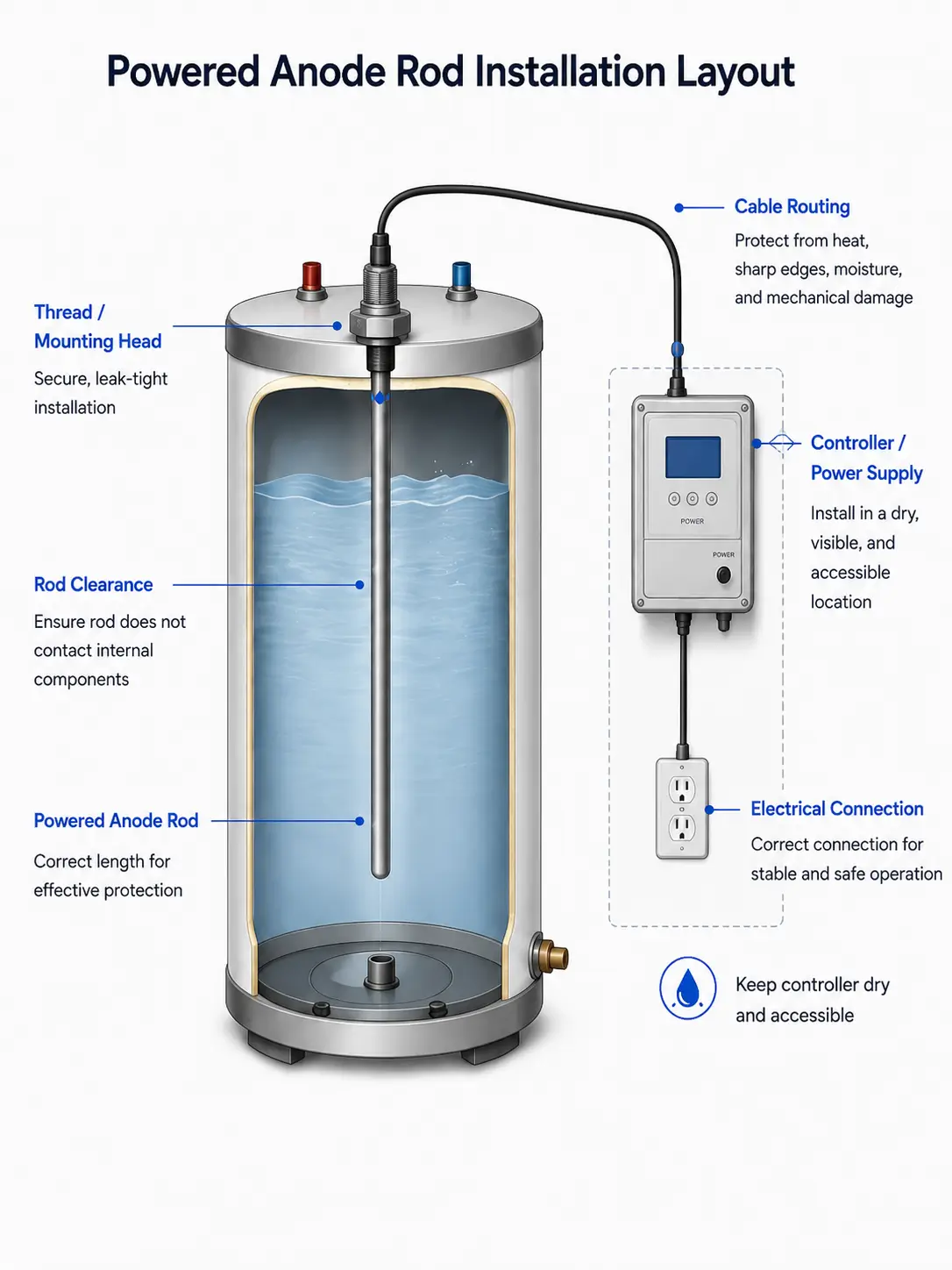
Selection note: Powered anode rod installation should be reviewed together with tank design, thread type, rod length, controller position, cable route, power supply, and water chemistry. Share your tank drawing, installation space, and electrical requirements for review.
Powered Anode Rod FAQs
What is a powered anode rod?
Is a powered anode rod the same as a magnesium anode rod?
What information is needed to select a powered anode rod?
Can HELE customize the rod length and thread?
Can one powered anode rod fit every water heater?
What documentation can HELE provide?
Inquiry
Request a Powered Anode Rod Review
Tell us about the tank, mounting opening, water conditions and electrical interface. HELE can review a suitable rod assembly and confirm which element, cable, connector and controller components are included in the quotation.
- ✓ Tank type, dimensions and installation clearance
- ✓ Thread and rod length or existing assembly drawing
- ✓ Water conditions and power/controller interface
- ✓ Quantity, OEM labeling and required documents
Prefer email?
sales@heletitanium.comFactory & Engineering Center
Titanium Valley, Baoji City, Shaanxi Province, China