
Grade 1 Titanium Foil
Specify: Grade/UNS · Thickness · Condition · Surface
Commercially pure titanium foil reviewed for formability, process environment, dimensions and the ordered specification.


Foil Coil · Slit Strip · Cut Sheet · Custom Thin Gauge
Source titanium foil and precision strip with grade, specification, thickness and units, width, tolerance, condition, surface, edge, coil configuration, inspection and documents aligned before quotation.
Before comparing quotations: freeze grade, specification revision, condition, thickness and unit, width, tolerances, surface, edge, coil/cut dimensions, tests, documents and commercial basis.
Titanium Foil Range
A nominal thickness alone is not a complete foil specification. Width, condition, surface, edge and coil configuration can determine whether the material works in the downstream process.
Specify: Grade/UNS · Thickness · Condition · Surface
Commercially pure titanium foil reviewed for formability, process environment, dimensions and the ordered specification.
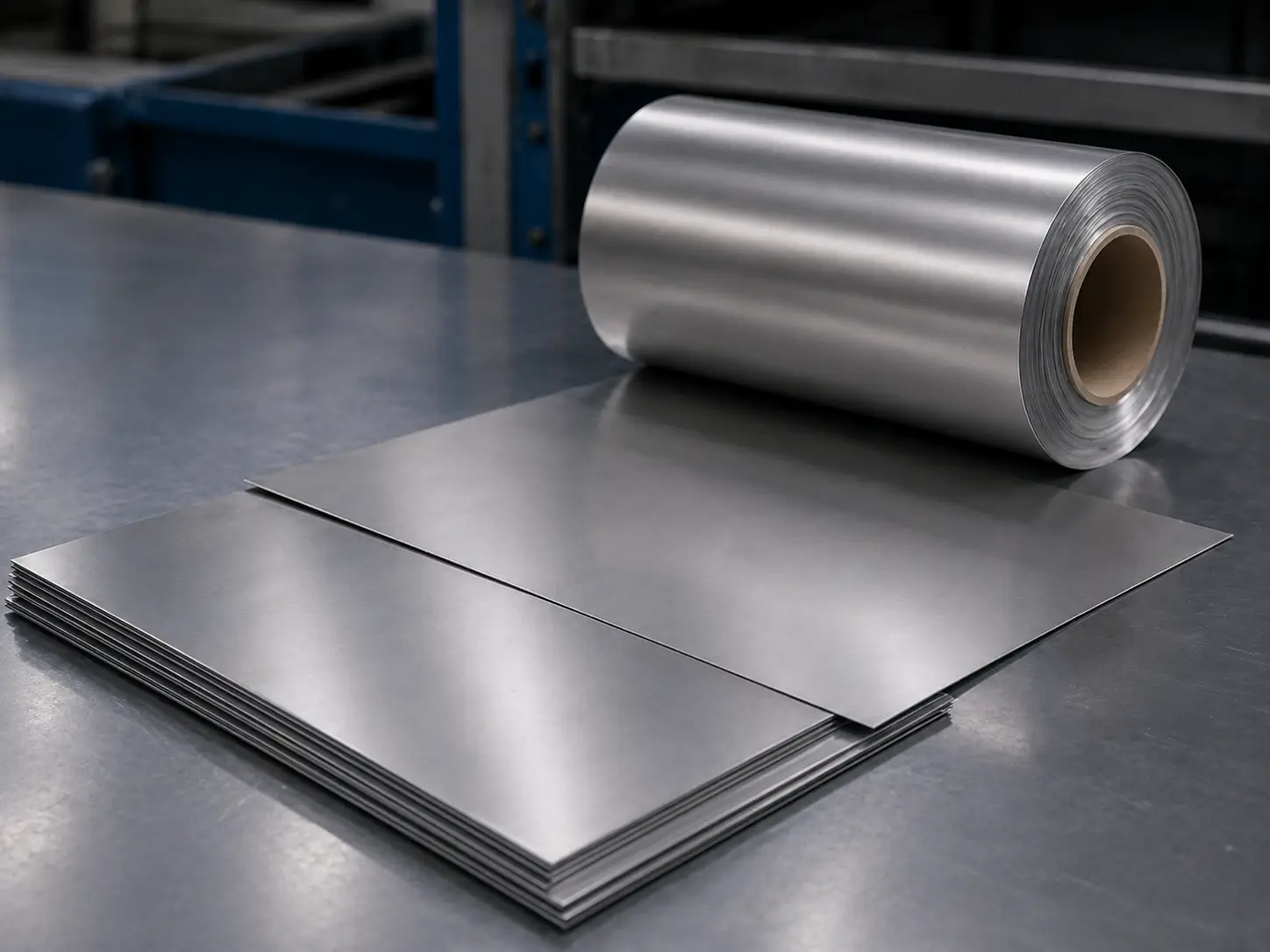
Specify: Grade/UNS · Thickness · Width · Tolerance
Commercially pure Grade 2 material supplied only where the grade, condition, dimensions and evidence are confirmed.

Specify: Thickness + unit · Width · Tolerance · Inspection
Very thin foil reviewed against a verified thickness-width route, surface criteria, handling and measurement plan.
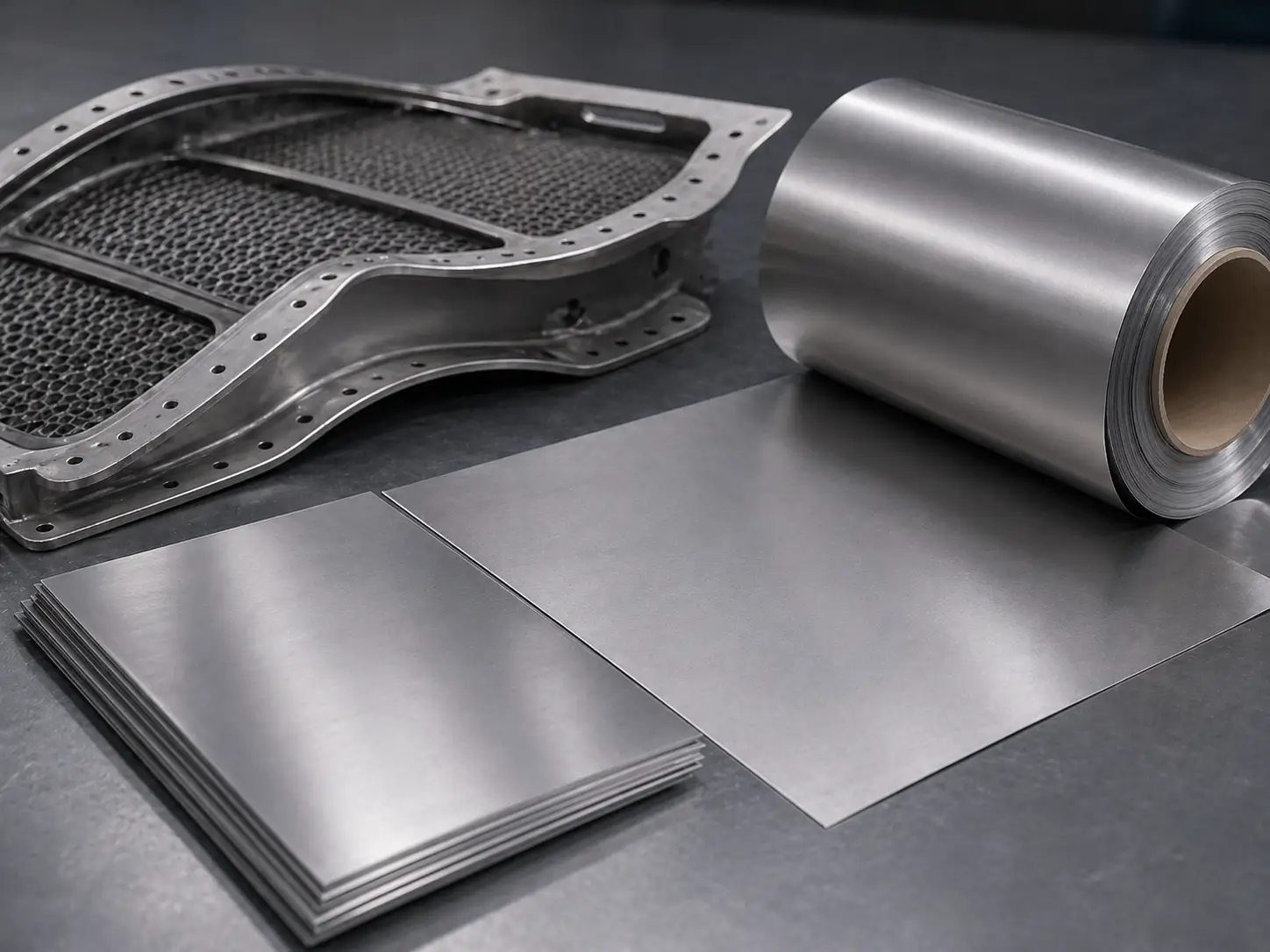
Specify: Alloy · Condition · Thickness · Properties
Ti-6Al-4V thin-gauge material reviewed separately from CP foil because rolling, condition and formability requirements differ.

Specify: Thickness · Width · ID/OD · Weight · Winding
Continuous coil supplied against an agreed configuration, edge, orientation, splice policy and protective packing.

Specify: Slit width · Tolerance · Burr · Camber · Edge
Narrow strip reviewed for width control, edge condition and compatibility with the customer’s continuous process.

Specify: Thickness · Width × length · Edge · Quantity
Sheets, blanks and flat profiles cut to stated dimensions and protected against creasing and edge damage.

Specify: Alloy · Condition · Surface · Cleanliness · Evidence
Non-standard material or surface requirements are reviewed against an approved specification and feasible processing route.
Thickness, width, tolerance, condition, surface, edge, coil configuration and availability are confirmed per quotation for each foil type.
Specification Mapping
ASTM B265 covers titanium and titanium-alloy strip, sheet and plate within its scope. Applicability to a thin-gauge order depends on the specified grade, condition, dimensions, revision and contractual requirements.
| Purchase form | Dimensions | Additional controls | Boundary |
|---|---|---|---|
| Foil coil | Thickness, width, ID, OD, weight | Winding, surface, edge, orientation, splice policy | Verify B265 or customer-spec applicability |
| Precision slit strip | Thickness, slit width, length/coil | Width tolerance, burr, camber, flatness, edge | Capability depends on thickness × width × condition |
| Cut foil sheet / blank | Thickness, width, length, profile | Edge, flatness, surface protection, quantity | Differentiate from thicker sheet/plate orders |
| Application-qualified foil | All material and geometry inputs | Process-specific tests and qualification plan | Raw material does not qualify the final component |
Foil Selection Guide
Foil, strip and sheet terminology varies. The order should rely on measurable dimensions and a named delivery form, not a universal thickness cutoff.
Coil, slit strip, cut sheet or blank; forming, stamping, etching, bonding, coating or assembly.
Grade, UNS, specification revision, condition and required properties.
Thickness with unit, width, tolerances, flatness, camber, surface, cleanliness and edges.
ID/OD/weight, winding, orientation, inspection, traceability, labels and packing.
Titanium foil and strip are cold rolled in our own facility. Annealing, cleaning, slitting, cutting and the inspection scope are confirmed by quotation against the agreed order basis.
Product, process and specification
Grade, condition, source and conversion
Roll, anneal, clean, slit or cut as agreed
Thickness, width, shape, surface and records
Identity, coil protection, documents and packing
Inside HELE Titanium
Cold rolling, annealing, slitting, cutting and inspection are carried out in our own facility. The inspection scope and documentation for a specific order are agreed in the quotation.
Application Review
These application groups require their own component-level design and qualification; the material certificate alone does not establish final performance.

Define thickness, surface, cleanliness, etching/bonding/stamping route, dimensional control and application-specific qualification.
Review the application context →
Define material specification, condition, properties, forming route, traceability and customer qualification requirements.
Review the application context →
Define actual component function, media, temperature, electrical duty, coating interface and validation responsibility.
Review the application context →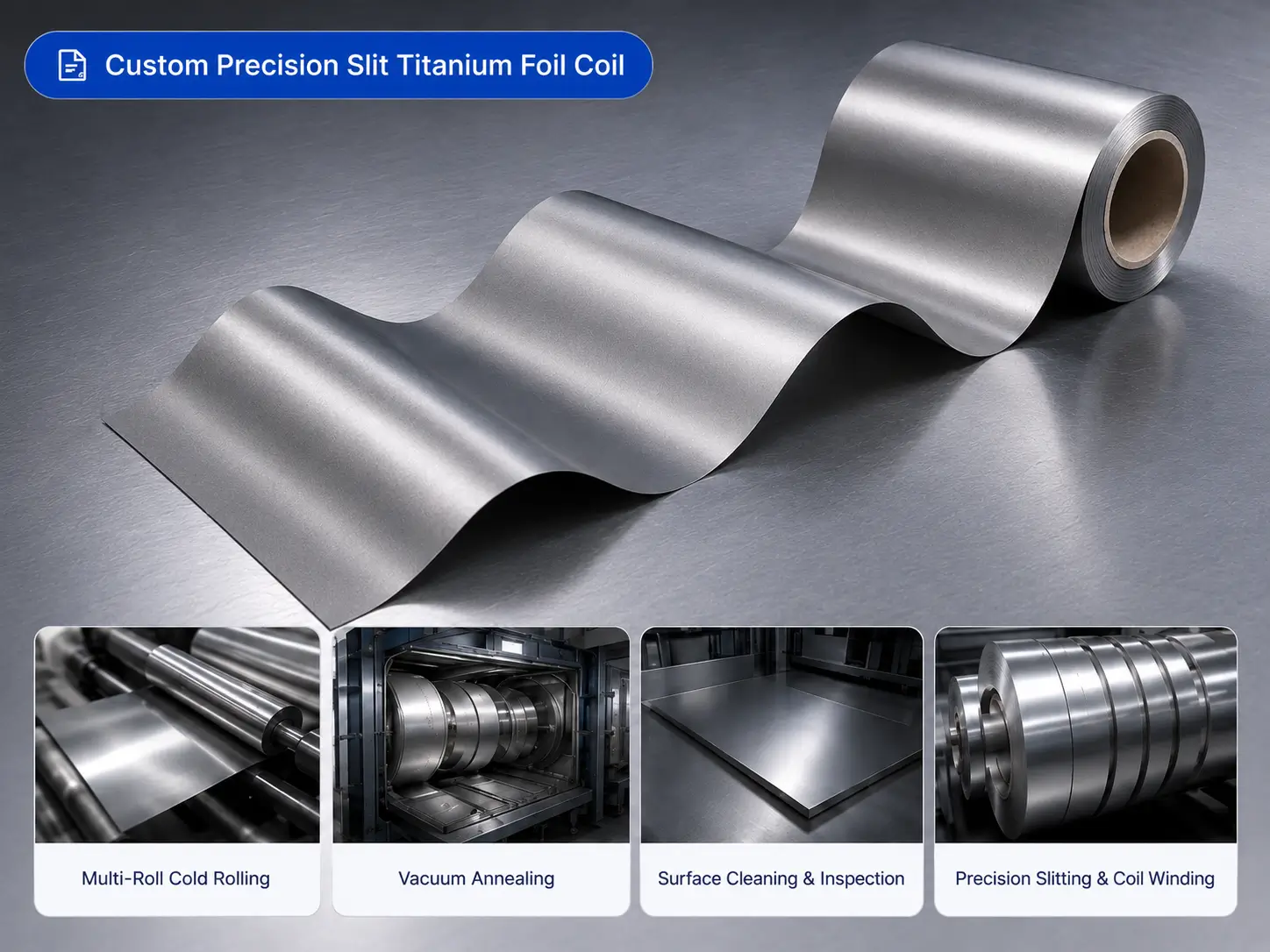
Define thickness-width combination, edge/burr, camber, coil interface, cut geometry, cleanliness, inspection and packing.
Review the application context →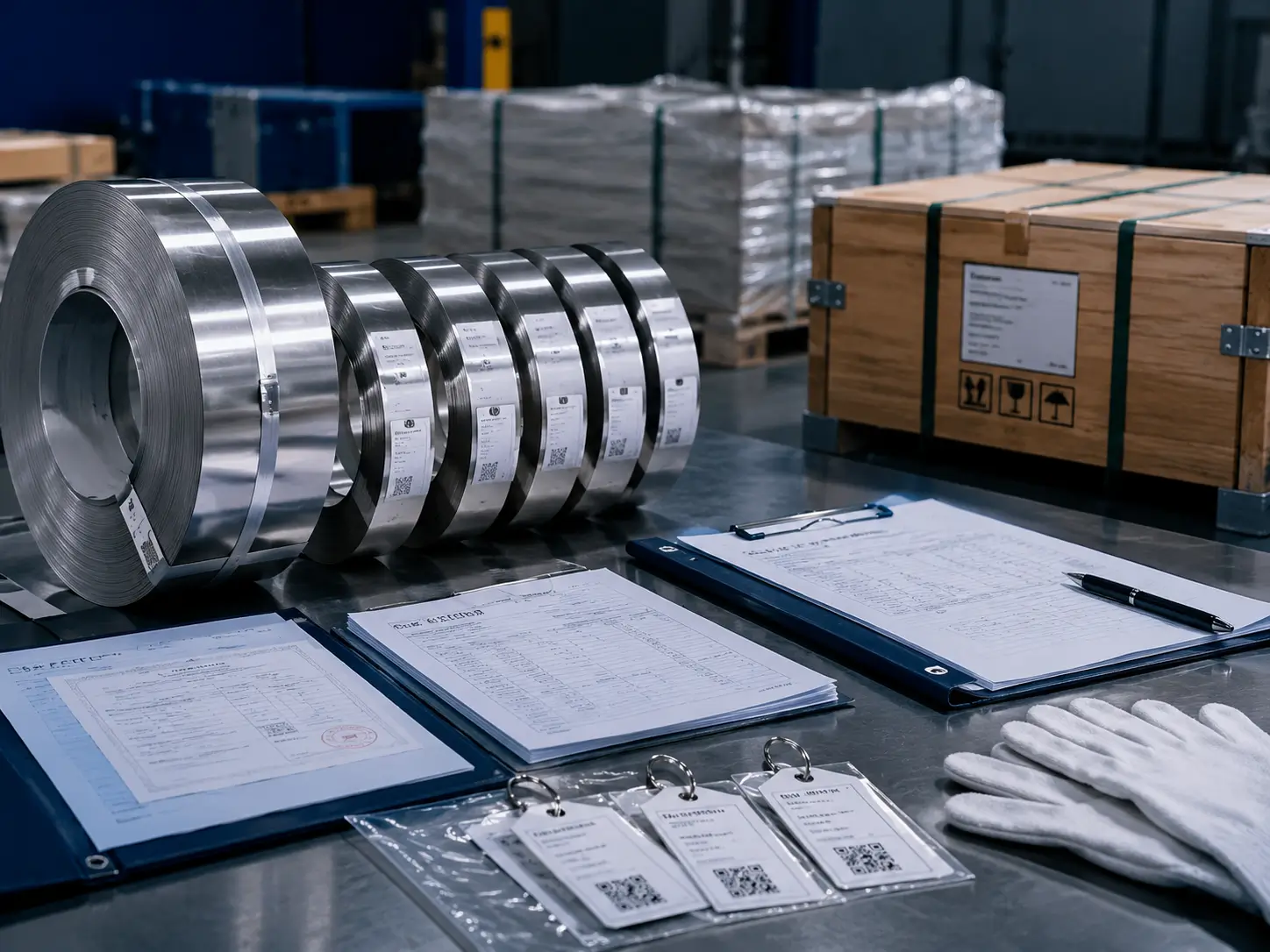
Supply Scope & Qualification
Inspection must connect the ordered material and dimensions to the released coil or cut lot. A generic “precision” or “clean” claim is not an acceptance method.
Confirm material, standard revision, condition, thickness and units, width, tolerances, surface, edge, coil/cut configuration, inspection, traceability, packing, exceptions and delivery terms.
Frequently Asked Questions
Provide grade, governing specification and revision, nominal thickness and tolerance, width and tolerance, condition, surface, edge, coil or cut-sheet dimensions, quantity, inspection, documents, packing and destination.
These commercial terms can overlap and do not have one universal thickness cutoff. Use the governing specification, dimensions, delivery form and purchase order to define the product.
No. ASTM B265 covers titanium and titanium-alloy strip, sheet and plate within its scope. Applicability depends on the ordered grade, condition, dimensions and revision; other foil requirements may need a customer or project specification.
Always include units and nominal thickness, for example millimetres, micrometres or inches, plus tolerance and measurement method. A query such as 0.005 is incomplete without the unit.
State coil ID, maximum OD, net weight, width, edge and burr limits, camber, winding direction, orientation, splice policy, core and protective packaging where applicable.
No. Define the method, sampling, acceptance criteria and report requirement. Generic words such as bright, clean or pinhole-free are not complete acceptance criteria.
Provide grade, specification, thickness and units, width, condition, surface and delivery form where known. Open technical and commercial items can be reviewed before quotation.