
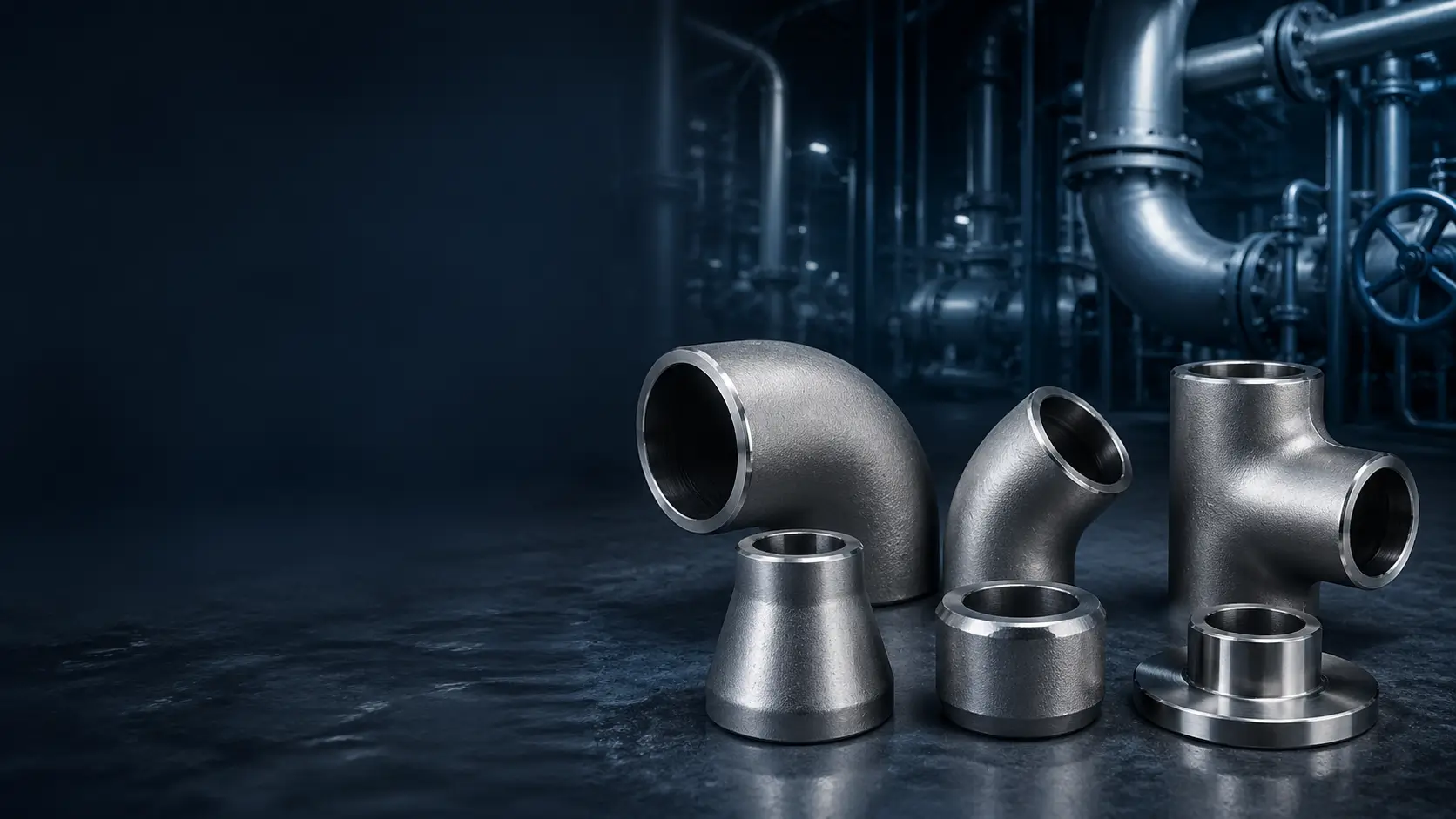
Titanium Pipe Fittings Manufacturer — Elbows, Tees, Reducers & Stub Ends
Source titanium pipe fittings including elbows, tees, reducers, caps and stub ends, with grade, NPS or DN, Schedule or wall thickness, seamless or welded construction, dimensional standard, end preparation, inspection and documentation reviewed to your piping specification.
- Elbows · Tees · Reducers · Caps · Stub Ends
- ASTM B363 Fittings*
- NPS / DN · Schedule / Wall Thickness
- Seamless · Welded*
- MTC · Traceability · Dimensional Inspection
Titanium Pipe Fitting Buying Essentials
Titanium pipe fitting selection depends on fitting type, titanium grade, NPS or DN, Schedule or wall thickness, construction, dimensional standard, end preparation and inspection requirements. Define these parameters before quotation to confirm compatibility with the mating pipe and piping specification.
Fitting Type & Construction
Define the required fitting geometry and whether the component is seamless, welded or otherwise fabricated according to the applicable product specification and project requirements.
Review: Elbow · Tee · Reducer · Cap · Stub End
Construction: Seamless · Welded · Fabricated*
Grade & Material Specification
Confirm the titanium grade, UNS designation and applicable material or product specification according to the service environment, design requirements and purchase order.
Review: Grade · UNS · ASTM / ASME Specification · PO Requirements
NPS, Schedule & End Preparation
Specify the nominal pipe size, wall-thickness series and required welding-end preparation to match the mating pipe and piping-system specification.
Review: NPS / DN · Schedule / Wall Thickness · End Preparation
When Applicable: LR / SR · Branch Size · Bevel Requirement
Inspection & Documentation
Define dimensional, material, weld, marking and documentation requirements according to the fitting construction, applicable specification and purchase order.
Review: MTC · Heat Number · Dimensional Inspection · Weld / NDE* · Marking
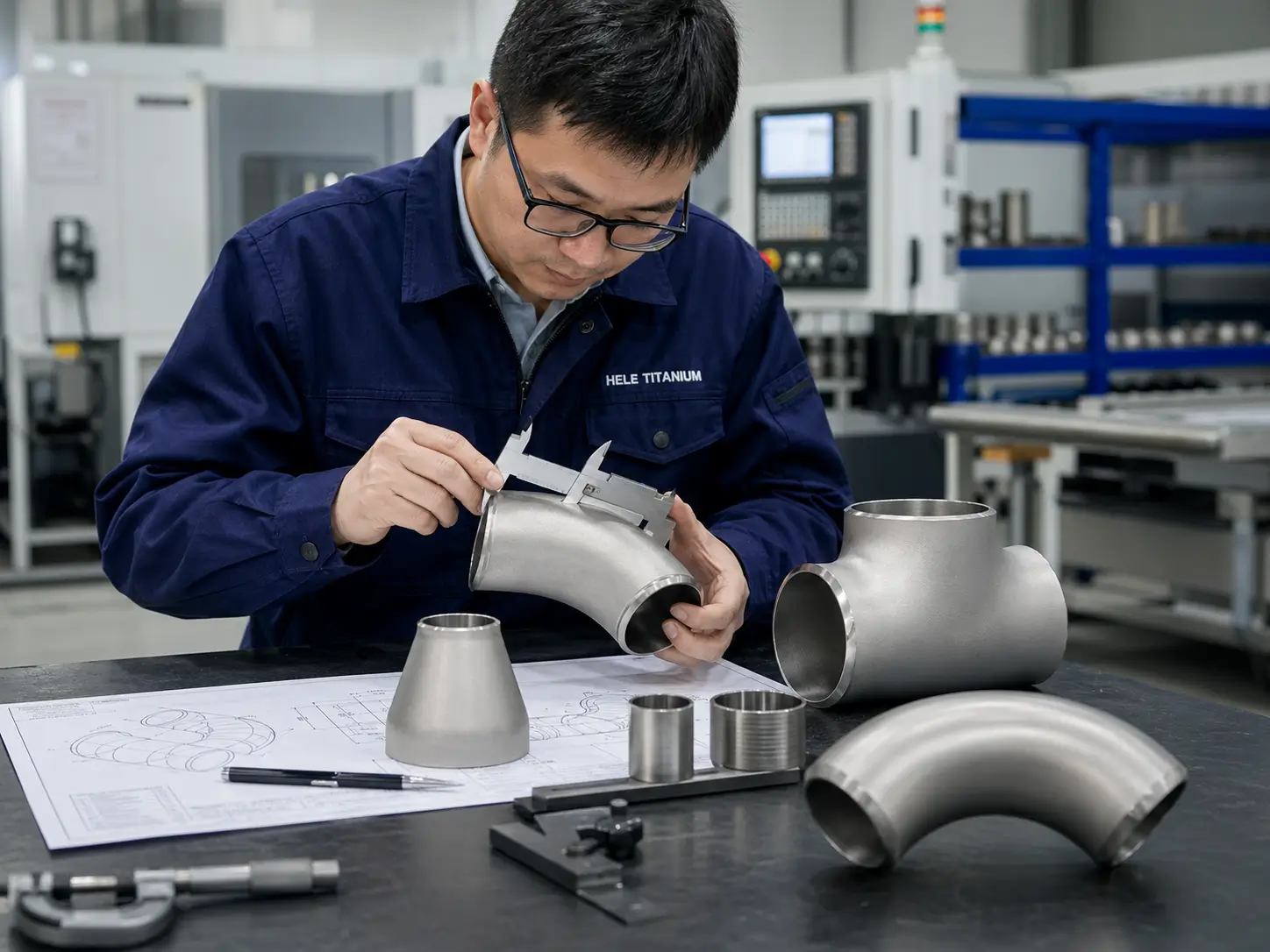
Designed for: chemical processing piping, seawater systems, desalination equipment, heat exchangers, pump and valve assemblies, pressure piping, electrochemical equipment, hydrogen systems and custom industrial titanium piping projects.
Titanium Pipe Fitting Types
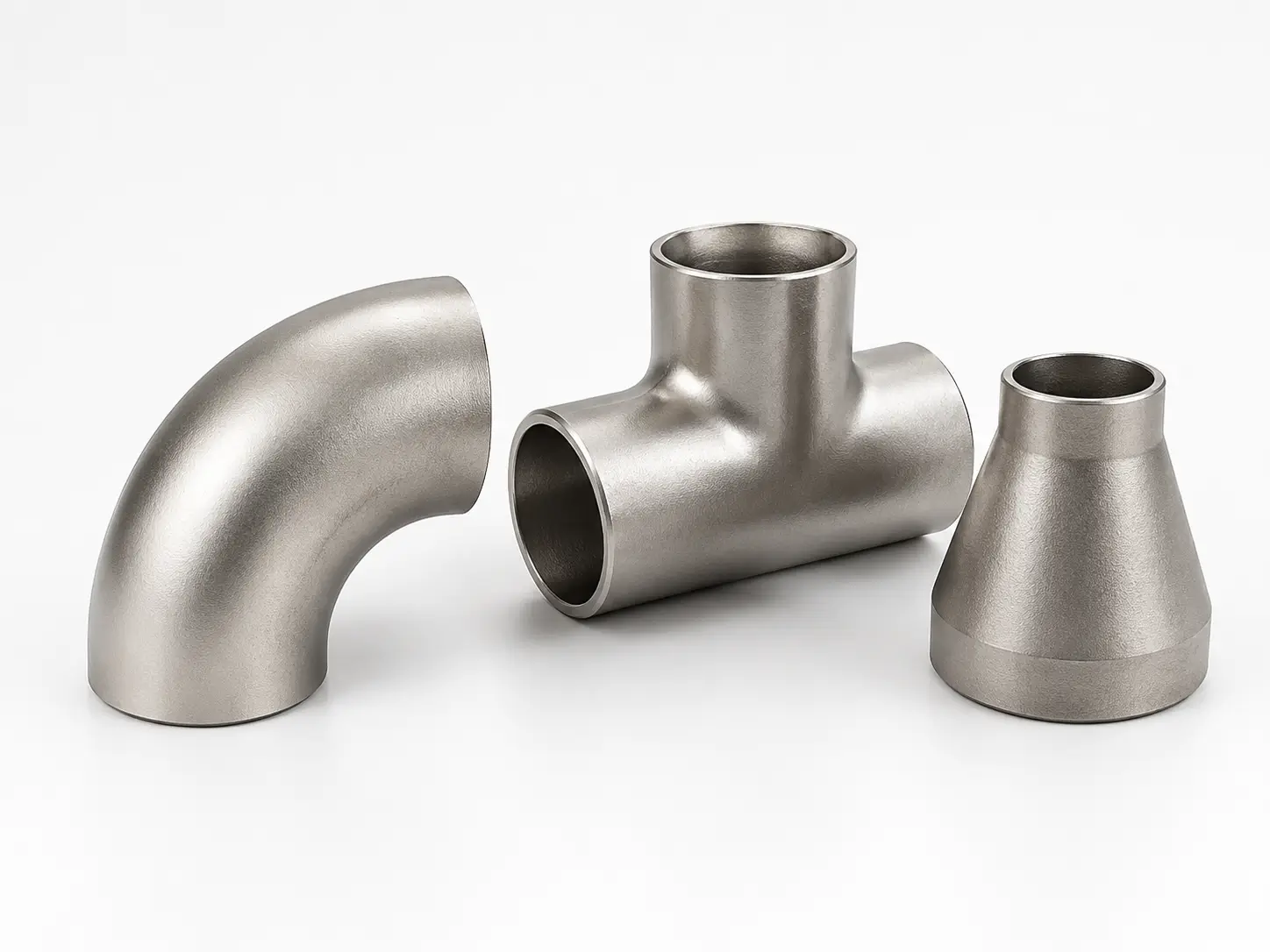
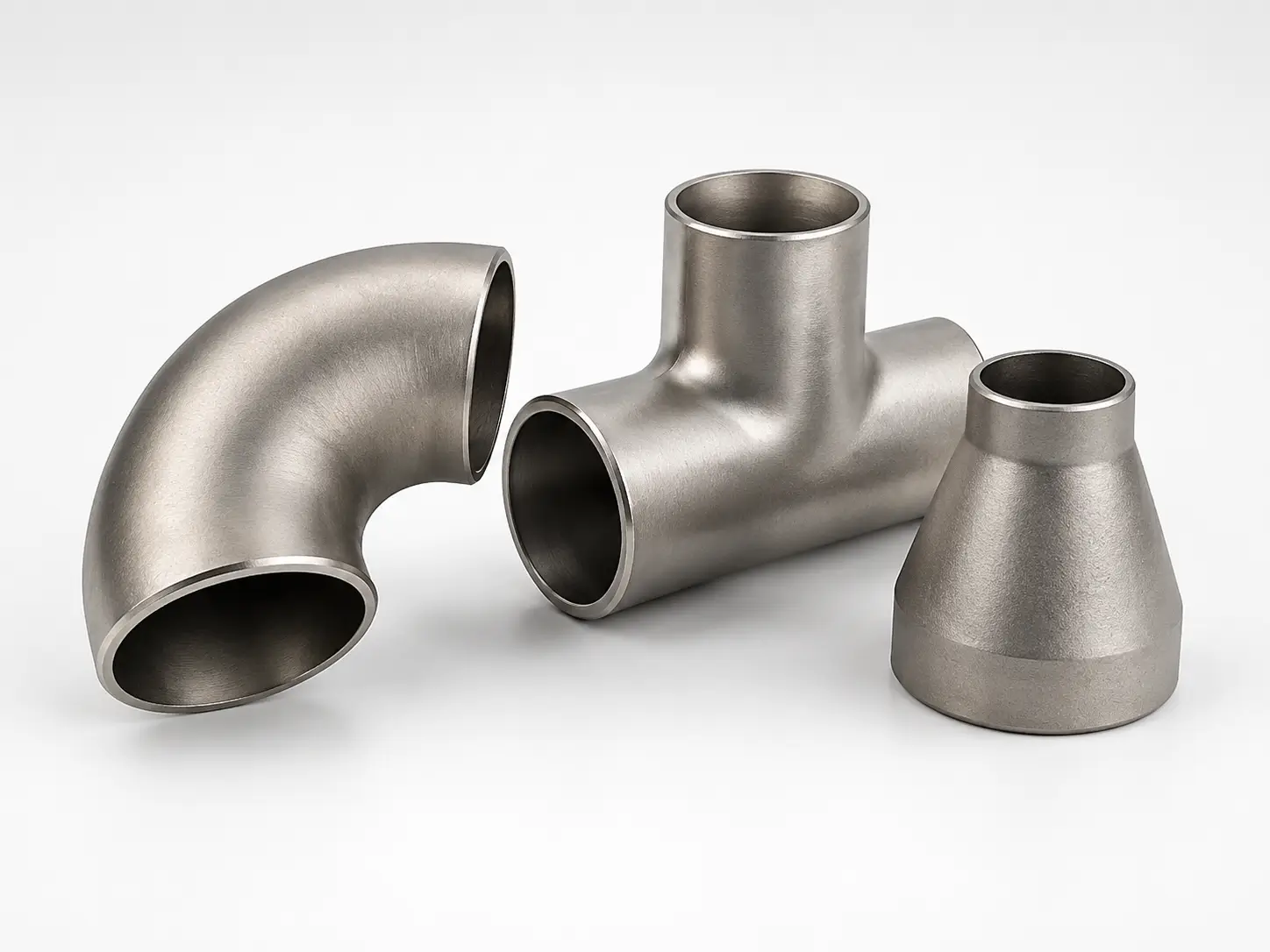
HELE manufactures titanium pipe fittings for butt-weld piping systems, including elbows, returns, tees, reducers, caps and stub ends, with grade, NPS or DN, Schedule or wall thickness, construction, dimensional standard and end preparation reviewed to your project specification.
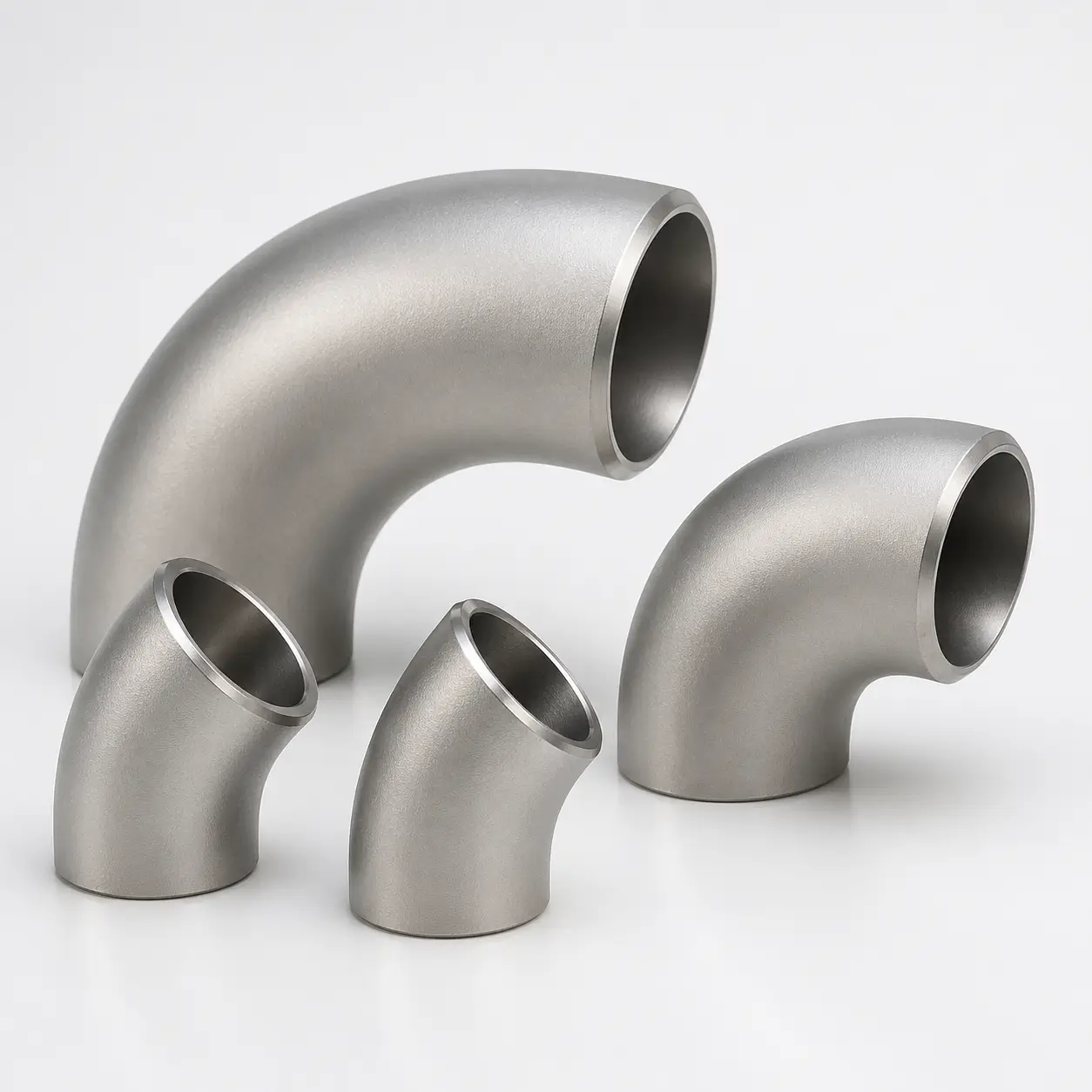
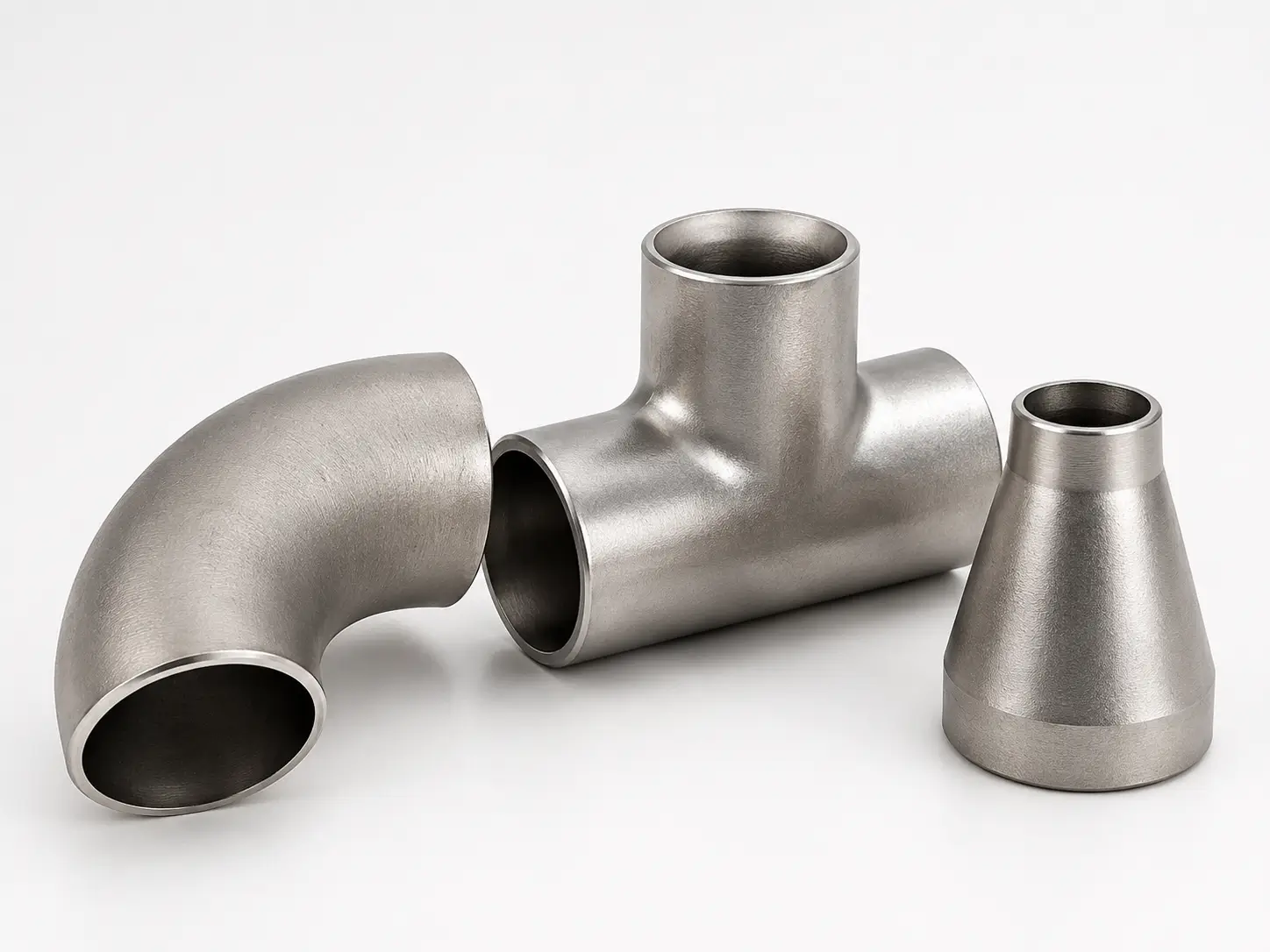
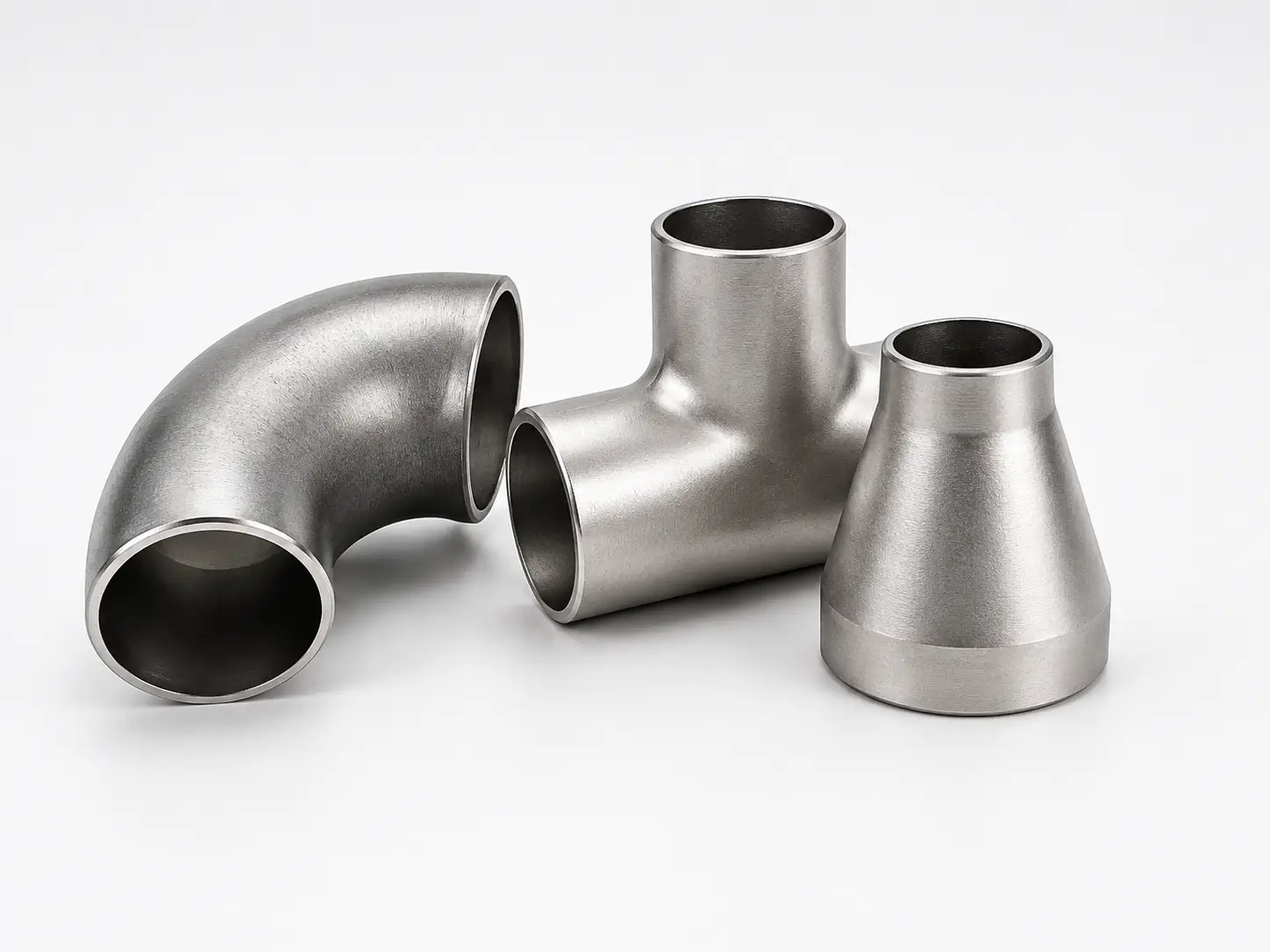
Titanium 45° & 90° Elbows
Titanium elbows are manufactured for directional changes in piping systems, with angle, radius, size, wall thickness and construction reviewed against the applicable dimensional and piping requirements.
45° / 90° · LR / SR* · NPS / DN · Schedule / WT
Seamless · Welded*
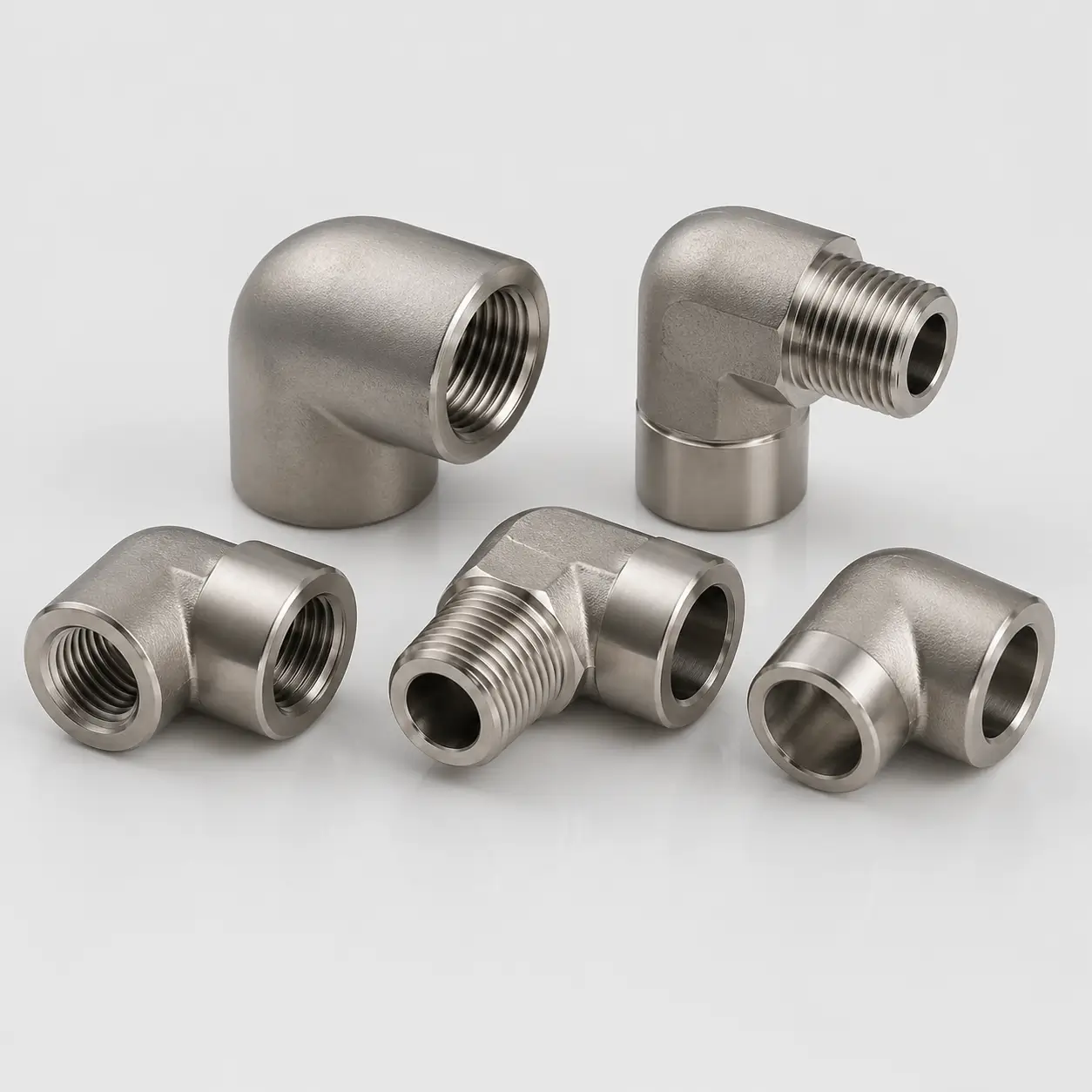
Titanium 180° Returns
Titanium return bends are used where the piping layout requires a 180-degree change in flow direction, with radius, center-to-center dimensions, wall thickness and construction confirmed for the project.
180° Return · Radius · NPS / DN · Schedule / WT
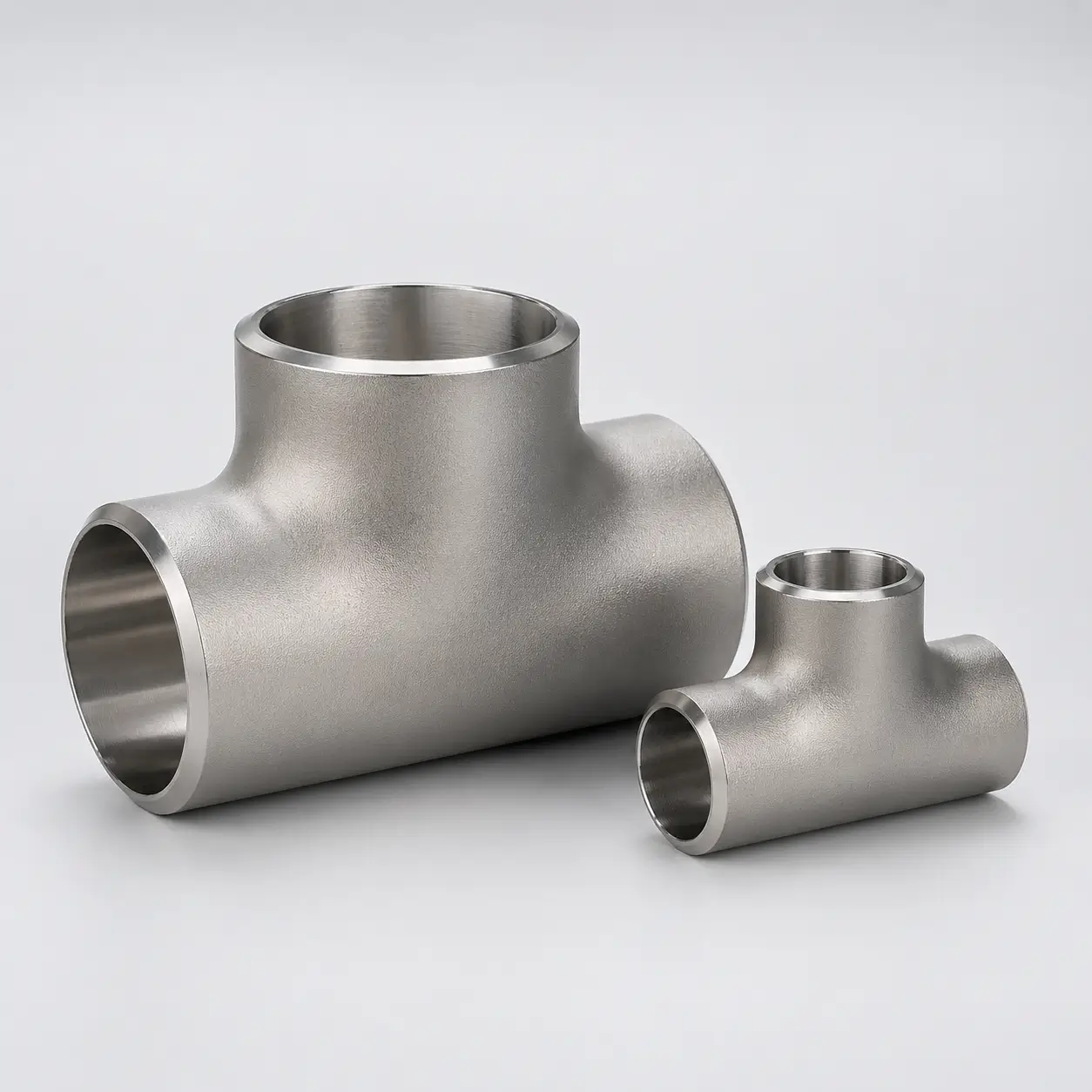
Titanium Equal Tees
Equal titanium tees provide a branch connection with matching run and branch sizes, with dimensions, wall thickness, construction and end preparation reviewed against the piping specification.
Run Size · Branch Size · Schedule / WT · Construction
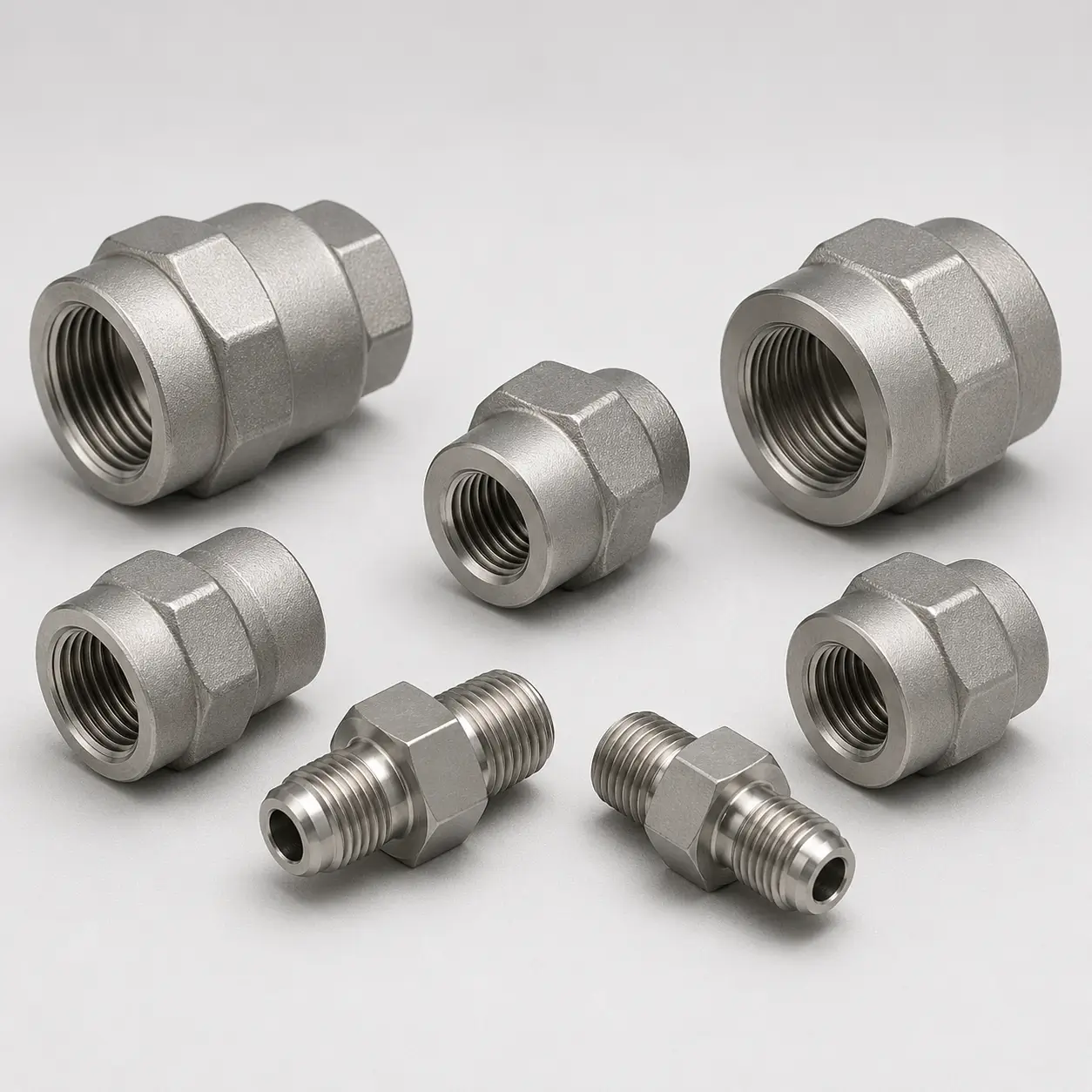
Titanium Reducing Tees
Reducing titanium tees provide branch connections where the branch size differs from the main run, requiring both run and branch dimensions to be defined in the RFQ.
Run NPS / DN · Branch NPS / DN · Schedule / WT
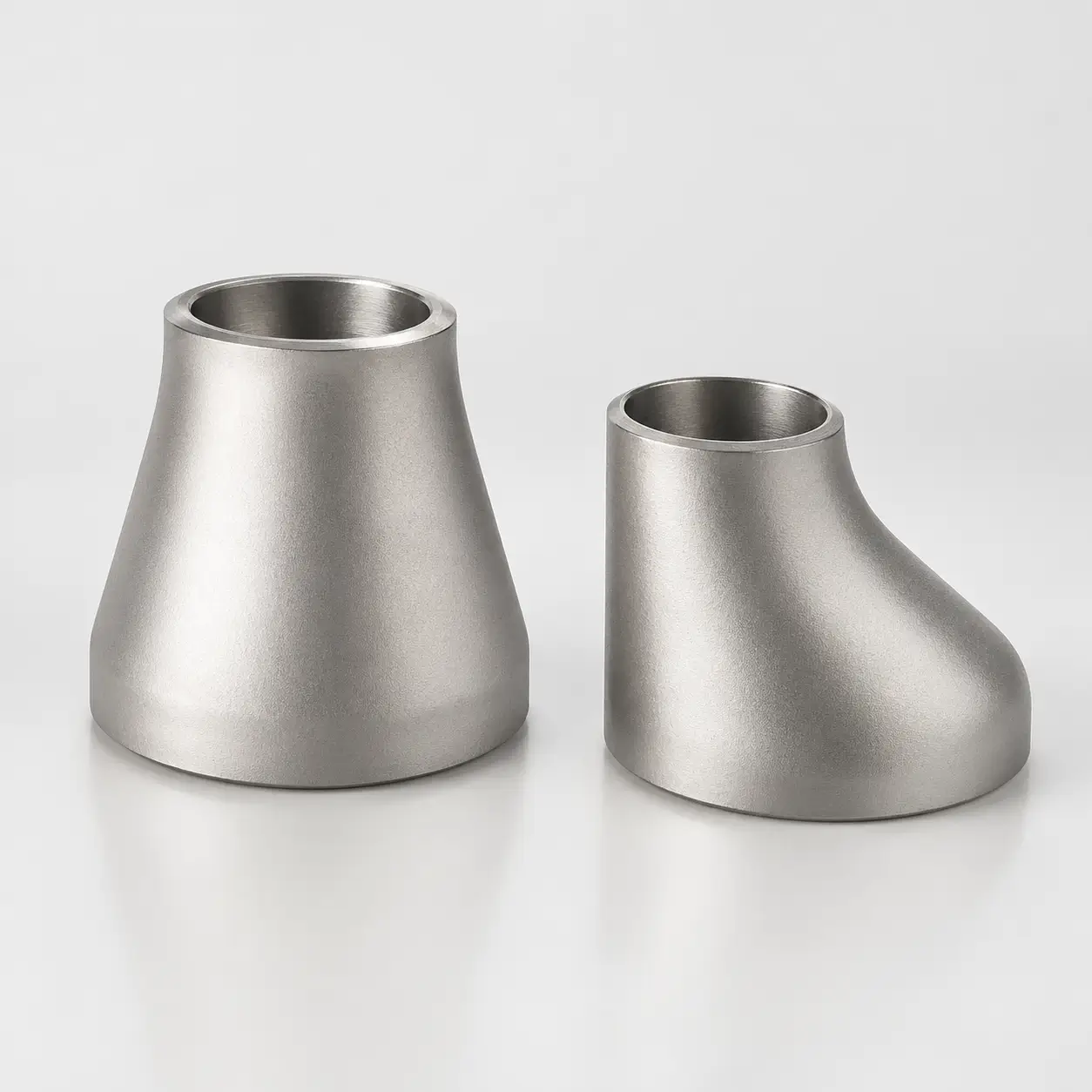
Concentric Titanium Reducers
Concentric reducers transition between different pipe sizes along a common centerline, with inlet size, outlet size, wall requirement and overall dimensions reviewed to the piping specification.
Large End · Small End · Schedule / WT · Length
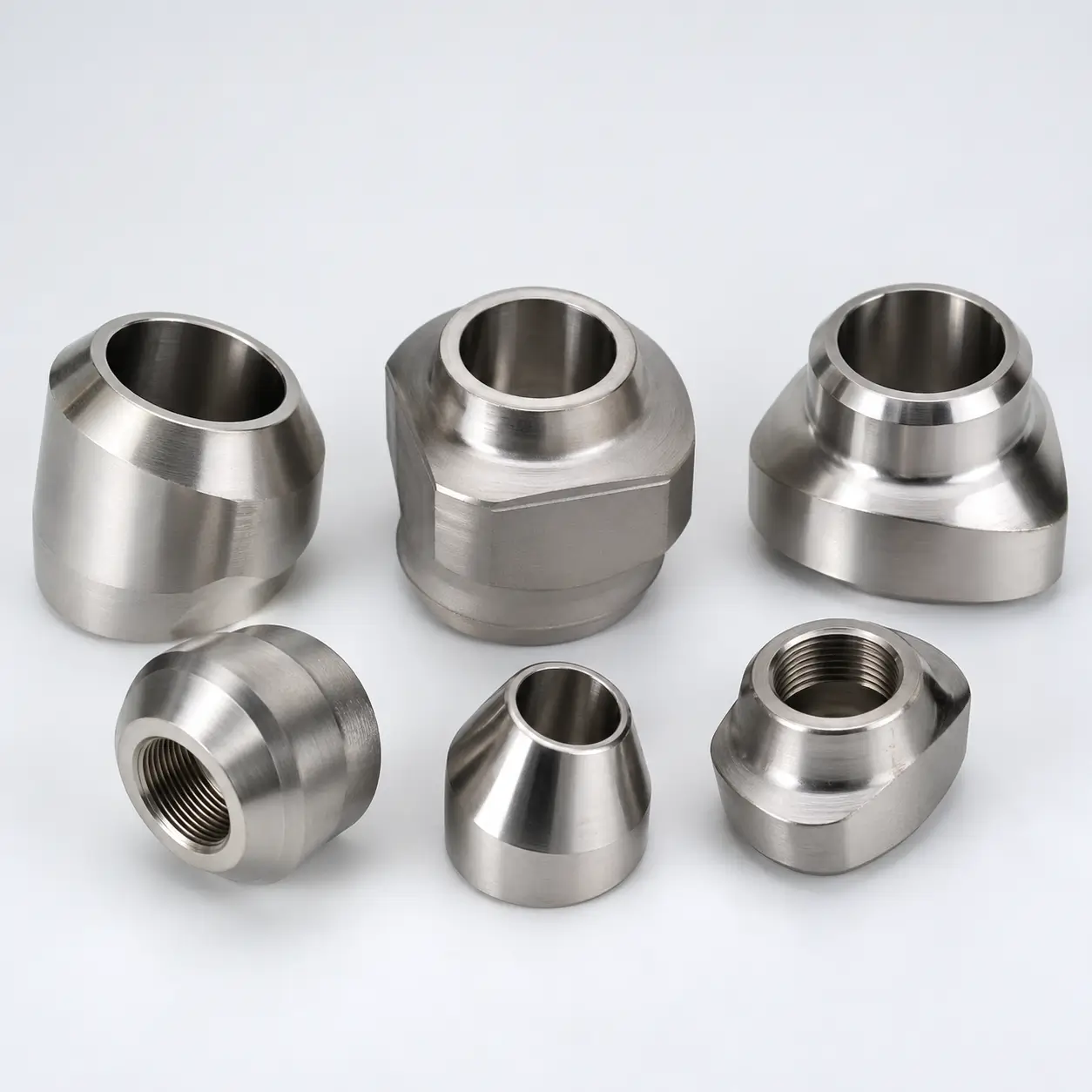
Eccentric Titanium Reducers
Eccentric reducers transition between different pipe sizes with offset centerlines and are specified by large-end size, small-end size, orientation and wall requirements.
Large End · Small End · Orientation · Schedule / WT
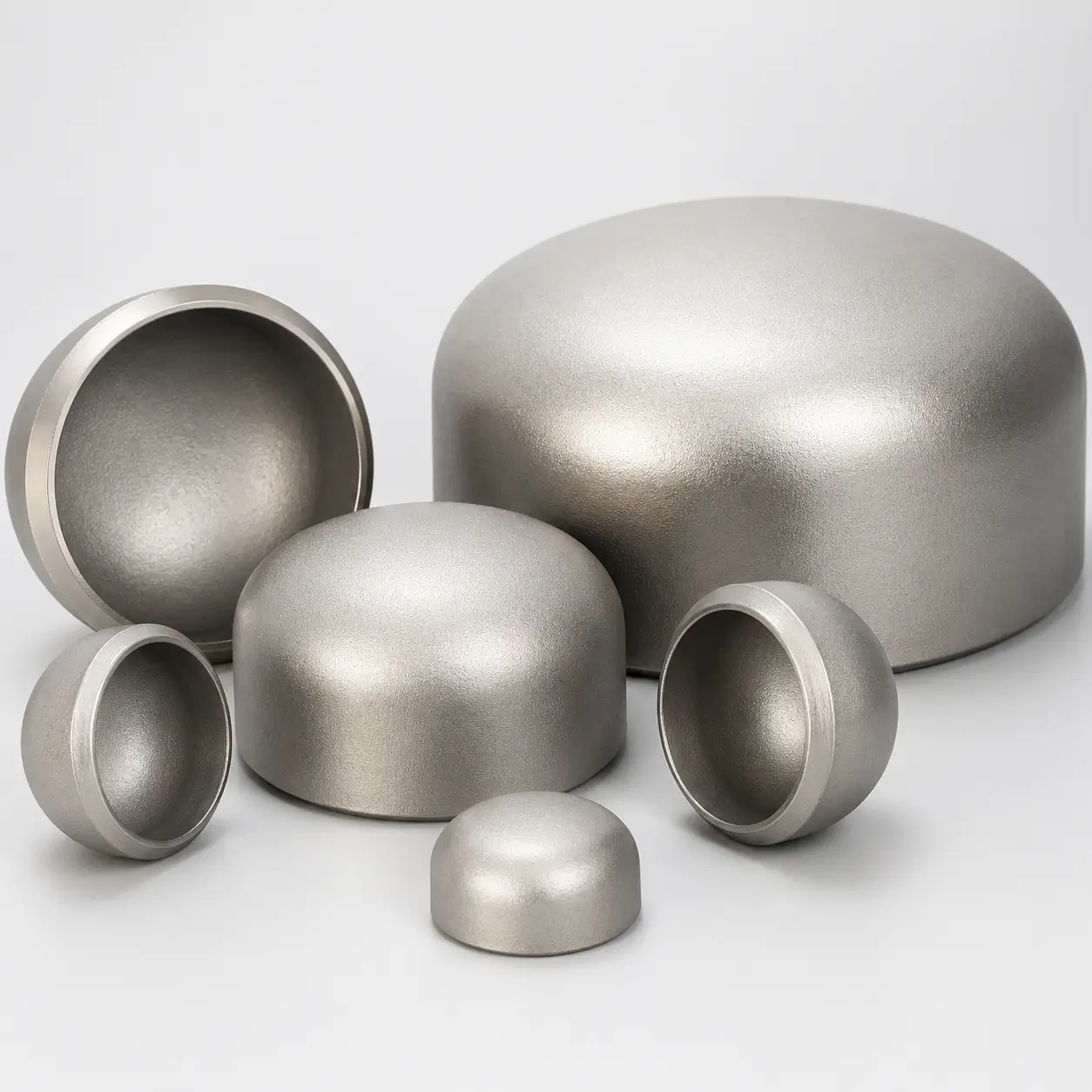
Titanium Pipe Caps
Titanium caps are manufactured for terminating butt-weld piping ends, with nominal size, wall thickness, depth, construction and end preparation reviewed against the specified piping requirements.
NPS / DN · Schedule / WT · Depth · Construction
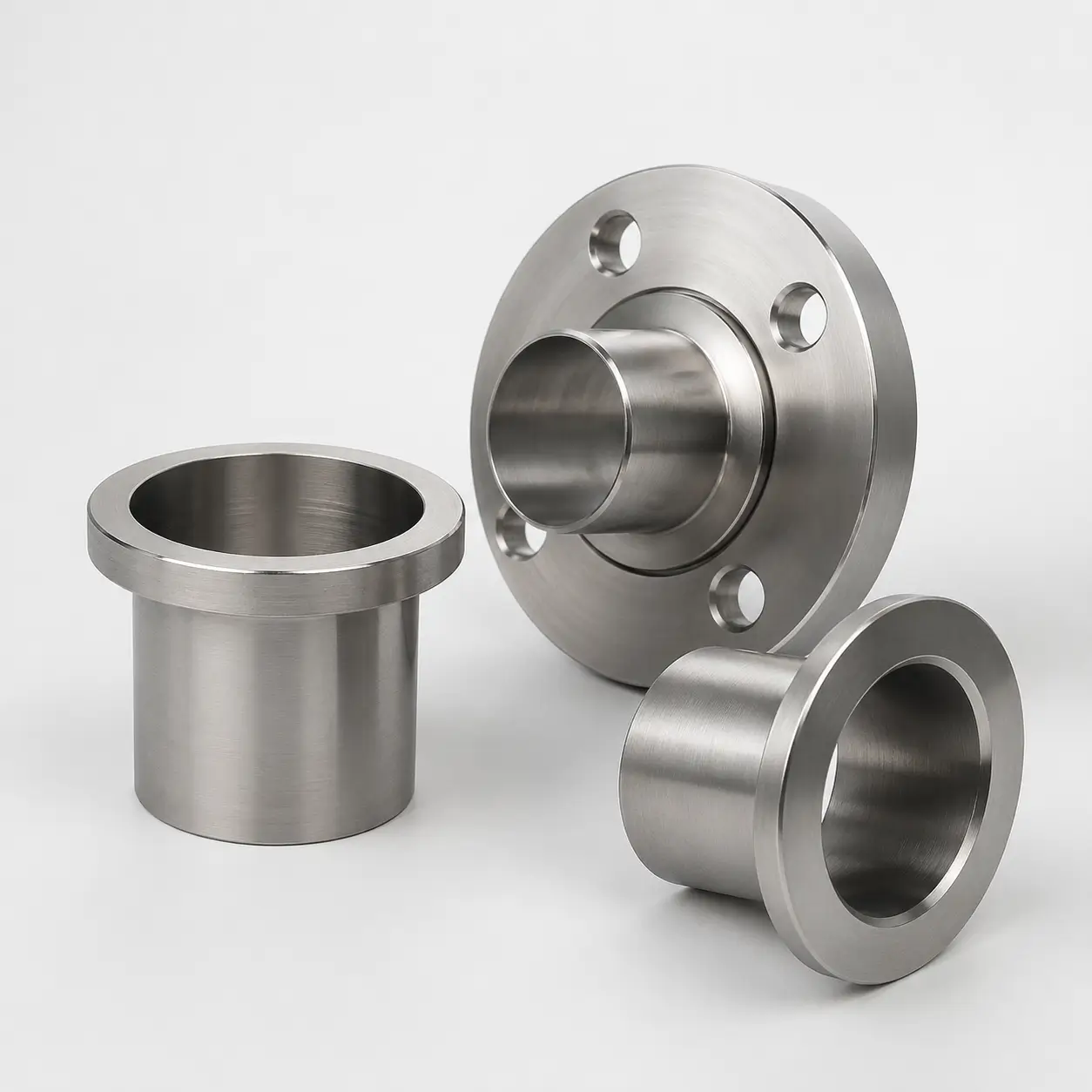
Titanium Lap-Joint Stub Ends
Titanium stub ends are manufactured for lap-joint piping assemblies, with stub-end type, pipe size, wall thickness, lap dimensions and mating-flange requirements reviewed together.
Stub-End Type · NPS / DN · Schedule / WT · Lap Dimensions
Mating Pipe · Lap-Joint Flange · End Preparation
Pipe Fittings vs Flanges
This page covers titanium pipe fittings such as elbows, returns, tees, reducers, caps and stub ends. Titanium flanges are specified separately by flange type, pressure class, facing, drilling pattern and applicable flange standard. Stub-end and lap-joint flange requirements can be reviewed together as one piping assembly.
Upload MTO or Isometric
Titanium Grades for Pipe Fittings
Select the titanium grade according to the service environment, mechanical requirements, piping design and applicable material specification. Final availability is confirmed by fitting type, size, wall thickness, construction and purchase requirements.
UNS R50400 · Commercially Pure Titanium
Grade 2 provides a practical balance of strength, ductility, fabrication performance and corrosion resistance for a broad range of industrial titanium piping and fitting requirements.
- Selection Focus: General Industrial Service · Fabrication · Welded Piping Systems
- Fitting Review: Elbows · Tees · Reducers · Caps · Stub Ends*
UNS R56400 · Ti-6Al-4V
Grade 5 offers higher strength than commercially pure titanium and can be reviewed for piping components where alloy strength, dimensions, fabrication route and project-specific design requirements justify its use.
- Selection Focus: Higher Strength · Alloy Components · Project-Specific Review
- Fitting Review: Selected Fitting Types · Custom Requirements · Drawing-Based Components*
UNS R52400 · Ti-0.2Pd
Grade 7 is a palladium-alloyed commercially pure titanium grade that can be reviewed for corrosion-sensitive piping applications where the project material specification calls for enhanced corrosion performance.
- Selection Focus: Corrosion-Sensitive Service · Chemical Processing · Project Material Selection
- Fitting Review: Elbows · Tees · Reducers · Caps · Stub Ends*
UNS R53400 · Ti-0.3Mo-0.8Ni
Grade 12 combines titanium with molybdenum and nickel and can be reviewed for industrial piping projects requiring a specific balance of strength, fabrication characteristics and corrosion performance.
- Selection Focus: Industrial Piping · Corrosion Review · Project-Specific Material Selection
- Fitting Review: Selected Butt-Weld Fittings · Custom Project Requirements*
Grade Selection Is Only One Part of Piping Design Titanium grade alone does not determine the allowable pressure or temperature of a piping system. Fitting geometry, wall thickness, construction, dimensional standard, welding, piping code, service temperature and system design must also be evaluated by the responsible project engineer.
*Grade availability depends on fitting type, size, wall thickness, construction, manufacturing route and purchase requirements.
Need help selecting the right titanium grade for your pipe fitting application?
How to Choose the Right Titanium Pipe Fittings
Follow these 6 engineering steps to ensure the right fitting type, titanium grade, dimensions, end preparation, pressure rating and documentation for your piping system.
Confirm Fitting Type
Select the fitting type that matches your piping layout and connection requirements.
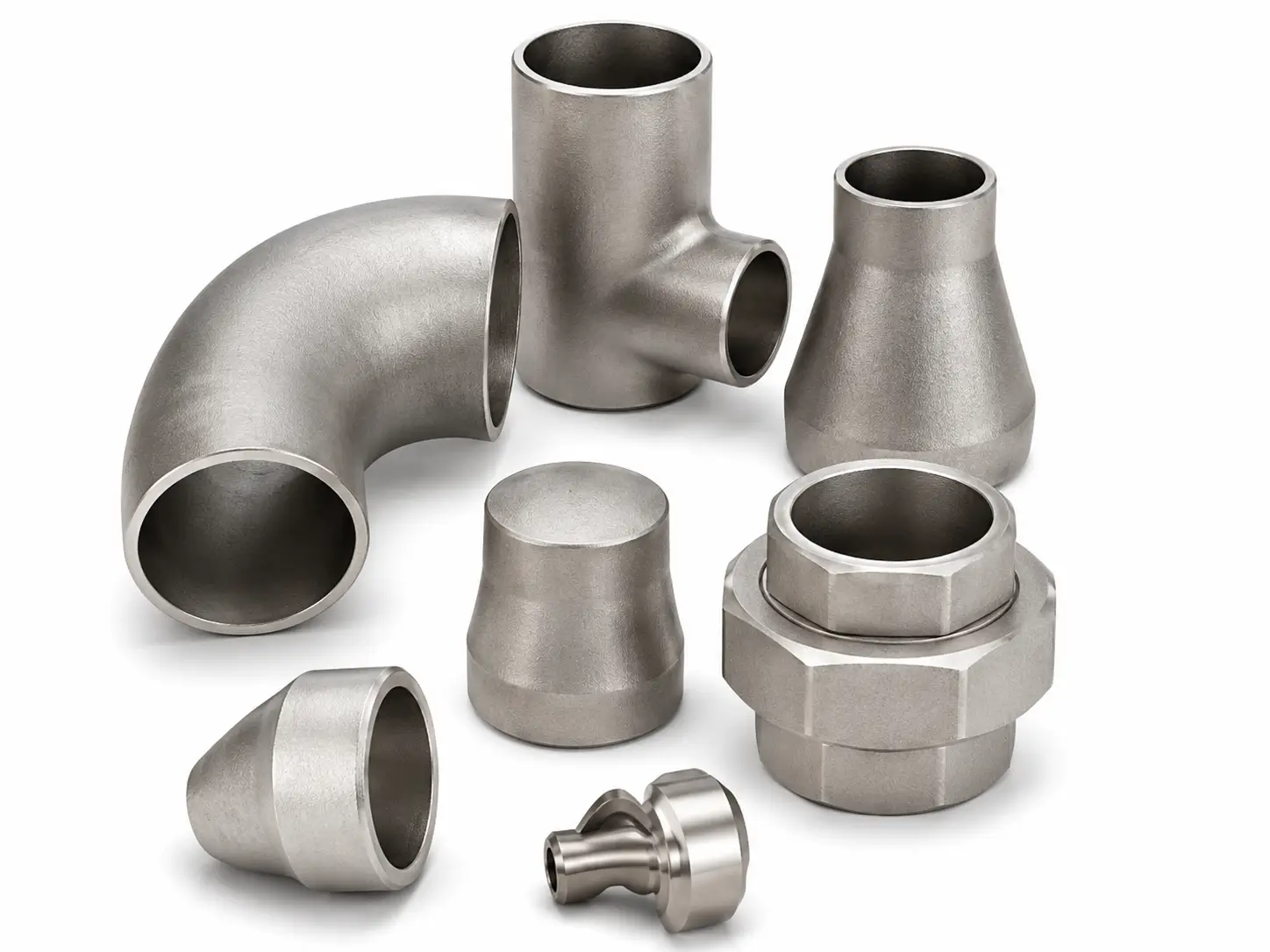
- •Elbow 45° / 90° / 180°
- •Tee & Reducing Tee
- •Reducer, Con. / Ecc.
- •Stub End
- •Cap / End Cover
- •Coupling / Union
- •Custom Fitting
Define Size & Wall Thickness
Confirm pipe dimensions and fit-up requirements to ensure proper matching and installation.
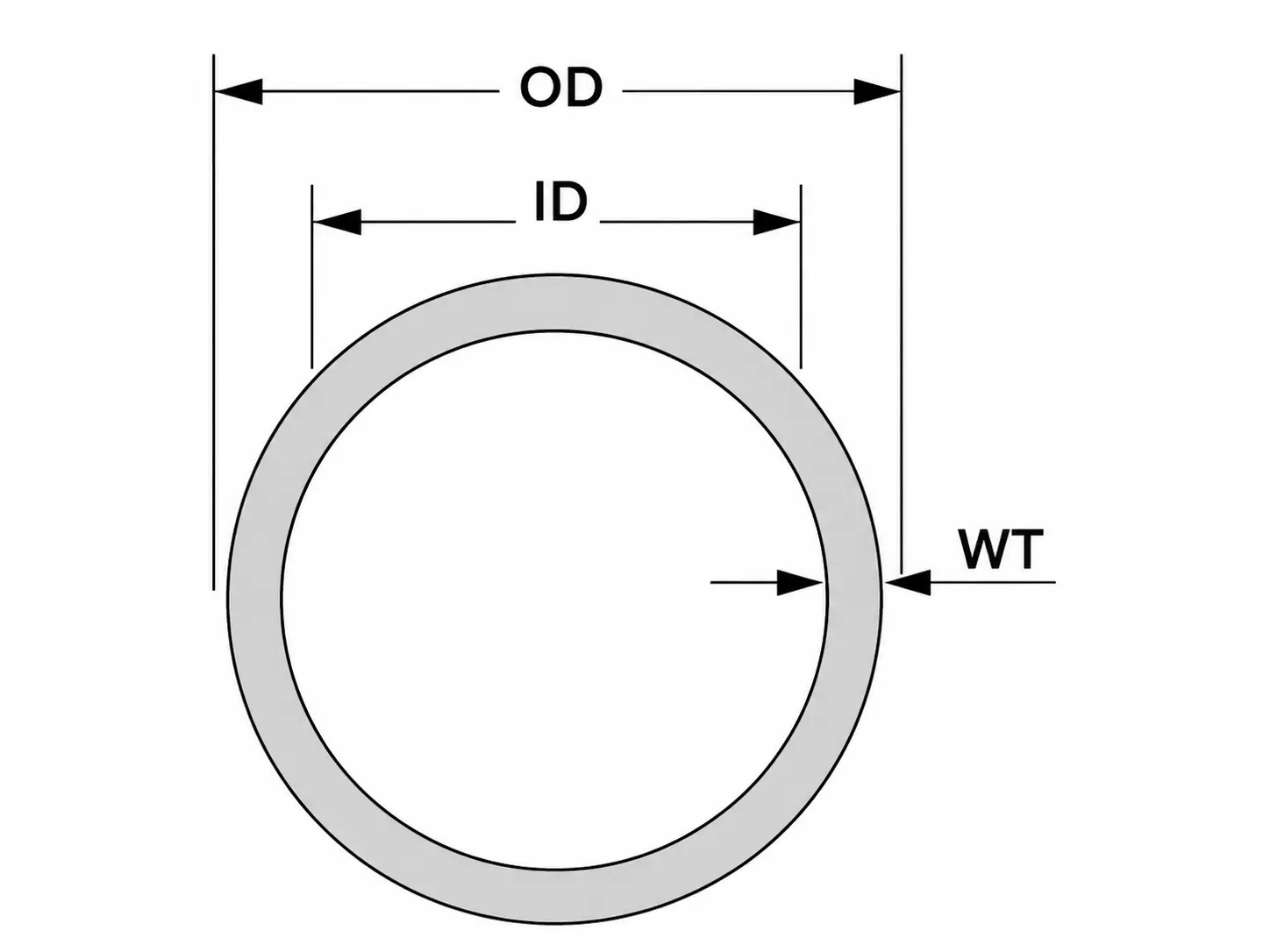
- •OD, Outside Diameter
- •ID, Inside Diameter
- •Wall Thickness
- •Schedule / SCH
- •NPS / DN
- •Fit-up Requirements
Match Grade to Medium
Select the appropriate titanium grade based on corrosion medium, temperature and service conditions.
- •Grade 2 — General corrosion resistance, seawater and industrial piping
- •Grade 7 — Enhanced corrosion resistance for harsh chemical and chloride
- •Grade 12 — Industrial corrosion resistance for heat exchanger and chemical
- •Grade 5 — High strength and lightweight applications
Standard & End Preparation
Confirm standards and end preparation to meet project, welding and connection requirements.
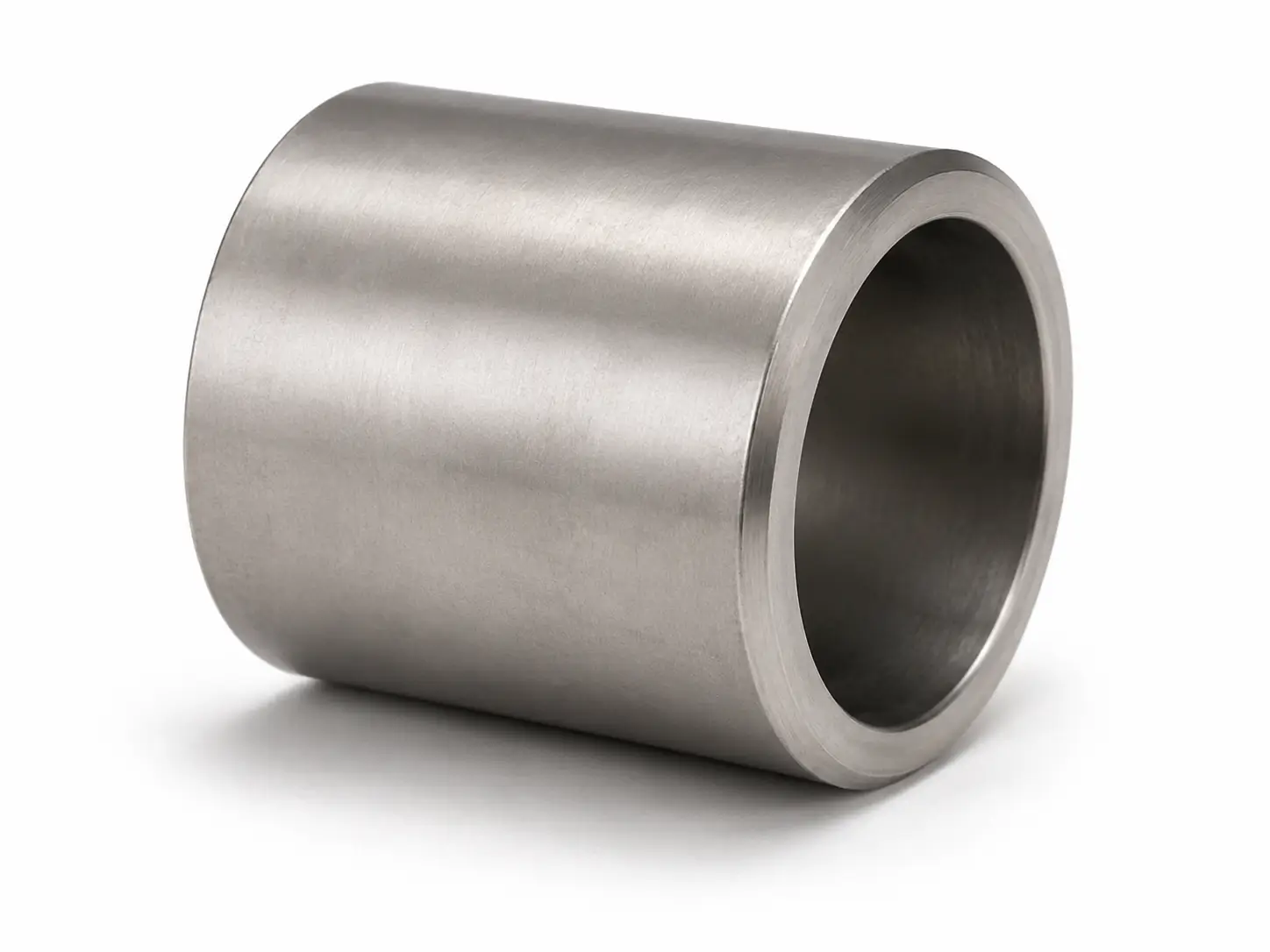 Butt Weld
BW
Socket WeldSW
ThreadedTHD
CustomEnd
- •Standards: ASTM / ASME / DIN / JIS / EN
- •End Types: Butt Weld, Socket Weld, Threaded
- •Bevel Type, Length and Angle
- •Surface Finish Requirements
Pressure & Flow Conditions
Review system conditions to support safe operation and reliable installation.
- •Pressure Rating / Class
- •Flow Direction
- •Branch Connection
- •Weldability & Process
- •Bend Radius
- •Fit-Up Space
Inspection & Documents
Prepare required inspections and documents to support project quality and traceability.
- •Dimensional Inspection
- •PMI, Material Identification
- •MTC, Material Test Certificate
- •Heat Number Traceability
- •Surface Inspection & Packing
- •Export Documents / TPI
Not sure which fitting or grade is right for your project? Our engineers can help you review drawings, specifications and system conditions.
Custom Fabrication
Custom & Non-Standard Titanium Pipe Fittings
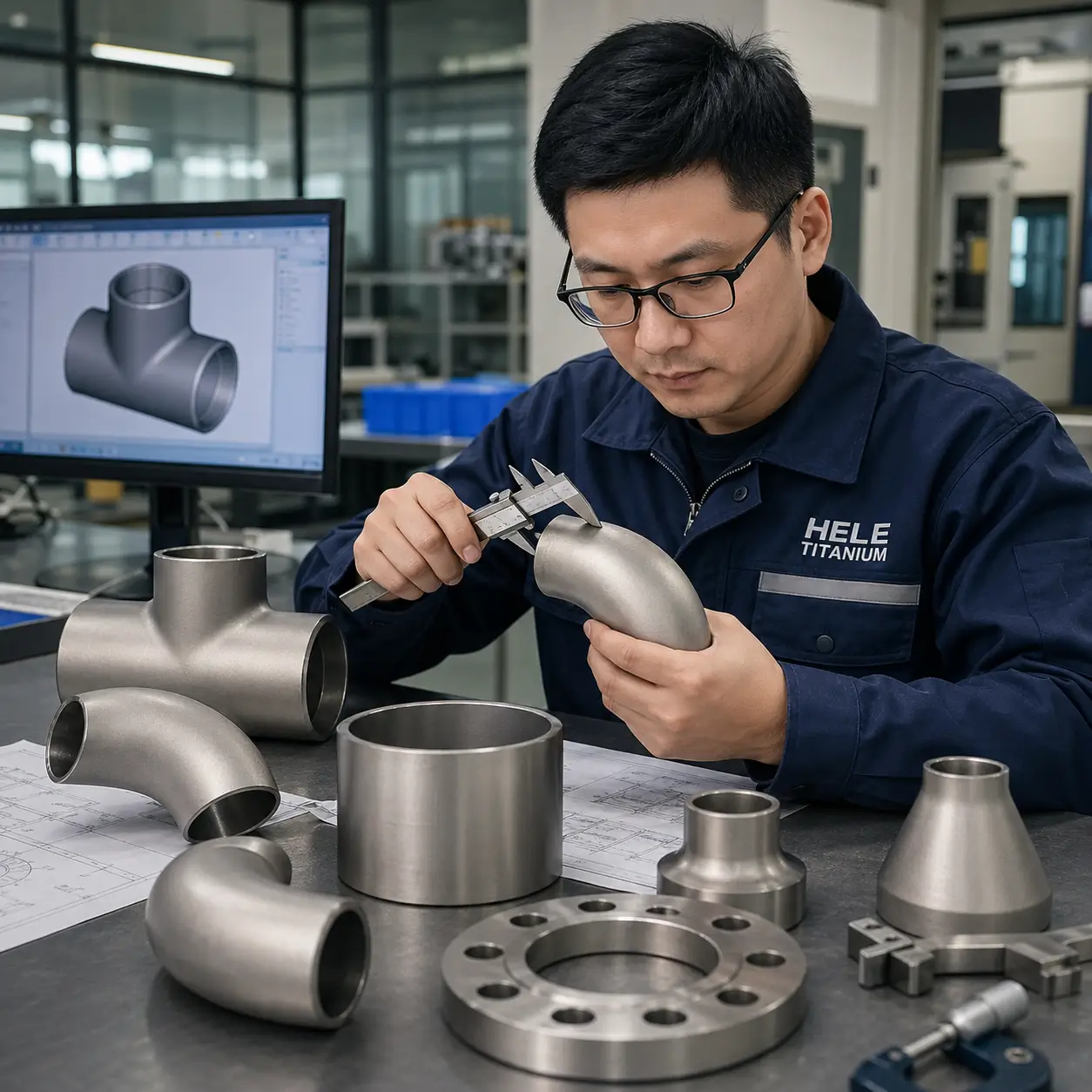
HELE manufactures drawing-based titanium fittings and fabricated piping components for projects requiring non-standard angles, branch configurations, dimensions, wall thicknesses or connection details, with manufacturability, welding, dimensional control and inspection reviewed against the approved drawing and purchase specification.
Drawing & Review
Customer drawings, isometrics and technical specifications are reviewed before production to confirm geometry, material, wall thickness, forming route, weld requirements, tolerances and inspection points.
Review: Drawing · Grade · Dimensions · Tolerance · Wall Thickness · Inspection
Forming & Geometry
Non-standard elbows, reducers, branch components, stub ends and other fitting geometries can be manufactured according to the approved drawing where the selected grade, dimensions and forming route support the required geometry.
Capabilities: Custom Angle · Radius · Branch Geometry · Reducer Combination
Welding & Assemblies
Fabricated fittings and assemblies can include qualified welding and multi-piece construction where required by the design, with joint configuration, welding procedure and inspection scope reviewed before production.
Review: Joint Design · Welding Requirement · WPS / PQR* · Weld Inspection*
Final Inspection
Finished custom fittings are reviewed against the approved drawing and agreed inspection plan for dimensions, wall condition, end preparation, weld quality, marking and required documentation.
Inspection: Dimensions · Wall Condition · End Preparation · Weld / NDE* · Records
Standard Fittings vs. Custom Fabricated Components
Standard titanium butt-weld fittings may be manufactured to applicable ASTM B363 and dimensional requirements such as ASME B16.9 where specified. Custom drawing-based fittings are reviewed against the approved drawing, material specification, fabrication procedure and inspection requirements and should not be assumed to meet a standard dimensional specification unless explicitly required and confirmed.
*Welding procedure, heat treatment, NDE method and inspection scope depend on fitting geometry, grade, construction, project specification and agreed manufacturing route.
Titanium Pipe Fitting Inspection & Documentation
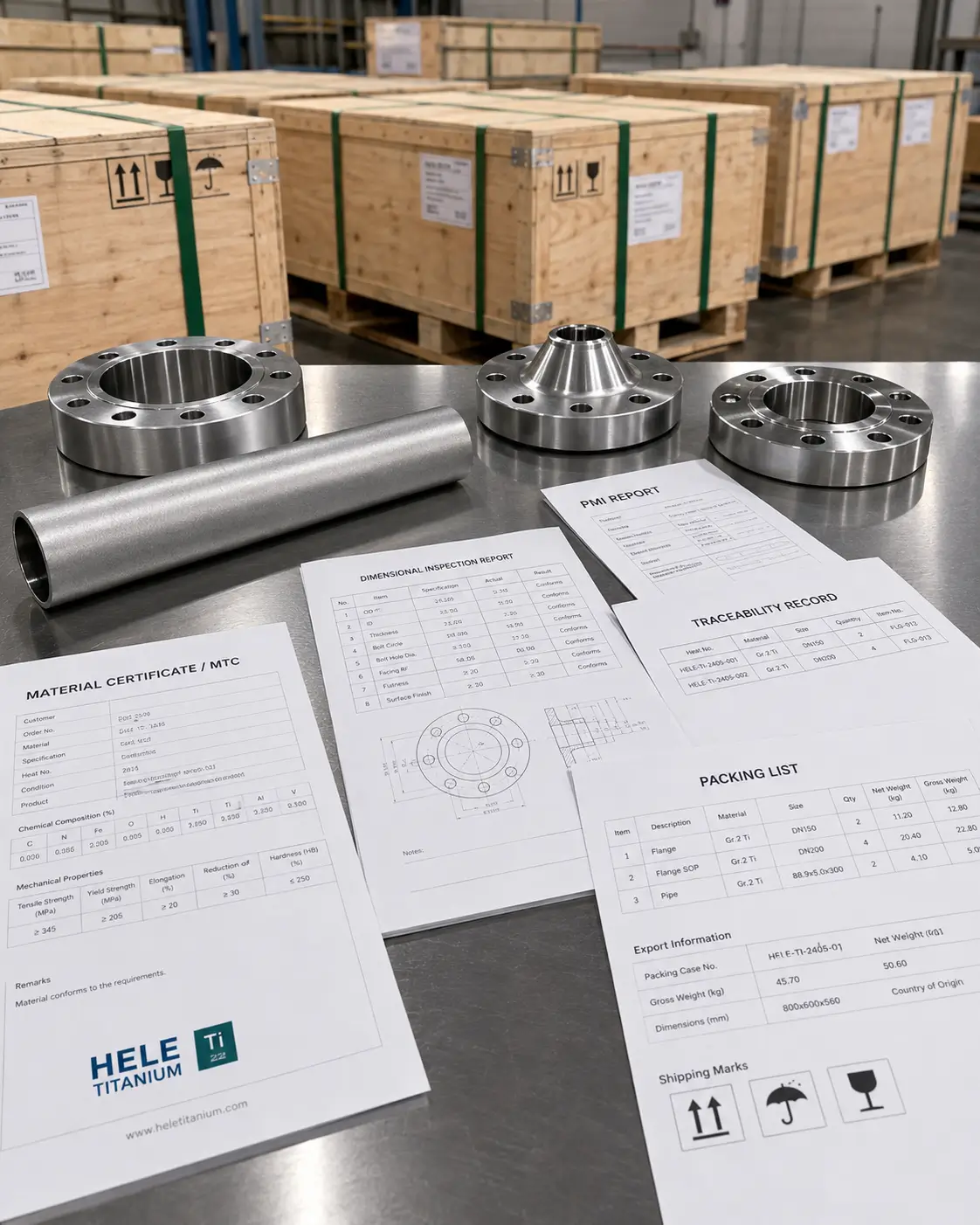
Titanium pipe fittings are reviewed against the agreed material specification, dimensions, construction, end preparation, marking and inspection requirements, with material traceability and project documentation prepared according to the purchase order.
Material & Heat Traceability
Titanium grade, UNS designation, applicable material specification and heat or lot information are checked against the agreed order requirements before shipment.
Review: Grade · UNS · Heat / Lot No. · MTC
Dimensional & Geometry Inspection
Fitting dimensions and geometry are inspected according to the applicable drawing or dimensional standard, including size, wall condition, center-to-end or end-to-end dimensions and fitting-specific geometry.
Inspection: NPS / DN · Wall Thickness · End-to-End · Center-to-End · Radius / Branch / Reducer Dimensions
When Applicable: Ovalization · Wall Thinning · Flatness / Alignment
End Preparation & Fit-Up Review
Butt-welding ends are reviewed for bevel geometry, wall condition, alignment and compatibility with the mating pipe according to the specified end-preparation requirements.
Review: Bevel · Root Face · End Squareness · Wall Condition · Mating Pipe Compatibility
Reference: ASME B16.25 when specified
Weld & NDE Inspection
For welded or fabricated fittings, weld quality and required nondestructive examination are reviewed according to the approved manufacturing route, project specification and agreed inspection plan.
Review: VT · PT · RT / UT* · Weld Records · Repair Status*
Marking & Identification
Product identification and permanent or project-required marking can be reviewed to maintain traceability between the fitting, material records and shipment documentation.
Review: Grade · Heat No. · Size · Specification · Manufacturer Mark*
Final Documentation & Shipment Records
Agreed material certificates, dimensional records, NDE reports, inspection records, packing documents and shipment identification can be prepared according to the project and purchase-order scope.
Documents: MTC · Dimensional Report · NDE Report* · Inspection Record · Packing List · CoC / EN 10204 Type 3.1*
Inspection method, sampling frequency, NDE scope, marking and documentation depend on fitting type, grade, size, seamless or welded construction, applicable specification and purchase-order requirements.
Reliable Docs. Clear Packing. Smooth Delivery
Hele Titanium can support available shipment documents, traceability records and export packing according to order requirements.
Titanium Pipe Fittings for Industrial Piping Systems
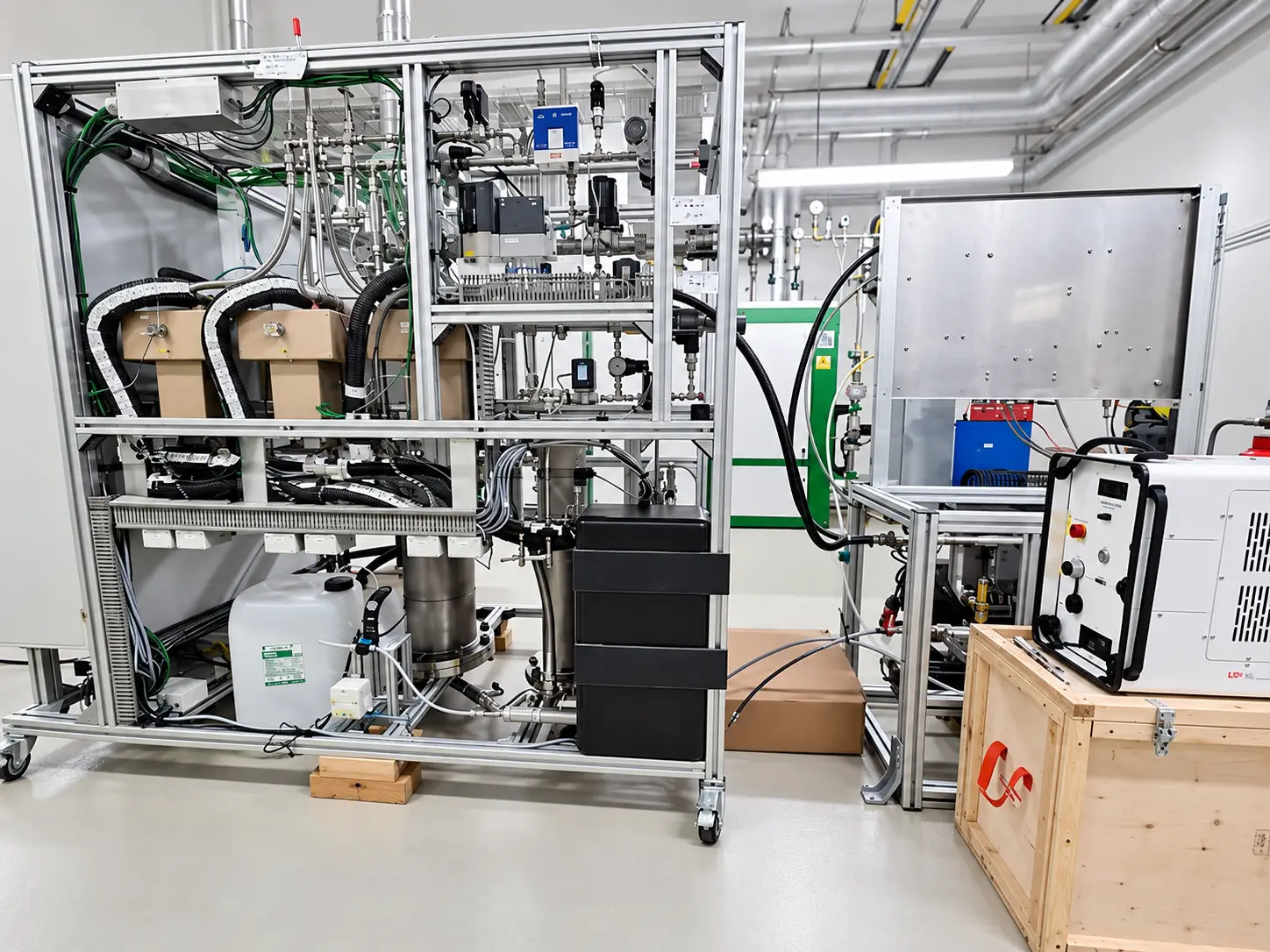
Titanium pipe fittings are manufactured for chemical processing, marine, process equipment and engineered piping projects where material grade, fitting geometry, wall thickness, construction and inspection requirements are defined by the operating environment and project specification.
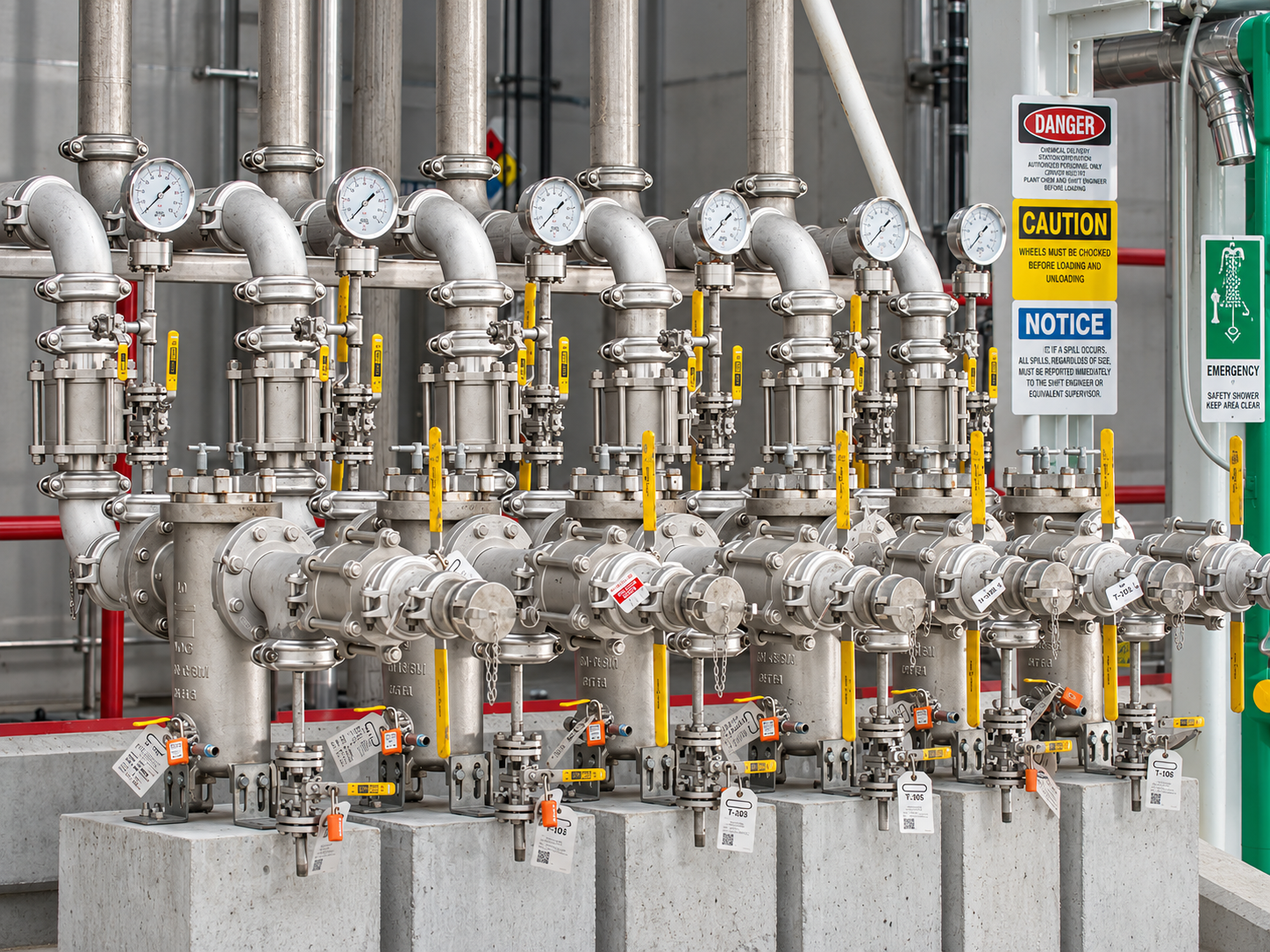
Chemical Processing
Titanium elbows, tees, reducers, caps and stub ends can be manufactured for chemical-processing piping systems where material selection is reviewed against the actual medium, concentration, temperature and project corrosion requirements.
Grade · Medium · Temperature · NPS / DN · Schedule · Construction
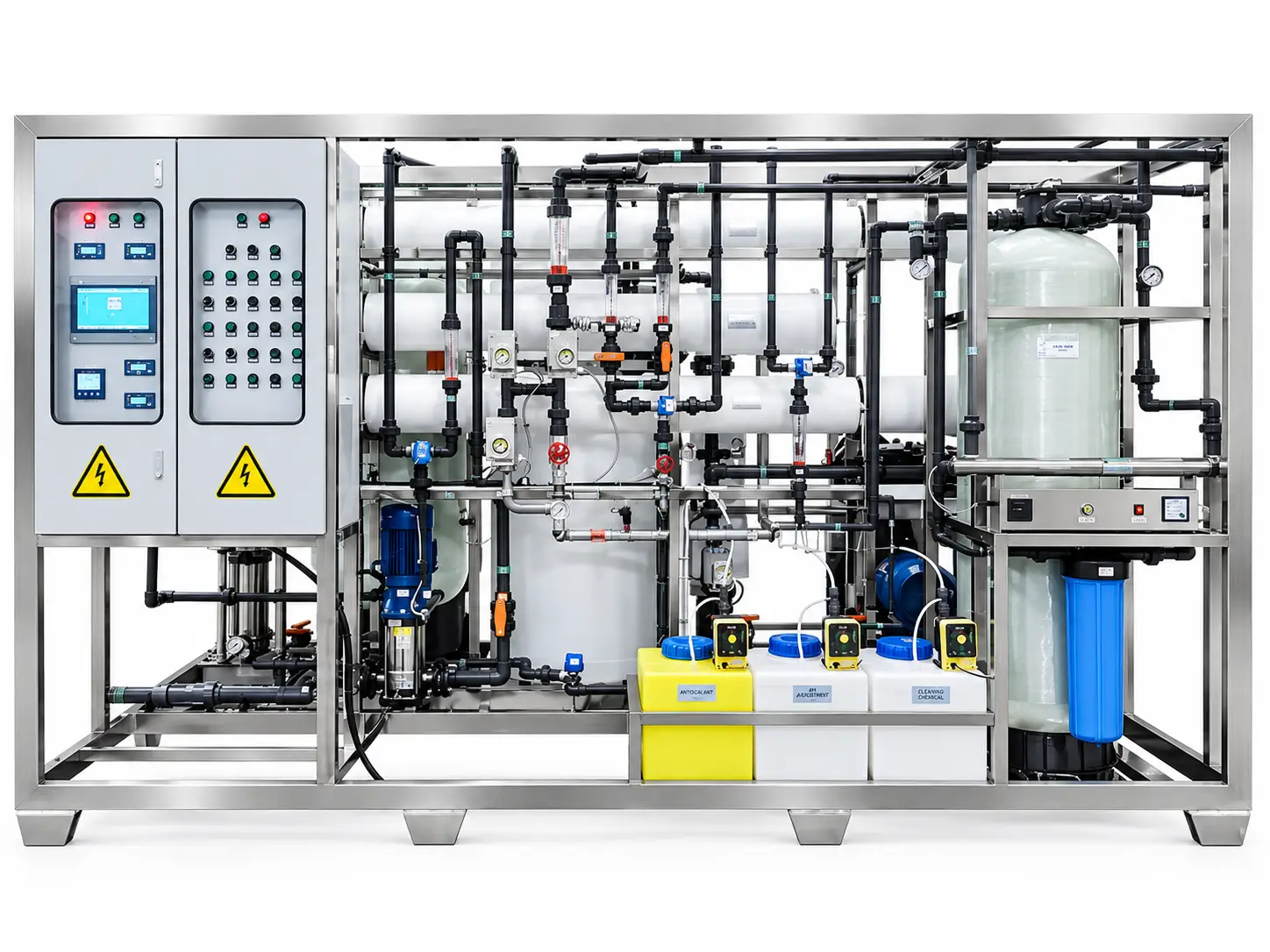
Marine & Seawater Systems
Titanium pipe fittings can be reviewed for seawater handling, marine process piping and related equipment where grade, wall thickness, fabrication route and system design are confirmed for the actual service conditions.
Grade · Seawater Service · Wall Thickness · Welding · Inspection

Heat Exchanger & Process Equipment
Titanium fittings can be manufactured for process-equipment piping, heat-exchanger connections and fabricated assemblies where fitting dimensions, mating pipe, end preparation and fabrication requirements must be coordinated with the equipment design.
Mating Pipe · Dimensions · End Preparation · Fabrication · Inspection
EPC & Custom Piping Projects
HELE supports project-based titanium fitting packages from MTO and isometric review through fitting specification, custom fabrication, inspection documentation, packing and delivery coordination.
MTO · Isometric · Project Specification · Inspection · Documentation
Application Does Not Determine the Fitting Specification by Itself
The same application may require different titanium grades, wall thicknesses, fitting constructions and inspection requirements depending on the medium, temperature, piping code, design conditions and project specification. Final suitability should be confirmed by the responsible project engineer.
Discuss Your Piping Application
Why Industrial Buyers Choose HELE as Their Titanium Pipe Fittings Manufacturer
HELE supports titanium pipe fitting projects with specification review, standard and custom manufacturing, dimensional and material inspection, traceability documentation and international project coordination from RFQ through shipment.
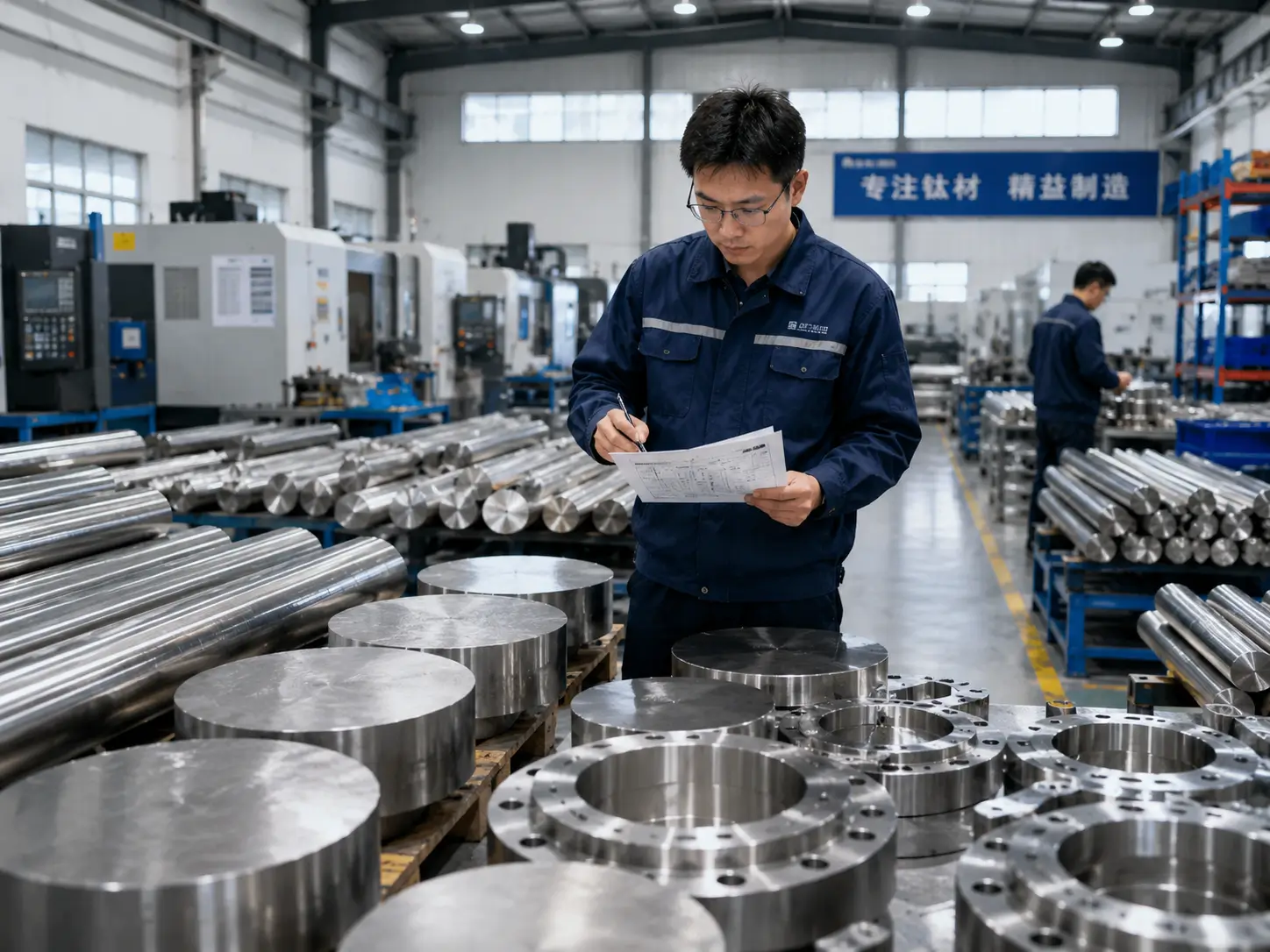
Engineering Specification Review
Fitting type, titanium grade, NPS or DN, Schedule or wall thickness, construction, dimensional standard and end preparation are reviewed together before manufacturing.
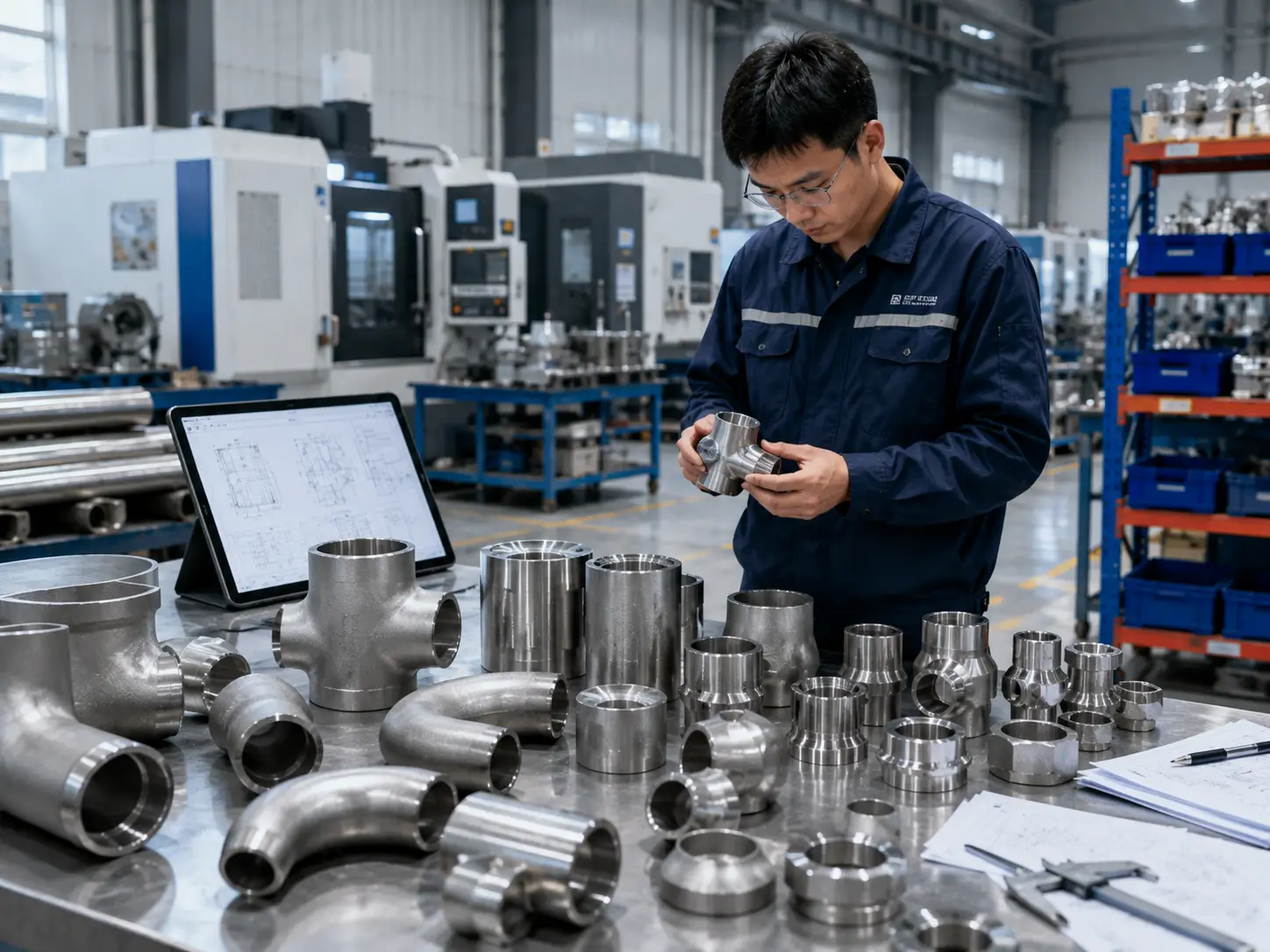
Standard & Custom Fitting Manufacturing
HELE manufactures standard butt-weld fittings and drawing-based titanium piping components, with forming, welding and fabrication routes reviewed according to the required geometry, size, grade and purchase specification.
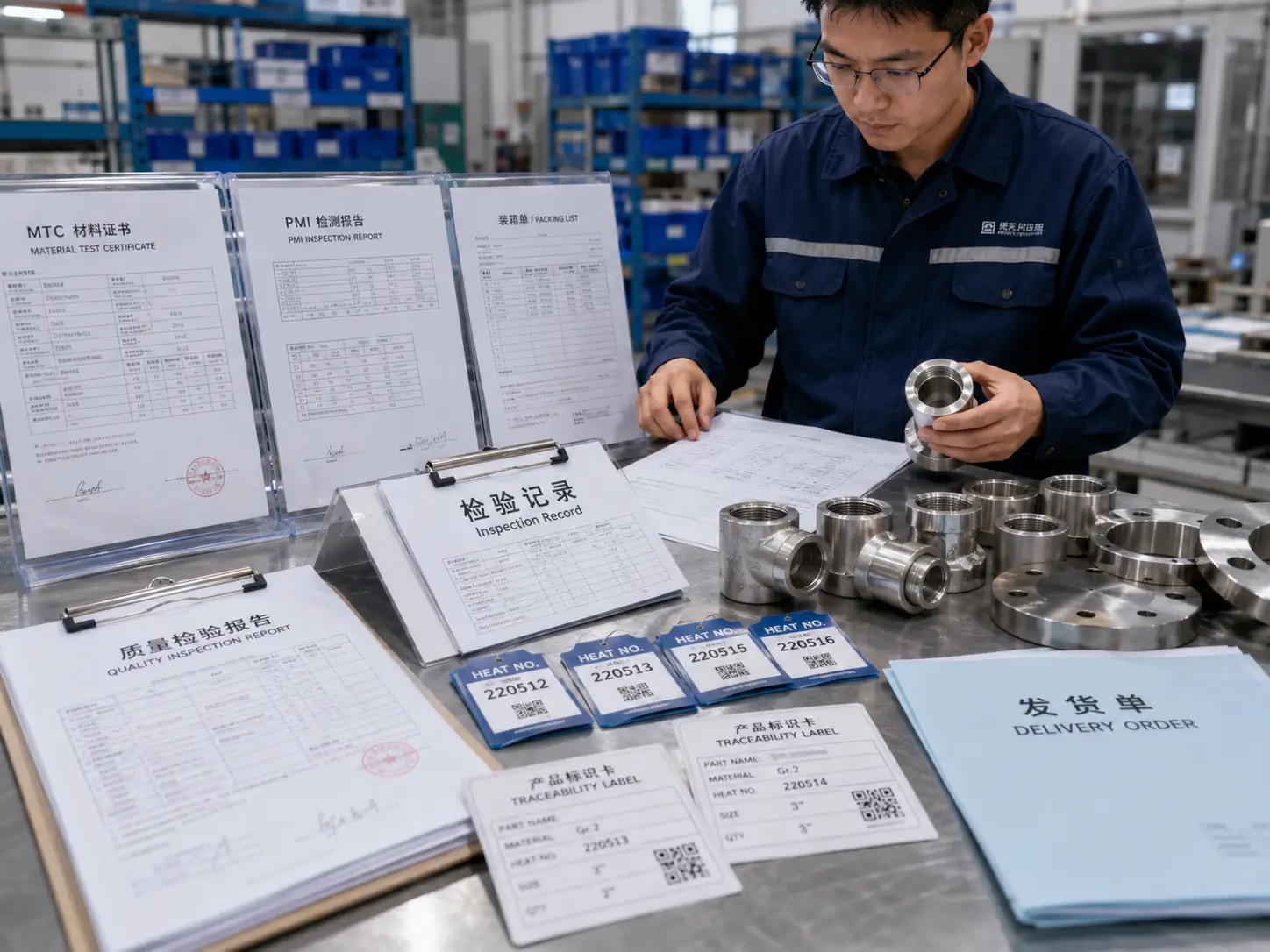
Inspection & Material Traceability
Material identity, heat or lot traceability, dimensions, end preparation, marking and applicable weld or NDE requirements can be inspected against the agreed specification and purchase order.
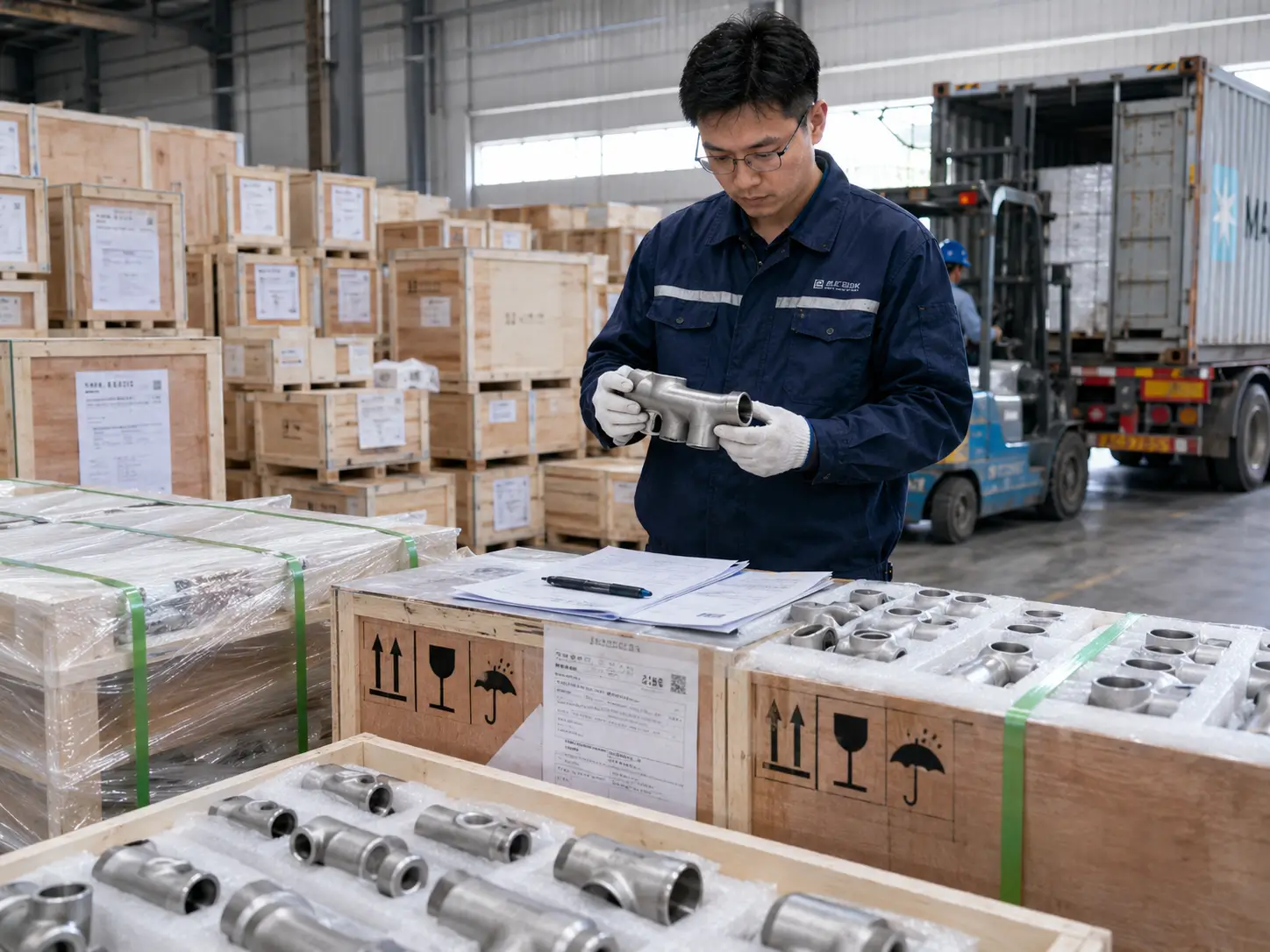
Project & Export Coordination
HELE coordinates fitting lists, MTOs, isometrics, inspection requirements, product identification, packing and shipping documentation for OEM, EPC and industrial piping projects.
From Fitting Specification to Project Delivery
Send the fitting list, MTO or isometric with grade, NPS or DN, Schedule, construction, quantity and inspection requirements for technical and commercial review.
Titanium Pipe Fittings FAQs
Find answers to common questions about titanium fitting types, ASTM B363, dimensional standards, NPS and Schedule, construction, material grades, inspection and quotation requirements.
Products & Standards
What types of titanium pipe fittings does HELE manufacture?
What is the difference between ASTM B363 and ASME B16.9?
What do NPS, DN and Schedule mean when ordering titanium fittings?
What is the difference between seamless and welded titanium fittings?
Technical & Quotation
Which titanium grades are commonly used for pipe fittings?
What is the difference between a titanium stub end and a titanium flange?
What inspection and documentation can be supplied with titanium fittings?
What information should I provide for a titanium pipe fitting quote?
Get Your Titanium Pipe Fittings Solution
Tell us your fitting type, standard, titanium grade, schedule, end preparation, quantity, and service environment. Our engineering team will recommend the most suitable titanium fitting solution for your piping system.
-
Direct Factory Fitting Production
-
Standards-Based Geometry & End Prep
-
Traceability, MTC & Inspection Support
Direct Contact
sales@heletitanium.com
Titanium Valley, Baoji City, Shaanxi Province, China