
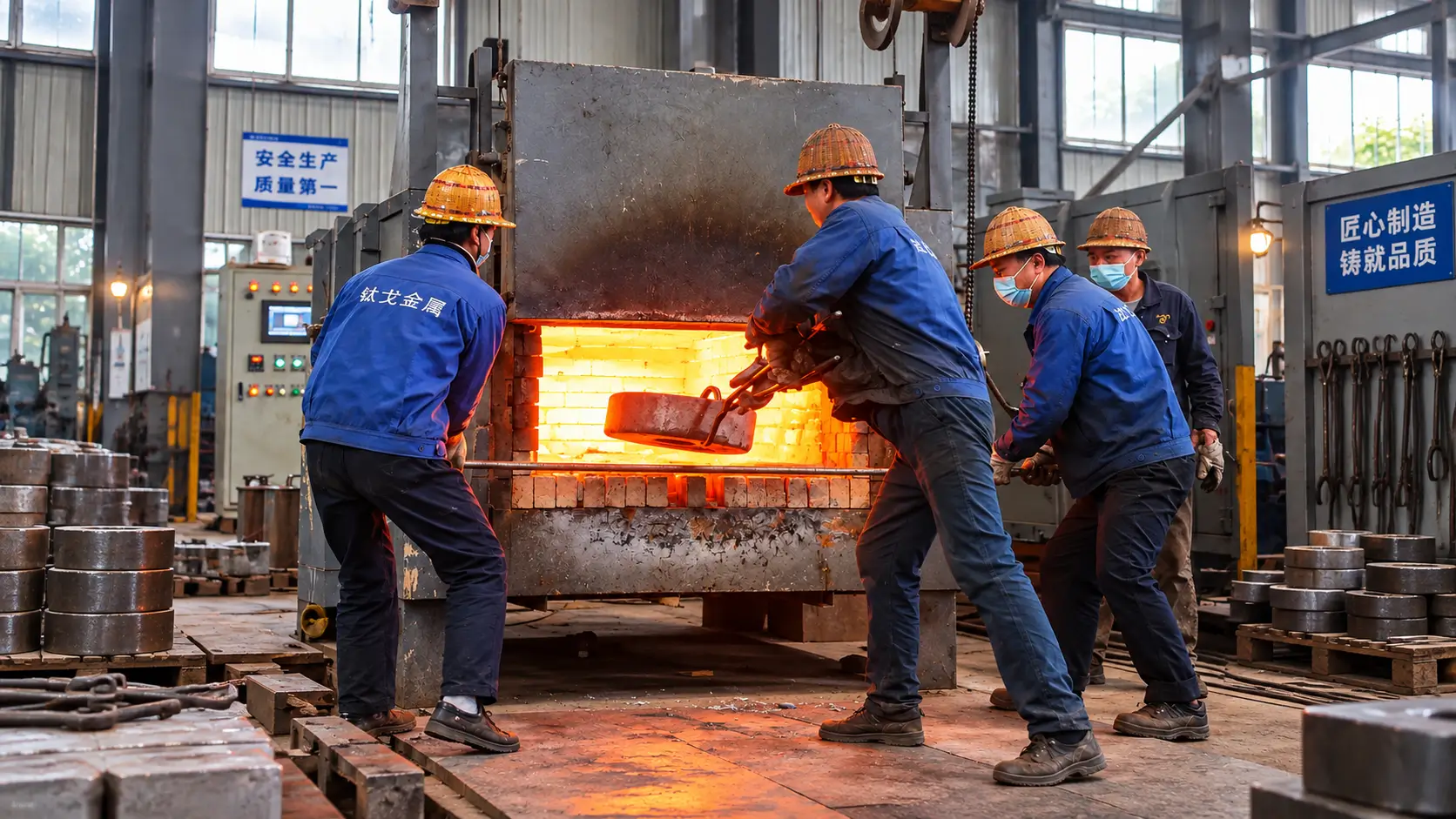
Custom Titanium Forgings: Rings, Discs, Shafts & Blocks
Direct-to-industry production of high-performance titanium forged rings, discs, shafts, blocks, flanges, and custom blanks. Engineered with refined grain flow, controlled forging ratios, and ASTM B381 traceability for aerospace, marine, medical, chemical, and high-load industrial applications.
Forging Details That Define the Final Part
The forging shape is only the starting point. Grade, forging route, machining allowance, heat treatment and inspection define the final purchasing specification.
Titanium forgings may be supplied as rings, discs, shafts, blocks or custom blanks, but the required forging specification depends on the final geometry, material grade, manufacturing route and downstream machining requirements.
For quotation, define the rough-forging size, ASTM B381 grade, machining allowance, heat-treatment condition, mechanical-property requirements and inspection scope specified by the drawing or purchase order.
Forging Form & Geometry
Select rings, discs, shafts, blocks, flanges or custom forgings according to the final component geometry and machining plan.
Form · Rough Size · Final Geometry · Weight
Grade & Delivery Condition
Define the titanium grade, applicable specification and required delivery condition before production review.
ASTM B381 Grade · Material Condition · Mechanical Requirements
Forging Route & Machining
Forging route, rough dimensions and machining allowance are reviewed according to part geometry, quantity and final machining requirements.
Forging Route · Machining Allowance · Grain-Flow Requirement
Inspection & Documentation
Mechanical testing, dimensional inspection and NDT can be specified according to the drawing, purchase order and applicable acceptance criteria.
UT / PT · Mechanical Tests · MTC · Traceability
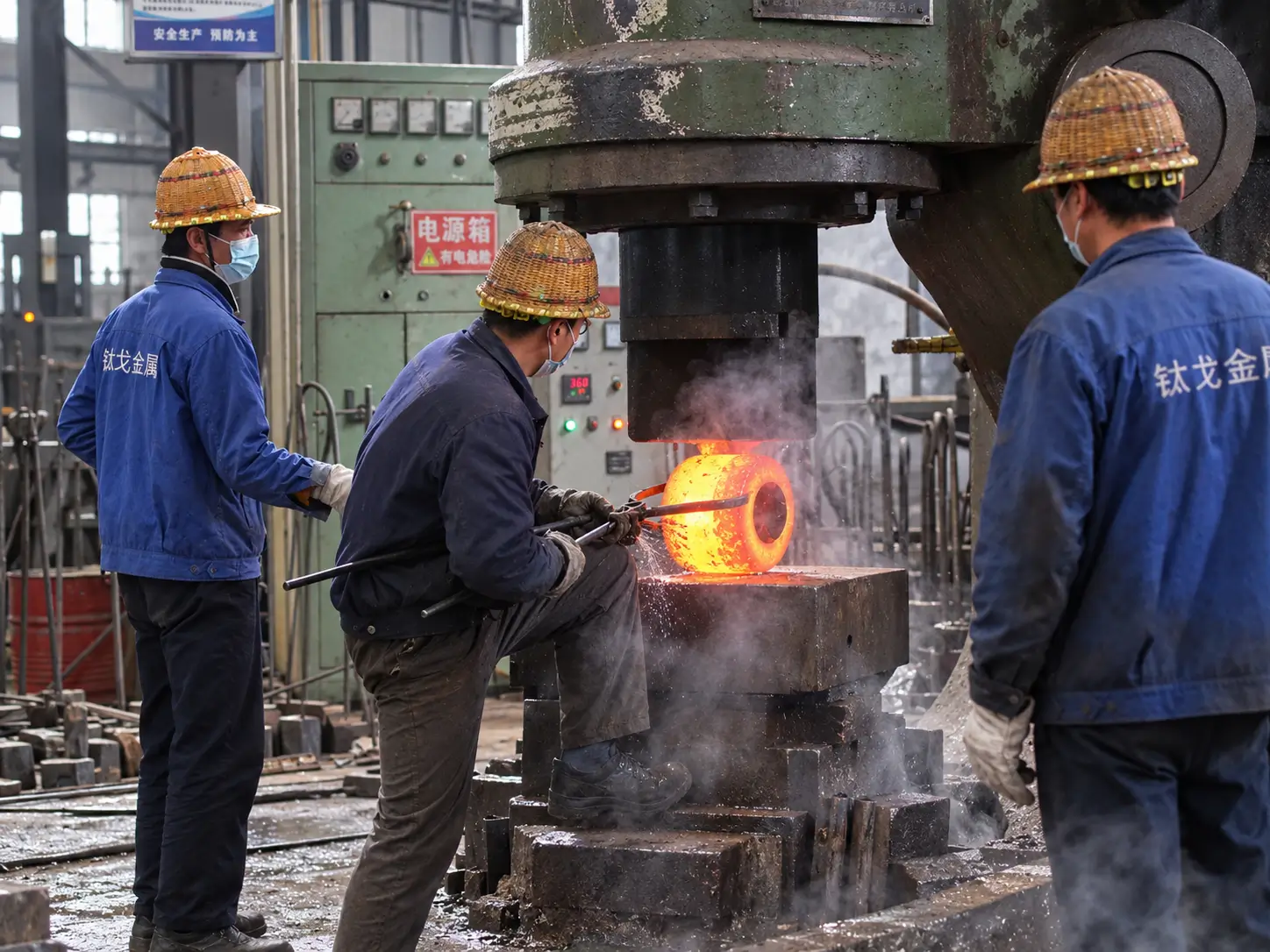
Designed for: chemical equipment, marine systems, pump and valve components, heat exchangers, pressure equipment, energy systems, hydrogen equipment, electrochemical systems, OEM machined parts and custom industrial titanium forging projects.
Titanium Forging Product Forms
Custom titanium forgings are available in standard and drawing-based forms for machining, equipment fabrication and project-specific applications.
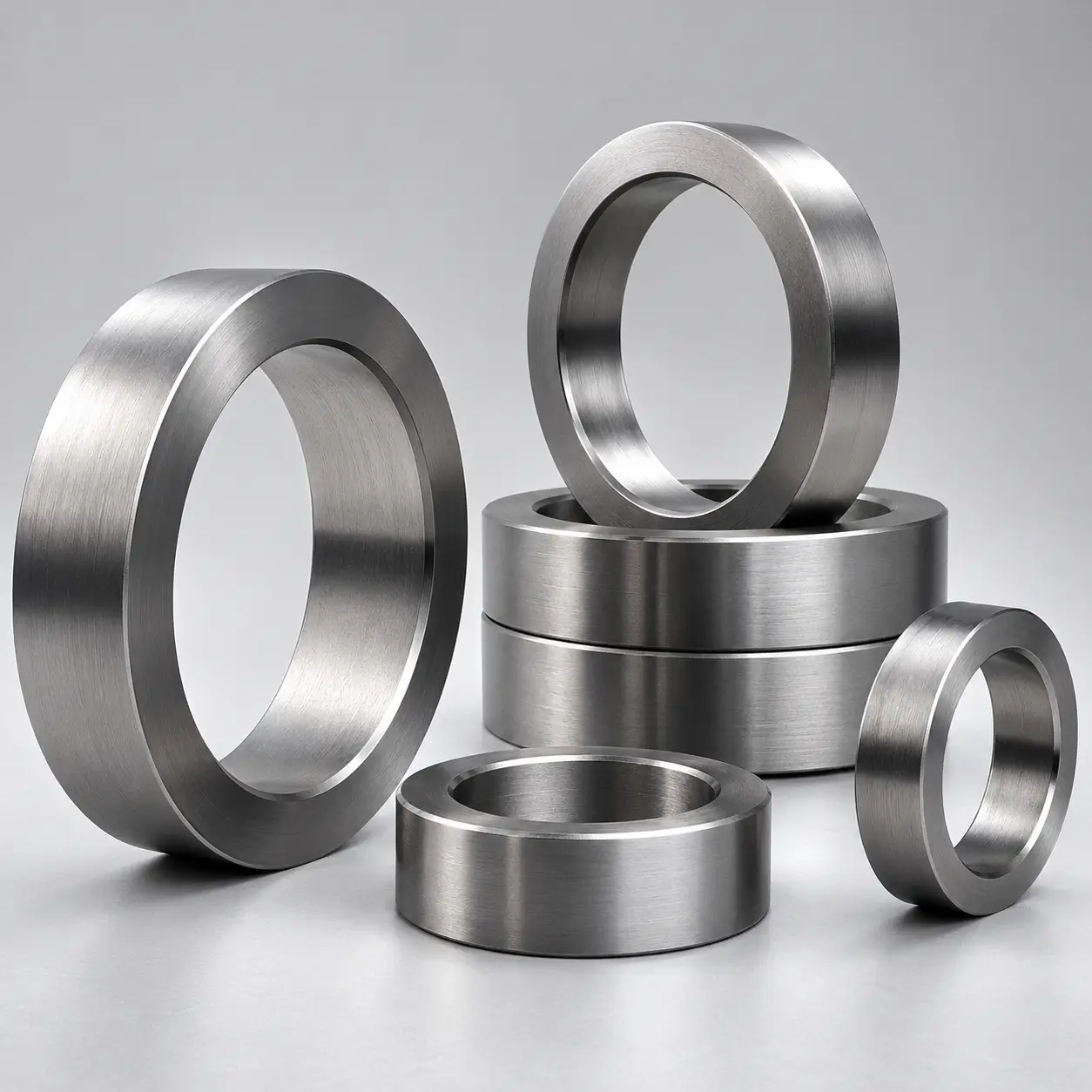
Titanium Forged Rings
Custom forged rings for machined components, flanges, rotating equipment and industrial assemblies.
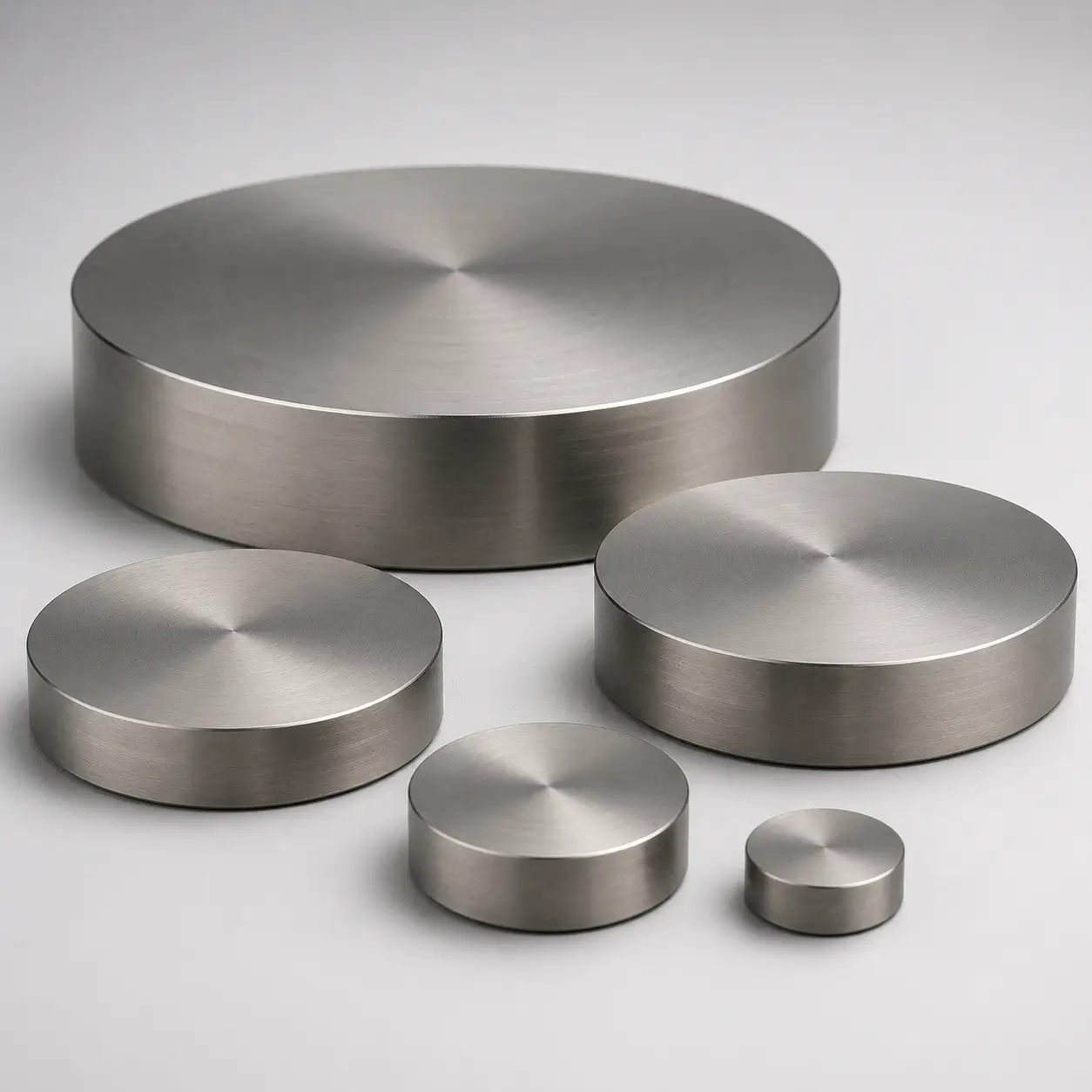
Titanium Forged Discs
Round forged discs and blanks for machining into flanges, covers, hubs and custom components.
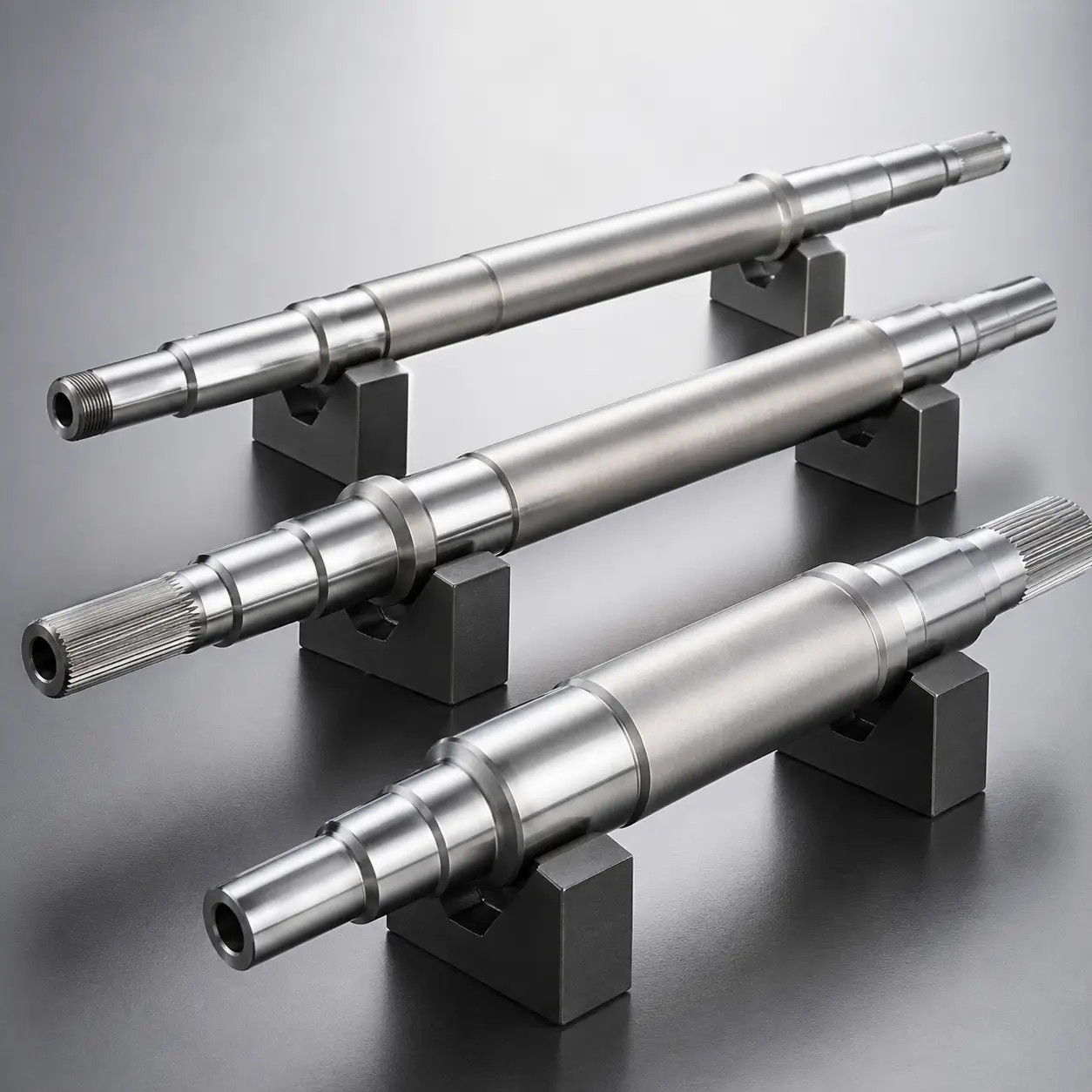
Titanium Forged Shafts
Forged titanium shafts and stepped blanks for rotating, structural and equipment components.
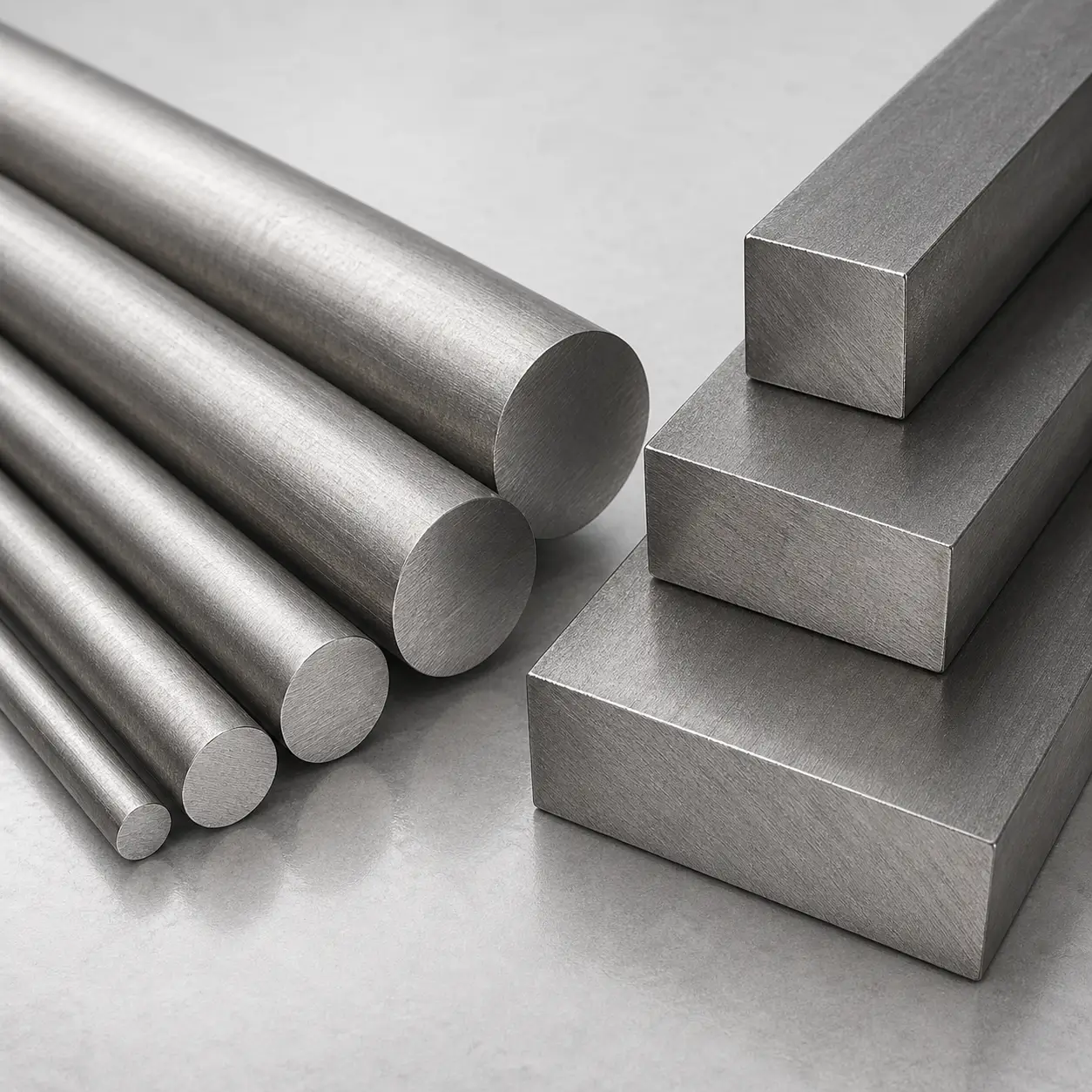
Titanium Forged Blocks
Rectangular and square forged blocks for CNC machining and drawing-based titanium components.
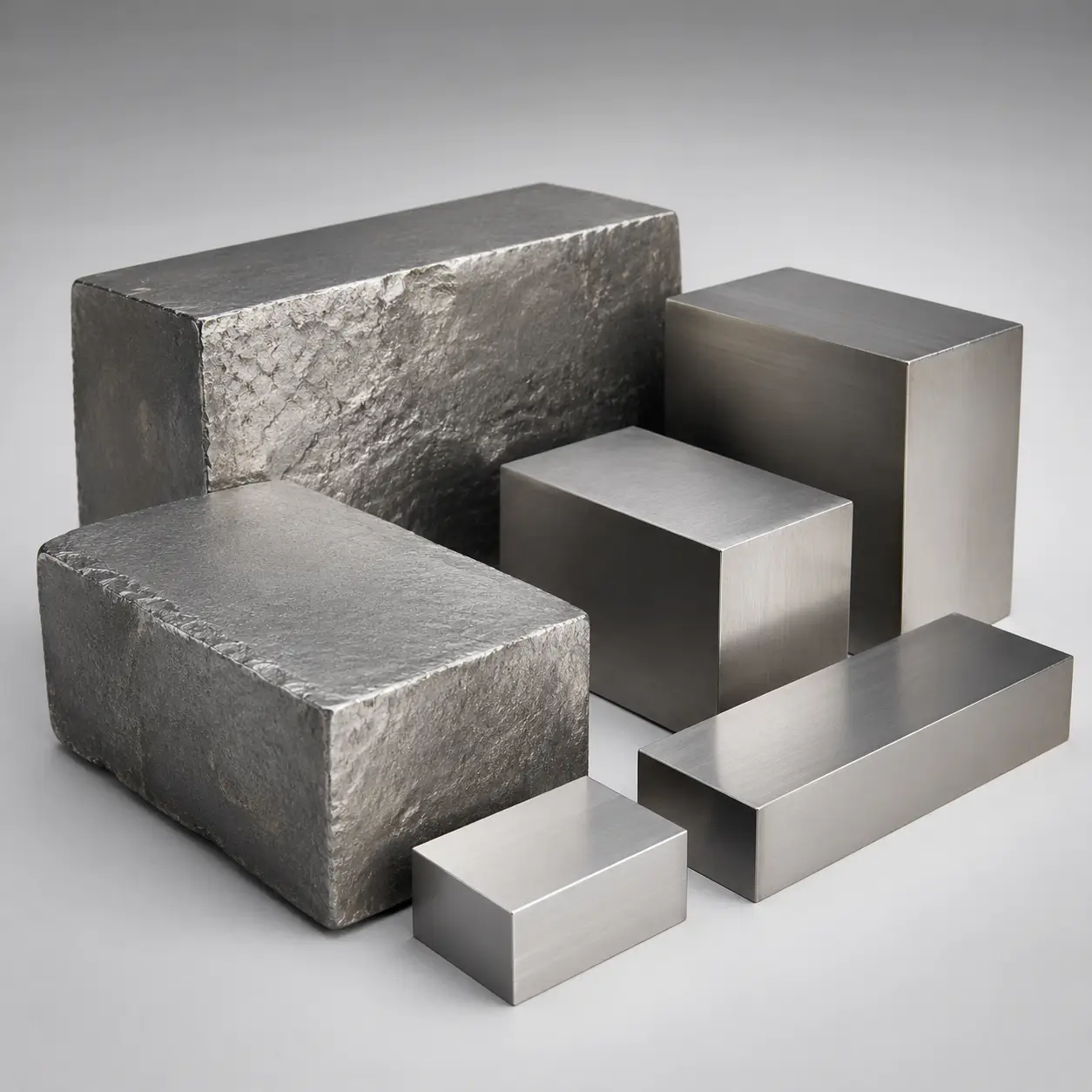
Titanium Forged Bars
Forged round, square or rectangular bars supplied as machining blanks for custom components.
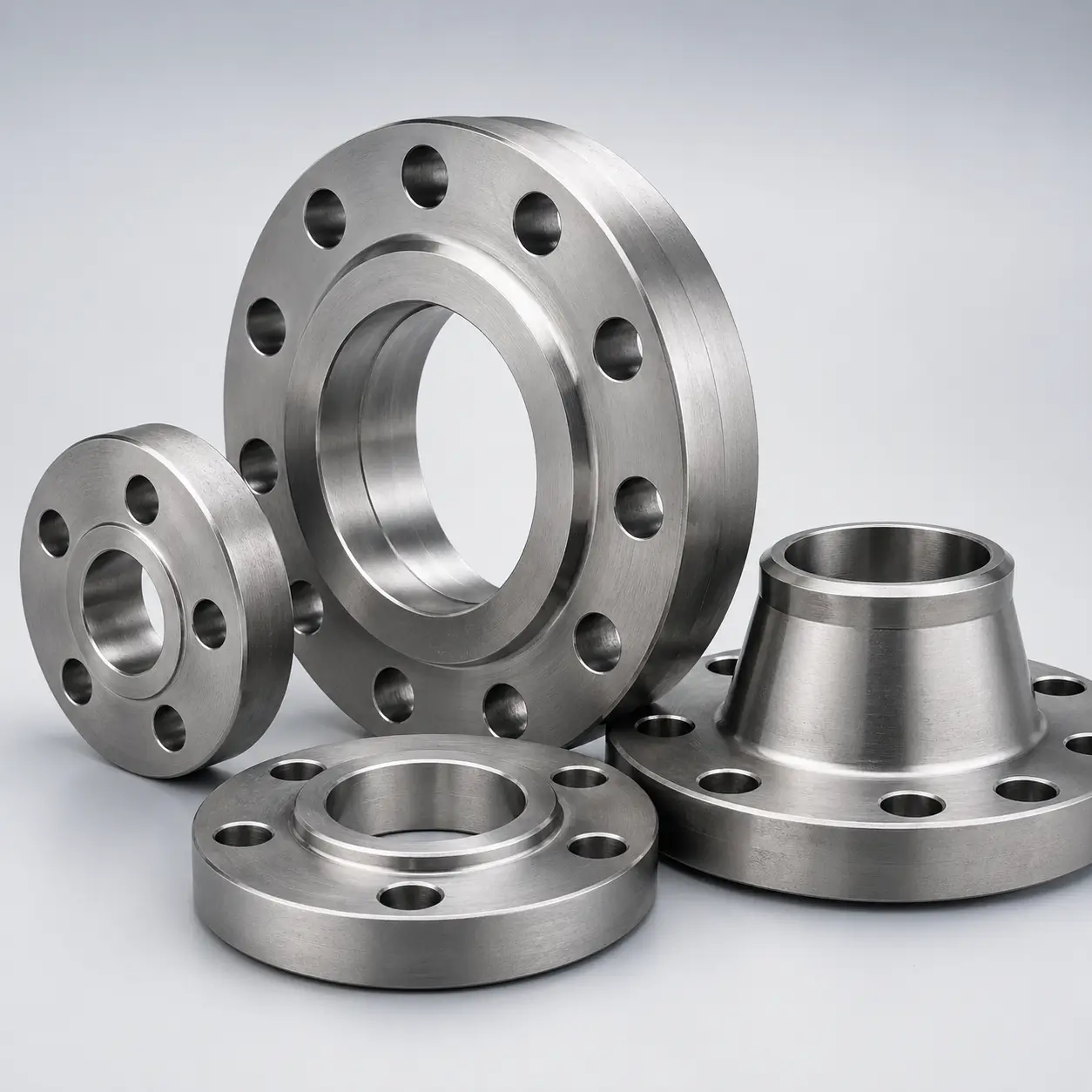
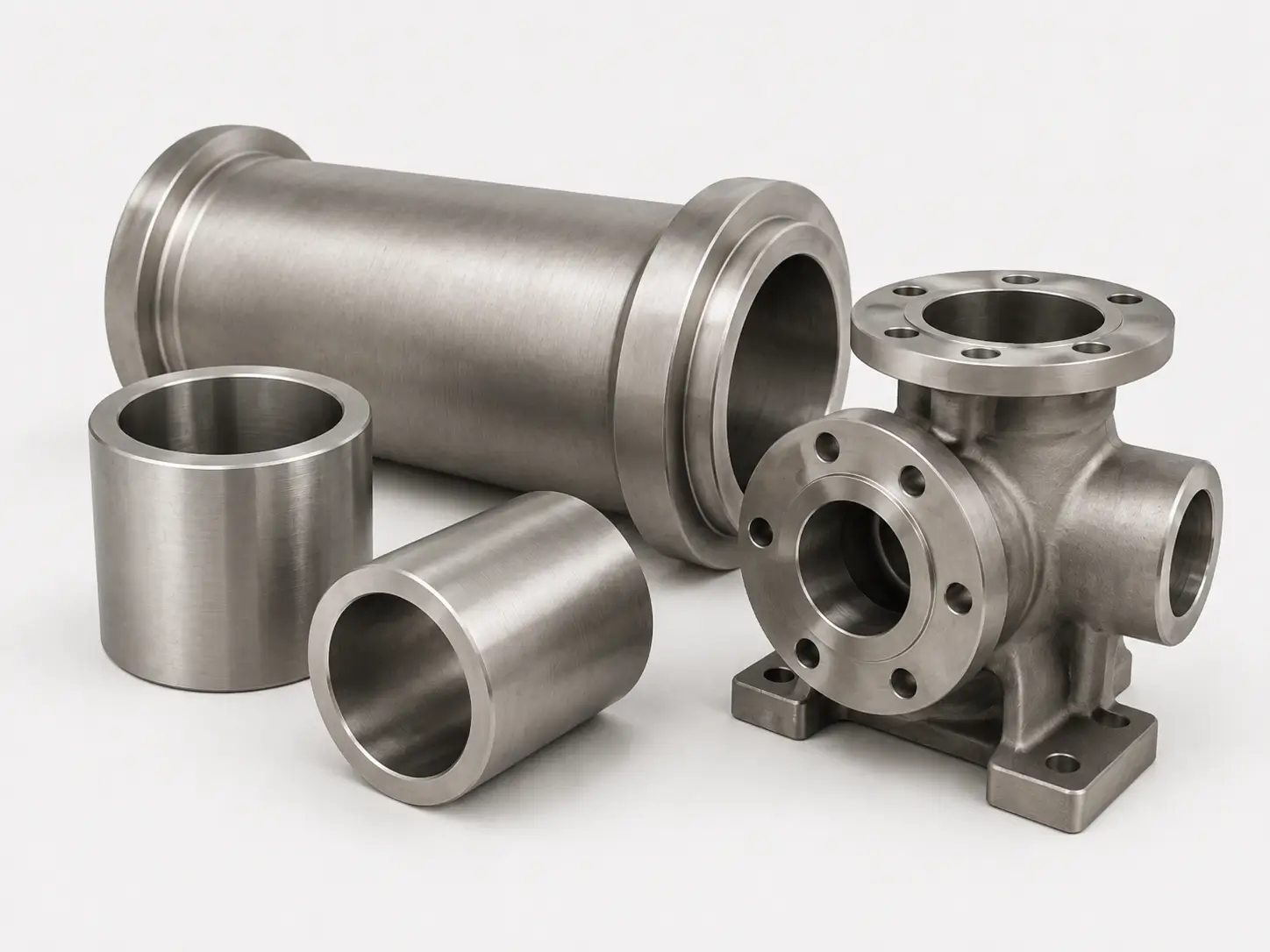
Forged Cylinders & Sleeves
Hollow forged cylinders and sleeves for equipment and machining applications.
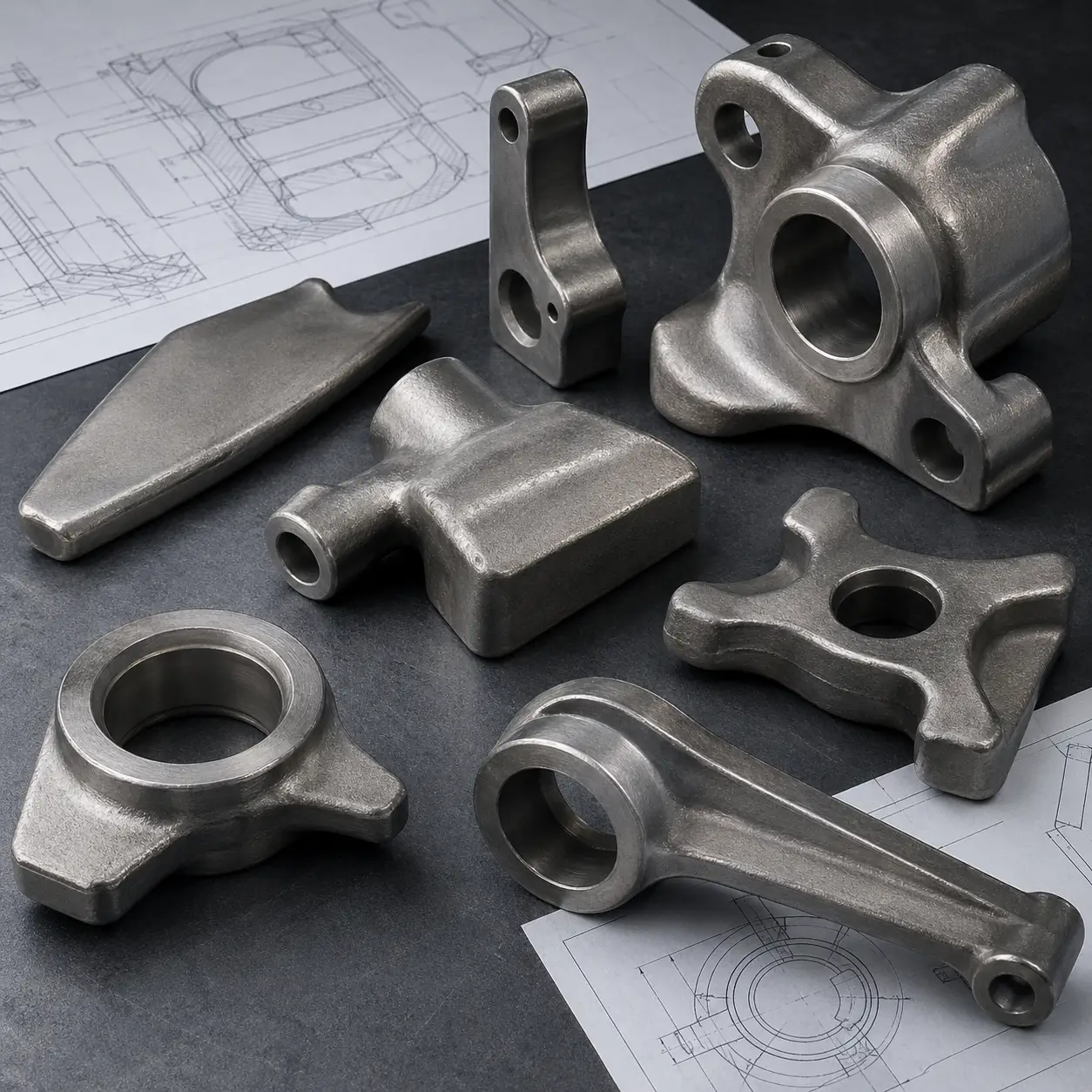
Forged Flanges & Nozzles
Near-shape forged blanks for custom flanges, nozzles and equipment connection components.

Custom Titanium Forgings
Drawing-based titanium forgings for non-standard geometries, machining blanks and project-specific components.
How to Specify a Custom Titanium Forging
Define the key material, geometry, manufacturing and inspection requirements before quotation.
Select the Forging Form
Choose ring, disc, shaft, block, bar, sleeve, flange blank or a drawing-based custom forging.
Define Rough Dimensions
Provide the rough-forging dimensions, final geometry and estimated piece weight where available.
Confirm Material Grade
Specify the applicable material standard and forging grade required by the drawing or purchase order.
Define Machining Allowance
Confirm the required stock allowance for rough machining, finish machining or near-net-shape delivery.
Confirm Heat Treatment & Properties
Specify the required delivery condition, heat treatment and mechanical-property requirements where applicable.
Define Inspection Requirements
Specify dimensional inspection, mechanical testing, UT, PT or other NDT requirements together with the required acceptance criteria.
Not sure about the forging route, allowance or inspection scope? Send the final-part drawing for manufacturing review.
ASTM B381 Titanium Forging Grades
Select the forging grade according to mechanical-property requirements, corrosion environment, machining needs and the applicable purchase specification.
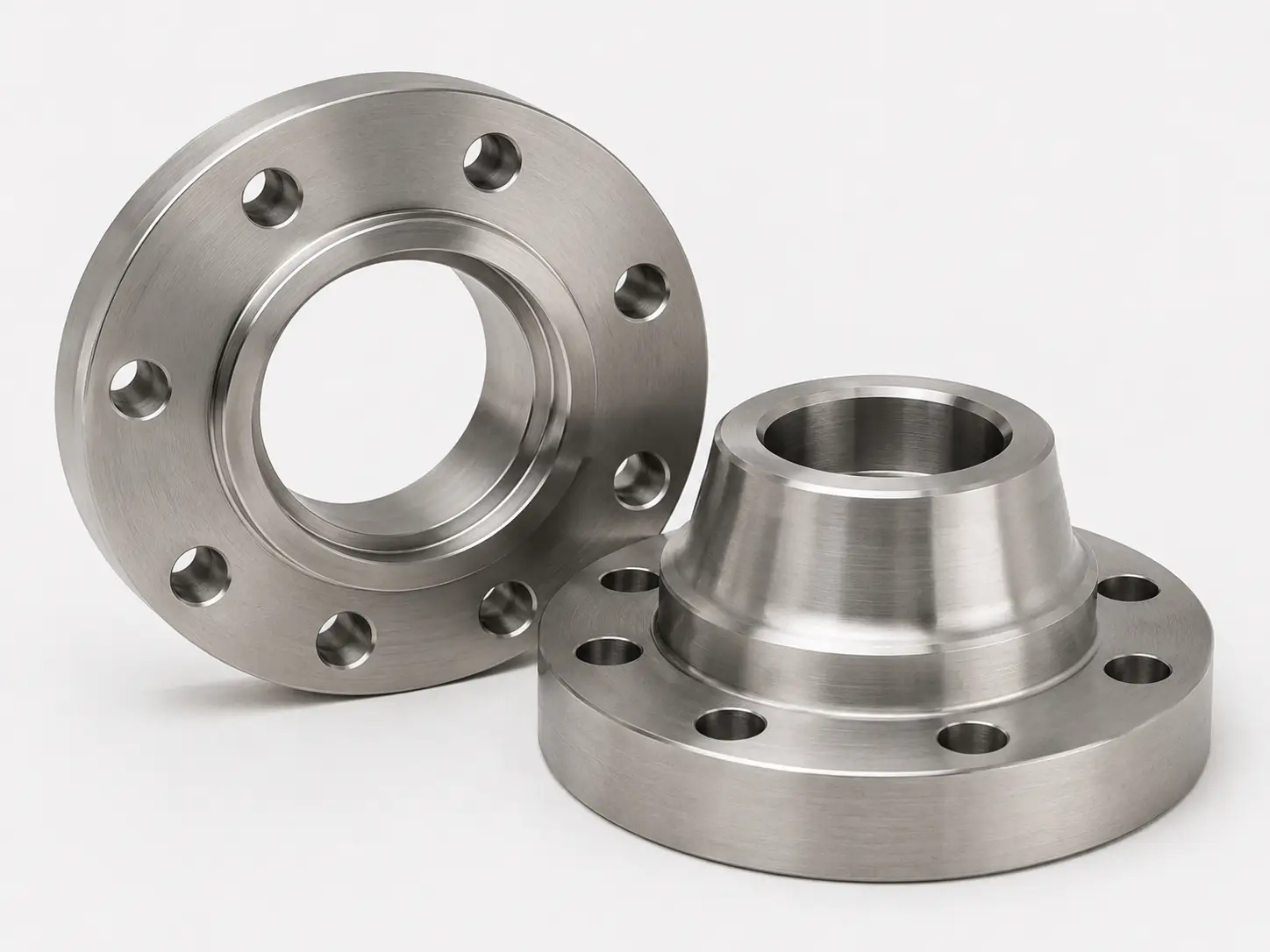
Commercially Pure Titanium Grade 2
General-purpose titanium forgings for industrial, chemical-processing and corrosion-resistant components.
- Key Characteristics: Good Corrosion Resistance · Formability · Machinability
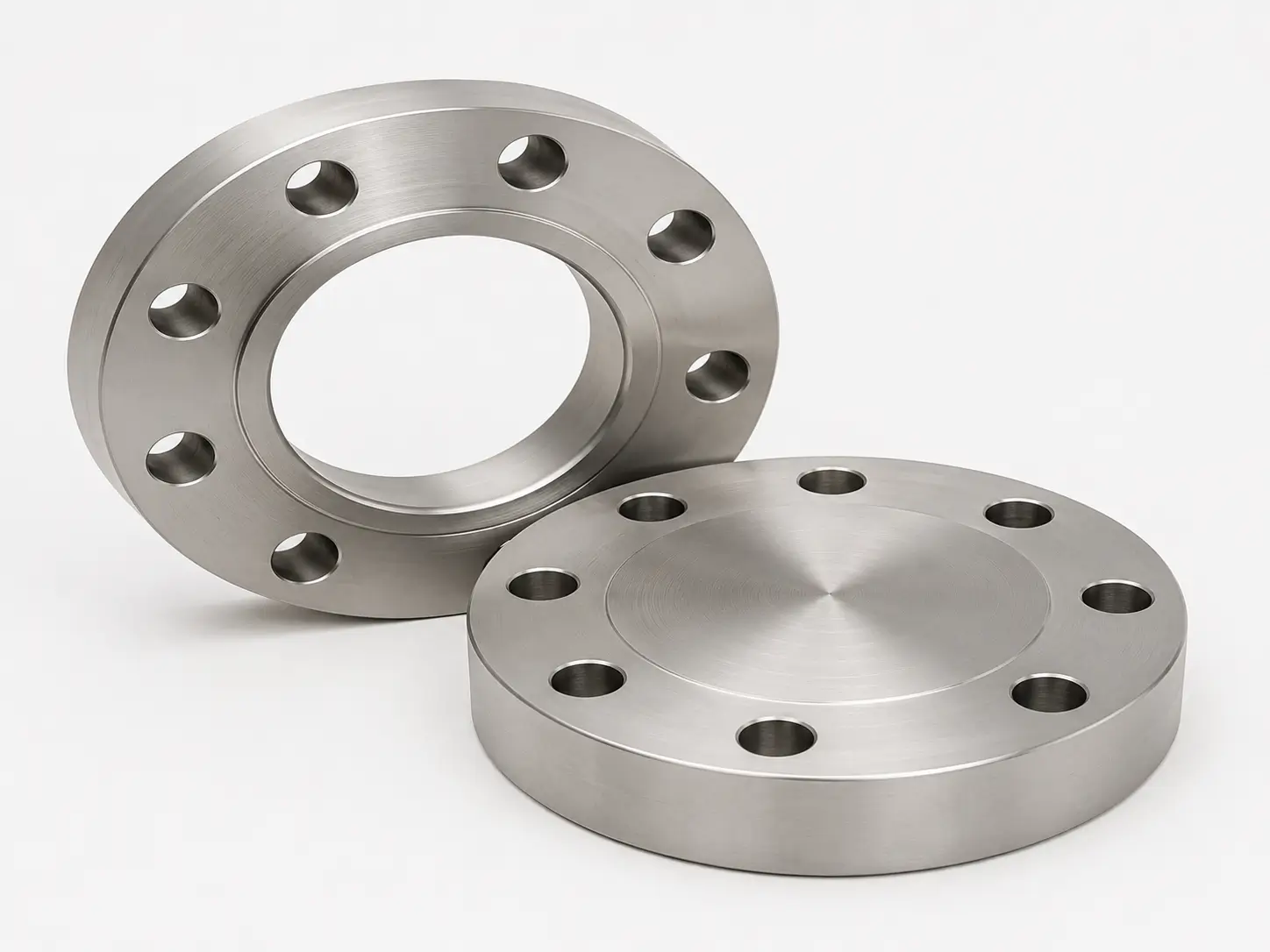
Ti-6Al-4V
High-strength titanium alloy forgings for structural, rotating and precision-machined components.
- Key Characteristics: High Strength · Low Weight · Broad Engineering Use
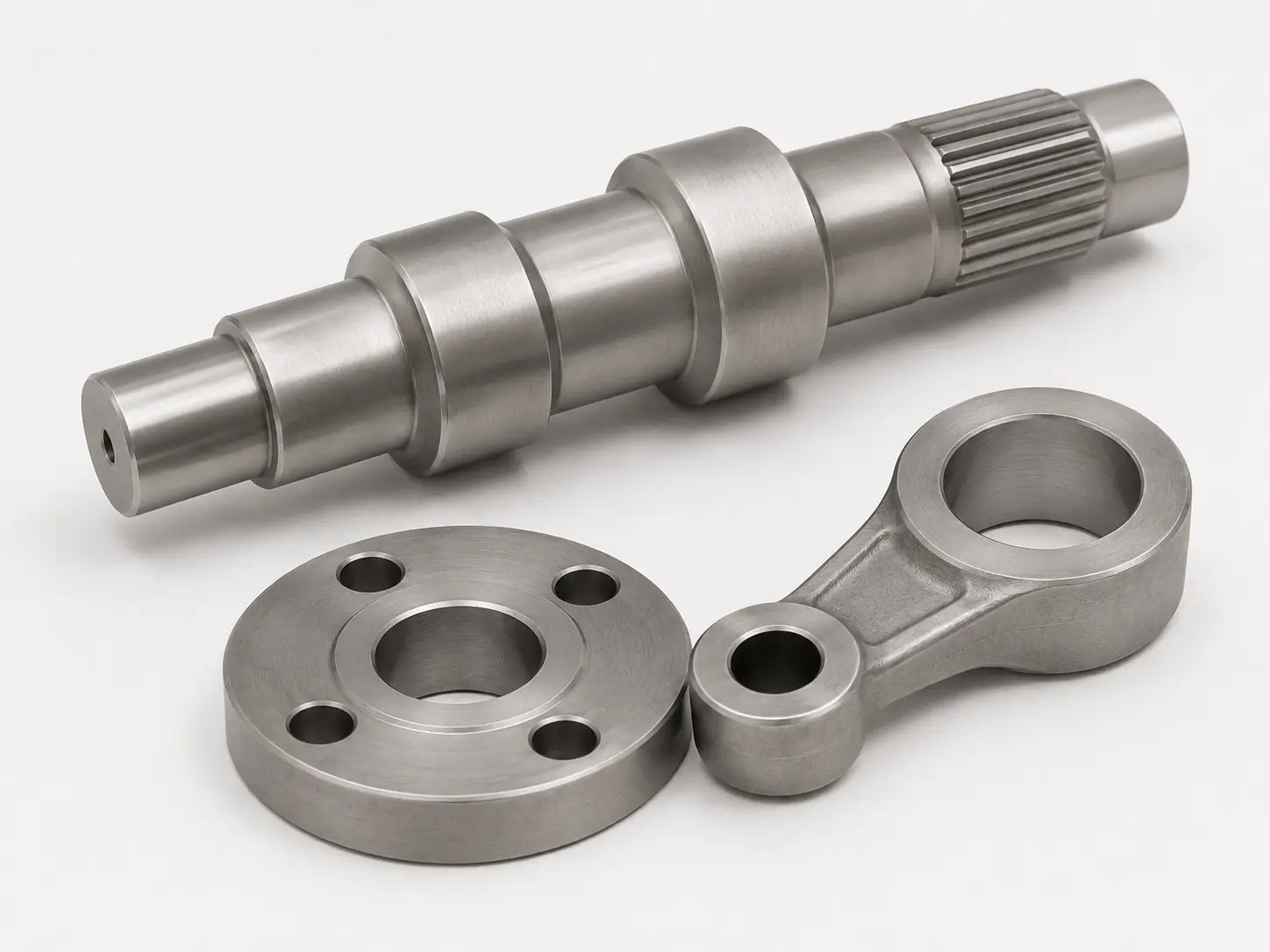
Titanium Grade 7
Palladium-alloyed titanium forgings for demanding corrosion-service and chemical-processing applications.
- Key Characteristics: Enhanced Corrosion Resistance · Chemical Service
Ti-6Al-4V ELI
Low-interstitial Ti-6Al-4V forgings for project-qualified applications requiring controlled chemistry and material properties.
- Key Characteristics: Low Interstitials · Controlled Chemistry · Project Qualification
Grade Selection Note: Other ASTM B381 forging grades can be reviewed according to the drawing, purchase specification and project requirements. Final grade, specification revision, delivery condition, heat treatment and mechanical requirements should be confirmed before production.
Need help selecting the right titanium grade for your forged component?
Custom Titanium Forgings to Drawing Requirements
Custom forged blanks and components can be reviewed according to final geometry, titanium grade, machining allowance, heat treatment and inspection requirements.
Final processing capability should be reviewed according to titanium grade, product form, drawing tolerance, quantity, surface finish, inspection requirement and delivery schedule.
Drawing & DFM Review
Final geometry, rough-forging size, machining allowance and downstream machining requirements can be reviewed before production.
Material & Grade Review
Titanium grade and applicable forging specification are reviewed according to mechanical, corrosion and service requirements.
Forging & Machining Review
Forging route, rough geometry and machining scope are reviewed according to part size, quantity and final component requirements.
Inspection & Traceability
Material records, mechanical testing, dimensional inspection and NDT can be included according to the purchase order and project requirements.
Custom Geometry. Drawing-Based Review. Inspection to Order Requirements.
Quality Control for Titanium Forgings
Material, dimensional, mechanical and NDT requirements are controlled according to the applicable specification, drawing and purchase order.
Material & Traceability
Titanium grade, heat or batch identification and material documentation are reviewed against the order requirements.
Heat Treatment & Mechanical Testing
Heat-treatment condition and mechanical testing are verified according to the applicable grade, specification and purchase requirements.
Dimensional Inspection
Rough-forging dimensions, machining allowance and specified features are checked against the approved drawing.
NDT & Final Documentation
UT, PT or other NDT can be performed to the method, extent and acceptance criteria specified in the purchase order. Inspection records and project-required documentation can be supplied when included in the order scope.
Inspection Records & Shipment Deliverables
Titanium forging shipments can be supported with inspection records and traceability documents according to order requirements.
Quality Control Note
Inspection method, sampling, extent and acceptance criteria should be defined in the drawing, purchase order or applicable project specification.
Titanium Forgings for Industrial Applications
Custom titanium forgings can be reviewed for industrial, chemical, marine and qualified high-performance applications according to material grade, drawing, inspection and project requirements.

Aerospace & High-Performance Engineering
Forged rings, discs, shafts and structural blanks can be reviewed for lightweight, high-strength and fatigue-sensitive components subject to customer qualification.
Typical Forms: Rings · Discs · Shafts · Structural Blanks
Material Review: F-5 / F-23 / Project-Specified Alloys

Medical & Precision Components
Grade F-23 and other titanium forging blanks can be reviewed for precision-machined medical and technical components subject to the applicable customer and regulatory requirements.
Typical Forms: Discs · Blocks · Bars · Custom Blanks
Material Review: F-23 / Customer-Specified Material

Chemical & Petrochemical
Corrosion-resistant forged flanges, rings, blocks, nozzles and equipment blanks for chemical and process-industry applications.
Typical Forms: Flanges · Rings · Blocks · Nozzles
Material Review: F-2 · F-7 · F-12

Marine & Offshore Engineering
Forged shafts, rings, housings and custom blanks for seawater, marine equipment and offshore engineering applications.
Typical Forms: Shafts · Rings · Housings · Custom Blanks
Material Review: F-2 · F-5 · F-7 / Project-Specified Grade
Final material grade, forging route, inspection scope and qualification requirements are confirmed according to the drawing and purchase order.
Why Source Titanium Forgings from HELE Titanium
Drawing review, custom forging support, machining coordination and inspection documentation for industrial titanium forging projects.
Drawing & Specification Review
Forging form, grade, rough dimensions, machining allowance, heat treatment and inspection requirements are reviewed before quotation.
Drawing · ASTM B381 Grade · Rough Size · Inspection
Custom Forging & Machining Support
Rings, discs, shafts, blocks and custom blanks can be reviewed for rough-forged, rough-machined or drawing-defined delivery requirements.
Custom Forms · Rough Machining · CNC · Delivery Condition
Inspection & Traceability Support
Material records, mechanical testing, dimensional inspection and project-specified NDT can be included according to the purchase order.
MTC · Mechanical Tests · UT / PT · Traceability
Project & Export Support
Technical clarification, order documentation, inspection coordination and export packing can be supported throughout the project.
Technical Review · Documentation · Inspection · Export Packing
From drawing review to inspection documentation, each forging order is evaluated against the applicable material, dimensional and purchase requirements.
Titanium Forging FAQs
Quick answers to common purchasing, material, machining and inspection questions for custom titanium forgings.
What information is required for a titanium forging quotation?
Please provide the forging form or final-part drawing, ASTM B381 grade, rough dimensions, quantity, machining allowance, heat-treatment requirements and inspection scope.
If available, also include: Final Geometry · Estimated Piece Weight · Mechanical Properties · NDT Acceptance Criteria
What titanium forging forms can HELE supply?
Which ASTM B381 grades are available?
Can titanium forgings be supplied with machining allowance?
Yes. Rough-forging dimensions and machining allowance can be defined according to the final-part drawing and required delivery condition.
Forgings can be reviewed for as-forged, rough-machined or drawing-defined machined delivery.
What NDT can be specified for titanium forgings?
UT, PT and other applicable inspection methods can be included according to the purchase order, drawing and specified acceptance criteria.
The inspection method, extent and acceptance criteria should be defined before production.
Can heat treatment and mechanical testing be included?
Can MTC and inspection records be supplied?
Can HELE manufacture custom titanium forgings from drawings?
Inside Our Manufacturing & Quality System
See how we produce, inspect, and document titanium products as a direct manufacturing partner.
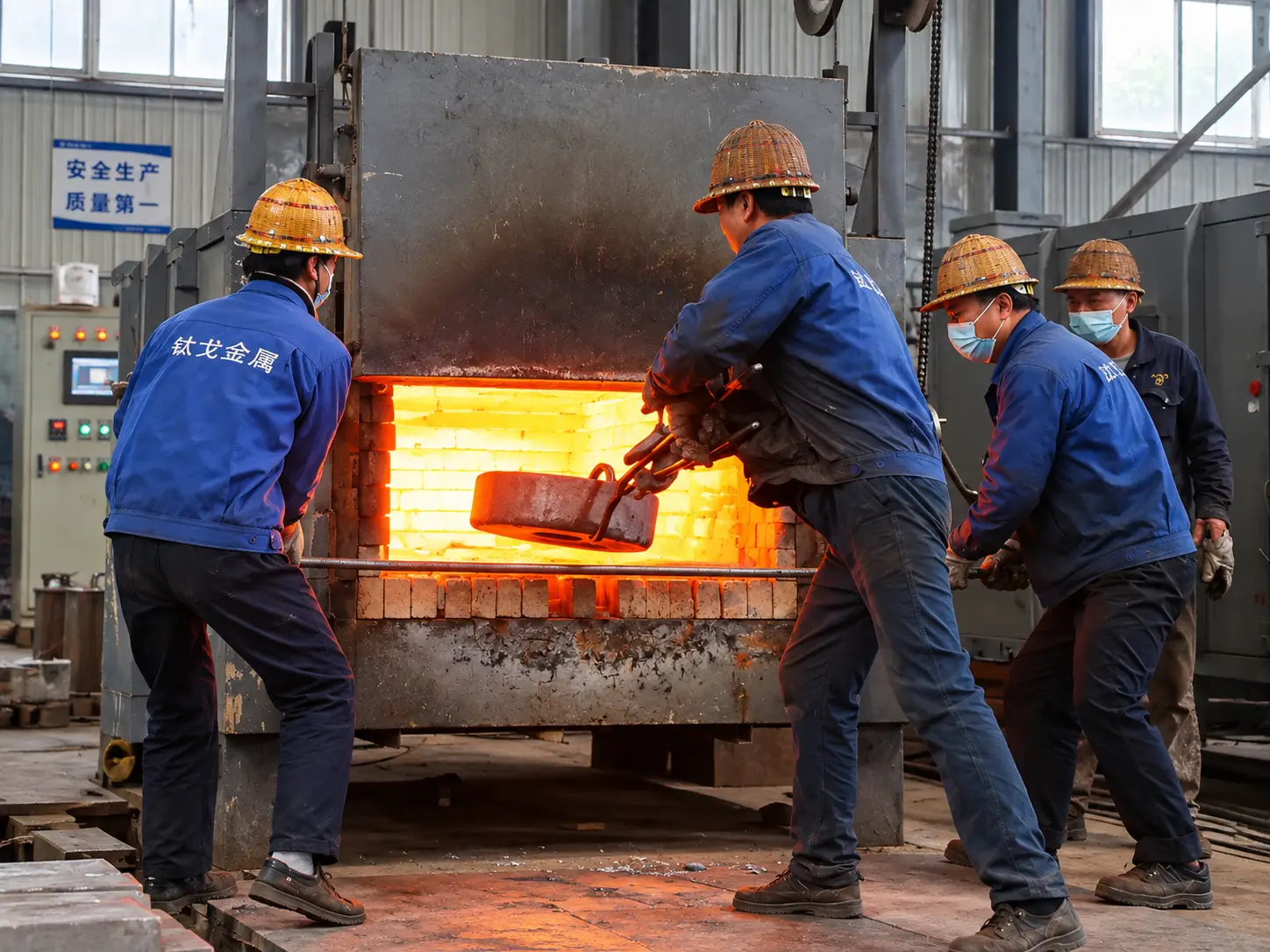
See how titanium forgings move from billet preparation and controlled heating through forging, heat treatment, machining, and final release.
Titanium Billet Preparation
Controlled Heating & Forging
Cold Drawing & Sizing
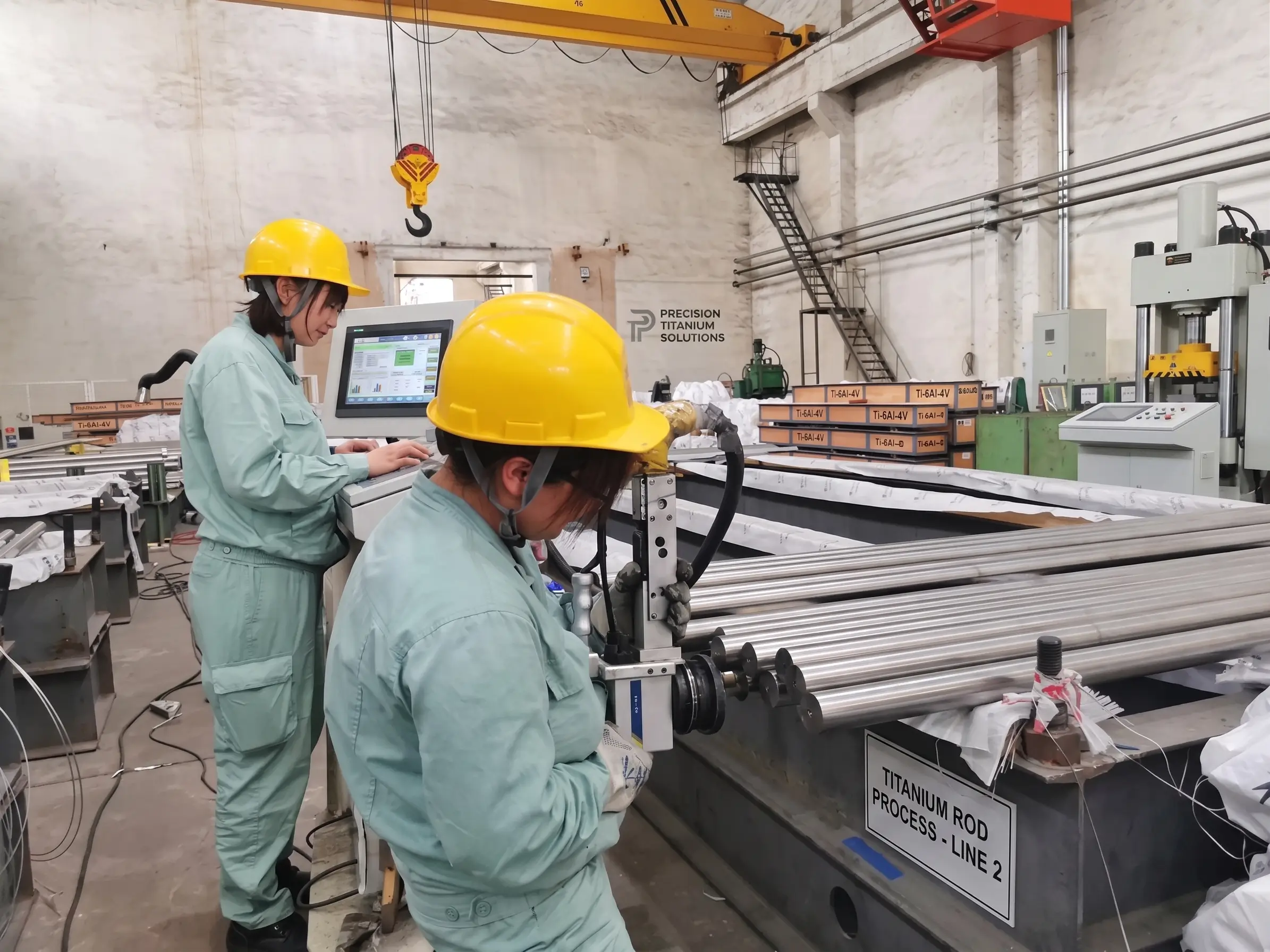
Annealing & Straightening
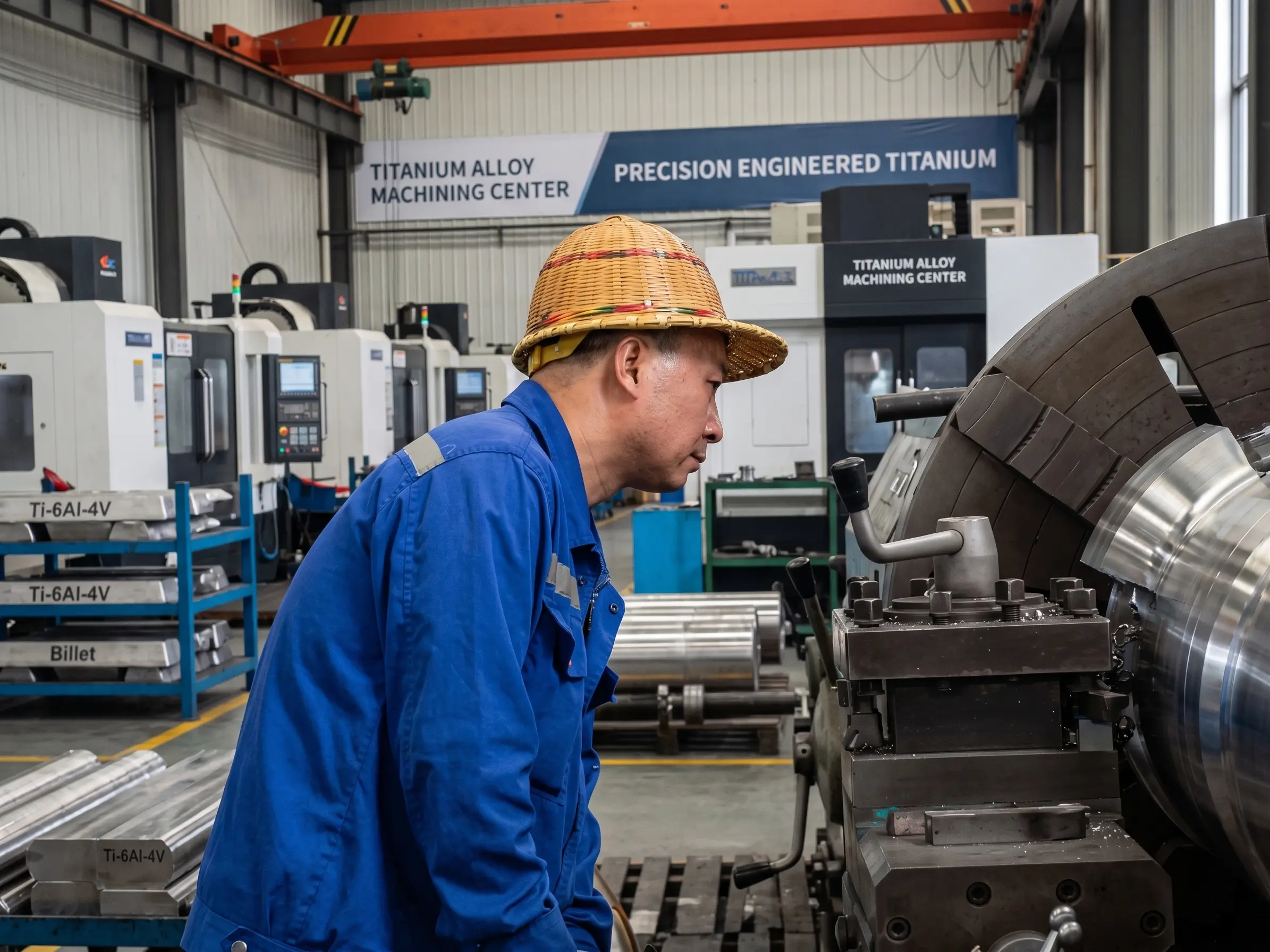
A look inside the production areas where titanium forgings are heated, pressed, machined, inspected, and prepared for shipment.
Forging Press Area
Heat Treatment Furnace Area
CNC Machining Station
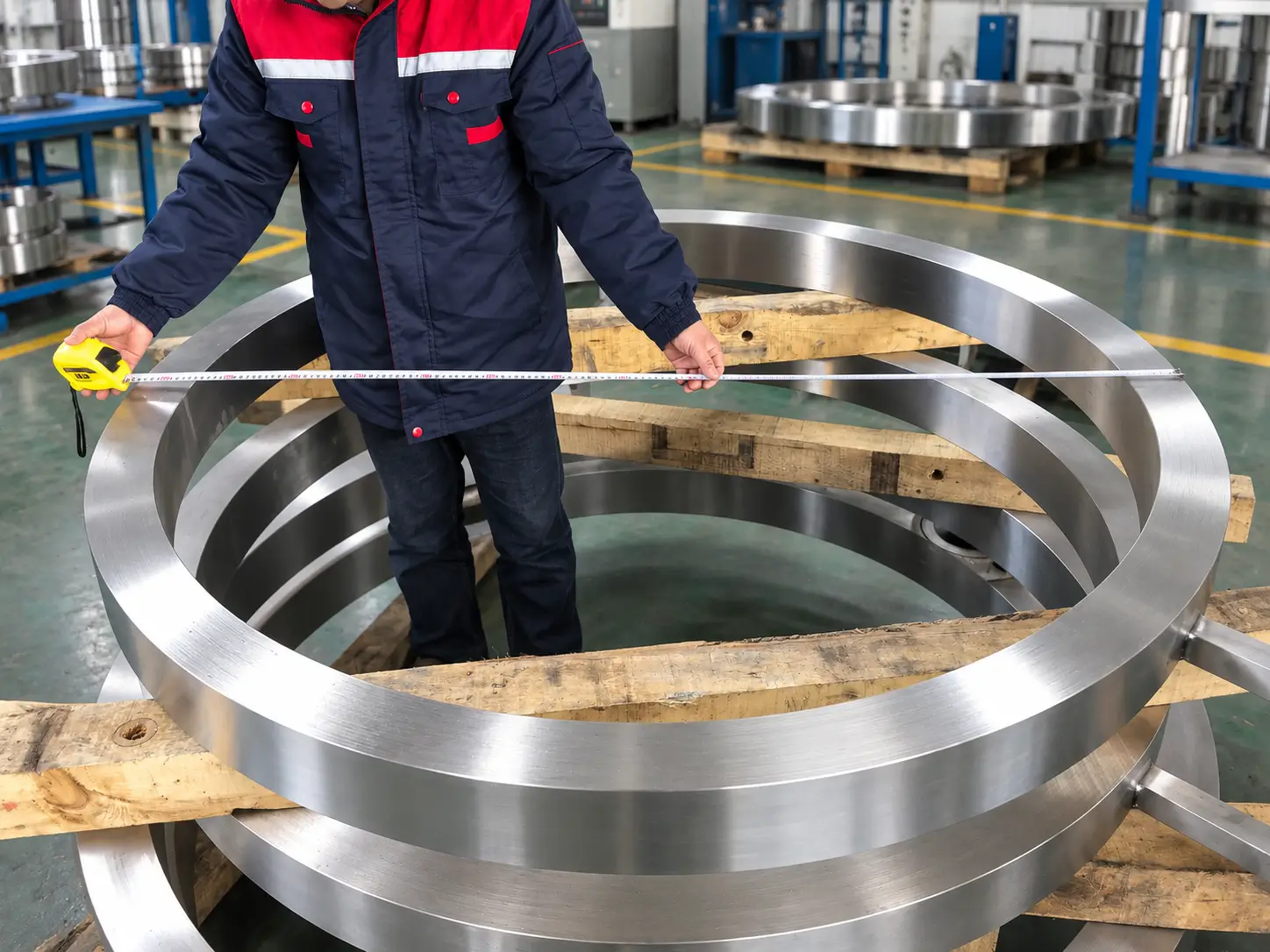
Packing & Bundling Area
Our inspection system verifies material identity, internal soundness, grain-related performance, dimensions, and final documentation before shipment.
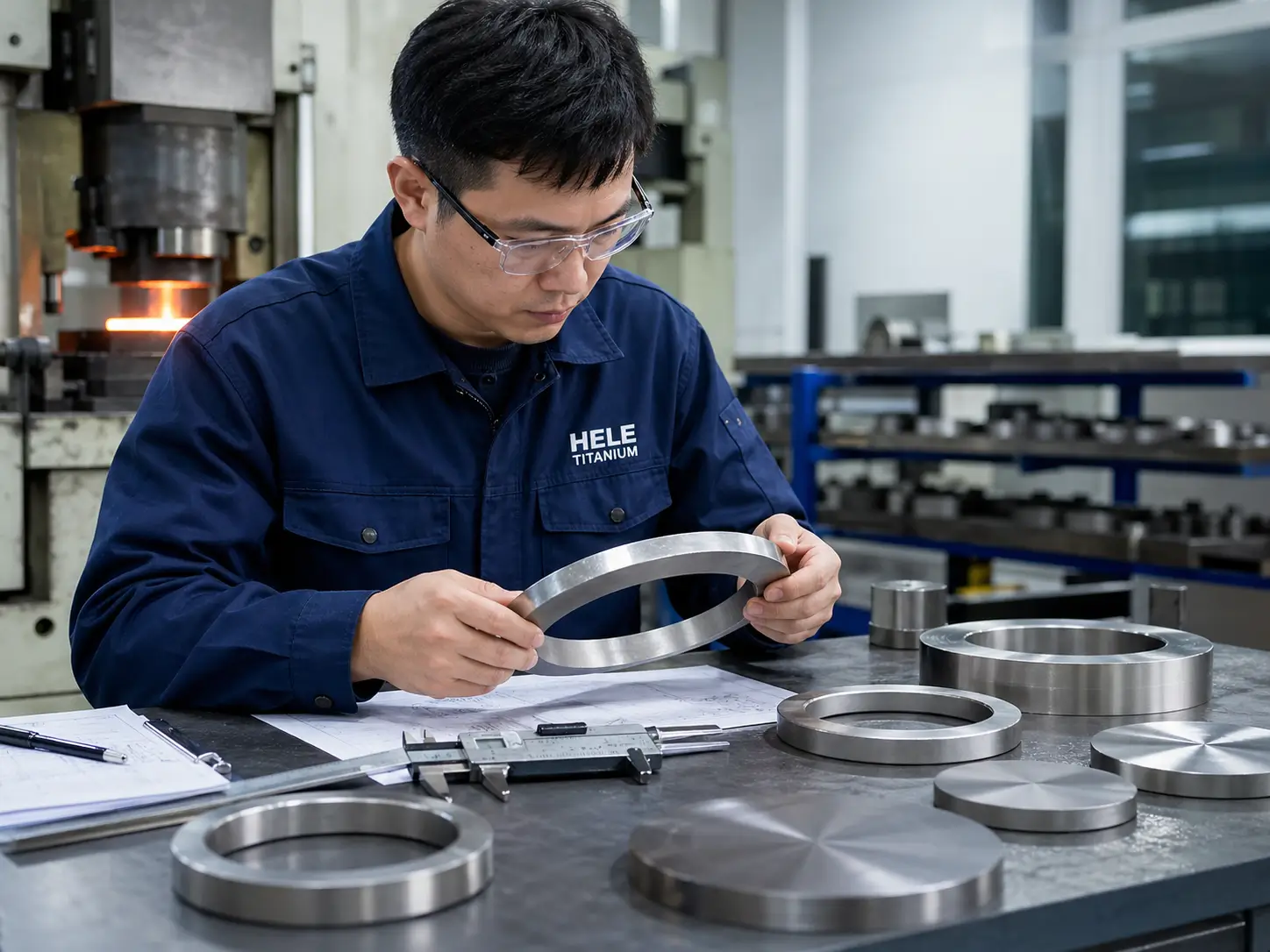
PMI Material Verification
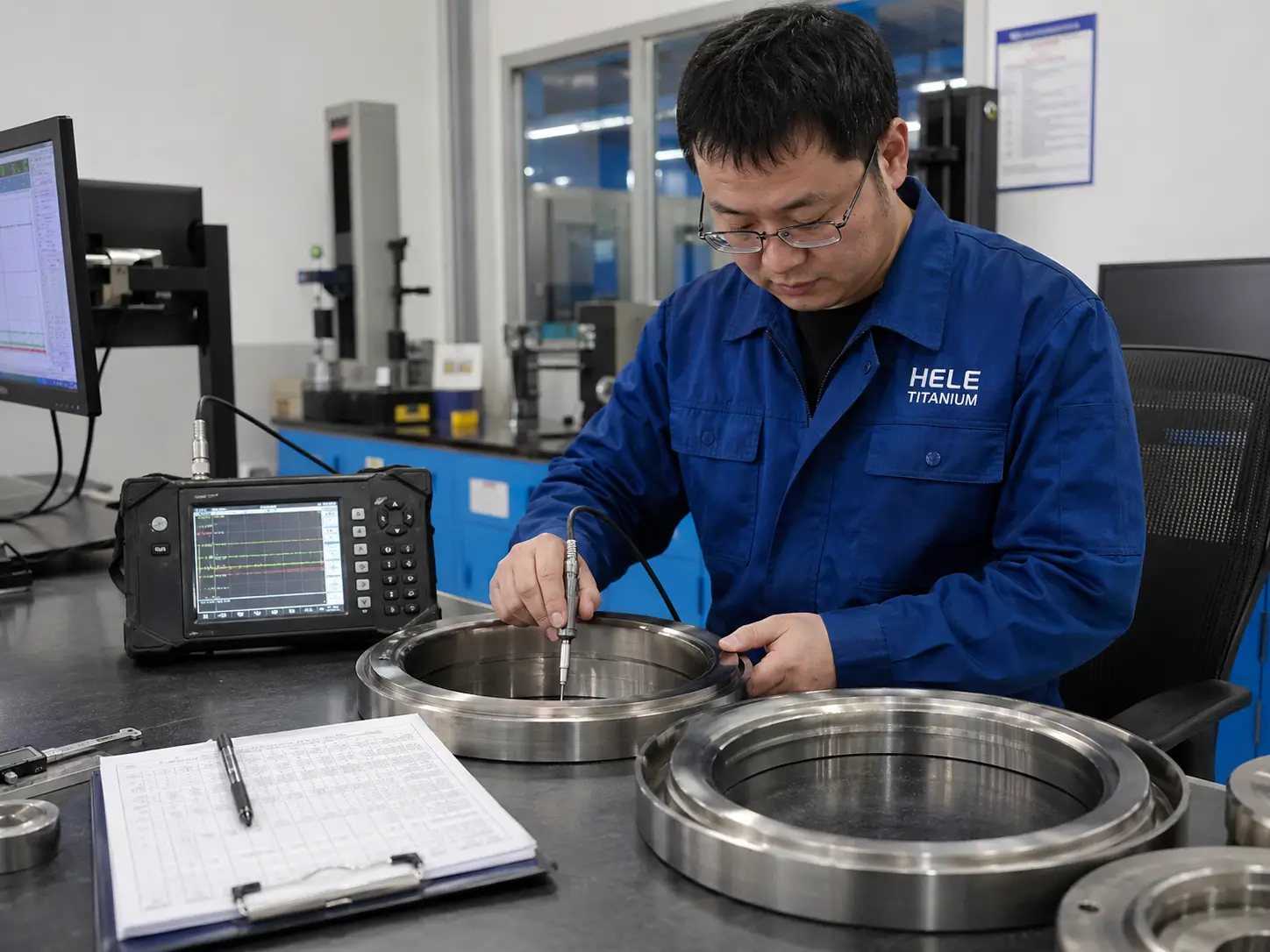
UT Internal Defect Testing
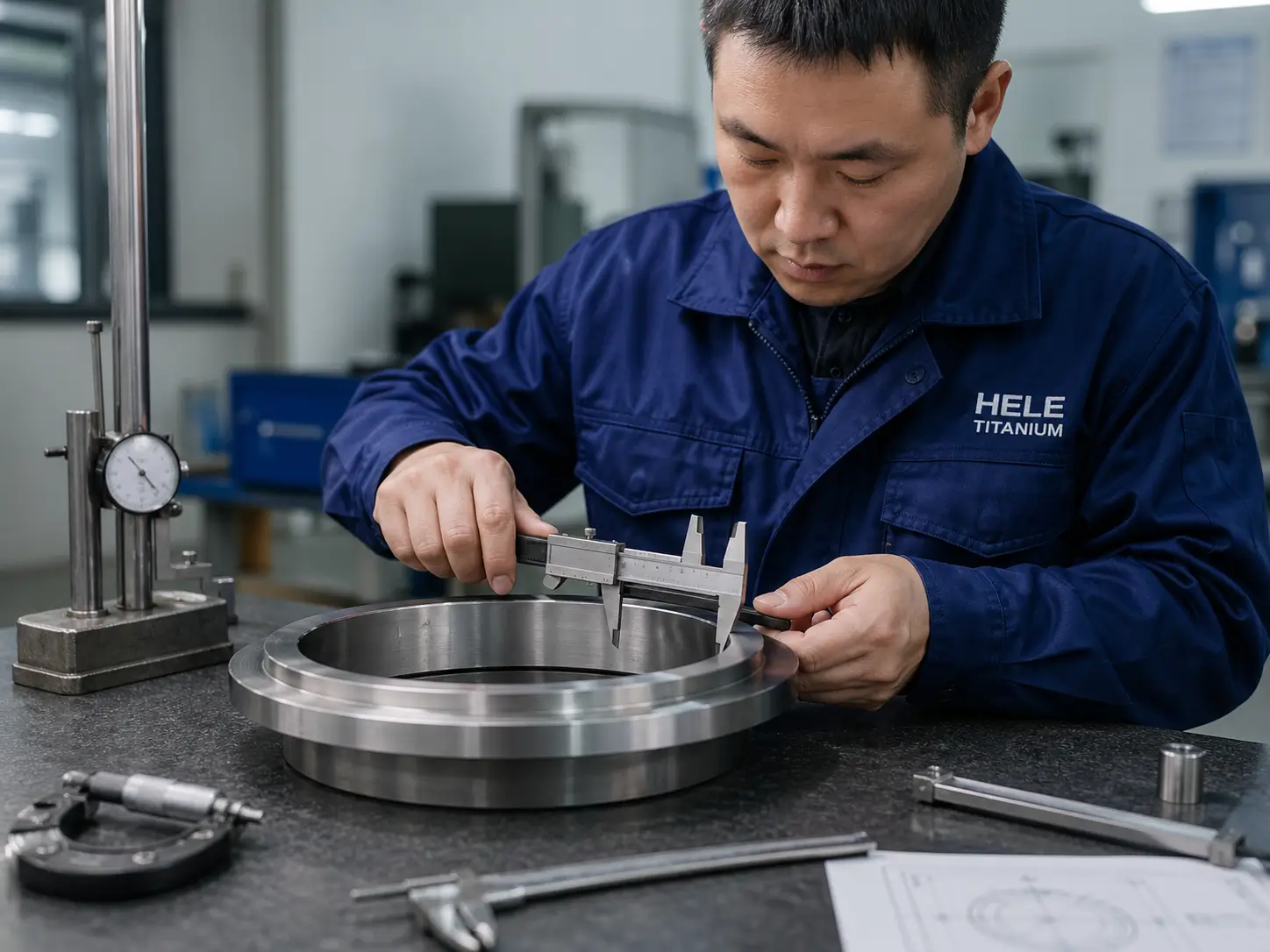
Dimensional Inspection
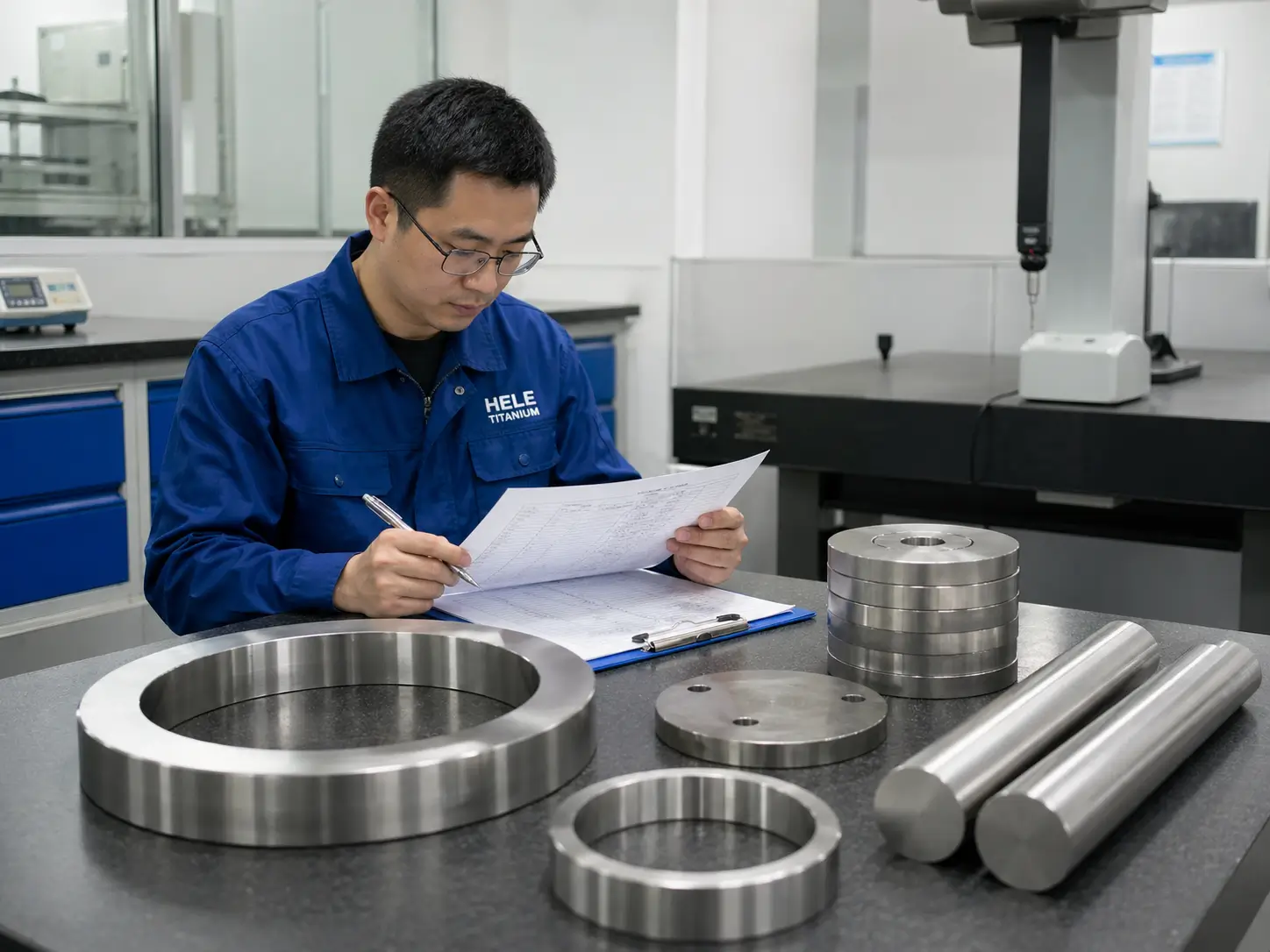
Final Quality Review
Documentation and traceability support are essential for pressure systems, project approval, and global delivery.

Mill Test Certificate Example
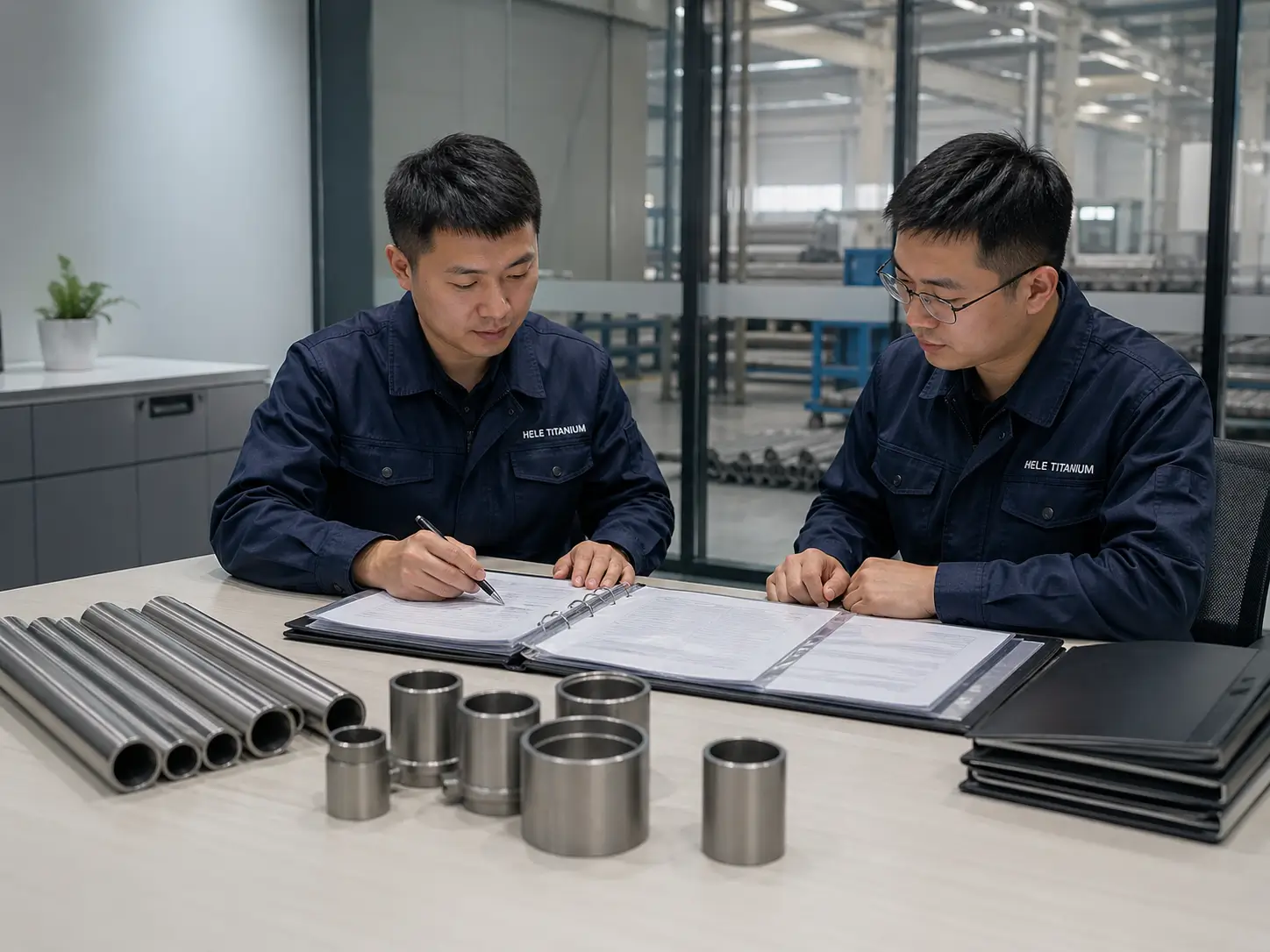
Pressure Test Documentation

ISO / ASME Compliance
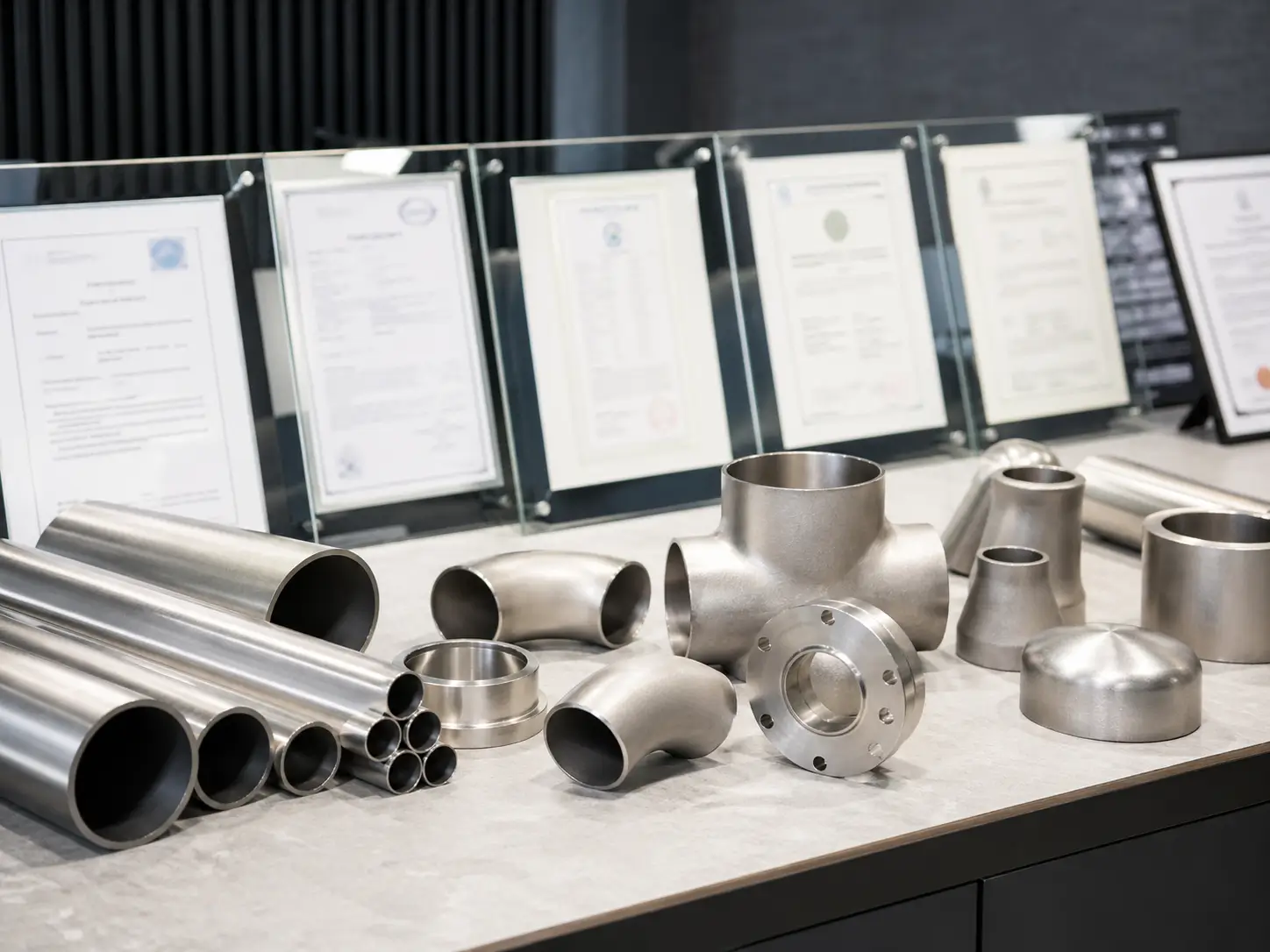
Third-Party Inspection
Get Your Custom Titanium Forging Solution
Tell us your forged part type, titanium grade, dimensions, drawing requirements, mechanical properties, inspection standards, quantity, and application environment. Our engineering team will recommend the most suitable forging route for your project.
-
ASTM B381 Titanium Forgings
-
Open-Die / Closed-Die / Rolled Ring Capability
-
UT, MTC & Full Traceability Support
Direct Contact
sales@heletitanium.com